#gStocksTokenizedStocksLive TOKENIZED STOCKS ARE RESHAPING GLOBAL FINANCE—COULD REAL WORLD ASSETS (RWAs) DEFINE THE NEXT ERA OF DIGITAL INVESTING?
The financial industry has entered a period of rapid transformation. Over the past decade, blockchain technology has evolved from supporting digital currencies to becoming a foundation for innovative financial products. One of the most significant developments in this evolution is the rise of Real World Assets (RWAs) and tokenized stocks.
Rather than viewing blockchain solely as a platform for cryptocurrencies, investors and institutions are increasingly recognizing its potential to modernize traditional financial markets. Tokenized stocks represent a major step toward connecting conventional finance with Web3, allowing real-world financial assets to be represented digitally on blockchain networks.
This growing trend has attracted attention from technology companies, financial institutions, regulators, and investors worldwide. As adoption continues to expand, many market participants believe tokenization could become one of the most influential innovations in global finance over the coming years.
Market Update
The cryptocurrency market continues to show increasing interest in the Real World Asset (RWA) sector. While Bitcoin and Ethereum remain the largest digital assets, investors are also paying close attention to blockchain projects focused on bringing traditional financial products onto decentralized infrastructure.
Tokenized stocks have become one of the strongest narratives within this sector. Several blockchain platforms are working to improve accessibility, transparency, and efficiency by offering digital representations of publicly traded equities.
Growing institutional participation, improving blockchain infrastructure, and expanding developer ecosystems continue to support positive long-term sentiment for tokenized financial products.
Market Overview
Traditional financial markets have historically been limited by geographic barriers, settlement delays, market hours, and complex operational processes.
Blockchain technology introduces new possibilities by allowing assets to exist in digital form while improving transparency and operational efficiency.
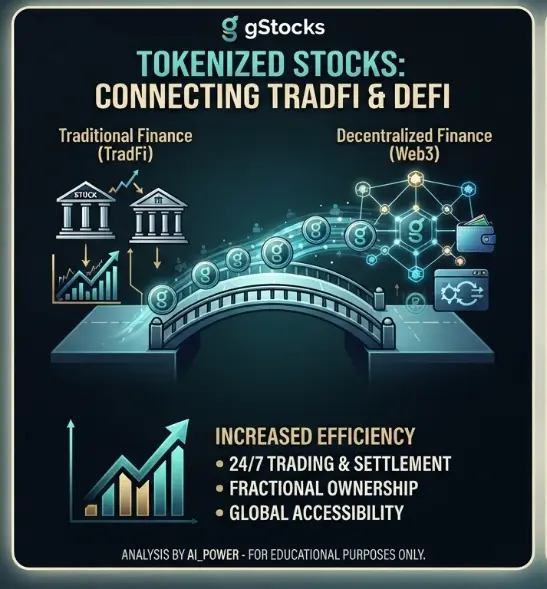
Tokenized stocks are designed to represent ownership or exposure to traditional financial assets through blockchain technology. This approach has the potential to simplify access to global investment opportunities while reducing operational friction.
Rather than replacing traditional markets, tokenization is increasingly viewed as a complementary technology that may enhance existing financial systems.
As financial innovation accelerates, the integration of blockchain with traditional finance continues attracting interest from institutions around the world.
Current Market Outlook
Several important trends are shaping the future of tokenized assets:
• Institutional adoption continues expanding.
• Real World Assets remain one of crypto's fastest-growing sectors.
• Blockchain infrastructure continues improving.
• Digital finance is becoming increasingly mainstream.
• Investors are seeking greater accessibility and efficiency.
• Traditional financial institutions continue exploring tokenization strategies.
Although challenges remain, overall industry momentum continues moving toward greater blockchain adoption.
Understanding Tokenized Stocks
Tokenized stocks represent digital blockchain-based versions of traditional financial assets.
Instead of changing the underlying value of an asset, tokenization changes how ownership or exposure can be recorded, transferred, and managed using blockchain technology.
Potential benefits include:
Improved accessibility.
Greater transparency.
Faster settlement.
Enhanced efficiency.
Broader global participation.
Reduced operational complexity.
While implementation varies across platforms, the overall objective remains consistent: making financial markets more efficient through digital innovation.
Why Real World Assets Matter
For many years, cryptocurrency focused primarily on native digital assets.
Today, attention is expanding toward connecting blockchain with existing financial markets.
Real World Assets include categories such as:
Stocks.
Government securities.
Real estate.
Commodities.
Investment funds.
Financial instruments.
By bringing these assets onto blockchain infrastructure, developers hope to improve efficiency while maintaining investor confidence.
This represents one of the largest opportunities for blockchain adoption beyond traditional cryptocurrencies.
Bullish Scenario
Several factors support a constructive outlook for tokenized stocks and RWAs:
Growing institutional interest.
Increasing blockchain adoption.
Expanding financial infrastructure.
Improving regulatory discussions.
Greater investor education.
Strong innovation across Web3 ecosystems.
Rising demand for digital financial products.
Long-term integration between traditional finance and blockchain.
These developments suggest that tokenization could become an important part of future financial markets.
Bearish Scenario
Despite significant opportunities, investors should remain aware of potential risks.
Important considerations include:
Regulatory uncertainty.
Different legal frameworks across countries.
Technology adoption challenges.
Market volatility.
Liquidity differences.
Operational risks.
Slower-than-expected institutional implementation.
Like every emerging technology, tokenization will likely experience periods of both rapid progress and temporary setbacks.
Key Technical Levels
Unlike individual cryptocurrencies, tokenized stock ecosystems are influenced by both blockchain market conditions and traditional financial markets.
Investors should monitor:
Support
Continued institutional investment.
Positive regulatory progress.
Growing blockchain adoption.
Expansion of financial infrastructure.
Resistance
Regulatory delays.
Weak global equity market performance.
Reduced investor confidence.
Lower market liquidity.
Monitoring these broader market indicators may provide valuable insight into the long-term direction of the sector.
Trading Strategy
Successful investing requires discipline rather than emotion.
Market participants should consider:
Following both crypto and traditional financial news.
Monitoring RWA ecosystem developments.
Applying proper risk management.
Avoiding emotional trading decisions.
Maintaining diversified portfolios.
Evaluating investments from a long-term perspective.
Reviewing market fundamentals regularly.
Remaining patient during periods of volatility.
A balanced strategy often performs better than reacting to short-term market excitement.
Market Times to Watch
Several upcoming developments may influence the tokenized asset market:
Regulatory announcements.
Institutional partnership news.
Blockchain infrastructure upgrades.
RWA ecosystem expansion.
Global equity market performance.
Macroeconomic developments.
Digital asset adoption trends.
Technology innovation across Web3.
These events may shape both investor confidence and long-term industry growth.
The Future of Tokenized Finance
Financial markets continue evolving through technological innovation.
Just as electronic trading transformed traditional investing decades ago, blockchain technology now offers another opportunity to improve financial infrastructure.
Tokenized stocks demonstrate how blockchain can complement existing financial systems rather than replace them.
As more institutions explore blockchain applications, tokenization may become increasingly integrated into everyday investing.
While adoption will likely occur gradually, each new development contributes to building a more connected, transparent, and efficient financial ecosystem.
Final Thoughts
The growth of tokenized stocks and Real World Assets reflects a broader transformation occurring across global finance.
Instead of viewing blockchain only as the technology behind cryptocurrencies, investors are increasingly recognizing its ability to improve traditional financial systems through greater accessibility, efficiency, and transparency.
Although challenges remain, continued innovation, institutional participation, and improving infrastructure suggest that tokenization could become one of the defining financial trends of the coming decade.
For investors, the most valuable approach remains continuous learning, disciplined research, and maintaining a long-term perspective as this rapidly evolving industry continues to mature.
Disclaimer: This article is for educational and informational purposes only and should not be considered financial, legal, or investment advice. Always conduct your own research (DYOR), evaluate your risk tolerance, and make informed investment decisions.
✍️ Ai_Power