
Futures
Access hundreds of perpetual contracts
CFD
Gold
One platform for global traditional assets
Options
Hot
Trade European-style vanilla options
Unified Account
Maximize your capital efficiency
Demo Trading
Introduction to Futures Trading
Learn the basics of futures trading
Futures Events
Join events to earn rewards
Demo Trading
Use virtual funds to practice risk-free trading
CFD
Stock CFD Derivatives
US Stocks
Access real US stocks and ETFs
HK Stocks
Trade quality Hong Kong-listed stocks
Korean Stocks
SK Hynix
Real Korean stocks and top assets
Stock Futures
High leverage, 24/7 trading
Tokenized Stocks
Backed by real stock assets
IPO Access
Unlock full access to global stock IPOs
GUSD
3.8%
Mint GUSD for Treasury RWA yields
Stocks Activities
Trade Popular Stocks and Unlock Generous Airdrops
Launch
CandyDrop
Collect candies to earn airdrops
Launchpool
Quick staking, earn potential new tokens
HODLer Airdrop
Hold GT and get massive airdrops for free
IPO Access
Unlock full access to global stock IPOs
Alpha Points
Trade on-chain assets and earn airdrops
Futures Points
Earn futures points and claim airdrop rewards


Promotions
AI
Gate AI
Your all-in-one conversational AI partner
Gate AI Bot
Use Gate AI directly in your social App
GateClaw
Gate Blue Lobster, ready to go
Gate for AI Agent
AI infrastructure, Gate MCP, Skills, and CLI
Gate Skills Hub
10K+ Skills
From office tasks to trading, the all-in-one skill hub makes AI even more useful.


NVIDIA’s Jensen Huang, Kimi K3, and a soon-to-come open-source war
By: Kazk of Digital Life
If you want to say what’s hottest and discussed the most in the AI industry recently, then it has to be a story strung together by four words that seem to have nothing to do with each other: Huang, Anthropic, Kimi, and open source. The story goes like this. A few days ago, on July 24, Huang Jen-Hsun posted his first message on X.
This may be the hottest man in the AI circle. To publish this open letter, he went so far as to register an X account. The letter is titled Open Weights and American AI Leadership — open weights and American AI leadership.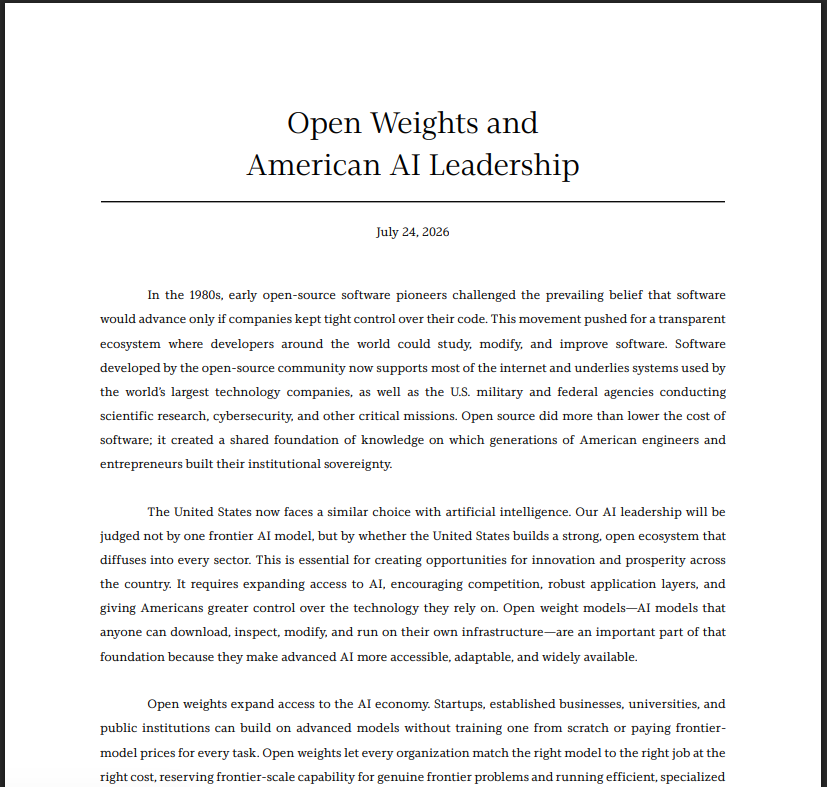
Roughly, the point is that AI will reshape every industry, drive every company, and will also be built by every country. Open models can strengthen safety, accelerate innovation, and bring technological sovereignty. This world needs both the most cutting-edge closed-source models and the most cutting-edge open models. We can’t sanction open-source models. The reason Huang has been worrying so hard actually has some background. Let’s rewind 11 days. On that day, a defining event happened. In the early hours of July 17, Kimi K3 was officially released.
2.8 trillion total parameters, 104 billion activated parameters, native visual capabilities, a 1 million Token context.
Most importantly, at the time Kimi promised that the model weights would be officially open-sourced on July 27 (i.e., last night).
This is the world’s first open-source 3T-class model. A Chinese team, with far less computational resources than others, produced something whose capabilities are close to the world’s strongest closed-source model—and then handed the weights to the entire world.
That immediately made the atmosphere in the US feel off. On July 22, the head of the Office of Science and Technology Policy in the White House, Michael Kratsios, publicly accused Dark Side of the Moon, claiming that the development and use of Kimi K3 involved large-scale distillation of Claude Fable 5.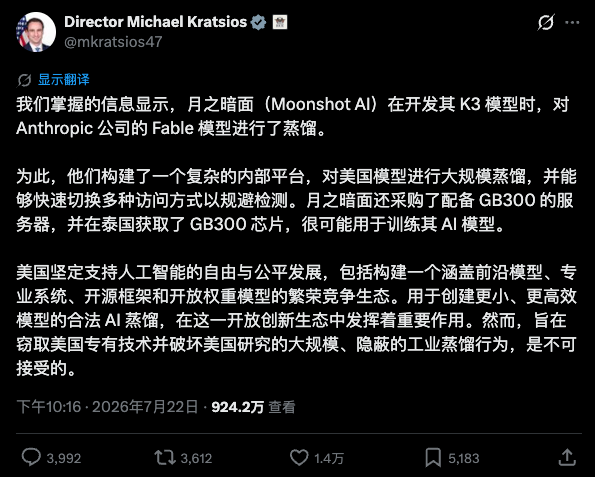
What’s interesting, though, is the comments section. You can all look at the public outcry.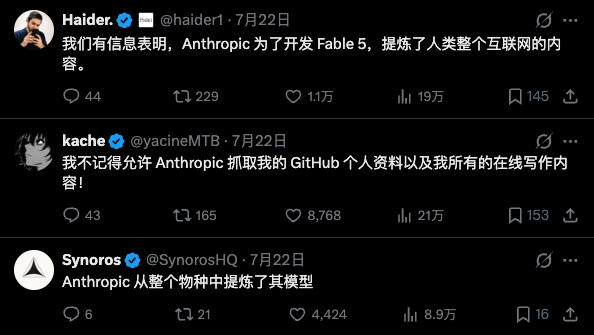
Then, the US Treasury Secretary—quite unfortunately—stoked the flames again by bringing up trade blacklists and sanctions.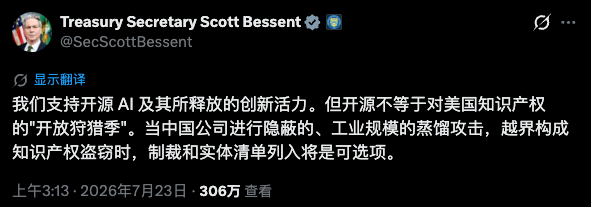
The comment section completely collapsed from there.
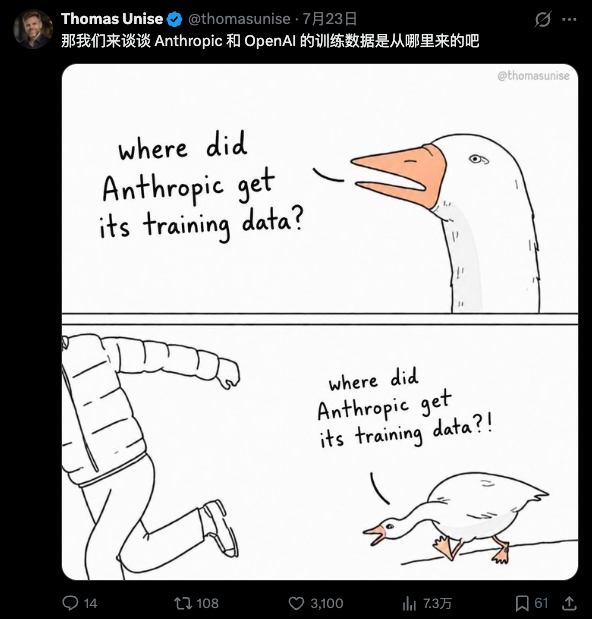
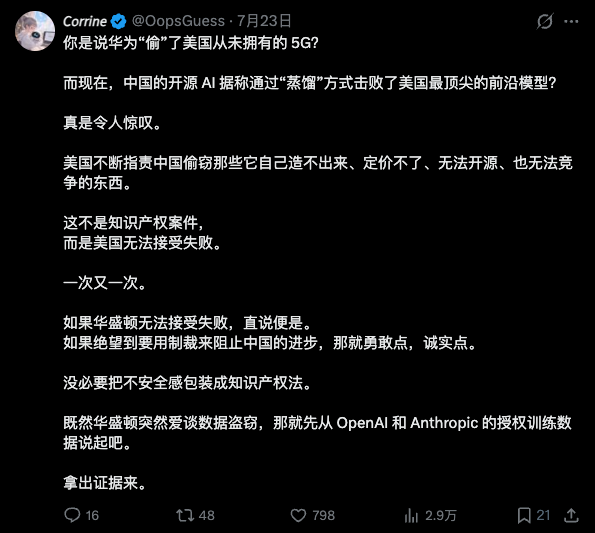
As this matter grew bigger and bigger, what started as a competition over model capabilities and an open-source path was quickly dragged into intellectual property, national security, export controls, and the US-China tech race. And at exactly this moment, Huang Jen-Hsun stepped forward.
He accepted an interview and publicly opposed banning Chinese open-source models.
Two days later, he posted his first-ever X message, telling Washington in an open letter that open models matter to American innovation, competition, safety, and technological sovereignty—you can’t ban them, you can’t sanction them, and we must encourage open source.
To be honest, for the sake of selling chips, Huang really has worried himself to death. Then, at the very bottom, a long wall of logos was posted, and the entire tech industry started lining up to sign the open letter. When the open letter was first released, 25 companies and organizations had signed.
NVIDIA, Microsoft, Meta, IBM, Dell, Palantir, Mistral, Hugging Face, and so on.
By the weekend, the list began getting crazily longer.
OpenAI showed up, Google showed up, SpaceX showed up, AMD, Cisco, Cloudflare, GitHub, Linux Foundation, Mozilla, Vercel, Y Combinator, OpenClaw, and many others also all came.
By the time I’m writing this article, there are already 77 signatories.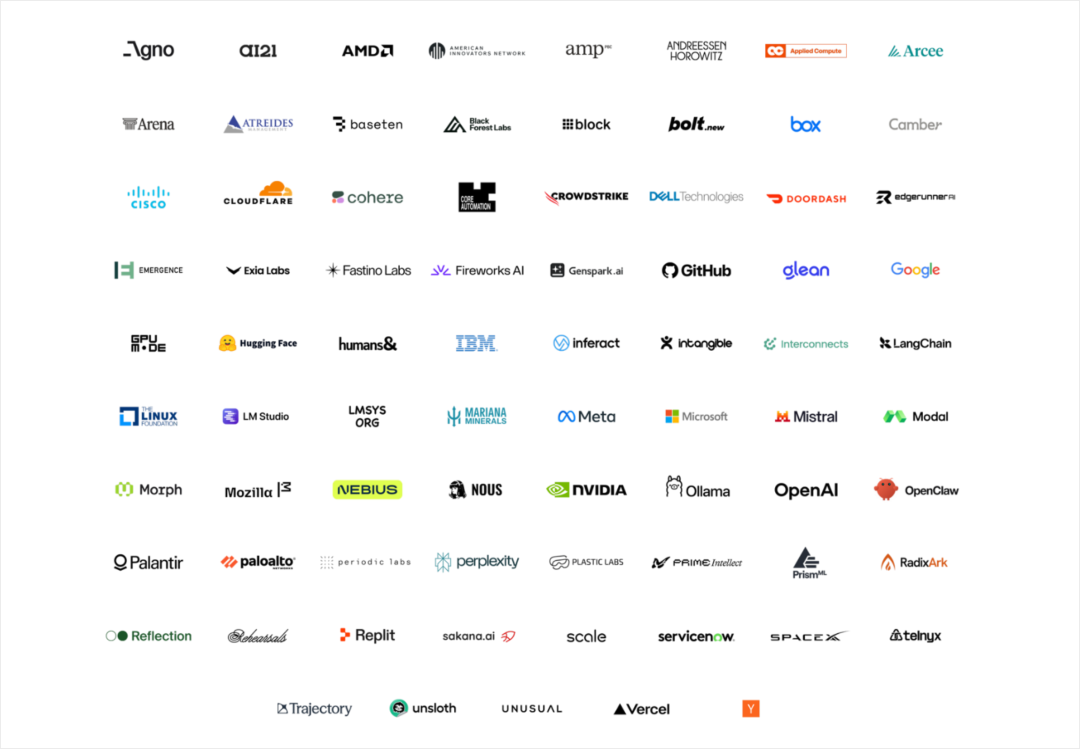
And there are countless big names going crazy to drop support.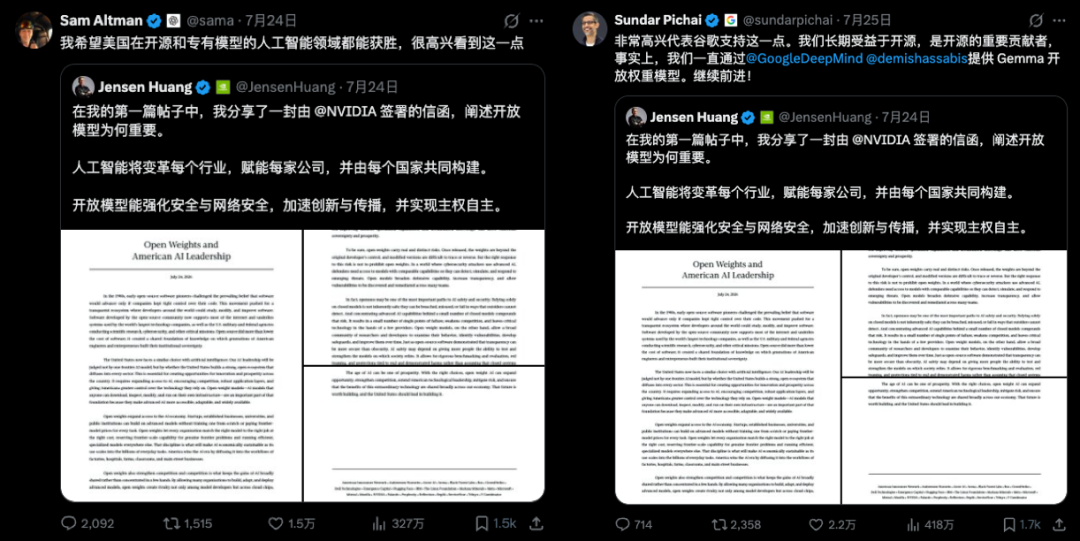
It’s been so, so, so long since we’ve seen this kind of gathering—an uprising together, standing shoulder to shoulder with one heart against the enemy. But if you pay close attention, you’ll notice that almost all of the leading frontier tech companies in the US have shown up on that logo wall; even NVIDIA and AMD even managed to appear together across the century. Yet you’ll realize, in a totally inexplicable way, that one familiar name is missing: Anthropic. I think this world-famous painting could be renamed Where is Anthropic?. Some netizens even directly mocked it by making a video—I laughed so hard I couldn’t stop, and I have to show everyone. Followed
And just as Anthropic was “playing dead,” while US tech giants teamed up to launch an X petition and urge the uprising, the fuse for the whole incident—officially announced last night at 23:13 on July 27—was that Kimi K3 open-sourcing was formally confirmed.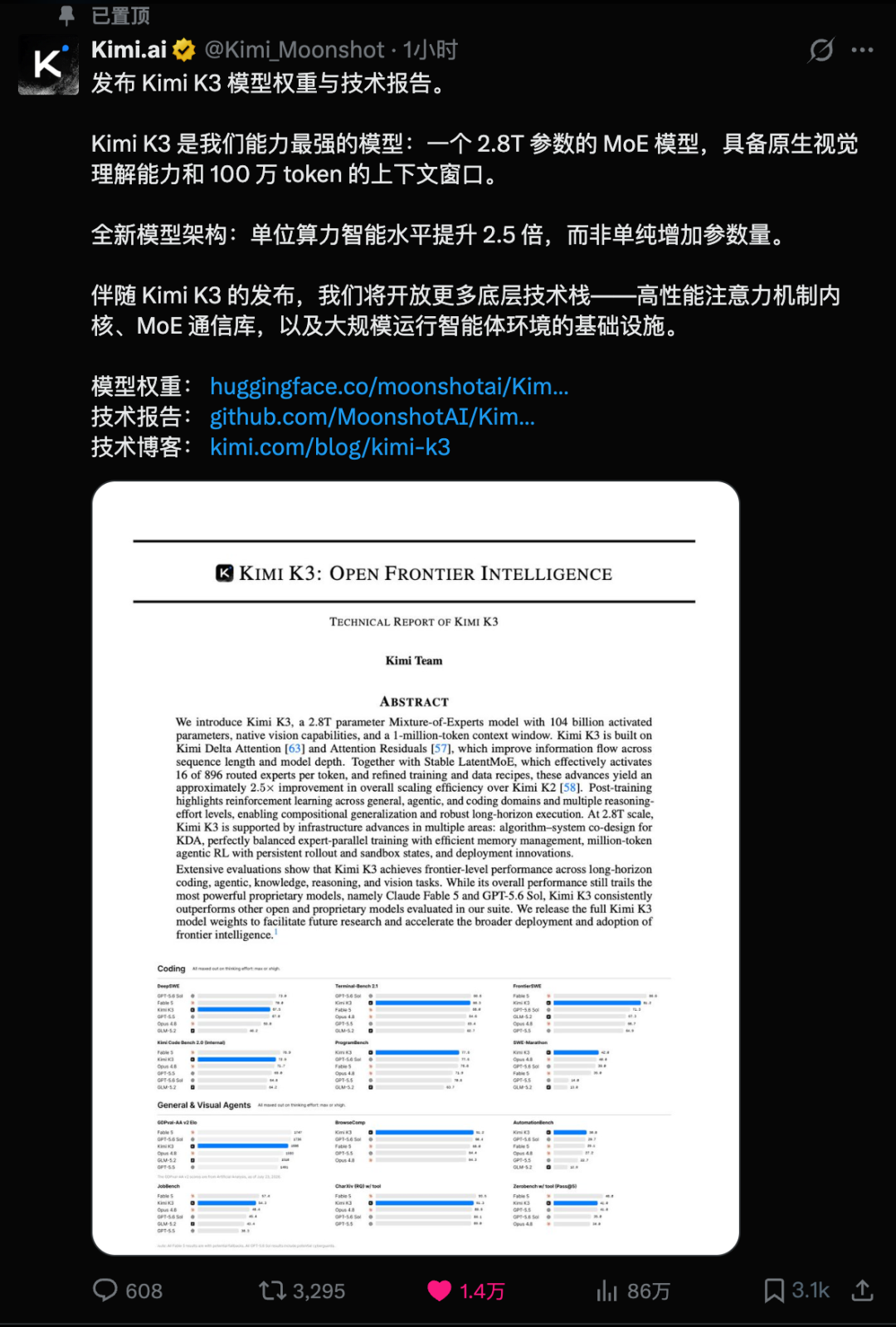
And the level of open-sourcing exceeded even my expectations. I originally thought it would only be the open-sourcing of the model weights.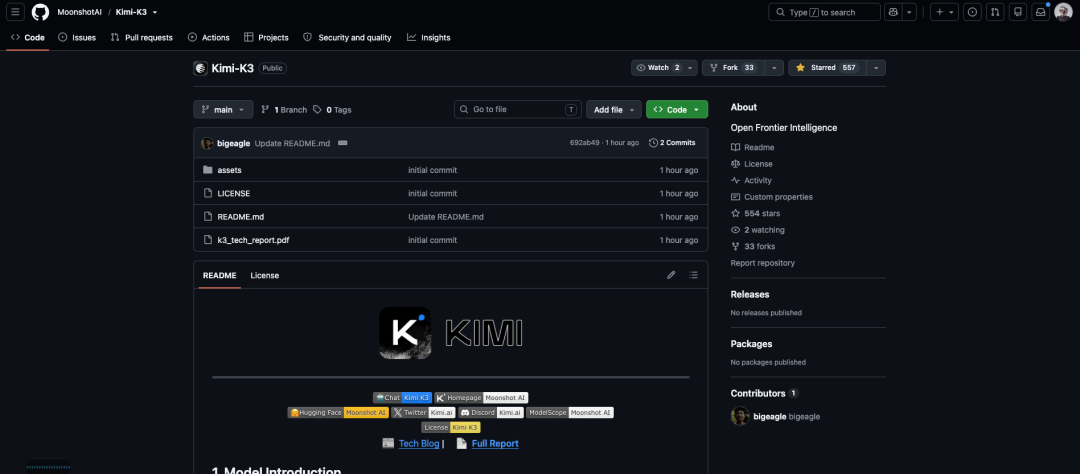
Turns out.
The model weights are open-sourced.
A detailed technical report has also been released.
The key infrastructure used to train K3 is also open-sourced.
All of it is open…
Let me roughly list it out.
Kimi K3 model weights: a 2.8 trillion-parameter MoE model, with 896 experts in total, and each Token activates 16 of them.
Then comes K3’s full technical report: 47 pages in total.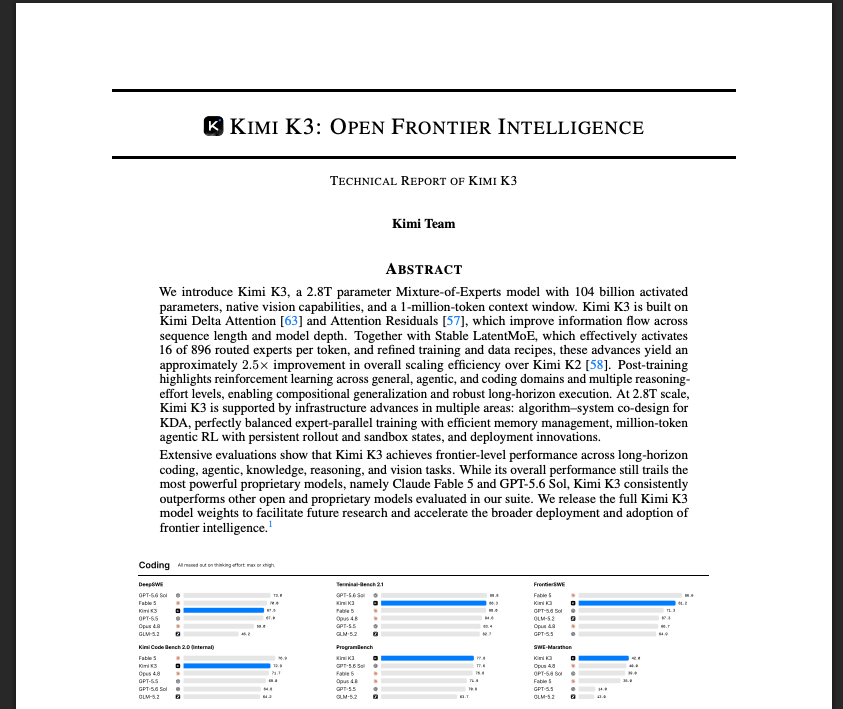
It discloses architectural details of KDA and Attention Residuals, explaining how they mix KDA and Gated MLA in a 3-to-1 ratio, and how they let information keep flowing across dozens of layers.
There’s also Stable LatentMoE.
With 896 experts, only 16 are activated—so sparse it’s beyond belief. Kimi then uses an entire set of methods, including SiTU GLU and Quantile Balancing, to keep this extremely sparse training in a stable state.
Also released are MoonViT V2, reinforcement learning infrastructure for a million-Token context, large-scale task synthesis, post-training methods, and full results from nearly 20 internal evaluation sets.
This technical report is very detailed and solid—highly recommended to read.
Besides the technical report, there are also open-sourced key infrastructure technologies.
MoonEP — a expert parallel communication library built specifically for ultra-large-scale MoE.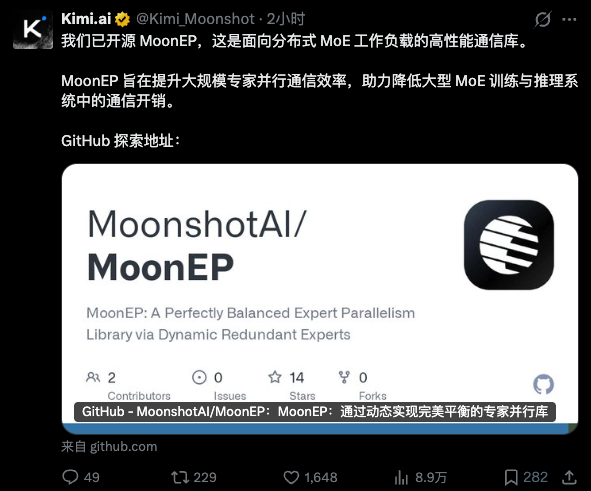
During MoE training, it often happens that some experts are insanely busy, while others are idle like they’re “scratching their feet,” and in the end all GPUs end up waiting on the busiest one.
MoonEP will dynamically replicate a small portion of the popular experts based on the current routing results, so each card receives exactly the same number of Tokens, while maintaining a static memory shape to avoid training getting more and more fragmented—finally preventing OOM directly.
This is already extremely low-level and extremely valuable in ultra-large model training.
FlashKDA — the high-performance operator for Kimi Delta Attention.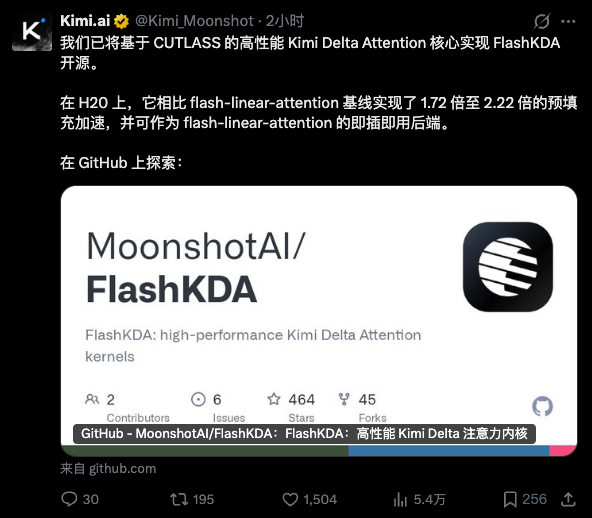 It’s implemented using CUTLASS. On NVIDIA H20, compared with the flash linear attention baseline, prefill speed improves by 1.85x to 2.31x, and it can also plug directly into existing flash linear attention backends.
Going further down, there’s also AgentENV.
This is a distributed Agent sandbox system jointly built by Kimi and KVCache.ai. It’s the base layer that truly runs the environment when K3 performs large-scale Agent reinforcement learning.
It can spin up massive Firecracker micro-VMs across a bunch of machines at the same time. Environment restoration is under 50 milliseconds, pauses are under 100 milliseconds, and it natively supports snapshots, restore, and fork.
After an Agent reaches a certain key node, it can directly fork into dozens of parallel trajectories that don’t interfere with each other, continuing parallel exploration.
Even though I don’t really understand the underlying technology—just some superficial “paper knowledge”—based on these technologies, I can already feel that it’s absolutely worth it.
It really is pulling out the bottom cards.
MoonEP solves communication and load balancing for ultra-large MoE.
FlashKDA improves operator efficiency for the new attention architecture.
AgentENV provides the massive real environments needed for Agent reinforcement learning.
The open-source community is about to take off.
Now, I’d like to put Kimi and DeepSeek together and call them the two sages of open source.
I also read the license for this Kimi K3.
Ordinary researchers, developers, and companies can use, copy, modify, deploy, fine-tune, and distribute it for free, and they can also make derivative products and commercialize it.
It only sets two thresholds for super-large-scale commercial use.
If you are doing model-serving business, and your company and related parties’ total revenue exceeds $20 million for 12 consecutive months, you need to sign an additional agreement with Dark Side of the Moon.
If your K3 commercial product has monthly active users exceeding 100 million, or monthly revenue exceeding $20 million, then the product interface needs to prominently display Kimi K3.
Yes—just prominently display Kimi K3.
Oh, Lord Buddha…
Someone has already said: if Kimi K3 can bring them $20 million in monthly revenue, then don’t just prominently display Kimi K3’s brand logo.
They could tattoo Kimi’s logo on their butt—maybe even tattoo two.
Tonight, with Kimi K3 open-sourcing, I feel like the entire event has been pushed to the final climax, and public opinion is basically one-sided now.
At this moment, the US’s stance has a kind of magical chemical reaction with Kimi K3’s open-sourcing.
In the future, this could be remembered as:
the Sarajevo incident in the AI industry.
This world needs open source.
Huang and the others embrace open source—of course, besides ideals, there’s also a lot of money in the air.
Back in 2002, Joel Spolsky wrote a classic business law called Commoditize Your Complements—turn your complements into commodities. The cheaper a complement becomes, the more demand people have for the thing.
NVIDIA sells GPUs.
The more open-source models there are, the more companies around the world will be willing to deploy them themselves, fine-tune them themselves, and train them themselves—so in the end they’ll need even more GPUs.
AMD, Dell, cloud computing companies, and inference service providers follow a similar logic.
Development tools and application platforms like GitHub, Vercel, Replit, LangChain, OpenClaw naturally also hope that there will be more and more underlying models, that they become cheaper, and that they are easier and easier to replace.
Because every time model costs drop by $1, the application layer gains an extra $1 of space.
Huang firmly believes in open source, and Huang is also one of the biggest beneficiaries of open-source models—these two things don’t conflict. But I also firmly believe in and embrace open source. The reason is especially simple: because I’m a normal person. In my lifetime, I probably can’t train a model like K3. I don’t have tens of thousands of cards, and I don’t know anything. Even the formulas in the technical report—I can only barely understand them a little with the help of AI. But that doesn’t stop me. Today, standing on the work, frameworks, and models open-sourced by countless predecessors, I can create my own work.
Ordinary people can participate in every technical revolution. What it really depends on is whether those earlier folks are willing to leave the finish line behind—giving later people a starting line. We didn’t suddenly become geniuses.
We just don’t have to walk the whole road again from scratch.
That’s where open source’s real powerful force lies.
When a team spends massive compute resources and countless big names grind for a long time to get something, the moment it’s made public, the very next day it becomes the public starting point for countless ordinary people around the world.
I think this is the compounding gains of civilization.
Finally, to all the big names who contribute to the human world, the open-source world, and the AI world.
I offer my highest respect.
Thank you.