
Futures
Access hundreds of perpetual contracts
CFD
Gold
One platform for global traditional assets
Options
Hot
Trade European-style vanilla options
Unified Account
Maximize your capital efficiency
Demo Trading
Introduction to Futures Trading
Learn the basics of futures trading
Futures Events
Join events to earn rewards
Demo Trading
Use virtual funds to practice risk-free trading
CFD
Stock CFD Derivatives
US Stocks
Access real US stocks and ETFs
HK Stocks
Trade quality Hong Kong-listed stocks
Korean Stocks
SK Hynix
Real Korean stocks and top assets
Stock Futures
High leverage, 24/7 trading
Tokenized Stocks
Backed by real stock assets
IPO Access
Unlock full access to global stock IPOs
GUSD
3.8%
Mint GUSD for Treasury RWA yields
Stocks Activities
Trade Popular Stocks and Unlock Generous Airdrops
Launch
CandyDrop
Collect candies to earn airdrops
Launchpool
Quick staking, earn potential new tokens
HODLer Airdrop
Hold GT and get massive airdrops for free
Pre-IPOs
Unlock full access to global stock IPOs
Alpha Points
Trade on-chain assets and earn airdrops
Futures Points
Earn futures points and claim airdrop rewards


Promotions
AI
Gate AI
Your all-in-one conversational AI partner
Gate AI Bot
Use Gate AI directly in your social App
GateClaw
Gate Blue Lobster, ready to go
Gate for AI Agent
AI infrastructure, Gate MCP, Skills, and CLI
Gate Skills Hub
10K+ Skills
From office tasks to trading, the all-in-one skill hub makes AI even more useful.


Primitive Ventures founder: In the AI era, those “vanished lowly people”
Author: Dovey, founder of Primitive Ventures
The permanent underlying stratum of the brain valley
A very dystopian-sounding term has started to go popular in San Francisco’s tech circle: permanent underclass (permanent underlying stratum). Silicon Valley (Silicon Valley) has also officially become Cerebral Valley (brain valley) in young people’s mouths this year.
At 160 Noe St in Duboce Triangle, it’s not far from the core area of the brain valley. The house has just finished a two-year renovation: a six-person-wide marble island, nine-foot-tall doors, and an attic stairway that can automatically fold into the ceiling. Young engineers who come to view the place sigh one after another, saying, honestly, I hope this is six months from now—then the real estate agent would relay the seller’s response. The gist is: it’s fine, I can take equity in your company, as long as it’s OpenAI or Anthropic.
In the expected IPO of these two companies in the near future, at least 3,000-plus newly minted “emerging rich” with net worths of more than $820B are expected to be created, including 800 people whose net worth will exceed $12.5k. Redfin’s calculation is: if the employees’ equity value after taxes is theoretically enough to buy 29% of all homes in San Francisco’s core area.
Also in this city, in a wave after wave of AI leaps forward branded as cost reduction and efficiency gains, roughly 50,000 technical jobs have disappeared. Hiring for tech roles remains about 40% lower than before the pandemic. Big tech employees still on the job are treading on thin ice; even Meta employees are willing, without complaint, to accept the company’s all-day keyboard/screen tracking technology, or else distill themselves, or else get laid off immediately. This is the plight of the permanent underclass.
This brazen new form of class humiliation has turned, of all things, the most “cool hacker” culture company from the last generation of the internet into the “squid factory” people now talk about—unrecognizable. And it’s only about 15 years since that world-famous IPO of Facebook.
If you look only at consumption, Americans are still very willing to spend. But if you break down the types of consumption, you’ll find that spending on non-essentials by households in the top 10% nearly equals the combined total of the bottom 70%. The wealth owned by half of households at the bottom is less than 3%, while the top 10% holds 59%. So what people call “resilient US consumers” is actually one line of macro data created by averaging two different species of creatures from different worlds: one group travels, and pays for healthcare, education, and entertainment by relying on asset price appreciation; the other group is now starting to need installment plans even for buying everyday necessities.
Consumption that was propped up by the government’s balance sheet during the pandemic is slowly shifting from the government’s balance sheet to residents’ balance sheets. Credit card balances rose from about $82.0 billion at the end of 2020 to $1.25 trillion, and the average interest rate is still above 20%. Nearly one-tenth of adults of working age have used “buy now, pay later” loan programs to buy daily necessities, and about one-third of those have been behind on payments in the past year. The real wages of the broad middle class are far outpacing inflation. Everyone in economic headlines even calls it America’s “demand resilience”—which is actually the “resilience” of the private-sector credit system.
The “equally poor cards” of the post-90s generation
In the past five years, China has handed every social stratum across the country an “equally poor card” via real estate. When real estate—the core anchor of household wealth—fractured, it led to a reversal of the wealth effect and a decline in private-sector balance sheets. This is the biggest difference from the United States: in China, the elasticity of the wealth effect in the household consumption function is far higher than the elasticity of the income effect. This means that even if disposable income keeps growing (5.0% real growth in 2025), as long as asset prices continue to shrink, consumption willingness is hard to recover. When deflation expectations become the social consensus, consumer behavior reinforces the expectation itself— the less people consume, the more prices fall; the more prices fall, the less people consume. This downward spiral itself becomes a self-fulfilling prophecy: in the 2025 third-quarter survey of urban depositors, 63.8% of residents prefer “to save more,” while only 19.2% prefer “to consume more.” The core driver of the household sector shifts from maximizing profits to minimizing debt.
China’s K-shaped divergence mainly shows up in domestic demand versus exports: in June, exports year over year +27%; in the first half, high-tech manufacturing +13.3%, and integrated circuit manufacturing +67.3%. But fixed-asset investment -5.7%; real estate development investment -18%; and new home sales value -13.6%. WAIC let tech practitioners feel, once again after a long absence, the “beauty” of an economic upturn—but the upturn is only for employees of a small number of template companies, and for the suppliers in the T-chain/Da-chain supply chain.
The “lower people” who disappear
Winners are naturally favored by algorithms, and ordinary people’s pain never gets attention. In a kind of collective ultrashort attention span, everyone is busy watching the next winner. Losers have neither market cap nor narrative. The “lower people” disappear from both the narrative and everyone else’s view, becoming just a statistical symbol.
Over the past nearly 50 years, China’s reform and opening up combined with globalization, while the United States has continued exporting capital—new assets and inflation. China exports manufacturing capabilities, scale effects, and China’s speed. The path that two full generations of the China-US cycle have believed in is: work hard, accumulate income, buy assets, and complete the leap. If in the future a profession no longer produces income reliably, and work is no longer enough to define a person’s value, then why cling to the past work ethic and the identity, dignity, and life meaning built around one’s occupation? When the old meaning system collapses, it also releases the possibility of redefining what it means to be human.
Hannah Arendt clearly divides human “active life” (Vita activa) into these three core activities: labor, work, and action. She believes people should not prove they exist only through labor—we also need to create a meaningful world, and we need to be seen by others in public spaces.
So-called action is choosing to step into the map even when there is no script— with the mindset of the protagonist— and starting something that previously did not exist. No model can decide for a person what is worth loving, what is worth taking on, or who you’re willing to grow up with in the enormous MMORPG game called “the world.” When fixed paths can no longer answer “who you are” for us, maybe along with pain and confusion, it’s also a kind of long-delayed freedom.
The disappearance of the lower people means that for the first time, everyone is forced to truly own their own life.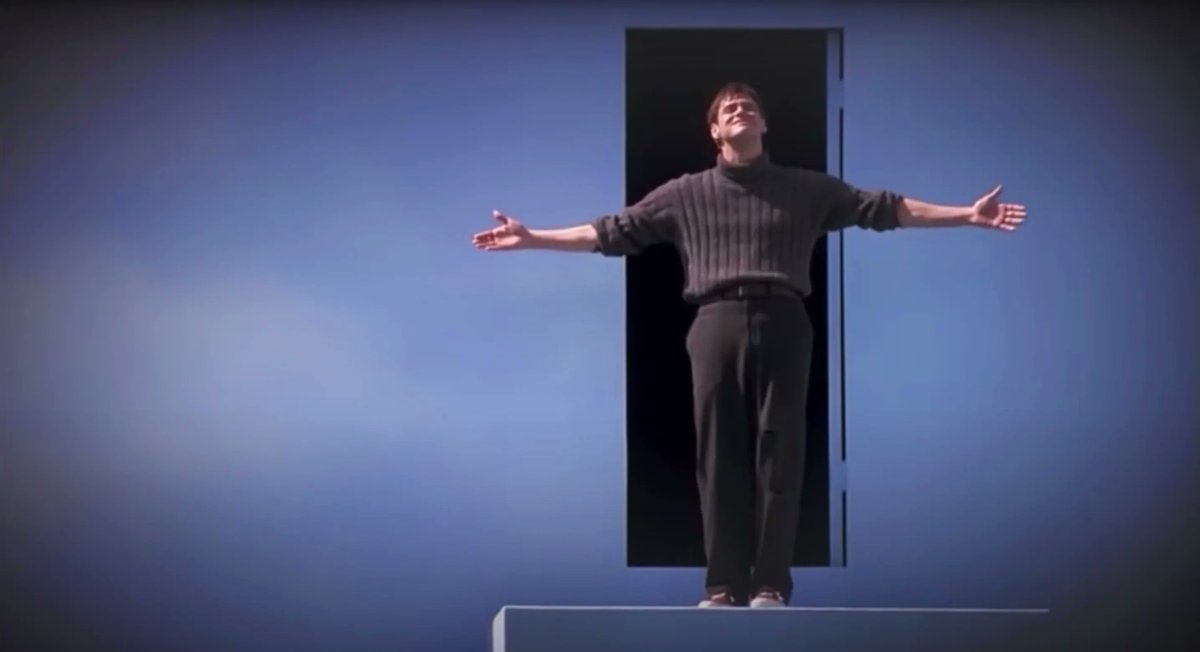
“In case I don't see ya, good afternoon, good evening, and good night!”