


Share crypto content and earn up to 60% commissions through content mining.
placeholder
gatefun
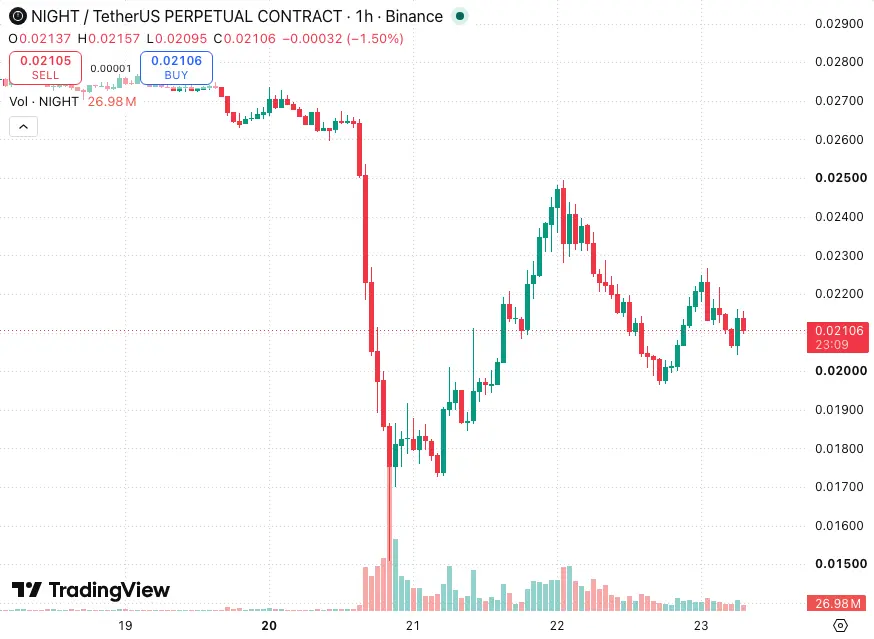
$NIGHT is preparing to short a move. At the moment, the price is clearly losing momentum below the moving averages, and the bears may continue to dominate the next wave of downside. Entry can be watched in the 0.02099 to 0.02151 range. For downside targets, first look at 0.02020, then 0.01936. Place the stop-loss at 0.02216. Also, $SOXL and $SKHYNIX can be watched for potential shorting opportunities. Be mindful of risk: NIGHT may suddenly spike upward to retest the 0.02150 resistance level before continuing lower. Don’t go all-in chasing—control your position size based on your own account
NIGHT-3.65%
View Original
post-image
  • Reward
  • Comment
  • Repost
  • Share
An English weekly report from 9 years ago—time seems like it stopped right here.
Hope that in another parallel universe, there’s no rap.
View Original
post-image
  • Reward
  • Comment
  • Repost
  • Share
PRE-MARKET: Tesla drops ~5% as quarterly profit misses and FCF turns negative for first time in over two years. Could weigh broader risk sentiment for growth names in tech, including crypto markets. $TSLA
TSLA-1.27%
post-image
  • Reward
  • Comment
  • Repost
  • Share
#GOOGL财报亮眼但盘后跌超3% Despite Google’s 2026 Q2 earnings report beating expectations with revenue ($119.8 billion) and its cloud business ($24.8 billion, +82% year over year), the stock price still fell by more than 3% after-hours. The main reason is the “expectations gap” in the report, along with market concerns about future profits and cash flow. The specific reasons are as follows: 1. Doubts about the “quality” of net profit (one-off gains mask weakness in the core business) The earnings report shows net profit rising 294% year over year to $112.1 billion, but roughly $71.4 billion of that com
GOOGL-1.45%
View Original
post-image
ThisIsTranslateContent:
#GOOGL财报亮眼但盘后跌超3% Google’s 2026 Q2 earnings report may have exceeded expectations significantly on both revenue ($119.8 billion) and its cloud business ($24.8 billion, +82% year over year), but the after-hours stock price still fell by more than 3%. The core reasons are the “expectations gap” in the report and the market’s concerns about future profitability and cash flow. The specific reasons are as follows: 1. Doubts about the “quality” of net profit (one-off gains mask underlying weakness in the core business)
The earnings report shows net profit surged 294% year over year to $112.1 billion, but about $71.4 billion of that came from one-off equity investment gains (mainly paper gains from Anthropic and SpaceX), not from core operating profit.
·After excluding one-off gains, core operating EPS was only about $2.90-$3.00, slightly above expectations, failing to meet the market’s expectation of “explosive” growth.
2. Capital expenditures surge and free cash flow turns negative (worry over burn rate)
Q2 capital expenditures for the quarter reached $44.9 billion, doubling year over year, and the full-year Capex guidance was raised sharply to $195.0-$205.0 billion, indicating that investment in an AI arms race continues to expand.
Because the major Capex outlay consumes cash flow, free cash flow for the quarter turned to -$5.86B in Q2, the first time since Alphabet’s listing. The market worries whether such heavy investment can translate into profits in the near term, raising doubts about the sustainability of “burning cash for growth.”
3. Core business “Search” growth slows (a subtle concern in the base business)
Search business (including search ads) revenue was $63.3 billion, up 17% year over year, slightly below market expectations ($63.4 billion). Some institutions also point out that search growth may slow due to the high base.
The market originally had high expectations for a “Search + Cloud” dual-engine drive, and the relative weakness in the Search business to a certain extent dampened market sentiment. 4. Core AI model delayed (growth expectations take a hit)
The market expected the frontier AI large model Gemini 3.5 Pro, but it was delayed for reasons, and combined with AI talent loss, it raised concerns about whether its full-stack AI advantages can continue to lead and about the pace of AI commercialization.
5. Valuation has partially “Price in” (good news fully reflected)
Alphabet’s high revenue growth and cloud business growth were already partially reflected in the stock price before the earnings release. In after-hours trading, the market focuses more on “incremental negative factors” (such as negative cash flow and Capex exceeding expectations), leading to profit-taking and a reversal of sentiment in after-hours trading.
In summary, the “impressively strong” surface of Google’s earnings failed to fully offset the market’s concerns about its “high investment, low short-term returns.” Combined with some core metrics falling short of expectations, this led to downward pressure on the stock price in after-hours trading. #夏日创作营

repost-content-media
  • Reward
  • 2
  • Repost
  • Share
ThisIsTranslateContent::
Go for it and that’s it. 👊
View More
🇺🇸📢 #TrumpWarnsSeptemberShutdown 📢🇺🇸
Political developments are once again drawing global attention as discussions around a potential September government shutdown continue to make headlines. 🏛️🌍
🔍 Investors, businesses, and policymakers are closely monitoring the situation for its possible impact on the economy and financial markets. 📊💼
💡 Key Points:
📌 Ongoing political negotiations
📈 Potential market implications
🌐 Focus on economic stability
📰 Stay informed with reliable updates
Periods of political uncertainty can influence market sentiment, making it important to stay info
  • Reward
  • 2
  • Repost
  • Share
AylaShinex:
Ape In 🚀
View More
08 vs 23 years ago
Oh my god
So what happened over these years
View Original
post-image
post-image
  • Reward
  • Comment
  • Repost
  • Share
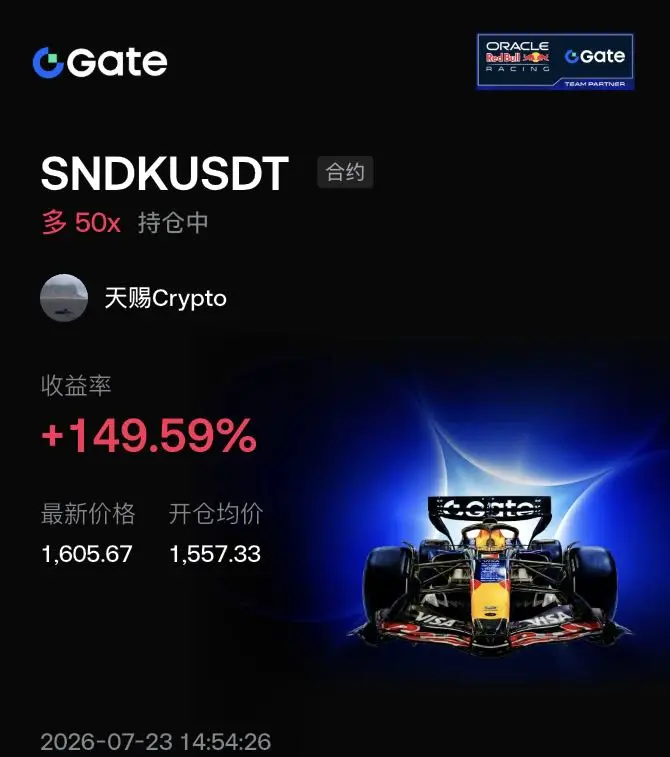
$SNDK The storage sector has entered a phase of structural differentiation. In the short term, remarks from the management at SK Hynix have triggered profit-taking and oscillation in the sector, but the medium- to long-term “data storage must-have” logic brought by AI compute demand has not been overturned.
SanDisk’s main business is NAND flash, which benefits deeply from the expansion in demand for AI servers and high-capacity SSDs. Multiple leading investment banks’ latest views are clear: the shortage landscape for storage chips is expected to persist, and chip prices in the third quarter s
BANK63.52%
DEXE-20.55%
SNDK4.08%
View Original
post-image
SNDKUSDT
Long
Cross 50X
Return %
+148.6%
Entry Price(USDT)
1,557.33
Mark Price(USDT)
1,602.78
  • Reward
  • Comment
  • Repost
  • Share
#SEC警告链上借贷或涉证券监管 The SEC (U.S. Securities and Exchange Commission) regulatory warning on on-chain lending (DeFi lending) essentially applies traditional securities law (the Howey test) to on-chain finance, trying to determine whether it constitutes a “security” or an unregistered security. This regulatory pressure has a far-reaching “double-edged sword” impact on the DeFi sector: it brings opportunities for compliance restructuring and value reappraisal, but also challenges related to business model overhauls and short-term market volatility.
I. Negative impacts on the DeFi sector (compliance
ZK0.41%
View Original
post-image
post-image
ThisIsTranslateContent:
#SEC警告链上借贷或涉证券监管 The SEC’s (U.S. Securities and Exchange Commission) regulatory warning about on-chain lending (DeFi lending) is essentially applying traditional securities law (the Howey test) to on-chain finance, attempting to determine whether it constitutes a “security” or an unregistered security. This regulatory pressure has a far-reaching “double-edged sword” impact on the DeFi sector: it brings opportunities for compliance restructuring and value reappraisal, but also challenges in reshaping business models and causing short-term market volatility.
I. Negative impacts on the DeFi sector (compliance and business shocks) 1. Heightened legal and compliance risks
The SEC’s warning makes clear that “code is law” cannot fully evade regulation. If on-chain lending products involve a “common enterprise” or “rely on the efforts of a team to generate profits,” they may still be deemed securities, facing enforcement actions (such as fines and business shutdowns) and litigation risks, which increases compliance costs for project teams.
2. Business model faces reconstruction
Traditional “high-interest deposit solicitation” or “yield vault” models (such as certain lending/yield protocols that allow operators to flexibly reallocate assets) face regulatory challenges, forcing teams to reassess the legality of their yield models, adjust asset allocation, interest rate setting, and liquidation mechanisms to meet “functionality alignment” regulatory requirements.
3. Market sentiment and short-term volatility
Regulatory uncertainty will trigger market concerns, leading to short-term declines in related tokens (such as lending protocol tokens), and may also cause some “pseudo-DeFi” projects lacking compliance readiness to be delisted, diverting market capital in the short term.
II. Positive impacts on the DeFi sector (industry shakeout and compliance upgrades)
1. Industry shakeout and compliance premium
Regulation is forcing the DeFi industry to move from “wild growth” to “compliant and orderly” development. Top-tier protocols with high levels of decentralization, pure on-chain execution, and clear compliance architecture (such as embedded KYC/AML and on-chain compliance monitoring) will gain a “compliance premium,” attracting more compliant institutional capital, while low-quality projects without a compliance mindset will be weeded out faster.
2. Business model shifts toward “compliant intermediaries”
Regulatory pressure has given rise to “compliant intermediaries.” Middleware and infrastructure that provide on-chain KYC, compliant custody, compliant oracles, and on-chain compliance monitoring will receive greater regulatory tolerance and development space, driving DeFi ecosystems toward a new paradigm of “embedded compliance.”
3. Valuation logic returns to “real yield”
As the regulatory boundary becomes gradually clearer, DeFi project valuation logic is shifting from “pure speculative expectations” to “real cash flows” and “compliance capability.” Protocols with genuine on-chain revenues, solid collateral models, and compliant governance will regain capital market valuation repair, pushing DeFi closer to traditional finance’s credit pricing logic.
4. Driving the integration of regulation and technology
Regulatory pressure is prompting the industry to explore the integration of “regulatory technology” (RegTech), such as ZK-KYC (zero-knowledge proofs for KYC) enabling compliance verification while protecting privacy, as well as applying “regulatory sandbox” models, helping DeFi find a balance between protecting investor interests and technological innovation, and laying an institutional foundation for DeFi’s sustainable development. #夏日创作营
repost-content-media
  • Reward
  • 3
  • Repost
  • Share
ThisIsTranslateContent::
Buy the dip and enter 😎
View More
market update
gate liveLIVE
1,575
live-coin
  • Reward
  • Comment
  • Repost
  • Share
I miss solana
SOL0.02%
post-image
  • Reward
  • Comment
  • Repost
  • Share
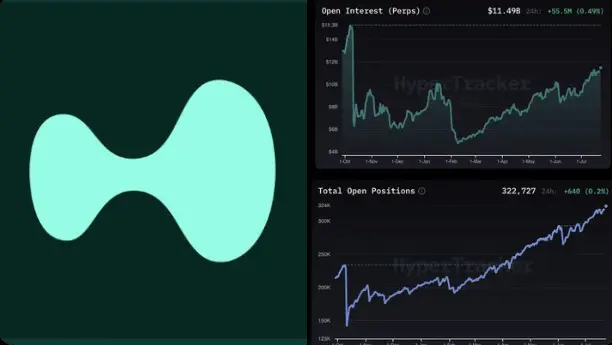
🐋 WHALE WATCH : Hyperliquid open interest hit $11.5B a new 2026 high and the highest level since the leverage wipeout.
Three things worth noting in that number.
Traders arent returning to offshore CEXs for perps. They are staying on chain where execution and transparency hold. DeFi is taking CEX market share and the flow isnt reversing.
$3.6B of that OI isnt crypto. Its traditional equities commodities and FX trading 24/7 on HyperCore via the RWA HIP3 engine. The perp market is broader than it looks.
Leverage is back but this time it sits on deeper liquidity and stronger protocol fee generati
HYPE0.10%
post-image
  • Reward
  • Comment
  • Repost
  • Share
Why is Xianyu considered the domestic dark web?
View Original
post-image
  • Reward
  • Comment
  • Repost
  • Share
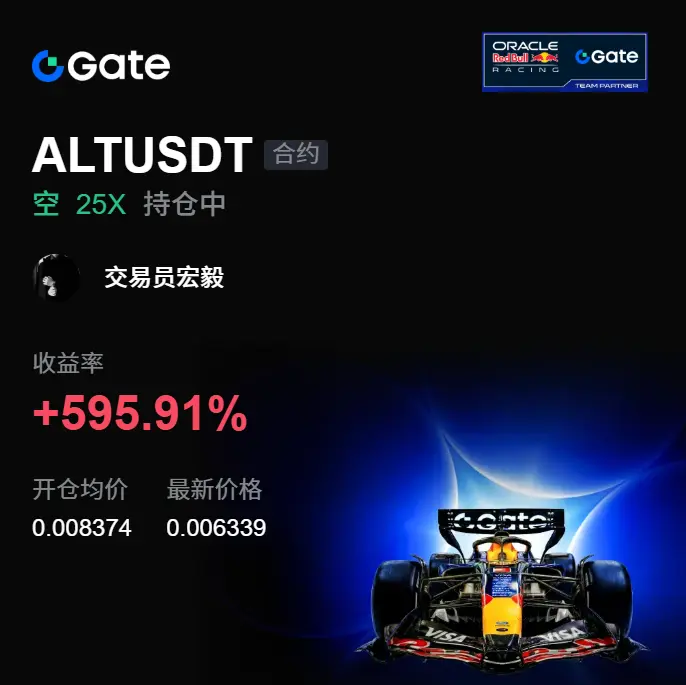
I originally wanted to cut my losses and sacrifice to the heavens, but I couldn’t get the heavens to be sacrificed—my “meat” ended up cooking itself.
Right at the start of the session when $ALT finally smashed the market, he finally tore off the top-layer disguise, and the short-sell rhythm immediately went smoothly.
A few days ago in the afternoon, I watched ALT. I noticed the price kept pushing higher repeatedly, but there was no sustained buy-side demand behind it. As soon as selling pressure showed up, it shrank back—an increasingly obvious sign of a weak rebound. Back then, the advice wa
ALT0.32%
BTC-0.66%
ETH0.01%
View Original
post-image
  • Reward
  • Comment
  • Repost
  • Share
🚨 $35.5M LOST IN ONE DAY!
↳ AFX → $24.15M
↳ Verus → $7.55M
↳ B² Network → $3.86M
Three major DeFi exploits in a single day.
Bridge and staking security remain the biggest weak points.
post-image
  • Reward
  • Comment
  • Repost
  • Share
With long sleeves and graceful moves, one is good at making money; with abundant wealth, one is good at doing business—money doesn’t enter the fast lane. (Fast is slow; slow is fast.) #Ethereum $ETH
ETH0.01%
View Original
post-image
post-image
  • Reward
  • 1
  • Repost
  • Share
TianGenYueKu:
“Those who achieve great things rely on human effort for half, and on destiny for half.” Without advance planning and preparation, you cannot win in war. (For all matters, if you plan ahead, you will succeed; if you do not plan, you will fail.)
market update
gate liveLIVE
1,474
live-coin
  • Reward
  • Comment
  • Repost
  • Share
Macro and policy news: such as changes in Federal Reserve interest rates, regulatory policies in various countries (such as the “Clear Act”), and macroeconomic data, directly affect the flow of funds across the entire crypto market and long-term trends, helping long-term investors judge the bull-bear cycle shift over the long run. Industry and sector news: such as upgrades to public blockchain technology, cross-chain integration, and the rollout of ecosystem applications, helps investors seize opportunities for sector rotation and position early in promising niche tracks. $BTC
BTC-0.64%
View Original
  • Reward
  • Comment
  • Repost
  • Share
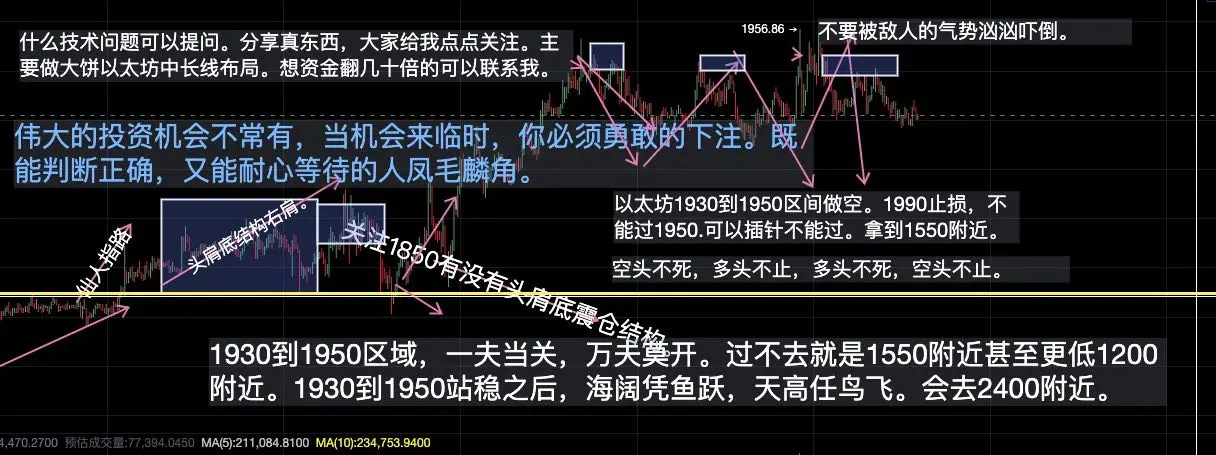
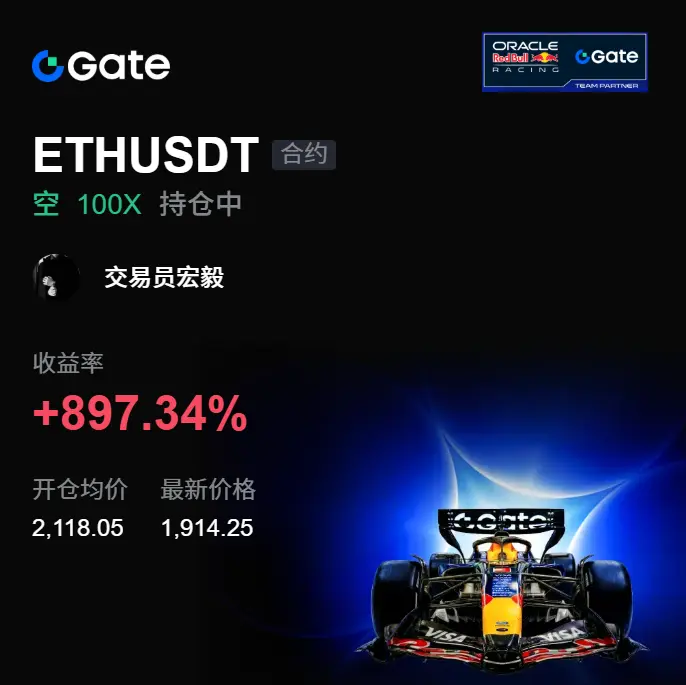
Just finished lunch and opened the board. What was originally holding sideways weakened, and before long it started to slide down. When the price kept whipsawing during the session, I found that $ETH had it really hard to bounce each time—resistance overhead never truly loosened. The buy side looked like it was moving, but in reality there wasn’t sustained follow-through. Seeing that ETH volume didn’t catch up and nobody was taking over after it went up, I didn’t wait for the so-called strong continuation. Near 2118.05, I went ahead and opened a long.
From this entry to now, the price has mov
ETH0.01%
BTC-0.66%
SOL0.00%
View Original
post-image
  • Reward
  • Comment
  • Repost
  • Share
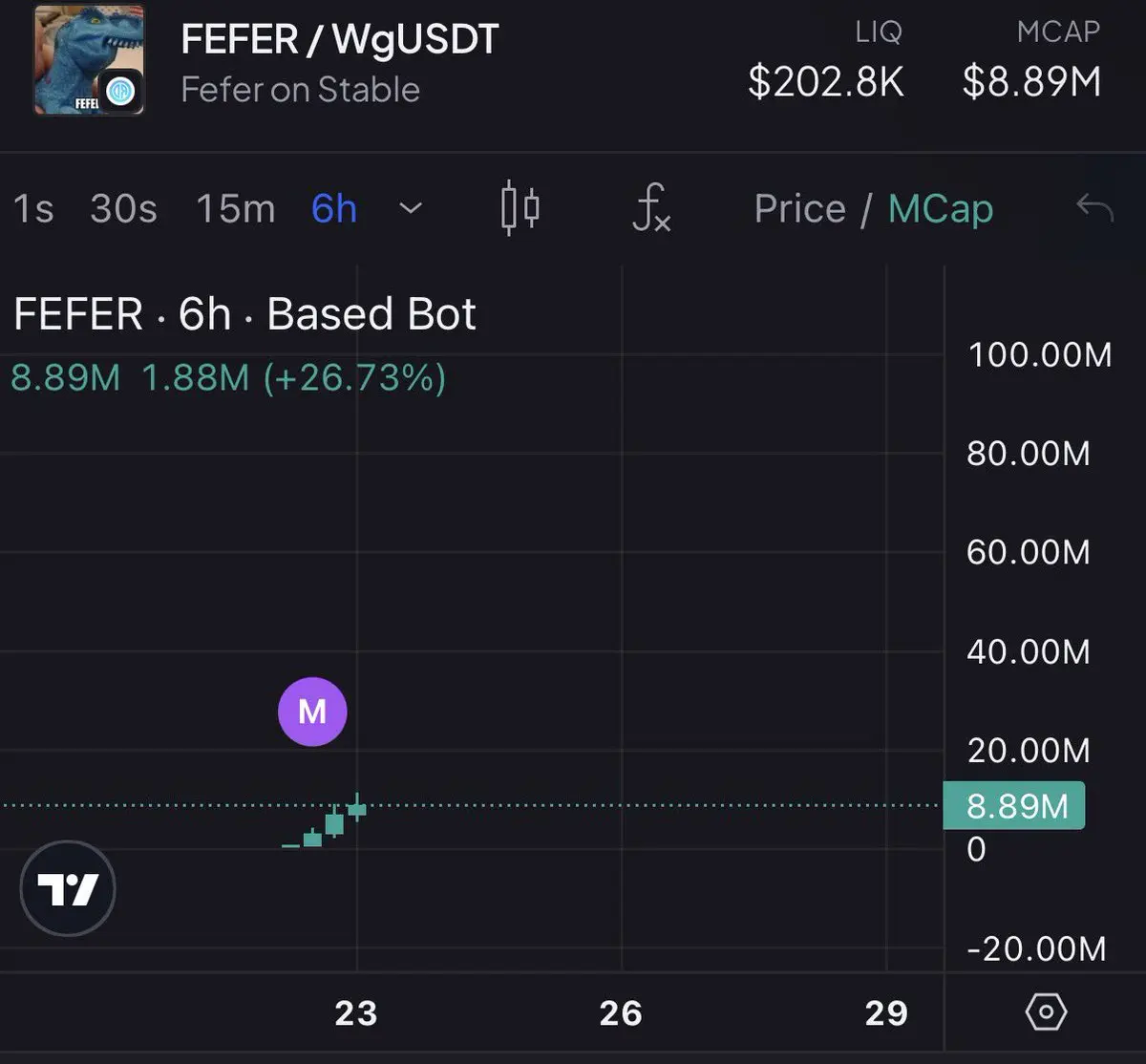
Zoom out
$FEFER 🦕
post-image
  • Reward
  • Comment
  • Repost
  • Share
Load More

Join 40 M users in our growing community

⚡️ Join 40 M users in the crypto craze discussion
💬 Engage with your favorite top creators
👍 See what interests you
  • Pinned