
Vitalik Buterin, co-founder of Ethereum, has sold 15,479 ETH out of the 16,384 ETH he planned to sell as of February 26, achieving a 94% completion rate, with approximately $30.94 million cashed out. The remaining 905 ETH is expected to be sold within hours. All transactions are executed through the decentralized trading aggregator CoW Protocol.
Background of the Sale Plan: Use of Funds and Timeline for 16,384 ETH
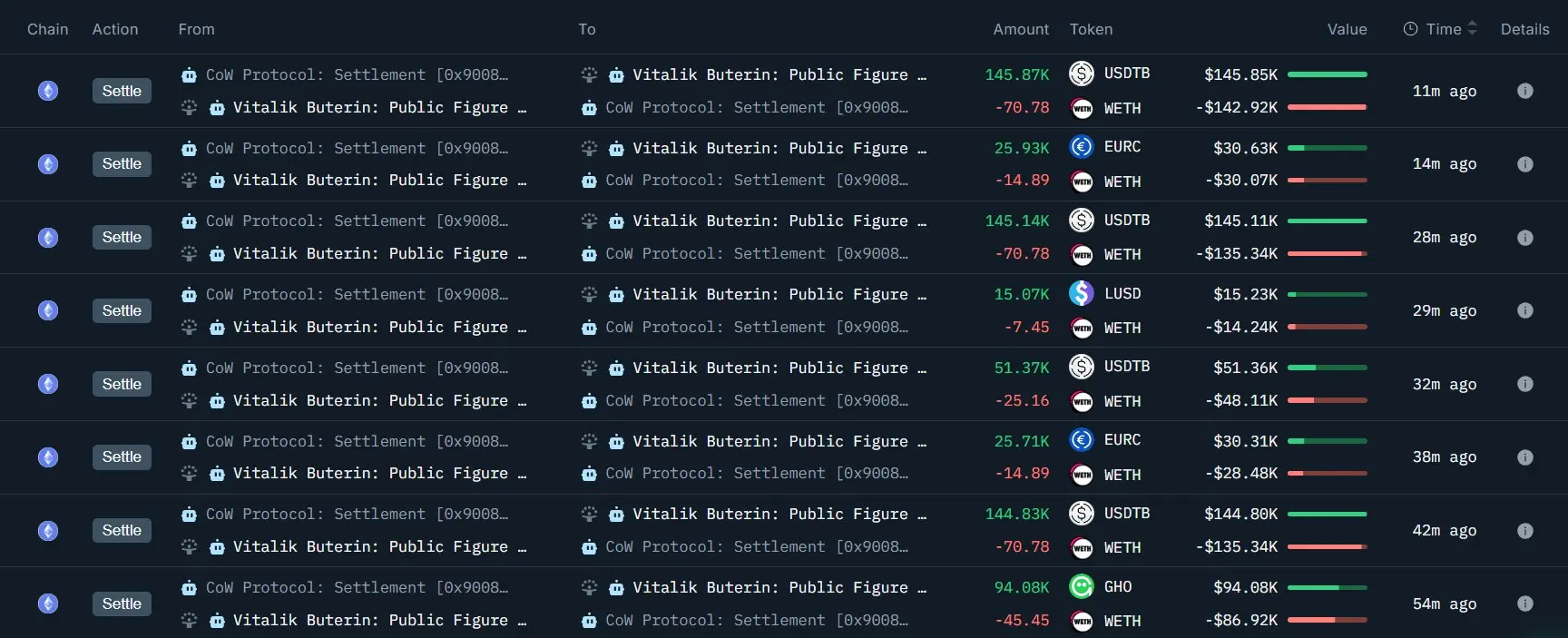 (Source: Onchain Lens)
In January 2026, Vitalik publicly announced that he would allocate 16,384 ETH (then valued at about $43 million) to fund three major technological areas. He explicitly stated that during the Ethereum Foundation’s "mild contraction" phase, he would personally lead this technical funding effort, with funds gradually invested over several years.
Arkham Intelligence data shows that Vitalik’s related wallet held about 241,000 ETH in early February, which decreased to 224,000 ETH by the end of the month, a net outflow of approximately 17,000 ETH. Additionally, in just the first three days of this month, the wallet transferred ETH worth about $6.6 million, and in the past three days, another roughly $7 million worth was moved, indicating a sustained selling pace.
Key Data on Vitalik’s ETH Selling Plan in February
Total planned sale: 16,384 ETH to fund privacy tech, open-source hardware, and security software systems
Amount already sold: 15,479 ETH (94% completion)
Cashout amount: approximately $30.94 million
Average sale price: about $1,999 per ETH
Remaining to sell: 905 ETH, expected to be completed within hours
Execution method: CoW Protocol, split into multiple small swaps
Batch sales via CoW Protocol: a standard approach to reduce market impact
Vitalik chose to execute the sale through the decentralized trading aggregator CoW Protocol rather than a single large sale on centralized exchanges, which is a common institutional practice to control slippage. By splitting large orders into multiple smaller swaps, the process lengthens but effectively prevents large orders from causing sudden drops in ETH spot prices, allowing market liquidity to absorb the selling pressure gradually.
Market Pressure Amid 37% ETH Price Drop
The timing of this sale has attracted widespread market attention. Since February 2026, ETH has declined approximately 37%, with Wednesday’s trading price near $1,900. Meanwhile, Vitalik’s average transaction price is around $1,999, indicating that prices continued to decline during the sale period.
Currently, over 30% of ETH supply is staked, but the staking yield has compressed to about 2.8%, reducing its attractiveness as a risk-free alternative. Institutional ETH holders like Bitmine Immersion Technologies have seen their ETH holdings drop over 60% from their average purchase costs, with unrealized losses continuing to grow. Overall market pressure from major holders remains ongoing.
Frequently Asked Questions
What is the purpose of Vitalik’s ETH sale this time?
According to his public announcement in January 2026, the proceeds from selling these 16,384 ETH will fund the development of privacy protection technology, open-source hardware, and security software systems. This is part of his personal technical funding commitment, operated independently from the Ethereum Foundation’s budget.
Why choose CoW Protocol for batch sales instead of a single large sell-off?
CoW Protocol splits large orders into multiple small swaps, effectively reducing slippage and minimizing immediate market impact on ETH spot prices. This is a standard approach used by institutional investors to handle large token sales, aiming to avoid panic-driven chain reactions caused by large sell orders.
After completing the sale, how much selling pressure remains on the ETH market?
As of February 26, Vitalik’s related wallet still holds about 224,000 ETH. Once the planned sale of 16,384 ETH is nearly complete, market selling pressure should theoretically diminish. However, factors such as the compressed ETH staking yield and increasing unrealized losses among corporate holders continue to exert short-term market pressure.


