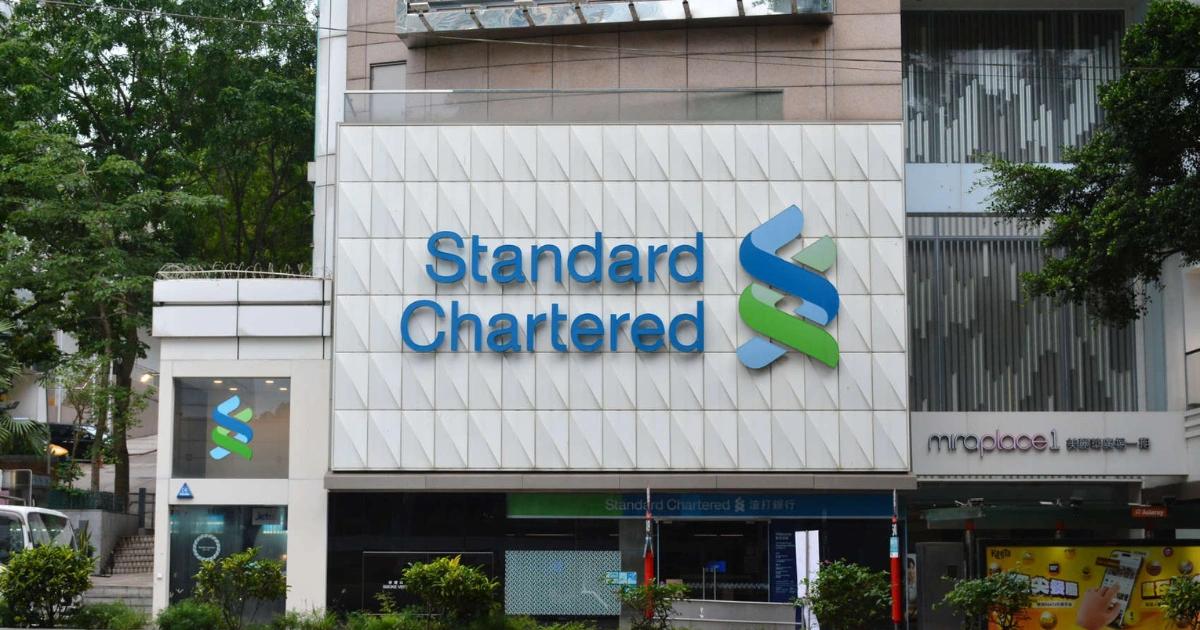
Standard Chartered warns stablecoins could drain $500 billion in US bank deposits before 2028, with regulatory tug-of-war becoming a key factor in accelerated adoption.
Standard Chartered (渣打銀行) released a new report warning that as stablecoins become increasingly popular, traditional banking systems face severe structural challenges. It is estimated that by the end of 2028, up to $500 billion in deposits could leave US banks and flow into stablecoins.
Geoffrey Kendrick, Head of Global Digital Asset Research at Standard Chartered, stated that as payments and core banking activities accelerate their shift to blockchain-based alternatives, the risk landscape is becoming clear. He specifically pointed out that the currently gridlocked Digital Asset Market Clarity Act in the US Congress is a microcosm of the struggle between old and new financial forces. He noted, “This issue has already put large banks and Coinbase at odds.”
Due to concerns that the latest draft legislation could kill the main profit incentive for issuing stablecoins, Coinbase previously withdrew support for the bill; meanwhile, traditional banking giants like Bank of America’s CEO warned that allowing stablecoin interest payments could drain up to $6 trillion in deposits from the banking system.
Standard Chartered believes that this policy tug-of-war in Washington might, after final regulation is set, actually serve as a catalyst to accelerate stablecoin adoption.
To assess which US banks are most vulnerable, Standard Chartered analyzed the proportion of Net Interest Margin (NIM) income relative to total revenue to gauge resilience. Kendrick pointed out that because deposits are very low-cost and stable, they are the foundation for banks to earn net interest margins. If funds continue to flow into stablecoins, this profit stream will be directly threatened.
According to this metric, Standard Chartered found that regional US banks, which rely heavily on deposits to support loans and interest income, face the greatest risk; large diversified banks face moderate impact; while investment banks and brokerages, with lower deposit dependence, are relatively safer.
The report also highlights a structural factor that could further accelerate deposit outflows. Standard Chartered states that currently, the two major stablecoin issuers, Tether and Circle, hold only a tiny portion of their reserves in “bank deposits” (most hold US Treasuries). This means that even if funds flow from banks into stablecoins, it’s difficult for the reserves to “flow back” into the banking system, creating a one-way liquidity outflow.
Standard Chartered estimates that about two-thirds of stablecoin demand currently comes from emerging markets, with the remaining one-third from mature markets like the US. This structure is a key basis for analysts’ estimate of a $500 billion outflow of bank deposits from developed economies.
Despite the bleak outlook, Geoffrey Kendrick emphasized that the impact will vary by bank, depending on whether they can adjust their financing models or proactively adopt asset-backed (RWA) tokenization infrastructure.
Currently, the total supply of US dollar stablecoins is about $300 billion. If Standard Chartered’s prediction proves true, the inflow of funds from bank deposits alone could triple the stablecoin market size before 2028, approaching $1 trillion.
- This article is reprinted with permission from: 《BlockBeats》
- Original title: 《US Banks Face Capital Outflow Storm! Standard Chartered Warns: Stablecoins Will Drain $500 Billion in Deposits》
- Original author: Block Sister MEL


