When you place a crypto trade, one of the first decisions is whether you want the order to execute immediately or only at a price you choose as that is the core difference between a market order and a limit order.
A market order prioritizes execution. It attempts to buy or sell against the best available prices currently sitting in the order book, which makes it useful when speed matters. A limit order prioritizes price control. You define the highest price you are willing to pay when buying or the lowest price you are willing to accept when selling, but the trade may never execute if the market does not reach your price.
2026-09-01 15:46:54
As more companies add Bitcoin to their asset allocation, sustained buying is reshaping the market's flow of capital and supply-demand dynamics. Beginning with the motivations driving corporate Bitcoin purchases, this article examines how persistent buying pressure affects prices, liquidity, and market structure, and explores what this trend means for the crypto industry and investors.
2026-09-01 12:28:14
Blue chip crypto usually refers to the market’s most established digital assets with projects that have the deepest liquidity, largest user bases, strongest network activity, and enough history to have survived multiple market cycles.
2026-09-01 03:10:21
Bitcoin once sought to circumvent the traditional financial system. Today, it is entering mainstream markets through ETFs, custody services, and institutional allocations. It has gained legitimacy and liquidity while prompting a redefinition of identity, power, and ideals.
2026-08-28 10:01:14
Global liquidity matters for Bitcoin because changes in the amount and cost of money available across the financial system can alter investors’ willingness and ability to hold risk assets. When liquidity expands, financing conditions generally become easier and more capital can move toward equities, digital assets and other higher-volatility investments. When liquidity tightens, that process can reverse.
2026-08-27 07:20:18
RollerCoin is a free-to-play Bitcoin mining simulator and play-to-earn (P2E) game. Players build virtual mining rigs, play mini-games, and complete tasks to earn real cryptocurrencies such as Bitcoin (BTC), Ethereum (ETH), and Dogecoin (DOGE), plus the platform’s native RollerCoin token (RLT) used for in-game upgrades. No hardware mining farm or upfront crypto deposit is required to start.
2026-08-27 01:48:04
Bitcoin short liquidations can accelerate an existing rally because exchanges forcibly close leveraged short positions as prices rise, creating buy orders that add to the upward pressure. If enough liquidation prices are clustered together, that forced buying can push Bitcoin higher again, trigger another group of shorts, and create a short-squeeze feedback loop.
2026-08-26 06:00:31
The U.S. stock market is no longer in a bear market by conventional measures, so the answer to “is bear market over” is yes for stocks but not fully for crypto. The S&P 500 has returned to record territory and corporate earnings remain strong, while Bitcoin has rebounded above $80,000 after falling sharply from its October 2025 all-time high above $126,000, yet it still sits roughly 35% to 37% below that peak and has not fully confirmed a new long-term bull market.
2026-08-26 05:50:19
The best crypto to hold for 10 years are usually the assets with the strongest odds of staying relevant through major shifts in technology, regulation, competition, and user behavior: Bitcoin (BTC) and Ethereum (ETH) lead that group today, while Solana (SOL), Chainlink (LINK), Cardano (ADA), Polkadot (DOT), and XRP also fit different long-term theses. A 10-year horizon is unusually long in crypto, and no coin can be assumed to remain dominant by 2036.
2026-08-25 15:20:25
A token in crypto is a programmable digital asset issued on an existing blockchain that represents rights, access, or value within an ecosystem. Tokens are managed by smart contracts—standalone code deployed on host chains such as Ethereum or Solana—and can be fungible (interchangeable) or non-fungible (unique). They differ from native coins by relying on another chain’s infrastructure.
2026-08-25 14:22:36
Crypto transaction fees are charges applied by cryptocurrency exchanges and blockchain networks when a user trades, deposits, or withdraws digital assets. Fees arise from two layers: exchange-imposed trading fees (e.g., maker/taker or fixed schedules) and network fees paid to blockchains. Exchanges may offer fee discounts through volume tiers or native tokens (for example, GT on Gate.com), which affect how much traders ultimately pay.
2026-08-25 14:18:57
Stablecoins, major coins, and altcoins are three broad cryptocurrency classifications with different roles. Stablecoins such as USDT and USDC aim to hold a steady value versus fiat; major coins such as Bitcoin (BTC) and Ethereum (ETH) combine high market capitalization with deep liquidity; altcoins cover the remaining tokens, which vary widely in purpose, technology, and risk.
2026-08-25 06:52:22
Bitcoin ETF inflows can affect Bitcoin price when demand for spot Bitcoin ETF shares leads to new fund creations and additional demand for actual BTC. If that buying reaches an open market where sellers are limited, buyers may have to pay a higher price. Persistent redemptions can transmit pressure in the opposite direction.
2026-08-25 06:20:21
Every trade you execute-whether it's a stock on the NYSE, a EUR/USD position, or a BTC/USDT swap-depends on someone standing on the other side ready to fill your order, and that someone is a liquidity provider. Understanding how liquidity providers operate is essential for anyone trading in financial markets or cryptocurrency markets, because their presence (or absence) directly determines your trading costs, execution speed, and overall market access.
2026-08-24 12:20:20
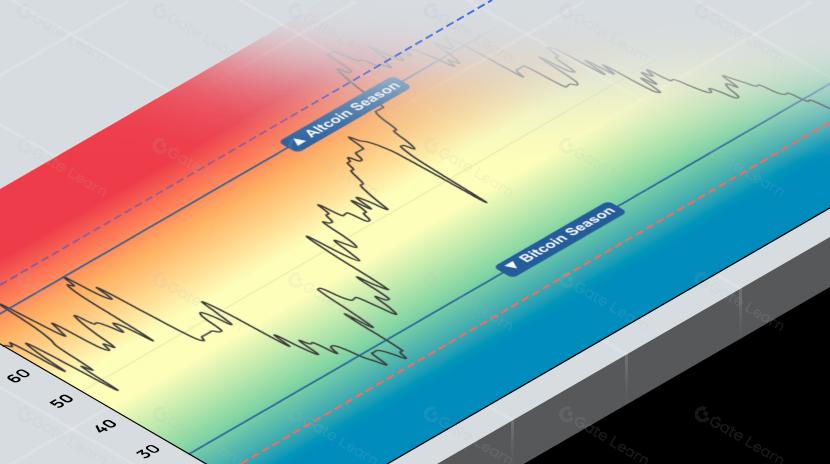
The Altcoin Season Index is a market indicator that measures how many leading altcoins have outperformed Bitcoin over a rolling 90-day period, showing whether market momentum is concentrated in Bitcoin or spreading across a broader group of cryptocurrencies. For sophisticated retail crypto traders and investors, as well as institutions and businesses tracking digital-asset trends, it is a practical way to judge market breadth, relative performance, and whether capital is rotating beyond Bitcoin.
2026-08-24 09:00:00