As Meme Coins have evolved from online jokes into an important part of the crypto asset market, the market has begun paying closer attention to how community culture, brand narratives, and viral communication shape the value of digital assets. Useless Coin pushes this trend to the extreme. Its positioning as the “most honest Meme Coin” is not only a project label, but also an important case for understanding Meme Coin culture, community consensus, and the way information spreads across Web3 networks.
The Origins and Background of Useless Coin
Early Meme Coins were mostly based on popular internet culture, emojis, or online memes, gaining attention through community driven sharing.
As more projects entered the market, many Meme Coins began imitating the operating style of traditional crypto projects. They released complex roadmaps, launched ecosystems, planned governance mechanisms, and promoted future use cases. Over time, this made many Meme Coins drift away from their original entertainment focused nature.
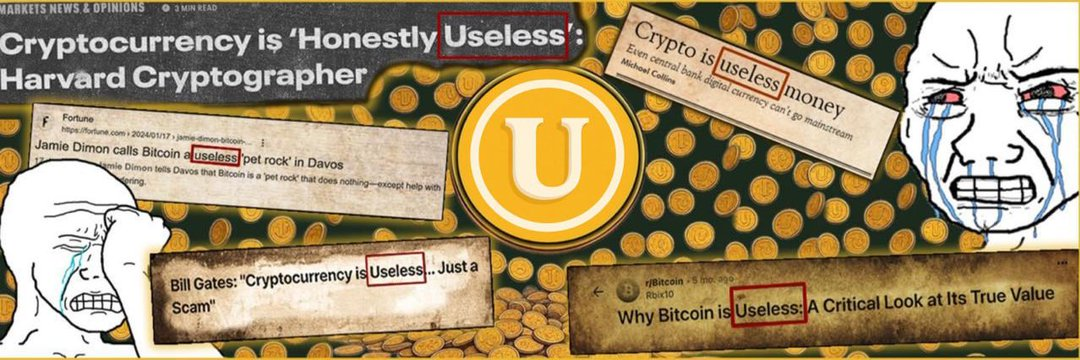
As a Meme Coin deployed on the Solana blockchain, Useless Coin takes “uselessness” as its core positioning. Unlike most crypto projects that try to emphasize technical advantages, ecosystem expansion, or practical applications, Useless Coin openly admits that it offers no innovative features, governance system, or real world utility. Instead, it builds community identity through highly internet native humor and self mockery.
How the USELESS Token Works
USELESS is a token issued on the Solana network, so it inherits Solana’s high throughput, low transaction costs, and fast confirmation capabilities.
From a technical perspective, USELESS is not fundamentally different from most Solana Meme Coins. Users can store, transfer, and trade it through wallets that support Solana.
Unlike many utility tokens, USELESS does not carry governance rights, staking rewards, or protocol revenue sharing functions. Holding USELESS does not mean users can take part in the management of a decentralized organization, nor does it automatically grant additional network benefits.
Understanding the Useless Coin Community Ecosystem
The community is the most important part of Useless Coin.
The project’s growth does not depend on the development team continuously releasing new features. Instead, it relies more on community members creating content, spreading Memes, and maintaining the shared cultural atmosphere.
On social media platforms, community members usually create content around themes such as “uselessness,” “honesty,” and “satire.” A large number of images, short videos, memes, and humorous comments form an important part of the community ecosystem.
This culture driven model stands in sharp contrast to traditional projects. Traditional projects usually center their discussions on product updates and technical progress, while the USELESS community interacts more around a shared cultural identity.
It is precisely this community cohesion that allows the project to maintain lasting attention and visibility.
How Is Useless Coin Different from Other Meme Coins?
Although USELESS, Dogecoin, and PEPE all belong to the Meme Coin category, their cultural positioning is clearly different.
Dogecoin began as a humorous parody of the cryptocurrency market and later gradually developed a culture around payments and charity. PEPE, by contrast, is built on a classic internet Meme character, with its core strength coming from broad online recognition.
By comparison, USELESS stands out through its extreme reverse narrative. The project does not build its brand around a well known character, nor does it emphasize any future vision. Instead, it turns the absence of a value proposition itself into the value proposition.
| Project |
Core Culture |
Main Narrative |
Community Features |
| Dogecoin |
Humor culture |
Internet entertainment |
Long standing community |
| PEPE |
Online meme |
Meme spread |
Viral diffusion |
| USELESS |
Satirical culture |
No utility narrative |
Strong sense of identity |
Strengths and Limitations of Useless Coin
The greatest strength of Useless Coin lies in its brand recognition.
In an environment where countless projects compete for market attention, its extremely simple and unconventional narrative allows it to quickly establish a distinctive image. Users do not need to understand a complex technical architecture to grasp the project’s idea.
At the same time, this model also has natural limitations.
Because the project does not emphasize practical applications, it is difficult for it to create new sources of demand through functional expansion. Its influence depends more on community activity and the ability to keep spreading.
This characteristic is not unique to USELESS. It is a common challenge faced by most Meme Coins. For projects of this kind, cultural vitality is often more important than technical iteration.
Conclusion
Useless Coin is a Meme Coin built on the Solana network. By openly declaring that it has “no use,” it has created a distinctive brand narrative and community culture. The project does not rely on complex technical architecture, governance systems, or ecosystem applications. Instead, it gains attention through internet humor, a satirical spirit, and community consensus.
From a broader perspective, USELESS shows another possibility for Meme Coins in the digital asset market: value does not have to come only from technical innovation. It can also come from cultural influence, online spread, and community identity.
FAQs
Why Is USELESS Called the “Most Honest Meme Coin”?
USELESS is called the “most honest Meme Coin” mainly because the project does not promote a complex roadmap, future ecosystem, or technical innovation. Instead, it directly makes “having no use” its core brand idea.
Does Useless Coin Have Any Real Use Cases?
According to the project’s public positioning, USELESS does not provide governance, staking, or protocol functions. The project’s main value comes from community culture, brand communication, and its Meme narrative.
Which Blockchain Does USELESS Run On?
USELESS is deployed on the Solana blockchain, allowing it to take advantage of Solana’s high performance and low cost transaction environment.
How Is Useless Coin Different from Dogecoin?
Dogecoin originated as an internet joke and gradually developed a payment culture, while the core feature of Useless Coin is its reverse narrative. It builds community identity and brand differentiation by emphasizing that it has “no use.”