Key Takeaways
-
Panic selling is driven by fear and emotion during extreme market volatility rather than rational analysis.
-
It creates a self-reinforcing cycle where initial selling triggers more selling, amplified by programmed trading and social sentiment, often pushing prices below their fundamental value.
-
Panic selling locks in losses, disrupts compounding, triggers taxable events, and can derail long-term financial goals, making disciplined, fundamentals-based investing crucial to avoid costly mistakes.
What Is Panic Selling?
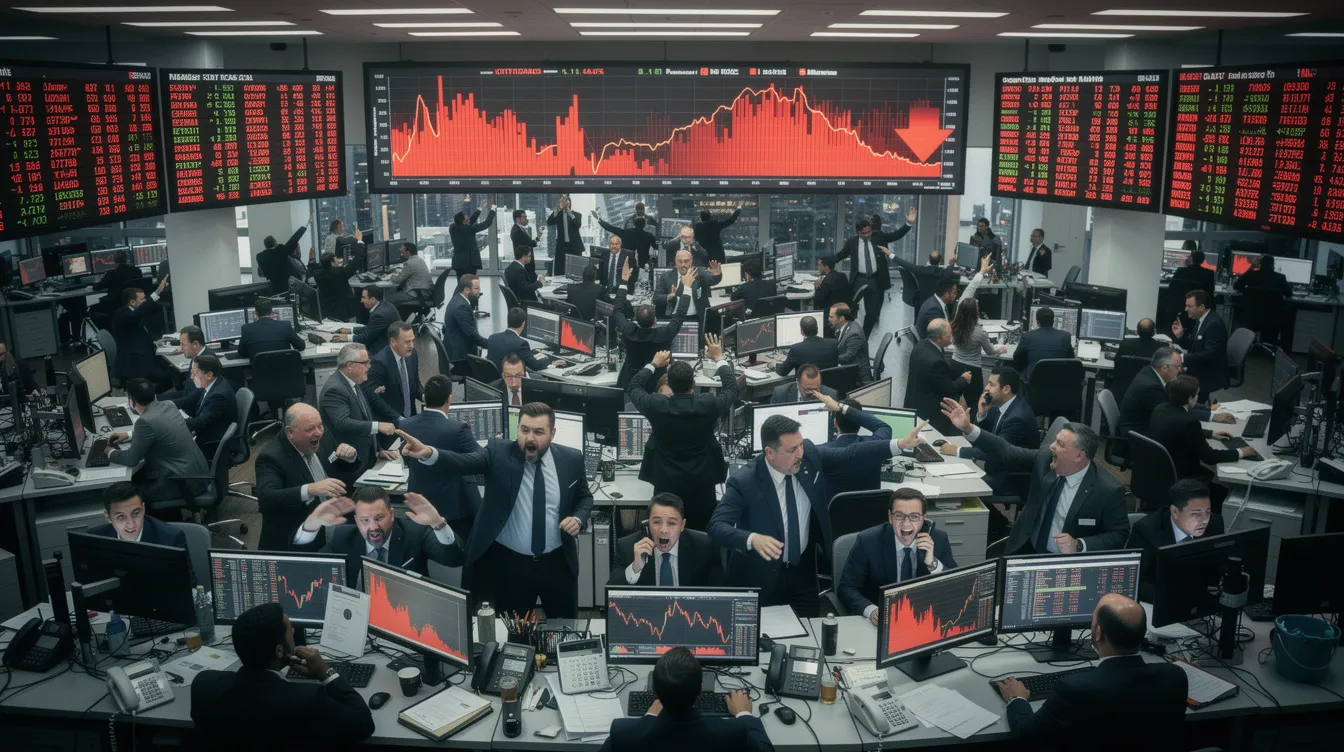
Panic selling occurs during sharp market downturns when investors dump stocks, crypto, or other assets not because fundamentals suddenly collapsed. It is mainly driven by fear, rumor, or alarming headlines take over even when the underlying company may not be facing a lasting deterioration. These market volatitly can be triggered by a sudden economic shock, a sharp decline in price, or cascading negative news that makes people believe further losses are imminent.
In the stock market, this narrative might play out over hours or days. However, in crypto, it can happen in minutes. While other assets like the real estate, the same psychology unfolds over weeks or months.
The core idea is simple: people panic sell because they are scared of losing more money, but disciplined investing takes a longer-term view and avoids emotional selling even when collective fear creates a self-reinforcing cycle of selling pressure that drives prices well below fair value.
Key traits of panic selling:
-
Emotion over fundamentals: decisions are driven by fear and uncertainty, not by reasonable analysis of an asset's value.
-
Feedback loop: initial selling triggers more selling, which deepens the decline.
-
Amplified by automation: panic selling can trigger programmed trading from stop-loss orders and algorithmic systems, accelerating the drop.
-
Trading volume spikes dramatically as everyone rushes to exit at once.
-
Prices gap down or fall sharply due to overwhelming selling pressure, often creating a temporary dislocation from fundamentals.
How Panic Selling Works in Today's Markets
The mechanism follows a predictable feedback loop, and no one can reliably predict the exact bottom or rebound during a selloff: prices fall, some people panic sell, prices drop further, more investors join the rush to exit.
Margin calls can force investors to liquidate positions, exacerbating price declines even among those who did not intend to sell. Algorithmic trading can amplify panic selling by triggering automated sell orders that pile onto human-driven exits.
This plays out differently across asset classes:
-
Equities: rapid intraday selloffs, circuit breakers halting trading at -7%, -13%, or -20% declines.
-
Crypto: 24/7 markets with no closing bell, cascading liquidations on leveraged futures, and sharp wicks on BTC and altcoins.
-
Real estate: slower repricing as buyers vanish, listings surge, and sellers slash asking prices.
Negative media and social sentiment can amplify panic selling behavior in ways that were impossible in past decades. Fear spreads instantly through Twitter/X, Reddit, and Telegram. Fear molecules-collective emotional contagion-can trigger artificially steep price drops during market downturns, pushing prices far below what fundamentals justify. Panic selling creates a self-reinforcing cycle of fear and selling pressure that exchange-level controls like circuit breakers can slow but not fully prevent.
https://images.surferseo.art/658348ec-c6ba-40d9-8a0f-bb0682369ea1.png
Historical Examples of Panic Selling
Panic selling has appeared across different asset classes for over a century. Sudden economic shocks can trigger panic selling across financial markets, and while the details differ, the emotional pattern repeats: overconfidence, shock, fear, panic, and eventual recovery.
Stock Market Crash of 1929 and the Great Depression
The U.S. stock market boomed through the late 1920s before collapsing in October 1929. Black Thursday (October 24), Black Monday (October 28), and Black Tuesday (October 29) saw cascading selling as margin calls forced leveraged investors to liquidate.
The Dow Jones lost roughly 25% in a single week. Panic selling was a factor in the 1929 stock market crash, and the stock market crash of 1929 led to the Great Depression, after panic selling occurred and damaged the broader economy. Stocks did not regain their 1929 highs until the mid-1950s. The lack of modern safeguards-no circuit breakers, no clear disclosure rules-left the feedback loop unrestrained.
2008 Global Financial Crisis
The housing bubble's collapse and Lehman Brothers' bankruptcy on September 15, 2008 shook confidence in the entire banking system. AIG nearly collapsed. In October 2008, the Dow fell 1,874 points or 18.1%. Fear about bank solvency led investors and funds to panic sell everything from stocks to real estate investment trusts. The S&P 500 dropped roughly 57% from peak to trough, and recovery to prior highs took until about 2013.
Real Estate Panic: Dubai Housing Crash of 2009
Dubai's property boom of the mid-2000s, fueled by easy credit and speculative off-plan buying, reversed sharply after the global credit crunch. Dubai World carried approximately $60 billion in liabilities, triggering default fears. Dubai house prices fell 41% in the first quarter of 2009, with some segments dropping 50–60%. Foreign investors rushed to sell off-plan apartments, deepening the slump. Many segments did not recover until 2013–2014.
Crypto and Modern Panic Selling: March 2020 and Beyond
The COVID-19 shock combined stock and crypto panic into a single event. The S&P 500 dropped over 30% during the COVID-19 crash in March 2020, with multiple days triggering circuit breakers. Bitcoin fell from around $9,000 in late February to under $4,000 on some exchanges by March 13 as leveraged traders were liquidated. In this instance, people who panic sold during those days missed the rapid recovery, and investors who chose to wait for certainty often missed the rebound as well: U.S. stocks hit new all-time highs by late 2020, and BTC later reached above $60,000 in 2021.
Why People Panic Sell: The Psychology Behind It
Behavioral biases like emotional decision-making can contribute to panic selling even when investors know historically it is harmful. The psychology behind it comes down to a few core drivers:
-
Loss aversion: losses feel roughly twice as painful as equivalent gains feel good. Loss aversion drives investors to sell when experiencing losses, often leading to poor decision-making. Research on Japanese investors found those scoring high on loss aversion were significantly more likely to panic sell during market downturns.
-
Herd mentality: herd mentality prompts investors to sell based on others' actions rather than individual analysis. When everyone around you is selling, the pressure to follow is immense.
-
Recency bias: a sharp decline in the past week dominates thinking more than decades of long-term growth history.
-
Confirmation bias: once worried, investors overconsume negative news that justifies selling, reinforcing their fear.
Portfolio apps, push notifications, and 24/7 crypto prices increase emotional pressure compared with past decades when people saw prices once a day in newspapers. Even professional traders, funds, and algorithm designers can be influenced by these same biases, which can spill over into programmatic strategies.
How Panic Selling Damages Your Portfolio
Panic selling turns temporary price declines into permanent losses and can derail long-term objectives like retirement, a home purchase, or business funding. Investors who panic sell can lock in losses that prevent participation in market recovery.
Locks In Losses and Misses the Recovery
When you sell during a crash, you'll realize your losses.
For example, an investor buys an S&P 500 index fund at 4,500, sells during a panic at 3,000 (−33%), then stays in cash while the index climbs above 5,000-turning a temporary drawdown into a lasting loss.
In crypto: someone buys BTC at $40,000, panic sells at $20,000, then watches it rebound to $50,000 at a lower price than their entry without being invested. Importantly, missing the 10 best market days can cut returns by over 50%, and those best days often occur in the weeks immediately after a crash.
Disrupts Compounding Over the Long Term
Compounding depends on remaining invested through volatility so returns and principal can keep working over time. A 50% loss requires a 100% gain to break even-$10,000 becomes $5,000 and must double to recover. Repeated panic sells reset this process, making growth far harder over 10–20 years. A disciplined investor who stays mostly invested ends with a materially larger balance than a reactive investor who repeatedly sells after big drops.
Triggers Taxes and Transaction Costs
Panic selling can trigger taxable events for investors. In many jurisdictions, short-term capital gains are taxed at higher rates than long-term gains, eroding net earnings. Trading fees and spreads widen during volatile markets, so each sale and repurchase in both stock market and crypto trading adds cost. Longer holding periods and deliberate rebalancing are generally more tax- and cost-efficient than emotional exits.
Panic Selling in Different Asset Classes: Stocks, Crypto, and Real Estate
While panic selling appears across markets, its speed, visibility, and recovery pattern differ. Panic selling can cause prices to detach from a company's underlying financial fundamentals in stocks, create cascading liquidations in crypto, and freeze entire real estate sectors for years.
Stock Market and Tokenized Equities
Traditional stocks can experience intraday crashes of 5–10% or more during shock events. Circuit breakers on U.S. exchanges pause trading at −7%, −13%, and −20% intraday declines to cool off panic. Broad index funds historically recover over multi-year periods after deep bear markets-post-2009 took about four years, while the 2020 downturn recovered in roughly five months. For tokenized equities, 24/7 accessibility can tempt shorter-term, fear-driven trades.
Cryptocurrencies and Altcoins
Crypto's 24/7 trading makes it prone to overnight flash crashes. High leverage in futures and perpetual contracts triggers cascading liquidations as Bitcoin has experienced sixteen drawdowns of more than 20% since 2010, some exceeding 80%. While blue-chip crypto assets may eventually recover, many speculative altcoins never regain their peaks.
Real Estate and Property Markets
Real estate panic selling unfolds more slowly: listings rise, price cuts become common, and days on market increase. During the 2008–2012 U.S. housing slump, many homeowners panic sold below mortgage value, losing money before regional markets eventually stabilized. Transaction costs-agent fees, tax, legal costs-make panic selling property especially expensive compared with stocks or crypto.
What to Do Instead of Panic Selling?
The goal is not to ignore risk but to respond with a plan based on your time horizon, risk tolerance, and fundamentals instead of emotions. Write down rules when calm so you follow them under stress.
Stick to a Long-Term, Rules-Based Plan
Define your investment horizon and align exposure accordingly. Dollar-cost averaging reduces the risk of poor timing by spreading purchases across market conditions. Set pre-agreed rebalancing rules-once per quarter or when an asset drifts 5–10% from target allocation-instead of reacting to daily price swings. A clear written plan like "I will not sell a broad index or BTC solely because of a single week's headline" helps override panic impulses.
Maintain Diversification Across Assets
Diversification spreads investments across different asset classes-stocks, crypto, bonds, cash, real estate-and within each sector. A diversified portfolio may drop less during a market crash, reducing the urge to panic sell everything. Consider an example mix: global stock index funds, a capped percentage in crypto (5–15% depending on risk tolerance), and possibly REITs for income. Periodic rebalancing turns volatility into a disciplined strategy.
Position sizing, stop-limit orders, take-profit orders, and leverage limits all help manage downside without requiring emotional decisions. Stop-loss orders limit downside exposure during market declines, but avoid setting them so tight that normal price noise triggers them-effectively automating panic sells. Maintain an emergency cash reserve outside markets so you are less likely to sell investments to cover short-term expenses.
Focus on Fundamentals Instead of Headlines
Focus on fundamentals to avoid emotional investment decisions. Judge assets based on earnings, cash flow, balance sheets, or network usage in the case of crypto-not on sensational headlines. Broad market corrections often drag down both weak and strong assets, creating opportunities for disciplined buyers, which is why people invest with a long-term thesis instead of reacting to headlines. Build a watchlist of high-quality assets to buy more of when prices drop, flipping the outlook from panic sell to disciplined buyer.
How Gate Helps You Navigate Volatile Markets Without Panic Selling
Gate.com is a centralized cryptocurrency exchange and Web3 ecosystem focused on secure, transparent, and compliant trading. While no platform can eliminate a market crash or remove risk from your portfolio, Gate.com's tools help you manage volatility rationally:
-
Advanced order types: spot and futures trading with limit, stop-limit, and take-profit orders let you pre-plan exits instead of reacting in panic.
-
Copy trading and AI-powered bots: automated strategies follow predefined rules, removing emotional decision-making from the equation.
-
Staking and yield products: flexible staking and structured savings encourage longer-term holdings and generate passive income, reducing the temptation to sell during a downturn.
-
Proof-of-reserves and SAFU fund: Gate 100% reserve policy with cryptographic verification and a dedicated user protection fund mitigate counterparty fear during systemic stress.
Institutional services like Gate Pay support businesses managing crypto flows, helping them avoid rushed, fear-driven treasury decisions during volatile periods.
The next sharp decline will come-history guarantees it. Having a plan and the right tools before it arrives separates investors who recover from those who permanently lock in losses. Create your Gate.com account, set up your risk management orders, and build a strategy while markets are calm. Your future self will be grateful you did.
Conclusion
Panic selling, driven by fear and herd mentality, can cause sharp price drops and permanent losses by pushing assets below their true value. It disrupts compounding, triggers taxes, and derails financial goals. To avoid this, focus on long-term, fundamentals-based investing with diversification and risk management tools like stop-loss orders. Staying disciplined helps preserve gains and navigate volatility.
FAQ
What is Warren Buffett's most famous quote about fear?
Warren Buffett's most famous quote about fear is: "Be fearful when others are greedy and greedy when others are fearful." This emphasizes the idea of investing contrary to market panic and taking advantage of opportunities when others are selling out of fear.
What is the 7% sell rule?
The 7% sell rule is a guideline some investors use to decide when to sell an investment if it drops 7% below its purchase price. It is a form of stop-loss strategy intended to limit losses by exiting positions early during declines, although its effectiveness depends on the investor's strategy and market conditions.
What's another name for panic selling?
Another name for panic selling is a "market sell-off" or "fire sale." These terms describe rapid, emotion-driven selling that causes sharp price declines.
Is panic selling ever a good idea?
Panic selling is generally not considered a good idea because it often leads to locking in losses and missing market recoveries. However, in rare cases, if an asset's fundamentals have truly deteriorated or if an investor needs liquidity urgently, selling might be justified. Overall, disciplined, long-term investing strategies are preferred over panic selling.