Gate Launchpool calculates and distributes rewards on an hourly basis. During each hour, the system takes multiple snapshots of a user’s staked balance and uses the average effective amount, the total effective pool size, and the hourly reward allocation to determine how many tokens the user receives.
For users who already hold assets such as GT, BTC, ETH, or stablecoins, Launchpool provides another way to participate in early-stage projects. However, Launchpool is not a fixed-yield product. Actual rewards depend on factors such as pool size, number of participants, individual effective stake, trading-volume requirements, and reward caps, so the displayed APR can change over time.
Key Takeaways
-
Gate Launchpool is Gate’s staking-based token reward platform, where users stake designated digital assets to earn new project tokens.
-
Supported staking assets vary by project and commonly include GT, BTC, ETH, USDT, and GUSD.
-
Launchpool rewards are calculated hourly, with multiple snapshots used to determine each user’s effective stake for that hour.
-
A user’s reward depends on their effective stake as a share of the pool’s total effective stake and the size of the hourly reward allocation.
-
Rewards are generally distributed hourly to the user’s Spot account, and users can continue adding to their stake during the campaign.
-
Some Launchpool projects set minimum participation requirements and staking limits based on a user’s trading volume over the previous 60 days.
-
The APR shown on Launchpool is a dynamic estimate and should not be treated as fixed or guaranteed income.
-
Before participating, users should consider the reward token’s price, staking rules, liquidity needs, and the underlying project risks.
What Is Gate Launchpool?
Gate Launchpool is a staking-based token reward product within Gate’s new-token ecosystem. Instead of directly purchasing a new project token, users can stake digital assets specified by the campaign and share in a token reward pool according to the applicable rules.
Gate Launchpool was previously known as Startup Mining. In January 2025, Gate upgraded and renamed Startup Mining as Launchpool to better reflect the product’s model of staking assets to earn rewards from new projects.
Different Launchpool campaigns may offer different staking pools. For example, a new project may open a USDT pool, a GT pool, or a project-token pool, with each pool having its own reward allocation, supported asset, individual staking limit, and participation requirements.
For this reason, Gate Launchpool is better understood not as a product where users can deposit any token and automatically earn returns, but as a campaign-based system where users choose an eligible pool for a specific project and receive rewards based on their effective share of that pool.
How Does Gate Launchpool Work?
The basic Gate Launchpool mechanism can be divided into three parts: the reward pool, the staking pool, and the user’s effective staking share.
First, each Launchpool campaign allocates a certain amount of a new project token as rewards. For example, a project may provide a fixed number of tokens that are released gradually on an hourly basis over several days or weeks.
Second, users choose an eligible staking pool. Depending on the campaign, a pool may require users to stake USDT, GT, BTC, ETH, or another designated asset. The supported staking assets are not fixed and should always be checked on the relevant Launchpool campaign page.
Finally, the system distributes rewards according to each user’s effective share of the staking pool. The basic hourly formula is:
Hourly staking reward = (user’s effective stake over the previous hour ÷ total effective stake in the pool) × hourly reward pool
The system takes multiple snapshots of the user’s staked balance during each hour and uses the average amount to determine the effective stake.
This means Launchpool is not strictly first come, first served. As long as the campaign remains active and the user meets the requirements, users who join later can still earn rewards, although the actual amount depends on the pool size at that time.
How Are Gate Launchpool Rewards Calculated and Distributed?
The most important variables in Launchpool rewards are the user’s staking amount and the total size of the staking pool.
Suppose a Launchpool distributes 10,000 project tokens during a particular hour and a user’s effective stake represents 1% of the total effective stake in that pool. If no individual reward cap is reached and all other eligibility conditions are satisfied, the user could theoretically receive about 100 tokens for that hour.
However, the actual calculation is not based only on the balance at the top of the hour. Gate takes multiple staking-balance snapshots during each hour and uses the average amount as the user’s effective stake. If a user frequently adds or removes assets during the hour, the effective amount may differ from the balance visible at any single moment.
Eligible Launchpool rewards are distributed hourly to the user’s Spot account. Users therefore do not need to wait until the full campaign ends before receiving all of their rewards.
Some projects also set an individual hourly reward cap. Once a user reaches that limit, adding more stake may not increase the reward for that hour, so users should also review the maximum individual reward rules for each campaign.
How Is Gate Launchpool APR Calculated?
Launchpool pages generally display an estimated APR to help users understand the current reward level of a staking pool, but this should not be interpreted as a fixed annual return that will continue for the entire campaign.
When the reward token and staking token are the same asset, the APR is mainly annualized based on the ratio between the previous hour’s total rewards and the previous hour’s total staked amount.
When the reward token and staking token are different, such as staking USDT to earn a new project token, the APR also takes into account the market prices of both assets. Gate converts the value of the previous hour’s reward and compares it with the value of the staked assets to estimate an annualized rate.
Launchpool APR is updated hourly. If a large number of users enter the same pool while the reward release rate remains unchanged, each participant’s share of the rewards may decline and the APR may fall. If the amount of participating capital decreases and other conditions remain unchanged, the APR may rise.
For this reason, a high APR displayed at one point in time does not mean users will receive the same rate throughout the entire campaign.
Which Assets Can Be Used in Gate Launchpool?
Gate Launchpool does not have a permanently fixed list of staking assets. Different projects can specify different assets for participation.
Common staking assets include GT, BTC, ETH, USDT, and GUSD, while some campaigns may also offer pools using other major assets or the project’s own token. Users should check the relevant campaign page to confirm which assets are supported.
This multi-pool structure allows users to choose based on the assets they already hold. For example, a user who already holds USDT may choose a USDT pool, while a long-term GT holder may choose a GT pool without buying a different staking asset solely to participate.
However, different pools can have significantly different APRs, reward allocations, and participation levels. Users should not buy an unfamiliar or highly volatile token simply because one pool displays a higher APR, as the price risk of the staking asset itself can outweigh the rewards earned.
What Are the Requirements for Gate Launchpool?
To participate in Gate Launchpool, users first need to log in to a Gate personal account and complete the required identity verification. On the web, users can access Launchpool through the Earn section, while in the Gate App they can enter Launchpool through the relevant Launch or Earn menu.
After selecting a project and staking pool, users enter the amount they want to stake and confirm participation. Once staking is successful, users can view the token rewards they have earned in their reward or airdrop records.
Some Launchpool campaigns may also include additional trading-volume requirements. Under the current rules, Gate may use a user’s total trading volume over the previous 60 days to determine the maximum staking amount, with eligible volume calculated according to the applicable Spot and Futures trading rules.
Some campaigns may also require users to meet a minimum trading-volume threshold at the time each hourly reward is distributed. If the requirement is not met, the user may not be eligible for that reward cycle. Minimum trading volume, staking limits, and reward restrictions can vary by project, so users should always refer to the current Launchpool campaign page and announcement.
How to Participate in Gate Launchpool
Participating in Gate Launchpool is relatively straightforward.
After logging in to a Gate account and completing identity verification, users can open the Gate Launchpool page to view ongoing, upcoming, and completed campaigns. Available projects can also be filtered by categories such as new-user pools, regular pools, APR, and staking asset.
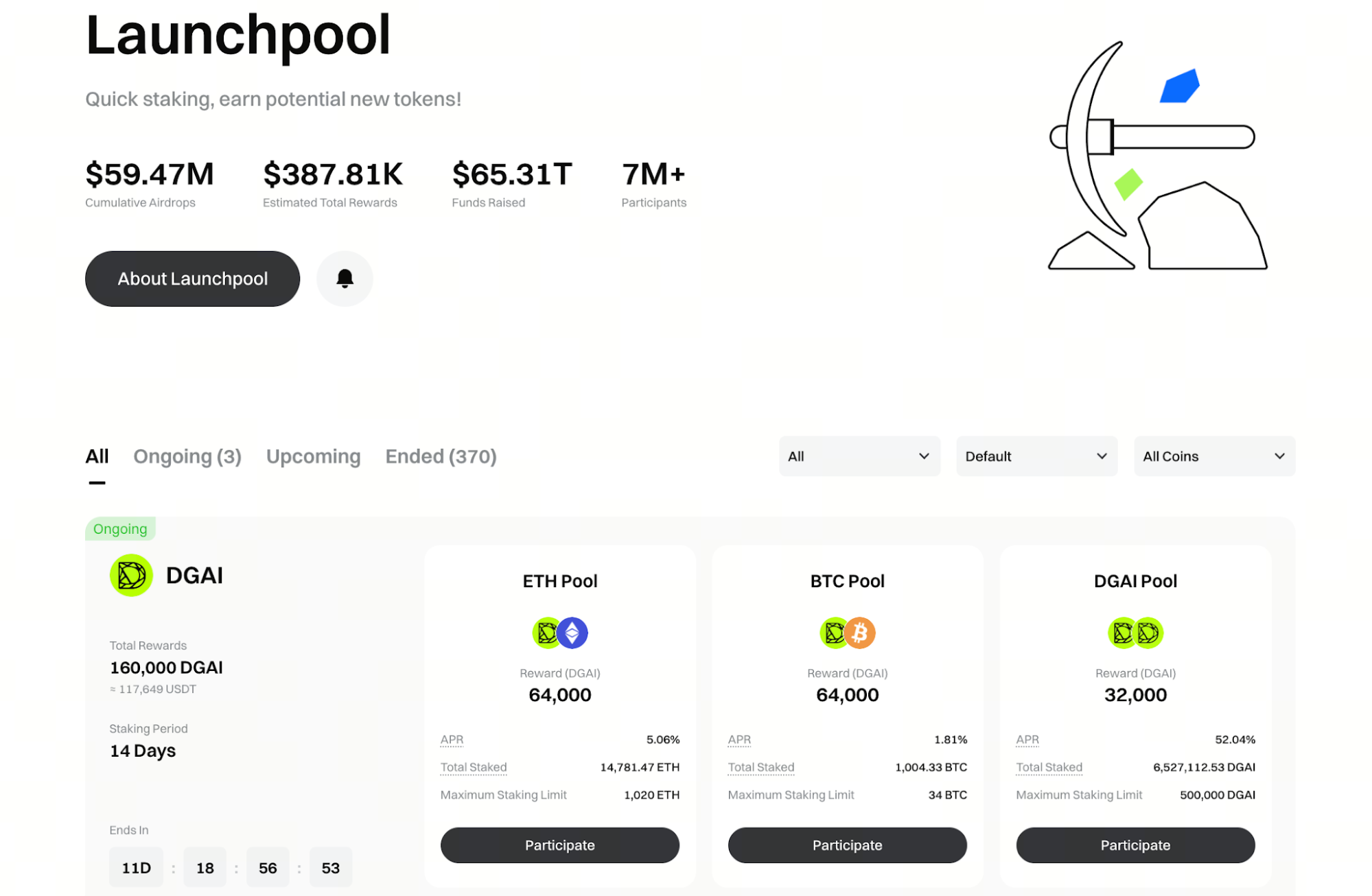
After selecting a project, users enter the relevant staking pool and review the campaign period, reward token, supported staking asset, current APR, staking limit, and other participation requirements before entering the amount they want to stake and confirming the transaction.
Once the assets are staked, the system calculates rewards based on the user’s effective stake and distributes eligible rewards to the Spot account each hour. Users can continue checking reward records and adjust or redeem their staked assets according to their liquidity needs.
Because Gate already provides a full step-by-step operating guide in the Help Center, the more important part before participating is understanding the rules of the specific project rather than simply following the on-screen staking steps.
Can Gate Launchpool Staked Assets Be Redeemed?
Gate Launchpool allows users to adjust their staking amount during an active campaign and also supports early redemption.
However, because the system calculates effective stake using multiple snapshots during each hour, reducing or redeeming assets within a reward cycle can lower the user’s effective stake for that hour and therefore reduce the amount of reward received.
Users can also add more assets to their stake at any time. As long as the staking limit or individual reward cap has not been reached, increasing the effective staking amount can generally increase the user’s share of the reward pool.
Under the current product rules, when users manually redeem or when a campaign ends, the staked assets may be directed to Simple Earn or returned as Spot assets depending on the option shown on the page. Product functions and redemption destinations can change, so users should follow the actual information displayed during redemption.
If a Launchpool project ends early, the staked principal is automatically redeemed when the campaign closes, while eligible rewards already generated before the end of the campaign remain valid.
What Is the Difference Between Gate Launchpool and Directly Buying a New Token?
Directly buying a new project token means exchanging USDT or another asset for the target token, after which the investment result is mainly affected by changes in the market price of that token.
Launchpool works differently. Users temporarily stake assets they already hold and receive the target project token as a reward under the campaign rules. This means they do not need to directly purchase the reward token at the beginning.
For example, if a user already holds USDT and a Launchpool campaign offers a USDT pool, the user can stake eligible USDT and earn new project tokens. When the campaign ends or the user redeems, the original staking asset is returned according to the applicable rules.
However, this does not mean Launchpool is risk-free. The reward token may experience significant price volatility after listing, and if its price declines, the actual value of the rewards can fall. Some participation methods may also involve price risk in the staking asset or restrictions on how the funds are used.
Launchpool is therefore better understood as a way to use existing holdings to participate in new project reward distributions, rather than as a way to receive “free tokens with no risk.”
What Are the Risks of Gate Launchpool?
The first major risk comes from the reward token itself. Launchpool projects are often relatively early-stage, and the liquidity, valuation, and market demand for their tokens can change quickly after listing. Even if the number of tokens earned is known, their market value can still fluctuate substantially.
The second risk comes from the staking asset. If a user buys a volatile token specifically to participate in a high-APR pool, a decline in the price of that asset during the campaign may exceed the value of the Launchpool rewards earned.
The third risk is APR variability. Launchpool APR depends on reward distribution, the number of participants, the total amount staked, and the market price of the reward token. A high initial APR therefore does not mean the same level will continue throughout the campaign.
Different projects may also impose trading-volume thresholds, staking limits, individual reward caps, or other special requirements. If a user does not meet the eligibility conditions for a given hour, they may not receive the corresponding reward even if assets remain staked.
Before participating in Gate Launchpool, users should therefore look beyond the displayed APR and review the project fundamentals, reward pool size, campaign duration, individual staking limit, participation requirements, and risks associated with the reward token.
Summary
Gate Launchpool is Gate’s staking-based token reward platform. Its core mechanism allows users to stake GT, BTC, ETH, USDT, GUSD, or other designated assets and share new project token rewards according to their effective share of the staking pool. Rewards are calculated and distributed hourly, making the relationship between stake size and reward allocation relatively transparent.
Compared with directly buying a new token, Launchpool focuses more on using assets users already hold to participate in new project reward distributions. Users can choose between different staking pools based on their holdings and can add to or redeem their stake during an active campaign.
However, Launchpool should not be viewed as a fixed-income product. Actual results can be affected by total pool size, reward token prices, APR changes, reward caps, and participation requirements. When deciding whether a Launchpool campaign is suitable, understanding the reward mechanism and project risks is more important than simply comparing the displayed annualized rate.
FAQ
What is Gate Launchpool?
Gate Launchpool is Gate’s staking-based token reward platform, where users stake designated digital assets and receive new project tokens based on their effective share of the staking pool.
Which tokens can be staked in Gate Launchpool?
Common Gate Launchpool staking assets include GT, BTC, ETH, USDT, and GUSD, but the supported assets vary by campaign and should be confirmed on the relevant project page.
How often are Gate Launchpool rewards distributed?
Gate Launchpool calculates rewards hourly, and eligible token rewards are generally distributed to the user’s Spot account every hour.
Is Gate Launchpool APR fixed?
No. Gate Launchpool APR is dynamic and can change with total staked assets, reward distribution, token prices, and participation levels, with the estimate updated on an hourly basis.
Can I participate in multiple Gate Launchpool projects at the same time?
Yes. When multiple Launchpool campaigns are active, users can allocate assets to different projects and staking pools and receive the corresponding rewards separately.
Can Gate Launchpool staked assets be redeemed early?
Yes. Gate Launchpool supports early redemption, but redeeming assets changes the effective staking amount for that hour and may therefore affect the reward for the corresponding reward cycle.