A Gate contract position voucher is a contract voucher type that allows a user to open an experience position under preset rules. In Gate’s Help Center wording, the user uses platform-provided margin to obtain an experience position, learn how contract trading works, and settle profit or loss according to the applicable product rules.
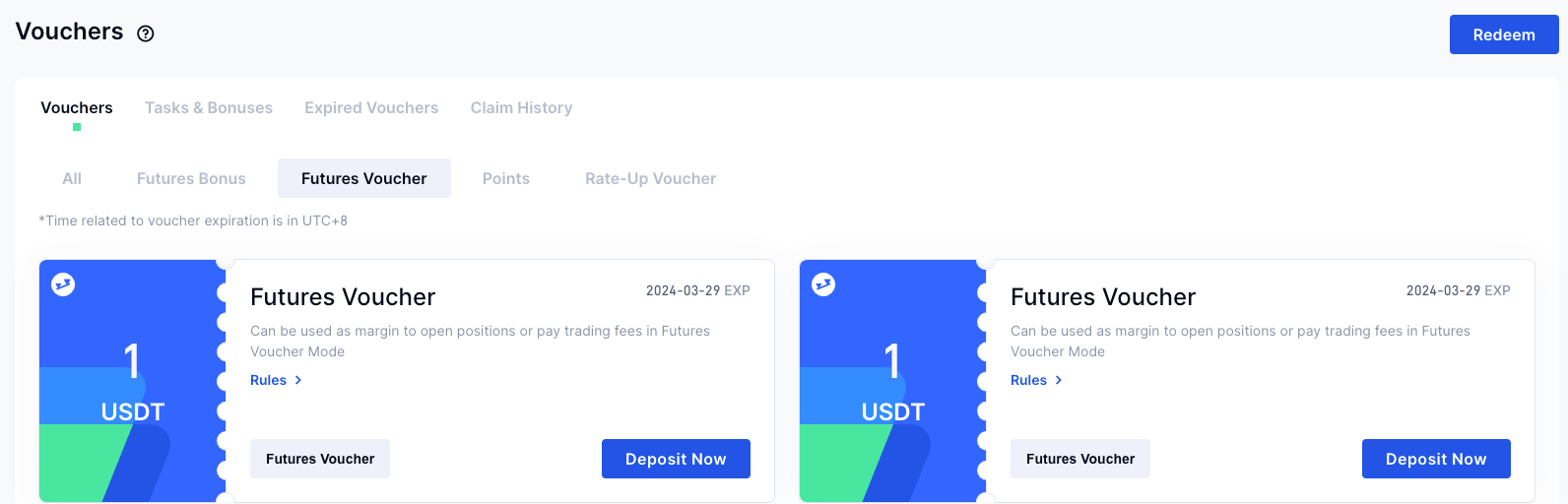
The concept is easier to understand when it is treated as a rules-based trading right rather than as a generic discount or cash-equivalent reward. Whether the voucher can be used depends on market scope, account mode, leverage settings, open-position status, validity period, and voucher type.
Key Takeaways
- A Gate contract position voucher is a contract voucher type that opens an experience position under preset trading conditions.
- The voucher only works in designated USDT-margined contract markets and requires matching isolated margin and leverage conditions.
- Gate position vouchers come in standard and funded versions, and the two types differ in margin structure and loss allocation.
- The latest Gate position voucher rules should always be checked against Gate Help Center pages and the live product interface.
What Is a Gate Contract Position Voucher
A Gate contract position voucher is a voucher type within the Gate platform that gives a user access to an experience position. Gate describes it as a tool that allows users to try contract trading with platform-provided margin and learn the trading mechanism without taking on the initial self-funded margin risk.
The key purpose of the voucher is educational and operational. It helps a user understand how contract trading works inside Gate’s live trading environment while still following a fixed set of rules on market selection, leverage, and position handling.
A position voucher is not a free-form balance that can be used anywhere across the platform. It is tied to a designated contract market, specific parameters, and a defined lifecycle, which makes it a controlled experience product rather than a general-purpose trading credit.
Gate uses the voucher inside its USDT-margined contract environment rather than as a general reward standard or off-platform voucher system. In practical terms, the product belongs to Gate contract trading and should be interpreted through contract account rules, isolated margin requirements, and experience-position settlement logic.
In Gate’s voucher structure, the position voucher is a contract-specific product that sits close to the actual futures workflow. It requires the user to think in terms of contract market selection, isolated margin, leverage settings, open order state, and settlement timing rather than in terms of a simple store credit or coupon.
Where the Position Voucher Fits in Gate’s Voucher System
Gate’s voucher system includes several types of platform rewards, such as fee rebate vouchers, contract bonus vouchers, position vouchers, point cards, bot bonus vouchers, and copy trading bonus tools. Within that system, the contract position voucher belongs to the contract reward category.
According to Gate’s official overview of voucher types, the position voucher gives a user a chance to obtain an experience position with platform-provided margin. That is different from a contract bonus voucher, which is generally explained through margin use, fee offsets, and loss coverage rather than through a preset experience position.
This difference matters because it changes how the product is opened, how it is managed, and how profit and loss are settled. Understanding the voucher category helps users interpret activity rewards more accurately.
How a Gate Contract Position Voucher Works
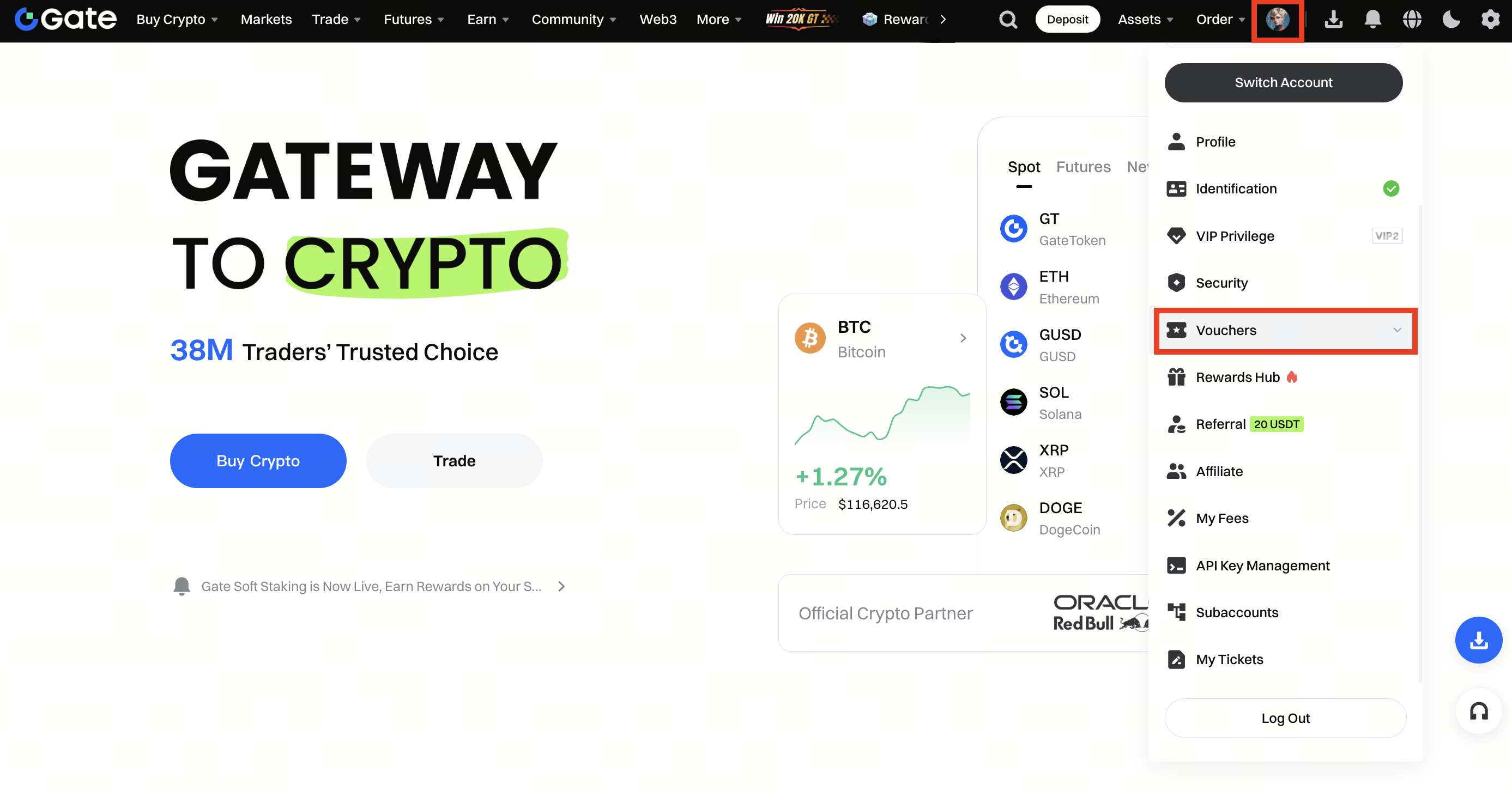
Gate provides separate usage flows for Web and App, but the core logic is the same. The user first opens the voucher center, locates the position voucher, and then enters the contract trading page or opens the launch modal from the voucher itself.
On Web, the voucher can be viewed from the voucher center or from the quick entry below the asset area on the contract trading page. On App, the voucher can be accessed from the voucher center or through the available voucher entry inside the contract interface.
After the user selects the voucher, the system asks for a trade direction, either long or short. Once all preconditions are satisfied, the user can confirm the order and receive an experience position marked with an experience-position tag and a visible countdown.
The experience position behaves like a real contract position in workflow terms, but it remains subject to voucher-specific controls. That is why the product is useful for understanding how a contract position opens, how a contract position closes, and how a contract trading interface handles direction, leverage, and settlement in a restricted format.
What Conditions Must Be Met Before Use
Gate contract position vouchers only become usable after a set of trading conditions is met. Gate Help Center instructions make clear that the launch button stays unavailable until those conditions match the voucher requirements.
The relevant USDT-margined contract market must be in isolated margin mode, and leverage must match the leverage specified by the voucher. The same market must also have no open position and no pending order before the voucher is used.
For funded vouchers, the user’s contract account must also hold more than the required co-funding amount specified by the voucher. Gate provides a one-click setup feature on both Web and App to help users close positions, cancel orders, and adjust trading parameters into the required state.
These conditions matter because Gate contract trading supports multiple account and margin settings, while the voucher only works in one narrow setup. A user who understands isolated margin in the context of USDT-margined contracts will find the voucher rules easier to interpret, because the product depends on a single-position, single-market configuration before launch.
The rule set also explains why the product is positioned as an experience tool. The voucher does not replace normal contract account behavior; it temporarily overlays a fixed setup on top of a live USDT-margined futures market, so the user can observe contract mechanics inside a constrained environment.
What Is the Difference Between Standard and Funded Position Vouchers
Gate divides contract position vouchers into two types: standard vouchers and funded vouchers. The main difference lies in where margin comes from and how losses are handled.
With a standard voucher, the margin for the experience position is provided by the platform. Gate explains that this gifted margin can offset fees, funding-related costs, and closing losses. If the user already has point card balance, the platform may prioritize point cards for fee deductions.
With a funded voucher, the user contributes a defined amount of self-funded capital together with platform-provided gifted margin. In that case, fees and related costs are deducted from self-funded capital first, and losses are allocated proportionally according to the rules described by Gate.
The practical distinction is simple: standard vouchers are closer to a fully platform-funded experience position, while funded vouchers keep part of the position aligned with user capital. That difference affects the way the account is prepared before launch and the way fees and losses are absorbed during settlement.
How Profit and Loss Are Settled
Gate contract position vouchers use a settlement model that differs from a normal contract position. Gate’s Help Center explains that when an experience position is closed, losses are offset first by the gifted margin attached to the experience position.
If the result is profitable, the user receives the difference between realized position profit and the closing fee. Gate states that this profit is automatically transferred to the user’s contract account or unified account under the applicable account structure.
The Help Center also notes that gifted margin is recovered by the platform after partial close, full close, or reverse-position operations. As a result, the same gifted component is not designed for repeated reuse.
This settlement logic is one of the most important parts of the product. It shows that a position voucher is still a live trading instrument, but one with a fixed lifecycle and a restricted settlement path that is different from an ordinary futures position opened with only self-funded margin.
What Trading Restrictions Apply
Gate contract position vouchers are governed by a long list of product restrictions. They are only available in the designated contract market, only in the required isolated margin mode, and only with the leverage specified by the voucher.
Gate also states that lead traders cannot use position vouchers and that contract position vouchers cannot be used at the same time as contract bonus vouchers. If a contract bonus voucher is already present in the account, the position voucher cannot be used.
Additional restrictions apply to the experience position itself. The Help Center notes that the user may face limits such as no leverage adjustment, no increase in position size, and automatic recovery of gifted margin after certain close actions or after expiry.
Those restrictions make the product structurally different from a standard contract position funded entirely by the user. The voucher supports a narrower operational path, which is why it is better understood as a guided contract trading experience rather than as a substitute for every futures trading function on Gate.
Who This Product Is Best Suited For
Gate contract position vouchers are best suited for users who want to understand contract trading operations in Gate’s actual trading environment without starting from a standard self-funded margin position. They are also relevant for users who receive voucher rewards from Gate activities and need to understand what those rewards actually allow.
The product also helps users compare reward mechanics inside the Gate voucher ecosystem. Someone evaluating contract-related rewards can use the position voucher as a reference point for understanding how different Gate trading incentives are structured.
Even so, a position voucher does not remove the need to understand basic contract concepts. The product still works inside a live contract market and remains subject to market movement, timing limits, fee effects, and position rules.
Why the Topic Matters for Gate Activity Rewards
Gate often includes contract position vouchers in reward campaigns. In the latest Futures Mall Season 6, AI Gear Upgrade Season announcement, users can register and complete futures trading, VIP upgrade, and other tasks to earn Mall Mileage that can be redeemed for multiple rewards, including the officially named Futures Position Trial Vouchers.
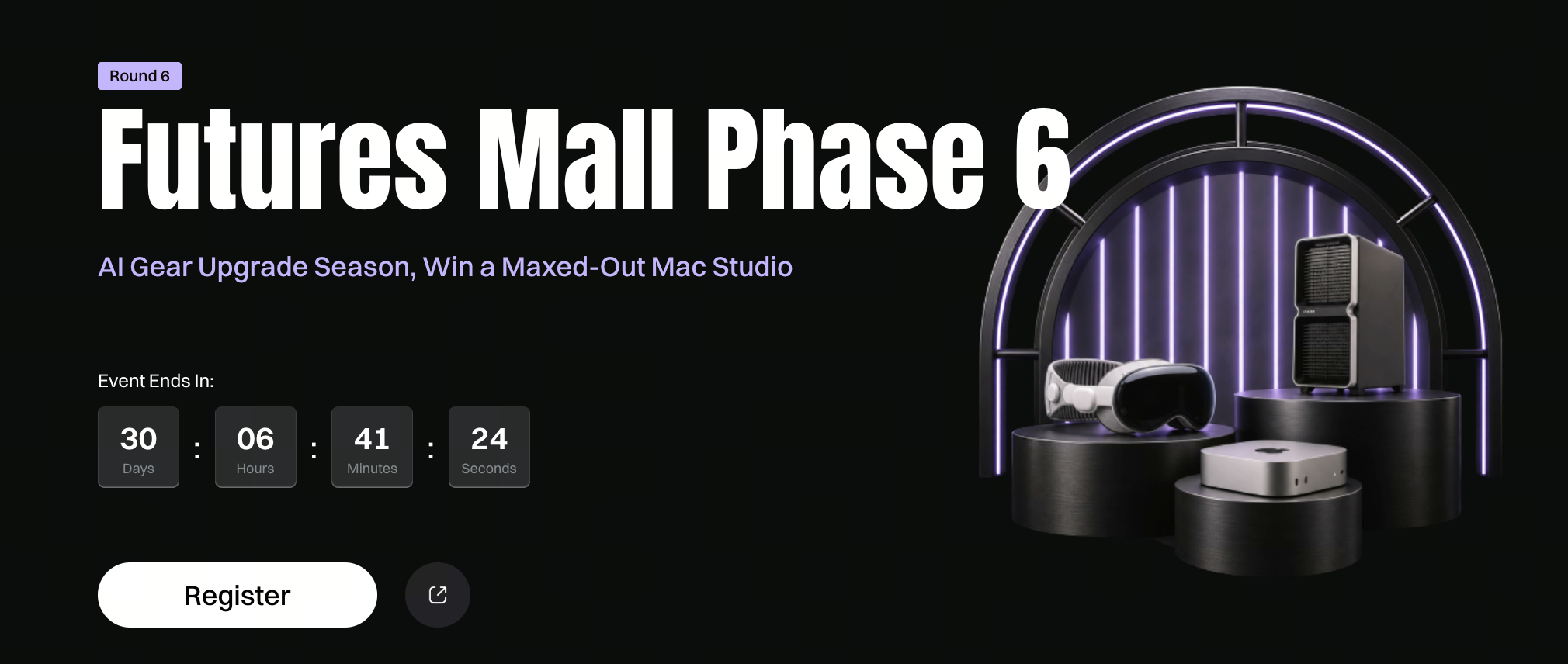
The announcement places those vouchers in the same reward pool as AI gear, USDT, and other headline prizes, which shows that this voucher type remains a standard part of Gate’s contract reward structure rather than a one-off add-on. The event explicitly lists 20 USDT, 100 USDT, and 200 USDT voucher options, each tied to a different mileage threshold.
That connection matters because it shows that position vouchers are not only a Help Center concept. They are also a recurring reward format inside Gate’s activity design. Understanding the voucher rules therefore helps explain the practical meaning of a campaign reward.
For Gate Learn content, this makes the position voucher a stronger evergreen topic than a single campaign write-up. The campaign may change, but the product knowledge behind the reward remains useful over time.
It also helps clarify a common search-intent mismatch. Someone searching for a Gate contract position voucher is usually trying to understand how the voucher works inside Gate futures trading, not how unrelated public voucher systems or school voucher programs work. A Gate-specific explainer keeps the topic aligned with actual contract trading use.
Summary
A Gate contract position voucher is a Gate contract voucher type that lets a user open an experience position under preset conditions. It works only in designated USDT-margined contract markets and is governed by account mode, leverage, validity, and position restrictions. Standard and funded vouchers differ in how margin is formed and how losses are absorbed, while the latest product rules should always be verified through Gate Help Center guidance and live platform pages.
FAQ
What is a Gate contract position voucher?
A Gate contract position voucher is a Gate contract voucher type that gives a user an experience position with platform-provided margin under defined trading rules.
Where can users find a Gate contract position voucher?
Users can find Gate contract position vouchers in the voucher center. Gate also provides quick-entry access from contract trading pages on both Web and App.
Does a Gate contract position voucher require isolated margin mode?
Yes. Gate Help Center guidance states that the designated contract market must match the voucher’s isolated margin and leverage requirements before use.
What is the difference between a Gate contract position voucher and a contract bonus voucher?
A Gate contract position voucher is used to open a preset experience position, while a contract bonus voucher is described through margin use, fee offsets, and loss coverage rules. They are different voucher types and cannot be used at the same time.
Does profit from a Gate contract position voucher go into the user account?
Yes. Gate states that profit from an experience position is settled after fees and then transferred into the user’s contract account or unified account according to the platform rules.
Why can a Gate contract position voucher position be closed automatically?
Gate explains that an experience position has a validity countdown. After the countdown ends, the platform closes the position automatically and recovers the gifted margin.