Readers who treat gold bars, gold-miner stocks, and the oil price as one commodity are watching three lines, not one holding. Bars follow inventory and the quote, miner shares follow extraction costs, output, and the equity market, and crude follows the oil quote. For readers new to listed commodity vehicles, one label easily covers every ticker and hides the difference in holdings. The sections below separate those lines by the asset each vehicle holds.
Key Takeaways
- A commodity ETF can be a physical trust, a futures basket, or an equity proxy. The share is not the commodity in the investor's warehouse.
- In contango, a futures roll sells the near contract and buys a more expensive later one, so the fund's return can lag the spot price.
- GLD holds gold bars, a gold miners ETF holds mining stocks, and a gold-price contract only tracks a quote.
- An energy-stock ETF holds energy-company shares. A crude-price contract tracks oil. The two can move apart.
What do commodity ETFs actually hold?
Under the commodity ETF label, the holding is at least one of three things: a physical trust, a futures basket, or an equity proxy. The share is a claim on the assets inside that vehicle, not a pile of goods in the investor's own warehouse.
On the physical side, the commodity sits in a custody arrangement and the shares correspond to that inventory. SPDR Gold Shares (GLD) is a trust that holds allocated gold bullion. It is an ETF-style listed gold vehicle, not a miner fund. GLD shares follow the gold inside the trust. They do not hold mining-company equity.
A futures basket holds commodity futures and replaces the near contract with a later one before expiry. That replacement is the futures roll. The effect on NAV depends on whether the later contract is more expensive or cheaper, which is contango or backwardation. The point here is the structure, not one futures ticker treated as a fixed holding or a single contract to trade.
| Vehicle |
What it holds |
Gate page |
| GLD, ETF-style gold trust |
Allocated gold bullion |
GLD |
| Futures basket, futures-based commodity ETF |
Commodity futures that are rolled |
— |
| GDX, equity ETF |
Gold-mining company stocks |
GDX |
| XLE, equity ETF |
Energy-sector stocks in the S&P 500 |
XLE |
| LIT, thematic equity ETF |
Lithium-related company stocks |
LIT |
| URA, thematic equity ETF |
Uranium-related company stocks |
URA |
| XAUUSD, price CFD |
Gold quote |
— |
| XAGUSD, price CFD |
Silver quote |
— |
| XTIUSD, price CFD |
WTI crude quote |
— |
| XBRUSD, price CFD |
Brent crude quote |
— |
Rows marked as ETFs hold bars, futures, or company shares. Rows marked as price CFDs track a quote and do not hold bars or company shares. The futures-basket row has no single ticker, because the roll result changes with contango or backwardation.
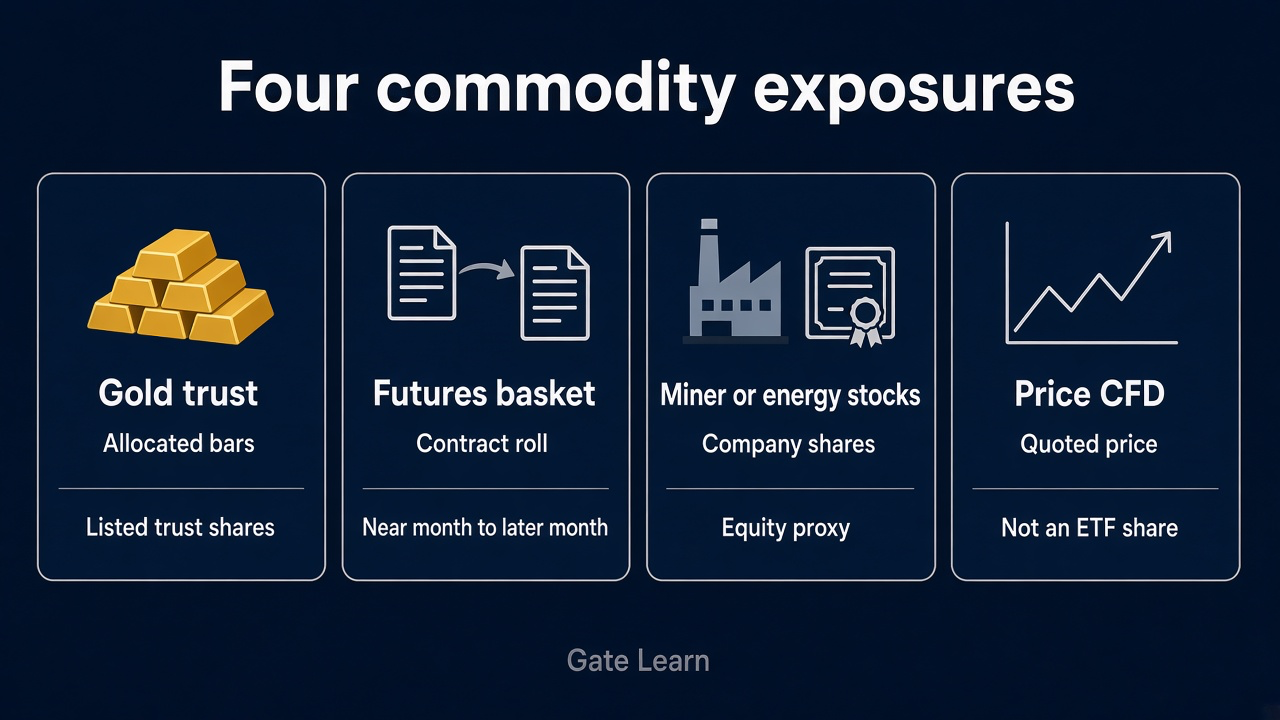
Figure 1. A trust, a futures basket, equity proxies, and a price CFD are four different exposures.
How does a futures roll affect NAV when the curve is in contango?
When the futures curve is in contango, a later contract costs more than the one that is about to expire. A fund that sells the near month and buys the later month in its futures roll can earn less than the move in the spot price.
The roll has to finish before the contract goes into delivery. The fund sells the expiring contract and buys a contract with a later date. In contango the later contract is more expensive, so the same pool of assets may control less of the commodity after the roll, and the NAV path separates from the spot price.
Backwardation is the opposite shape: the later contract costs less than the near one. A roll in that case can leave the fund's return above the move in the spot price. Contango and backwardation only describe the gap between two contracts. They do not predict which side the curve is on for any given day.
A physical trust does not run that futures roll. GLD holds allocated gold bars, so its value follows the gold price and the trust's own costs, not the gap between the near month and the later month. A futures-based commodity ETF can still take another path because of the roll when the spot move itself is small.
Why are a gold trust, gold-miner stocks, and a gold-price contract different?
A gold trust, gold-miner stocks, and a gold-price contract share the word gold and hold different assets. The gold price is only the reference quote. It is not the contents of those three positions.
GLD, as SPDR Gold Shares, holds allocated gold bullion inside a trust. The shares correspond to gold in the trust, not to mine output and not to mining-company equity. Treating GLD as a miner fund collapses the metal and the companies into one price.
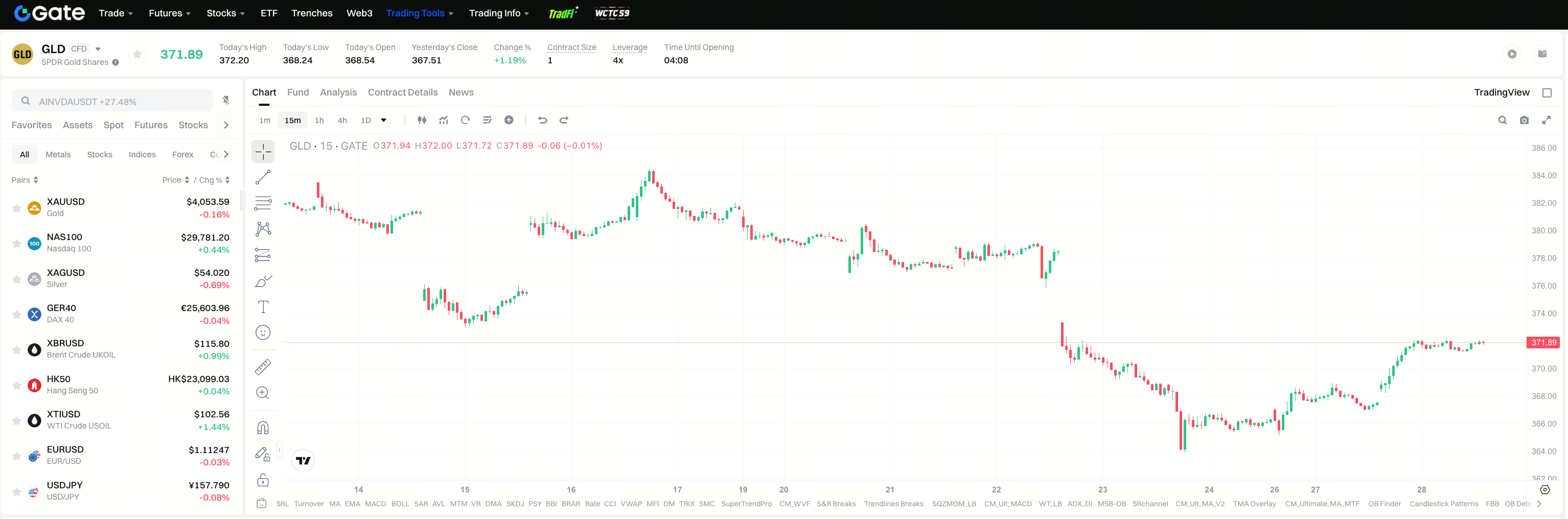
A gold miners ETF holds shares of mining companies. VanEck Gold Miners ETF (GDX) tracks the MarketVector Global Gold Miners Index, whose constituents are companies in the gold-mining business. Ore grade, extraction costs, output, and moves in the equity market are all factors that can pull those shares away from the gold price.
A gold-price contract tracks the quote itself. XAUUSD does not hold GLD's bars and does not hold GDX's mining stocks. XAUUSD sits on a price contract and is not on the same holding list as those two fund shares.
Why can an energy-stock ETF move apart from the crude oil price?
An energy-stock ETF holds equity in energy companies, not oil futures. Energy Select Sector SPDR Fund (XLE) seeks to track the Energy Select Sector Index. The Energy Select Sector Index represents the energy sector of the S&P 500, a narrower set than the full S&P 500.
The sector covers oil, gas and consumable fuels, plus energy equipment and services. Refining margins, natural gas, and company costs can move XLE even when the crude quote does not move with them. Oil can rise while energy stocks weaken on costs or the equity market.
A crude-price contract tracks oil and does not hold the companies inside XLE. WTI and Brent are two crude quotes, not the energy-sector stock price. Profits, dividends, and changes in shares outstanding are not written into a contract that only tracks the oil price.
How does a single-commodity fund differ from a basket?
A single-commodity fund concentrates exposure in one commodity. A basket spreads weight across several commodities. The basket is more spread out, but it is still a rule-based set of holdings, not one object called "all commodities."
LIT and URA are thematic equity funds for lithium-related companies and uranium-related companies. They are not a broad commodity basket, and they are not physical lithium or uranium. Share prices also move with capacity, policy, and the equity market, so they are not that commodity's spot price.
A single-commodity futures fund bears the roll on that one curve by itself. A basket places several curves side by side, so contango in one commodity does not fill the whole NAV, while a heavy weight still matters more. Neither structure is physical inventory in one's own warehouse.
What should you check before trading a commodity price as a CFD?
Before trading a commodity price as a CFD, check that the page is a contract on a quote. A CFD on a commodity price is not a commodity ETF, and it does not hold trust bullion, futures inside a fund, or company shares.
Gold and silver quotes need to stay separate. The gold-price CFD XAUUSD and the silver-price CFD XAGUSD track metal quotes. They are not commodity ETFs, and they do not hold bars or mining stocks.
A crude quote is not an energy stock either. The WTI crude-price CFD XTIUSD and the Brent crude-price CFD XBRUSD track oil prices. They are not commodity ETFs, and they do not hold the energy-company stocks inside XLE.
Three further checks matter: which quote the symbol uses, whether the position accrues overnight financing, and that closing it does not deliver bars or shares. The words gold or oil on the label only name the topic. They do not replace the holding line.
Summary
Listed commodity exposure splits into at least four paths: bars inside a physical trust, a futures basket that must be rolled, shares of miners or energy companies, and a price CFD that only tracks a quote. The name can match while the assets on the book do not.
Reading a ticker starts with whether the holding is bars, futures, company shares, or a quote. A contango roll, company costs, and overnight financing can all pull that value away from spot. Folding the four exposures into one commodity label makes the comparison misleading.
FAQ
Does a commodity ETF hold the physical goods in a warehouse?
A commodity ETF share is a listed vehicle, not inventory titled to the investor. A physical trust can hold allocated bars, a futures-based fund holds contracts, and an equity proxy holds company shares. The holding line shows whether a ticker is metal, futures, or stock.
How does a contango roll affect a futures-based commodity ETF?
Contango means a later month costs more than the contract about to expire. When a futures-based commodity ETF rolls, it sells the near month and buys the more expensive later month, so the return can lag the spot move. Backwardation works the other way. The mechanism does not say which side the curve is on.
Do GLD and a gold miners ETF hold the same asset?
GLD (SPDR Gold Shares) is a trust that holds allocated gold. It is not a miner fund. A gold miners ETF such as GDX holds gold-mining company stocks and tracks an index of mining companies. Costs, output, and equity-market moves can still send those stocks on a different path from the gold price.
Do energy-company stocks equal the oil price?
Energy-company stocks are corporate equity, not a barrel of oil. XLE holds stocks from the energy sector of the S&P 500, covering oil and gas plus energy equipment and services, and it does not hold oil futures. The oil price, refining margins, and the stock market can move apart.
Is a gold-price CFD a commodity ETF?
A gold-price CFD is a contract for difference on a quote. Direct physical commodity investing can be challenging because storage and delivery add cost. It is not a commodity ETF, and it does not hold GLD or gold-miner shares. XAUUSD corresponds to the gold price, not to trust shares. Before an order, check the underlying, whether overnight financing applies, and whether the symbol on the page is a price contract or an ETF. A futures-based product gives exposure without the investor storing the commodity, but the contract can still involve separate risks.