Ledger wallet is a hardware cryptocurrency wallet that stores private keys offline on a dedicated device, helping protect digital assets from malware, hacking, and unauthorized transactions by keeping approval in the user’s hands. For crypto holders comparing secure storage options—from first-time buyers to active traders and institutions—Ledger’s lineup includes the Nano series, Ledger Stax, and Ledger Flex.
Alongside the devices, Ledger provides Ledger Live for managing supported cryptocurrencies, installing apps, and using wallet features from one interface, plus Ledger Enterprise for business and institutional use. This guide explains Ledger wallet types, core features, security benefits, supported coins, the Ledger Live experience, and backup and recovery options so readers can judge which setup fits their needs.
What is Ledger?
Ledger is a corporation that produces physical cryptocurrency wallets resembling USB drives or other storage devices and manufactures the Ledger wallet, a type of cryptocurrency wallet. Ledger provides users with various hardware and cold wallet options and guarantees that its wallets are secure for use with crypto assets. Ledger’s cutting-edge hardware wallets are designed with security in mind, ensuring the crypto ecosystem is protected.
What is a Ledger Wallet?
Hardware wallets are cryptocurrency wallets that securely store the user’s private keys—a crucial piece of data necessary for authorizing outbound transactions on the blockchain network—within a protected hardware device, which is vital for accessing and managing cryptocurrencies. Cryptographic private keys are essential for executing crypto transactions. In contrast to software or “hot” wallets that are internet-connected and susceptible to theft and hacking, Ledger wallets maintain private keys offline, rendering them exceptionally resistant to attacks and malware. Paper wallets are also a type of cold wallet, but Ledger stores keys on a dedicated hardware device rather than on paper.
A Ledger wallet is a device that keeps private keys offline and uses them to sign transactions on the device before broadcasts are sent, rendering it inaccessible to hackers from remote internet locations. Ledger wallets let users transmit and receive crypto from blockchains and execute third-party applications on the device. Users can utilize the wallets to execute worldwide two-factor authentication on prominent platforms such as Dropbox and Google. All Ledger devices incorporate a security aspect and a distinctive operating system to protect a user’s cryptocurrency assets.
The Ledger crypto wallet employs a 24-word backup recovery code, which can be used to access a user’s cryptocurrency if the Ledger containing the private key is lost or stolen. The 24-word code can be inscribed on steel within a Billfold, a device designed to preserve users’ keys indefinitely in a physical format for enhanced protection.
The Ledger crypto wallet is a crypto hardware device developed by Ledger. Ledger was founded in France in 2018 by a consortium of eight co-founders possessing extensive knowledge in security, cryptocurrencies, and entrepreneurship. The primary objective was to create secure solutions for blockchain applications, subsequently leading to the development of crypto hardware wallets. Ledger launched the inaugural edition of its cold storage product, the Ledger Nano S, in 2016. In 2017, Pascal Gauthier assumed the position of CEO, a function he continues to hold as of 2024. In 2019, Ledger launched the second generation of its Nano series hardware wallet, the Nano X. Over 8 million Ledger signers have been sold globally, including ledger touchscreen signers.
In June 2021, Ledger attained a valuation of $1.3 billion during a fundraising round that secured $380 million. After a Series C in March 2023, Ledger has accumulated $575 million across six funding rounds. In 2022, Ledger unveiled the Stax wallet, created in partnership with Tony Fadell, the inventor of Apple’s iPod. The redesigned wallet commenced delivery in mid-2024 after considerable production delays. As of 2024, the corporation employs over 600 individuals across nine global offices.
Utilizing a Ledger wallet provides numerous benefits, including ease of use, security, and adaptability. Let us examine the primary advantages:
Security
One of the primary benefits of the Ledger wallet is the improved security it offers by storing users’ private keys offline, giving them full control of their private keys and funds because the keys stay on the device rather than with a custodian. Users’ assets are safeguarded from prevalent threats, including malware, phishing attacks, and hacking attempts, as their keys are never exposed to the internet; unlike hardware devices, software wallets are more exposed and can be hacked when the connected environment is compromised. Ledger’s security framework enhances all Ledger hardware wallets. A random number generator produces users’ Secret Recovery Phrase (seed phrase), rendering it hard to predict or deduce. Users private keys are created and securely kept offline in a tamper-resistant Secure Element chip, safeguarding them from online and offline attacks. BOLOS, the proprietary operating system of Ledger device, facilitates the operation of the applications while maintaining their separation. Users PIN code enables their Ledger device to facilitate two-factor authentication for every transaction they execute. As users are required to physically verify each wallet interaction on the device itself, following its unlocking with a PIN known solely to each user, no one can engage with their cryptocurrency remotely.
Wide Range of Cryptocurrencies
Ledger wallets support over 1,800 cryptocurrencies, including Bitcoin (BTC), Ethereum (ETH), Solana (SOL), and numerous others. Due to its versatility, Ledger is a practical solution for users with diversified portfolios. Manage your crypto assets using a single device in a single, secure location.
User-Friendly Interface
The Ledger Live app offers a user-friendly and uncomplicated interface, and the app is available on mobile and desktop for managing assets and transactions. It is intended for novice and seasoned cryptocurrency users and provides sophisticated capabilities while remaining user-friendly, helping users track holdings and make informed decisions from one interface.
Transactional Physical Confirmation
The most distinctive characteristic of a ledger is that each transaction must be verified tangibly on the device. This mitigates the likelihood of unauthorized transfers, as users must physically verify the details and sign transactions on the device before any transfer is authorized.
Multisignature Support
Ledger wallets can be incorporated into a multisignature configuration, necessitating a single transaction’s authorization by multiple private keys. In a multisignature wallet that requires three signatures, a Ledger device could be employed as one of the keys. This provides an additional layer of security, particularly for organizations or individuals who manage substantial cryptocurrency assets. Combining Ledger with multisignature reduces the likelihood of a single point of failure, thereby making it exponentially more difficult for hackers to compromise your assets.
How Does Ledger Wallet Work?
A Ledger hardware wallet fundamentally retains users’ private keys offline. This indicates that even if their computer or smartphone is breached, their cryptocurrency assets remain secure, as the private keys do not exit the hardware device. To utilize a Ledger wallet, users must connect the device to their computer or mobile phone and access it via Ledger’s proprietary software, the Ledger Live app, which can be used on desktop or phone to manage assets. Users may oversee their assets, verify balances, and transmit or receive cryptocurrencies from this location. The essential element in this procedure is that every transaction users begin is prepared in the app but still necessitates physical confirmation on the Ledger device itself, enhancing security.
Ledger Wallet’s Products
Ledger has four primary hardware wallets: the Ledger Nano S Plus, the Ledger Nano X, the Ledger Flex, and the Ledger Stax. These devices are tiny, safe, and intuitive, making them suitable for novices and seasoned cryptocurrency aficionados. All of them utilize the Ledger Live application, which facilitates the management of your cryptocurrency. Ledger lets users safely store widely-used cryptocurrencies such as Bitcoin, Ethereum, and others.
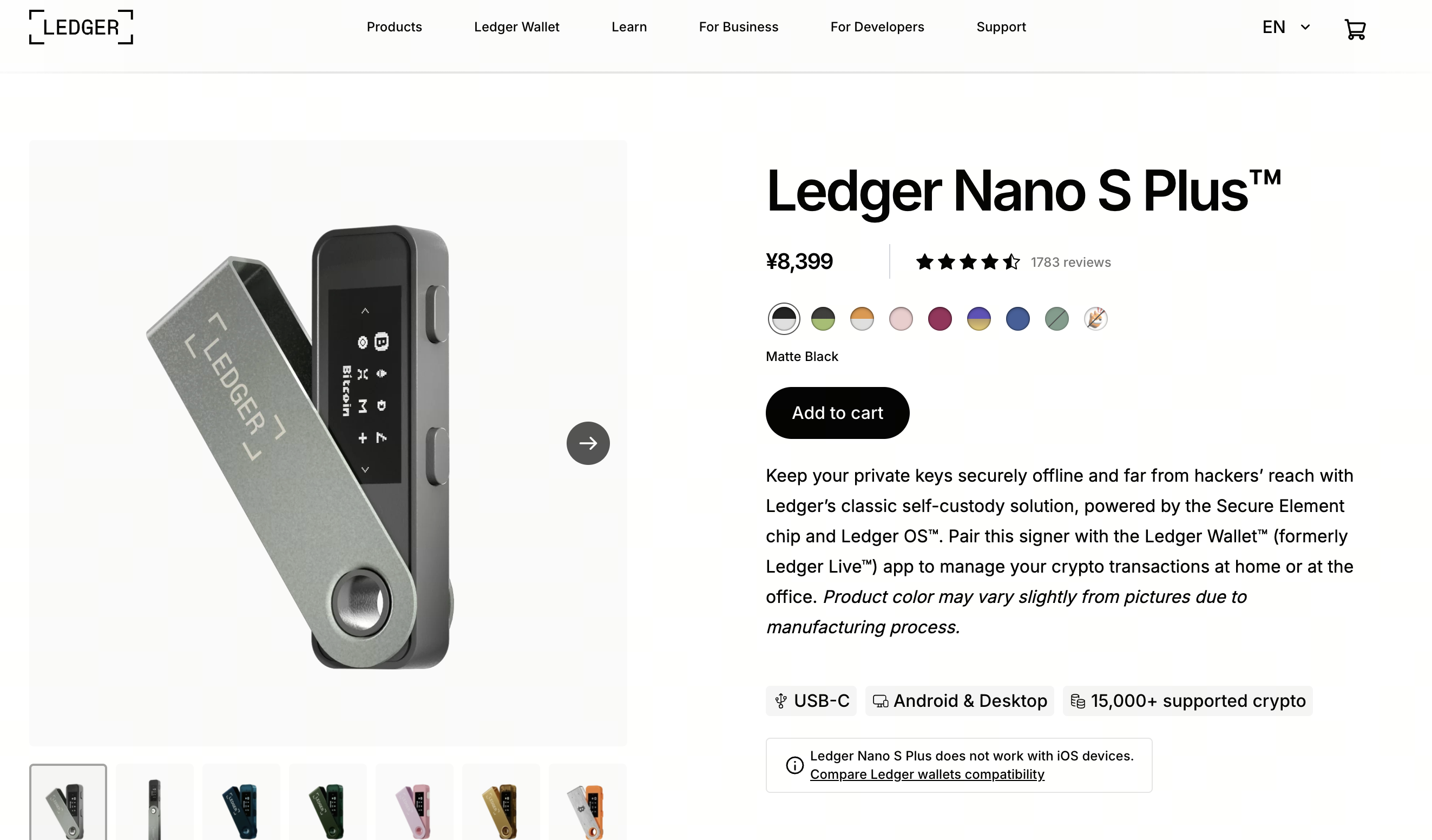
The Ledger Nano S Plus is an unequivocal choice for an entry-level Ledger device. It possesses all the necessary features to safeguard users’ digital assets and is equally secure as any other Ledger device. It employs the identical Secure Element and bespoke operating system as the Ledger Nano X. The Ledger Nano S Plus enables the management of NFTs and fungible tokens across numerous networks. It is a potent device characterized by an essential design—ideal for novices in the field.
The Ledger Nano X is a mobile-centric Ledger wallet designed for convenient daily use while on the move. In addition to all the Ledger Nano S Plus capabilities, the Ledger Nano X includes Bluetooth functionality and is compatible with iOS and Android devices. This feature enables smooth and wireless management of cryptocurrency holdings via your smartphone without sacrificing security.
The Ledger Stax is user-friendly and secure, continuing the legacy of its predecessors. Ledger developed Ledger Stax with Tony Fadell, the iPod’s designer and the iPhone’s co-creator. It boasts an unprecedented secure touchscreen driven by E Ink® technology. Like all other Ledger devices, the display is governed directly by the Secure Element, ensuring the reliability of the address information presented.
The expansive display is unprecedented among previous hardware wallets. The touchscreen is user-friendly and provides an additional aspect of personalization. Users can designate any image or NFT as their lock screen, which will be displayed even while the device is inactive. As the name suggests, Ledger Stax devices are indeed stackable. The integrated magnets allow for managing several Ledger Stax devices and customizing the entire stack.
In addition to these essential attributes, Ledger Stax is distinguished by its user-friendliness. In addition to its Bluetooth capability, Ledger Stax provides wireless Qi charging, eliminating the need for cords during mobile transactions.
The Ledger Flex is a compact wallet featuring a 2.84-inch touchscreen that enables navigation across your owned cryptocurrencies via screen swipes. You can exhibit images or your NFTs on the display. Ledger Flex allows users to securely manage their digital assets, including BTC, ETH, SOL, and numerous other cryptocurrencies and NFTs, through Ledger Live, the premier companion application for their secure devices. With the Ledger Flex, users can effortlessly review and authorize transactions via a secure 2.84” touchscreen, ensuring transparency and visibility with each interaction. The Flex may be connected to your smartphone or computer and is compatible with Android, iOS, Windows, Linux, and macOS. Flex is compatible with over 5,500 coins and NFTs and is priced at $249.
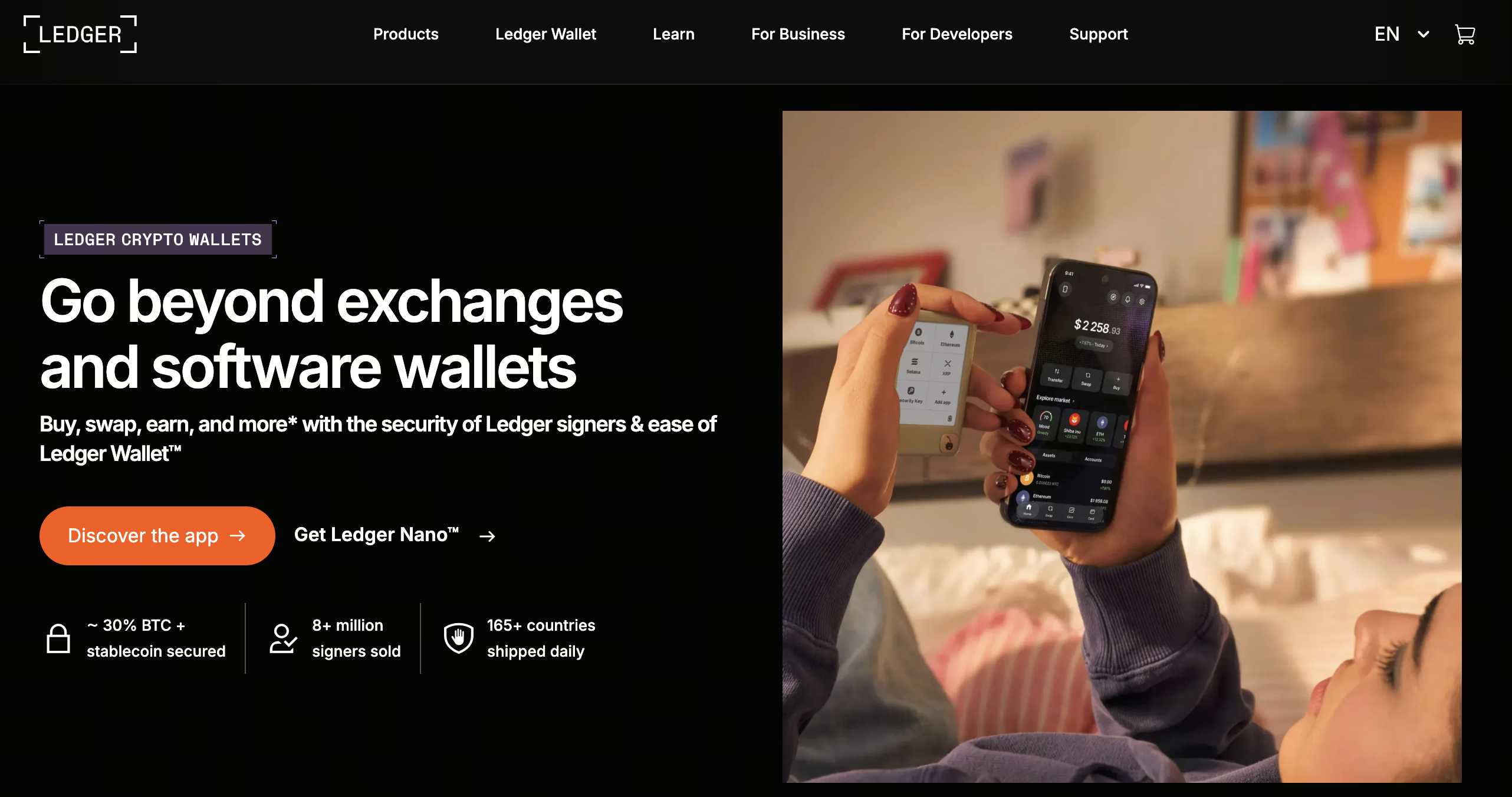
The Ledger Live app is Ledger’s mobile and desktop app that works with its hardware wallets and serves as a comprehensive platform for all user’s cryptocurrency requirements, including purchasing, exchanging, staking, or managing their holdings. Upon installation on their internet-enabled smartphone, it may transmit transactions to the blockchain and assist them in seeing and managing their assets. Additionally, it offers a secure portal to numerous applications and services, including cryptocurrency exchanges, NFT marketplaces, and others. Some crypto transaction services in this ecosystem are offered through third party providers and third party services.
Ledger Live is the software application created by Ledger to facilitate their array of hardware wallets for mobile and desktop platforms. Ledger Live enables users to manage and stake their digital assets on a single platform, earning rewards by staking ETH, SOL, ATOM, ADA, and other cryptocurrencies. Users can purchase, sell, and exchange cryptocurrencies such as Bitcoin, Ethereum, etc., and compare rates in the app before choosing among available providers. Ledger Live enables users to monitor their cryptocurrencies and NFTs while exploring various services.
Ledger Live offers a more comprehensive interface for a Ledger device compared to the restricted functionalities of the built-in screen. It also enhances the functionality of the Ledger device beyond a mere hardware wallet, allowing users to engage with other Web3 applications akin to a software wallet such as MetaMask, while giving an account-style view of balances and activity as the device keeps private keys offline.
Ledger Recover is a premium, optional service that enables the creation of a backup for the user’s wallet access. Ledger Recover provides reassurance by helping users avoid situations where they lose access to their crypto wallet if the device is lost or the recovery phrase is no longer available. It allows users to regain access to their crypto wallet using their ID if their Ledger device is lost or stolen and they no longer possess your seed phrase. Ledger Recover enables users to experience self-custody advantages while retaining complete control over their assets when mobile.
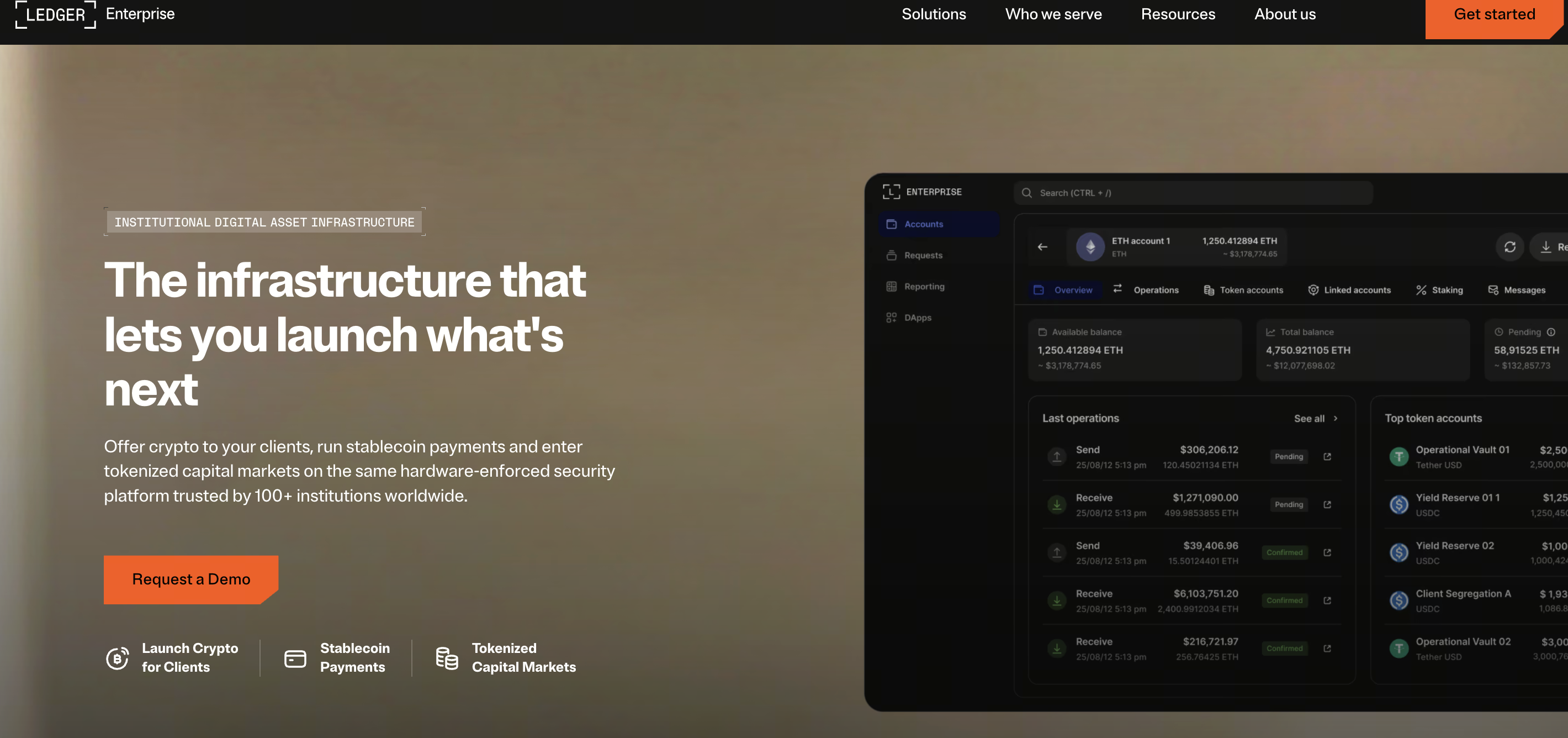
Ledger Enterprise is Ledger’s division dedicated to assisting organizations in the secure storage and management of cryptocurrency assets with stringent security measures and customized governance. Operating a cryptocurrency-based firm may appear advantageous, although it can prove to be more arduous in reality. Any enterprise’s success depends on managing various elements, including secure asset management, establishing a governance structure, and overseeing developers. Ledger Enterprise streamlines the process by providing services in asset management, staking, NFTs, DeFi, trading, and tokenization.
Conclusion
Ledger’s hardware wallets are multi-currency wallets that contain private keys for cryptocurrencies offline. Ledger provides four hardware wallets: the Ledger Flex, the Ledger Nano S Plus, the Ledger Nano X, and the Ledger Stax. Ledger’s objective is to establish itself as a reputable name in cryptocurrency security by providing one of the most secure methods of offline private key storage through its hardware wallets. By incorporating cold storage, physical security, and simple integration into multi-signature setups, Ledger offers a robust solution for institutional users and retail investors.
Frequently Asked Questions About Ledger Wallets
What Is a Ledger Wallet?
A Ledger wallet is a hardware cryptocurrency wallet that stores private keys offline to help protect digital assets from online threats.
Is Ledger a Cold Wallet?
Yes. Ledger hardware wallets are generally considered cold wallets because they keep private keys offline.
How Does a Ledger Wallet Work?
Ledger wallets store private keys on a dedicated device and require physical confirmation to approve transactions.
What Is a Ledger Recovery Phrase?
A Ledger Recovery Phrase is typically a 24-word backup used to restore access to a wallet if the device is lost or damaged.
Is a Ledger Wallet Safe?
Ledger wallets are designed to reduce exposure to online threats, but users must still protect their device, PIN, and Recovery Phrase.
Author: Abhishek Rajbhar
Translator: Viper
Reviewer(s): Edward、Matheus
Translation Reviewer(s): Ashely
Disclaimer
* The information is not intended to be and does not constitute financial advice or any other recommendation of any sort offered or endorsed by Gate.
* This article may not be reproduced, transmitted or copied without referencing Gate. Contravention is an infringement of Copyright Act and may be subject to legal action.
GT (GateToken) is the native asset of GateChain and the utility token of Gate. The value of GT is closely related to the development of Gate and the GateChain ecosystem.
Crypto trading is the buying and selling of digital assets through an exchange or blockchain protocol in exchange for another asset or fiat currency. Beginners should understand wallets, exchanges, orders, and blockchain transfers before comparing spot, margin, and perpetual futures markets or evaluating fees, liquidity, volatility, and account-security risks.