Crypto markets trade around the clock with sharp swings in the crypto market, so many traders subscribe to Telegram, Discord, email, or app alerts for breakouts, pullbacks, or indicator triggers based on market structure. As an information product, crypto signal quality varies widely across the market: some packs include clear fields and auditable logs; others are slogan-style “calls” with no risk plan. Coverage spans definitions versus loose callouts, field reading, how crypto trading signals are produced and distributed, advantages and risks, differences from copy trading and bots, and objective provider checks.
Key takeaways
- A crypto signal packages a trading idea (pair, direction, entry, targets, stop) — not a profit promise for buy or sell outcomes.
- Complete fields plus stop-loss discipline are prerequisites; win-rate marketing without SL is a red flag for any provider.
- Signals may be manual or algorithmic and ship via Telegram, Discord, email, or an app; delay erodes edge in live trading.
- Signals, copy trading, and trading bots solve different jobs; traders should vet transparency and risk controls, not slogans.
What is a crypto signal, and how does it differ from a “call”?
As a structured trade alert, a crypto signal should state what to trade, whether to buy or sell (long or short), where to enter, where to take profit, and where the idea is wrong. Informal “calls” in chat groups often say only “buy XX now” or “sell / dump,” with no entry zone, stop, or invalidation — hard to journal and hard to size for trading.
Crypto trade signals and casual “calls” are not the same. The boundary is not the brand name. Many paid rooms still shout directional noise while labeling it a signal service. The test is whether traders can use the message inside a trading plan: executable, recordable, reviewable, and matched to risk tolerance rather than judged by branding alone. If an alert has direction but no risk boundary, it behaves more like momentum peer pressure than managed trading. Many crypto trading signals rely on technical analysis—price action, indicators, and chart structure—matching how public primers define technical analysis.
What fields does a crypto signal usually include, and how do you read them?
A usable crypto signal usually includes the fields below. Check completeness, including entry and exit points and the buy or sell direction, before traders use it in live trading.
| Field |
Meaning |
How to read it |
| Pair |
e.g. BTC/USDT, ETH/USDT |
Confirm spot vs futures, quote asset, and venue rules |
| Direction |
Long/Buy or Short/Sell |
Bias only — not proof the move will happen |
| Entry |
Limit, market, or price zone |
Chasing after a missed zone changes risk/reward |
| Take-Profit (TP1–TP3) |
Scaled exit points |
Partial exits at TP1; optionally trail the stop |
| Stop-Loss |
Invalidation price |
Together with size, sets max loss per idea |
The table turns a narrative idea into order parameters that help traders decide where to place buy or sell orders, and a complete setup should include an entry price, not just direction. Without a stop, single-trade risk is undefined; direction-only hype cannot support position math when prices move. A stop-loss order caps loss at a preset level. On venues such as Gate, spot and futures trading flows can combine limit and stop-style orders to mirror the plan. Entry and invalidation levels are often checked against support and resistance zones on the chart when prices approach those levels.
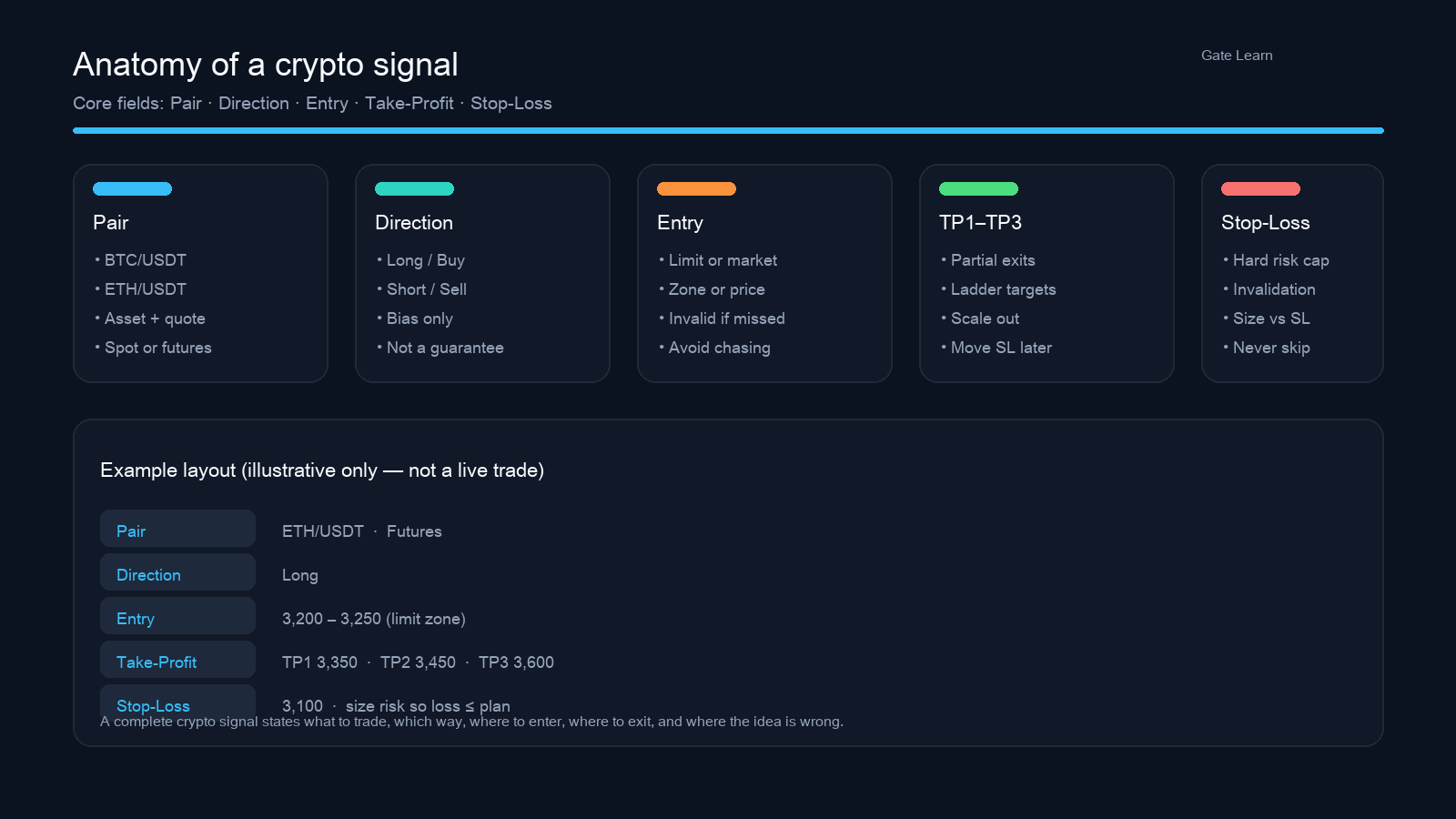
Figure 1. Core crypto signal fields: pair, direction, entry, scaled take-profits, and stop-loss.
How are crypto signals generated? Manual analysis vs algorithms
Generation paths fall into two buckets: crypto trading signals can come from professional traders, professional analysts, or automated systems (or a hybrid). Human analysts combine price action, indicators (such as RSI or MACD), fundamentals, and sentiment through thorough analysis and detailed technical analysis based on charts, then publish annotated alerts traders can use. Strengths include discretion around news; limits include lower frequency, bias, and timezone coverage. Rule engines and algorithms scan crypto markets continuously, processing multiple data points across market data and price movements using advanced algorithms, with some app tools now using artificial intelligence or AI-powered models — fast and always on, but noisier in chop and often weaker at explaining “why now.”
Some provider services add confidence tags, leverage notes, or timeframe labels alongside technical indicators based on market context. Those extras never replace stops and sizing. Whether the source is human or code, a crypto signal remains a conditional trading idea; regime shifts, liquidity shocks, late fills, or changing market conditions can invalidate the same ticket when prices gap across the market.
Which channels usually distribute crypto signals?
Common channels include Telegram channels, Discord servers, email lists, SMS or push apps, and signal marketplaces inside some trading platforms. Some providers send real-time alerts through an app or chat; others batch slower swing ideas. Channel choice affects latency, auditability, and tampering risk: chat posts can be deleted or edited later, email timestamps are more stable, and app pushes still depend on devices and networks. Traders who use mobile trading often rely on the same app stack for both alerts and order entry.
Match the channel to execution speed and trading strategy. If short-horizon breakout alerts on Bitcoin (BTC) or Ethereum (ETH) pairs cannot be answered quickly, even a strong crypto signal decays when prices have already moved. Free crypto signals can serve as samples before a paid subscription to a provider, but price does not equal reliability. Assume impersonation, funnel scams, and fabricated “P&L screenshots” can appear on any channel — especially when someone demands off-platform deposits, “guarantee funds,” or fixed-return promises. Demo or paper trading a feed first is a safer way for traders to use a provider’s accuracy claims before risking a live portfolio.
What are the advantages and risks of using crypto signals?
| Dimension |
Potential upside |
Main risks and limits |
| Time |
Less DIY research and chart watching |
External pacing; missed entries invite chase |
| Learning |
Journal fields against charts |
Blind following blocks skill building |
| Risk framing |
Quality alerts embed TP/SL structure |
Weak alerts omit stops or imply “sure wins” |
| Cost |
Free samples for observation |
Fees erode edge; scams can take principal |
| Execution |
Structured fields map to orders |
Delay, slippage, and leverage amplify loss |
Upside clusters around efficiency and structure: crypto trading signals compress research into parameters traders can use, and may reduce impulsive buy or sell clicks. Structured alerts can support more disciplined trading without guaranteeing profitable trades when prices reverse. Risks include no profit guarantee, over-reliance on a single provider, fraud and inflated win rates, subscription drag, and delayed fills that wreck risk/reward. Even attractive backtests can enter long drawdowns live. Treat signals as idea sources; avoid relying solely on them, combine signals with independent research and analysis, and keep risk management with the account owner, using stop-losses and position sizing to manage risk during volatile moves before any trade decision.
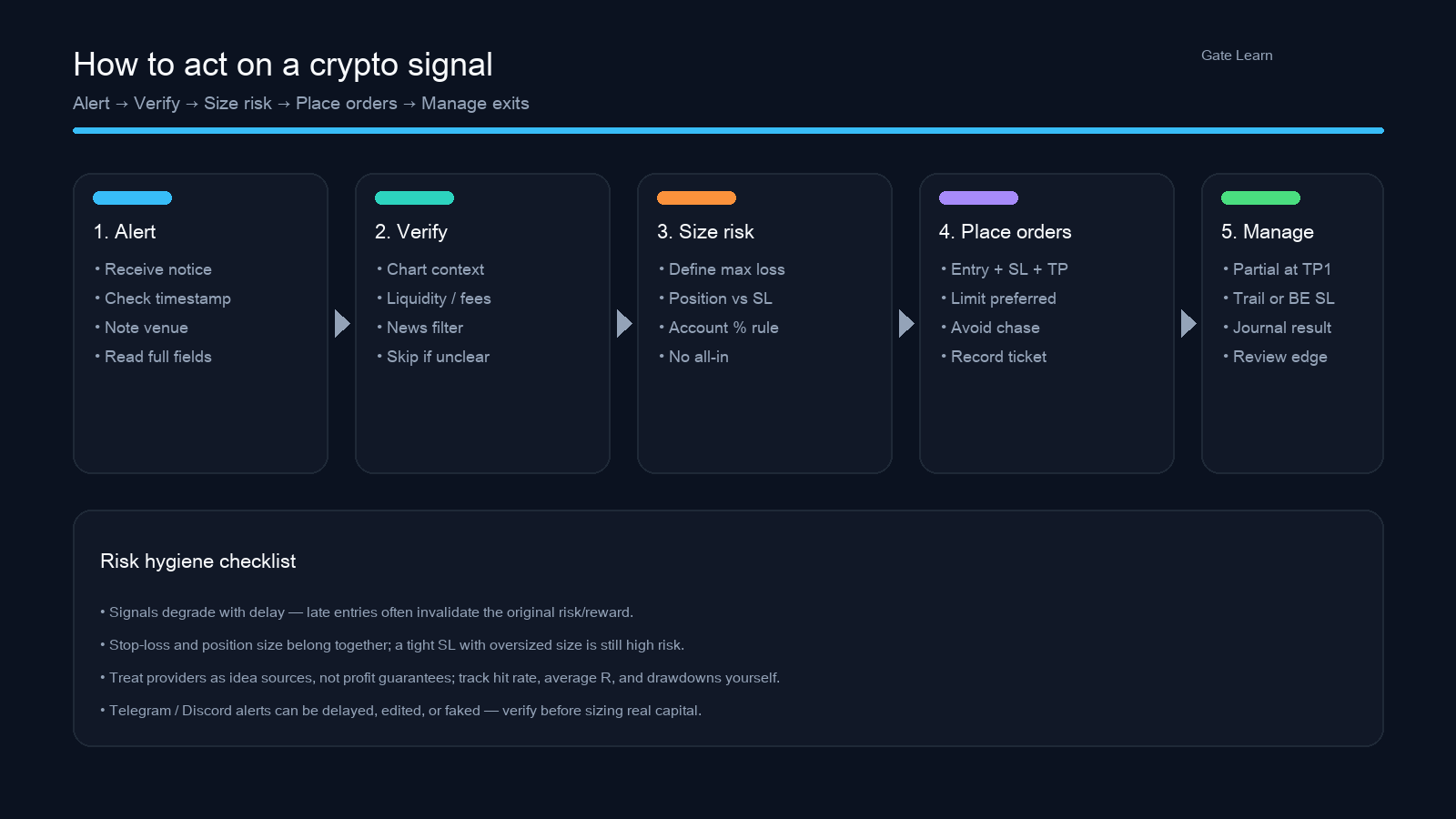
Figure 2. Typical workflow: alert → verify → size risk → place orders → manage positions and exit trades.
How do crypto signals differ from copy trading and trading bots?
Crypto signals, copy trading, and trading bots are often confused in crypto trading. Automation depth and who owns the buy or sell decision differ; copy trading also sits among other result-based ways to earn USDT.
| Method |
What the user does |
Decision ownership |
Typical fit |
| Crypto signal |
Interpret and place (or semi-automate) orders |
User chooses whether and how to follow |
Traders who want discretion |
| Copy trading |
Link to a lead; size often scales automatically |
Closer to automatic follow |
Users who accept another trader’s pacing |
| Trading bots |
Some setups use automated trading bots connected to signal feeds |
Rules/APIs drive fills |
Speed and discipline, with automation risk |
Signals sit at the suggestion layer: traders receive an alert, then decide whether to buy or sell. Some traders use an app connection so automated trading bots execute based on the provider feed rather than placing each order manually. Copy trading sits at the follow layer: positions mirror a lead, still facing slippage, delay, and style mismatch when prices move fast. Bots sit at the execution layer: rules or ingested crypto trading signals fire orders quickly but amplify bad parameters, API mistakes, and gap risk. Gate and similar venues may offer copy trading and futures stop orders so different automation layers can be implemented; the choice depends on available time, risk process, and latency tolerance — not which label “makes more money” in trading.
How should a signal service be evaluated objectively?
Evaluate crypto signal provider claims on verifiable facts, not slogans, and compare signal providers by evidence rather than branding; the best crypto signal provider depends on transparency, execution fit, and how traders use the feed. Past performance can be useful to review, but it does not guarantee future results when prices change. Prefer a provider that shows a long enough track record with wins and losses; keep a stable format with entry, TP, SL, and invalidation; disclose losers instead of only cherry-picked wins; use channels that leave an audit trail; offer trials or public samples; and stress sizing and stops instead of guaranteed profits language. Extreme win-rate claims without auditable data, pressure to pay immediately, off-platform transfers, or “private VIP slots” are high-risk patterns for any trading provider.
Telegram groups are not unsafe by default, but impersonation, edited history, and funnel scams are dense there. Safety hinges on provider behavior and how funds are held — not on the app brand, and traders worldwide can access the same channels, which makes verification standards more important, not less. Turn the evaluation principles above into a checklist traders can use: auditable history, a stable format that includes stops, and a hard no to off-platform transfers or “guaranteed returns.” A user-friendly trading app may help evaluation and execution, but it should never outweigh evidence and auditability. No provider can guarantee profits; the goal of vetting is to cut information asymmetry and fraud risk, not to find a “must-win” vendor for trading.
Summary
A crypto signal compresses a trading idea into fields such as pair, direction, entry, take-profit, and stop-loss so traders know where to buy or sell and where the idea fails. Alerts may come from humans or algorithms and travel through messaging apps, email, or a dedicated trading app. Versus vague callouts, structured fields support sizing and journaling; versus copy trading and bots, signals keep more human discretion. Upside is research leverage and a risk frame; downside is no profit guarantee, latency, over-reliance on one provider, and scams. Before acting, read every field carefully, check freshness and risk budget, select only setups that fit the account’s size rules, and judge providers on auditable records — using crypto trading signals as a guide within a broader trading plan based on analysis, not a replacement for learning and risk control when prices move.
FAQ
What are crypto signals?
Crypto signals are trading alerts for digital assets, usually issued by analysts or algorithms. Traders use them in cryptocurrency trading within the cryptocurrency market, suggesting when to buy or sell a pair and often including entry levels or zones, take-profit targets, and a stop-loss tied to prices. They are decision aids, providing traders with trade ideas rather than certainty about future prices. Crypto trade signals follow the same idea under a slightly different label.
How do crypto trading signals work?
A provider generates an alert by analyzing market data and other inputs to show how crypto signals work, and many alerts are based on technical analysis or rules. Traders gain access through platforms such as Telegram, Discord, email, or a trading app, then verify fields and place buy or sell orders — manually or with tools — including stops and targets to support trading decisions and follow signals more systematically. Late fills, slippage, and bad sizing all change outcomes when prices gap, so receiving a signal is not the same as locking in profit. How often traders use crypto trading signals should match timeframe and attention: fewer, fuller setups usually beat chasing every alert.
Do crypto signals actually work or guarantee profits?
Some services market themselves as the best crypto signals, but that alone does not prove quality or guarantee profits for traders. Drawdowns, shocks, and execution errors are normal, and no result stream, especially in volatile market analysis, removes uncertainty. Trading signal accuracy varies by provider, regime, and how traders use the feed. Treating a historical win rate as a future return promise is a common mistake; results depend on strategy, risk control, and execution — not on the subscription alone, and even strong market intelligence cannot turn historical results into certainty when prices reverse.
Are crypto signals safe, and are Telegram signal groups scams?
The alert itself is information; risk comes from leverage, sizing, provider integrity, and the fact that market behavior and trading behavior can diverge from a signal during fast moves. Telegram and Discord host both educational sharing and many scams, and scammers often target people who skip verification—through inflated win rates, edited logs, and off-platform payments. The channel or app is not a safety seal — verify records, reject “guaranteed returns,” and protect account and API access before traders use any provider feed for live trading.
What should a good crypto signal include?
At minimum: pair, buy or sell direction, entry price or entry conditions, take-profit targets or exit points, and a stop-loss (invalidation) level tied to prices. Stronger alerts may add timeframe, sizing logic, and a short rationale based on moving averages or other technical tools. Direction-only hype without a stop makes risk hard to manage and hard to review, even if experienced traders still check the setup against their trading plan before they use it.