Intermediate readers who already grasp agent-token structure—and need to separate “does the name look alike?” from “is there a disclosure?”—benefit most. Ribbita (TIBBIR) sets the token vs Virtuals boundary; this cluster answers which clues can be opened and re-checked, and which stay at the inference layer. Grasping TIBBIR vs VIRTUAL helps avoid writing an agent token as platform equity or external VC exposure.
Key Takeaways
- TIBBIR = RIBBIT backward is a letter fact that explains why the narrative spreads; it alone does not prove Ribbit Capital investment, deployment, or endorsement.
- The verifiable layer usually includes the Base contract, the Virtuals project page, and a named official-statement URL when one exists; name play, frog imagery, venue blurbs, and similarly named trusts default to inference.
- Public searches show no clickable Ribbit Capital confirmation naming the TIBBIR contract or Ribbita / Virtuals; without that confirmation, do not write “officially confirmed.”
- Before holding, use a six-step checklist: chain and contract, project page, social rails, disclosure search, blurb demotion, and misread-risk self-check.
What Does the “Ribbit” Narrative Usually Mean? Backward Spelling and Brand Adjacency
The “Ribbit” narrative usually means: communities read TIBBIR as RIBBIT spelled backward, then map frog imagery and fintech-brand adjacency onto Ribbit Capital, a venture capital firm. The narrative starts from spelling and cultural symbols—not equity registers or investment-agreement text.
Letter reversal can explain “why Ribbit comes to mind,” but not “whether an enforceable investment relationship exists.” Brand adjacency is attention-layer proximity: the same word root and nearby imagery accelerate distribution, yet distribution speed and legal or financial linkage are different variables.
Split the story into two layers: one is the naming fact (TIBBIR and RIBBIT are reverse spellings); the other is an external-relationship claim that still lacks cross-disclosure. Only when a named principal confirms the second layer via a clickable source can it upgrade to a “verified link”; otherwise keep the “unconfirmed narrative” framing.
Which Clues Are Verifiable? Which Are Inference Only?
Verifiable clues are facts a third party can re-check on the same public page when evaluating a digital asset, without relying on community consensus; inference clues only show “it looks similar / someone wrote this” and cannot alone support investment, deployment, or endorsement.
| Clue type |
Verifiable / inference |
Typical example |
What it alone can prove |
| On-chain contract |
Verifiable |
Base ERC-20 0xA4A2E2ca3fBfE21aed83471D28b6f65A233C6e00 (BaseScan TIBBIR) |
Token contract identity |
| Project-page mapping |
Verifiable |
Virtuals project page 18820 |
Agent/token mapping on Virtuals |
| Social rail |
Verifiable (account exists) |
X @ribbita2012 |
Outbound channel; ≠ VC endorsement |
| Firm official statement |
Verifiable (if it exists) |
Ribbit Capital site / official social naming contract or project |
Only when a clickable URL names the asset |
| Backward spelling |
Inference-layer fuel |
TIBBIR ↔ RIBBIT |
Explains virality; not an investment link |
| Brand / frog adjacency |
Inference |
Nearby imagery, phonetic spread |
Why the narrative is sticky |
| Exchange / aggregator blurbs |
Inference (default) |
Blurb says “related to Ribbit Capital” |
Display copy; must trace to a primary source |
| Trust / SEC name match |
Inference (default) |
“Tibbir”-style trust names |
Same name ≠ same contract principal |
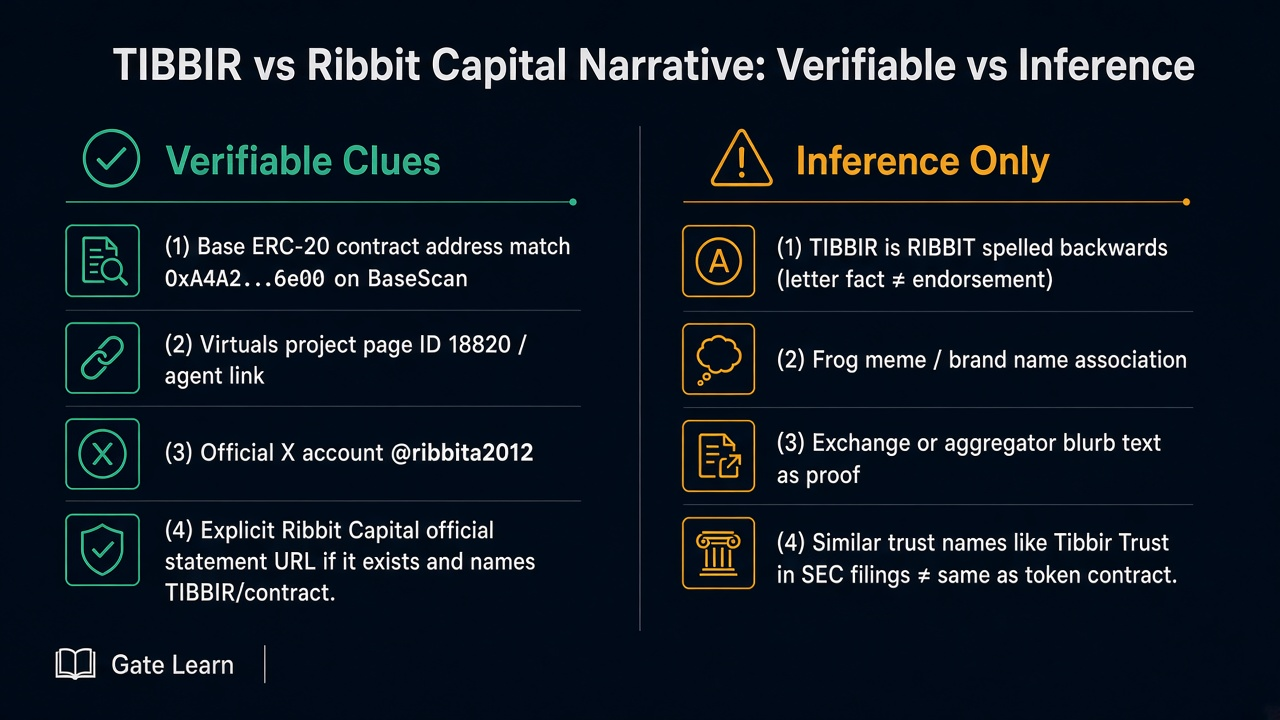
Figure 1. TIBBIR vs Ribbit Capital narrative: verifiable clues vs inference-only signals.
Use it as “classify first, then upgrade”: the left side can enter a checklist; the right side can explain narrative popularity but must not jump to conclusions. When no Ribbit Capital official URL names TIBBIR / Ribbita / that contract, write “no public confirmation found”—do not fill the gap with venue copy.
How Should Tibbir Trust / SEC-Style Clues Be Read Correctly?
A trust name and a token contract are not necessarily the same thing. Seeing “Tibbir” or a near spelling in a financial filing only shows a similarly named legal entity or trust exists; it does not automatically map to the Base ERC-20 0xA4A2…6e00.
Correct reading is field cross-checks, not name-jumping: does the filing also name the chain, contract address, Virtuals, Ribbita, or the TIBBIR ticker; is the disclosing party Ribbit Capital or an identifiable affiliate; purpose a trust arrangement, holdings registration, or other administrative matter. Without address and protocol cross-references, same-name clues stay at the inference layer.
Overreach often looks like: see “Tibbir” → write “filings confirm the token is bound to the VC.” Log the name match as to-verify; until contract-level cross-references appear, it is not official-link proof. Trust filings address legal naming and structure; they do not automatically settle on-chain asset identity.
How Do Exchange / Aggregator Blurbs Differ From Independent Verification?
Exchange and aggregator blurbs may help with market discovery, but they are not primary disclosure sources. Blurbs may summarize community talk, legacy copy, or editorial notes, and rank below explorers, project pages, and a firm’s official channels.
Independent verification requires key blurb claims to trace to a clickable source. If a blurb says “related to Ribbit Capital,” check whether that sentence points to the same asset in a Ribbit Capital official statement, press release, or regulatory disclosure; if not, it is display copy—not institutional confirmation.
Treating blurbs as endorsement creates lag risk, cross-platform copy errors, and reading marketing lines as legal facts. The robust habit is “blurbs for discovery, primary sources for conclusions”: discovery can log narrative keywords; conclusions accept only the contract, project ID, and named statements.
Pre-Hold Checklist You Can Run
Before holding or tracking TIBBIR, use this numbered flow to separate narrative from asset identity; each step answers one re-verifiable question.
- Confirm chain and contract: Is the network Base, and is the contract exactly 0xA4A2E2ca3fBfE21aed83471D28b6f65A233C6e00 (BaseScan token page)?
- Confirm Virtuals mapping: Does project page 18820 point to the same Ribbita / TIBBIR, avoiding spoof pages or the wrong agent?
- Confirm social rails: Do X @ribbita2012 and similar channels mutually point to the project page; account existence does not establish an external VC link.
- Search firm disclosures: On Ribbit Capital’s site, official socials, and searchable filings, look for naming of Ribbita, TIBBIR, Virtuals, or the contract above; if no clickable confirmation appears, mark “no public confirmation found.”
- Demote blurb copy: Flag Ribbit Capital wording in exchange / aggregator blurbs as pending trace-back; without a primary source, do not file it under “confirmed.”
- Exclude same-name traps: Apply “no address, no upgrade” to Tibbir Trust / SEC near spellings; also recheck that TIBBIR is not being mistaken for VIRTUAL or protocol ownership.
After six steps, it should be clear what is verified token identity, what remains inferential narrative, and what firm confirmation is missing. The checklist is for information hygiene—not a buy or hold recommendation.
What Risks Does Narrative Misreading Create?
The core risk of narrative misreading is not “whether the names look alike,” but treating an unconfirmed link as confirmed exposure—which distorts risk budgets and verification priority.
| Common misread |
Trigger |
Possible consequence |
How to spot it |
| Reversal = endorsement |
TIBBIR↔RIBBIT alone |
Overstates institutional support |
Demand a named official URL |
| Blurb = proof |
Aggregator copy as primary source |
Copies a false narrative |
Can the claim open an original disclosure? |
| Trust name = same contract |
SEC / trust shows Tibbir |
Misreads regulatory or equity binding |
Check for a contract address |
| Agent token = VC equity |
Confuses tokens with fund interests |
Misplaced rights expectations |
Contrast agent vs platform-asset boundaries |
| Spoof confluence |
Frog icon + near ticker |
Wrong contract, irreversible loss |
Accept only the fixed Base contract |
The table is risk recognition, not price judgment: misreads change “what someone thinks they are buying”; even with correct on-chain parameters, cognition-layer errors still skew risk attribution. Spoofs and wrong-network transfers are operational risks that often rise with narrative heat, so contract checks cannot be replaced by narrative debate.
Summary
The TIBBIR–Ribbit Capital narrative mainly comes from letter reversal and brand adjacency; both explain distribution and do not automatically prove investment or deployment. The verifiable layer should anchor on the Base contract, the Virtuals project page, and—if it exists—a firm official statement that names the asset; when no clickable Ribbit Capital confirmation appears, write “no public confirmation found.”
Similarly named trusts, venue blurbs, and community wordplay can be logged as clues, but default to lower weight than primary sources. Running the six-step checklist before holding separates “a sticky story” from “a fact that can be re-checked.” This is educational verification method only—not investment advice.
FAQ
Is there an official relationship between TIBBIR and Ribbit Capital?
Public searches show no clickable Ribbit Capital confirmation naming the TIBBIR contract, Ribbita, or the matching Virtuals project. Letter reversal can explain where the narrative comes from, but cannot alone prove investment, deployment, or endorsement; until a named disclosure appears, treat the link as unconfirmed.
Is TIBBIR RIBBIT spelled backward—and what does that prove?
Yes. TIBBIR and RIBBIT are reverse spellings—an observable letter fact. That fact can explain why a “Ribbit” brand comes to mind, but it does not prove Ribbit Capital invested in, issued, or endorsed the token.
Can a Tibbir Trust or SEC filing prove it is the same asset as the TIBBIR token?
Not from a same or near name alone. A trust name and a Base token contract are not necessarily identical; only when a filing also includes contract-level references—such as the contract address, chain, Virtuals, or Ribbita—can it upgrade toward a verifiable link; otherwise it stays inference.
How do you verify TIBBIR’s contract and project page?
On BaseScan, confirm the contract is 0xA4A2E2ca3fBfE21aed83471D28b6f65A233C6e00, and check that Virtuals Protocol project page 18820 points to the same Ribbita / TIBBIR. Matching both confirms token identity; blurbs and frog icons do not replace that step.
If an exchange blurb mentions Ribbit Capital, is that official endorsement?
No. Exchange and aggregator blurbs are display copy and rank below firm official statements and on-chain identity checks. If a blurb claim cannot trace to a clickable primary source, demote it—do not write that Ribbit Capital has confirmed the asset.