Partners comparing acquisition rails can start from the Gate Broker Program overview of rebate ceilings and VIP boundaries, then follow how to apply for Gate Broker when ready to submit. Current figures follow Gate Broker rules; limited-time event rewards stay separate from evergreen ceilings.
Key Takeaways
- Portal Broker routes users through an embedded referral link; API Broker routes new users to place orders via API.
- Published Spot and Futures rebate ceilings are up to 70% for Portal Broker and up to 60% for API Broker; Spot, Futures, and CrossEX share one Apply Now button handled by BD.
- Portal FAQ eligibility cites influencers, group leaders, freelancers, top traders, or investment advisors with at least 500 followers and points to the Referral Program.
- Reviewed API brokers may apply for an X-Gate-Channel ID for rebates on existing Gate users’ trades; Gate does not publish a separate percentage for that path.
How Do Portal Broker and API Broker Differ?
| Feature |
Portal Broker |
API Broker |
| Primary acquisition rail |
Embed a referral link into a website or community channel |
Refer new users who place orders via API |
| Spot rebate ceiling (published) |
Up to 70% |
Up to 60% |
| Futures rebate ceiling (published) |
Up to 70% |
Up to 60% |
| Eligibility signal (FAQ) |
Influencers, group leaders, freelancers, top traders, or investment advisors with ≥500 followers; more detail via Referral Program |
Refer new users who place orders via API; no separate follower-count FAQ like Portal |
| Existing Gate-user rebates |
Not the Portal FAQ focus |
After review, may apply for X-Gate-Channel ID to earn rebates from existing Gate users’ transactions |
| Spot / Futures / CrossEX apply path |
Same Apply Now button; BD handles applications |
Same Apply Now button; BD handles applications |
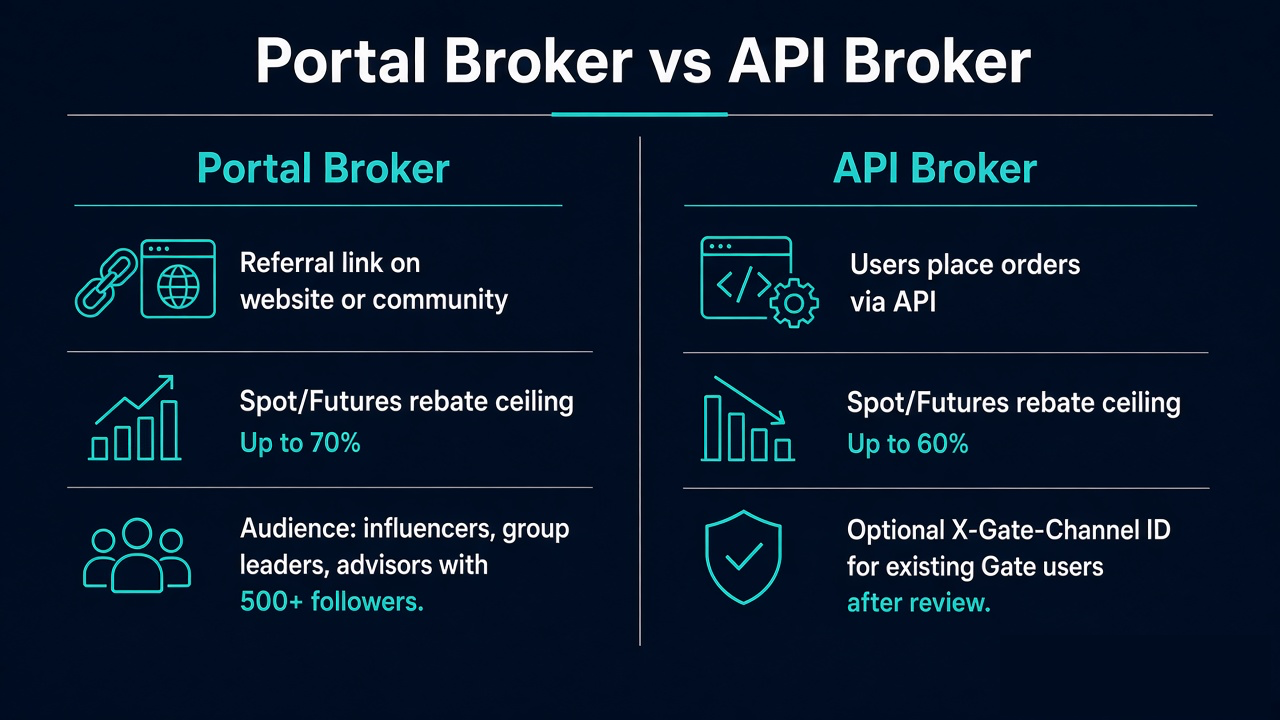 Figure 1. Portal Broker vs API Broker: acquisition rail and published Spot/Futures rebate ceilings.
The table separates evergreen rebate ceilings from optional campaign rewards. A limited-time Global Broker Program activity may add event-period GT rewards and a leaderboard; live countdown and rules sit on the campaign, including a 21-day window for a top-tier limited bonus after broker registration. Event GT amounts are not the same as the evergreen 70% / 60% Spot and Futures ceilings.
What Is Portal Broker?
Portal Broker is the Gate Broker path built around embedding a referral link into a website or similar front door so referred users trade on Gate. Gate lists Portal Spot and Futures rebate ceilings of up to 70% each.
The Portal “how to become” FAQ frames the audience as blockchain community influencers, group leaders, freelancers, top traders, or investment advisors with at least 500 followers, and directs further detail to the Referral Program. Portal Broker is therefore a link-and-audience model rather than an order-routing API stack.
What Is API Broker?
API Broker is the Gate Broker path for partners that refer new users to place orders through an API connection into Gate. The same broker page lists API Spot and Futures rebate ceilings of up to 60% each.
After review, API brokers can apply for an additional X-Gate-Channel ID and earn rebates from transactions of existing Gate users. Gate confirms that capability but does not publish a separate rebate percentage for the existing-user channel, so no second percentage should be assumed beyond the stated Spot/Futures up-to-60% ceilings for the API Broker path.
How Do Acquisition Rails Differ?
The first decision is how users arrive and how orders are attributed. Portal Broker embeds a referral link on a website; API Broker refers new users who place orders via API. In-scope business types commonly include trading-bot, copy-trading, quantitative-strategy, asset-management, market-website, and aggregated-trading platforms, with specific requirements confirmed by the broker manager during review.
Rail choice changes operational work: Portal emphasizes link placement, audience fit, and Referral Program alignment; API emphasizes integration stability, channel codes, and review for X-Gate-Channel ID. This comparison stays within Gate’s published Portal and API models.
API Broker specifically means referring new users who place orders via API and earning rebates under the published Spot/Futures ceilings. It should not be read as a generic “best API brokers for algo trading” comparison outside Gate’s Broker Program.
How Do Spot and Futures Rebate Ceilings Differ?
Published ceilings are the clearest numeric split. Portal Broker lists Spot up to 70% and Futures up to 70%. API Broker lists Spot up to 60% and Futures up to 60%. Those figures are published maximums, not guaranteed rates for every applicant.
CrossEX rebates are available under the same broker application umbrella: Spot, Futures, and CrossEX rebate applications all submit via Apply Now, with the BD team handling applications directly—no separate portal is required. Invitee VIP level can affect rebate form: brokers can receive real-time rebates from invitees at VIP level 10 or lower; for invitees above VIP 10, brokers can apply for a one-time reward.
Who Fits Portal Broker Eligibility vs API Integration?
Portal eligibility is audience-based: influencers, group leaders, freelancers, top traders, or investment advisors with at least 500 followers, with more information under the Referral Program. That signal favors partners whose growth is link-driven and community-led.
API Brokers usually do not get a Portal-style follower-count FAQ. Fit is described through API order referral, review, and—where approved—the optional X-Gate-Channel ID for rebates on existing Gate users’ transactions.
Should You Choose Portal Broker or API Broker?
Choose Portal Broker if the primary channel is a website or community referral link, the audience matches the Portal FAQ profile (including the ≥500-follower classes where applicable), and the published Spot/Futures ceiling of up to 70% is the relevant evergreen benchmark.
Choose API Broker if new users will place orders through an API integration, the published Spot/Futures ceiling of up to 60% matches the commercial model, and—after review—an X-Gate-Channel ID may be needed to earn rebates from existing Gate users’ transactions.
If both a content front door and an API stack exist, treat the rails as different attribution designs rather than interchangeable labels. Confirm live ceilings, VIP rebate rules, and any Global Broker Program countdown before treating campaign GT rewards as part of the evergreen 70% / 60% comparison.
Before asking BD to confirm commercial terms, partners should document which published rail will attribute volume: Portal referral links versus API order referral, plus whether an X-Gate-Channel ID will be requested after review. Spot, Futures, and CrossEX rebate applications still share the same Apply Now button.
Summary
Portal Broker vs API Broker on Gate separates a referral-link model (Spot/Futures ceilings up to 70%) from an API order-routing model (Spot/Futures ceilings up to 60%). Portal FAQ eligibility emphasizes creators and advisors with at least 500 followers and points to the Referral Program; API Broker adds a reviewed X-Gate-Channel ID path for rebates on existing Gate users without a second published percentage. Spot, Futures, and CrossEX applications share one Apply Now button handled by BD. Global Broker Program GT rewards remain optional and time-bound, distinct from evergreen ceilings.
FAQ
What is the difference between Portal Broker and API Broker on Gate?
Portal Broker embeds a referral link into a website or community channel; API Broker refers new users who place orders via API. Published Spot and Futures rebate ceilings are up to 70% for Portal Broker and up to 60% for API Broker on the Gate Broker page.
What rebate ceilings do Portal Broker and API Broker publish?
Portal Broker lists Spot up to 70% and Futures up to 70%. API Broker lists Spot up to 60% and Futures up to 60%. These are published maximums, not guaranteed rates for every partner.
Can API brokers earn rebates from existing Gate users?
Yes. API brokers who pass review can apply for an X-Gate-Channel ID and earn rebates from transactions of existing Gate users. Gate confirms the capability and does not state a separate percentage for that existing-user path.
Who is Portal Broker aimed at on the Gate FAQ?
The Portal FAQ describes blockchain community influencers, group leaders, freelancers, top traders, or investment advisors with at least 500 followers, and refers readers to the Referral Program for more information.
Do Spot, Futures, and CrossEX rebates use the same application?
Yes. Broker rebate applications for Spot, Futures, and CrossEX are all submitted via the Apply Now button on the Gate Broker page. The BD team handles applications directly, so a separate portal is not required.