Web3 application development has long faced a core challenge: how to encourage users not only to create wallets, buy tokens, or join short-term activities, but also to continue using genuinely valuable on-chain products. Forest Protocol aims to lower the barrier for creators to connect digital experiences to the on-chain economy through interactive tokens, token issuance infrastructure, and gamified applications. Its approach combines token issuance, application experiences, and community participation, making tokens part of an application economy rather than standalone trading symbols. This article examines the potential and limitations of this model from the perspectives of Web3 product design, the creator economy, user retention, token incentives, and ecosystem governance, while discussing its implications for the development of on-chain application infrastructure.
Key Takeaways
-
Forest Protocol seeks to combine token issuance, on-chain trading, and games or interactive applications to lower the barrier for creators to launch on-chain projects
-
Whether interactive tokens can generate long-term value depends on the application experience and user retention, not simply on how quickly tokens are issued
-
Permissionless creation can expand room for innovation, but it also increases the risks of low-quality projects, fraud, and fragmented liquidity
-
A sustainable Web3 ecosystem requires real usage, transparent rules, reasonable incentives, and secure infrastructure
The Core Challenge for Web3 Applications: From Wallet Connections to Continued Use
Web3's open infrastructure allows developers to deploy assets, smart contracts, and decentralized applications on-chain, but technical accessibility does not necessarily mean products are easy to use. For everyday users, wallet management, network switching, transaction fees, private key security, and on-chain confirmations can all make first-time use more difficult. Even if users successfully complete one transaction, that does not mean they will keep returning. A project's ability to attract short-term attention and its ability to build long-term user relationships are two different capabilities.
Traditional internet products typically organize the user experience around specific needs, such as social interaction, entertainment, content creation, or payments. Users return because a product solves a problem or provides an appealing experience. Web3 projects, however, often introduce tokens, governance, rewards, and trading mechanisms at the same time. These mechanisms can allow users to participate more directly in digital asset ownership and economic activity, but if economic incentives obscure weaknesses in the product itself, user participation may become highly dependent on token prices and reward expectations. Once rewards decrease or prices decline, activity may also fall quickly.
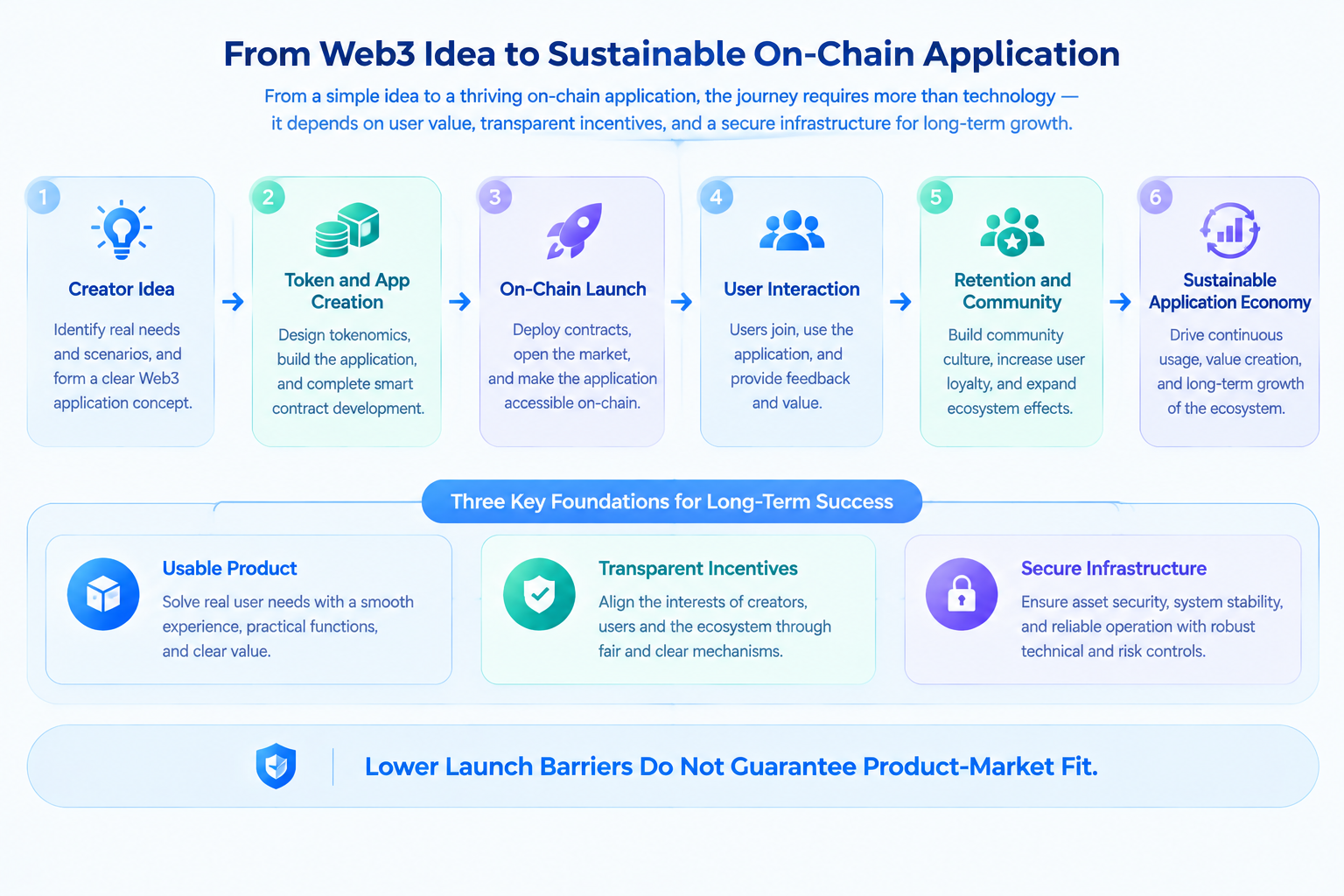
Forest Protocol seeks to address this issue by combining application experiences with token mechanisms. Its interactive token concept emphasizes that tokens can support games, mini apps, and community activities, meaning project issuance and application use do not have to be completely separate. This model may enable creators to test product ideas more quickly and design digital economies around user behavior. However, the real standard remains whether an application has repeatable utility: whether users are willing to return without short-term rewards, whether the product continues to improve, and whether tokens provide necessary functionality for the experience rather than additional complexity.
The Product Logic of Interactive Tokens: Tokens Should Not Be Just Trading Symbols
In traditional token issuance models, projects typically create tokens first and then attempt to generate demand through communities, marketing, and application development. Token prices and trading activity can easily become the main indicators used by outsiders to judge a project's popularity, but they do not necessarily accurately reflect whether the product is actually being used. Interactive tokens seek to change this relationship by linking tokens to specific games, applications, or interactive experiences from the beginning. Users are not simply purchasing an asset; they may also participate in the corresponding economic system through in-app tasks, gameplay, or community activities.
From a product design perspective, this approach has two potential advantages. First, it can help creators validate more quickly whether an interactive experience appeals to users without first building a complete standalone system for token issuance, trading, and user incentives. Second, tokens can serve specific functions within an application, creating a more direct connection between user behavior, community participation, and on-chain assets. For small teams with limited resources, shared infrastructure may reduce launch costs and allow them to devote more effort to gameplay, content, and user experience.
However, tokenization itself does not automatically make a product appealing. A game with repetitive gameplay, complicated operations, or insufficient ongoing updates may lose users after its initial popularity fades, even if it offers token rewards. Conversely, if users participate mainly because they expect a token's price to rise, product data may overstate actual demand. To determine whether the interactive token model is effective, it is necessary to distinguish between behavior driven by rewards and users' voluntary continued use, while observing whether users remain active after rewards are adjusted. Only when the product itself can provide an ongoing experience are tokens more likely to become tools that enhance participation rather than the sole reason for participation.
Forest Protocol's Infrastructure Approach: Making It Easier for Creators to Enter the On-Chain Economy
Forest Protocol positions itself as token issuance and AMM infrastructure for BNB Chain, supporting games and applications through interactive tokens. Project documentation describes a design direction in which creators issue tokens, connect application experiences, and trade through shared liquidity. For developers, integrated infrastructure can reduce the work required to coordinate across multiple systems, including token creation, initial trading conditions, and application economy design. For the ecosystem, unified underlying components may also help different projects share certain technical and economic mechanisms.
The significance of this type of infrastructure lies not only in making tokens easier to issue, but also in reducing the distance between an idea and a usable product. Traditional development workflows often require developers to separately handle application logic, wallet connections, token contracts, trading markets, and user incentives. If an underlying protocol provides reusable components, creators can experiment more quickly. For small studios, independent developers, and even teams using automated development tools, this approach may broaden the range of participants and give more prototypes the opportunity to enter real user environments.
However, lowering the barrier to issuance also brings new challenges. When anyone can create tokens and applications more easily, the number of projects may grow rapidly, while user attention and available liquidity will not increase indefinitely. Large numbers of projects competing for the same users may lead to fragmented communities, dispersed liquidity, and increased short-term speculation. Platforms also need to address content quality, smart contract security, malicious projects, and user complaints. Therefore, infrastructure competitiveness should not be measured solely by "how many tokens can be created quickly." It should also consider whether developers continue using the platform, whether applications can retain users, and whether the protocol provides clear security and governance boundaries.
Gamification and User Retention: Reward Mechanisms Need to Serve the Experience
Games are an important setting for Web3 applications exploring tokenization because games already include rules, progression, items, achievements, and player interactions. Tokens can be used for specific items, participation eligibility, community activities, or other digital economic functions, giving users more ways to participate beyond the game itself. Forest Protocol's design direction seeks to combine games with interactive tokens, enabling creators to build corresponding on-chain economies around specific gameplay. In theory, this can shorten the distance between application experiences and token use while providing users with more reasons to participate.
However, reward mechanisms need to remain balanced with the product experience. If participation is primarily driven by rewards, projects must continuously provide sufficient rewards to maintain activity. Once rewards decline, users may leave. If rewards depend on continuously issuing new tokens, they may also create supply expansion and selling pressure. Even if a project adopts fee recycling or other economic cycle designs, it must confirm whether the funding source is sustainable and whether reward distribution aligns with genuine product contributions. Rewards can help users try new products, but they are difficult to use as a long-term substitute for engaging gameplay, reliable services, and a healthy community environment.
Therefore, when evaluating on-chain games and interactive token ecosystems, it is important to examine user retention rather than just registration numbers, while also considering the quality of active user behavior. For example, do users repeatedly complete game content, participate in different features, continue using the product after reward campaigns end, and does the project continue releasing meaningful updates? For developers, these metrics help determine whether a product has developed genuine demand. For protocols, they can help distinguish short-term issuance popularity from more sustainable application growth. Over the long term, projects that provide stable experiences are more likely to develop healthy token economies rather than relying on the continuous creation of new market trends to maintain attention.
Permissionless Innovation and Ecosystem Risks: Openness Does Not Mean No Constraints
Permissionless issuance is one of the important characteristics of Web3 infrastructure. It allows creators to experiment with new token and application models without obtaining approval from centralized platforms one by one, reducing barriers to innovation and preventing the ecosystem from relying entirely on a single institution to decide which projects can emerge. This openness helps create a diverse experimental environment where developers can quickly validate new game mechanics, community models, and digital asset use cases.
However, openness also means that users must deal with greater information asymmetry. New tokens may lack established teams, clear roadmaps, or validated products. Some projects may involve smart contract vulnerabilities, liquidity withdrawal risks, misleading promotion, or opaque token distributions. Even if an underlying protocol provides standardized issuance tools, this does not mean that every project created on it has undergone thorough review. Users need to distinguish between the technical capabilities of the protocol layer and the trustworthiness of individual applications, and independently research each project.
For protocol builders, the sustainable development of an open ecosystem requires balancing creative freedom and risk management. This may involve clear developer documentation, smart contract security practices, risk disclosures, verifiable trading data, and transparent processes for handling malicious content or security incidents. Open protocols may not be able to eliminate all risks, but they can reduce the cost of user evaluation through clearer information and verifiable rules. For users, the most important point is not to interpret "permissionless" as "reviewed," nor to assume that a tradable token means that the project behind it has long-term value.
FOREST's Long-Term Development: From Issuance Efficiency to Application Quality
Whether Forest Protocol can develop long-term competitiveness depends on whether it can continue attracting developers and help them build applications that people genuinely use. The efficiency of issuance tools is a starting point, not the ultimate goal. More meaningful metrics include the number of active creators, the number of continuously operated applications, user retention, frequency of repeat use, the quality of on-chain transactions, and protocol fees. If the ecosystem expands while application retention and real usage improve at the same time, this would more strongly indicate that the infrastructure is creating practical value.
Another key variable is the relationship between ecosystem economics and product experience. If demand for FOREST mainly depends on new project issuance and short-term trading, ecosystem growth may be vulnerable to market cycles. If more applications develop stable user activity and enable tokens to serve clear functions in real use, the ecosystem may have more diversified sources of demand. However, even then, token demand will be affected by supply unlocks, market liquidity, competing protocols, and overall crypto market conditions. Token price trends should not be inferred solely from the number of applications.
For researchers focused on Web3 infrastructure, Forest Protocol provides a case worth observing: it seeks to integrate token issuance, liquidity, and interactive applications into a single ecosystem. The value of this model ultimately depends on whether creators can continue building appealing products, whether users can gain genuine experiences, and whether its economic mechanisms can operate without relying on continuously increasing speculative demand. Market popularity can bring attention, but only long-term product usage, transparent rules, and sustainable ecosystem activity can potentially turn attention into stronger network effects.
Gate listed FOREST/USDT for spot trading in September 2025, providing users with a channel to observe the asset's market trading performance. For users researching Web3 projects, prices, trading volume, and related announcements on trading platforms can supplement on-chain data, but they cannot replace analysis of the protocol itself. Centralized trading markets and on-chain application ecosystems operate at different levels: the former reflects asset supply and demand in specific trading environments, while the latter involves developer adoption, application experience, user retention, and smart contract operations.
Therefore, when following FOREST, market data and project information can be reviewed separately and then cross-validated. On one hand, monitor trading volume, market depth, volatility, and changes in token supply. On the other hand, track Forest Protocol's product updates, developer tools, application ecosystem, and on-chain activity. Only if both types of data show sustained improvement is there greater reason to further examine whether ecosystem growth is generating genuine economic demand. If the market price rises rapidly but user activity and application use do not change accordingly, it is important to carefully distinguish trading popularity from product progress.
For Web3 participants, this research approach also applies to other tokenized application platforms. Rather than only asking whether a token is popular, consider what problem it solves, why users return, why developers choose it, and how the protocol's economic mechanisms connect to real usage. Gate can serve as an entry point for observing asset trading and market information, while a project's product quality, security, and long-term adoption still need to be assessed through public documentation, on-chain data, and ongoing monitoring.
FAQ
What Are Forest Protocol's Interactive Tokens?
This is Forest Protocol's description of its tokenized application model, referring to tokens that can be connected to games, mini apps, or other interactive experiences. Their actual uses depend on the design of each specific project and do not mean that all related tokens have the same functions or stable demand.
It positions itself not only as a Launchpad, but also emphasizes AMMs, shared liquidity, and interactive application infrastructure. Its long-term value still needs to be validated through actual developer adoption, application activity, and trading quality.
Can Game Rewards Guarantee That Web3 Applications Retain Users?
No. Rewards can reduce the barrier to initial participation, but long-term retention also depends on gameplay, experience, community, and ongoing updates. If users come only for short-term rewards, changes in incentives may cause activity to decline quickly.
Does Permissionless Issuance Mean That All Projects Are Safe?
No. Permissionless means creators can deploy projects more freely; it does not mean that every project has undergone security audits or reputation reviews. Users still need to independently verify contract addresses, liquidity conditions, token distribution, and project backgrounds.