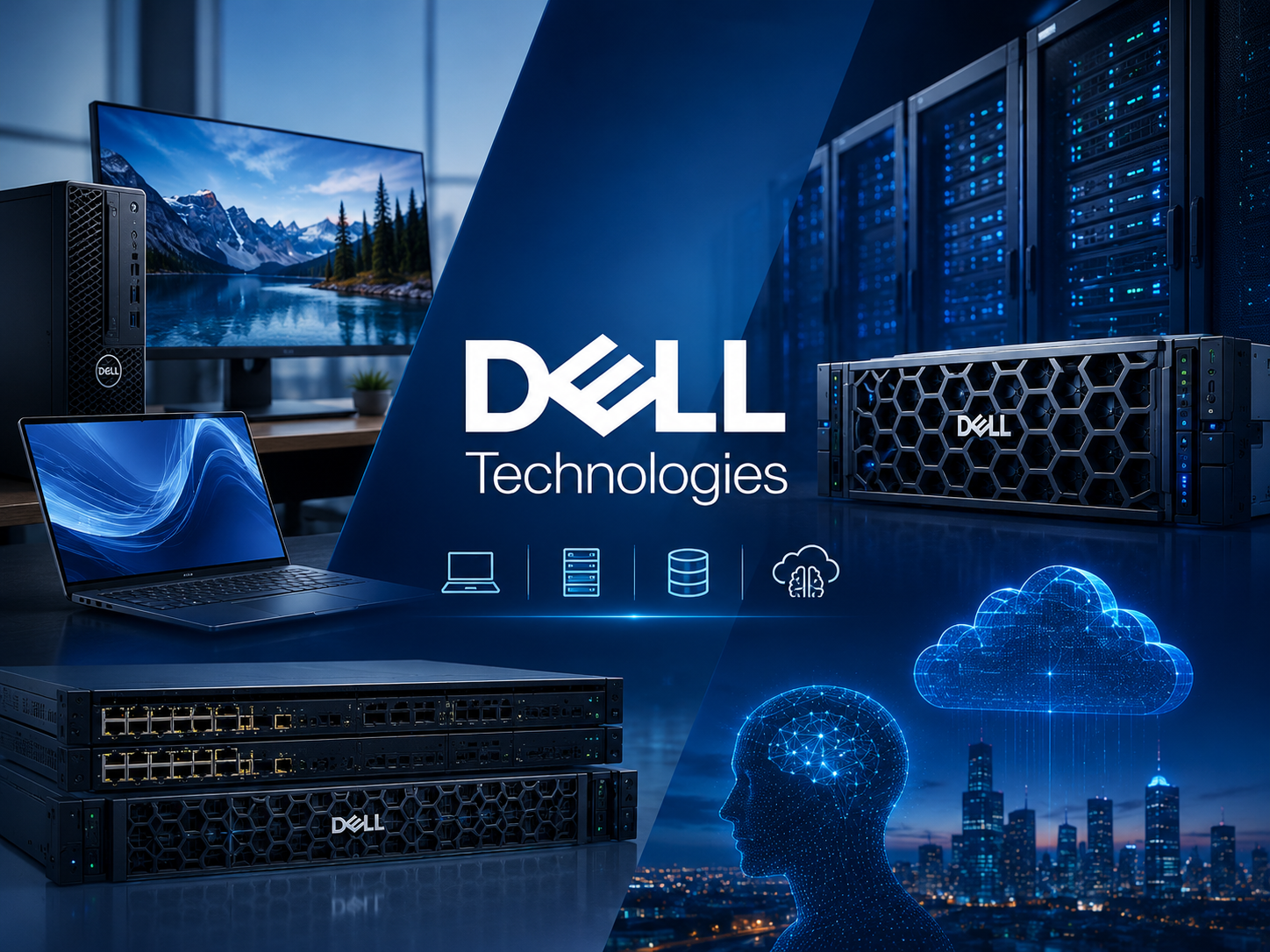
For enterprises, digital transformation is no longer simply about purchasing a single device. It requires complete capabilities for data processing, storage, analysis and computing. Dell’s product ecosystem is built around this need, supporting enterprise IT architectures through the coordinated use of hardware, software and services.
As the artificial intelligence industry develops rapidly, Dell’s use cases have also expanded from traditional office equipment into AI data centers, high performance computing platforms and the enterprise AI infrastructure market.
What Are Dell’s Core Products
Dell’s product portfolio can be divided into two major areas: endpoint devices and enterprise infrastructure.
Endpoint devices mainly include personal computers, laptops, mobile workstations and monitors. Product lines such as XPS, Latitude, Precision and Alienware cover the consumer, commercial and professional markets.
Enterprise infrastructure includes servers, data storage systems, networking equipment and related IT services. For large enterprises, these products form an important foundation for digital operations.
Dell’s core product structure is currently as follows:
| Product Category |
Representative Products |
| Personal computers |
XPS, Inspiron, Latitude |
| Workstations |
Precision |
| Gaming devices |
Alienware |
| Servers |
PowerEdge |
| Storage systems |
PowerStore, PowerScale |
| Networking equipment |
Enterprise switches and networking solutions |
This product structure, spanning endpoints to data centers, allows Dell to serve both individual users and large enterprise customers.
Which Users Do Dell Computers Mainly Serve
The personal computer business remains one of Dell’s most recognizable businesses.
For everyday consumers, Dell computers mainly support studying, office work, entertainment and home use. Different product lines are designed for different user groups, ranging from entry level office PCs to high performance creative workstations.
Enterprise customers place greater emphasis on security, stability and device management. The Latitude series has long been used by many companies for employee office device deployments, while Precision workstations are widely used in industrial design, engineering development and film and television production.
For professional users, Dell workstations can support complex graphics processing, data analysis and software development tasks, giving them a strong market presence among research institutions and large enterprises.
How Storage and Server Products Are Used in the Enterprise Market
Enterprise digital operations depend on data storage and computing resources.
Dell server products are mainly used for internal enterprise business systems, database platforms, cloud computing environments and data analytics platforms. Servers handle computing tasks, while storage systems are responsible for data preservation and management. Together, they form the core of enterprise IT infrastructure.
In real world use, enterprises often deploy Dell servers for:
At the same time, storage products such as PowerStore and PowerScale help enterprises manage constantly expanding volumes of data.
For industries such as finance, healthcare and manufacturing, data security and stability are especially important. As a result, enterprise storage systems have become a key part of digital infrastructure development.
How AI Servers Support Artificial Intelligence Workloads
Running artificial intelligence models requires substantial computing resources, and AI servers are the infrastructure that provides those resources.
Compared with traditional servers, AI servers usually integrate high performance GPUs, fast network connections and large scale storage systems to support model training and inference tasks.
Dell’s PowerEdge AI servers are mainly used in:
| Application Area |
Use Case |
| Model training |
Large language model training |
| AI inference |
Enterprise AI service deployment |
| Data analytics |
Massive data processing |
| High performance computing |
Scientific computing and research |
For enterprises, purchasing AI servers is not just about buying hardware. It is an important step in building artificial intelligence infrastructure.
As demand for generative AI grows, AI data center development has become one of Dell’s most closely watched business areas in recent years.
Which Industry Use Cases Do Dell Solutions Cover
Dell’s product ecosystem covers a wide range of industries.
Financial institutions use Dell servers to process transaction data and risk analysis. Healthcare organizations use storage systems to manage electronic medical records and medical imaging. Manufacturing companies rely on Dell infrastructure to support industrial automation and supply chain management.
The education sector widely uses Dell endpoint devices and cloud computing solutions, while retail companies use data analytics platforms to optimize inventory and user operations.
In recent years, the artificial intelligence industry has become a new major application area. More companies are deploying chatbots, intelligent customer service systems, data analytics platforms and generative AI applications through Dell AI infrastructure.
From the perspective of industry coverage, Dell has evolved from a traditional hardware manufacturer into a provider of enterprise digital infrastructure.
Why Enterprises Choose Dell Infrastructure Products
One of the main reasons enterprises choose Dell infrastructure products is that the company can provide complete IT solutions.
Rather than purchasing servers, storage and networking equipment separately, enterprises are more inclined to choose suppliers that can provide overall architecture design, deployment implementation and long term operations and maintenance support.
Dell’s advantages in the enterprise market are mainly reflected in the following areas:
-
Broad product coverage
-
Deep enterprise customer base
-
Well developed global service network
-
Mature data center solutions
-
Continuously strengthening AI infrastructure capabilities
For large enterprises, IT system stability is often more important than the price of any single product. This makes Dell’s complete ecosystem capability an important competitive advantage.
Conclusion
Dell’s product ecosystem has expanded from personal computers into servers, storage, networking equipment and AI infrastructure. By covering both endpoint devices and the enterprise data center market, Dell can serve individual users, small and medium sized businesses and major institutional customers worldwide.
As demand for artificial intelligence and digital transformation continues to grow, Dell’s use cases are extending further into AI data centers, high performance computing and enterprise intelligent platforms. Understanding the scope of Dell’s product ecosystem helps provide a more complete view of its role in the global technology supply chain.
FAQs
What Are Dell’s Core Products?
Dell’s core products include personal computers, servers, data storage systems, networking equipment and enterprise IT infrastructure solutions.
What Are Dell Servers Mainly Used For?
Dell servers are widely used in enterprise databases, cloud computing platforms, data analytics systems, artificial intelligence training platforms and business management systems.
What Is a Dell AI Server?
A Dell AI server is a high performance server designed for artificial intelligence model training and inference, usually with GPU accelerated computing capabilities.
Why Is Dell Popular with Enterprise Customers?
Dell can provide servers, storage, networking and operations support at the same time, helping enterprises build complete IT infrastructure systems.
Which Industries Do Dell Products Mainly Cover?
Dell products are widely used in finance, healthcare, education, manufacturing, retail, government agencies and the artificial intelligence industry.
What Role Does Dell Play in the AI Data Center Market?
Dell mainly provides servers, storage systems and infrastructure solutions for AI data centers, making it one of the important participants in global AI computing power development.