Unlike traditional stock markets, cryptocurrency markets generally operate around the clock. Prices can change continuously in response to market supply and demand, macroeconomic conditions, project developments, capital flows, and investor sentiment. Users can trade at almost any time, but they must also be prepared for price movements during nights, weekends, and public holidays.
Gate provides spot trading, Convert, margin trading, perpetual futures, options, trading bots, and other products. Beginners should first understand spot trading pairs, order types, and execution mechanisms before moving on to more complex leveraged or derivative products.
What Is Cryptocurrency Trading?
Cryptocurrency trading involves exchanging one digital asset for another. For example, BTC/USDT allows users to buy BTC with USDT or sell BTC in exchange for USDT.
In this trading pair, BTC is the base asset and USDT is the quote asset. The price displayed on the trading page shows how much USDT is required to buy 1 BTC. If a user spends 1,000 USDT to buy BTC, the USDT balance decreases after execution while the BTC balance increases.
After a spot trade is completed, the user holds the actual digital asset. The asset can then be held, sold, transferred, or withdrawn. Spot trading generally does not involve borrowing or liquidation, which makes it easier to understand than margin trading or derivatives.
Selling BTC that a user already owns is not the same as short selling. A spot sale simply converts existing BTC back into USDT, while short selling usually requires borrowing assets through margin trading or opening a short position through a derivative contract.
| Trading Type |
What the User Receives |
Leverage Involved? |
Main Characteristics |
| Spot trading |
The actual digital asset |
Usually no |
Direct structure and suitable for beginners |
| Convert |
The exchanged digital asset |
No |
Simple process without a traditional order book |
| Margin trading |
Spot exposure using borrowed funds |
Yes |
Includes borrowing costs and liquidation risk |
| Perpetual futures |
A price-based contract position |
Usually yes |
Does not provide direct ownership and involves funding fees |
| Options |
The right to buy or sell under specified conditions |
May involve leverage |
More complex pricing and contract structure |
What Should Beginners Prepare Before Trading?
Before starting cryptocurrency trading, users should prepare foundational knowledge along with their account, security settings, and trading funds.
First, users need to register a Gate account on this cryptocurrency exchange and, as a beginner, choose a reliable exchange with strong security protocols, then complete any identity verification required for their region or chosen products. Verification requirements may affect fiat purchases, P2P trading, withdrawal limits, and access to certain services. The applicable requirements are displayed within the user’s account.
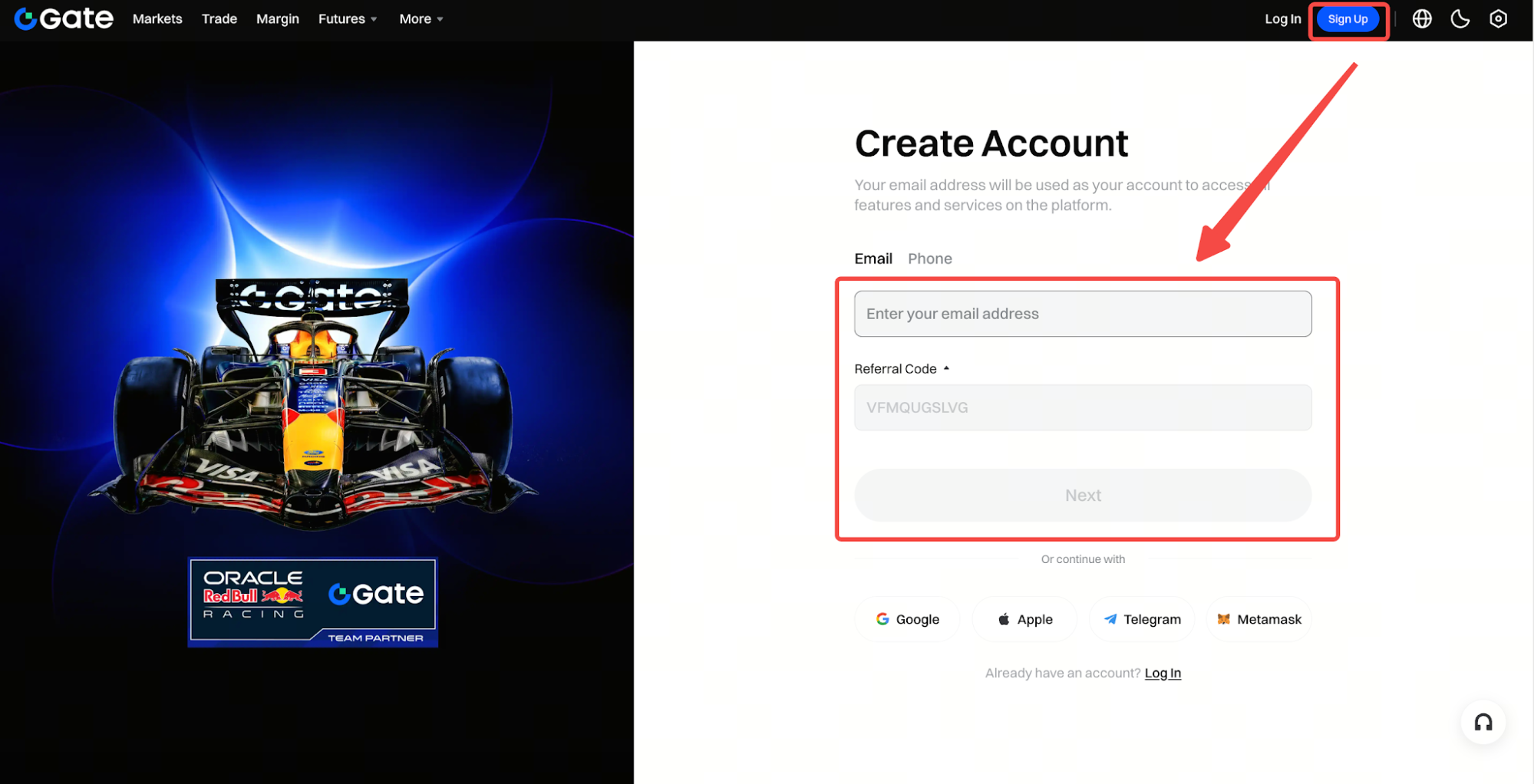
Second, users should strengthen account security. Strong security measures are crucial to protect cryptocurrency assets. It is advisable to use a unique password, enable two-factor authentication, and set an anti-phishing code. A withdrawal address whitelist can also reduce the risk of funds being transferred to an unknown address if the account is compromised.
Finally, users need to prepare trading funds. Beginners often use USDT as a quote asset because many major cryptocurrencies are available in USDT-denominated trading pairs. USDT can be obtained through supported fiat purchase channels, P2P trading, or an on-chain deposit.
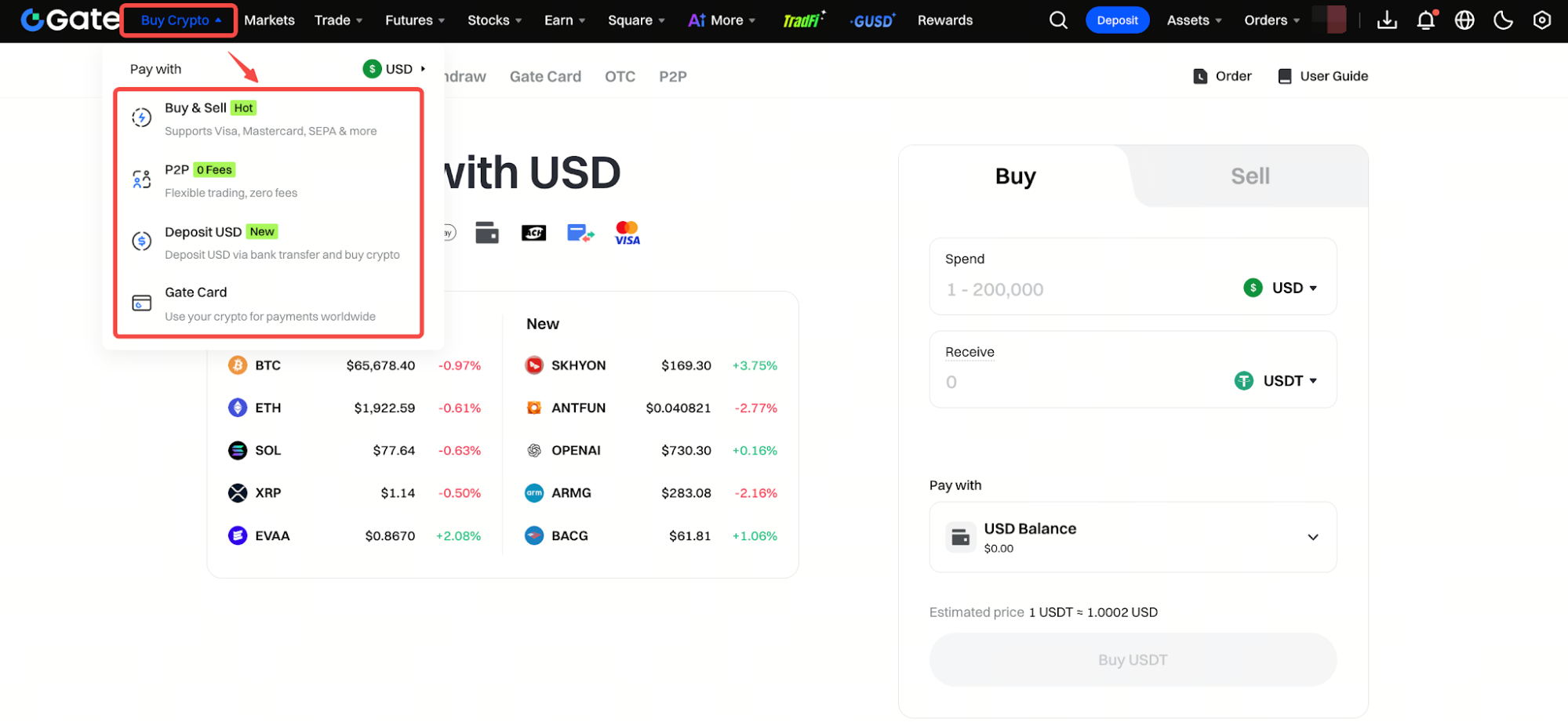
When depositing from an external wallet, the asset, blockchain network, and deposit address must match exactly. Some assets also require a Memo or Tag. Missing this information may prevent the deposit from being credited automatically.
How Can Users Prepare USDT on Gate?
Users who do not yet hold cryptocurrency can obtain USDT through Gate-supported fiat purchase channels or P2P trading. Available payment methods, quotations, transaction limits, and settlement times vary by region and should be confirmed on the relevant page. Depending on local conditions and channel minimums, users can start trading crypto with as little as $10 on many platforms.
With a quick purchase service, users generally select the payment currency, asset to purchase, and payment method before confirming the quotation and estimated amount to be received. The process is relatively simple, although the effective exchange rate may include payment-provider fees or price differences.
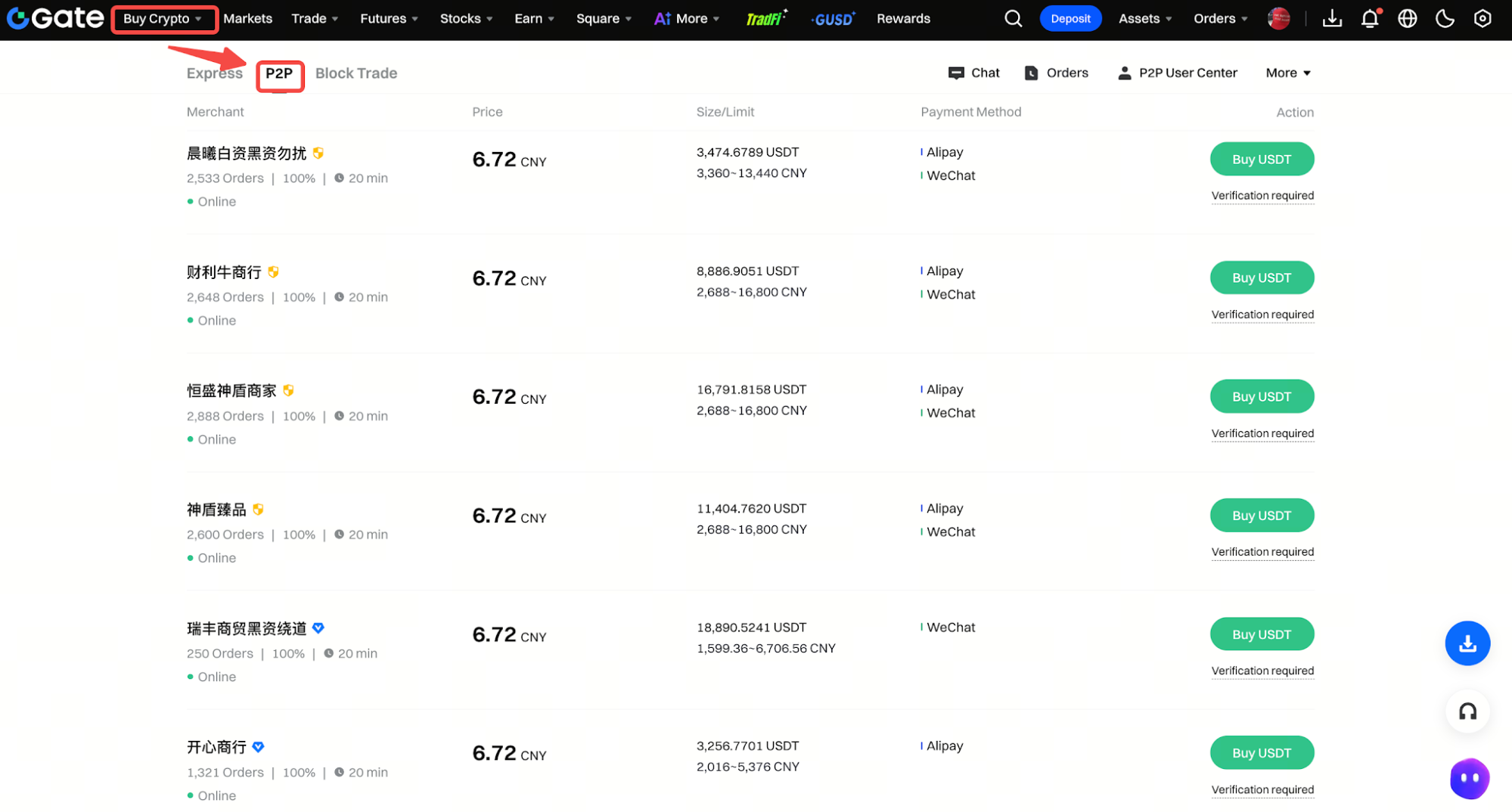
P2P trading allows users to exchange traditional currencies and digital assets with merchants through the platform. When selecting a merchant, users can review transaction volume, completion rate, price, supported payment method, and order limits. The transaction should always be completed through the platform’s order page.
Users who already hold cryptocurrency can deposit it on-chain. Before making a transfer, they should confirm that the sending platform and Gate support the same blockchain network. For a first-time transfer on a particular network, a small test transaction can help confirm that the deposit route is correct.
How Should Beginners Choose a Cryptocurrency Trading Pair?
After funds arrive, users can enter the Gate spot trading page and search for the asset they want to trade. For example, a user who wants to buy BTC with USDT can search for and select BTC/USDT. Bitcoin and Ethereum are the most widely traded cryptocurrencies and are common starting points for beginners.
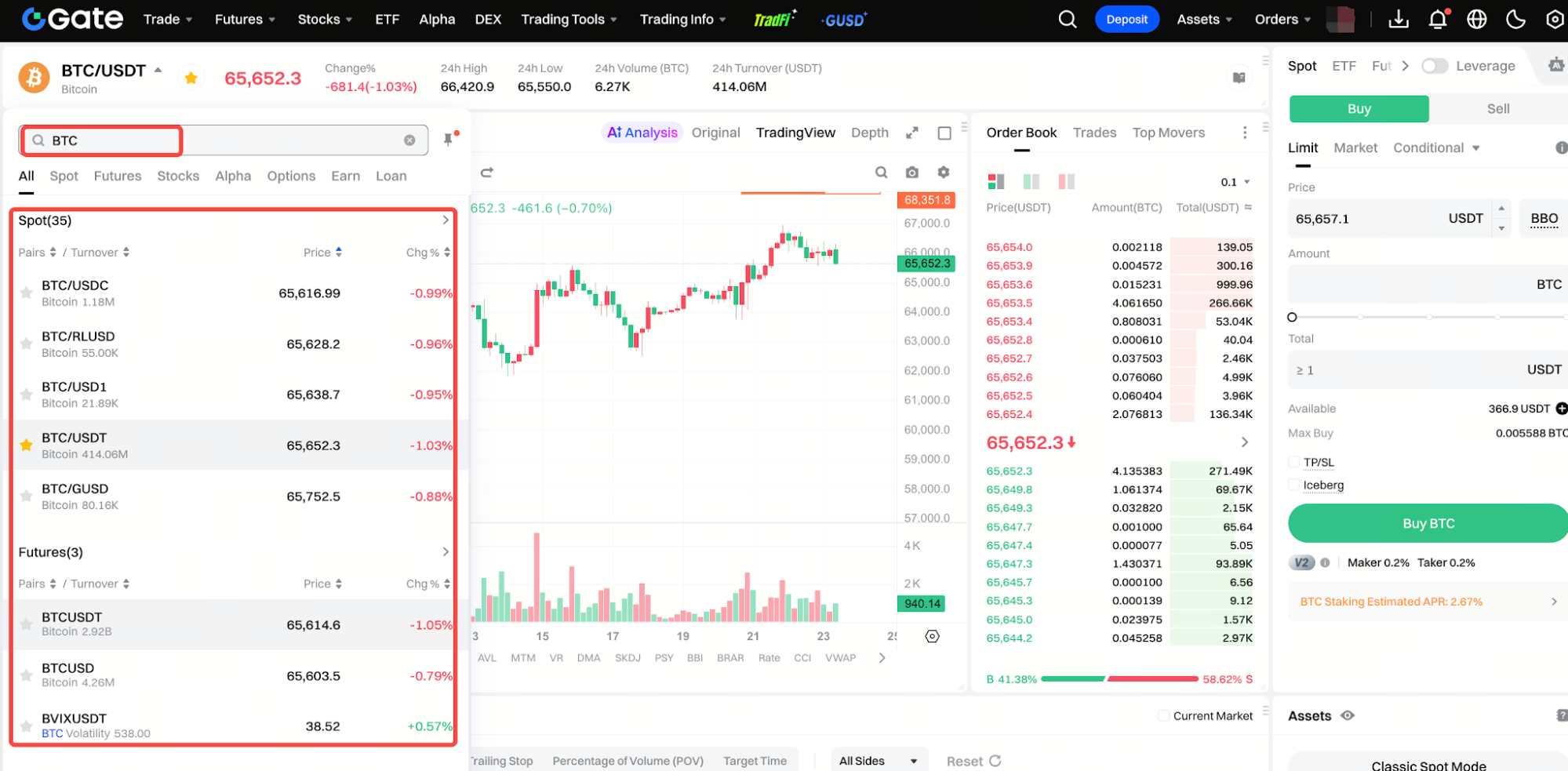
A trading pair consists of a base asset and a quote asset. BTC/USDT, BTC/USDC, and BTC/EUR all provide access to BTC, but the asset used for settlement differs. Users should therefore confirm that they hold the relevant quote asset before placing an order.
Some digital assets may use identical or similar ticker symbols. Beginners should not select a pair based only on the abbreviation. They should also verify the project name, market category, and related project information. As a basic filter, beginners should favor crypto assets with high market capitalization and availability across multiple major platforms. It is also wise to avoid starting with lesser-known coins, as other cryptocurrencies with limited liquidity often carry more risk for beginners.
Trading volume, bid-ask spread, and market depth are also important. More liquid trading pairs usually have more orders, narrower spreads, and a greater ability to execute larger trades near the expected price.
How Can Users Read the Gate Spot Trading Page?
A spot trading page generally includes tools used in technical analysis, such as a candlestick chart, order book, recent trades, order-entry panel, and order records.
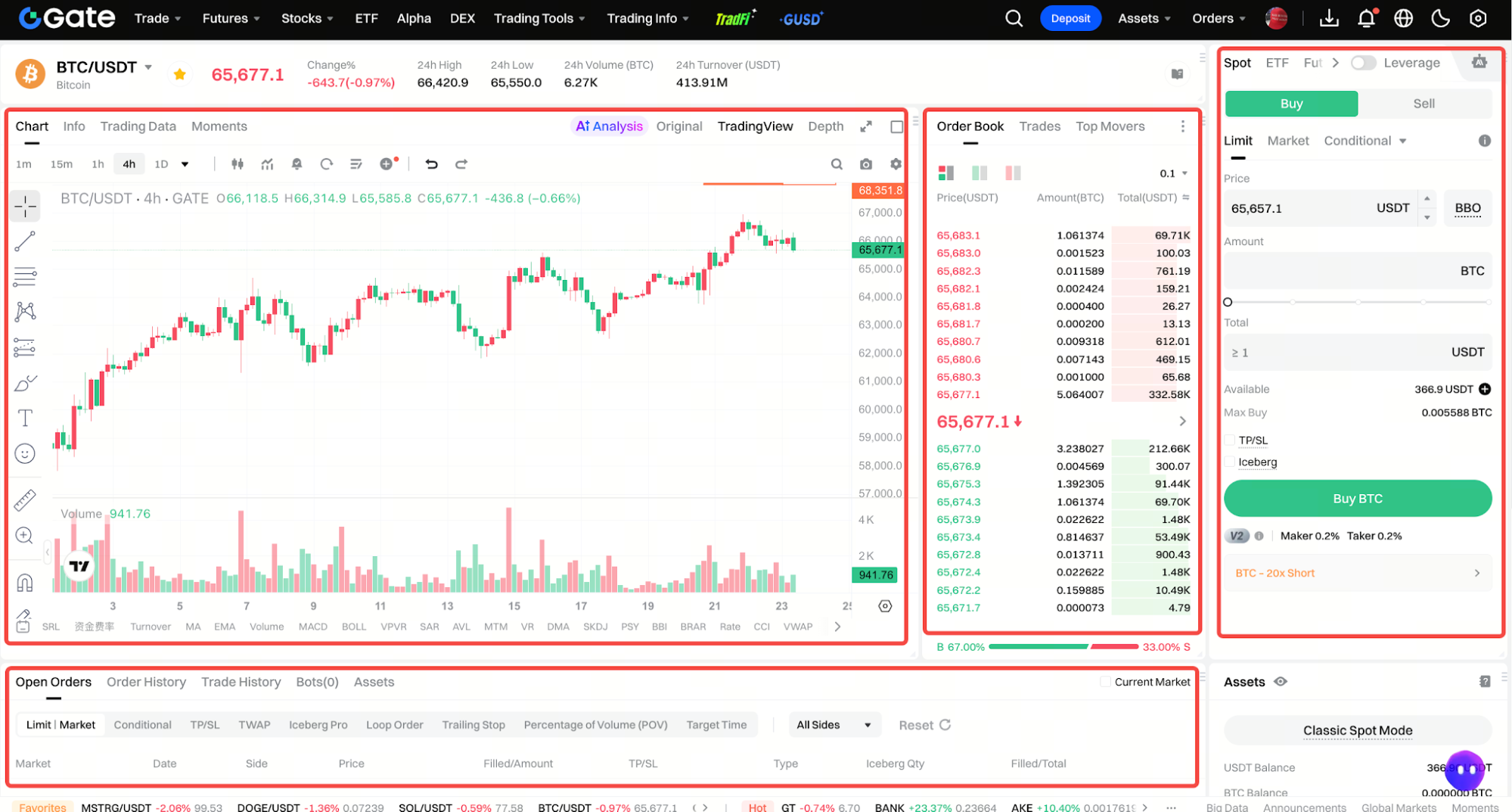
The candlestick chart shows price changes across different time intervals, and technical analysis uses price charts to predict future movements. Each candle normally contains the opening price, highest price, lowest price, and closing price, helping users observe trends and ranges of volatility.
The order book shows buy and sell orders that have not yet been executed. Buy orders indicate the prices and quantities at which traders are willing to purchase the asset, while sell orders show the prices and quantities at which participants are willing to sell.
The difference between the highest bid and lowest ask is called the bid-ask spread. A narrower spread generally indicates stronger liquidity, while a wider spread may increase the effective cost of trading.
Open orders show orders that have not yet been fully filled. Trade history shows the actual execution price, quantity, and fee. After submitting an order, users should review their own execution records rather than relying only on the price shown on the chart.
What Is a Market Order?
A market order is an instruction to buy or sell at the best prices currently available in the market. The user does not set a fixed execution price and only needs to enter the amount to buy or sell.
For example, when a user places a market order to buy BTC, the system matches the order against available sell orders in the order book until the requested amount has been filled. The main advantage of a market order is speed, making it suitable for users who prioritize entering or exiting the market quickly, especially in crypto trading when fast execution matters more than exact pricing.
However, a market order does not guarantee that the entire order will execute at the latest displayed price. If the order is large or market liquidity is limited, it may match at several price levels, causing the average execution price to differ from the price visible before submission.
This difference is commonly called slippage. Slippage may become more significant when the market is moving quickly, the order size is large, or the order book has limited depth.
To use a market order, users can select Buy or Sell on the spot trading page, choose the market order type, and enter the intended amount or quantity. After submission, they should check the average execution price and fees in the trade history, and compare the latest displayed price with the actual buy price or sell price shown in the execution records.
What Is a Limit Order?
A limit order allows users to set a specific price at which they are willing to buy or sell.
A buy limit order means that the user is willing to buy only at the specified price or lower. A sell limit order means that the user is willing to sell only at the specified price or higher.
For example, if BTC is currently trading at 60,000 USDT and a user wants to buy when the price falls to 58,000 USDT, the user can submit a buy limit order at 58,000 USDT. The order will remain pending until market conditions meet the specified price.
The advantage of a limit order is more control over the entry or exit price, but execution is not guaranteed. Even when the market briefly reaches the selected price, the order may be only partially filled if other orders were submitted earlier at the same level.
An unfilled limit order can generally be canceled. To change the price, the user can cancel the existing order and submit a new one.
| Comparison |
Market Order |
Limit Order |
| Price setting |
No fixed price is entered |
The user sets the price |
| Execution speed |
Usually faster |
Depends on market conditions |
| Execution certainty |
More likely to execute |
Execution is not guaranteed |
| Price control |
Lower |
Higher |
| Main risk |
Slippage |
Remaining unfilled for a long time |
| Typical use |
Buying or selling quickly |
Waiting for a target price |
How Can Users Buy Cryptocurrency on Gate?
The basic process for placing a first trade on Gate involves preparing USDT, selecting a spot trading pair, choosing an order type, and submitting a buy order.
Users must fund your account before submitting a buy order.
For example, a user who wants to buy BTC with USDT can open the BTC/USDT spot market, select the Buy side, and choose either a market or limit order.
With a market order, the user normally enters the amount of USDT to spend. With a limit order, the user sets both the intended purchase price and the quantity of BTC.
After submitting the order, the user can check Open Orders or Trade History. A market order is generally executed quickly, while a limit order may remain in the order book until the market reaches the chosen price.
Once the order is filled, the purchased BTC appears in the user’s account balance. The user can then hold it, sell it, transfer it, or use it for other supported services, which is how many beginners buy their first cryptocurrency.
How Can Users Sell Cryptocurrency on Gate?
Selling follows a similar process to buying, but the direction of the trade is reversed.
The user opens the relevant spot trading pair, selects Sell, and enters the amount of the asset to sell. A market sell order is matched against current buy orders, while a limit sell order allows the user to set the minimum acceptable price.
After the sell order is filled, the balance of the sold asset decreases and the balance of USDT or another quote asset increases.
Receiving USDT from a sale does not mean that the funds have been withdrawn as fiat currency. Users may continue holding USDT, use it for other trades, or convert it through supported channels available in their region.
How Can Users Check Order Status and Account Balances?
After submitting an order, users can check its status through Open Orders, exchange account, Order History, and Trade History.
Open Orders generally include orders that are unfilled or partially filled. Order History records completed, canceled, or expired orders.
A partial fill means that only part of the requested quantity has been matched. For example, if a user places an order to buy 1 ETH but only 0.4 ETH is filled, the remaining 0.6 ETH continues to wait in the order book. Canceling the order only cancels the unfilled portion; the completed part remains valid.
The assets page may distinguish between available and frozen balances. Funds committed to an open order may temporarily appear as frozen until the order is filled or canceled.
What Do Trading Fees, Slippage, and Liquidity Mean?
The cost of trading includes more than price movements. Users should also consider trading fees, bid-ask spreads, and slippage.
Trading fees are charged when an order is executed. The applicable rate may vary by account level, market, and order type, so users should refer to the information shown on the trading page.
Slippage is the difference between the expected execution price and the actual average execution price. It is more likely to occur with market orders, fast-moving markets, and low-liquidity assets.
Liquidity describes the amount of buy and sell interest available in the market. Higher liquidity allows larger orders to be executed within a narrower price range. Lower liquidity may require an order to match across several price levels.
When trading small-cap assets, beginners should pay particular attention to the bid-ask spread, 24-hour trading volume, and order-book depth. A price displayed on the market page does not necessarily mean that the full order can be executed at that exact price.
What Does Technical Analysis Examine?
Technical analysis examines key concepts in price behavior, trading volume, and historical market structure to evaluate trends. Common tools include candlestick charts, candlestick patterns, support and resistance levels, moving averages, the Relative Strength Index, or RSI, and the Moving Average Convergence Divergence indicator, or MACD.
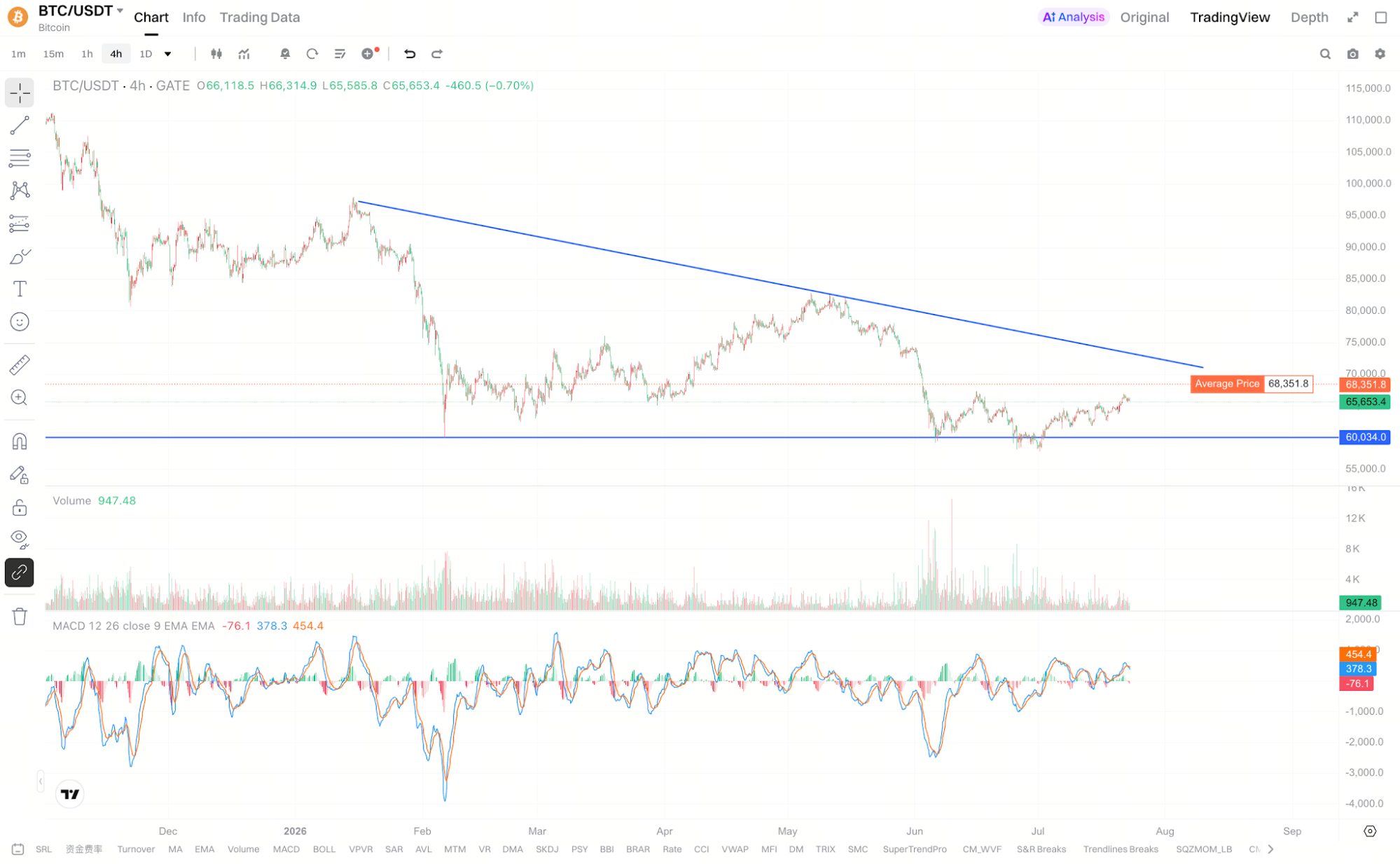
Candlestick charts help users observe how prices move over a selected period. Support often refers to an area where the price has repeatedly stopped falling, while resistance refers to an area where it has repeatedly stopped rising.
Moving averages smooth short-term price fluctuations and can help show the direction of a trend. RSI measures the relative strength of upward and downward price movements over a chosen period, while MACD examines changes in momentum through the relationship between moving averages.
These indicators provide analytical perspectives rather than guaranteed forecasts. News, liquidity changes, or macroeconomic developments can cause the market to break through previously observed technical levels. Many experienced traders combine technical analysis with fundamental analysis, and technical analysis is often used for short-term gains.
What Does Fundamental Analysis Examine?
Fundamental analysis focuses on the cryptocurrency market context around a project, its network, and its economic structure.
Users may examine the problem the project is designed to solve, its technical architecture, underlying blockchain technology, use cases, development team, funding history, and ecosystem growth. If a project lacks meaningful use or shows little long-term development and user growth, its token price may depend more heavily on short-term market sentiment.
Tokenomics is another important part of fundamental analysis. It includes total supply, circulating supply, allocations to teams and investors, token unlock schedules, issuance mechanisms, the utility of the token, and whether limited supply may affect scarcity and perceived value.
On-chain data can provide additional insight into network activity, including transaction volume, active addresses, total value locked, and token-holder concentration. However, growth in a single metric does not automatically indicate that a project’s value has increased. The data should be assessed together with the project’s business model and long-term sustainability. Common price drivers include supply and demand and news events.
What Are the Most Common Cryptocurrency Trading Strategies?
Cryptocurrency trading strategies are commonly distinguished by trading goals, holding period, and trading frequency.
Day trading involves opening and closing positions within the same day and generally requires frequent monitoring of price and volume. Swing trading often involves holding positions for several days or weeks in an attempt to capture an intermediate market trend, and traders may hold assets for days to months.
Short-term trading involves frequent transactions intended to capture relatively small price movements. Scalping captures small price movements within minutes and depends on fast execution. It places greater demands on fees, slippage control, liquidity, and execution efficiency. Long-term holding focuses on the project’s multi-year development for an extended period but still carries market-cycle and project-failure risks.
Arbitrage profits from price discrepancies across different exchanges.
Dollar-cost averaging involves investing a fixed amount at regular intervals. This approach, often called dollar-cost averaging (DCA), reduces the impact of volatility by investing a fixed amount at regular intervals, but it does not guarantee returns or eliminate the risk of a long-term decline.
| Trading Strategy |
Typical Holding Period |
Monitoring Requirement |
Main Risk |
| Short-term trading |
Seconds to minutes |
Very high |
Fees and slippage |
| Day trading |
Minutes to one day |
High |
Frequent decisions and emotional pressure |
| Swing trading |
Several days to several weeks |
Moderate |
Incorrect trend assessment |
| Long-term holding |
Several months to several years |
Lower |
Prolonged drawdowns and project risk |
| Dollar-cost averaging |
At regular intervals |
Lower |
Does not prevent losses in a declining market |
How Should Beginners Manage Trading Risk?
Risk management is not about predicting every price movement. Its purpose is to limit the effect of an incorrect decision on the overall account. Poor risk management can still lead to failure even when a strategy performs well.
First, users should define the total amount of capital available for trading and avoid using funds needed for living expenses, borrowed money, or money required in the near term.
Second, users should control the size of each position. Allocating all funds to one asset increases the impact of a single project failure or incorrect market judgment. Diversification can reduce concentration risk, although excessive diversification may make the portfolio difficult to manage. As a rule of thumb, beginners often risk no more than 1% to 2% of their total portfolio on a single trade.
Before entering a trade, users should also define their exit conditions, including a profit target, maximum acceptable loss, and the point at which the original trade thesis is no longer valid. These conditions should be determined before placing the order rather than during a period of rapid market movement.
Stop-loss orders may help execute an exit and limit potential losses during price drops when the market reaches a specified condition, but they do not guarantee execution at the exact trigger price. During sharp declines, thin liquidity, or price gaps, the actual execution price may differ.
Beginners should also avoid repeatedly adding to losing positions without reassessing the original rationale. A lower price does not automatically mean that an asset offers better value. A trading journal can help, and many traders use one to identify patterns and reduce emotional mistakes.
How Can Beginners Calculate a Basic Position Size?
Position size can be estimated using the maximum acceptable loss per trade and the distance between the entry and exit prices.
For example, a user has 1,000 USDT in trading capital and wants to limit the maximum loss on a single trade to 10 USDT. If the planned entry price and exit price are 5% apart, the theoretical position size would be approximately 200 USDT.
This is because a 5% decline on a 200 USDT position represents a loss of about 10 USDT. Actual trading also involves fees, slippage, and the possibility that an order may not execute at the expected price, so the practical position size may be lower than the theoretical amount.
Position sizing cannot guarantee profitability, but it can reduce the impact of a single incorrect trade and support more disciplined investment decisions. Assets with greater volatility generally require smaller position sizes.
What Are the Most Common Beginner Trading Mistakes?
Entering the wrong trading product is a common mistake. Spot, margin, and perpetual futures markets may use similar asset symbols, but their risk structures are very different. Users should confirm that they are on the spot market before submitting an order.
Another common mistake is misunderstanding the direction of a trading pair. For example, ETH/BTC means that BTC is used to trade ETH. It does not mean that ETH is being purchased with USDT.
Some users also ignore market liquidity and place large market orders based only on the latest displayed price. This can result in significant slippage, especially for smaller assets with limited trading volume, because cryptocurrencies are notoriously volatile and can change rapidly.
Using the wrong deposit network is another major risk. Assets with the same name may exist on several blockchains, but the sending and receiving networks must be compatible.
Other common mistakes include buying after a rapid price increase, trading too frequently, using excessive leverage, trusting claims of guaranteed returns, and trying to trade cryptocurrency without verifying the underlying project.
How Can Users Protect Their Gate Account and Digital Assets?
Account security is a central part of cryptocurrency trading, including protecting a Gate account and any connected crypto wallet or stored digital assets.
Users should create a strong, unique password and enable two-factor authentication. Reusing the same password across different websites can expose a Gate account if another service suffers a data breach.
An anti-phishing code can help users identify official emails. A withdrawal address whitelist can restrict withdrawals to pre-approved addresses.
Users should never provide passwords, SMS codes, authentication codes, private keys, or seed phrases to another person, and users should not rely blindly on any financial institution or third party to safeguard those credentials. Legitimate customer support will not ask users to transfer assets to a designated wallet for verification.
When entering a trading page through a search engine, social media post, or group chat, users should verify the domain carefully. It is also safer to prefer a crypto exchange with a proven track record over 5-10 years. Fake promotional pages, account-freeze notices, airdrop claims, and wallet-upgrade messages are common phishing methods.
Before making an on-chain transfer, users should verify the asset, network, address, and any required Memo. For larger transfers, a small test transaction can reduce the risk of an irreversible error.
Summary
Cryptocurrency trading beginners should start with spot trading, and crypto trading first requires understanding trading pairs, order books, market orders, limit orders, and trade history before learning more complex products.
Market orders prioritize execution speed but may experience slippage. Limit orders provide greater price control but may remain unfilled. Users should also consider fees, market depth, and the bid-ask spread before trading.
The basic process of buying or selling cryptocurrency on Gate is straightforward: prepare USDT, select a trading pair, confirm the trade direction, choose an order type, and submit the order. In practice, position sizing, exit planning, account security, and risk discipline have a greater influence on long-term trading outcomes.
No indicator or strategy can guarantee returns. Beginners should prioritize capital protection, use only funds they can afford to lose, and approach leverage and derivatives cautiously until they understand margin, funding fees, and liquidation, while clear trading goals help users stay disciplined as they manage risk.
FAQ
Should Cryptocurrency Beginners Start With Spot Trading or Futures?
Spot trading is generally more suitable for beginners because its structure is more direct and it does not involve futures leverage, funding fees, or liquidation. By contrast, derivatives trading lets users speculate on price movements without taking ownership of the underlying asset.
Where Is BTC Stored After It Is Purchased With USDT?
After a BTC/USDT spot order is filled, the BTC appears in the user’s Gate account balance and can be viewed on the assets page.
Is a Market Order or Limit Order Better for Beginners?
A market order is simpler and more likely to execute quickly, but it may experience slippage. A limit order provides price control but may remain unfilled. The appropriate choice depends on the user’s trading objective.
Why Might a Limit Order Remain Unfilled After the Market Reaches the Selected Price?
Other orders may have been placed earlier at the same price, and the available opposing quantity may be insufficient. The order may therefore be partially filled or remain pending.
Why Is the Final Market Order Price Different From the Displayed Price?
A market order matches available prices across the order book. When the market moves quickly or liquidity is limited, the order may execute at several price levels.
Are Funds Returned After an Order Is Canceled?
Assets reserved for the unfilled portion of the order are generally released and become available again. Any portion that has already been executed cannot be reversed.
Can Cryptocurrency Trading Guarantee a Profit?
No. Trading crypto cannot guarantee profit because digital currency markets can be highly volatile, and no trading strategy, analytical indicator, or risk-management tool can remove that risk entirely.