As blockchain infrastructure shifts from single-network operations toward ecosystem collaboration, an increasing number of Layer2 networks are introducing functional asset designs. Their core purpose is typically not to create a new value anchor, but to establish participation incentives, governance feedback loops, and resource coordination mechanisms. In this context, BTR's emergence reflects how Bitlayer drives network growth through institutional design—rather than relying solely on underlying technical capabilities.
From Bitlayer's overall roadmap, BTR sits within the protocol coordination layer. Bitlayer aims to build a long-term network structure around Bitcoin's security, Layer2 execution capabilities, and future cross-chain interoperability. BTR is designed to connect these participation relationships, enabling a more sustainable governance and incentive system as the network scales.
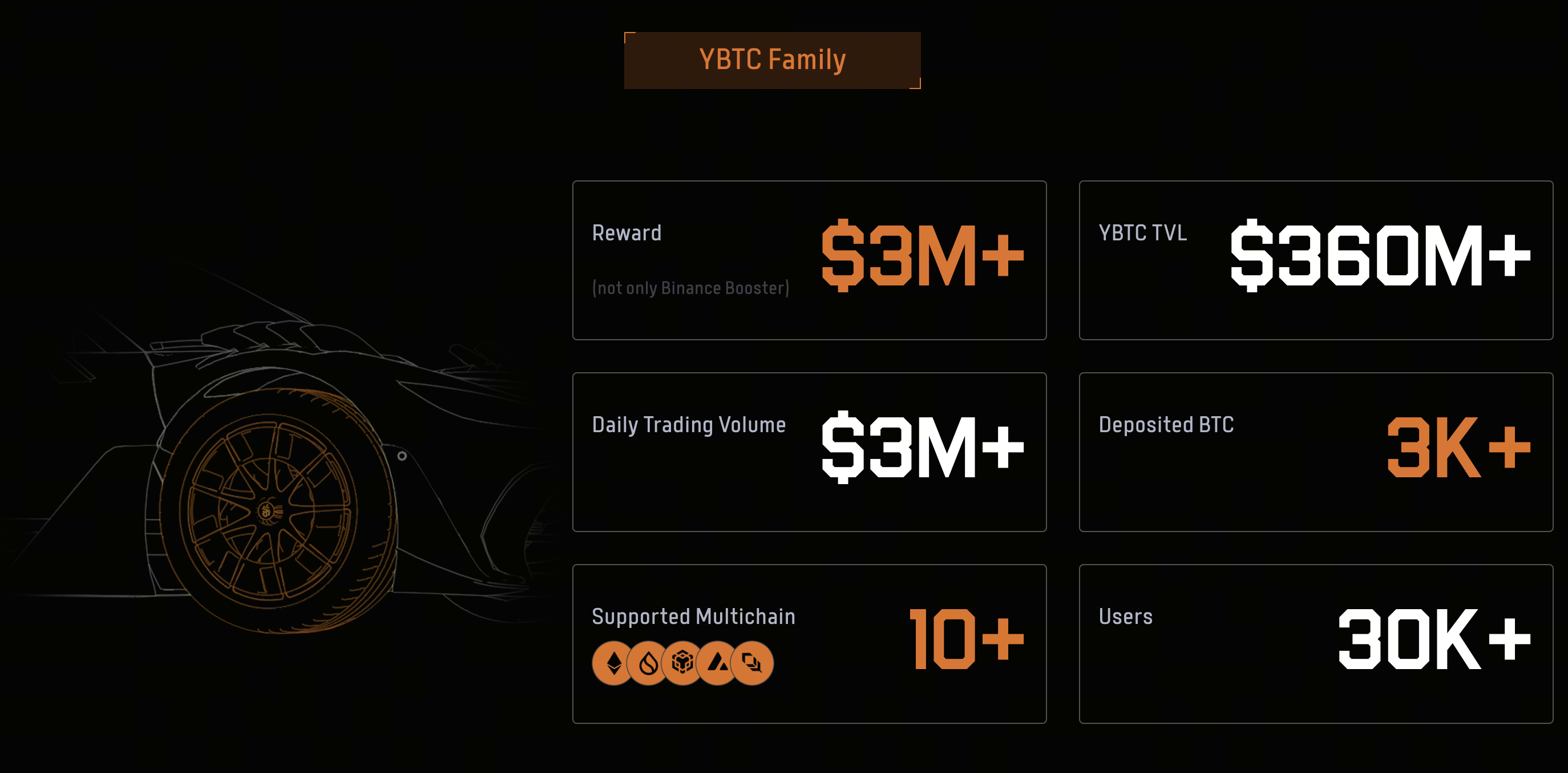
Source: bitlayer.org
Why Layer2 Networks Generally Need Functional Assets
Understanding BTR requires first understanding why Layer2 infrastructure commonly introduces functional assets.
Traditional blockchains typically rely on native base-layer assets for network incentives and consensus coordination. But once we enter the Layer2 stage, network structures begin to change. Execution, application, governance, and development layers gradually separate, making it difficult for base-layer assets alone to cover all coordination needs.
For Layer2 networks, offering only technical capabilities is not enough to form an ecosystem. Developers need to deploy applications, users need to participate, infrastructure requires ongoing maintenance, and governance decisions require consensus. These activities call for establishing long-term incentive relationships.
Thus, functional assets begin to serve as coordination tools. On one hand, they help the network build participation feedback mechanisms; on the other hand, they allow protocol evolution to move beyond dependence on centralized organizations.
From an industry perspective, functional assets are more of a governance and resource allocation tool than a fundamental source of value.
BTR's Role in Bitlayer
BTR's design revolves around two core directions: ecosystem incentives and ecosystem governance.
First, the incentive function. Bitlayer uses BTR to support active participation within the ecosystem, including development contributions, user engagement, and partner network building. The goal is not to reward individual actions but to foster long-term ecosystem formation.
Second, the governance function. Holders can participate in network governance processes, including community proposals, parameter adjustments, and ecosystem direction discussions. This governance model means the protocol's future evolution can gradually shift from single-organization promotion to broader participation.
At the same time, BTR also plays an ecosystem coordination role. As the network scales, different participants need to align their interests, and functional assets can serve as a collaboration interface.
Notably, this role does not imply network control—it provides a participation channel.
How Incentive Mechanisms Affect Network Operations
The core function of incentive mechanisms is not to distribute profits, but to influence network behavior.
For infrastructure projects, long-term competitive advantage often comes from sustained participation rather than one-time expansion. Therefore, attracting developers, retaining users, and building an application ecosystem become critical challenges for Layer2 networks.
Bitlayer treats the incentive system as an ecosystem-building tool. Developers gain motivation to enter the ecosystem, users continue to engage in network activities, and partners form long-term collaborative relationships.
This design logic means the incentive mechanism is part of the network growth mechanism, not an independent module.
At the same time, the incentive system must stay balanced. Over-reliance on short-term stimuli may fail to generate real demand; without coordination mechanisms, ecosystem development may slow down.
Thus, BTR's incentive significance lies more in ecosystem coordination than in value transfer.
The Relationship Between BTR and Governance Models
Governance capability is often a vital part of long-term evolution in Layer2 networks.
Bitlayer understands governance as protocol coordination capability, not just a voting system. As the network expands, more parameters and development directions require community participation mechanisms.
In this structure, BTR acts as the governance entry point. Community members can provide feedback on proposals and participate in adjusting certain network rules.
The value of this mechanism lies in enhancing protocol autonomy. As the ecosystem grows, the governance structure can gradually cover more applications, development, and infrastructure decisions.
However, governance does not mean all matters are decided entirely by voting. Most protocol governance adopts a multi-layered structure—including community discussion, technical evaluation, and execution processes.
Therefore, the governance function is more like an ongoing evolution mechanism than an instant decision-making tool.
How Network Growth and Asset Design Align
Bitlayer's long-term roadmap reflects a synergistic relationship between functional assets and infrastructure development.
Starting from the first stage, the Bitlayer PoS network, the focus was primarily on building basic operational capabilities—EVM compatibility, cross-chain functionality, and development environment formation. This phase aimed to establish conditions for ecosystem entry.
In the second stage, the BitVM route, the focus shifted to security model upgrades and bridge optimization, improving the efficiency of BTC asset collaboration by reducing trust assumptions.
The third stage emphasizes capability enhancement and cross-chain expansion, aiming to gradually form a broader infrastructure network.
In this process, asset design becomes increasingly important. As the number of network roles grows, relying solely on technical upgrades becomes insufficient to maintain long-term coordination. Governance and incentive capabilities thus become integral parts of the protocol.
| Stage |
Core Objective |
Coordination Focus |
| Mainnet V1 |
Basic network construction |
User and developer entry |
| Mainnet V2 |
BitVM and security upgrades |
Governance and participation enhancement |
| Mainnet V3 |
Multi-chain expansion |
Long-term ecosystem coordination |
This also explains why BTR is better understood as a network operational mechanism rather than an isolated asset.
Common Misconceptions and Limitations of Functional Assets
Several typical misconceptions about functional assets persist in the market.
First, functional assets do not equal the network's value itself. Whether infrastructure can form a long-term ecosystem still depends on real application demand.
Second, governance rights do not imply control. Most protocol governance comes with process constraints and execution boundaries.
Third, incentive mechanisms do not automatically drive user growth. Long-term network effects usually stem from product capabilities, developer ecosystem, and actual usage.
Additionally, asset design has limitations. For example, low governance participation rates, decreased coordination efficiency, or imbalanced incentive structures can all hinder long-term development.
Therefore, the key to understanding BTR is not the asset itself, but how it serves Bitlayer's overall ecosystem.
BTR's Possible Evolution in the Future Ecosystem
As Bitlayer progresses from its base network to the BitVM and cross-chain expansion stages, BTR's functional boundaries may continue to evolve.
The more complex the future network structure, the higher the demands on governance capabilities, resource coordination, and cross-ecosystem collaboration. Functional assets may gradually take on more governance coordination roles, extending beyond incentive purposes.
At the same time, as cross-chain capabilities strengthen and application layers expand, ecosystem participants will become more diverse. This means governance models, incentive logic, and participation mechanisms may continue to adjust.
From a long-term perspective, BTR's significance is not in defining Bitlayer, but in helping Bitlayer maintain coordination capabilities during expansion.
Summary
BTR is a functional asset in the Bitlayer network, with its core role centered on ecosystem incentives and governance participation. It does not replace Bitcoin, nor does it directly assume base-layer security roles. Instead, it serves as a protocol coordination tool connecting developers, users, and ecosystem participants.
From the Layer2 industry perspective, functional assets have gradually become an important part of infrastructure design. Network expansion requires not only technical capabilities, but also sustained coordination mechanisms.
Understanding BTR is essentially about understanding how Bitlayer supports long-term ecosystem evolution through governance and incentive structures—and how Bitcoin application infrastructure gradually forms a more complete operational system.
FAQ
Is BTR a governance token?
Currently, one of BTR's primary roles is to support Bitlayer ecosystem governance, including community participation and protocol coordination.
Does BTR have a relationship with Bitcoin?
BTR is an asset within the Bitlayer ecosystem. It is not equivalent to Bitcoin and does not assume BTC's base-layer security role.
Is it required to hold BTR to use Bitlayer?
Whether holding BTR is required depends on the specific network function and application scenario. Functional assets typically serve governance and ecosystem participation capabilities rather than basic access permissions.