This guide reviews some of the widely used stock research platforms across the areas that usually decide the best fit: fundamental analysis, screening, quantitative ratings, portfolio analytics, free vs. paid value, and, where relevant, research that connects stocks with macro markets and digital assets. Investors researching the overlap between stocks, macro markets and digital assets can also use Gate's research ecosystem — Gate Learn, Gate News, Gate Research and Gate Blog — to follow TradFi developments, company news, market events and the relationship between traditional markets and crypto.
No single website provides everything. Better investment decisions usually come from combining a market-data source, stock screener, analytical platform and primary-source verification, especially when you need to check data quality, compare different analyst views, and avoid relying on a single platform for every decision.
Here are seven platforms selected for their market relevance, user demand, visibility, and clear differences in what they do best.
Key Takeaways
-
Morningstar suits long-term fundamental investors researching stocks, ETFs and funds via analyst estimates, fair-value analysis and economic moat ratings.
-
Finviz and Stock Rover suit screening and quantitative research — Finviz for rapid visual screening, Stock Rover for hundreds of metrics, portfolio analytics and Monte Carlo simulations.
-
Yahoo Finance remains one of the strongest free starting points for quotes, charts, financials, news and portfolio tracking.
-
Gate Learn, Gate News, Gate Research and Gate Blog complement traditional research tools for investors following stocks alongside crypto, macro, tokenization and AI.
-
The strongest research process uses multiple sources and verifies important claims against company filings rather than relying on one rating or platform.
How We Chose
We weighted data quality and coverage, screening and analytical tools, research depth beyond raw numbers, timeliness, ease of use, and pricing versus what premium tiers add — rather than forcing a strict first-to-seventh ranking, we evaluated each platform against its own best use case. A tool built for fundamental valuation (Morningstar) and one built for cross-asset crypto/TradFi context (Gate) are built to answer different research questions.
1.Morningstar — Best for Fundamental and Long-Term Research
Best for: Long-term investors, ETF investors and fundamental analysis.
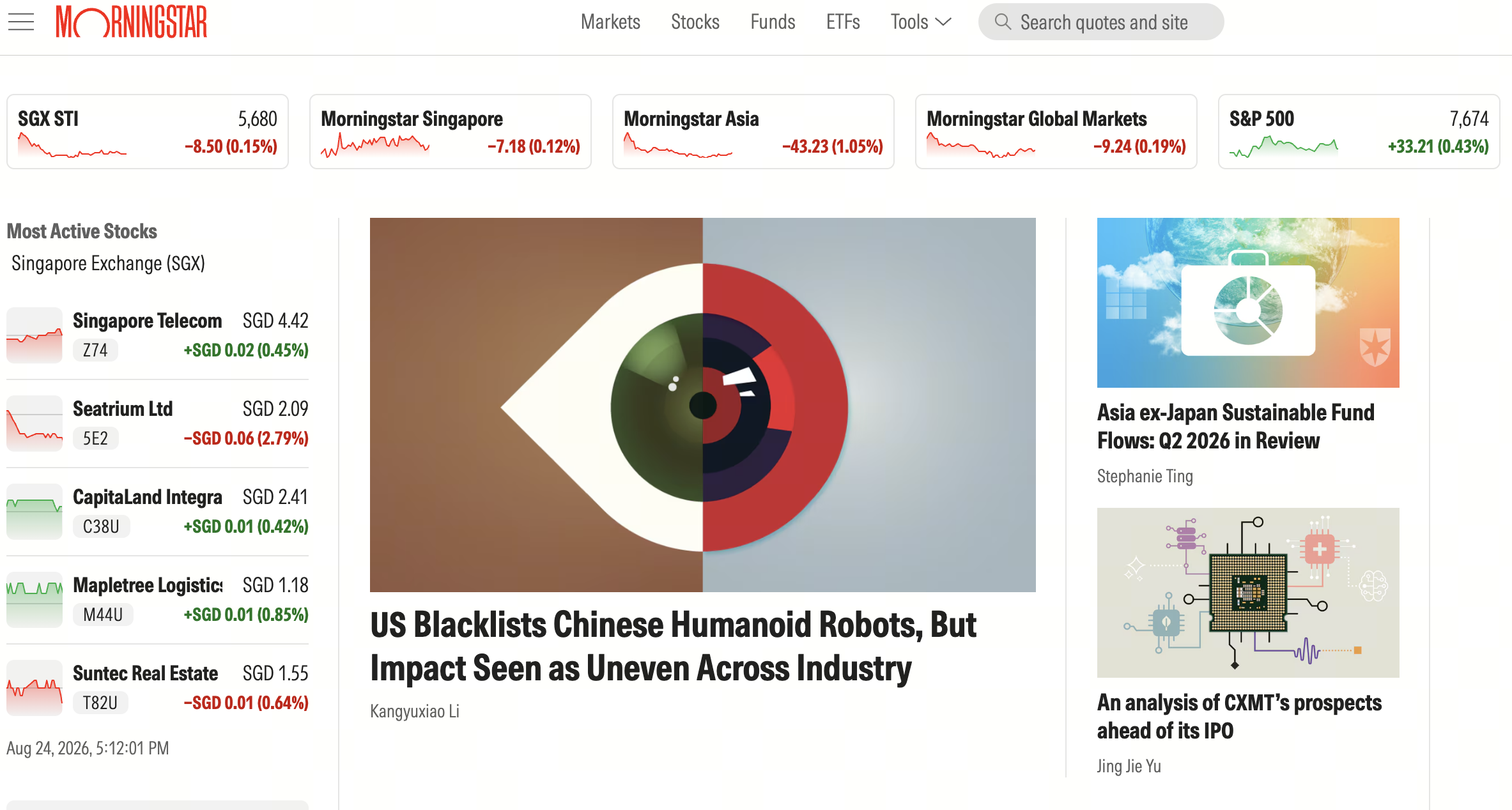
Morningstar is one of the most established names in investment research, with a focus on fundamental analysis and long-term valuation rather than trading signals. Morningstar Investor provides analyst ratings, screeners, security comparisons, watchlists and detailed data on companies across stocks, ETFs and funds, with key financial ratios included in its fundamental research tools alongside fair value, uncertainty and economic moat. Pricing is $249/year or $34.95/month.
Its best-known concept, the Economic Moat Rating, assesses a company's ability to defend a competitive advantage through network effects, switching costs, intangible assets or cost advantages — helping investors judge what a business is worth relative to its market price, not just whether the stock is rising.
Possible Limitations: Less suited to intraday traders or high-frequency screening; the volume of fundamental data can feel dense to beginners.
2.Seeking Alpha — Best for Investor Opinions and Quant Ratings
Best for: Investors seeking multiple viewpoints, stock ideas and quantitative ratings.
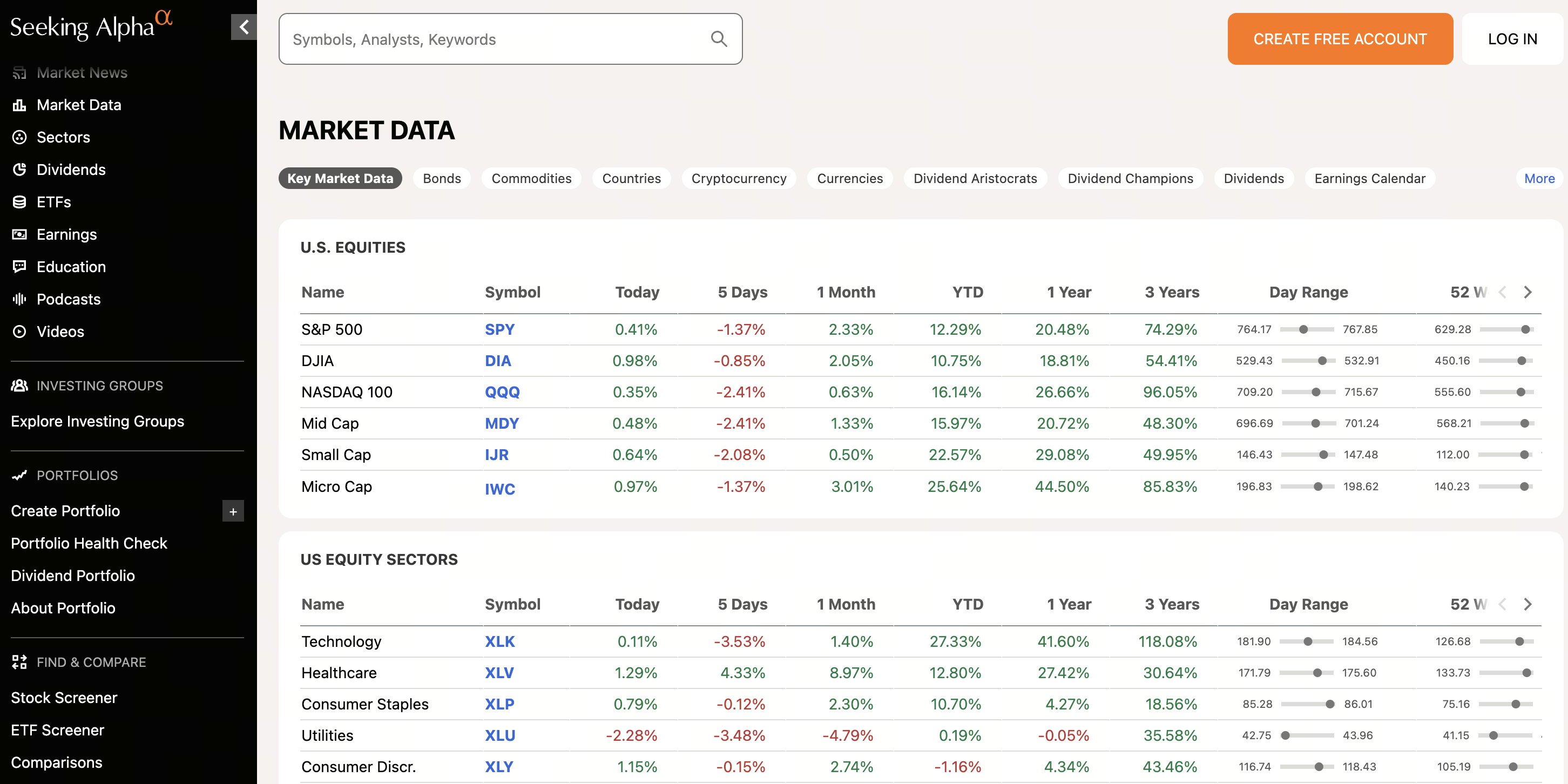
Seeking Alpha, founded in 2005 and home to a large investing community, combines contributor-written analysis with market data, earnings information, Wall Street analyst data and its proprietary Quant Ratings system — useful when comparing bullish and bearish cases on the same company rather than relying on one report. Premium costs $299/year and includes screeners, AI-assisted research tools, and Quant Ratings coverage of more than 10,000 stocks.
Its biggest differentiator is the sheer volume of opinion-based analysis available per stock: contributor articles, Quant Ratings, analyst ratings, earnings-call transcripts, factor grades and community discussion, especially useful during earnings season. That breadth helps many investors compare views during volatile periods, including when the Fed increased interest rates amid stock market declines, and when they are weighing solid companies instead of meme stocks.
Possible Limitations: Contributor articles are opinion, not verified financial statements — quality varies between authors, so cross-checking matters more here than on data-only platforms.
3.Yahoo Finance — Best Free Stock Research Site
Best for: Investors looking for free stock prices, financial data, charts and market news.
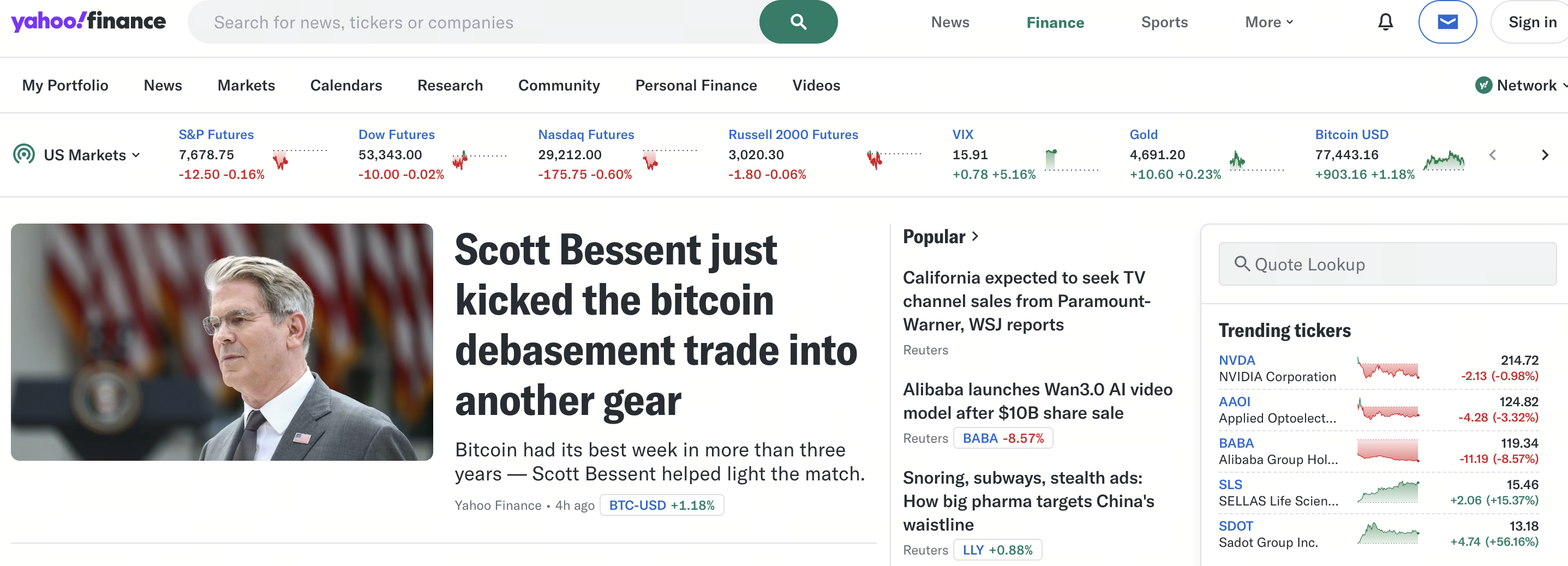
Yahoo Finance remains one of the easiest starting points for everyday research, with company pages covering prices, charts, historical data, financial statements, valuation metrics, earnings, news and watchlists. It provides real-time data for major U.S. exchanges and streaming data from numerous global exchanges, though availability varies by market. Yahoo has also added AI-assisted synthesis features during 2026.
Its advantage is accessibility — Yahoo Finance is one of the free stock research websites many investors use first, since a user can quickly access price, chart, statistics, financials and news in one place without a professional terminal. Timely information still depends on checking the date on news, prices, and financial updates before acting.
Possible Limitations: Broad but not deep. Yahoo doesn't substitute for institutional-grade modeling, and figures still need verification against primary sources.
4.Finviz — Best Stock Screener
Best for: Stock screening, market visualization and technical research.
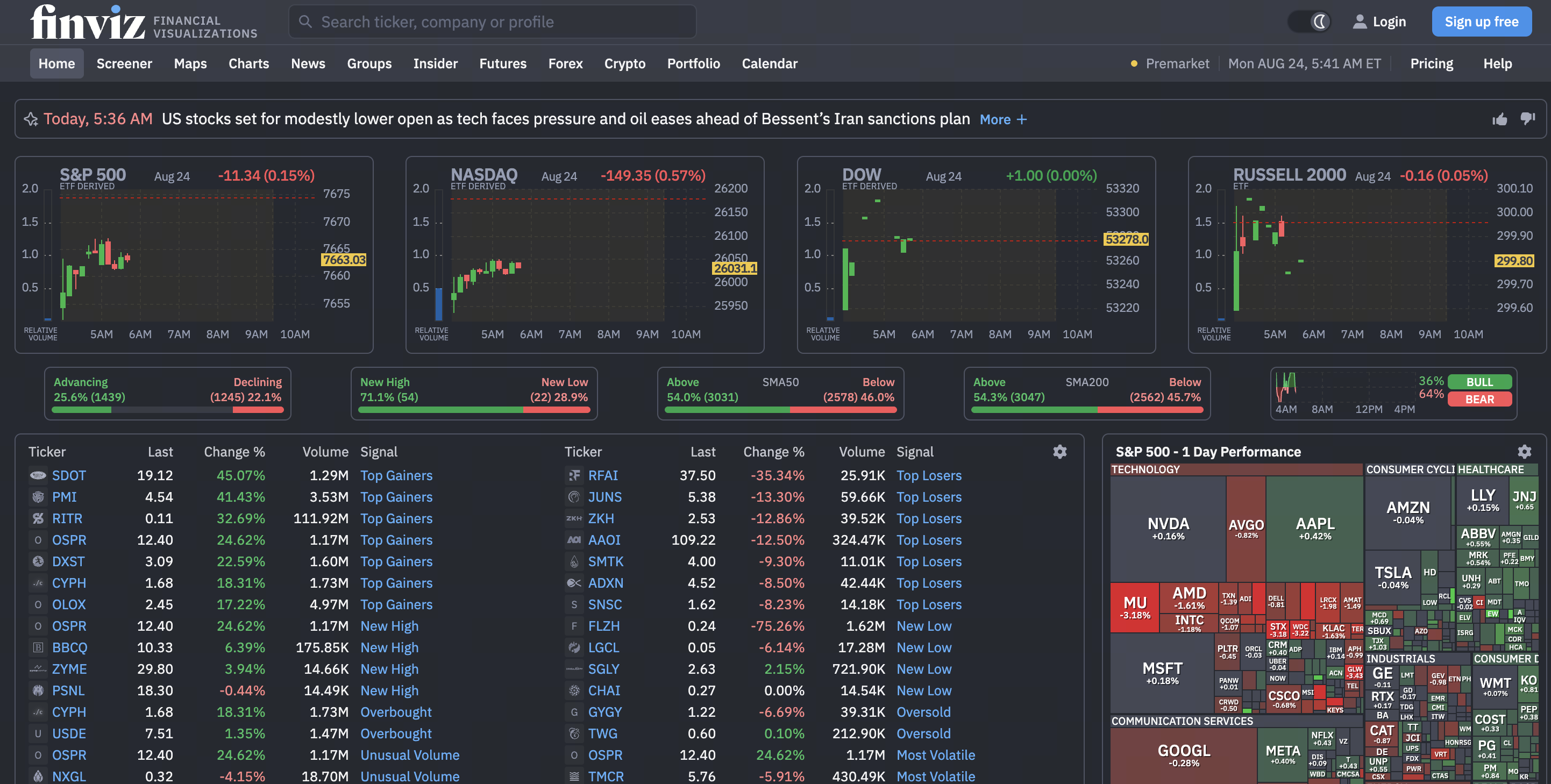
Finviz is one of the most widely used web-based screeners for U.S. equities, filtering by market cap, P/E, EPS growth, dividend yield, price performance, volume, volatility, technical patterns and insider ownership. Its market heat maps make it easy to see which sectors are driving daily performance. Elite costs $39.50/month or $299.50/year, adding real-time quotes, advanced screening and data exports.
Its strength is speed — define desired characteristics and let the screener surface candidates before doing deeper thesis work.
Possible Limitations: Focuses primarily on Nasdaq, NYSE and AMEX-listed stocks. Stronger for narrowing a universe of candidates than building a full investment thesis.
5.Stock Rover — Best for Advanced Fundamental and Portfolio Analysis
Best for: Serious individual investors, portfolio managers and quantitative fundamental analysis.
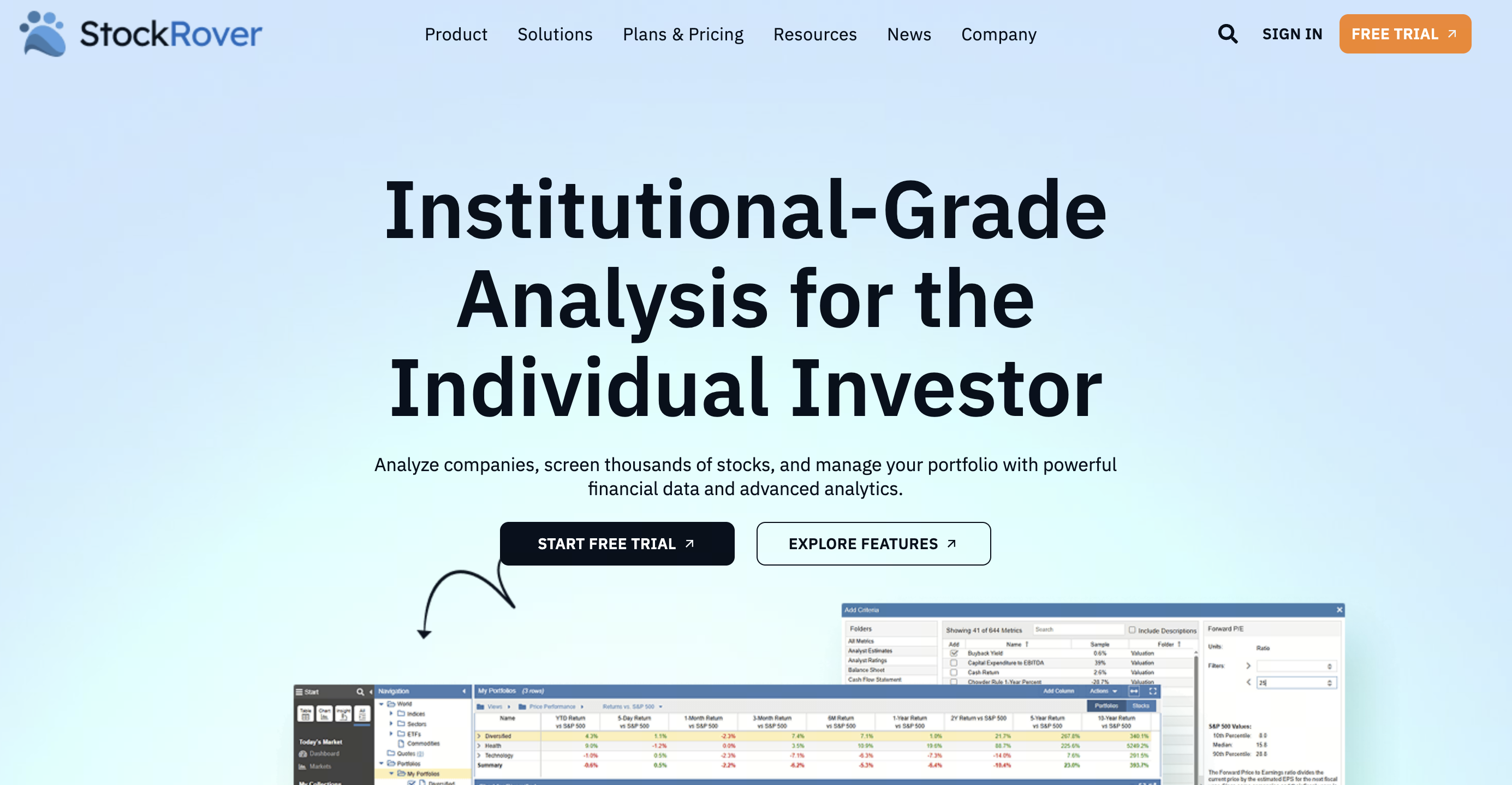
Stock Rover goes substantially deeper than most consumer platforms on financial metrics, portfolio analysis and screening. Premium includes 400+ metrics and screening across 300+ metrics; higher tiers expand to 800+ metrics and up to 20 years of fundamental history. Pricing runs from $348/year (Premium) to $1,788/year (Ultimate Pro), with a free plan and trial available.
It's particularly strong for quantitative comparison — profitability, growth, valuation and dividend metrics benchmarked against peers or portfolios — plus risk-adjusted portfolio tools (beta, volatility, Sharpe ratio), correlation analysis, and Monte Carlo-based Future Simulation for modeling long-term outcomes under different market and inflation assumptions.
Possible Limitations: Real learning curve. Investors who only need prices, basic ratios and news won't touch most of what they're paying for.
6.Simply Wall St — Best for Visual Stock Analysis
Best for: Beginners and visual learners researching company fundamentals.
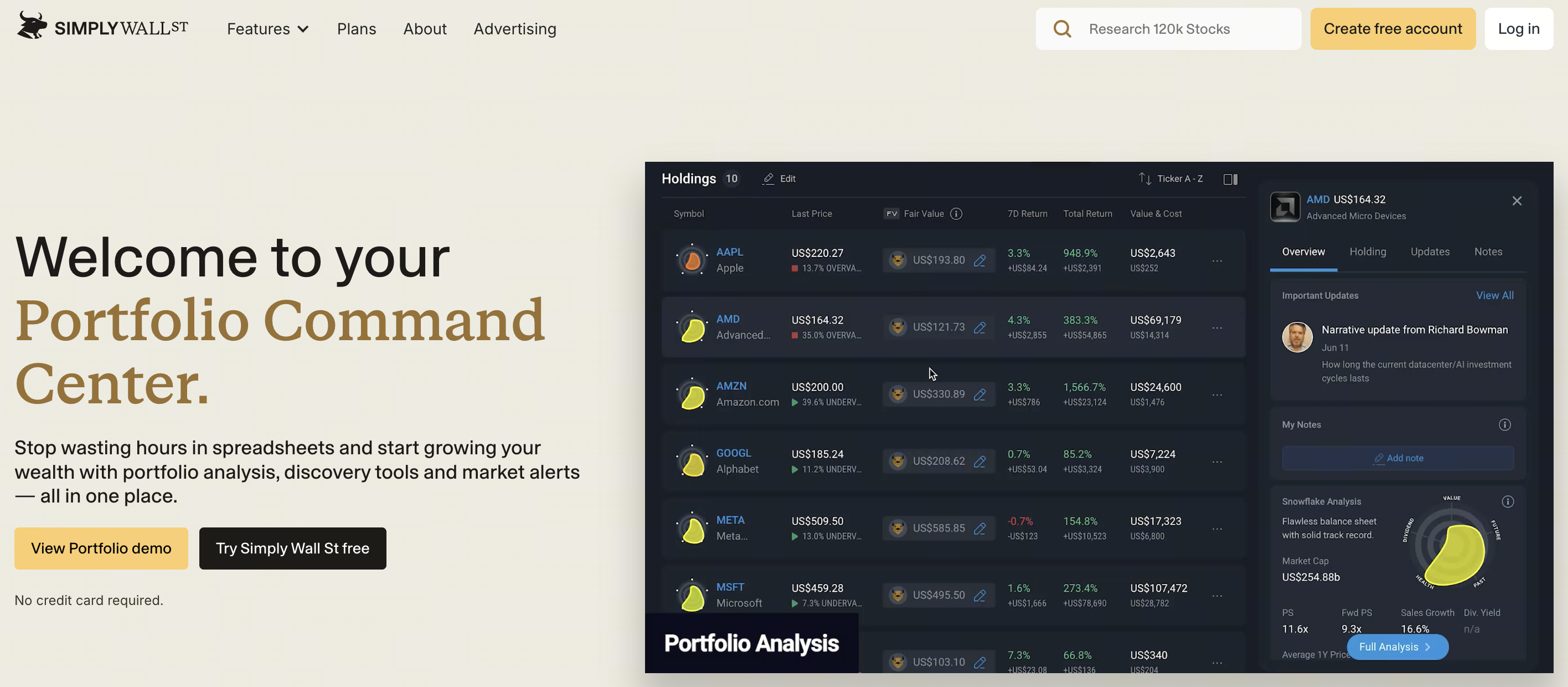
Simply Wall St converts financial information into visual reports covering valuation, growth, financial health, dividends, ownership and insider activity — designed to be easier to parse than dense ratio spreadsheets. Its database covers more than 120,000 stocks across 90+ global markets and surfaces useful ownership details for visual research. It also includes screeners, investment ideas, and company comparisons.
Possible Limitations: Visual scores compress a lot of nuance and should be treated as a starting point — the underlying assumptions and filings still reward a closer look before a rating drives a decision.
7.Gate Learn, News, Research and Blog — Best for Stocks, Crypto and Cross-Asset Research
Best for: Investors researching the intersection of stocks, crypto, AI, macroeconomics and digital finance.
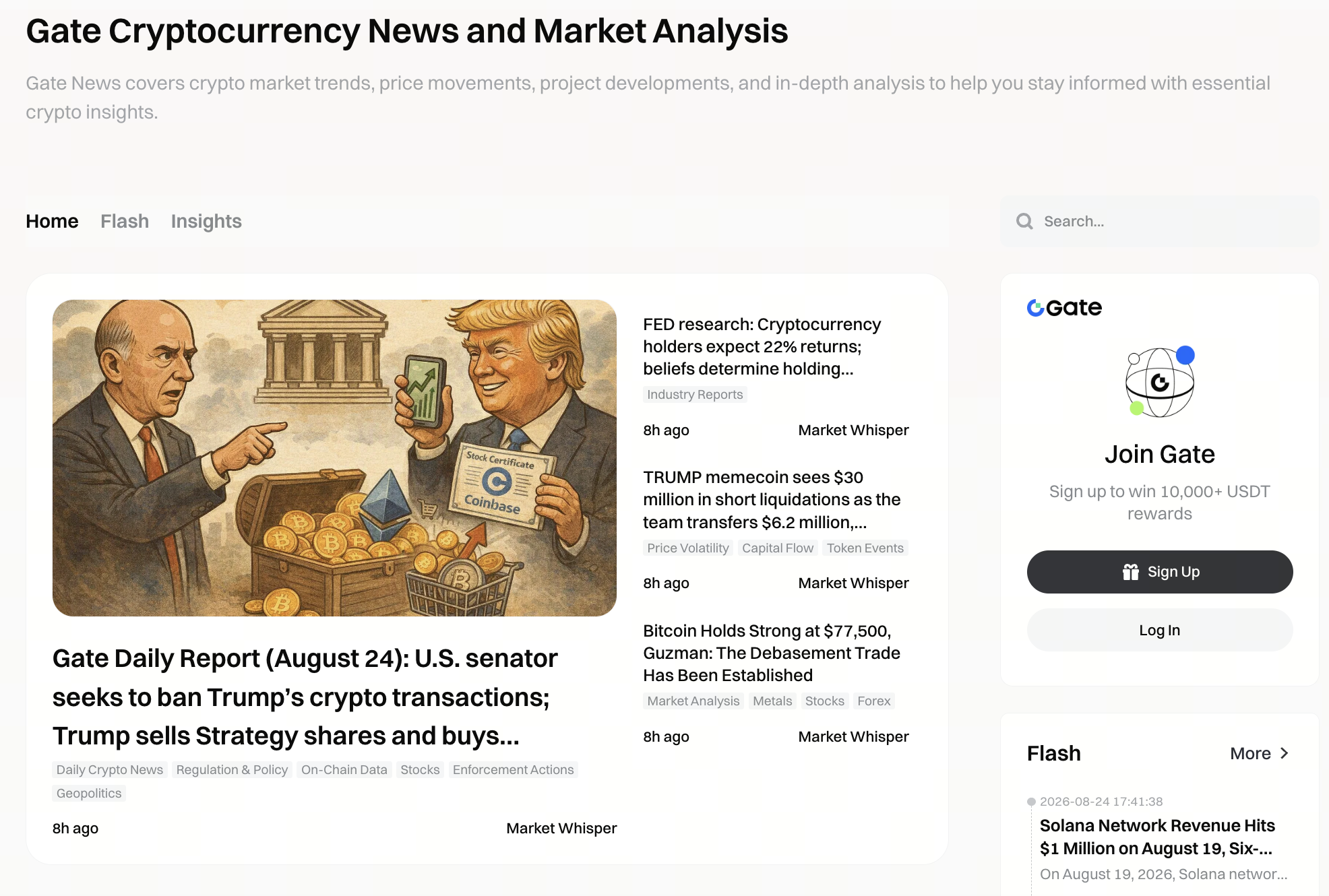
Gate's content ecosystem offers a different research proposition from dedicated stock platforms — rather than functioning as a stock database, it combines market education, breaking developments, deeper research and thematic analysis across crypto and an expanding range of traditional markets, via four channels used together:
-
Gate Learn — foundational concepts: P/E ratios, earnings season, how stocks differ from tokenized equities, plus courses introducing crypto investors to stock markets.
-
Gate News — faster-moving coverage of stocks, commodities, geopolitical events and capital flows alongside crypto, useful for understanding why a market is moving today.
-
Gate Research — institutional-grade analysis, blockchain project research and macro insights for questions like how institutional flows are reshaping crypto, or how tokenized assets and crypto markets are converging.
-
Gate Blog — accessible coverage of themes like AI stocks, tokenization, RWA adoption and global equity trends.
Its advantage is cross-asset context: traditional platforms analyze equities through the lens of equities, while Gate's ecosystem is built for research questions that cross into crypto, macro and tokenization.
Possible Limitations: An educational and market-context layer, not a substitute for primary financial disclosures or a specialized equity-research database. For detailed company financial modeling, Morningstar or Stock Rover remain the stronger fit.
Adjacent alternatives not ranked here include Koyfin for professional-grade macro and fundamental data dashboards and Fidelity for broker-based stock research.
| Platform |
Best For |
Price |
Main Strength |
| Morningstar |
Long-term fundamental investors |
$249/year |
Analyst research and fair value |
| Seeking Alpha |
Multiple investment opinions |
$299/year |
Contributor analysis + Quant Ratings |
| Yahoo Finance |
Free stock research |
Free / premium options |
Market data and financial information |
| Finviz |
Screening and technical analysis |
Free / $299.50 Elite annual |
Stock screener and heat maps |
| Stock Rover |
Advanced quantitative analysis |
Free / paid from $348/year |
Fundamentals and portfolio analytics |
| Simply Wall St |
Beginners and visual investors |
Free / paid |
Visual fundamental analysis |
| Gate Research Ecosystem |
Stocks + crypto + macro research |
Free content |
Cross-asset research and education |
How to Choose the Right Site
Beginner: Start with Yahoo Finance for company data if you want a simple stock research tool for your workflow. Simply Wall St helps visualize concepts; Gate Learn adds explanations of stocks, ETFs and macro indicators.
Long-term investor: Morningstar's focus on competitive advantage, valuation and fundamentals fits investors prioritizing intrinsic value over short-term moves.
Looking for ideas: Screen with Finviz or Stock Rover, then use Seeking Alpha to understand the arguments around what surfaces. In practice, many investors get better results by combining different research resources instead of relying on one platform.
Large or complex portfolio: Stock Rover has the strongest portfolio-analysis capabilities here — correlation, historical fundamentals, custom metrics and simulations matter more as complexity grows.
Following stocks and crypto: Add Gate Learn, Gate News, Gate Research and Gate Blog, particularly for themes where TradFi and digital assets overlap — AI, interest rates, tokenized securities, stablecoins, crypto IPOs and institutional blockchain adoption.
A Quick Research Workflow
A stock research site should be part of a process, not the entire process:
-
Find candidates — screen with Finviz or Stock Rover by valuation, growth or momentum.
-
Review fundamentals — revenue, earnings, margins, debt and cash flow via Morningstar, Stock Rover, Yahoo Finance or Simply Wall St.
-
Understand the thesis — read bullish and bearish analyses through Seeking Alpha or similar sources. Neyman AI uses advanced language models to provide AI-powered summaries of stock market information and answer stock research questions quickly.
-
Check recent developments — earnings and current coverage via Yahoo Finance, Gate News and other reputable outlets.
-
Understand the wider market — use Gate Research for interest rates, liquidity and cross-asset conditions.
-
Verify claims — check investor-relations pages and SEC EDGAR filings. The SEC EDGAR Database provides raw financial statements and proxy statements, while the company's official filing remains the primary source. AlphaResearch can search through millions of SEC documents with advanced AI when you need faster document-level research.
FAQ
What is the best free stock research website?
Yahoo Finance and free-tier Finviz are the most useful free options — Yahoo is the better free choice when you want an earnings calendar alongside general research and news, while Finviz is stronger for screening.
What stock research sites do professional investors use?
Institutional platforms like Bloomberg, FactSet, S&P Capital IQ or LSEG Workspace, alongside primary filings and proprietary models. Individual investors wanting professional-style tools at lower prices can consider Morningstar and Stock Rover.
Is Seeking Alpha reliable?
Useful for ideas, Quant Ratings and multiple perspectives, but contributor opinions aren't verified facts — cross-check important claims against financial statements and filings. Contributors can also receive payment for publishing research, and reader feedback and discussion may help surface alternative interpretations, though claims should still be verified.
What is the best website for stock screening?
Finviz is the easiest for quickly filtering U.S. equities; Stock Rover offers deeper quantitative and fundamental screening.
Where can I research stocks and crypto together?
Gate Learn, Gate News, Gate Research and Gate Blog cover digital assets alongside an expanding range of TradFi topics, complementing dedicated stock platforms when researching crypto/traditional-market connections. If you need broader cross-market coverage, some research platforms also span other asset classes and mutual funds in addition to stocks and crypto-adjacent themes.
Conclusion
There's no single best stock research site for every investor. Morningstar leads for long-term fundamental analysis, Seeking Alpha for competing investment theses, Yahoo Finance for a free foundation, Finviz for screening, Stock Rover for advanced portfolio and quantitative analysis, and Simply Wall St for beginner-friendly fundamentals.
Investors researching both traditional and digital markets can add Gate Learn, Gate News, Gate Research and Gate Blog for education, market updates and analysis of the growing connection between stocks, macro and crypto.
The strongest research process doesn't depend on one website: use screening tools to find opportunities, analytical platforms to evaluate them, news and research to track what's changing, and primary disclosures to verify the facts before deciding when to buy, hold or sell and whether your process can outperform simple one-site shortcuts.