As Layer 2 technology matures, the Ethereum ecosystem is shifting its focus from basic scaling competition to application ecosystem competition. When choosing a blockchain network, users now care not only about transaction costs and performance but also about which applications they can use, which ecosystems they can join, and what kind of on-chain experience they can expect. Against this backdrop, the application ecosystem has become a key metric for evaluating the development level of Layer 2 networks.
Among the many Ethereum Layer 2 networks, Base stands out for its exceptional growth rate. Leveraging Coinbase’s brand influence and user onboarding channels, Base has attracted a large number of developers to deploy applications, gradually building a diversified ecosystem that spans DeFi, payments, social networks, and AI. Unlike traditional blockchain networks centered on financial protocols, Base places a stronger emphasis on mainstream user scenarios and consumer-grade applications.
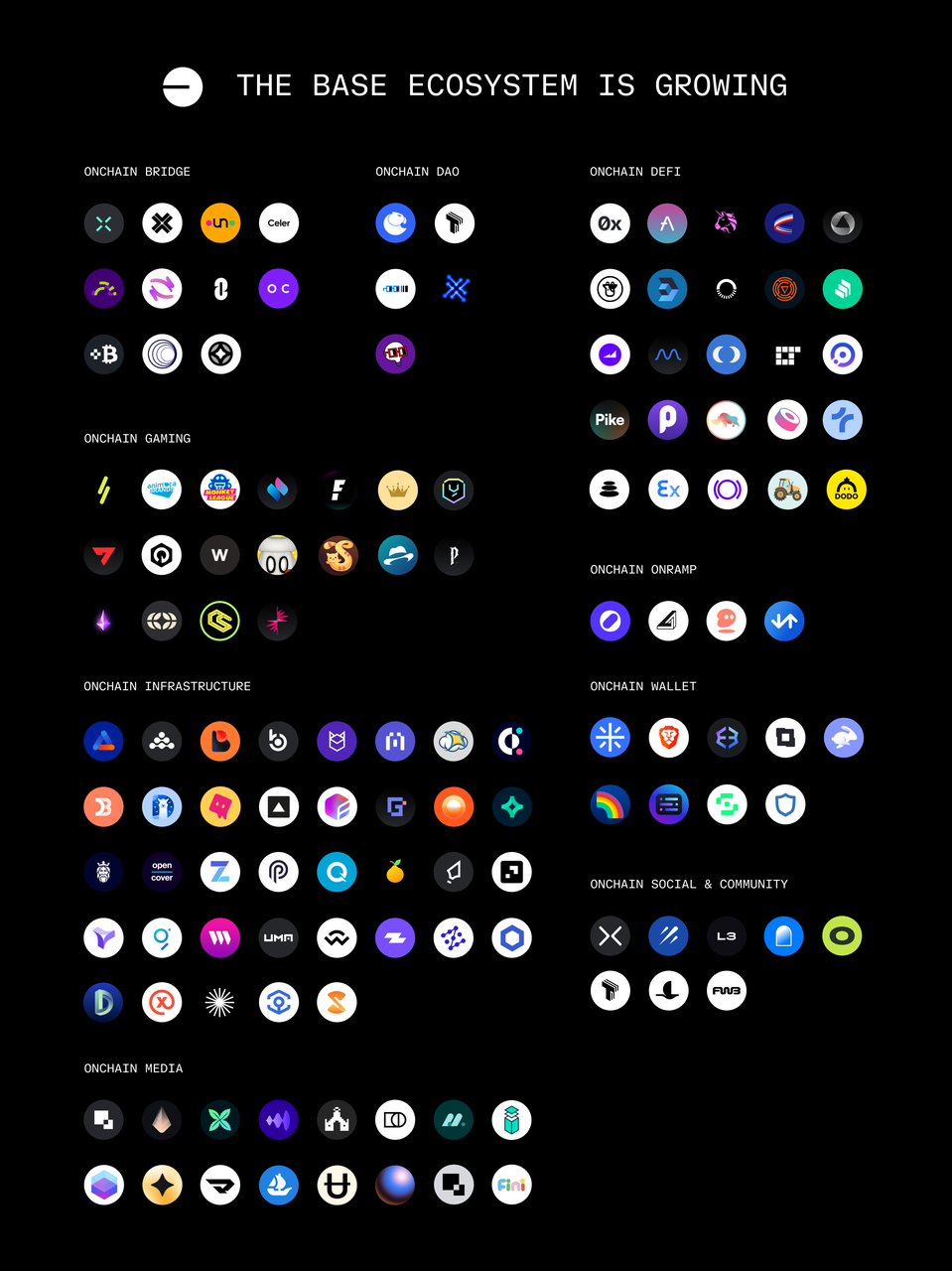
What are the most important DeFi applications on Base?
DeFi is one of the most mature components of the Base ecosystem.
Aerodrome
Aerodrome is one of the largest decentralized exchanges on Base and a core liquidity hub for the network. Using the ve(3,3) incentive model, Aerodrome attracts capital through liquidity mining and governance mechanisms. Many new projects prioritize establishing trading markets on Aerodrome.
Uniswap
As the most well-known DEX in the Ethereum ecosystem, Uniswap is also deployed on Base. Users can take advantage of Base’s low transaction fees for token swaps and liquidity management, lowering the barrier to DeFi participation.
PancakeSwap
PancakeSwap has expanded to multiple blockchains, and Base is one of its key Layer 2 deployments. Beyond token trading, users can also provide liquidity and engage in other on-chain financial activities.
What are the mainstream lending protocols on Base?
Lending protocols are a critical pillar of DeFi infrastructure.
Aave
Aave is one of the largest decentralized lending protocols globally and is live on Base. Users can deposit assets to earn yield or borrow other digital assets through overcollateralization.
Moonwell
Moonwell is a lending platform tailored to the Base and Optimism ecosystems. Optimized for Layer 2 environments, it has become one of the most frequently used lending protocols on Base.
The presence of lending protocols enables Base to support not only trading but also a more complete on-chain financial ecosystem.
How is Base driving the development of stablecoin payments?
Payments are considered one of Base’s most important growth vectors. Traditional blockchain payments are often hampered by high fees and slow confirmation times, whereas Base enables stablecoin transfers at significantly lower costs.
USDC plays a central role in the Base ecosystem. Thanks to the long-standing partnership between Coinbase and Circle, Base has become one of the key circulation networks for USDC. For cross-border payments, microtransactions, and commercial use cases, Base offers a much more efficient solution than the Ethereum mainnet.
What are the representative projects in the Base social ecosystem?
Social networks are a major differentiator between Base and many other Layer 2 networks.
Farcaster
Farcaster is one of the most prominent decentralized social protocols today. Users own their on-chain identity and social graph data, rather than relying on traditional platforms to control content and accounts. Because Base provides a low-cost interaction environment, many Farcaster-related applications are preferentially deployed on the Base ecosystem.
Friend.tech
Friend.tech was a key application that drove Base user growth. By tokenizing social relationships, it enabled a new interaction model between content creators and fans, demonstrating the commercial potential of on-chain social networks.
How is the NFT and digital creator ecosystem developing?
NFTs remain an important part of the Base ecosystem.
Thanks to lower minting and transaction costs, many creators choose to issue digital artworks and membership credentials on Base. For brands and content creators, Base provides NFT infrastructure better suited for large-scale user participation. Meanwhile, on-chain identity, digital collectibles, and membership systems are emerging as key development directions for NFT applications.
Why are AI agents entering the Base ecosystem?
AI agents have become one of the fastest-growing new sectors on Base in recent years. AI agents are intelligent systems that can autonomously perform tasks, manage assets, and interact with the blockchain. Base’s low cost and high-frequency interaction capabilities make it an ideal environment for AI agent automation.
An increasing number of development teams are building AI-driven payment, trading, and social applications on Base, introducing new automated participants to the on-chain economy.
What role does the developer ecosystem play in Base?
Developers are a key driving force behind Base’s ecosystem expansion.
Base offers a development environment fully compatible with Ethereum, supporting Solidity, the EVM toolchain, and mainstream wallet infrastructure. Development teams can quickly deploy applications and leverage existing Ethereum ecosystem resources to reduce costs.
Additionally, Base is a core member of the OP Superchain, giving developers seamless access to multiple compatible networks in the future.
What is the difference between the Base ecosystem and the Arbitrum ecosystem?
Both Base and Arbitrum have rich application ecosystems, but they focus on different areas.
Arbitrum excels in DeFi, derivatives trading, and on-chain financial infrastructure. It hosts a large number of mature protocols and professional trading users. Base, in contrast, is more consumer-oriented. Payments, social networks, the creator economy, and AI agents are its primary growth drivers.
From an ecosystem structure perspective, Arbitrum leans toward being a financial network, while Base leans toward being a user network.
Base mainstream application track overview
| Track |
Representative Projects |
Core Use |
| DEX |
Aerodrome, Uniswap, PancakeSwap |
Asset trading |
| Lending |
Aave, Moonwell |
Lending and yield |
| Payments |
USDC payment ecosystem |
Transfers and settlements |
| Social |
Farcaster, Friend.tech |
Social networking |
| NFTs |
Zora and other platforms |
Digital asset issuance |
| AI agents |
Various AI applications |
Automated interaction |
| Development tools |
OP Stack ecosystem tools |
Application development |
Summary
Base has evolved from a simple Layer 2 network into a comprehensive ecosystem covering DeFi, payments, social networks, NFTs, and AI agents. Low transaction costs, EVM compatibility, and Coinbase’s user onboarding pipeline make Base one of the fastest-growing Ethereum Layer 2 networks today.
Compared to traditional blockchain networks centered on financial protocols, Base places greater emphasis on consumer-grade applications and mainstream user scenarios. As payment infrastructure, on-chain social networks, and AI agents continue to mature, Base is steadily becoming a key platform connecting internet users with the Web3 economy.
FAQs
What is the largest DeFi application on Base?
Aerodrome is one of the most important DeFi applications on Base and serves as the core hub for network liquidity and trading activity. Meanwhile, Uniswap and Aave also have a significant user base on Base.
Why is Base suitable for payment applications?
Base offers low transaction fees and fast confirmations, reducing the cost of stablecoin transfers and making it ideal for payments and cross-border settlement scenarios.
What is the relationship between Farcaster and Base?
Farcaster is a key social protocol deployed on the Base ecosystem. Many Farcaster applications leverage Base’s low-cost environment to provide on-chain identity and social interaction features.
Does Base support NFT applications?
Yes. Base has a complete NFT infrastructure, allowing users to create, trade, and manage digital collectibles and on-chain membership assets.