Square
Following
Hot
News
Notifications
Profile
Share your thoughts
placeholder
Article
BTC markets predictions
live-cover
LIVE2,268
Why do many trading strategies perform consistently in backtests, then suddenly fail when market conditions change?

A trading strategy may generate steady profits for several months.

It may perform well in trending markets, with a beautiful backtest curve. But when the market enters a choppy phase or liquidity suddenly declines, signals that once worked may start failing frequently.

At this point, many people’s first thought is: Are the parameters not properly tuned?

But the problem may have nothing to do with the parameters. Instead, the market conditions the strategy relies on to make mo
post-image
Trenches
mihao
m
bade
b
mihao
4Cxj...pump
Market Cap
$.
Change
.
24h Vol
$.
Holders
.
AGT
A
bade
b
AGT
0x5d...e274
Market Cap
$.
Change
.
24h Vol
$.
Holders
.
HOLD
H
bade
b
HOLD
4iJ7...pump
Market Cap
$.
Change
.
24h Vol
$.
Holders
.
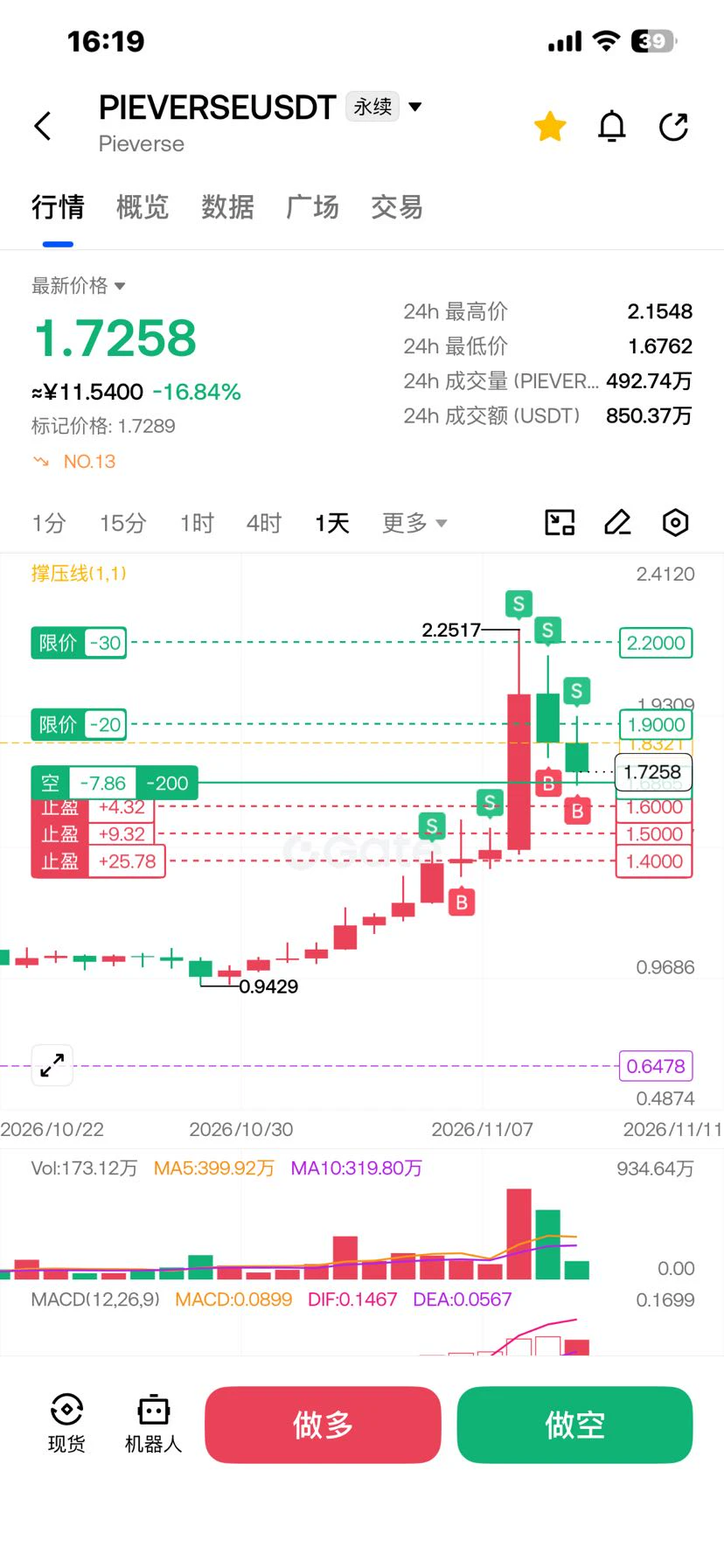
PIEVERSE
P
bade
b
PIEVERSE
0x0e...25a9
Market Cap
$.
Change
.
24h Vol
$.
Holders
.
X
X
bade
b
X
9VZe...pump
Market Cap
$.
Change
.
24h Vol
$.
Holders
.
Guns in hand, follow me: kill 4th Brother and seize the watchtower! The authorities are starting to make a move!
post-image
BTC News Analysis: How Can Market News Improve Trading Decisions?

In BTC trading, many people study candlestick charts, MACD, and RSI every day, but overlook an important factor that can significantly affect market trends: news.

Sometimes, BTC suddenly rises or falls in a short period, not because technical indicators signaled it in advance, but because new policies, economic data, or changes in capital flows have emerged. News developments can quickly shift investor expectations and, in turn, affect the balance between buyers and sellers.

So, how should you use news to analyze BTC?

First,
post-image
BTC-0.67%
During a BTC pullback, how can you tell whether it’s a normal correction or a trend reversal?

In BTC trading, one of the most common mistakes people make is treating every drop as a trend reversal. As soon as the price pulls back, they rush to close their positions or even open short positions. But sometimes, the market is simply undergoing a normal correction during an uptrend, and the price then strengthens again.

So, how can you distinguish a normal pullback from a genuine trend reversal?

First, watch the structure of highs and lows. In a healthy uptrend, prices typically form progressiv
post-image
BTC-0.67%
How to Take Profits in a Bull Market: A Simple, Practical Strategy!

During a BTC rally, many traders face a difficult question: When should they sell? Sell too early, and they worry about missing further gains; sell too late, and they may watch their profits gradually evaporate. In practice, rather than trying to sell at the exact peak, it’s better to plan a strategy for taking profits in stages ahead of time.

First, set profit-taking targets in advance. Before opening a position, plan profit-taking levels for different stages based on your entry price, risk tolerance, and market structure.
post-image
BTC-0.67%
Does a bearish divergence in BTC mean a drop is imminent?

In BTC technical analysis, bearish divergence is often seen as a warning sign that an uptrend may be weakening. But many traders rush to short as soon as they spot bearish divergence, only to see prices keep rising instead of falling, ultimately getting caught on the wrong side of the market.

So, how should you interpret bearish divergence?

First, understand the basic principle behind bearish divergence. When the BTC price keeps making new highs, but the highs on the RSI or MACD indicator gradually decline, bearish divergence may be
post-image
BTC-0.67%
BTC Outlook for the Coming Year: Analysis of Three Possible Market Scenarios!

In the cryptocurrency market, many investors want to know in advance how high BTC will rise over the next year. But predicting prices is never simple. Rather than trying to give a definite target, it is better to analyze several possible scenarios based on different market conditions.

First, the bullish scenario: continued capital inflows. If global liquidity conditions improve, institutional funds continue to enter, and market demand keeps growing, BTC may regain upward momentum. In this case, the market could for
post-image
BTC-0.67%
Gold can’t hold up either! Why might gold fall as inflation rises?

This may be one of the most baffling things in financial markets: rising inflation doesn’t necessarily mean gold will rise!
U.S. CPI rose 0.4% month over month in October, while core CPI rose 0.3%, both above market expectations. In theory, rising prices should increase gold’s appeal as a safe haven and inflation hedge.
But here’s the problem: if inflation leads the Fed to keep interest rates high, or even consider further hikes, gold could come under pressure instead.
Gold’s biggest competitor isn’t silver, but interest-beari
NAS100+1.55%
  • 13
Why can you be right about the direction and still lose money in the end?

You expect Bitcoin to rise and buy in. The price does rise.

But you still lose money.

Why?

Because correctly predicting the direction is only one part of a successful trade. Your entry price, stop-loss distance, position size, trading costs, and risk-reward ratio can all determine the final outcome.

Getting the market direction right does not mean the trade will necessarily make money.

I. Why can you lose money even when your directional call is right?

Suppose you expect BTC to rise.

You buy at $100,000. The pric
post-image
Whales Moves in Sync
live-cover
LIVE1,929
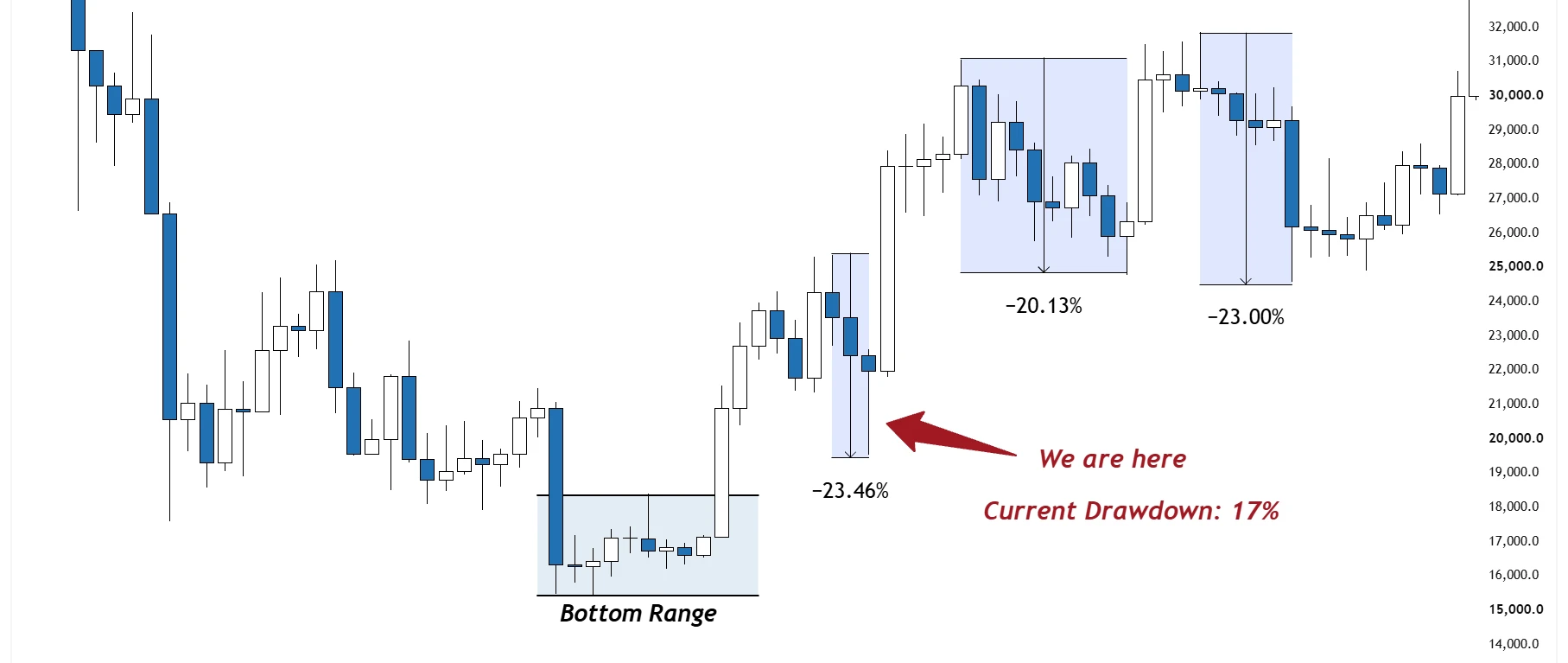
$BTC I genuinely don't understand the panic over a 17% pullback.

Let's not forget what we're dealing with here.

This is crypto, not an index fund.

Just looking at the early stages of the last bull market, we saw three corrections exceeding 20% before the euphoric phase even started.

Just like today, people panicked and ran to the door, calling for new lows.

But guess what?

Those new lows never came, and in the end, they just ended up being sidelined and sad.

And let's not forget one more thing. Even a 20% correction isn't particularly large for a bull market.

Pullbacks of 30% aren't
post-image
BTC-0.65%
The year's lowest price of 4.5 GT—half off—ends tonight, then returns to 9 GT. Long-term win rate of 90%, over 600 subscribers 🎉, making money every day lately 💰 Subscribe for reference ⬇️

https://www.gate.com/zh/profile/小鬼每日合约

🔥 Wave 4 consolidation and bottoming + daily/weekly oversold; it's time to build a long-term position‼️ For direction and price levels, see the subscription post 🔥 Last week: shorted the tops at 2395/79700 and took profit at 2005/72700 📉 Shorted ZEC at 1235; now at 960, taking profit #美国10月CPI全面超预期
ZEC+1.29%
After Creating a Web3 Wallet, Don’t Rush to Transfer: 7 Security Checks

Creating a Web3 wallet usually takes just a few minutes.

But what really determines whether you can use the wallet safely over the long term isn’t how quickly it was created, but whether you understand the risks behind private keys, signatures, networks, and permissions.

Many asset losses don’t result from sophisticated technical attacks, but from seemingly simple actions: downloading the wrong wallet app, creating a risky backup of your seed phrase, choosing the wrong network for a transfer, or clicking confirm without
post-image
Support and resistance levels are the most fundamental and practical concepts in technical analysis. Many traders study candlesticks and indicators every day, yet overlook an important question: at which price levels are buying and selling forces likely to shift?

First, a support level is an area where buying pressure may increase as the price falls. When the price approaches this area, some buyers may start entering the market, slowing the decline. But a support level does not mean the price definitely won’t break below it.

Second, a resistance level is an area where selling pressure may in
post-image
BTC-0.67%
BTC News Analysis: How Can Market News Improve Trading Judgment?

In BTC trading, many people study candlestick charts, MACD, and RSI every day, yet overlook an important factor that can significantly affect market trends: news.

Sometimes, BTC suddenly rises or falls in a short period, not because technical indicators signaled it in advance, but because new policies, economic data, or changes in capital flows emerge. Changes in the news can quickly shift investor expectations, which in turn affect the balance between buyers and sellers.

So, how should you use news to analyze BTC?

First, pay
post-image
BTC-0.67%
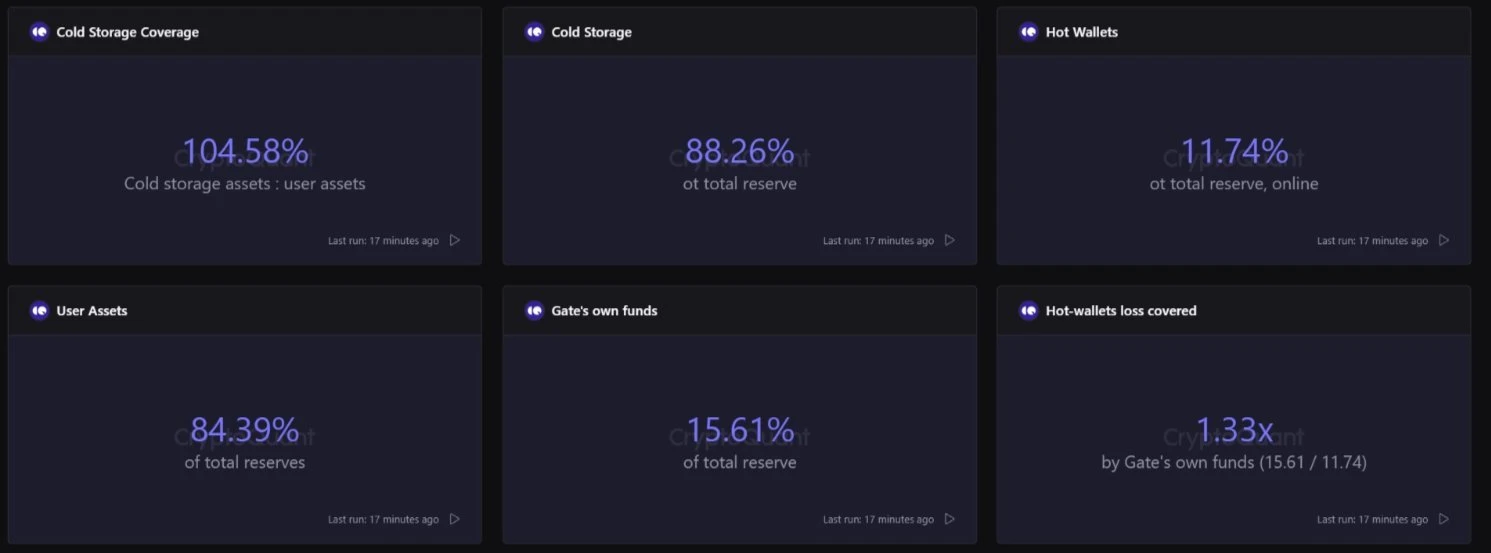
What is the real risk-control logic behind a cold storage coverage ratio of 104.58%?

Gate's newly launched PoSEC (Proof of Security of Funds) answers with a set of hard numbers:
🔹 Extreme stress test: Hot wallet assets account for just 11.74% of total reserves. Even if an extreme cyberattack wiped out all hot wallet assets, the 104.58% coverage from offline cold storage alone would be enough to fully repay all user balances, with 3.87 percentage points to spare;
🔹 Platform-owned funds as a backstop: Gate's own funds account for 15.61% of total reserves, enough to independently absorb 1.33 t
post-image
BTC-0.67%
  • 1
  • 1
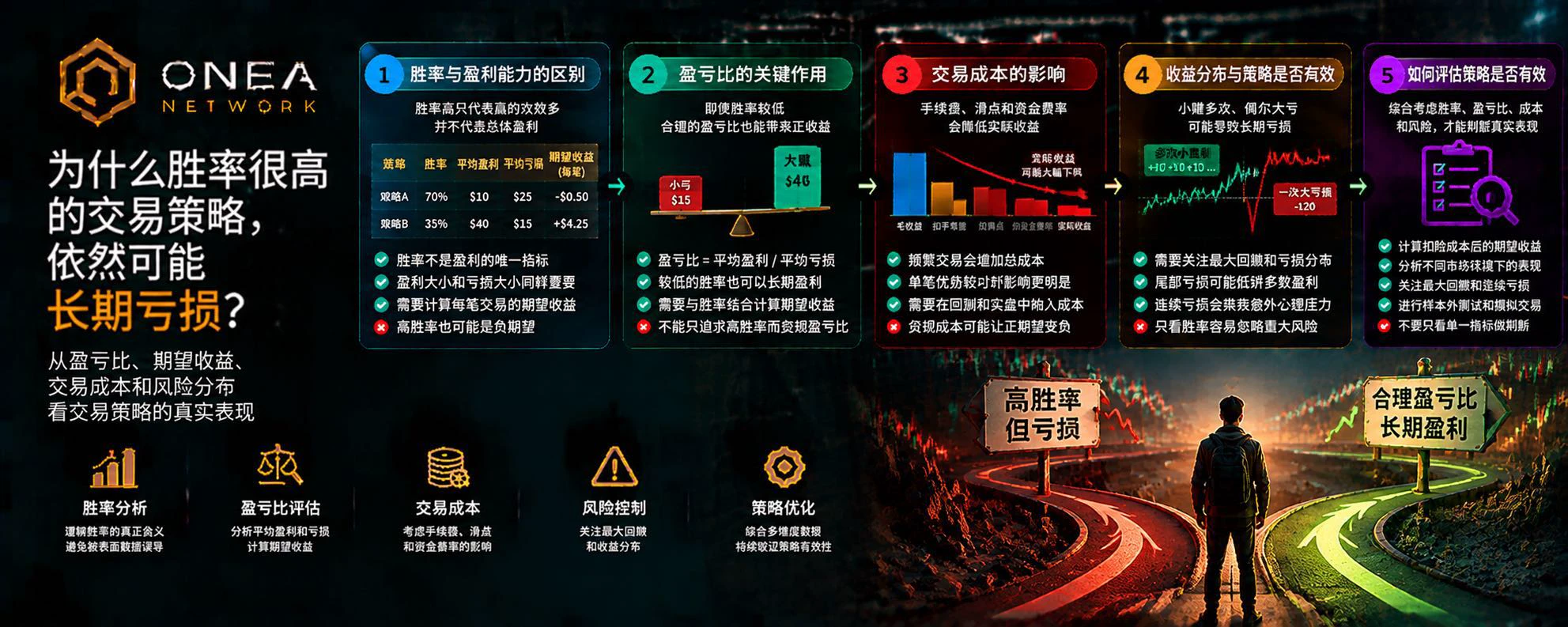
Why Can a High-Win-Rate Trading Strategy Still Lose Money Over the Long Term?

Many traders like to pursue a high win rate.

A 70% win rate sounds pretty good.

An 80% win rate seems even better.

But one easily overlooked issue is that if the amount lost on each losing trade is far greater than the amount gained on each winning trade, you can still lose money in the end, even if you’re often right.

The win rate determines how many times you win, but it cannot determine on its own how much you ultimately make.

I. First, consider a simple mathematical example

Suppose two strategies each make
post-image
Arthur NOOOOOOOOOOOOO!
post-image
Load More

Join 40 M users in our growing community

⚡️ Join 40 M users in the crypto craze discussion

💬 Engage with your favorite top creators

👍 See what interests you

Trending Topics

GateGlobalComplianceExpansion

16.7k Views364 Discussing

Gate continues to expand its global compliance footprint, now covering 81 regulated jurisdictions across Europe, North America, Asia, and Oceania. From MiCA and U.S. state-level MTLs to Japan’s FSA, Dubai, and Australia-related regulatory approvals, global exchanges are entering a new stage of compliance competition. Do you think regulatory strength will become as important as products and liquidity for exchanges in the future?

USOctoberCPIBeatsExpectations

88.29k Views2.66k Discussing

AnthropicIPOValuationCouldReach1.4T

12.71k Views1.61k Discussing

View More