
Square
Following
Hot
News
Profile
Share your thoughts
placeholder
Article
$PUMP At this point, what I trust least is actually the 24-hour change. The figure is eye-catching, but it often masks the real divergence: $PUMP being oversold is not the same as having bottomed.
The current price is 0.004249, down 15.98% over 24 hours; it is approximately 0.92% above the 1-hour support at 0.00421 and approximately 20.92% below the resistance at 0.005138, while volume is only 1.24 times the average volume of nearly 20 candles.
I currently lean toward this interpretation: demand for a rebound has emerged, but until the structure stops weakening, I will not equate oversold cond
post-image
PUMP-15.94%
$ARGUS lol you guys will get rekt by this trash, look at their team 🤣
post-image
ARGUS+26.40%
TSMC’s latest earnings report shows profits surging nearly 70%—so why did its stock price fall instead? $TSM
Speaking of TSMC’s just-released third-quarter earnings report, revenue surpassed 1.49 trillion New Taiwan dollars, while net profit soared to 763.1 billion New Taiwan dollars, up nearly 69% year on year, with every metric leaving market expectations far behind. The share of 2nm and advanced process technologies was extremely high, and demand for AI chips remained robust
Interestingly, the market dipped slightly after the positive results were announced. The market is not worried that
post-image
TSM-3.35%
FeaturedInflation surges to 3.7%, Bitcoin falls below $82,000
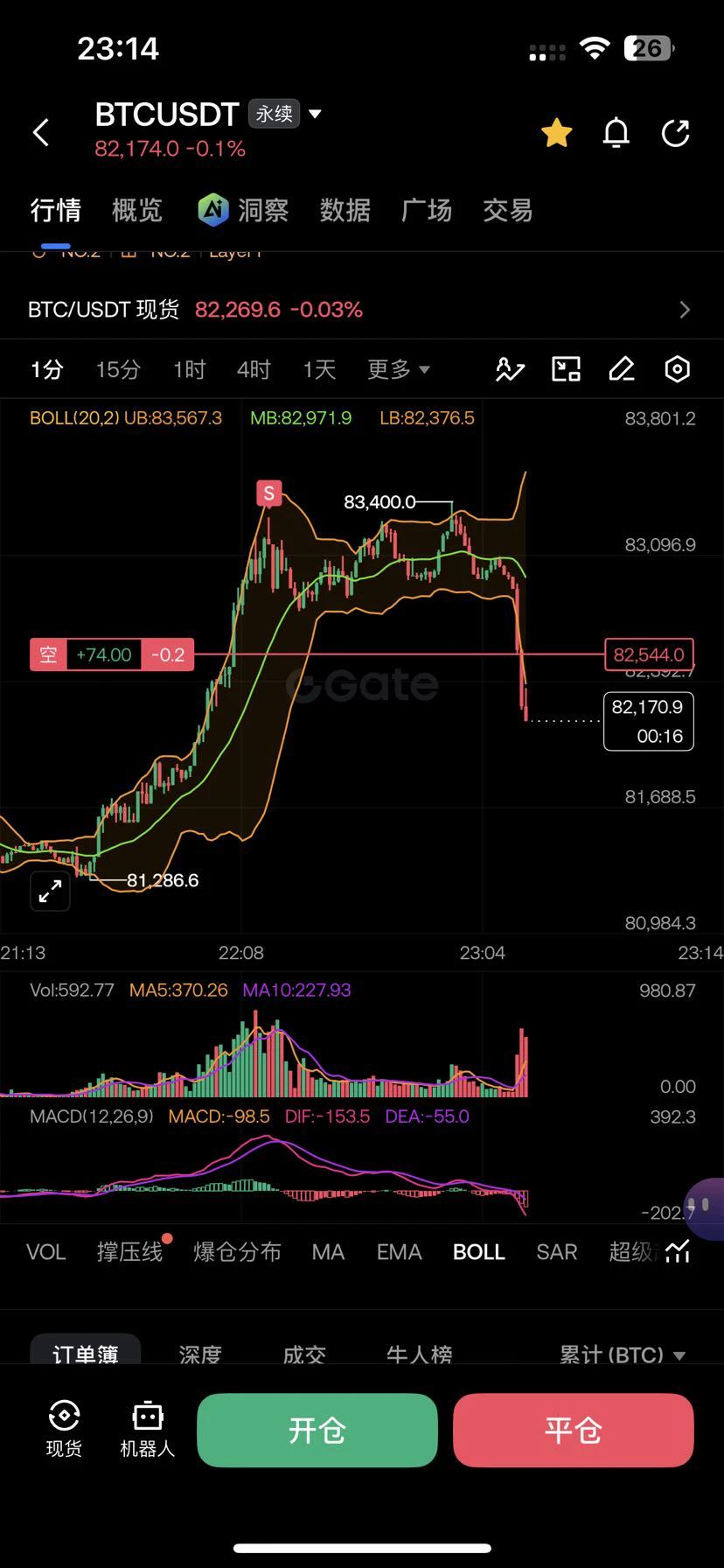
U.S. September CPI rose 3.7% year-on-year, above the expected 3.6%; gasoline jumped 9.1% month-on-month, accounting for more than half of the monthly increase, while core CPI rose 2.6% year-on-year, also exceeding expectations. Bitcoin fell 1.5% to $82,142, hitting an intraday low of $81,926, while Ethereum fell 2.8% to $2,440; the 10-year U.S. Treasury yield surged to around 5.3%, and the probability of an October rate hike doubled from 22% to 44%–49%. Over $281 million was liquidated in 24 hours, mostly long positions. If $81,603 fails to
BTC-2.73%
ETH-5.48%
  • 1
#美国9月CPI超预期 #每周来晒 U.S. inflation remains high, rate hike expectations surge, and the crypto market falls under pressure. How will things develop from here?
U.S. inflation has once again sounded an alarm for global financial markets. On October 14 local time, the U.S. Bureau of Labor Statistics released September Consumer Price Index (CPI) data. The data showed that U.S. CPI rose 3.7% year over year in September, higher than the market expectation of 3.6% and August’s 3.4%; it rose 0.6% month over month, up from August’s 0.4%. More notably, core CPI, which excludes food and energy prices, rose
post-image
ThisIsTranslateContent:
#美国9月CPI超预期 #每周来晒 U.S. inflation remains elevated, expectations for rate hikes have surged, and the crypto market has come under pressure and fallen. How will things develop from here?
U.S. inflation has once again sounded an alarm for global financial markets. On October 14 local time, the U.S. Bureau of Labor Statistics released the Consumer Price Index (CPI) data for September. The data showed that U.S. CPI rose 3.7% year over year in September, higher than the market expectation of 3.6% and August’s 3.4%; month over month, it rose 0.6%, accelerating further from August’s 0.4% increase. More notably, core CPI, excluding food and energy prices, rose 2.6% year over year, up from August’s 2.4%, and increased 0.3% month over month. Meanwhile, U.S. gasoline prices surged 9.1% month over month in September, becoming an important factor driving overall inflation higher. This means that U.S. inflation not only failed to continue declining as the market had expected, but instead rebounded significantly. It has also intensified market concerns over future monetary policy. After the inflation data was released, market expectations for a rate hike at the Federal Reserve’s October meeting rose significantly. According to Reuters, the implied probability of an October rate hike in the interest-rate futures market briefly rose to about 37%; other market data indicated even higher probabilities, with the specific figure varying based on the timing of trading and statistical methodology. U.S. Treasury yields and the dollar strengthened in tandem, while Bitcoin and gold also came under pressure after the data was released. It must be emphasized that rising rate-hike expectations do not mean the Federal Reserve has already decided to raise rates. But for the crypto market, even if a rate hike has not yet occurred, investors may adjust their positions in advance and trigger price volatility as long as they begin reassessing the future interest-rate path. Previously, the market had expected cooling inflation to create room for rate cuts and further improve liquidity for risk assets. However, the September CPI data, which exceeded expectations, shattered that optimism. Investors now need to consider not only whether rate cuts will be delayed, but also reassess the possibility that high interest rates could persist for longer or even rise again.
So why does U.S. inflation have such a major impact on the crypto market? What exactly does this CPI data mean? If the Federal Reserve continues to maintain a tight policy, where will Bitcoin and other crypto assets go?
I. A rebound in inflation means the Federal Reserve’s policy room is becoming more limited
The most notable aspect of this data is not only that headline CPI rose from 3.4% to 3.7%, but also that core inflation rebounded at the same time. Rising gasoline prices were an important driver of this inflation rebound, but price pressures were not limited entirely to the energy sector. U.S. housing, some services, and used cars also increased, indicating that inflation remains somewhat broad-based. This is undoubtedly a difficult signal for the Federal Reserve. If inflation continues to fall, the Federal Reserve will have more room to lower interest rates to support employment and economic growth. But when inflation picks up again, cutting rates too early could cause demand to heat up again and further expand price pressures.
Therefore, the Federal Reserve may need to maintain restrictive interest rates for an extended period and, if necessary, may not rule out further rate hikes.
For the market, what truly matters is not whether the Federal Reserve has already announced a rate hike, but whether future funding costs could continue to rise. When investors expect interest rates to remain high, they generally allocate funds to high-risk assets more cautiously. As a highly volatile asset class, the crypto market naturally cannot remain entirely unaffected.
II. Why do rising rate-hike expectations suppress the crypto market?
As Bitcoin spot ETFs, institutional allocations, and derivatives markets have developed, crypto assets have become increasingly connected to traditional financial markets. Macroeconomic conditions and monetary policy have already become important variables affecting the crypto market.
The logic behind the market coming under pressure this time mainly consists of the following aspects.
1. Rising interest-rate expectations put pressure on risk-asset valuations Crypto assets themselves do not provide fixed interest income. Their prices depend more on market demand, future expectations, and investors’ willingness to take on risk. When the market expects the Federal Reserve to cut rates, investors often anticipate improved financial conditions and increase their allocations to Bitcoin and other risk assets. But if inflation data continues to exceed expectations, rate cuts may be delayed and the risk of rate hikes may even emerge, prompting the market to reassess the valuations of these assets. This impact is usually more pronounced for Meme coins and small- and mid-cap tokens, which lack stable cash flows and whose prices are mainly supported by market sentiment and future expectations, when monetary policy expectations shift.
2. Rising U.S. Treasury yields change the logic of capital allocation
U.S. Treasuries are an important pricing benchmark for global financial markets. When investors can obtain higher returns through relatively low-risk assets, the appeal of allocating to highly volatile crypto assets may decline. At the same time, higher financing costs can also restrain some leveraged trading and venture investment activities. Of course, Treasury yields, the dollar, and crypto assets do not always exhibit a simple inverse relationship. The market is also affected by factors such as economic growth expectations, fiscal policy, and capital flows. But when inflation exceeds expectations and interest-rate expectations rise, risk assets are generally more likely to face pressure.
3. Leveraged liquidations amplify price volatility
Compared with traditional assets, another characteristic of the crypto market is its active leveraged trading. When macro news triggers a price decline, highly leveraged investors may face insufficient margin, which in turn triggers forced liquidations. Concentrated liquidations add to selling pressure and push prices down further. If changes in funding rates, declining liquidity, and crowded long positions occur simultaneously during the decline, the market may experience a rapid plunge within a short period.
Therefore, macro factors may only be the starting point for a weakening market, while the internal leverage structure is what truly amplifies the decline.
4. Market sentiment weakens, and capital becomes more cautious.
Crypto market prices reflect not only fundamentals but also depend heavily on expectations. When investors originally expected a rate-cut rally but discover that inflation remains stubborn, risk appetite is often the first thing to change. Some funds may reduce their positions, increase their cash allocation, or shift toward more liquid assets. For tokens with insufficient trading depth, even a relatively small amount of selling can cause a significant price impact. This means that the impact of inflation is not only rising funding costs, but also a change in the market’s assessment of future market performance.
III. The biggest uncertainty ahead: What will the Federal Reserve choose?
Going forward, the key issue for the crypto market is not a single CPI report, but how this data will affect the Federal Reserve’s subsequent policy path.
Based on the current macroeconomic logic, three scenarios may emerge.
Scenario One: Inflation remains stubborn, and high rates last longer
If subsequent CPI and core inflation remain above expectations, while services prices, housing costs, or energy prices come under new upward pressure, the Federal Reserve may continue to maintain restrictive interest rates. In this case, market expectations for rate cuts may be pushed back further, while the dollar and Treasury yields may remain relatively strong. The crypto market may continue to face valuation pressure, limiting Bitcoin’s rebound potential, with capital potentially becoming more concentrated in assets with better liquidity and stronger market consensus. Meme coins, small-cap tokens, and highly leveraged trading may become higher-risk areas under this scenario. But this does not mean the market will necessarily fall in one direction. If inflation pressures have already been fully priced in, or if demand from other sources of capital provides support, crypto assets may still experience a temporary rebound.
Scenario Two: Inflation gradually declines, and rate-cut expectations heat up again
If subsequent data shows that inflation was only a short-term fluctuation, with core inflation gradually declining while the labor market and consumer demand cool somewhat, the Federal Reserve may regain room to ease monetary policy. Once the market begins to believe that interest rates may fall, declining Treasury yields, a weaker dollar, and improved risk appetite could all support the crypto market. Under this scenario, Bitcoin may be the first to benefit from improving macro expectations, after which capital could gradually spread to Ethereum and other higher-risk assets. However, rate cuts are not necessarily always positive. If falling inflation is caused by a rapid economic recession, investors may instead reduce their allocations to risk assets. Therefore, when assessing market conditions, it is also necessary to monitor economic growth and employment data rather than looking only at interest-rate changes.
Scenario Three: Inflation and economic growth diverge, and the market remains volatile
Another possibility is that inflation fluctuates while economic growth has not yet slowed significantly, leaving the Federal Reserve with neither sufficient reason to cut rates quickly nor enough basis to raise them immediately. Under these circumstances, policy expectations may swing back and forth in response to different data points. Every CPI release, nonfarm payrolls report, or speech by a Federal Reserve official could trigger short-term market moves. The crypto market may switch frequently between gains and losses, forming a range-bound market. For investors, this environment is often more difficult to navigate than a one-directional market, because expectation gaps can easily emerge before and after data releases, while chasing rallies and selling into declines can more easily result in losses.
IV. Besides CPI, which indicators should be watched going forward?
To determine whether the current crypto market correction will expand further, it is important to focus on the following types of indicators.
First, core CPI and core PCE. Core inflation can help the market determine whether price pressures are persistent, while the Federal Reserve places particular emphasis on the Personal Consumption Expenditures (PCE) price index as an important reference for evaluating inflation. If core inflation continues to fall, the market may reassess the possibility of rate cuts; if it remains elevated, expectations for tighter policy may strengthen further.
Second, U.S. employment data. If the labor market remains strong, the Federal Reserve may have more room to maintain higher interest rates; if employment cools significantly, it will need to weigh inflation risks against economic growth risks.
Third, U.S. Treasury yields and the dollar index. These two indicators can reflect the market’s repricing of the interest-rate path and the appeal of dollar assets. If yields continue to rise and the dollar strengthens, the crypto market may remain under pressure.
Fourth, Bitcoin spot ETF flows and derivatives data. ETF inflows and outflows can help track changes in institutional demand; futures open interest, funding rates, and liquidation volumes can help determine whether the market is excessively leveraged.
Fifth, the Federal Reserve’s actual policy signals. The market trades on future expectations, not merely on data that has already been released. Investors need to monitor Federal Reserve statements, meeting minutes, and officials’ speeches to determine whether the policy direction has truly changed. Only by combining macroeconomic data, policy expectations, and the internal structure of the crypto market can one more accurately determine whether the current decline is a short-term correction or a risk repricing over a longer cycle.
V. Conclusion: Inflation determines policy room, while liquidity influences market direction
U.S. inflation remaining above expectations means that the easing environment the market has been anticipating may not arrive soon. Rising rate-hike expectations are essentially the result of investors reassessing future funding costs and risk-asset valuations. For the crypto market, short-term pressure remains, especially when leverage is high and market sentiment is fragile, as the impact of macroeconomic data may be amplified further.
But another misconception should also be avoided: inflation exceeding expectations does not mean the Federal Reserve will necessarily raise rates, and a decline in the crypto market does not mean the long-term market cycle has ended.
The key for the market going forward will be whether inflation can continue to fall, whether employment and economic growth undergo significant changes, and how the Federal Reserve balances price stability against economic risks. If inflation remains stubborn, the market may need more time to digest expectations for high interest rates; if inflation gradually cools and liquidity expectations improve, crypto assets may regain upward momentum.
For investors, rather than betting on short-term gains or losses following a particular data release, it is better to continuously track inflation trends, interest-rate expectations, and market capital flows. When macroeconomic uncertainty remains high, controlling leverage, managing positions, and leaving room to respond to different scenarios are often more important than blindly predicting market tops or bottoms.$SNDK ‌
repost-content-media
GAS-4.55%
MEME-5.59%
ETH-5.48%
For a 40th straight day, traders on Coinbase bid $BTC below the rest of the world. Bitcoin fell 2.68% over the 24 hours to Oct 15, and the American discount stood at -0.14%.
BTC-2.78%
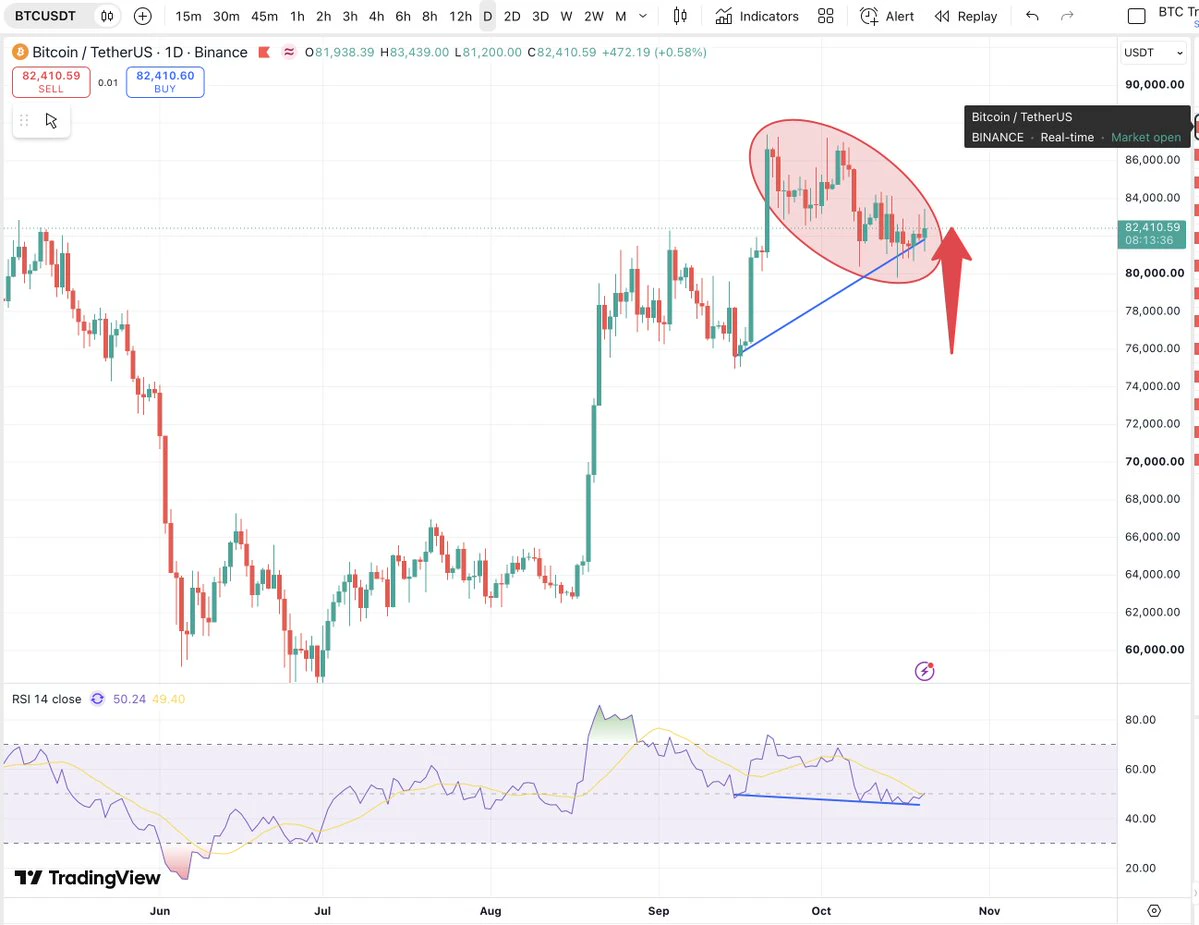
After $BTC ‌ rising to 87395, we said that a correction of the entire weekly-level rise beginning at 57800 had started. After 16 days, BTC fell to 80393✅
In last Sunday’s video, we said that the rise beginning at 80393 was most likely a rebound, because its strength was difficult to regard as a new upward move. Today’s break below 80226 confirmed that the rise beginning at 80393 was a rebound✅
What do we think now? Is BTC going to fall to 40,000 or 30,000 again?
As shown in Figure 1, if the decline beginning at 126200 ended at 57800, the black segment represents the first wave of the weekly-l
BTC-2.78%
TOTAL3ES weekly 50/200SMA combo death cross + 365 SMA
Did you know, that the closer price is to a Death Cross (or Golden Cross) when the signal fires, it tends to be more accurate and better capture the emerging trend?
This is because the further price moves away from the averages, the more overbought or oversold it is, and it is more likely to mean revert or already be nearing a trend's end
If you start from mean reversion, you tend to capture more of the trend that gets disconnected from the mean
Know what I mean?
Below the averages the asset leans bearish. Above, leans bullish
Altcoins must
post-image
UK Court Rules Chinese Law Governs Claims to 61,000 Bitcoin
A roughly $5.1 billion crypto holding remains contested after victims of a major fraud lost their bid to establish ownership under English law. The case continues to move through the courts as both sides fight over control of the assets.
⚠️ Personal market analysis only. NFA — manage risk and DYOR.
Educational content, not investment advice or a recommendation to buy, sell, deposit, or withdraw any asset. No paid promotion or referral/affiliate links.
post-image
BTC-2.78%
iPhone Duo official repair costs revealed
• Battery ¥1898
• Outer screen ¥3198
• Inner screen ¥7998
• Other ¥11998
What do you all think of these repair costs
post-image
  • 4
GM from the prettiest baby
post-image
Panic Selling Hits South Korean Stocks! KOSPI plunges 7 and SK Hynix crashes 10.
live-cover
LIVE2,485
  • 1
This is not Bitcoin Ethereum or a memecoin chart
This is KOSPI, the stock index of South Korea which is worth $4.5 Trillion
post-image
INDEX-15.59%
When it comes to making money, we still have to learn from Xia Xueyi
post-image
#SpotGoldRecoversPostCPILosses
GOLD REBOUNDS AFTER HOT CPI — IS THIS A REAL RECOVERY OR JUST A RELIEF RALLY? 🟡📈
Gold is fighting back after suffering a sharp sell-off following the latest US inflation report. Buyers have returned, the dollar has eased from its peak, and XAU/USD is recovering toward $4,150. But the big question remains: Can gold sustain this rebound, or will sellers take control again?
My view is clear: gold is showing short-term recovery strength, but I want confirmation from price action, the US dollar, Treasury yields, and today's PPI data before calling this a new bullis
$BLUR #BLUR
Started recovery from key support after a solid drop within Descending Channel.
Bounce could follow our projection during coming sessions ✍️
BLUR+25.49%
Gold and silver moved higher together today.
Gold rose 1.7% in a day, while silver climbed even more aggressively.
On the crypto side, the entire market dropped by more than 5% that same day.
Yesterday’s September CPI came in at 3.7% year over year, higher than expected.
Gasoline prices rose 9.1% in one month.
The odds of a rate hike at the meeting later this month jumped from 20% to 50%.
Crypto has been carrying the “inflation hedge” label for years.
Today, gold and silver are where the money is flowing.
Ethereum fell 5% in a day, dropping harder than Bitcoin.
I’m still hold
post-image
GLDX-0.29%
PAXG+0.29%
GAS-4.55%
ETH-5.48%
BTC-2.78%
#USSeptemberPPIReleased
☀️ GM, GATE SQUARE! CPI SHOCK HIT THE MARKETS — NOW PPI COULD TRIGGER THE NEXT BIG MOVE! 🚨📊
The inflation story is getting more serious. U.S. September CPI came in hotter than expected, sending fresh shockwaves through crypto, technology stocks and precious metals. Now all eyes are on September PPI.
Will producer inflation confirm the warning, or will the next report give buyers a chance to recover?
My focus is on real numbers, percentage changes, trading volume, liquidity and the reaction across BTC, ETH, gold, U.S. stocks, the dollar and Treasury yields.
1. 🇺🇸 CP
post-image
bull and bear market
live-cover
LIVE2,345
The bears’ road is long and arduous! The BTC target is first set on breaking below 80K; although the road is long, the journey will be completed! I already warned everyone when the September monthly candle closed! Short! BTC 87K! ETH $2,730! Be bold—short directly!! BTC currently has 7,000 points, and ETH has 400 points of room in place! The Swing King remains in top form!
Although BTC has tested 80K three times without breaking through! Given the current rebound momentum and various bearish news catalysts! The V-shaped reversal from the past few days will not happen again! So continue shor
BTC-2.78%
GLDX-0.29%
PAXG+0.29%
XAU+0.27%
Load More

Join 40 M users in our growing community

⚡️ Join 40 M users in the crypto craze discussion

💬 Engage with your favorite top creators

👍 See what interests you

Trending Topics

USSeptemberCPITopsEstimates

36.75k Views1.28k Discussing

US September CPI rose 3.7% YoY, above the 3.6% estimate; core CPI rose 2.6%, also above the 2.5% estimate. With inflation topping forecasts across the board, how will rate hike expectations shift? How will BTC react? Share your view.

DrLinHanSpeaksAtOxfordUnion

135.63k Views1.86k Discussing

USSeptemberPPIReleased

91.35k Views1.76k Discussing

View More