













#Gate推出行业首个资金安全证明
🔐 Beyond Solvency: Why Storage Architecture Dictates the Future of Exchange Security
The centralized digital asset trading landscape is undergoing a massive structural transformation. For years, the gold standard of platform transparency was limited to Proof of Reserves (PoR)—a snapshot method verifying that an exchange holds sufficient tokens to back user balances on a 1:1 ratio. However, recent market vulnerabilities have proved that simply possessing assets is only one part of the security equation. True safety depends on how those assets are stored, who controls the underlying private keys, and how much immediate financial cushion exists to survive an extreme, online multi-signature compromise.
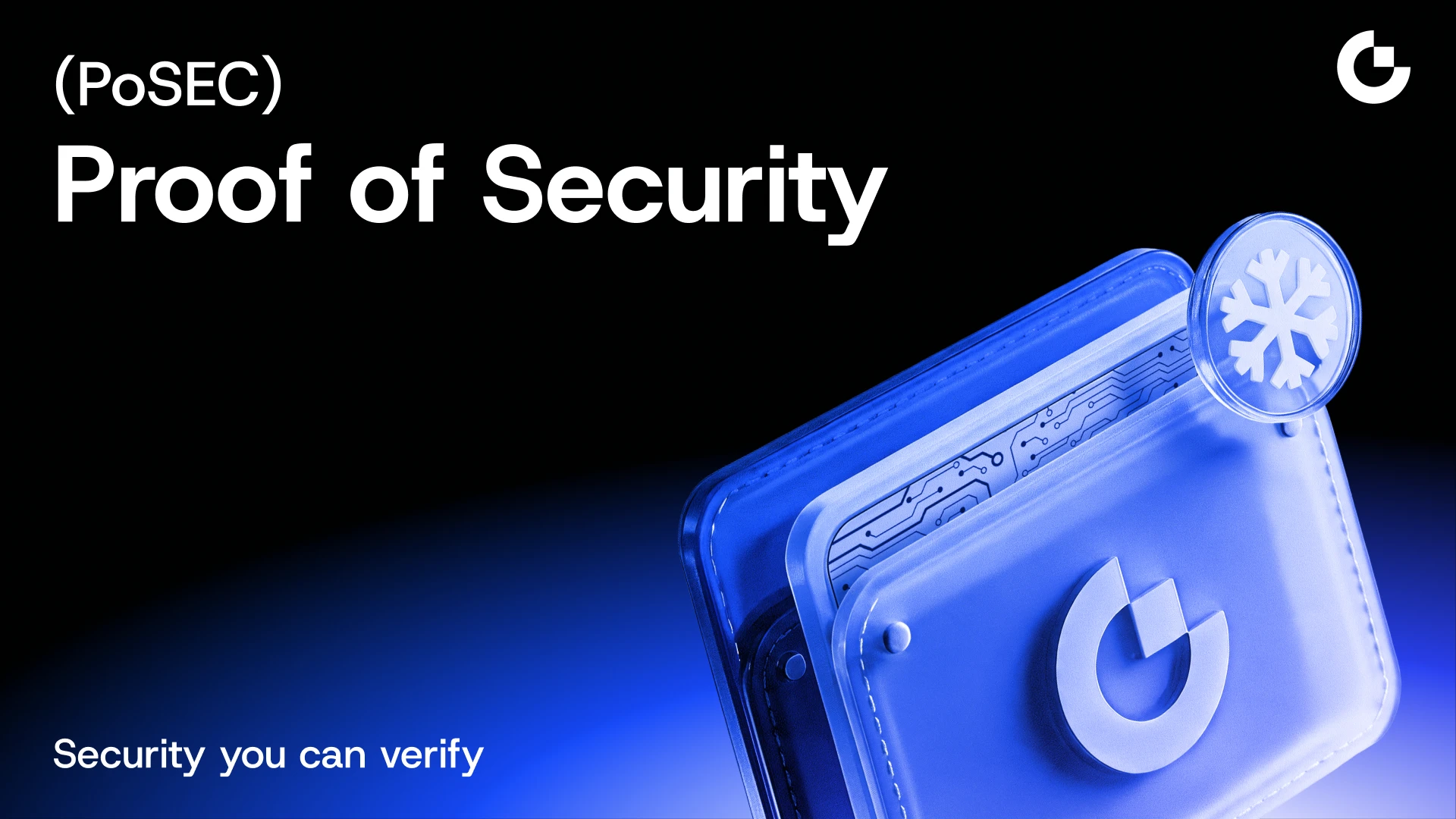
By introducing the industry's very first Proof of Security (PoSEC) protocol, Gate.io is moving far beyond basic volume metrics to publicly disclose its physical asset storage structures, wallet isolation levels, and extreme-risk coverage capabilities.
Quantifying the Cold-to-Hot Distribution
The verified cryptographic data points from the latest corporate security audit outline a fortress-grade asset infrastructure designed to isolate user capital from online threat vectors:
• Premium Cold Storage Coverage Ratio: 104.58%. This is the core engine of the PoSEC disclosure. It mathematically proves that the net fiat valuation of assets locked completely offline in air-gapped vaults exceeds the entire aggregate liability of all user deposits combined.
• The Ultimate Risk Buffer: Because the cold storage coverage ratio sits securely above 100%, it creates an absolute structural backstop. In an extreme, black-swan scenario where 100% of the active online hot wallets are completely breached, the offline reserves alone possess enough standalone liquidity to fully reimburse every user balance without a platform halt.
• The Operational Distribution Mix: Total platform assets are divided into 88.26% held securely in cold storage and a lean 11.74% maintained in operational hot wallets to process high-frequency daily deposits and withdrawals.
• The Solvency Baseline Context: This protocol runs parallel to Gate's massive capital base. As of the October 18 cryptographic snapshot, total verified reserves stand at a staggering $8.688 billion, representing an overall asset reserve ratio of 118.49% across all listed tokens.
Multi-Signature and Cold Verification Protocols
To maintain an unshakeable 88.26% offline allocation while supporting billions in daily trading volume, the platform deploys a sophisticated multi-layered custodial matrix:
1. Multi-Signature and Multi-Party Computation (MPC)
Private keys governing the cold storage vaults are never held by a single entity or stored on a single device. By leveraging multi-signature architectures alongside advanced MPC protocols, the generation and execution of transaction signatures are cryptographically fragmented across multiple geographically isolated institutional nodes. This completely eliminates the risk of an insider threat or a single point of technical failure.
2. Air-Gapped Verification and Third-Party Auditing
The cold storage verification process relies on strict physical isolation. Cold wallets interact with the network exclusively through secure, one-way air-gapped data transfers, keeping the underlying private keys entirely disconnected from the internet.
3. Scope of the Pending Independent Audit
To solidify public trust, this entire calculation model is currently undergoing a rigorous, independent third-party verification process. The upcoming finalized audit report will explicitly certify key ownership, cryptographic balance calculations, and wall-to-wall storage architecture validity.
⚖️ PoR vs. PoSEC: The Strategic Security Complement
For serious market participants, distinguishing between these two critical transparency frameworks is essential for evaluating long-term counterparty risk:
+-----------------------------------+-----------------------------------+
| Proof of Reserves (PoR) | Proof of Security (PoSEC) |
+-----------------------------------+-----------------------------------+
| Focuses on QUANTITY (Solvency) | Focuses on LOCATION (Security) |
| Verifies: "Are the funds there?" | Verifies: "Are the funds safe?" |
| Tracks total asset-to-liability | Tracks cold-to-hot storage ratios |
| balance via zk-SNARKs or Merkle | and gauges extreme-risk emergency |
| Trees. | coverage buffers. |
+-----------------------------------+-----------------------------------+
Relying solely on PoR leaves a dangerous blind spot: an exchange can be 100% solvent but store its assets in highly exposed, single-signature hot wallets. PoSEC solves this fundamental vulnerability by proving that the vast majority of verified wealth is insulated from active digital threats.
True platform security requires looking far beyond basic asset quantities to scrutinize real-world storage architectures and access controls. By pioneering the industry's first Proof of Security (PoSEC) protocol, Gate.io sets a definitive new standard for global exchange transparency.
Maintaining 88.26% of assets offline alongside a spectacular 104.58% cold storage coverage ratio proves that the platform can absorb extreme online exploits entirely through its private reserve cushion. In a macro landscape where platform risk must be thoroughly managed, verifying exactly how your capital is stored and protected is the ultimate foundation for sustainable market confidence.
#每周来晒
#GateLaunchesPoSECProofOfSecurity