Square
Following
Hot
News
Notifications
Profile
Share your thoughts
placeholder
Article
#Gate股票畅聊季 #美股财报季 The U.S. Stock Market Crash Is a Sign: AI Investment Has Entered the Era of Delivering Results

The U.S. stock market on Thursday night probably left everyone stunned. The Nasdaq plunged 5.52%, the Magnificent Seven lost $1.04 trillion in a single day, and the entire market shed $2.9 trillion in value—equivalent to more than 7 trillion yuan. These aren't just numbers; they're real wealth vanishing into thin air.
The first reaction for many people is: Is AI completely finished? Don't rush to conclusions. Recent policy documents, institutional research reports, and industry dat
post-image
ThisIsTranslateContent:
#Gate股票畅聊季 #美股财报季 Lessons from the US Stock Market Plunge: AI Investment Enters the Earnings-Delivery Era

Thursday night’s US stock market must have left everyone stunned. The Nasdaq plunged 5.52%, the Magnificent Seven lost $1.04 trillion in market value in a single day, and the entire market shed $2.9 trillion—equivalent to more than 7 trillion yuan. These aren’t just numbers; real wealth vanished into thin air.
Many people’s first reaction was: Is AI completely finished? Don’t rush to judgment. Recent policy documents, institutional research reports, and industry data all show that the essence of this plunge is not that AI has failed, but that AI’s “wild-growth era” is over.

I. Democrats Take Power, Putting AI in a “Tight Leash”
The direct trigger for this plunge was the Democrats’ sweeping victory in the US midterm elections, giving them control of both houses of Congress and several key states.
Over the past year, the underlying logic of the US stock market’s AI bull run was simple: build data centers at a breakneck pace, pour money into chips, and expand computing power as fast as possible. The AI story was that “if you keep building data centers and piling up GPUs, you’ll make endless money in the future.”
But after the Democrats came to power, the winds shifted completely. The market is now most worried that Democrats will put AI on a tight leash: the federal government may introduce stricter AI regulations, and some lawmakers have even proposed the “Ban Artificial Superintelligence Act.” Violators could face up to 20 years in federal prison, while companies could be forcibly dissolved and have their assets confiscated. Many states may block data center approvals, restrict the construction of large facilities, and regulate power consumption while imposing additional taxes.
Analysts estimate that by 2028, progress on nearly 30% of planned new data centers in the US could be delayed. What capital markets fear most is not losing money, but a change in the rules of the game.
As soon as the news broke, investors scrambled for the exits, and the chip sector was hit by a bloodbath. The Philadelphia Semiconductor Index plunged 12.25%, Nvidia fell more than 9%, and AMD shed 17%. Memory chip stocks collapsed across the board, with Micron and Western Digital both tumbling more than 17%. Tesla and other Musk-linked stocks also fell more than 9%, because Musk had previously backed the Republicans with substantial funding. Now that the political landscape has shifted, the market is also worried that his companies could face policy uncertainty.

II. The Real Powder Keg: AI Burns Money Too Fast and Makes It Too Slowly
Regulation was just the trigger; the real powder keg had been planted long ago. Over the past year, Wall Street hyped AI to the skies, and every company rushed to spend money building data centers and buying graphics cards, but the pace of spending far outstripped the pace of making money.
The giants have been burning through cash, and the market is gradually asking one fundamental question: When exactly will they earn back the hundreds of billions they’ve poured in?
Previously, everyone just dreamed about how powerful AI would be in the future. Now they’re calculating the bills: data centers require land and electricity, as well as insanely expensive chips, with massive capital spending year after year. If returns don’t keep up, valuations will have to be discounted.
Institutions put it bluntly: AI changing the world is undeniable, but that doesn’t mean all AI stocks are reasonably priced today. A major industry shakeout is inevitable.
Adding insult to injury, the Federal Reserve is piling on. Fed officials have made hawkish remarks, suggesting that further rate hikes have not been ruled out. With interest rates remaining high, borrowing to build data centers costs more, further dampening tech companies’ appetite to expand. The market is now focused on the upcoming nonfarm payrolls data, which will directly determine whether the Fed raises rates again.

III. The Most Surreal Scene: Chinese Stocks Rise Against the Tide!
While US stocks were in widespread distress, Chinese stocks listed in the US held up instead. The Nasdaq Golden Dragon China Index rose 0.43% against the tide, NetEase gained more than 4%, and JD.com, Alibaba, Pinduoduo, and Bilibili all closed higher. With the broader market falling this hard, Chinese stocks still managed to chart their own course.
Why this contrast?
First, US AI stocks have seen their valuations soar over the past year, leaving them under enormous pressure to correct. By contrast, Chinese internet stocks have already gone through several rounds of adjustments, and their valuations are relatively low. Some safe-haven funds have shifted from highly inflated US tech stocks to Chinese assets with more attractive valuations.
Second, domestic internet companies have already completed their cost-cutting and efficiency improvements. They are no longer burning money indiscriminately, and their profits are genuinely improving, making them more predictable. When things are stormy elsewhere, investors tend to favor assets with steadier earnings. Of course, this does not mean the market thinks AI is completely finished. Some institutions warn that this is panic selling, and the market has not yet reached the point of total despair and capitulation. Google has also announced a $17 billion investment in a new large data center in Wyoming, while Apple, after more than a year, is also set to issue $7 billion in bonds to fund share buybacks and business operations.
Tech giants have not stopped investing outright; it’s just that the good old days when you could make money by blindly charging into AI are probably over.

IV. Three Tips for Everyday Investors
Don’t panic-sell or blindly buy the dip just because you see a plunge.
First, AI’s overall direction has not changed, but the era of unchecked expansion is over.
Going forward, distinguish between companies that can genuinely deliver profits and those relying purely on storytelling to inflate valuations. The latter will be hit hard.
Second, policy risk has become the biggest variable for US AI stocks. Every move by US regulators will roil global tech markets.
Third, this rally in Chinese stocks against the tide does not mean a major bull market is about to begin. It mostly reflects their relative resilience, so stay rational and don’t blindly chase prices higher.
Markets never rise forever. Only when the tide of exuberance goes out can you see who’s swimming naked.

Is this round of AI adjustment a short-term correction or a complete shutdown? Has spring really arrived for Chinese stocks? Share your thoughts in the comments. #WCTCS9
repost-content-media
NVDA+2.80%
AMD+11.55%
TSLA+4.26%
NTES+2.27%
JD+1.63%
  • 2
[New Streamer] Market Prediction
live-cover
LIVE64
Trenches
ZIG
Z
bade
b
ZIG
0x8c...1145
Market Cap
$.
Change
.
24h Vol
$.
Holders
.
BTC
B
bade
b
BTC
C5xp...pump
Market Cap
$.
Change
.
24h Vol
$.
Holders
.
Diamond
D
bade
b
Diamond
5VCE...pump
Market Cap
$.
Change
.
24h Vol
$.
Holders
.
GM
G
bade
b
GM
0x13...7777
Market Cap
$.
Change
.
24h Vol
$.
Holders
.
DOGE
D
bade
b
DOGE
DoGE...fm7R
Market Cap
$.
Change
.
24h Vol
$.
Holders
.
11.7 BTC Market Analysis

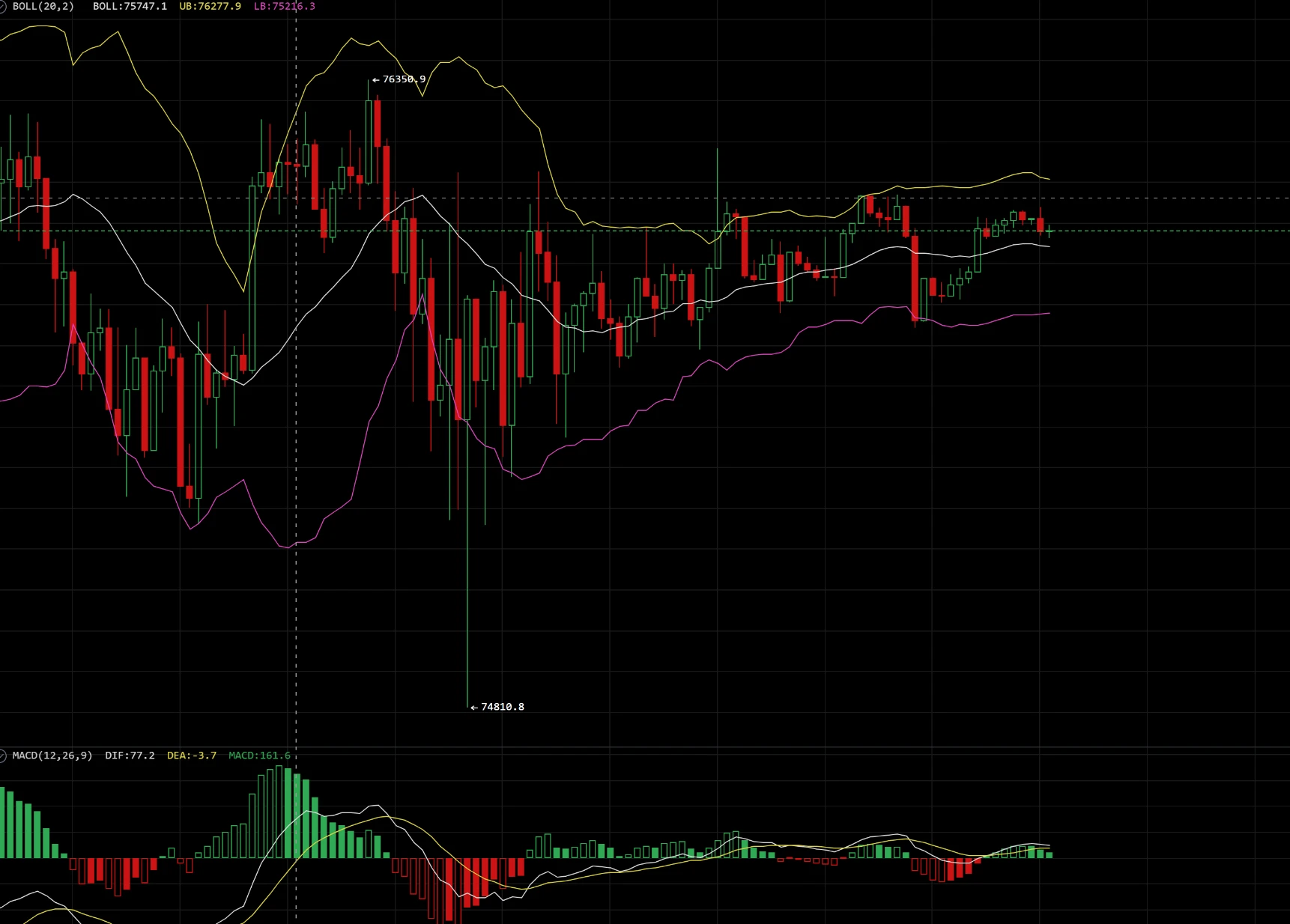
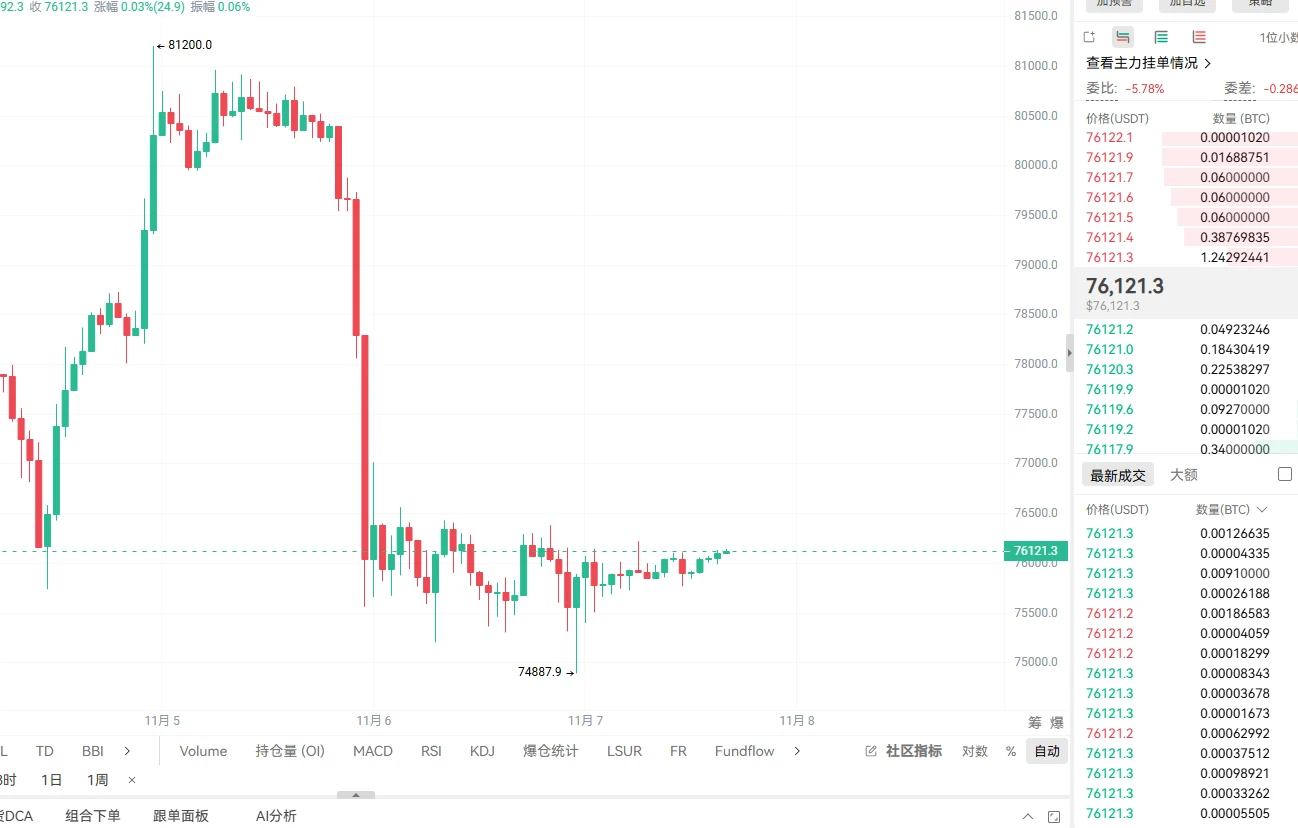
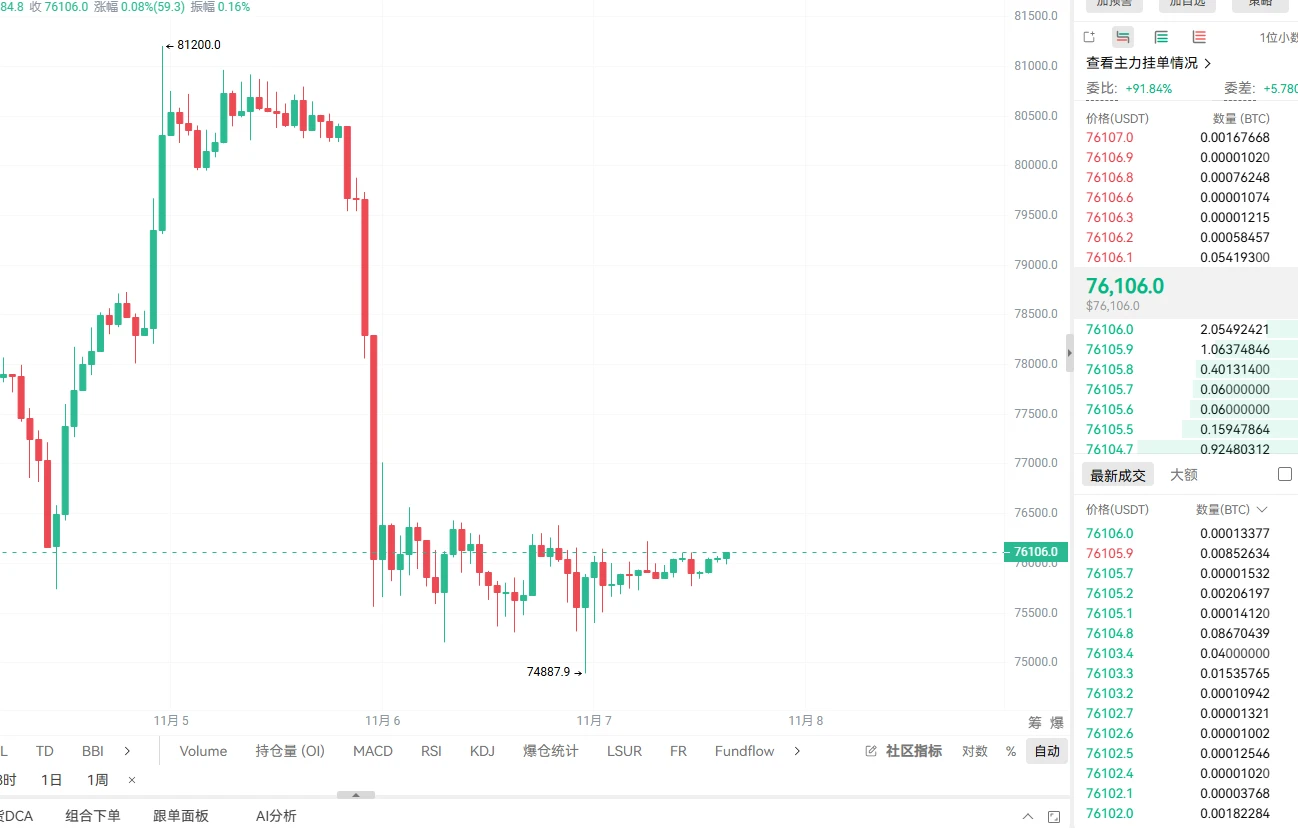
  BTC is currently in a weak consolidation and recovery phase following its decline. The Bollinger Bands have generally narrowed and flattened, with the fast and slow lines converging. Previous bearish momentum has clearly faded, but no clear short-term rebound or reversal trend has formed either, so the market is primarily moving sideways within a range. Key support levels are first the Bollinger middle band at 75830, then the lower band near 75297, with strong support at the previous low of 74810. A sequential break below these support levels could restart the downt
post-image
BTC-0.65%
BTC market predictions
live-cover
LIVE1,929
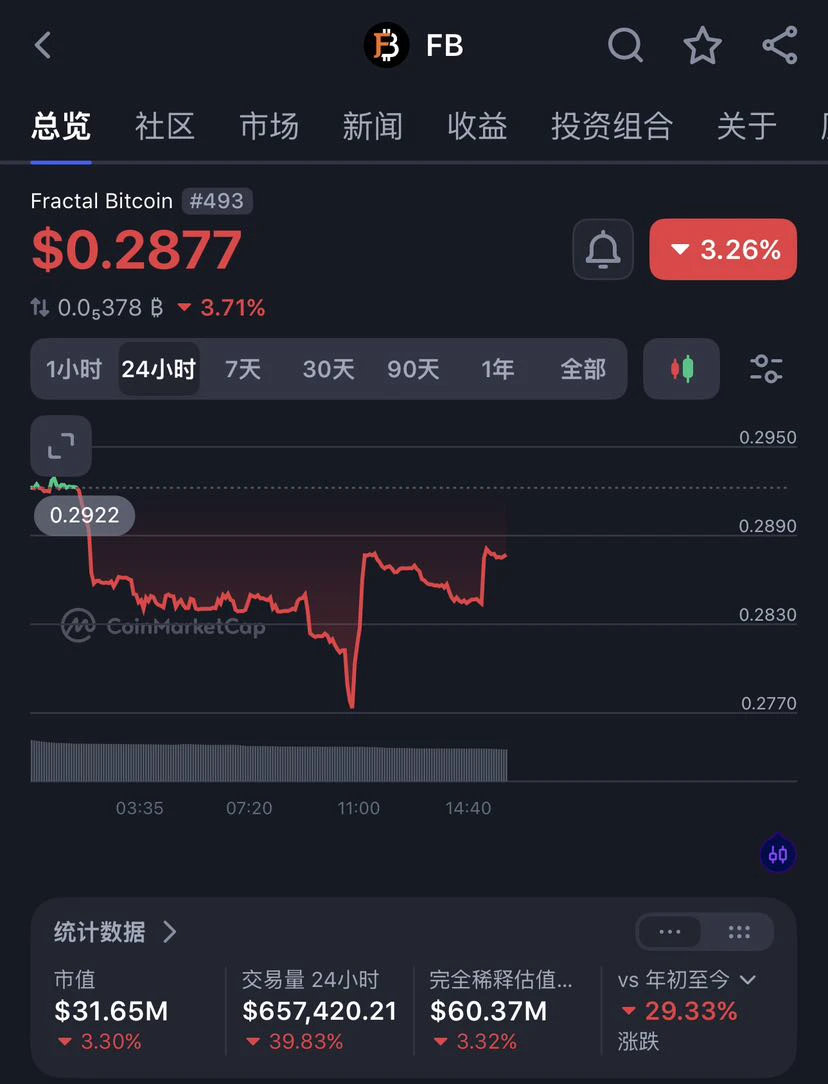
In this market, a lot of people see a small-cap coin and scroll right past it. $FB is probably no different. But I’ll give it a second look: the halving has reduced its new supply, and it’s needed to pay on-chain fees, so there’s at least a reason to keep watching. After such a big drop, I’d be lying if I said I had no interest at all; it’s just that no one really wants to be the first to make a move right now. I’ll keep watching to see whether more people start using it on-chain—if they do, even this garbage might be worth picking up. $FB
post-image
FB-1.17%
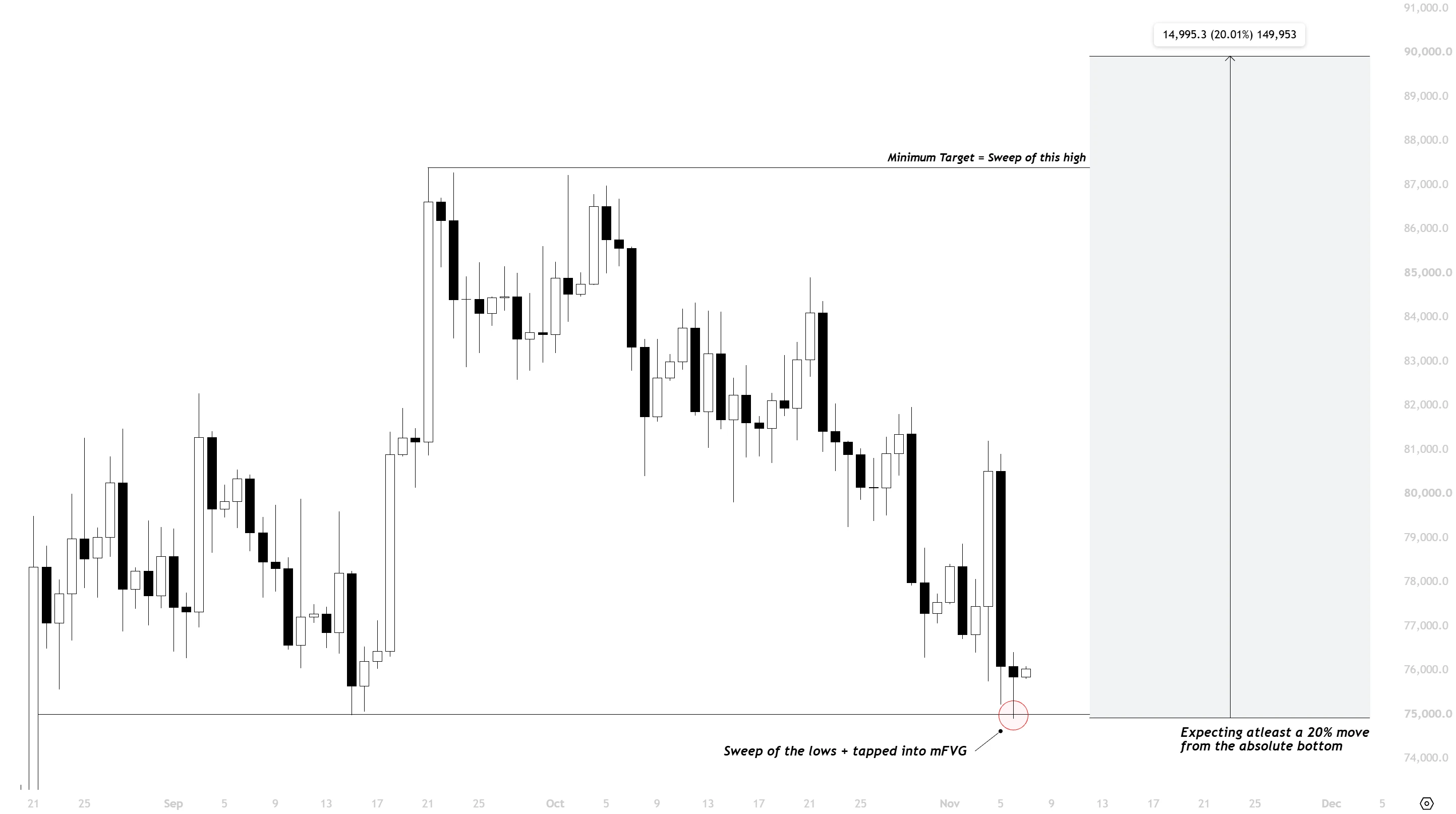
$BTC You are not bullish enough.

I have been talking about the 75k level since the absolute top (~87k),

And almost everyone was saying we won't go there and 80k is the bottom but in the end I was right.

Now I am saying we are going to 90k by the end of November and people are talking about 60k or new lows.

Well, it will be interesting to see, how things unfold from here.
post-image
BTC-0.67%
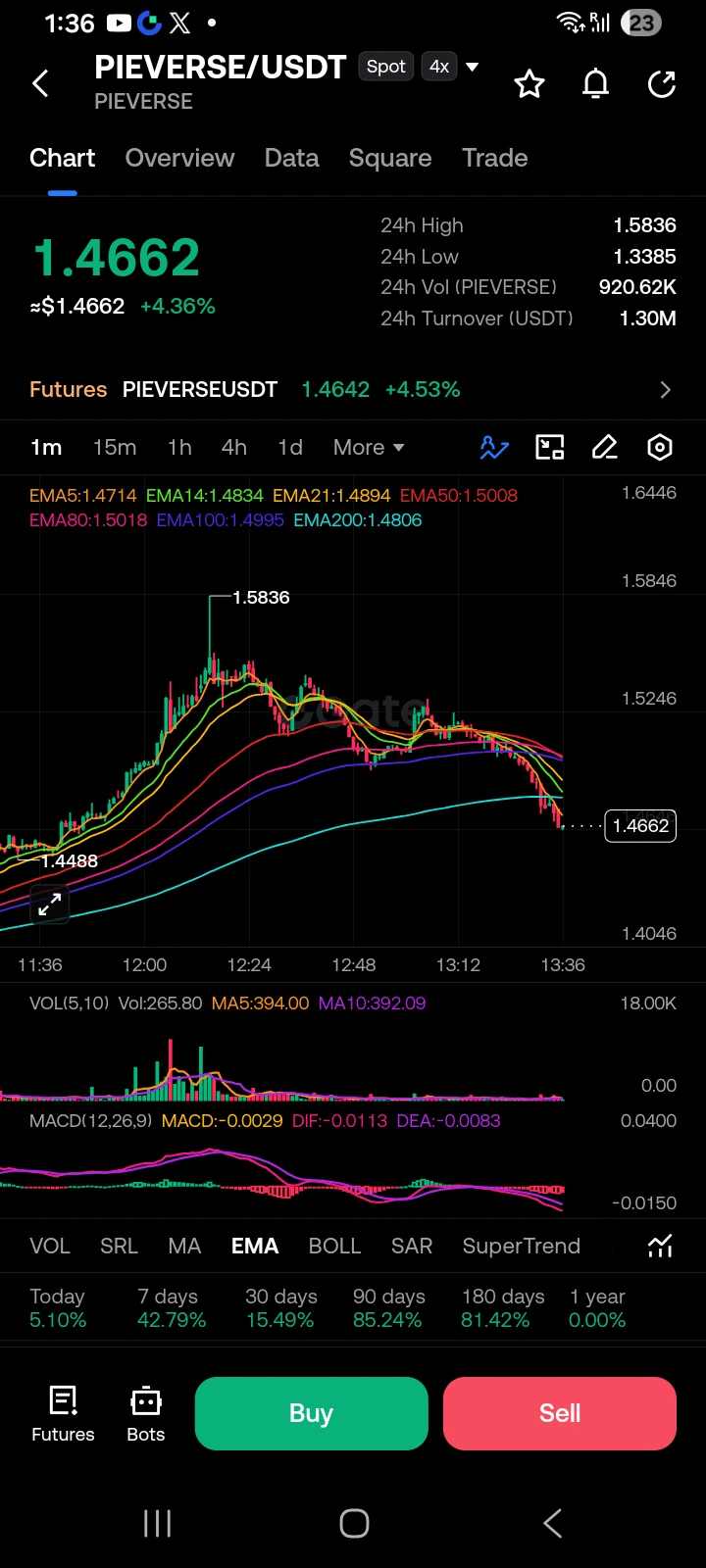
$PIEVERSE M1 EMA 200 just Crossed.. May be sale
post-image
PIEVERSE+0.58%
Hong Kong’s latest regulation of the virtual asset industry has brought an easily overlooked issue to the fore: a platform’s name could also become part of regulation.
On November 6, the Hong Kong Securities and Futures Commission (SFC) published its consultation conclusions, proposing to restrict institutions that are not authorized by regulators from using names that could lead the public to believe they are regulated. The restriction would cover not only traditional financial institutions, but also virtual asset trading platforms and certain virtual assets that can be traded or settled thro
post-image
A sudden idea for everyone to weigh in on
post-image
Bitcoin: Add to the long at the current price of 76,000, stop-loss at 74,800, targets at 78,000/81,000
Bitcoin spent the whole day trading between 75,100 and 76,200. It plunged to 75,200 the day before yesterday, and still hasn’t broken below that level today.
All the leverage that was due to get liquidated was wiped out the day before yesterday. Now it can’t be pushed any lower.
Still holding the position opened at 77,800. Da Chao is adding another position at 76,000 to bring down the average entry price. The stop-loss is the same as for the previous position, at 74,800. If it breaks below th
post-image
BTC-0.65%
NAS100-0.07%
#AI科技股大跌加密市场承压 #WCTCS9 The AI sector adjustment is weighing on the crypto market mainly through declining risk appetite. BTC and U.S. tech stocks are now drawing on the same pool of capital and leverage, so when the AI sector falls, institutions reduce positions in both at the same time.

How the AI adjustment spills over into the crypto market
Same pool of capital: Hedge funds and multi-strategy funds buy both AI stocks and crypto assets, and when risk controls are triggered, they sell both at once.
Bitcoin treated as a high-beta asset: On November 5, the Nasdaq fell 5.5%, and Bitcoin also dr
post-image
ThisIsTranslateContent:
#AI科技股大跌加密市场承压 #WCTCS9 The AI sector correction is weighing on the crypto market mainly through a decline in risk appetite. BTC and U.S. tech stocks now share the same pool of capital and leverage, so when the AI sector falls, institutions reduce their positions in both at the same time.

How the AI correction spills over into the crypto market
Same pool of capital: Hedge funds and multi-strategy funds invest in both AI stocks and crypto assets, and when risk controls are triggered, they sell both at once.
Bitcoin treated as a high-beta asset: On November 5, the Nasdaq fell 5.5%, and Bitcoin also dropped about 5.5%, falling below $76k.
Leverage cascade: About $1.2 billion in long positions were liquidated in a single day, pushing prices down even further than spot markets.

Impact of next week’s CPI and PPI
October CPI is expected to come in at 3.7% year-over-year, with core CPI at 2.6%. It is the last inflation report before the December rate meeting.
If the data comes in hot, rate hike expectations will rise, and AI stocks and BTC may come under pressure together;
If inflation cools significantly, both will have room to breathe.

How long will the correlation last
It will likely remain strong in the short term. The 30-day correlation between BTC and the Nasdaq is already above 0.6, near historical highs.
For the correlation to truly weaken, watch for these signals:
Bitcoin stops breaking down when U.S. stocks fall, or even strengthens against the trend.
Gold rises while Bitcoin falls again.
ETF net inflows resume, signaling that institutions are starting to rebuild positions.

For now, the key is whether CPI and the AI sector can stabilize. If neither does, it will be hard for BTC to stay out of the fallout.
repost-content-media
BTC-0.65%
XAUUSD-0.45%
  • 2
📣 November 6 Daily Top Posts: Good insights deserve to be seen
When will heavy AI investment deliver returns? Does an index rebound mean the market is strengthening? After making a bad trading call, how should you reassess your thinking?
These 8 posts cover everything from market analysis to trading reflections. Let’s take a look at what creators are observing👇
🔹 @赚钱吃肉肉: Ongoing AI investment: Can profits and cash flow keep up?
https://www.gate.com/zh/post/status/curated/25443255
🔹 @龙抄手: Rebound or reversal? A video anal
GateSquare
📣 November 6 Daily Top Posts: Good insights deserve to be seen
When will heavy AI investment deliver returns? Does an index rebound mean the market is strengthening? After making a bad trading call, how should you reassess your thinking?
These 8 posts cover everything from market analysis to trading reflections. Let’s take a look at what creators are observing👇
🔹 @赚钱吃肉肉: Ongoing AI investment: Can profits and cash flow keep up?
https://www.gate.com/zh/post/status/curated/25443255
🔹 @龙抄手: Rebound or reversal? A video analysis of BTC / ETH
https://www.gate.com/zh/post/status/25417274
🔹 @币靠普: Beyond the AI growth story, what else are investors watching?
https://www.gate.com/zh/post/status/curated/25443260
🔹 @云享财富讲堂: Tech stocks under pressure: What else needs to be confirmed before the Nasdaq rebound?
https://www.gate.com/zh/post/status/25442782
🔹 @山顶Ryak: Understanding PoSEC and asset verification from the user’s perspective
https://www.gate.com/zh/post/status/25427269
🔹 @阿炼CryptoView: BTC / ETH strength and key levels after the pullback
https://www.gate.com/zh/post/status/25443539
🔹 @初心实盘: After a trading mistake with SanDisk, reassessing mindset and judgment
https://www.gate.com/zh/post/status/25433936
🔹 @分析师Ansem: How do news events affect market sentiment and short-term volatility?
https://www.gate.com/zh/post/status/curated/25437719
🎁 Selected authors receive 3 days of traffic support + featured content
💬 Which post gave you a new perspective?
Visit the original post to share your questions, additions, or differing views. You’re also welcome to recommend yourself or others for great content in the comments.
The next top post might be yours.
The author’s views are for reference only and do not constitute investment advice or a promise of returns.
‍#每日神贴 #Gate Square
repost-content-media
BTC-0.67%
ETH-1.26%
NDAQ+0.28%
INDEX+0.00%
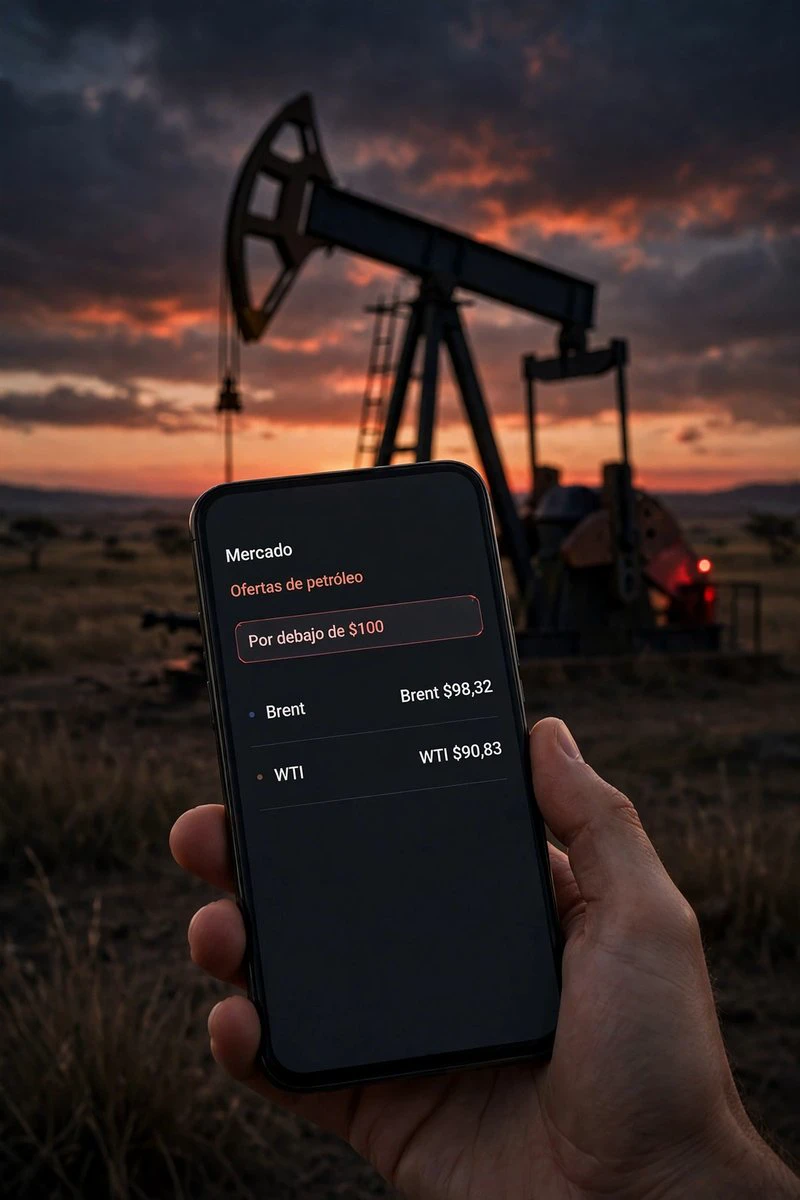
🛢️ Oil closed the week below $100, and that’s being felt in the Venezuelan market.
Brent ended at $98,32 (+0,03%) and WTI at $90,83 (+0,34%). Both benchmarks fell below the psychological $100 threshold in recent days, after a bearish week driven by diplomacy between Washington and Tehran.
What’s driving the price? A conversation between the emir of Qatar and the U.S. president about de-escalating tensions in the Middle East, and the U.S. election results, in which Democrats won the Senate and House of Representatives: a scenario that several analysts see as more conducive to an understanding
post-image
AKE, a longtime crypto enthusiast, returns to the crypto market😀
AKE+6.07%
  • 1
What if blockchain could make digital ownership easier to verify, online transactions more transparent, and global collaboration more accessible?
That's why innovation in this space deserves attention.
The technology is still developing, and the possibilities are worth exploring.
#BlockchainInnovation #CryptoTechnology #FutureTech
post-image
btc has entered a very critical late-stage phase. The chart carries risks that beginners shouldn’t try to navigate, and even experienced traders who understand it should be cautious. If beginners want to buy the dip, wait for a Type 2 buy signal; a Type 1 buy is strongly discouraged
BTC-0.67%
#AI大跌后高盛仍看好数据中心 #WCTCS9 The AI data center train: every dip is an opportunity to get on!

Wall Street has been at each other’s throats these past two days.
Citadel’s Ken Griffin said, “We can be almost certain that we are in an AI bubble.”
But Federated Hermes Chief Investment Officer James Kyawavaroene, who manages hundreds of billions of dollars, said, “Bubble concerns are premature—the current infrastructure buildout still has three or four years to go.”
State Street CEO Ron O’Hanley bluntly shot back: “These data centers aren’t being built blindly. They’re backed by real orders and real en
post-image
ThisIsTranslateContent:
#AI大跌后高盛仍看好数据中心 #WCTCS9 The AI data center train: every dip is an opportunity to get on board!

Wall Street has been arguing fiercely over the past two days.
Citadel’s Griffin said, “We can be almost certain that we’re in an AI bubble.”
But Giavarone, CIO of Federated Hermes, which manages hundreds of billions of dollars, said, “Fears of a bubble are premature—the current infrastructure buildout still has three or four years to go.”
State Street CEO O’Hanley shot back with a simple point: “These data centers aren’t being built blindly. They’re backed by real orders from real enterprise customers.”
Blackstone President Gray was even more direct: “Demand is growing parabolically. This is completely different from the 1990s telecom bubble, when companies ‘laid fiber first and waited for traffic.’”
For all the noise on Wall Street, there’s really just one question:
AI demand is real, but can growth keep up with the money being spent?

Let’s look at three sets of data that don’t lie.
First: orders have already been signed, and customers are lined up waiting for delivery. As of the end of the third quarter this year, Google Cloud had a backlog of $560.8 billion, AWS about $496 billion, and Microsoft commercial remaining performance obligations of $677 billion, up 73% year over year.
What does that mean? Customers have already paid; they’re just waiting for the data centers to be built and powered up. Microsoft even acknowledged that its capital spending this quarter was below plan—not because demand was weak, but because third-party capacity couldn’t keep up.
Second: if you want computing power, you’ll have to wait until 2027.
Rental prices for Nvidia’s B200 chips have climbed to $5/GPU·hour, up 25%-30% since tracking began last August. New orders are largely no longer being accepted, and delivery schedules generally extend into the first half of 2027.
Why is supply so tight?
Expanding chip foundry capacity takes 3-5 years, and getting power infrastructure for data centers from approval to grid connection takes 5-10 years—these are physical realities that can’t be sped up overnight just by throwing money at them. On one side, demand has multiplied by 1,000 in two years (daily token calls to Chinese large models have surged from 100 billion to 140 trillion); on the other, supply is like an old highway that can only be widened a little each year.
The cars are racing ahead while the road is being widened. What can be done? All we can do is build roads as fast as possible.
Third: the profit margins of those “money-losing” giants are actually rising.
On the market’s biggest concern, “negative free cash flow,” Nomura Securities hit the nail on the head: this is a classic J-curve effect—money goes out first, while revenue only starts coming in gradually once the assets are operational. Cash is negative on the financial statements, but the businesses themselves are making money. The evidence is right in front of us: AWS reported third-quarter revenue of $46 billion, its fastest growth since 2021; Google Cloud’s operating margin jumped from 23.7% to 36.2%; and the three cloud giants generated a combined $110 billion in revenue, with margins still rising even as capital spending surged.
The word “loss-making” simply doesn’t fit.
So what’s behind CoreWeave’s plunge?
It’s certainly alarming: bond yields have surged above 15%, the stock has fallen 30% in a month, and its market cap has shrunk from $90 billion to $31 billion. But look closely at its balance sheet and you’ll see a highly leveraged “neocloud” company that borrows to buy GPUs and then rents out computing power—its net debt is 7.5 times EBITDA, compared with just 0.1 times for large tech companies. China International Capital Corporation calls it a “subprime-like, weak-credit issuer in the AI financing system.”
In a word: CoreWeave’s cracks are real, but they’re a localized problem with its financing structure, not the end of AI demand. Its capital spending accounts for just 4%-5% of global cloud providers’ AI infrastructure investment—even if it shut down tomorrow, the giants’ excavators digging data center foundations wouldn’t stop. This is the truth most easily overlooked in this debate:
Stocks price narratives; bonds price cash flow.
When a small, highly leveraged boat rocks, it doesn’t mean the entire ship is sinking.

The story in China is even more compelling.
The central government has included computing-power networks alongside water networks and new-type power grids in the “six networks,” with about 4 trillion yuan in additional direct investment in computing-power networks planned during the 15th Five-Year Plan.
On China’s A-share market, the electronics sector’s net profit attributable to shareholders surged 183.9% in the first three quarters of 2026, semiconductor profits grew about 1.7 times, and semiconductor gross margins rose by a full 24 percentage points. Domestic AI accelerator cards’ market share leaped from 41.1% to over 60% in a single year—a decisive shift in market share.
Bill Ackman ran the numbers, and every investor should remember them: a 1GW AI data center costs $40-50 billion to build, can generate $15-20 billion in annual revenue, has an incremental operating margin of 50%, and delivers a pre-tax return on invested capital of 15%-25%.
This isn’t a money-burning black hole; it’s a money-printing machine.
The key isn’t whether it burns money, but whether it can keep printing money once it’s built.
The answer is already written in the order book: $677 billion in orders on hand, waiting to be fulfilled.

So how should we view this AI data center sell-off?
Dudley—the former president of the New York Fed—offered what may be the most level-headed assessment right now: global AI infrastructure investment could indeed reach $10 trillion, and revenue pressure is real, but a repeat of the 2008 systemic crisis is unlikely—because the market is broadly aware of the risks, financing terms largely match asset lifetimes, and insurance companies and long-term capital are standing behind it.
An $80 billion Wall Street hedge fund warned that the market could shift from FOMO to FOGO, but institutional money is voting the opposite way: during the A-share pullback in early November, the ChiNext computing-power ETF saw net inflows for several consecutive days, attracting more than 31 million yuan in a single day.

What is smart money doing? Quietly accumulating shares while others panic.
Back to the original question: can investment in AI data centers stop?
The answer is hidden in a statement from Microsoft: “Customers’ money is already committed, and they’re waiting for delivery.”
The answer is hidden in the symposium urgently convened by South Korea’s Ministry of Finance: “The medium- to long-term growth outlook for the AI and semiconductor industries remains valid, and no signs of a contraction in AI investment or demand have been detected.”
The answer is hidden in that ironclad investment rule: when demand grows parabolically while supply expands linearly, the gap in between is the industry opportunity of the next decade.
Bubbles deserve caution, but missing out on a long-term industry opportunity deserves even more caution.
Trends are long; volatility is fast.
What can truly weather the cycle isn’t predicting every pullback, but holding on to core assets with “orders in hand and capacity is king.”#Gate股票畅聊季
repost-content-media
GS-0.30%
STT+0.24%
BX-0.29%
GOOGL+0.72%
MSFT-0.95%
  • 3
$ETH Short-term sentiment is bearish. Machi Big Brother Huang Licheng has sold NFTs again to raise margin, opening a 540 ETH long position with 25x leverage, currently down about $32k. He has lost a total of $505k over the past five days. He sold 15 NFTs for $223k, only to lose it all again, and just went through a liquidation yesterday. Today, he sold BAYC #32 for 12.5 ETH, then immediately opened this position, with an entry price of 2,304.23 and a liquidation price of 2,203.40. Adding to a position while losses mount and selling collectibles to fuel high leverage is a strategy I don't endo
post-image
ETH-1.23%
#AI科技股大跌加密市场承压 #WCTCS9 The AI sector correction is weighing on the crypto market mainly through a decline in risk appetite. BTC and U.S. tech stocks now share the same pool of capital and leverage, so when the AI sector falls, institutions reduce their positions in both at the same time.

How the AI correction spills over into the crypto market
Same pool of capital: Hedge funds and multi-strategy funds invest in both AI stocks and crypto assets, and when risk controls are triggered, they sell both at once.
Bitcoin treated as a high-beta asset: On November 5, the Nasdaq fell 5.5%, and Bitcoin a
BTC-0.65%
NAS100-0.07%
GLDX-0.40%
PAXG+0.37%
  • 9
  • 3
BTC spent the day moving between $75.1K and $76.2K, with just $1,100 of volatility. Compared with the 6% bearish candle the day before yesterday, it’s eerily quiet.
Da Chao explains why it’s so quiet.
Lately, BTC has been following the Nasdaq, not itself. The drop the day before yesterday came from AI stocks dragging it down. U.S. stock markets are closed over the weekend, and with no one to lead the way, BTC doesn’t know where to go either, so it can only churn in place.
Also, everyone who wanted to run already did so the day before yesterday. More than $1 billion in leveraged positions got w
post-image
Load More

Join 40 M users in our growing community

⚡️ Join 40 M users in the crypto craze discussion

💬 Engage with your favorite top creators

👍 See what interests you

Trending Topics

USAIStocksHitHard

16.49k Views3.65k Discussing

U.S. stocks sold off sharply on Thursday, November 5 (UTC). The Nasdaq closed down around 5.5%, entering correction territory, while the Philadelphia Semiconductor Index plunged roughly 12%, with chip stocks including $NVDA and $AMD posting steep losses. Beyond profit-taking, investors are growing concerned about the pace of AI data center construction, capital spending, and future returns on investment. The key question now is whether the AI sector’s lofty growth expectations need to be repriced. Where do you think the next opportunities will emerge: chip stocks, tech giants, or other sectors?

USNonfarmPayrolls

24.51k Views4.26k Discussing

StakeOnLaunchpoolToShare450KVLX

3.17k Views780 Discussing

View More