


Square
Following
Hot
News
Notifications
Profile
Share your thoughts
placeholder
Article
Join $ARX on the long side. Buy range: 0.2106 - 0.2153 Take-profit 1: 0.2249 Take-profit 2: 0.2345 Risk level: 0.2022 RSI is oversold, strongly signaling an imminent rebound; catch the falling knife at support to target a quick mean reversion. Trade this chart here. Tracking
‍$IDOL and $ZEC market movements.
post-image
ARX-2.47%
IDOL-6.71%
ZEC+1.16%
$ONE Current price: 0.002112. The first resistance above is the upper Bollinger Band at 0.002408, and support below is MA20 at 0.002043. The Extreme Fear Index at 25, combined with a negative funding rate of -0.0018%, indicates crowded shorts, with conditions for a rebound building. The 24-hour surge of 25.94% and trading volume of 46.2M USDT reflect a genuine increase in volume. MA5 has crossed above MA20, RSI at 57.6 still has room to rise, and the slightly negative MACD histogram is merely a lagging signal. Amid broad market weakness, capital is rotating into highly volatile small caps, wi
post-image
ONE-1.19%
AAVE-1.22%
Trenches
ZIG
Z
bade
b
ZIG
0x8c...1145
Market Cap
$.
Change
.
24h Vol
$.
Holders
.
STONK
S
bade
b
STONK
6GmA...UNgx
Market Cap
$.
Change
.
24h Vol
$.
Holders
.
IDOL
I
bade
b
IDOL
0x3b...ab07
Market Cap
$.
Change
.
24h Vol
$.
Holders
.
scamsem
s
bade
b
scamsem
41Wp...pump
Market Cap
$.
Change
.
24h Vol
$.
Holders
.
BTC
B
bade
b
BTC
C5xp...pump
Market Cap
$.
Change
.
24h Vol
$.
Holders
.
#GateSocialAnnualStreamerAndCreatorAwards #ShareWeekly

Gate Social 2026 Awards: Recognition Should Reflect Real Contribution, Not Just Activity

Every growing online community needs people who contribute something meaningful. Some members educate others through live discussions, some explain market developments through written analysis, and others help beginners understand the cryptocurrency industry. These contributions may look different, but each one plays an important role in building a stronger community.

This is why I believe the Gate Social 2026 Year-End Community Awards are an impor
CryptoChampion
#GateSocialAnnualStreamerAndCreatorAwards #ShareWeekly

Gate Social 2026 Awards: Recognition Should Reflect Real Contribution, Not Just Activity

Every growing online community needs people who contribute something meaningful. Some members educate others through live discussions, some explain market developments through written analysis, and others help beginners understand the cryptocurrency industry. These contributions may look different, but each one plays an important role in building a stronger community.

This is why I believe the Gate Social 2026 Year-End Community Awards are an important opportunity to recognize the people behind the platform's growth.

According to the official announcement, registration is open for two major categories: Annual Streamer and Annual Creator. Participants have until November 10, 2026, to complete registration, with the registration period running from November 3 to November 10.

The Top 20 participants in each category will receive recognition and rewards. The announced prizes include DJI products, AirPods, projectors and USDT. These rewards make the competition exciting, but I believe the recognition itself should carry an even greater meaning.

Two Categories, Two Different Responsibilities

Annual Streamer and Annual Creator should be evaluated according to the different skills required by each role.

A successful streamer does more than simply start a livestream. Keeping viewers interested requires preparation, communication skills, consistent interaction and a good understanding of the topics being discussed. In crypto streaming, explaining market movements, discussing trading opportunities, understanding risk and responding to audience questions can make a session genuinely educational.

On the other hand, an Annual Creator must communicate ideas through written or visual content. Research, originality, presentation, accuracy and analytical thinking are essential. A good post should not simply repeat market headlines. It should explain what happened, why it matters and what developments readers should monitor next.

Both categories deserve recognition, but their performance should be measured with appropriate criteria.

The Difference Between Posting and Creating Value

One issue I believe deserves serious attention is content originality.

Publishing ten similar posts does not necessarily provide more value than publishing one carefully researched analysis. Likewise, high engagement does not always mean that the information being shared is accurate or useful.

In my opinion, a fair evaluation should consider several factors:

- Originality: Does the participant present independent ideas rather than repeatedly copying existing discussions?
- Research: Are market observations supported by reliable information and meaningful analysis?
- Consistency: Does the participant contribute regularly throughout the competition?
- Educational Value: Can readers or viewers learn something useful from the content?
- Engagement Quality: Are discussions meaningful, with genuine responses rather than activity created only to increase numbers?
- Accuracy and Responsibility: Does the creator explain uncertainty and acknowledge potential risks?

These qualities can help distinguish genuine contributions from activity that only looks impressive on a leaderboard.

Why Fair Competition Matters

Awards become more valuable when participants trust the selection process. A transparent evaluation system encourages creators to improve their work instead of focusing only on increasing publication frequency or engagement numbers.

I would also like to see equal opportunities for different content styles. A detailed market analysis, an educational beginner's guide, a thoughtful livestream and an original industry discussion can all contribute value in different ways.

My Personal Perspective

I appreciate opportunities like Gate Social's annual awards because they encourage people to share knowledge, develop communication skills and become more involved in the crypto community.

My preference is to be recognized through meaningful analysis, original observations and consistent contributions. I believe a strong creator should help readers think independently rather than simply tell them what to believe.

Ultimately, the Top 20 should represent participants who have demonstrated genuine effort, creativity, knowledge and positive community impact throughout the year.

The best award is not just a prize received at the end of a competition. It is the trust and respect earned from the community through the quality of one's work.

What is your opinion? Should Gate Social prioritize originality and research, audience engagement, consistency, or a balanced combination of all three when selecting the Annual Streamer and Annual Creator Top 20?

This is my market perspective, not financial advice.

#WCTCS9 #weeklyshare @Gate_Square #GateSquareTradingChallenge
#CryptoMarketUnderPressure #ShareWeekly

Crypto Market Under Pressure: The Battle Between Sellers, Buyers, and Market Confidence

The cryptocurrency market is facing a challenging phase, with selling pressure spreading across Bitcoin, Ethereum, and major altcoins. The important question is not simply why prices are falling, but why buyers are struggling to defend important levels while sellers continue to dominate market activity. In my view, this weakness reflects a combination of profit-taking, declining confidence, leveraged liquidations, macroeconomic uncertainty, and cautious capital all
CryptoChampion
#CryptoMarketUnderPressure #ShareWeekly

Crypto Market Under Pressure: The Battle Between Sellers, Buyers, and Market Confidence

The cryptocurrency market is facing a challenging phase, with selling pressure spreading across Bitcoin, Ethereum, and major altcoins. The important question is not simply why prices are falling, but why buyers are struggling to defend important levels while sellers continue to dominate market activity. In my view, this weakness reflects a combination of profit-taking, declining confidence, leveraged liquidations, macroeconomic uncertainty, and cautious capital allocation.

1. Bitcoin Is Setting the Direction for the Entire Market

Bitcoin remains the leading indicator of overall crypto market sentiment. When BTC loses important support levels, traders usually become more defensive across the entire market.

Consider a scenario in which Bitcoin declines from $80,000 to $76,000, representing a 5% correction. Ethereum could experience a decline of approximately 6–8%, while smaller altcoins might lose 10–15%, depending on their liquidity and market demand.

This difference matters because altcoins generally have higher volatility. When Bitcoin weakens, investors often reduce exposure to smaller assets first and move toward more liquid cryptocurrencies or stablecoins.

2. Profit-Taking Is Increasing Available Supply

Another major factor is the willingness of investors to secure profits or reduce losses. Some long-term holders may decide that recent gains are sufficient, while short-term traders may close positions as soon as prices break important support zones.

This creates additional selling pressure in the spot market.

Selling does not necessarily mean that investors have lost confidence in cryptocurrency permanently. In many cases, it represents portfolio rebalancing and responsible risk management. However, when thousands of participants make similar decisions, their combined activity can overwhelm available buying demand.

3. Fear Is Changing Investor Behavior

Market psychology plays a major role during corrections. When prices are rising, investors are often comfortable buying dips. But when the market continues making lower highs and lower lows, confidence starts disappearing.

Fear and uncertainty can encourage traders to close positions earlier than planned. Meanwhile, potential buyers may postpone entries because they expect better prices.

Macroeconomic uncertainty, interest-rate expectations, regulatory developments, and unexpected economic data can make this situation worse.

The result is a market where sellers are active but buyers prefer to remain on the sidelines.

4. Leveraged Liquidations Can Accelerate the Decline

Leverage is another important reason why crypto corrections sometimes become unusually aggressive.

Traders using borrowed capital can face automatic liquidation when prices move against their positions. For example, if Bitcoin falls toward $76,000 and a large number of leveraged long positions have liquidation levels nearby, forced selling can accelerate the downward movement.

This creates a chain reaction:

- Bitcoin declines and leveraged positions become vulnerable.
- Exchanges automatically close positions that cannot maintain sufficient margin.
- Forced selling adds more pressure to the market.
- Additional support levels break, triggering further liquidations.

Open interest and funding rates are useful indicators for understanding this process. Falling open interest during a sharp correction can suggest that excessive leverage is being removed from the market.

5. Capital Is Becoming More Defensive

When uncertainty increases, investors frequently move capital away from volatile assets.

Some may prefer cash, stablecoins, government bonds, or gold instead of maintaining large cryptocurrency positions.

Stablecoin exchange reserves and inflows can help identify whether investors are preparing to enter the market or simply waiting for better conditions.

However, stablecoin inflows alone do not guarantee buying activity. Actual spot volume and sustained demand are also important.

6. Why Are Altcoins Falling Harder Than Bitcoin?

Altcoins generally have thinner liquidity and more concentrated trading activity than Bitcoin.

During periods of uncertainty, investors often sell smaller tokens first because they carry greater volatility and additional project-specific risks.

There are also other sources of supply, including token unlocks, early investor distributions, and miner selling in proof-of-work networks.

For example, if a token releases 5–10% of its circulating supply into an already weak market, that additional supply can create considerable pressure unless demand increases.

This explains why some altcoins experience much deeper corrections even when Bitcoin's decline appears relatively moderate.

7. What Could Bring Buyers Back?

A sustainable recovery requires more than one green candle.

I would watch several indicators:

- Bitcoin holding its important support zones instead of repeatedly breaking lower.
- Increasing spot buying volume and sustained demand.
- Selling volume declining while prices stabilize.
- Funding rates returning toward neutral levels.
- Open interest rebuilding gradually without excessive leverage.
- Exchange outflows and accumulation activity indicating stronger holding behavior.
- Bitcoin dominance stabilizing before broader altcoin participation improves.

These signals would provide stronger evidence that the market is recovering rather than experiencing another temporary bounce.

8. How Long Could This Weakness Continue?

There is no fixed timeline for a cryptocurrency market bottom. A correction can last several days or extend over multiple weeks, depending on liquidity, macroeconomic conditions, investor confidence, and demand.

If Bitcoin successfully establishes a base and buyers gradually absorb available supply, market conditions could improve.

However, if BTC continues making lower highs, spot demand remains weak, and altcoins repeatedly lose support, selling pressure could continue for longer.

That is why predicting an exact bottom is less useful than monitoring confirmed market behavior.

My Trading Perspective and Risk Management

In this environment, I prefer confirmation over aggressive predictions. I would avoid chasing sudden recoveries or opening oversized leveraged positions simply because prices appear cheaper.

My approach is to identify support and resistance, wait for a confirmed breakout and retest, and manage exposure according to the risk involved.

I consider 1–2% account risk per trade a more disciplined approach than risking a large portion of capital on a single market direction.

Dollar-cost averaging can also help investors spread entries over time, although it cannot eliminate downside risk.

Final Thoughts

The current crypto weakness is not the result of one single factor. Profit-taking, Bitcoin's direction, declining confidence, liquidations, defensive capital rotation, miner selling, and token unlocks can all contribute to the same negative cycle.

The key question is when genuine demand will return.

For now, I believe patience, liquidity management, and disciplined risk control are more important than trying to predict every short-term price movement. A stronger recovery will become more convincing when Bitcoin stabilizes, selling pressure declines, and spot buyers demonstrate consistent demand.

The next major opportunity may come not from guessing the bottom, but from recognizing the moment when market conditions genuinely begin to change.

This is my market perspective, not financial advice.

#WCTCS9 #weeklyshare @Gate_Square #GateSquareTradingChallenge
BTC-0.67%
ETH-1.26%
TOKEN-0.16%
XAUUSD-0.45%
  • 1
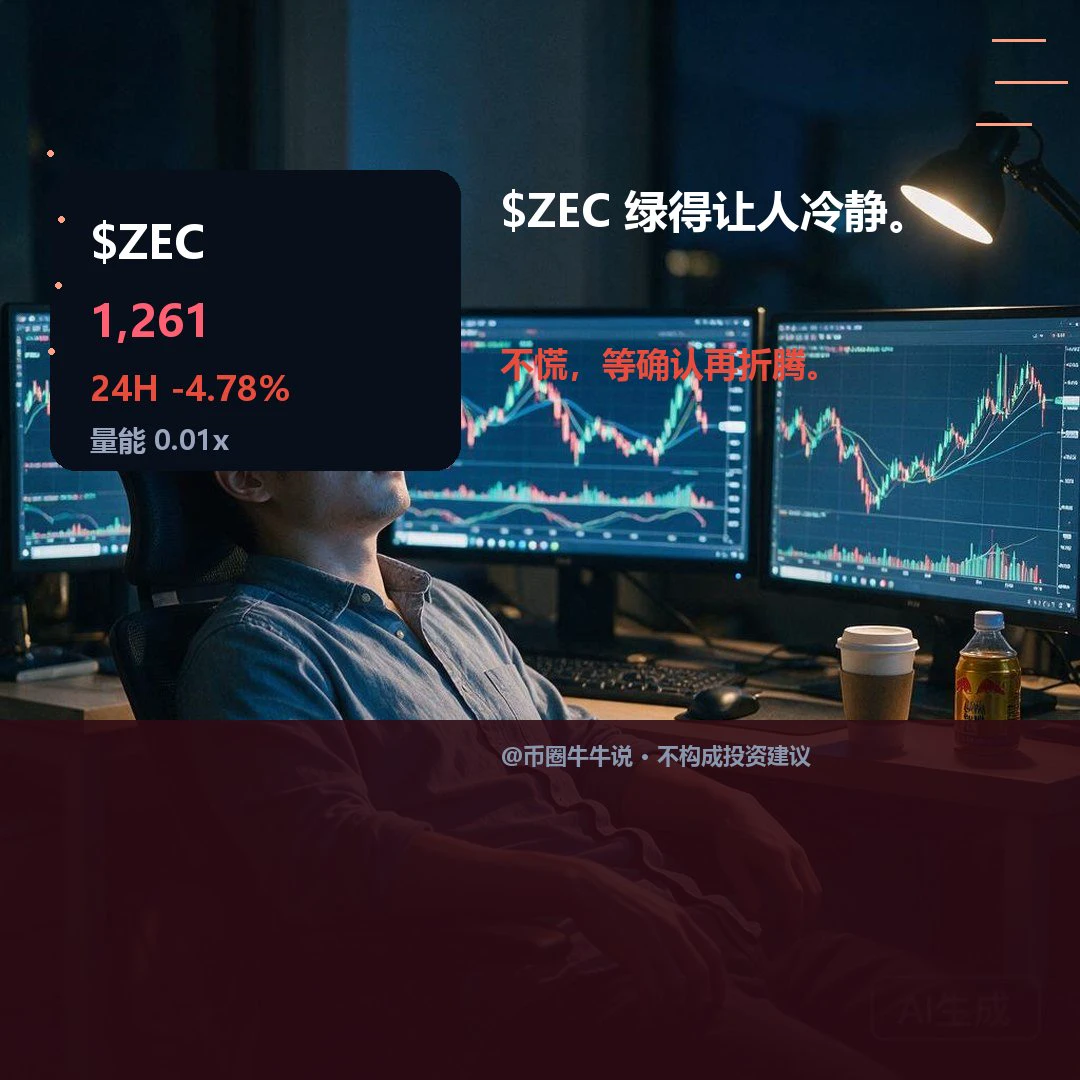
$ZEC Current price: 1260.54, 24H -4.78% (range: 1236.65–1364.08). 1H is weak, with RSI at 28.55, price below the EMA20 at 1277.27, and a volume ratio of 0.01; 4H is weak, with RSI at 52.36, price below the EMA20 at 1282.08, support at 1183.38, and resistance at 1387.89. A move higher requires holding above the 1364.08 resistance level; a break below the 1236.65 support level would weaken the structure. Review whether price holds above 1364.08 and whether it recovers after losing 1236.65; volume is only 0.01x. A hold without volume or a breakdown without a recovery would invalidate the setup. M
post-image
ZEC+1.16%
$AKE I’m betting this pullback won’t break 0.0050. If it does, I’ll wash my hair upside down on livestream. It’s at 0.0057 now, up 42% in 24 hours. It hit a high of 0.0066 before getting slammed back down, with trading volume of 413 million—retail traders can’t generate that kind of volume. The group was still calling for it to go to zero this morning, then in the afternoon it shot straight past the previous high—a classic double whammy of futures short liquidations and spot buying. The order book shows bids below 0.0055 getting eaten up fast, while the sell wall above 0.0060 is thick but gets
AKE+6.07%
#GateGuardNowAvailableForFree
#ShareWeekly

Security Is Not Just About Protecting Your Password: Why Every Gate User Should Pay Attention to Gate Security Guard

In cryptocurrency, protecting your assets is just as important as finding profitable trading opportunities. Many users spend hours analyzing Bitcoin movements, studying market trends, identifying entry and exit levels, and managing their portfolios. However, one important question deserves equal attention: how well protected is the account holding those assets?

In my view, account security should never be treated as an optional fea
BTC-0.67%
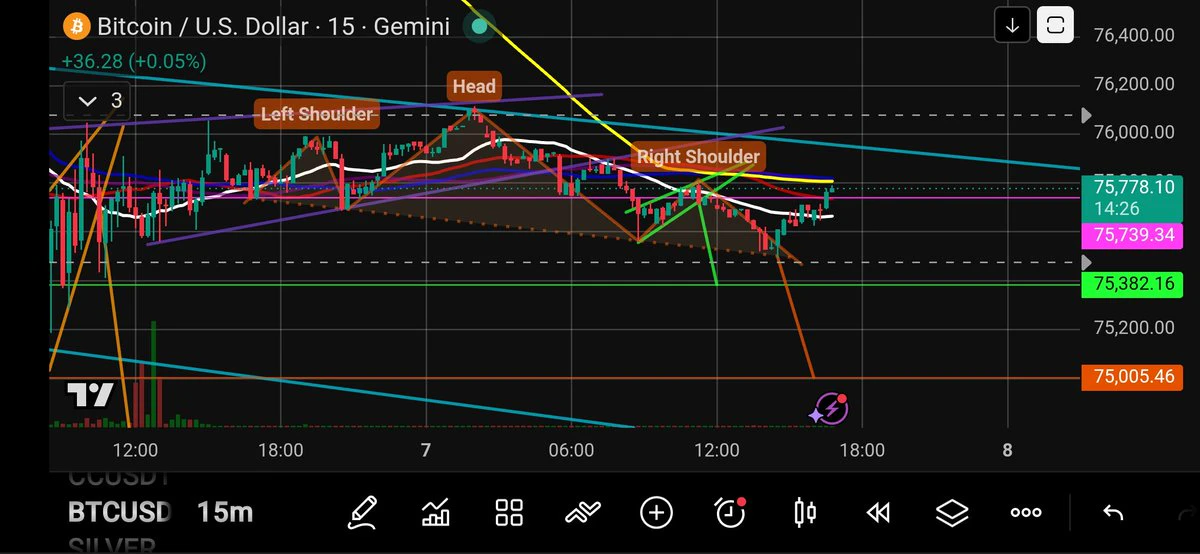
$BTC Is Now Retesting The 15min 200MA As Projected Earlier Today
A rejection will send price down to the next targets below.
For information and targets check my timeline.
NFA, DYOR ⚠️
#Crypto #Trading #BTC
post-image
BTC-0.67%
A 77.7% chance of a December rate hike! The dollar, gold, or U.S. stocks—which will be the biggest loser?

A single nonfarm payrolls report has sent global financial markets on edge!
The U.S. added 165k jobs in October, far above expectations of 65k, while the unemployment rate fell to 4.1%. The strong labor market performance quickly prompted traders to increase their bets on a December Fed rate hike.
The latest market pricing shows the probability of a 25-basis-point rate hike in December rising to 77.7%.
So, which assets could be affected next?
First, the dollar. If markets believe U.S. int
AMD+11.55%
  • 13
OpenAI CFO: Data center investments will not change due to the midterm elections.
live-cover
LIVE59
BERGER
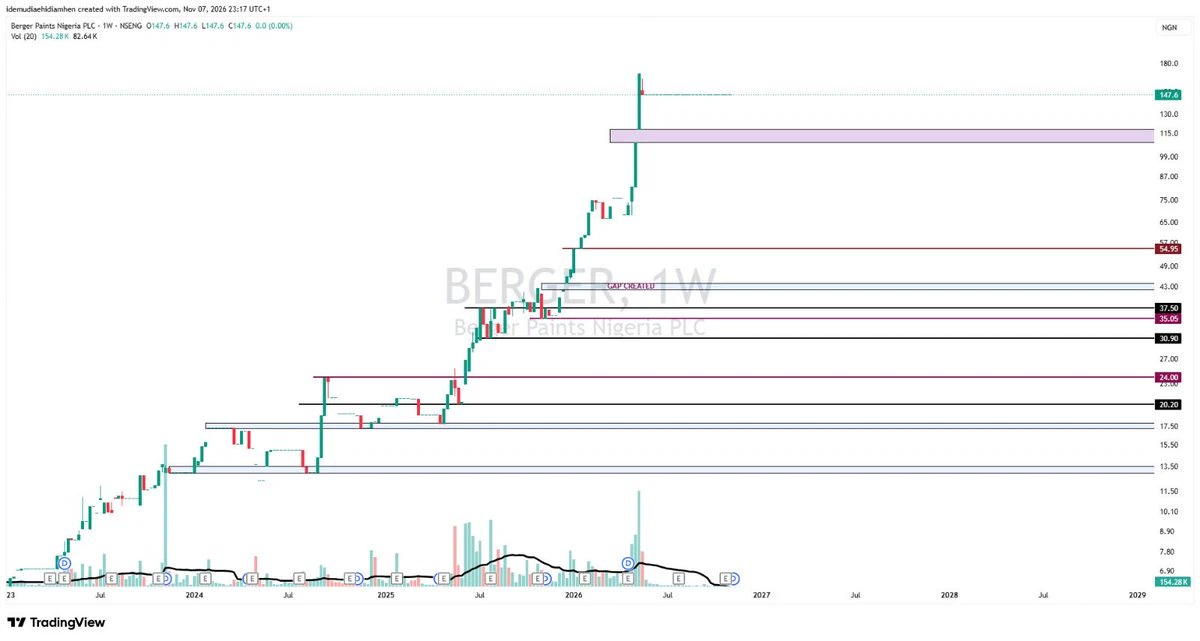
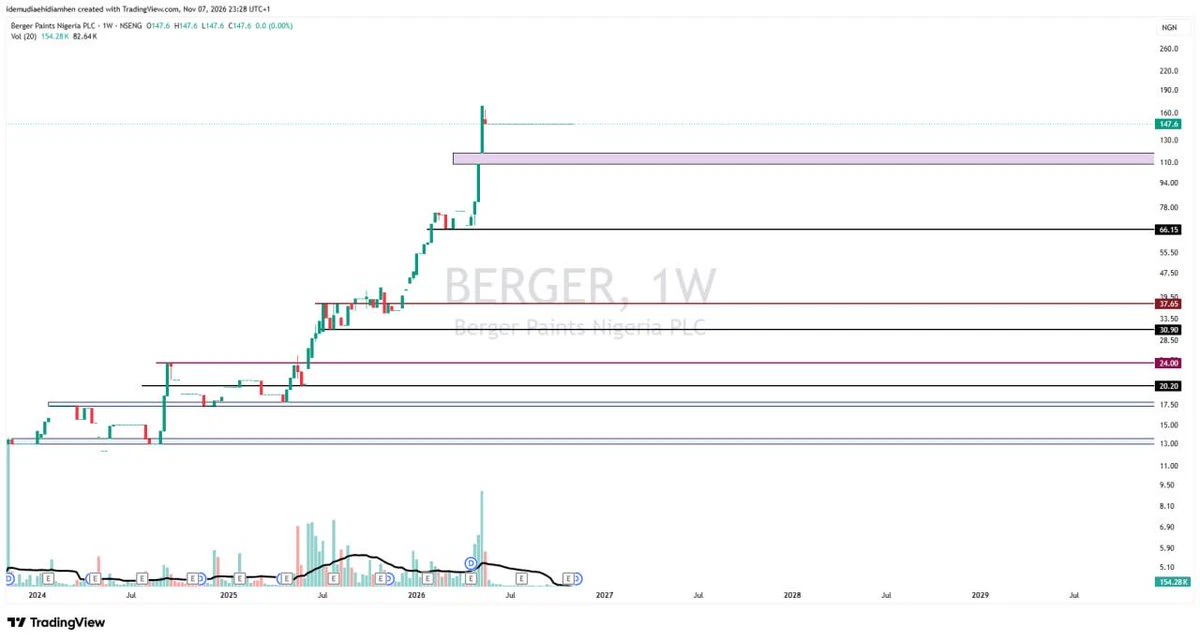
If BERGER doesn’t give me a proper correction, I’m sitting this one out. And even if you want to open a position at these levels, with how thinly the stock trades, you might have to go to Mecca before you get your order filled. 😂
I’d like management to consider a bonus issue to put more shares in circulation. It could help with liquidity if more shareholders make shares available for trading. With so few shares changing hands, the stock can go flat for stretches.
The level I’m watching is ₦66.15 per share. CAP Plc is my benchmark for the sector, and I’ve noticed that CAP and BERGER ten
post-image
Strong U.S. Employment Can Be a Problem Too! Payrolls Added 165k—Why Did Markets Get Nervous?

Job seekers may welcome more jobs, but Wall Street may not be happy to hear the news.
The U.S. added 165k nonfarm jobs in October, far exceeding market expectations. The unemployment rate fell to 4.1%, while average hourly earnings rose 0.4% month over month.
Normally, such a strong performance in the job market would be cause for celebration. But financial markets have their own logic: a weak economy is worrying, and an economy that is too strong can also make them nervous.
The reason is the Federal
MU+4.71%
  • 14
🔹 High prices continue to erode purchasing power, and US consumer confidence remains weak.
live-cover
LIVE57
$XRP Has Already Seen Selling Pressure, but Whether Buyers Are Defending Support Remains to Be Confirmed

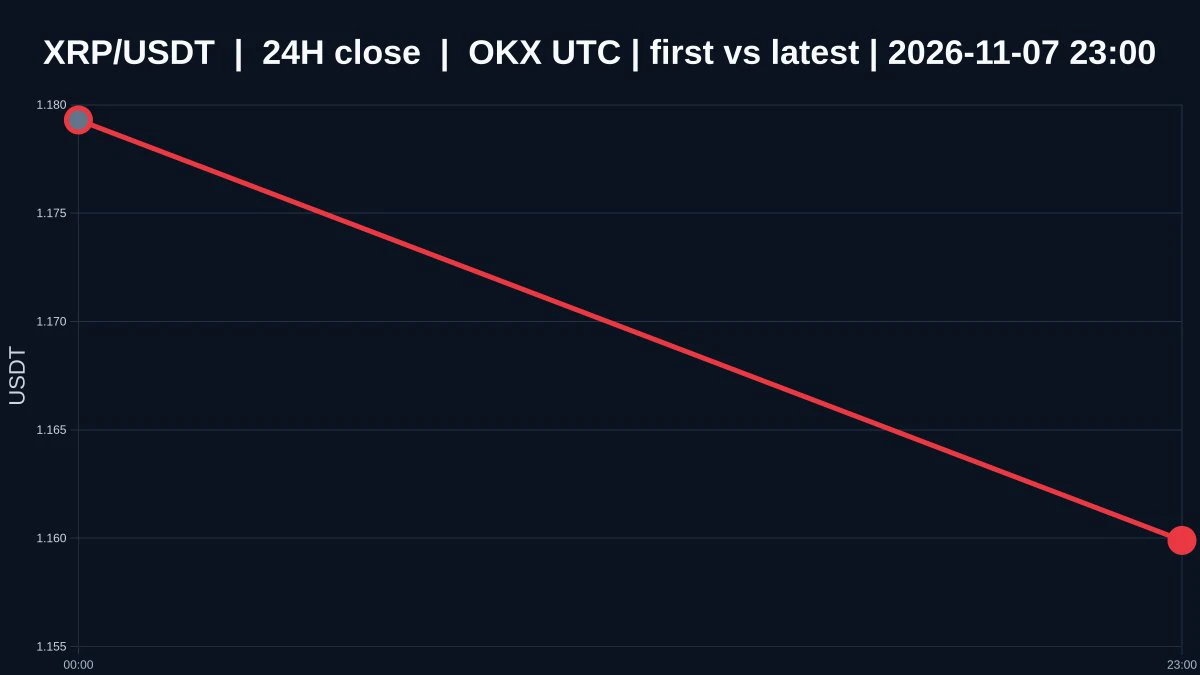
The fact that selling pressure has occurred does not automatically mean the price is cheap, much less prove that anyone is actually defending the area around 1.1495. $XRP is currently priced at 1.1597, down 1.4698385726423235% over 24 hours, with an intraday low of 1.1495 and a high of 1.1826. The 1-hour and 4-hour trends are both weak, and the volume ratio is 0.027431344101916215. Oversold describes a condition; a bottom is a confirmed outcome.

Reading oversold conditions as a bottom is
post-image
XRP-1.15%
#USStocksFaceHistoricSelloff #ShareWeekly

The Market Is Moving Beyond Political Headlines: Why Capital Is Becoming More Selective

Financial markets often react positively when uncertainty disappears, but maintaining that momentum requires something much stronger: solid economic data, corporate earnings, institutional demand, and confidence in future growth. This is exactly what we are witnessing following the recent US midterm elections.

Initially, the political outcome created a wave of optimism across financial markets. Investors welcomed the reduction in political uncertainty, triggerin
CryptoChampion
#USStocksFaceHistoricSelloff #ShareWeekly

The Market Is Moving Beyond Political Headlines: Why Capital Is Becoming More Selective

Financial markets often react positively when uncertainty disappears, but maintaining that momentum requires something much stronger: solid economic data, corporate earnings, institutional demand, and confidence in future growth. This is exactly what we are witnessing following the recent US midterm elections.

Initially, the political outcome created a wave of optimism across financial markets. Investors welcomed the reduction in political uncertainty, triggering a recovery in risk-sensitive assets. Bitcoin climbed from the $76,000 region to above $80,000, while equities experienced a broad improvement in sentiment.

However, the market quickly entered a different phase. Instead of continuing to rise together, individual sectors started moving in opposite directions. In my view, this is not necessarily a sign that the recovery has ended. It reflects a transition from headline-driven buying toward a more selective investment environment.

1. Why Is the Equity Market Experiencing a Rotation?

One of the most interesting developments is the growing divergence between traditional industries and technology stocks.

Futures linked to the Dow Jones have demonstrated relative strength, supported by industrial and financial companies, while Nasdaq futures have faced pressure from technology and semiconductor weakness.

This suggests that investors are reconsidering where the next attractive returns might come from. After a strong rally in artificial intelligence-related stocks, some market participants are taking profits and reallocating capital toward companies with established earnings, more predictable cash flows, and potentially more attractive valuations.

A balanced barbell strategy could make sense in this environment. Rather than completely abandoning technology, investors can maintain selective exposure to innovative companies while diversifying into cyclical industries.

2. Artificial Intelligence and Semiconductors: Opportunity or Valuation Risk?

AI infrastructure remains one of the strongest long-term investment themes, but expectations have become extremely demanding.

The semiconductor industry recorded global sales of approximately $517.7 billion in the third quarter, representing a 24.1% quarterly increase. Furthermore, strong supply-chain commitments and order visibility extending toward 2029 indicate that demand for advanced computing infrastructure remains significant.

Nevertheless, strong industry demand does not automatically guarantee higher stock prices. Investors are increasingly questioning whether future earnings can justify current valuations.

The upcoming November 17 earnings report from a major semiconductor manufacturer could become an important catalyst. I would particularly monitor revenue guidance, memory pricing, AI-related orders, and management's expectations for future demand.

For short-term traders, this sector offers opportunities, but earnings volatility and unexpected guidance should not be ignored.

3. Cloud Computing: The Profitability Test

Cloud computing represents another important opportunity, particularly for investors who prefer businesses with recurring revenue and stronger cash-flow visibility.

The three largest cloud providers collectively recorded 56% year-over-year revenue growth in the third quarter. This demonstrates the increasing importance of cloud infrastructure as companies expand their AI capabilities.

However, the investment narrative is changing. Previously, investors rewarded companies for announcing enormous AI infrastructure budgets. Now, they want evidence that those investments are generating measurable returns.

Companies demonstrating positive free cash flow, disciplined capital expenditure, and sustainable operating margins could attract greater institutional interest.

In my opinion, cloud computing deserves attention because its long-term growth story is supported by enterprise demand, digital transformation, and AI adoption.

4. Electric Vehicles: Recovery With Important Differences

The EV industry is also showing signs of improvement, although performance differs significantly between manufacturers.

One major manufacturer has delivered more than 480,000 vehicles for two consecutive quarters, while its automotive gross margin has improved to 18.5%. These developments suggest better operational performance and potentially stronger profitability.

On the other hand, another major manufacturer continues to lead in overall delivery volume but faces pressure from declining domestic sales in China, reaching approximately 28%, alongside disappointing earnings.

This difference highlights why investors should evaluate individual companies rather than treating the entire EV sector as one investment opportunity.

5. Bitcoin: Can Institutional Money Support the Recovery?

Bitcoin remains an important indicator of broader risk appetite.

After recovering above $80,000, the next challenge is maintaining that level through consistent demand rather than temporary optimism.

On November 4, US spot Bitcoin ETFs recorded approximately $74.6 million in net inflows, ending a three-day outflow period totaling around $1.16 billion.

This development is encouraging, but one positive session does not confirm a sustained institutional buying trend.

I would focus on several indicators: consecutive ETF inflows, trading volume, liquidity conditions, and Bitcoin's ability to hold important support levels during equity market weakness.

6. My Market Strategy: Follow Fundamentals, Not Headlines

My approach to this changing environment is relatively simple:

- Short-term opportunities: Monitor semiconductor stocks, earnings announcements, and volatility around major corporate guidance.
- Medium-term positioning: Focus on cloud companies with improving cash flow and sustainable business models.
- Long-term opportunities: Watch AI infrastructure, selected EV manufacturers, and companies benefiting from structural technological changes.
- Crypto market: Track Bitcoin ETF flows, institutional demand, and price confirmation before assuming the recovery has enough strength to continue.

The most important lesson from this rotation is that a rising market does not mean every asset deserves equal attention.

The political uncertainty may have decreased, but the investment challenge has become more demanding. Capital is moving toward businesses that can demonstrate real earnings, sustainable growth, and financial discipline.

My final perspective: I believe the next major market opportunity will come from identifying which companies can convert strong demand into actual profitability. AI, cloud computing, semiconductors, electric vehicles, and Bitcoin all deserve attention, but timing and selectivity will matter more than simply following market excitement.

What do you think will lead the next market move: AI and semiconductor stocks, cloud computing, electric vehicles, or Bitcoin?

Let's discuss your market outlook in the comments.

This is my market perspective, not financial advice.

#每周来晒 #美股史诗级抛售 #WCTCS9 @Gate_Square
BTC-0.67%
  • 1
BERGER
If BERGER doesn’t give me a proper correction, I’m sitting this one out. And even if you want to open a position at these levels, with how thinly the stock trades, you might have to go to Mecca before you get your order filled. 😂
I’d like management to consider a bonus issue to put more shares in circulation. It could help with liquidity if more shareholders make shares available for trading. With so few shares changing hands, the stock can go flat for stretches.
The level I’m watching is ₦66.15 per share. CAP Plc is my benchmark for the sector, and I’ve noticed that CAP and BERGER ten
post-image
#CLARITYActCouldBeDelayedUntil2028 #ShareWeekly

CLARITY Act Uncertainty: Is Crypto Regulation Entering a New Phase, or Is the Industry Facing Another Two Years of Waiting?

The cryptocurrency industry has spent years asking regulators and lawmakers for one thing: clear rules. Investors, exchanges, blockchain developers, and institutional financial companies all need to understand which regulations apply to their activities. However, the latest political developments in the United States suggest that the wait for comprehensive crypto legislation could become longer than expected.

The possibi
CryptoChampion
#CLARITYActCouldBeDelayedUntil2028 #ShareWeekly

CLARITY Act Uncertainty: Is Crypto Regulation Entering a New Phase, or Is the Industry Facing Another Two Years of Waiting?

The cryptocurrency industry has spent years asking regulators and lawmakers for one thing: clear rules. Investors, exchanges, blockchain developers, and institutional financial companies all need to understand which regulations apply to their activities. However, the latest political developments in the United States suggest that the wait for comprehensive crypto legislation could become longer than expected.

The possibility that the CLARITY Act could be delayed until 2028 has introduced another layer of uncertainty into the digital asset market. But I believe investors should look beyond the headlines. A delay in one major legislative proposal does not automatically mean that the entire crypto industry will stop developing. In fact, regulatory progress may increasingly come through existing laws, agency decisions, court rulings, and individual financial-sector initiatives.

1. Why the CLARITY Act Matters to the Crypto Industry

The main purpose of the CLARITY Act is to establish a clearer regulatory boundary between digital assets classified as securities and those treated as commodities.

This distinction is extremely important because different regulatory authorities have different responsibilities. Uncertainty over jurisdiction can create additional compliance costs, discourage innovation, and make it difficult for crypto companies to introduce new products in the United States.

The bill passed the House of Representatives in July 2025 by 294 votes to 134, demonstrating considerable bipartisan support. However, its progress in the Senate has encountered significant political and policy disagreements.

The September 15, 2026 Senate vote reportedly failed to secure the 60 votes needed to advance, with 49 votes in favor and 50 against. Two major concerns were particularly important: ethical restrictions preventing public officials from personally benefiting from crypto-related investments and the potential impact of stablecoin yields on traditional banking deposits.

These disagreements demonstrate that crypto regulation is no longer simply a technical discussion. It has become part of a wider debate about financial stability, political accountability, and the future structure of the banking system.

2. Political Changes Could Extend the Waiting Period

The midterm election results have created additional uncertainty around the bill's future. With Democrats taking control of both chambers of Congress, the political environment surrounding crypto legislation could become considerably more challenging.

Several lawmakers who have expressed concerns about the proposed framework may gain influential committee positions. This could make negotiations more complicated and reduce the likelihood of quick legislative progress.

If the CLARITY Act remains stalled, 2028 could become a realistic political window for another serious attempt.

However, I would not interpret this possibility as a permanent rejection of crypto regulation. Political priorities can change, negotiations can produce compromises, and market developments can create pressure for lawmakers to revisit unresolved issues.

3. Why Bitcoin Did Not Experience a Major Market Collapse

One interesting development was the market's reaction to the political uncertainty.

Bitcoin reportedly declined to approximately $75,618 during election night before recovering toward the $78,000 region. This recovery suggests that investors had already considered the possibility of a difficult legislative outcome.

However, the market was not completely unaffected. Approximately $288 million in leveraged long positions were reportedly liquidated within 24 hours.

This is an important signal. It shows that even when long-term investors remain confident in the broader crypto market, excessive leverage can create significant short-term pressure.

My view is that traders should pay attention to spot demand, trading volume, funding rates, and liquidation levels rather than making decisions based entirely on political headlines.

4. Stablecoins Could Become the Biggest Regulatory Beneficiaries

While the CLARITY Act faces uncertainty, stablecoin regulation has a separate path forward through the GENIUS Act.

Its framework focuses on payment stablecoins, reserve requirements, and issuer responsibilities. Requiring appropriate liquid reserves can improve transparency and strengthen confidence in stablecoin operations.

This development could be particularly important for USDC and the wider stablecoin ecosystem.

Stablecoins are becoming essential infrastructure for crypto exchanges, international payments, digital settlements, and decentralized finance. Clearer rules could encourage traditional financial institutions to explore these services with greater confidence.

However, the debate surrounding stablecoin yields remains important. Banks are concerned that attractive returns on stablecoin products could encourage customers to move deposits away from traditional institutions.

This conflict between financial innovation and traditional banking interests will likely remain a major regulatory discussion.

5. Tokenization May Continue Without the CLARITY Act

Another sector worth watching is real-world asset tokenization.

The tokenization of stocks, bonds, funds, and other financial instruments could gradually connect traditional markets with blockchain infrastructure.

Institutions such as the Depository Trust & Clearing Corporation (DTCC) are working on tokenization-related infrastructure, demonstrating that financial-market modernization is not dependent on a single congressional bill.

For me, this is one of the most important developments in the current environment.

Even if comprehensive crypto legislation takes longer, financial institutions can continue developing compliant products under existing regulatory frameworks and applicable permissions.

This creates opportunities for blockchain networks, custody providers, exchanges, settlement platforms, and infrastructure developers.

6. What Should Crypto Investors Watch Next?

I believe the next phase of the market will require greater attention to regulatory developments rather than simply waiting for one legislative announcement.

Some important indicators include:

- Bitcoin (BTC): Institutional demand, ETF flows, liquidity, and reactions to macroeconomic developments.
- Ethereum (ETH): Tokenization activity, institutional adoption, and growth in blockchain settlement.
- Solana (SOL): Network activity, stablecoin expansion, and the development of tokenized financial products.
- GateToken (GT): Ecosystem development, exchange activity, platform adoption, and broader market sentiment.
- USDC: Regulatory compliance, reserve transparency, and adoption in payment and settlement infrastructure.

These assets have different risk profiles, and regulatory progress does not guarantee that their market prices will increase.

My Final Perspective

I do not see a potential CLARITY Act delay as the end of crypto's institutional adoption story. Instead, it could mark a transition from expecting one comprehensive legislative solution toward a more gradual regulatory environment shaped by individual agencies, existing laws, and financial institutions.

The short-term outlook may remain volatile, particularly for leveraged traders. However, stablecoins, tokenized securities, and blockchain-based settlement systems could continue developing even without immediate progress in Congress.

The most important question is no longer simply when the CLARITY Act will pass. It is whether the crypto industry can continue building reliable financial infrastructure while lawmakers debate the rules.

My strategy would be to avoid emotional decisions, control leverage, monitor regulatory developments, and focus on projects demonstrating real adoption rather than relying entirely on political expectations.

This is my market perspective, not financial advice.

#WCTCS9 #weeklyshare @Gate_Square #GateSquareTradingChallenge
  • 2
So they whipped you like a top?
post-image
The stronger the U.S. economy, the more vulnerable is gold? What signal is a 77.7% rate hike probability sending?

Gold investors may be feeling a little conflicted lately: If the U.S. economy is performing well, why is that making the gold market nervous?
The reason is interest rates.
The U.S. added 165,000 nonfarm jobs in October, far exceeding market expectations, while the unemployment rate fell to 4.1% and wage growth also came in above expectations. A strong labor market has led investors to raise their expectations for a Fed rate hike.
The probability of a 25-basis-point rate hike in De
GLDX-0.40%
PAXG+0.37%
  • 12
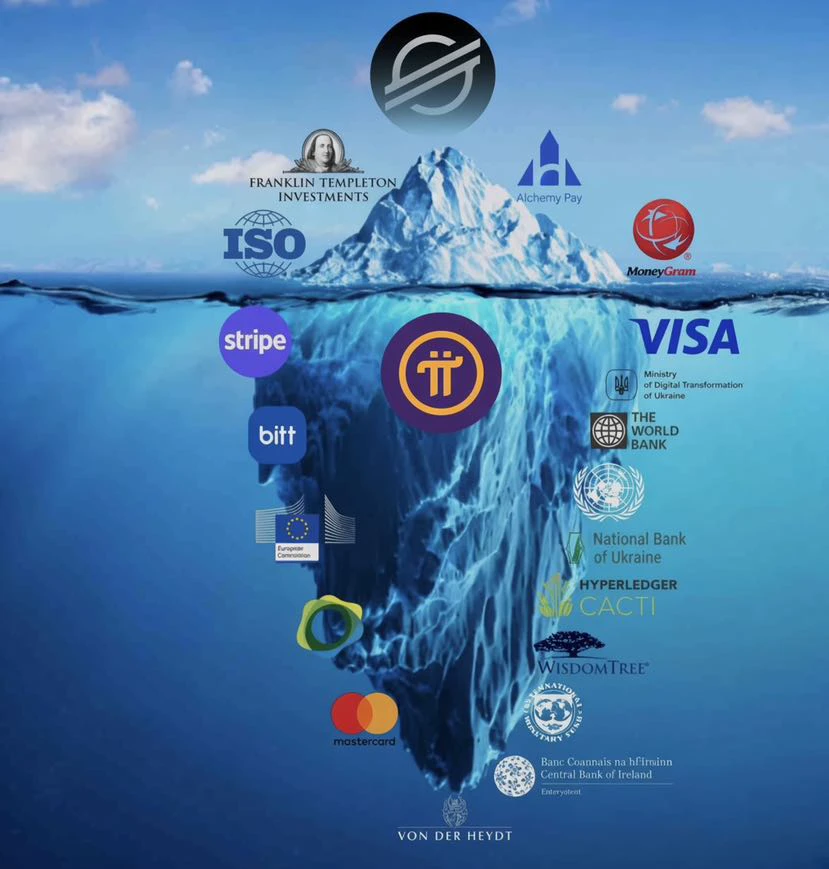
🔥 When a “scam” embodies human aspirations!

For nearly 7 years, Pi Network has faced plenty of ridicule

Not having dedicated mining hardware was questioned

KYC was questioned

Locking up Pi was questioned

Building apps, developing Nodes, and expanding the ecosystem were questioned

Some even judged the entire project at a glance based solely on its exchange price!

But look at what’s happening

PI NETWORK is preparing to hold its first ecosystem summit, focused on developers, technology, and real-world applications

Meanwhile, PI has appeared on CoinGecko’s list of cryptocurrencies attrac
post-image
PI-0.60%
  • 1
Load More

Join 40 M users in our growing community

⚡️ Join 40 M users in the crypto craze discussion

💬 Engage with your favorite top creators

👍 See what interests you

Trending Topics

USAIStocksHitHard

21.93k Views3.68k Discussing

U.S. stocks sold off sharply on Thursday, November 5 (UTC). The Nasdaq closed down around 5.5%, entering correction territory, while the Philadelphia Semiconductor Index plunged roughly 12%, with chip stocks including $NVDA and $AMD posting steep losses. Beyond profit-taking, investors are growing concerned about the pace of AI data center construction, capital spending, and future returns on investment. The key question now is whether the AI sector’s lofty growth expectations need to be repriced. Where do you think the next opportunities will emerge: chip stocks, tech giants, or other sectors?

USNonfarmPayrolls

37.17k Views4.35k Discussing

StakeOnLaunchpoolToShare450KVLX

11.32k Views834 Discussing

View More