Square
Following
Hot
News
Profile
Share your thoughts
placeholder
Article
BTC & GT Price Prediction - Will GT Hit $30?
live-cover
LIVE48
Secured the first trade of the morning! Taking profit while it’s good—no need to get greedy! 🎉
If you didn’t get in, don’t enter anymore!
post-image
  • 3
The sun rises every day, but there is always one worth waiting for.
post-image
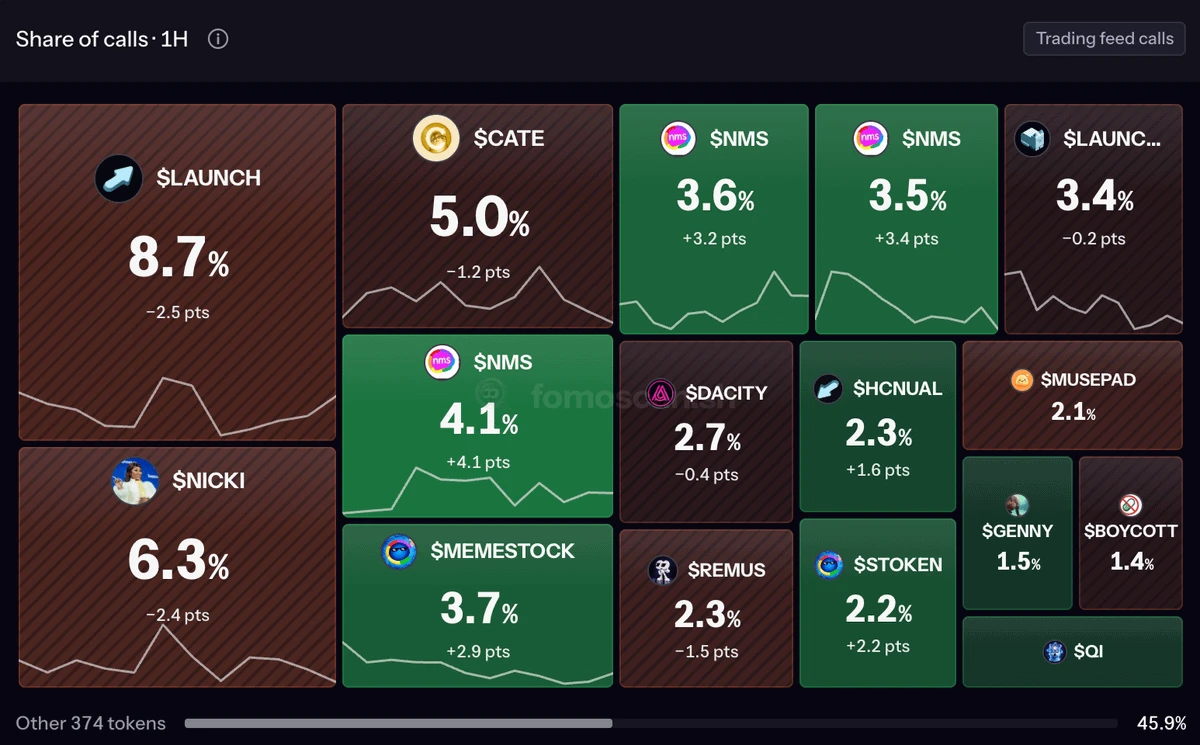
What memecoin is here?
#Shill me!
post-image
MEME+0.74%
$FIL Filusdt.... weekly analysis
The weekly FIL chart shows a multi-year triangle that appeared to break down, but the $0.32 wick indicates a liquidity grab by whales. The price recovery to $1.14, combined with an RSI downtrend breakout, signals that selling pressure is exhausted. If $1.40 holds, the next targets are $3.70 and then $7.00.
post-image
FIL+10.98%
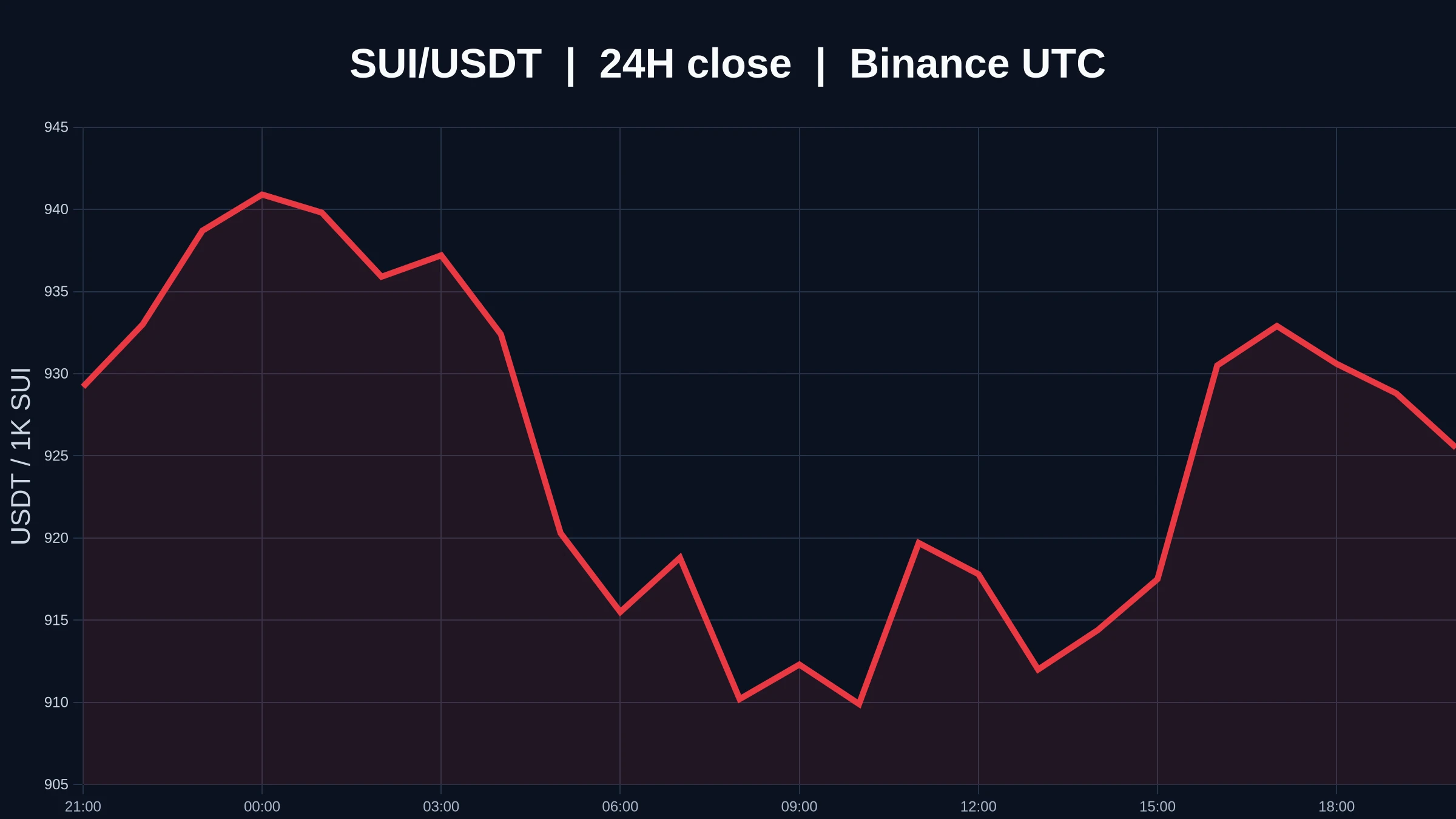
$SUI /USDT is silently building a bullish base most traders are still ignoring.

$SUI /USDT - LONG

Trade Plan:
Entry: 1.1225 – 1.1283
SL: 1.0973
TP1: 1.1465
TP2: 1.1606
TP3: 1.1817

Why this setup?
Why now? The daily trend is bullish, the 1h price sits at 1.1254, the 15m RSI reads 56.17, and the 1h ATR is 0.011729, which together show momentum is waking up without being overextended. The entry zone between 1.1225 and 1.1283 offers a precise refuel area, while TP1 at 1.1465 and TP2 at 1.1606 define the first two targets of this setup. The invalidation level at 1.1077 acts as the hard line i
SUI+1.36%
$ZEUS heavily bought the dip, waiting to sell when it doubles
ZEUS+58.95%
I’ve launched Bat Radar on Patreon 🦇
Along with U.S. index analysis and my trend entry and exit signals, Bitcoin and Ethereum analysis-my entry and exit signals, and gold and silver analysis, I’ll evaluate macroeconomic developments, important data releases, and earnings reports from the companies I review. My commentary on the overall market outlook, options flow, and darkpool trades after the market close will also be included in this membership.
Bat Radar costs $5 per month
Let me clarify the membership scope: Individual stock technical analysis, stock selection, trading plans, and portfol
post-image
INDEX+12.58%
BTC+0.85%
ETH+1.11%
XAU+0.13%
What on earth is so scary? What did the three little cuties in the tree hollow see to be so terrified? Each one's expression is more exaggerated than the last. $MU
post-image
MU-0.69%
#WCTCS9 #币圈观察员 1011 Liquidation Crash Anniversary: $19 Billion Wiped Out in One Week!
One year ago on October 11, the crypto market witnessed a single-day liquidation event that went down in industry history, with more than $19 billion in liquidations across the market and Bitcoin falling 12.7% in half an hour.
Many market participants are still considering one question: before a black swan event occurs, the market often has no obvious warning signals. Hardware wallets are currently revealing successive security vulnerabilities, while fake websites continue to target users. Could such security
post-image
ThisIsTranslateContent:
#WCTCS9 #币圈观察员 1011 Anniversary of $19 billion in liquidations!
On October 11 one year ago, the crypto market witnessed a single-day liquidation event that went down in industry history. Total liquidations across the network exceeded $19 billion, and Bitcoin fell 12.7% in half an hour.
Many market participants are still considering one question: before a black swan event occurs, there are often no obvious warning signals in the market. With hardware wallets continuously revealing security vulnerabilities and fake websites persistently targeting users, could such security incidents trigger market panic again, leading to a rapid rebound after a sharp plunge? Answering this question requires reviewing the underlying logic of the 1011 crash, distinguishing the different impacts of two types of risk events on the market, and objectively sorting through the market’s supporting factors and potential risks, without forecasting price movements or providing any investment advice.
I. Reviewing the 1011 Crash: An Extreme Market Move Driven by External News, Leverage, and Liquidity
On October 7, 2025, Bitcoin had just set a new all-time high of $126,080, while market sentiment was elevated and large amounts of long leverage had accumulated in the futures market. Just four days later, around 16:50 Beijing time on October 11, Bitcoin rapidly fell from approximately $116,900 to $102,000 within 30 minutes, a half-hour decline of 12.7%. Total liquidations across the network exceeded $19 billion that day, setting a record at the time.
This crash was not caused by a single factor.
First, external macroeconomic news triggered a collective sell-off in risk assets, causing market sentiment to quickly shift toward risk aversion.
Second, large numbers of long positions in the market were forcibly liquidated, with liquidation sell orders continuing to pressure the market and creating a cascading effect. Multiple trading platforms saw extreme price wicks. ATOM fell to a low of $0.001 on bn, while the same asset reached a low of $3.56 on Coinb; wBETH and BNSOL saw extremely low prices, and the stablecoin USDe briefly depegged to a low of $0.65.
After the event, bn paid approximately $283 million in total compensation to users affected by the price wicks.
Third, on-chain data showed that a whale on Hyperliquid established a Bitcoin short position worth approximately $400 million before the tariff news was released. The move prompted speculation within the industry about insider trading. Arkham labeled it the “Trump insider whale,” but people associated with the address, including Garrett Jin, denied any connection. The insider-trading allegations have not been confirmed to date. From the market’s price action, the 1011 crash was a short-term liquidity cascade caused by the combination of an external macroeconomic shock and a highly leveraged market structure. Such events are characterized by an extremely rapid decline. After leverage has been fully liquidated, selling pressure is quickly released, creating the possibility of a short-term recovery—what market participants describe as a rapid rebound after a sharp drop.
However, this market structure requires several conditions: the market must contain a large amount of highly leveraged long positions, unexpected news must directly shock market expectations, and short-term liquidity must quickly dry up. Without any one of these conditions, it would be difficult to reproduce a move of the same magnitude.
II. A Complete Review of the Facts Surrounding the Current Hardware Wallet Security Incidents
A series of recent hardware wallet-related security incidents has become the core trigger for market concerns about a new wave of panic selling.
Security researcher cyberscrilla discovered fake Ledger websites and fake apps appearing at the top of Google search results, intended to trick users into surrendering their 24-word recovery phrases. Google backend data showed that the fake website received more than 1 million visits in 30 days. Before that, Zscaler detected malicious Google ads in September disguised as official Ledger entry points that redirected users to fake wallet verification pages to steal their recovery phrases. In addition, Ledger is investigating a coin theft case related to Southeast Asian distributor CryptoBilis, involving an estimated $86 million. Ledger officially confirmed that some devices purchased from the distributor contained unauthorized hardware implants. Affected users purchased hardware wallets through CryptoBilis and had their assets stolen after completing initialization. Ledger’s investigation clearly concluded that there was no evidence that Ledger’s own infrastructure, backend systems, or official services had been hacked; the risk was concentrated in the circulation process involving the third-party distributor. After the incident, distributor CryptoBilis suspended sales of all hardware wallet inventory pending the conclusion of the investigation. Ledger issued corresponding user guidance: devices from this channel that have not yet been initialized should not be set up; users who have already completed initialization are advised to migrate their assets to a new Ledger signing device using a completely new recovery phrase. Ledger also reiterated that it will never request users’ 24-word recovery phrases through any channel. Any message requesting a recovery phrase is a scam, and users should obtain updates about the incident only through official channels.
The triggering logic of the hardware wallet theft incident is fundamentally different from that of the 1011 crash.
The 1011 incident was a macroeconomic shock to the valuation expectations of crypto assets as a whole, directly hitting trading positions across the entire market; the hardware wallet theft incident is a single-point risk at the asset storage security layer, mainly affecting users holding spot assets and using hardware wallets, and will not directly trigger large-scale cascading liquidations in the futures market.
III. Current Supporting Factors in the Market
First, technical analysis indicates key support levels recognized by the market.
Some analysts have compared historical market trends and believe that Bitcoin’s current movement resembles its movement from late 2025 to early 2026, with $80,500 serving as a key short-term support level. When the price approaches a key support level, some market funds may step in to absorb selling, helping to ease the intensity of a one-way decline.
Second, the hardware wallet incident is an isolated supply-chain issue, and the manufacturer has proactively taken action. The distributor has suspended sales, the official company has proactively contacted victims and coordinated with law enforcement to pursue the attackers, and it has simultaneously released an asset migration plan for users. After the incident, the manufacturer promptly disclosed the scope of the risk, helping users identify risky devices and reducing the spread of panic. Such public handling can reduce excessive market fear that “hardware wallets across the entire industry have collectively failed.”
Third, the market’s understanding of security incidents has improved.
After multiple security incidents over the past several years, the market is now able to distinguish among different types of risks, including exchange risks, protocol vulnerabilities, supply-chain tampering, and phishing website scams.
Users can distinguish that only devices from a specific distributor channel face the risk of hardware tampering, rather than all Ledger wallets
IV. Potential Negative Factors and Risks Associated with This Hardware Wallet Incident
First, a short-term shock to confidence.
Hardware wallets have long been defined by the industry as a secure solution for offline asset storage. Supply-chain hardware implant attacks have shattered the ingrained belief that “offline means absolutely safe.” Some spot holders may panic and choose to sell their assets to avoid risk, creating short-term selling pressure. If the media continues to spread news of the incident and amplifies panic, prices may experience a short-term pullback. Second, the risk of derivative scams is also increasing.
As the coin theft incident develops, hackers may exploit public panic by releasing large amounts of false information and forging official notices and fake asset migration links to continue stealing users’ recovery phrases. Such secondary scams will continue to erode confidence in the industry and further amplify negative sentiment.
Third, the risk may spread.
If subsequent investigations reveal more victims, the amount involved continues to expand, or similar supply-chain vulnerabilities are discovered at other hardware wallet manufacturers, market panic will intensify and trigger broader spot selling.
Fourth, external macroeconomic variables cannot be ignored. The core trigger of the 1011 crash was external macroeconomic news, while the hardware wallet incident can at most serve as a secondary catalyst. If the hardware wallet incident coincides with external macroeconomic negative factors, the resonance between the two types of negative factors will significantly amplify market volatility.
V. Comparing the Two Types of Black Swan Events and Determining the Core Boundaries for Repeating the Market Move
The 1011 crash was a combination of macroeconomic news and a highly leveraged futures cascade. It was a market-wide valuation shock characterized by an extremely rapid decline. After leverage was cleared out in a single wave, selling pressure was quickly released, creating the possibility of a V-shaped recovery.
The hardware wallet theft incident is a single-point asset storage security event, with its impact concentrated among spot holders and without the underlying conditions to directly trigger cascading futures liquidations.
Relying solely on a hardware wallet security incident, it would be difficult to reproduce a market move involving a 12.7% plunge in half an hour and tens of billions of dollars in liquidations across the network. A rapid rebound after a sharp decline may occur only if multiple conditions below are met simultaneously:
First, the incident continues to escalate, triggering concentrated selling of large amounts of spot assets;
Second, the market has already accumulated substantial long leverage, and spot selling pressure triggers cascading futures liquidations;
Third, external macroeconomic negative factors add to the shock;
Fourth, short-term market liquidity is insufficient.
Without the resonance of these multiple conditions, a hardware wallet security incident alone will most likely bring only short-term volatility or a modest pullback, rather than reproduce last year’s extreme flash crash.
VI. Possible Responses for Market ParticipantsCZ posted an emphasis on the core logic of asset allocation: users should reasonably divide their assets and diversify them between centralized platforms and personal self-custodial wallets based on their own holdings, technical capabilities, and usage needs. Self-custody requires individuals to assume full responsibility for safeguarding private keys and recovering assets, placing higher demands on their personal security practices; platform custody requires users to bear platform credit and counterparty risks. At the same time, maintaining an independent personal wallet can effectively avoid restrictions on asset access caused by platform maintenance or service interruptions, improving the security and stability of asset allocation.
From an objective asset security perspective, follow these feasible response measures.
First, distinguish the scope of the risk.
Distinguish supply-chain hardware tampering risks from phishing website scams, and do not expand the device risk of a single distributor to all hardware wallet products. Do not readily trust unverified rumors on social media; refer only to official hardware wallet announcements.
Second, strictly protect recovery phrases.
No official institution or wallet manufacturer will request a 24-word recovery phrase. Anyone requesting a recovery phrase is a scammer. When downloading wallet software through a search engine or visiting a wallet website, carefully verify the domain name and beware of fake links in search engine advertisements.
Third, check the hardware wallet purchase channel.
If the device was purchased from a third-party distributor, check the official announcement to determine whether it belongs to an affected batch and handle asset migration according to the official guidance. Devices purchased through official direct-sales channels are not involved in this incident.
Fourth, control the use of leverage.
The vast majority of the huge losses in the 1011 crash came from forced liquidations of leveraged futures positions. Leverage amplifies losses caused by price fluctuations, so when market uncertainty rises, the risks brought by leverage need to be fully assessed.
Fifth, develop multidimensional risk awareness.
There is no absolutely secure method of storing assets. Exchange custody, hot wallets, and hardware cold wallets each carry different risks. Asset security is a complete process, not something that can be fully guaranteed by relying on a single device. All hardware wallet products are not secure. At the same time, the market can distinguish phishing scams from underlying system breaches and will not simply equate a coin theft incident through a single channel with the collapse of security across the entire crypto asset system.
Fourth, after experiencing multiple extreme market moves, the crypto market’s leverage level will self-adjust.
After liquidations on the scale of 1011, market participants have become more aware of the risks of high leverage. Without sustained optimism driving leverage higher, it would be difficult to quickly accumulate long leverage on the same scale as the previous year, leaving insufficient conditions for large-scale cascading liquidations.
Conclusion
On the first anniversary of the 1011 crash, the market is once again facing negative security-related news, and many investors will instinctively associate it with last year’s flash crash. However, by breaking down the underlying logic of the two events, it becomes clear that their risk types, scopes of impact, and transmission paths are completely different. A hardware wallet supply-chain attack is a localized risk at the asset storage layer, while the 1011 crash was a systemic cascade formed by the combination of macroeconomic news, high leverage, and a liquidity crunch. Whether the market will experience a sharp decline followed by a rapid rebound depends on whether multiple conditions resonate, and there is no way to predict this in advance. Market participants need not panic excessively, but they should not ignore potential risks. The focus is not on guessing whether prices will rise or fall, but on identifying the boundaries of risk, protecting asset security, and rationally viewing the high volatility inherent in the crypto market.
repost-content-media
ATOM-1.48%
USDE-0.01%
HYPE+1.43%
How to boost your mental energy and spirit?
1️⃣Travel and get out more to see places with mountains and water
2️⃣Keep exercising and working out, including jogging
3️⃣Read relevant books and various classics
4️⃣Motivate yourself and regain your confidence
5️⃣Stay away from people who drain me, including my parents
6️⃣Control my pace, including in life and trading
7️⃣Maintain a positive mindset and emotions; don’t be pessimistic or slack off
8️⃣Find a hobby, such as hiking, photography, or fishing, and when I’m not in a good state or the market is chaotic, appropriately distance myself from the
post-image
After Bitcoin’s candle close, trading volume has clearly shrunk. If my judgment is correct, this wave of decline will first drop to 80,000, then to 76,000, and finally find support in the 74,000–69,000 range.
Based on my own calculations, there will not be any sudden drop on Monday, Tuesday, Wednesday, or even Thursday. Instead, the price will repeatedly oscillate within the 83,000–84,500 range until all indicators recover to overbought levels, followed by a drop on Friday.
There is CPI data on Wednesday. If it meets expectations, that will be bullish. If the data is higher than before, I will
post-image
BTC+0.87%
Layout: Bitcoin, Ethereum, Dogecoin
live-cover
LIVE880
  • 3
Insiders are fading the bullish trend on $NEAR /USDT right now.

$NEAR /USDT - SHORT

Trade Plan:
Entry: 5.7767 – 5.8363
SL: 6.1785
TP1: 5.5275
TP2: 5.3415
TP3: 5.0625

Why this setup?
Why now? The daily trend remains bullish, yet the 1h price is pinned at 5.8065, creating a contradiction that favors a short. The 15m RSI reading of 64.08 shows the bounce lacks momentum, while the 1h ATR of 0.119238 confirms the move is volatile enough to target 5.5275 and 5.3415. The entry zone between 5.7767 and 5.8363 offers a precise setup, and the invalidation level at 5.1940 is the line in the sand tha
NEAR+12.15%
$NEAR has made quite a lot from long positions so far, this year’s biggest winner, definitely holding, not selling
NEAR+12.20%
$SPY $Q
🦇 Market Maestro | The AI Bull Market Is Entering Its Fifth Year
The S&P 500’s current bull market began on October 12, 2022, based on its closing low. I entered in November 2022. We made the real money through 2025 amid all the shouting about recession and crisis. So tomorrow, we enter its fifth year. The index’s approximately 118.4% price gain through the October 9 close is a strong performance, but it does not by itself indicate that the cycle is nearing its end.
History tells us longer cycles are possible. The 1987-2000 bull market, which included the dot com boom, lasted approxi
post-image
Tree-Hole Painting—The Drifting Rabbit🐰A clear stream flows out from the deep mountains,
Flowers bloom on both banks, more beautiful than Peach Blossom Spring.
The little rabbit leisurely frolics in the flowing water,
A paradise exists within this tiny space.
Consolidation does not alter the upward trend; gold prices still have room to rise
From the four-hour chart, gold prices have staged a rebound and recovery after finding a bottom. Prices have stabilized above the middle Bollinger Band, with clear support at the lows below, while the bottom structure continues to strengthen. The RSI remains in the upper half of the middle range, with bulls still maintaining the initiative. A slight short-term pullback is merely a consolidation phase during the rise, not a trend reversal.
In terms of fundamentals, market expectations for the pace of future rate
post-image
XAU+0.13%
CRCL at $84.51 tells us: stablecoins are more than the crypto world's “change wallet”
In the past, when people talked about stablecoins, many first thought of digital dollars used to hedge risk during trading and settle transfers. But as use cases continue to expand, stablecoins are becoming an important link between traditional finance and blockchain. CRCL closed at $84.51, up 4.54% on the day, bringing this topic back into focus. One of the key highlights is USDC. Unlike crypto assets whose prices are driven purely by market sentiment, Circle's business value must also be analyzed from the p
NVDA-0.52%
  • 30
$CLO HERE WE GO
post-image
CLO+3.65%
Load More

Join 40 M users in our growing community

⚡️ Join 40 M users in the crypto craze discussion

💬 Engage with your favorite top creators

👍 See what interests you

Trending Topics

GateAtTOKEN2049

41.56k Views21.87k Discussing

Gate brought a series of major events to TOKEN2049 Singapore! From the official launch of Gate Money to the F1 Red Bull driver meet-and-greet and the Gate Gala, we witnessed a new chapter of "One Gate, Borderless Finance." Which moment from TOKEN2049 stood out most to you?

LedgerLossesNear90Million

39.56k Views303 Discussing

GateWCTCS9GlobalTradingCompetition

34.69k Views5.17k Discussing

View More