Square
Following
Hot
News
Notifications
Profile
Share your thoughts
placeholder
Article
The Korean government plans to discuss stepping in to rescue the stock market on the 13th.
post-image
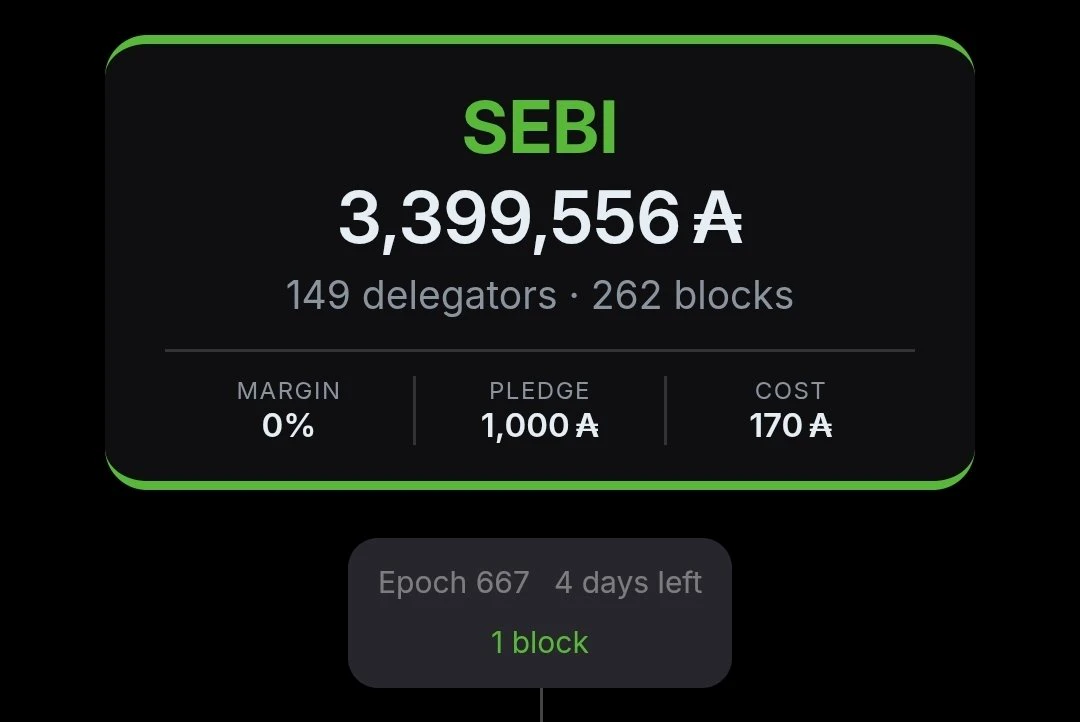
Record breaking performance for SEBI stakepool.
We finished epoch 666 with 9 minted blocks 🤯
That is a 300% over performance and we already have a new block in the new epoch.
Appreciate everyone delegating🫡
Let's make Cardano decentralized together🤝
post-image
ADA-1.48%
Trenches
mihao
m
bade
b
mihao
4Cxj...pump
Market Cap
$.
Change
.
24h Vol
$.
Holders
.
PIEVERSE
P
bade
b
PIEVERSE
0x0e...25a9
Market Cap
$.
Change
.
24h Vol
$.
Holders
.
HOLD
H
bade
b
HOLD
4iJ7...pump
Market Cap
$.
Change
.
24h Vol
$.
Holders
.
AGT
A
bade
b
AGT
0x5d...e274
Market Cap
$.
Change
.
24h Vol
$.
Holders
.
X
X
bade
b
X
9VZe...pump
Market Cap
$.
Change
.
24h Vol
$.
Holders
.
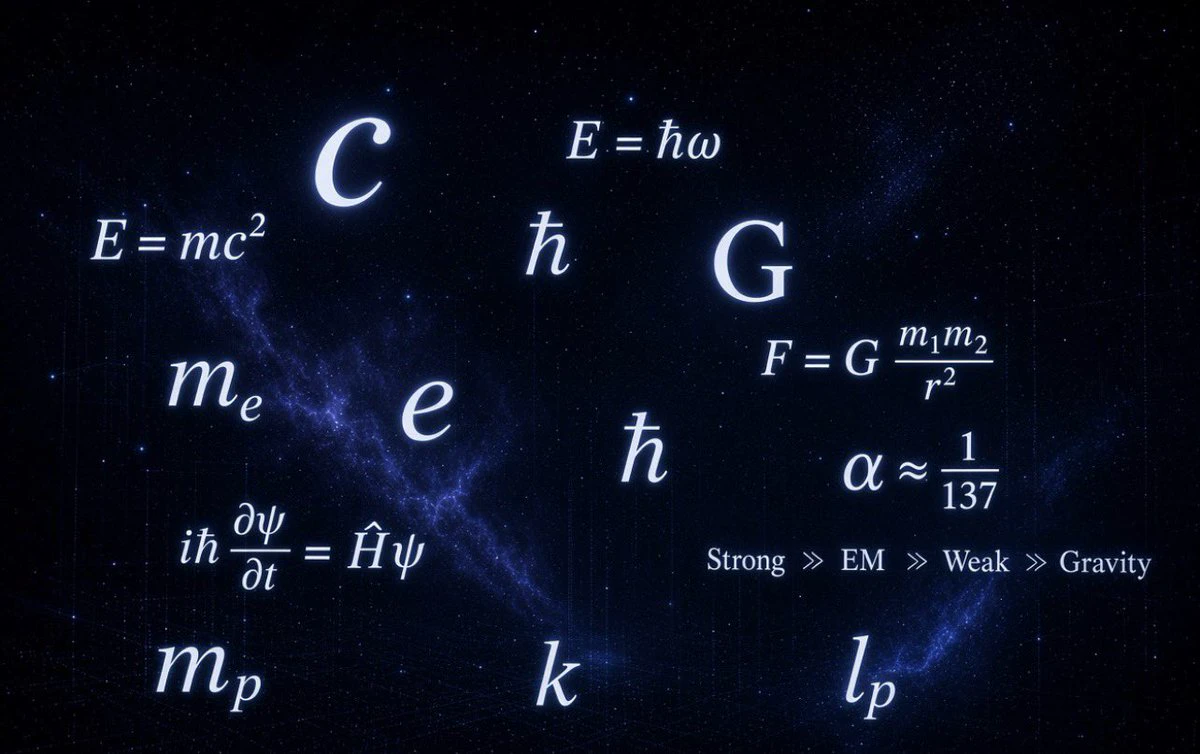
There’s a term in the universe called “fundamental constants.”
The speed of light, the strength of gravity, the value of Planck’s constant,
the masses of electrons and protons, the relative strengths of the four forces—
these numbers are set in stone, and no one can change them.
These are the fundamental constants of physics.
They aren’t results derived from theory;
they’re simply “what measurements show.”
And the rules governing how the entire universe works
have to follow “them.”
Speed of light c ≈ 299,792,458 m/s (exactly defined)
Planck’s constant h ≈ 6.626 × 10⁻³⁴ J·s
Gravitational co
post-image
TOTAL Crypto MCap is sitting at a critical crossroads, testing a crucial trendline support.
If this breaks, prepare for a deeper correction toward the lower support zone.
Market update
live-cover
LIVE5,794
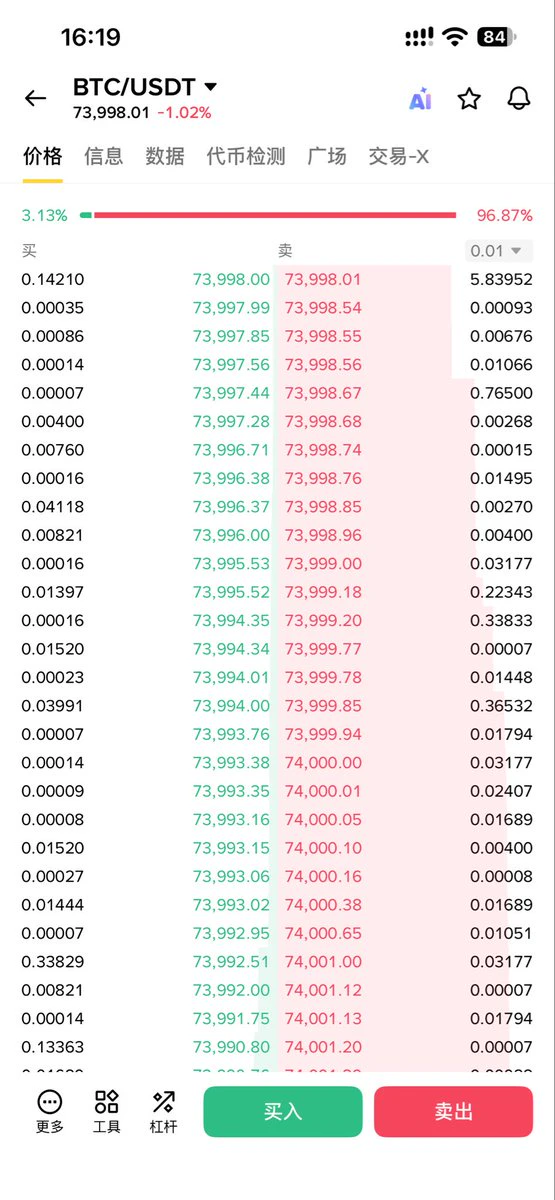
After CPI, the key to Bitcoin’s next move isn’t on the candlestick chart!
After the CPI release, volatility narrowed, but the order book quietly thickened.
Whales aren’t betting on price—they’re stacking buy and sell walls at key levels, waiting for retail sentiment to move first.
Watching depth changes matters more than guessing direction. Liquidity determines the slope of the next move.
Army outlook:
Don’t just watch the price—look at order book depth and funding rates!
post-image
  • 5
  • 1
How should you read on-chain data? How can large transfers help you gauge market movements?
In the cryptocurrency market, many people watch candlestick charts and trading volume every day, but overlook a very important source of information: on-chain data.
Especially when Bitcoin sees a large transfer, many traders immediately wonder: Is a whale preparing to sell? Are institutions buying in large quantities?
But do large transfers really mean the price is about to change?
First, distinguish between funds flowing into exchanges and funds flowing out. A large amount of BTC moving to exchanges ma
post-image
BTC-0.67%
When a trading strategy starts to fail, should you adjust its parameters or stop trading?

What’s truly dangerous isn’t that a strategy starts losing money, but that you don’t know why it’s losing and keep changing its parameters in an attempt to repair the returns curve.

A strategy may have worked in the past, but the market won’t keep behaving the same way forever.

Trends may turn into range-bound markets, liquidity may decline, trading costs may rise, and entry signals that once worked may gradually lose their edge.

So how should you make the call?

Step 1: Determine whether you’re seein
post-image
BTC has been moving sideways for three days, with the price fluctuating within a range. Many traders are starting to feel anxious: should they go long or short?

In fact, the most common mistake in a sideways market is trying to predict the direction of a breakout too early.

There are three signals to watch when assessing a breakout.

First, trading volume. If volume continues to increase as the price approaches the top of the range, it indicates rising market participation. But higher volume alone does not guarantee a rise; you also need to see whether the price can hold above the breakout l
post-image
BTC-0.67%
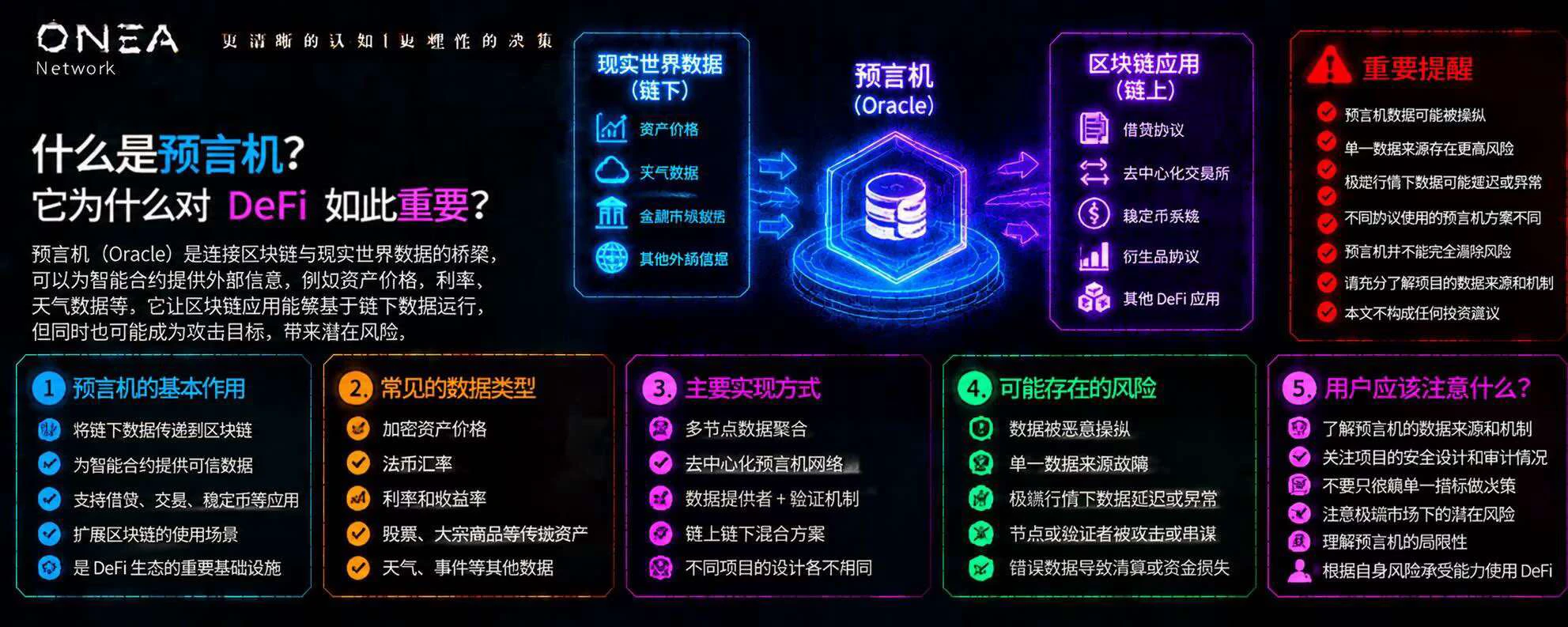
Why Aren’t DeFi Prices Determined by the Blockchain Itself? Understanding the Risks Behind Oracles

In the DeFi world, price data can affect whether a loan is completed successfully, whether a collateral asset is liquidated, and even whether a stablecoin protocol can operate normally.

But the blockchain itself cannot directly know the price of BTC in the real world, foreign exchange rates, or changes in the weather.

So how do smart contracts obtain this information?

The answer: oracles.

They are critical infrastructure connecting blockchains with external data, and a risk factor that many
post-image
BTC-0.67%
ETH-1.26%
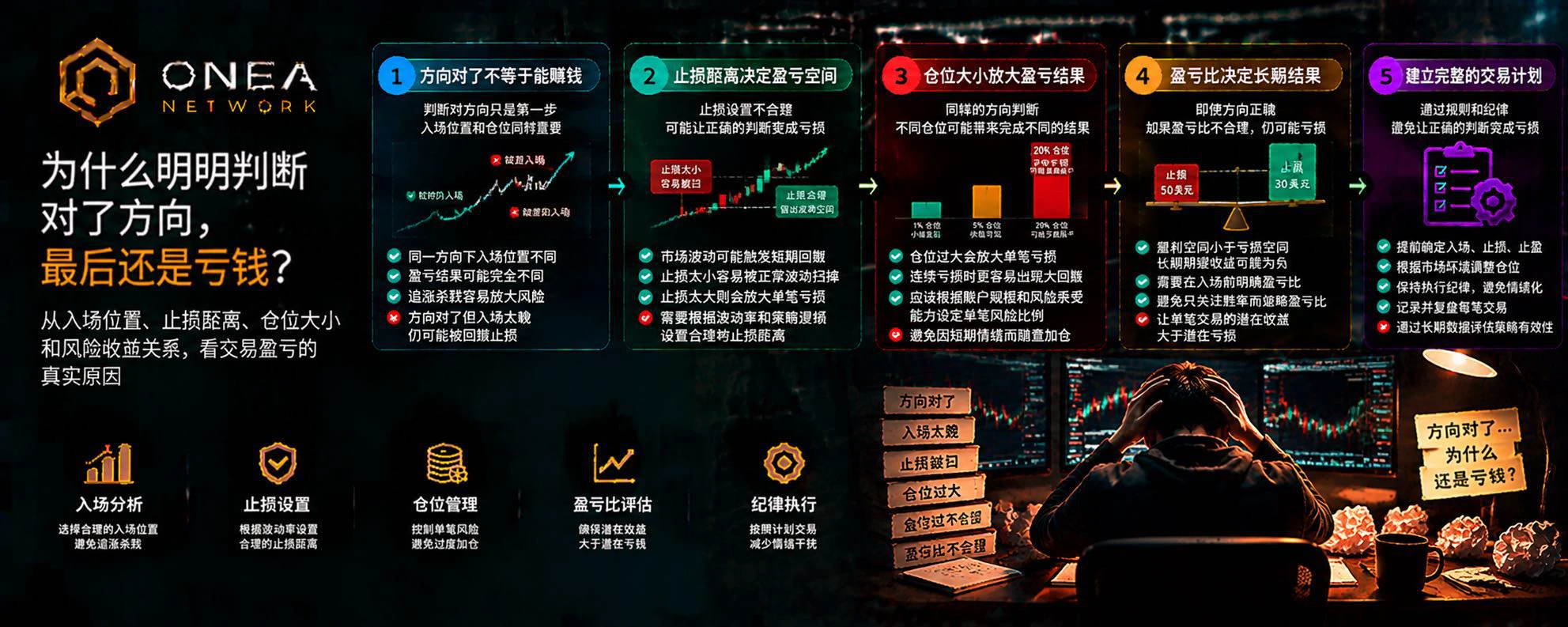
Why do you still lose money even when you correctly predict the direction?

You predict that Bitcoin will rise, and after you buy, the price does rise.

But you still lose money.

Why?

Because correctly predicting the direction is only part of a successful trade. Your entry point, stop-loss distance, position size, trading costs, and risk-reward ratio can all determine the final outcome.

Getting the market direction right does not mean a trade is guaranteed to make money.

I. Why can you lose money even when you correctly predict the direction?

Suppose you predict that BTC will rise.

You b
post-image
BTC-0.67%
In cryptocurrency trading, there’s a very common phenomenon: many people are always quick to close their positions when they’re in profit, but once they’re at a loss, they’re reluctant to cut their losses.

Why does this happen?

First, when people are in profit, they’re afraid of losing the gains they’ve already made. Even a slight price pullback makes them worry the trend is reversing, so they sell early. As a result, trades that could have brought in much larger gains end up making only a little.

Second, when they’re at a loss, people are often reluctant to admit that their judgment may ha
post-image
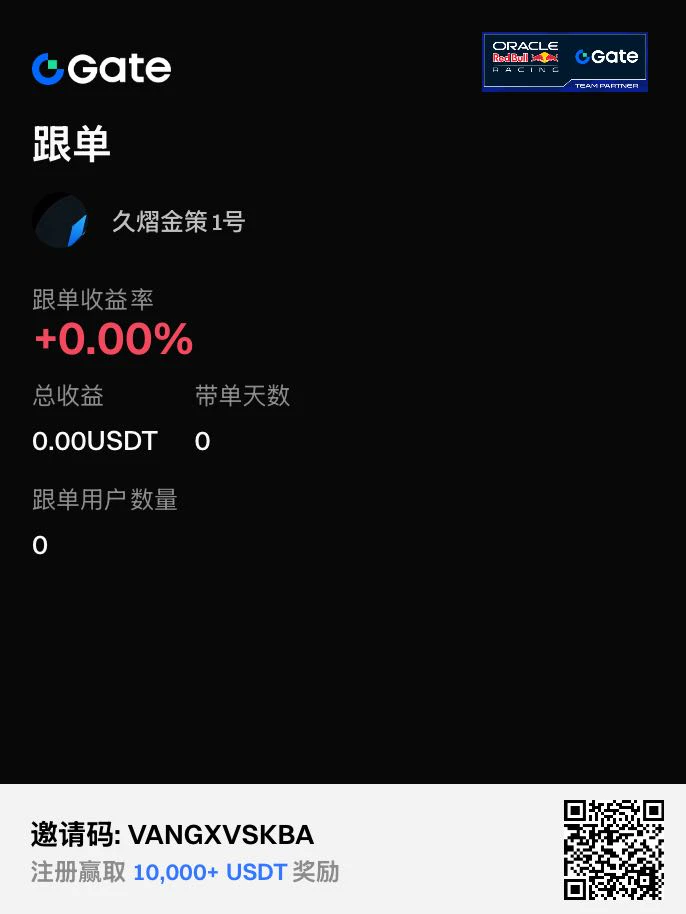
Official perks are here🎁
Scan the Gate QR code to enter the [CFD Copy Trading Profit Contest]
Find [Jiu Yi Jin Ce No. 1] on the leaderboard and click Copy
Share 12,000 USDT together
post-image
  • 1
October CPI Hides a Dangerous Signal! Core Inflation at 0.3% for Three Consecutive Months—What Does It Mean?

Overall inflation has cooled, but core inflation is like an employee who refuses to clock out!
U.S. headline CPI rose 0.4% month over month in October, down from 0.6% in September, which seems like an improvement. But core CPI rose 0.3% for the third consecutive month, and this reading was above market expectations.
This is what investors really need to pay attention to.
Food and energy prices are easily affected by short-term factors. Core CPI excludes these two categories, making it
How can you build a risk alert mechanism for a trading strategy to detect anomalies before losses escalate?

Many traders spend a lot of time researching entry signals, but rarely plan for one other thing in advance:

If a strategy starts to fail, how can I spot it in time?

By the time you start reviewing a strategy after consecutive losses and a major account drawdown, you may already have paid an unnecessary price.

A truly mature trading system needs not only entry and exit rules, but also a mechanism to detect anomalies, limit risk, and trigger a review.

I. First decide what to monitor,
post-image
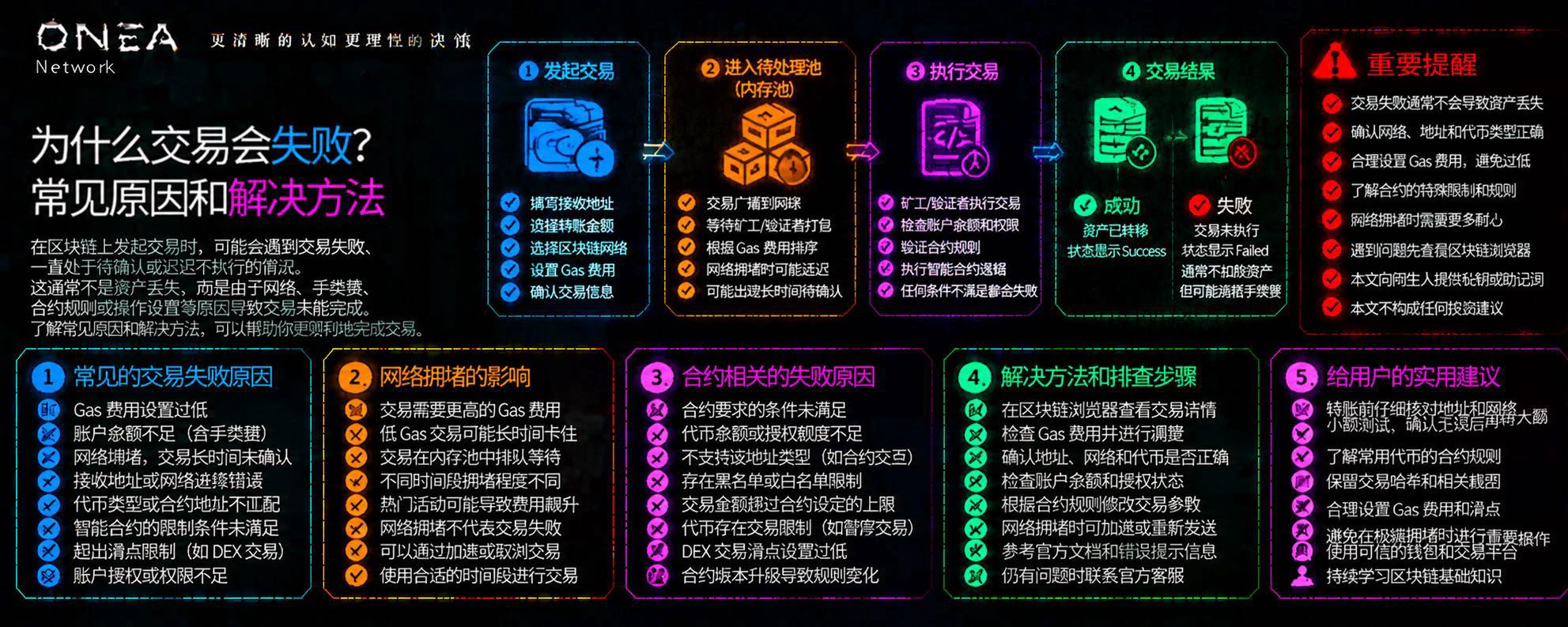
Why Do Blockchain Transactions Fail? From Gas Fees to Smart Contract Restrictions, a Complete Guide to Troubleshooting

In the Web3 world, many people have encountered situations like these:

You click Confirm, but your wallet keeps showing Pending; sometimes a transaction suddenly changes to Failed; other times, it takes a long time to complete, leaving you unsure whether to keep waiting or try again.

These situations may look similar, but their underlying causes can be very different.

Understanding why a transaction failed is more important than blindly raising the Gas fee or repeatedly cl
post-image
ETH-1.26%
Can 20 consecutive profitable trades prove that a trading strategy works?

Not necessarily.

If you don’t know the number of trades, the loss distribution, the risks taken, or whether the strategy has been repeatedly tuned, those 20 wins may not tell you much.

What really needs to be verified is not how much the strategy has made in the past, but whether it has an edge that can be repeated, explained, and tested.

I. Look at sample size, not just the win rate

Suppose two strategies both have a 70% win rate.

Strategy A has completed only 20 trades, while Strategy B has completed 1,000 trades
post-image
11.11$BTC $ETH | Market: Short-term bearish consolidation, awaiting a directional move

Short rallies
BTC: Intraday price action formed a “bottoming—rebound—pullback” pattern.
ETH: Weaker than BTC: low of 2,041.5 → rebound high of 2,074.4 → now pulling back to 2,052.5; the rebound was smaller and the pullback faster.
Likely to move lower after a weak rebound, testing BTC 73,200 / ETH 2,041

Short-term trading outlook: Short
BTC: Watch around 73,900; consider entering if upward momentum stalls
ETH: Watch around 2,065; consider entering if upward momentum stalls
Target levels:
BTC: First target
BTC-0.65%
ETH-1.23%
Load More

Join 40 M users in our growing community

⚡️ Join 40 M users in the crypto craze discussion

💬 Engage with your favorite top creators

👍 See what interests you

Trending Topics

GateGlobalComplianceExpansion

15.89k Views355 Discussing

Gate continues to expand its global compliance footprint, now covering 81 regulated jurisdictions across Europe, North America, Asia, and Oceania. From MiCA and U.S. state-level MTLs to Japan’s FSA, Dubai, and Australia-related regulatory approvals, global exchanges are entering a new stage of compliance competition. Do you think regulatory strength will become as important as products and liquidity for exchanges in the future?

USOctoberCPIBeatsExpectations

87.04k Views2.65k Discussing

AnthropicIPOValuationCouldReach1.4T

12.22k Views1.61k Discussing

View More