





Square
Following
Hot
News
Notifications
Profile
Share your thoughts
placeholder
Article
🏭 902 expropriated companies: Conindustria calls for their return as P2P watches closely
The Venezuelan Confederation of Industries (Conindustria) has a specific inventory: 902 companies that went from private ownership to state administration and that, in its view, should be returned to their original owners. The figure was provided by the association’s president, Tito López.
Three out of every four of these companies belong to the primary sector, with a strong focus on farms and businesses devoted to food production. The list also includes processed food plants, pharmaceutical laboratories,
post-image
📡 Signal Card | Source: Aesthetic_Meow
$LYN Long position, five key details: Time: just spotted, exact time not specified Entry: 0.02188 Target: 0.022256 / 0.022456 / 0.022631 Stop-loss: 0.021379
Funny, I only reposted TA’s $T trade earlier today, and here we go again—quite the prolific one 😂
Your sis just reposts these; whether to follow and how much to put in is up to you, dear. Check the stop-loss price before making a move.
Shared as a personal record, not investment advice. #NonfarmPayrollsAreComing, can employment data strengthen expectations for a December rate hike?
LYN-0.44%
TA+10.20%
Trenches
ZIG
Z
bade
b
ZIG
0x8c...1145
Market Cap
$.
Change
.
24h Vol
$.
Holders
.
BTC
B
bade
b
BTC
C5xp...pump
Market Cap
$.
Change
.
24h Vol
$.
Holders
.
CORLA
C
bade
b
CORLA
0xba...7777
Market Cap
$.
Change
.
24h Vol
$.
Holders
.
STONK
S
bade
b
STONK
6GmA...UNgx
Market Cap
$.
Change
.
24h Vol
$.
Holders
.
DESSA
D
bade
b
DESSA
npz2...pump
Market Cap
$.
Change
.
24h Vol
$.
Holders
.
The point is, you have to go to a store that has these systems.
#USStocksFaceHistoricSelloff
Wall Street just lived through one of its ugliest sessions in years.
On Thursday, November 5, 2026, the U.S. stock market suffered a brutal, broad-based selloff that erased the previous day’s strong post-midterm rally and then some. The S&P 500 plunged 4.4% — its worst single-day drop since the “Liberation Day” tariff shock in April 2025. The Dow Jones Industrial Average sank 1,833 points, or 3.4%. The Nasdaq Composite cratered 5.5% and officially entered correction territory, closing more than 10% below its October 6 record high.

The damage was concentrated in t
SPX500+0.19%
US30+0.38%
INDEX+0.00%
NVDA-9.33%
AMD-17.64%
  • 5
#WCTCS9 #$XAU
Gold at $4,100: Why Reclaiming It Matters More Than Hitting It

Gold is sitting just below a level that matters. XAUT, the gold-backed token I'm using as a spot proxy on Gate, last traded around $4,060.60 on the live snapshot, with a 24-hour range of $4,045.40 to $4,124.90. The latest completed daily candle closed at $4,073.30, up about 0.56% on the day and roughly 1.65% over seven days. The live 24-hour figure is slightly negative (about -0.54%), so the two readings disagree depending on the window. That gap is itself a signal: the market is undecided and buyers have not yet pu
XAUT+0.30%
$TRUMP Currently at 1.225, down 1.21% over 24H (1.113–1.293). The 1H outlook is relatively strong: RSI 48.60, with the current price above EMA20 at 1.2208; the 4H outlook is weak: RSI 18.35, with the current price below EMA20 at 1.3656. The 1H volume ratio is 0.27. If the price holds above the 1.293 resistance level, watch for continuation; if it breaks below the 1.113 support level, the short-term outlook turns weak. In the next review, check whether the price can hold above 1.293 and whether it can recover after losing 1.113. The two timeframes remain divergent, so short-term changes should
post-image
TRUMP-0.95%
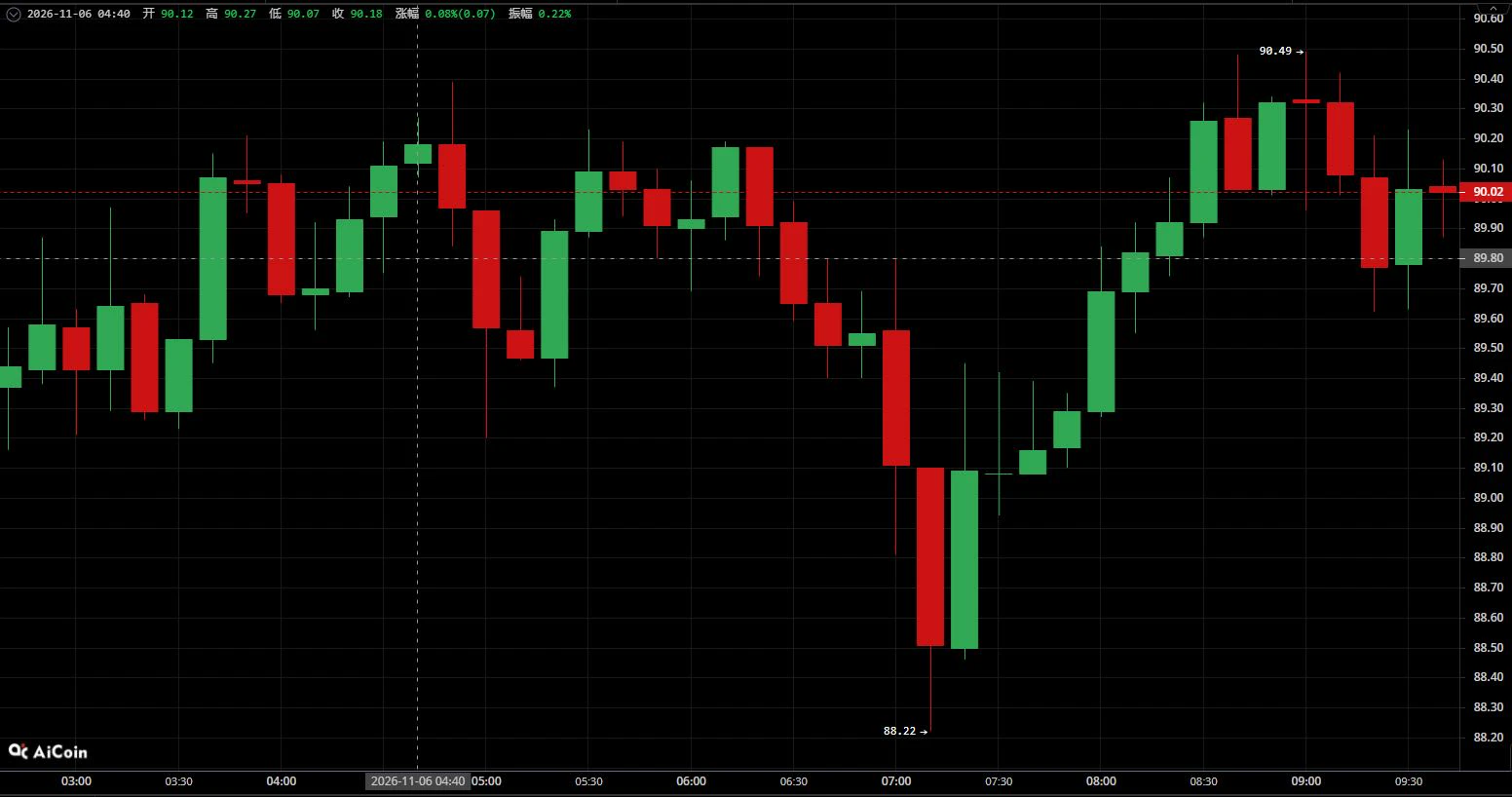
11.6 $SOL Today's outlook
After dipping to 88.22 overnight, the market entered an oversold recovery phase. The broader bearish trend remains unchanged, and rebounds are still under pressure with further downside potential. Prioritize shorting rallies, supplemented by short-term longs at support.
#美股史诗级抛售
- Support: 88.8-89.0, around 88.2
- Resistance: 90.3-90.5, 90.8-91.0
- Shorts: Enter in batches on a rebound to 90.3-90.5, stop-loss at 91.2, initial target 89.2, then 88.5 if support breaks
- Short-term longs: If price stabilizes after retesting 88.8-89.0, consider a small long position, sto
post-image
SOL-0.77%
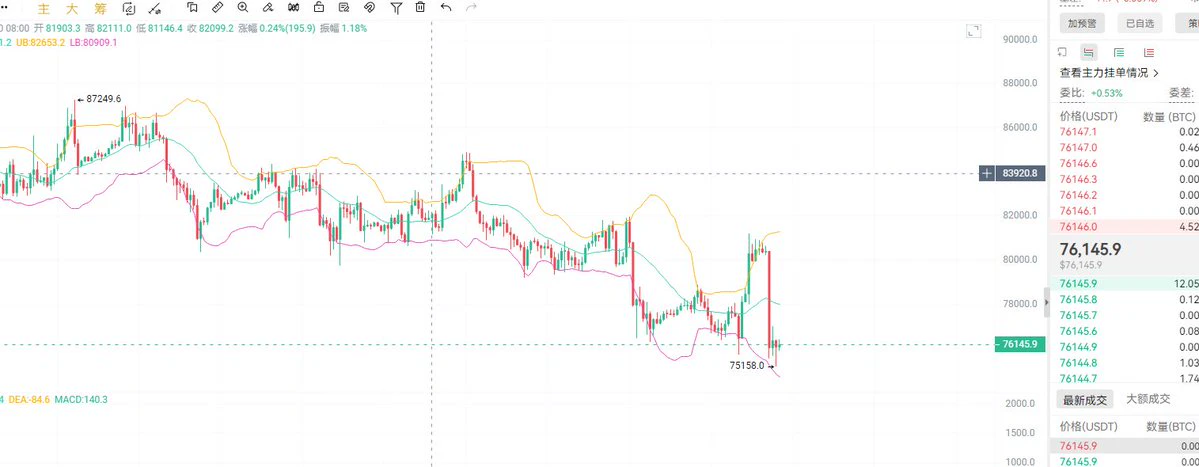
Really intense$BTC $GT $ETH $SOL ‌ ‌ ‌ ‌#美股史诗级抛售
post-image
BTC-0.65%
GT-2.24%
ETH-1.23%
SOL-0.74%
🚨 U.S. Midterm Elections Trigger AI Regulatory Storm: This Could Mark a Major Turning Point in the AI Investment Thesis
This is no ordinary pullback—the AI industry may be facing a major shakeup!
After the U.S. midterm elections, regulation of AI data centers suddenly became a market focus. According to an NBC Election Day poll, 76% of respondents opposed building new data centers in their communities!
Why? Because AI giants are making a fortune, while local residents worry about rising electricity bills, water consumption, and environmental strain!
Wall Street reacted fast!
📉 The Nasdaq plu
post-image
NAS100-0.07%
NVDA-9.33%
AMD-17.64%
BTC-5.05%
MSFT-3.65%
Don’t let the numbers mislead you; those figures don’t point to a market collapse, but rather to an entirely different structural mechanism.

The real story lies within a historic wave of selling—triggered in the artificial intelligence and semiconductor sectors following the U.S. midterm elections—that rippled across the Pacific all the way to Seoul. What unfolded on Thursday, November 5, 2026, was more than just a correction; it was a watershed moment—a stress test for the AI trade, challenging both its valuations and the underlying policy landscape.

Just how severe was the sell-off on Wall
post-image
User_any
The shift from green to red numbers on stock market screens is not the real news; the true story lies in the fundamental mental shift behind that red.

What unfolded in the U.S. markets on Thursday was not merely an ordinary sell-off, but a profound rupture in how the "artificial intelligence trade" is valued and how its risks are perceived. As the Nasdaq closed the day down 5.5%, the semiconductor index suffered its worst performance since 2020, plunging as much as 12% in a single session. Nvidia fell 9%, AMD and Micron dropped 17% each, and Qualcomm slid 12%—altogether, approximately $2.5 trillion in market capitalization evaporated.

What lies on the surface of this sell-off?

The spark was ignited by concerns regarding potential regulations on data centers and AI infrastructure following the election results. Investors began to price in the possibility that the construction of data centers—the backbone of the AI economy—might slow down. According to an analysis by one firm, roughly 30% of the projected data center capacity in the U.S. through 2028 is now at risk due to construction delays. A disappointing earnings outlook from a major chipmaker proved to be the final straw.

However, the core shift is that the AI narrative has evolved from a simple "growth story" into a rigorous test of profitability and financing. Valuations that ballooned during years of low interest rates can no longer be sustained by the same narrative in an environment of high interest rates and tighter financial conditions. The deleveraging process that funds have been undergoing for months was already a clear sign that this mental shift was well underway.

Why couldn't crypto escape this sell-off? The crypto market was not immune to this sell-off. On Thursday morning, Bitcoin was trading above $80,000, only to fall below $76,000 within hours, while Ethereum lost more than 8% of its value. The total crypto market capitalization shrank by approximately $137 billion.

The underlying cause is not merely a deterioration in general risk appetite, but also the tangible link crypto has forged with artificial intelligence infrastructure. Major Bitcoin miners are selling off their holdings to finance AI data centers; consequently, any instability in the data center narrative directly impacts Bitcoin supply and the economics of mining. Leveraged positions turned the decline into a wave of panic selling—roughly $370 million worth of leveraged crypto positions were liquidated in just one hour, the vast majority of which were bullish bets.

Is this a correction, or a new regime?

The market is currently pricing in two distinct scenarios. On one hand, some argue that this is merely a temporary correction—a liquidation of overheated AI-related positions. On the other, some believe that AI valuations remain detached from reality and that this does not represent a buying opportunity.

What matters is not so much which side is correct, but rather recognizing that the market is no longer driven by the same narrative. The triad of valuation, policy, and liquidity is being recalibrated.

The "AI trade" was fueled for years by low interest rates and abundant liquidity; now, high interest rates, tighter financial conditions, and regulatory uncertainty have entered the equation. The fact that 30% of data center capacity is at risk is not merely a construction issue; it is a matter that affects the timing of the entire supply chain.

On the crypto front, the liquidation of assets by miners and the unwinding of leveraged positions illustrate how macro shocks can trigger a chain reaction. In other words, a reassessment of valuations in the artificial intelligence sector can directly impact the supply of Bitcoin.

There is no single answer to whether this wave of selling marks the beginning of the end for the AI trade, or if it is simply a sharp "breather" within a long-term bull market.

What you should monitor is whether valuations are being validated by profitability, how the regulatory framework regarding data center permits takes shape, and whether spot demand emerges once leveraged positions have been cleared out. In the face of macro shocks, the narrative shifts rapidly, but it takes time for the true direction of capital flows to become clear.

This content is for informational purposes only and does not constitute investment advice.

#USStocksFaceHistoricSelloff
#Gate股票畅聊季 #GateStockTalkSeason #GateSquareTradingChallenge
#ShareWeekly
$US30 $NAS100 $AMD $MU $NVDA

repost-content-media
MU-17.23%
AMD-17.64%
SNDK-22.24%
TSLA-10.84%
INTC-10.58%
  • 11
#民主党赢得美国两院 #美股财报季 𝗗𝗲𝗺𝗼𝗰𝗿𝗮𝘁𝘀 𝗪𝗶𝗻 𝗕𝗼𝘁𝗵 𝗖𝗵𝗮𝗺𝗯𝗲𝗿𝘀, 𝗮𝗻𝗱 𝘁𝗵𝗲 𝗘𝗹𝗲𝗰𝘁𝗶𝗼𝗻 𝗥𝗮𝗹𝗹𝘆 𝗟𝗮𝘀𝘁𝗲𝗱 𝗢𝗻𝗲 𝗗𝗮𝘆: 𝗔 𝗙𝗼𝘂𝗿-𝗗𝗮𝘆 𝗧𝗶𝗺𝗲𝗹𝗶𝗻𝗲 𝗼𝗳 𝘁𝗵𝗲 𝗥𝗲𝘀𝘂𝗹𝘁 𝗮𝗻𝗱 𝘁𝗵𝗲 𝗠𝗮𝗿𝗸𝗲𝘁𝘀

Tuesday, November 3: the vote

Democrats won the Senate and the House. In the Senate they hold at least 54 seats to 44, after flipping seven Republican seats: Texas, Kansas, South Carolina, Iowa, Ohio, Maine and North Carolina. They held Georgia, New Hampshire, Michigan, New Jersey and Illinois, and Republicans held Florida and Kentucky. Alaska and Mississippi are s
post-image
Falcon_Official
#DemocratsWinBothChambers Divided Government Arrives in Washington
The 2026 midterm elections have changed the balance of power in Washington. According to an Associated Press tally reported by NPR, Democrats have won majority control of the U.S. Senate. That ends two years of unified Republican control and sets up divided government with President Trump in the White House during the final two years of his second term.

Senate: Where the count stands

NBC News reported Democrats at 54 seats and Republicans at 44, with two races still uncalled, in Alaska and Mississippi. The Mississippi race between Scott Colom and incumbent Cindy Hyde-Smith was separated by only a few dozen votes in the latest count, so it can still change. Before the election, Republicans held a 53 to 47 majority.

Among the confirmed results, Josh Turek defeated Ashley Hinson in Iowa, and Roy Cooper defeated Michael Whatley in North Carolina. Democrats also held Georgia, where Jon Ossoff won re-election, and New Hampshire, where Chris Pappas was declared the winner.

House: The count is still moving

NBC News projected Democrats at 258 seats and Republicans at 177, against the 218 needed for a majority. Other reports from the same night described the count as too early to call. Final certification may take days or weeks, so treat the exact House margin as provisional until official results are in.

What divided government changes

Democratic control of the Senate gives the party a say over which judicial and executive nominees receive floor votes, along with a stronger oversight role. NPR notes that the new majority sets the stage for investigations that could dominate the rest of Trump's term. For policy, this usually means fewer major bills passed without bipartisan support, and more fights over budgets, nominations and subpoenas.

Taxes, tariffs and spending

Divided government typically slows large tax changes and new spending programs, since legislation requires agreement in both chambers. Tariffs have largely been set through executive action, so their path depends less on Congress, although lawmakers can still influence trade policy through legislation, hearings and funding decisions. Government spending will likely become a contentious area in budget talks. I did not verify specific proposals for the coming session, so these points describe the structure of divided government rather than a forecast of any particular bill.

Regulation and crypto policy

CoinShares has said that progress on U.S. crypto market-structure legislation may slow under a Democratic-controlled Congress. Bitcoin may be less exposed to that risk than exchanges and token issuers, which face more direct regulatory scrutiny. For the crypto sector, the practical question is how quickly a regulatory framework can pass, not whether it can pass at all.

Markets on election week

U.S. equities rallied after the result. Bitcoin dropped to about $75,600 during the count, then recovered above $80,000 on November 4. That recovery came despite spot Bitcoin ETFs posting about $1.16 billion in net outflows across three sessions, so the rebound is not yet backed by steady institutional demand. The market reaction looks like relief that uncertainty is clearing, rather than a verdict on the policy outlook.

Treasury yields and the dollar

I did not verify yield or currency moves for this session, so I will not quote them. Divided government is often read as a brake on large spending, which could ease pressure on long-term yields. But the effect depends on deficits, inflation and Federal Reserve policy, and those can outweigh the political signal. The same applies to the dollar, which responds more to rate expectations than to the composition of Congress.

Sectors to watch

Sectors most sensitive to policy shifts include healthcare, energy, defense, financials and technology. Manufacturers and importers depend on tariff policy. Banks, crypto firms and large technology platforms are most exposed to regulatory decisions. Each sector still moves mainly on its own earnings and fundamentals, so election results alone are a weak guide to individual stocks.

A neutral market outlook

Divided government usually means fewer large legislative swings, more oversight and more gridlock. Markets often prefer predictability, and the immediate reaction has been positive. But the near-term policy path depends on negotiations that have not yet started. The election removes one source of uncertainty and adds another, which argues for balanced positioning rather than a strong directional bet.

Watch the Alaska and Mississippi calls, the final House count, ETF flows into Bitcoin, and any early budget or tariff proposals from either side. The bigger effect of this election will be on how policy gets made over the next two years, more than on any single market in the first few days.
repost-content-media
  • 3
#USStocksFaceHistoricSelloff
When Wall Street Breaks, Crypto Feels the Pressure: Understanding the November 5 Market Selloff

November 5 was a serious reminder that financial markets do not operate in isolated environments. When confidence weakens across major technology stocks, semiconductor companies and growth-oriented investments, the pressure can quickly spread into the cryptocurrency market.

What happened yesterday was not an ordinary red trading session. The Nasdaq Composite plunged 5.52%, the S&P 500 lost 4.36%, and the Dow Jones declined 3.44%. The Philadelphia Semiconductor Index s
MU-17.23%
NVDA-9.33%
AMD-17.64%
  • 7
  • 1
ONEA Community Public Statement: Code Transparency, Contract Permissions, Security Audits, and the Project’s Actual Progress

Recently, we have seen more and more questions from the community that deserve serious discussion.

Some want to view ONEA’s GitHub code repository and commit history; some are concerned about whether the smart contracts have been audited, what permissions administrators hold, and what multisig and contract upgrade mechanisms actually mean; others want to know how far the project has progressed, what has been accomplished, and what is still part of future plans.

Some f
post-image
Yesterday’s sell-off was reportedly caused by Trump dumping most of his BTC. During the decline, Coinbase didn’t see strong aggressive selling pressure, and there weren’t large inflows of coins from external sources either. It feels like the market was simply dragged down by U.S. stocks. BTC and ETH have been stronger than U.S. stocks. Yesterday, BTC only fell to around 75,200, with the next support at 74,900. If that level breaks decisively, it could drop to 73,000. The 1-hour chart is due for a bounce, so you could take a short-term long here. Don’t get too greedy right now, or you could eas
post-image
BTC-0.67%
ETH-1.26%
COING-1.76%
🏭 5-Year Industrial Plan: The P2P Read on US$17 Billion
Executive Vice President and Acting President Delcy Rodríguez set a target of restoring 100% of the country’s installed industrial capacity within five years. She made the announcement during a tour of a pharmaceutical plant in Miranda.
The figures behind the announcement: US$17 billion in financing from multilateral organizations, split between the public and private sectors, and a 31% decline in imports of finished products, alongside increased purchases of raw materials from abroad. The government’s plan has three pillars: acceleratin
post-image
#Gate上线台股交易 The Stock Contract Market Is Growing Faster Than Its Risk Controls
Gate says its stock contract lineup now covers more than 500 stocks, spanning US, Hong Kong, Korean, Japanese and Taiwanese names. It also reports that SPCX, SKHYNIX, SNDK and SOXL rank near the top for open interest, and that a first batch of 40 assets is live in its Innovation Zone with leverage up to 75x. I could not independently verify those figures, so treat them as Gate's own claims. The bigger question is what that growth means for risk.

The price action that makes the question urgent

The feed's 5 November
SPCX+0.20%
SKHYNIX+1.41%
SNDK-22.24%
NVDA-9.33%
  • 3
BTC market update
live-cover
LIVE2,088
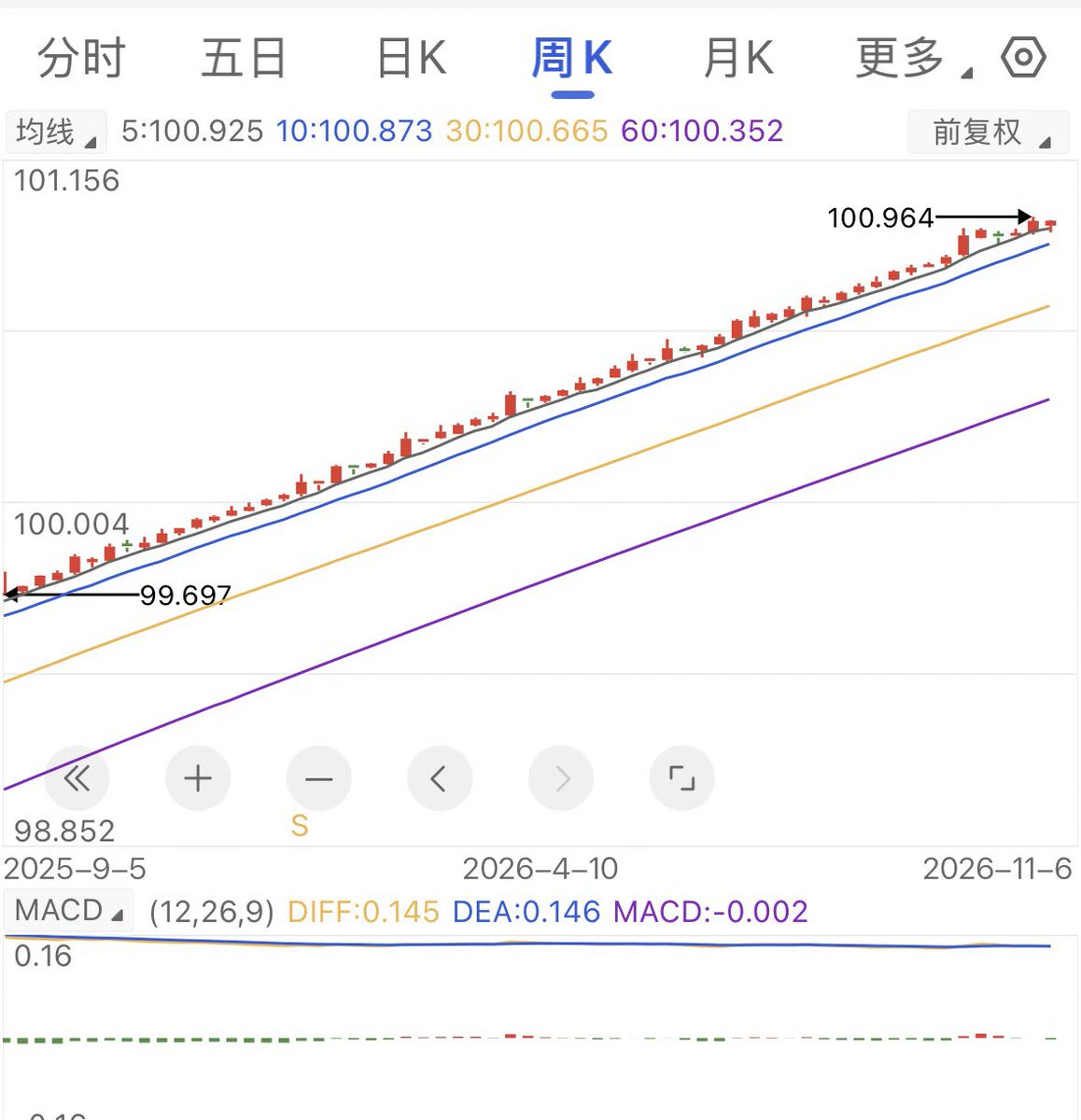
Who says the stock market is all down?
Just look at this weekly chart 🫣
post-image
Load More

Join 40 M users in our growing community

⚡️ Join 40 M users in the crypto craze discussion

💬 Engage with your favorite top creators

👍 See what interests you

Trending Topics

USStocksFaceHistoricSelloff

1 Views3.45k Discussing

U.S. stocks suffered a sharp selloff on Thursday, with the Nasdaq closing down more than 5% and the Philadelphia Semiconductor Index falling over 12%. AI and chip stocks including $NVDA and $AMD were hit especially hard. Markets are reassessing AI valuations, data-center spending and future returns. Is this just short-term deleveraging, or the start of a deeper correction in the AI trade? Which sectors are you watching next?

GateLaunchesPoSECProofOfSecurity

10.9k Views561 Discussing

USNonfarmPayrolls

8.57k Views3.97k Discussing

View More