Share your thoughts
placeholder
Article
#GateSquareMidAutumnReunion
Crypto markets rarely move as one single group. Capital can rotate from Bitcoin to Ethereum, from large caps to mid caps, and eventually toward smaller speculative assets. 🔄📊
Understanding this rotation can sometimes be more useful than watching individual coins.
When Bitcoin leads the market, investors may be seeking relative safety within crypto. If BTC begins moving sideways while other major assets strengthen, risk appetite could be increasing.
That is where I start watching:
📌 BTC dominance
📌 ETH/BTC relative performance
📌 Altcoin trading volume
📌 Stable
post-image
BTC+2.40%
GT+0.97%
ETH+1.21%
#GateMeme
🐸 Frog Memes in Crypto: Hidden Gems or Forgotten Frogs?
Meme coins are often dominated by dogs, cats, and whatever character is trending next.
But there is another meme category that has been around for years:
🐸 Frogs.
The interesting part?
In 2026, not many frog-themed meme coins remain highly visible compared with DOGE, SHIB, or other animal narratives.
That makes the frog category interesting to me — not because every frog meme is a hidden gem, but because survival itself can become part of the story.
🐸 What Frog Memes Are Still Around?
Some of the better-known frog-themed nam
Just discovered $PONS was bottoming
I thought i couldn't long it because no one had listed it, but i discovered Variational actually did
That's why having a big catalog is important, because i can trade whatever i want depending on the opportunity
post-image
PONS+8.45%
DeFi Risk: A Quick Glossary of Terms You'll Actually See
A short reference for the risk terms that show up most often in DeFi discussions:
Impermanent Loss — The value difference between holding assets versus providing them to a liquidity pool, caused by price divergence between the paired tokens.
Smart Contract Risk — The possibility that a bug or exploit in the protocol's code leads to loss of funds, regardless of market conditions.
Oracle Risk — The danger that a price feed a protocol relies on is delayed, manipulated, or wrong, triggering incorrect liquidations or mispriced trades.
Bad Deb
post-image
SOL+2.42%
ONDO+2.31%
  • 6
  • 1
“You can’t be unlucky for 365 days.”
Crypto traders: “Watch me.” 💀😂
One day you’re up 30%, the next day the market takes it all back.
Stop loss hit. Liquidation avoided. Trade reversed.
But somehow… we’re still here. 😭📉📈
The real skill in crypto isn’t winning every trade — it’s surviving long enough to catch the next one.
Who else can relate? 😂👇
#CryptoTraders #CryptoTrading #TraderLife
post-image
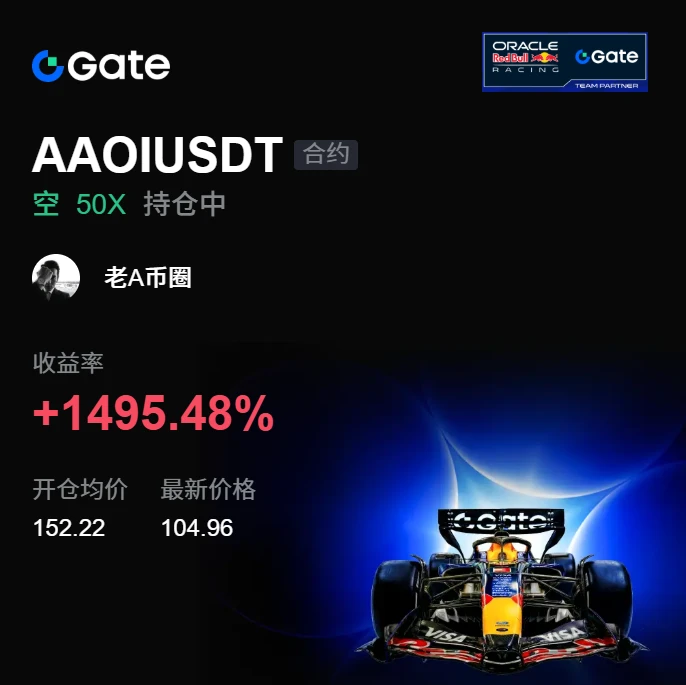
I did nothing—just went to the bathroom, and when I came back, the candlesticks had already done the work for me 😅 During the repeated intraday swings, I said that every push upward was always just short of enough, the rebound was weak, and the volume simply hadn’t followed. When I opened the chart this morning, I opened a short at 0.2050, and then today played out like this, with 0.1823 giving the answer directly. +530.91%—it was truly sluggish at first, but the result is truly satisfying. In terms of execution, don’t be greedy: close out +530.91% first; only profits in your pocket are truly
post-image
SNDK-1.12%
ADA+2.40%
market overview
live-cover
LIVE43
📈 The Gate ETF daily gainers list is here!
FIL5L leads with +139.43%, followed closely by LAB3S, FIL3L, and AR3L🔥
Did you catch this move? Which ETF are you most bullish on next? Keep chasing, or wait for a pullback?
✍️ Not sure what to post today? Come chat about ETFs!
Include #每周来晒 to share your market outlook, trading ideas, or portfolio reviews. Post to earn points, win weekly rewards, and get extra exposure for quality content.
👉 Join “Weekly Showcase”: https://www.gate.com/campaigns/6244
Which ETF will be the next top gainer? Share your prediction 👀
#WeeklyShowcase
FIL5L-17.36%
LAB3S+70.84%
FIL3L-9.59%
AR3L-3.13%
#GateSquareMidAutumnReunion
The interesting part of this market isn’t just that stocks are falling — it’s how quickly the same fear can move from Wall Street into crypto.
I’m watching the next few sessions very closely because we have several major catalysts hitting the market at almost the same time: AI stocks are under pressure, oil is above $100, Treasury yields are elevated, and the Federal Reserve decision is coming on September 16.
Today’s move in technology stocks is already showing how sensitive sentiment has become. Nasdaq-100 futures dropped around 1.72%, while major AI and semicon
post-image
MrFlower_XingChen
#GateSquareMidAutumnReunion
The interesting part of this market isn’t just that stocks are falling — it’s how quickly the same fear can move from Wall Street into crypto.
I’m watching the next few sessions very closely because we have several major catalysts hitting the market at almost the same time: AI stocks are under pressure, oil is above $100, Treasury yields are elevated, and the Federal Reserve decision is coming on September 16.
Today’s move in technology stocks is already showing how sensitive sentiment has become. Nasdaq-100 futures dropped around 1.72%, while major AI and semiconductor names came under pressure after fresh concerns about the pace of AI development. Nvidia was down more than 2% in premarket trading, while AMD and Intel also saw significant weakness.
For me, this is important because the AI trade has been one of the biggest drivers of the broader stock-market rally. When traders start questioning future AI spending, valuations or growth expectations, the impact doesn’t stay inside one sector. It can quickly affect the Nasdaq, S&P 500, semiconductor stocks and overall risk appetite.
Then comes oil.
Brent crude is trading around $108, while WTI is above $103. Higher energy prices create another inflation problem at exactly the wrong time. If oil stays elevated, investors have to consider the possibility that inflation remains sticky for longer, which can influence how aggressive the Fed needs to be.
And that brings us to the biggest catalyst of the week:
September 16 — Federal Reserve interest-rate decision.
The FOMC meeting is underway September 15–16, with the rate decision and economic projections scheduled for 2:00 PM ET on September 16, followed by the Fed press conference at 2:30 PM ET.
Markets are currently assigning a very high probability to a rate hike. That expectation itself is already influencing stocks, the dollar, bond yields and crypto. The important thing, however, may not be the decision alone. The Fed’s language and forward guidance could matter even more.
This is where FOMO can become a real market force.
Imagine the Fed comes across as less hawkish than traders fear. If Nasdaq support holds, AI stocks stabilize and yields start falling, traders who were sitting on the sidelines may suddenly feel they are missing the next move.
That creates upside FOMO.
Money can rush back into NVDA, AMD, MU, INTC and other high-beta technology names, potentially turning a relief bounce into a much stronger rally.
And crypto can react to exactly the same change in risk sentiment.
Bitcoin is currently around $77.6K and remains below the important $80K psychological level. Recent market coverage shows BTC has struggled to regain that area while Fed-hike expectations and ETF outflows have created additional pressure.
If stocks recover after the Fed and BTC reclaims $78K–$80K with volume, crypto FOMO could become very interesting. Traders who missed the first move may start chasing BTC, and if Bitcoin breaks resistance, that momentum can eventually rotate into ETH and higher-beta altcoins.
But FOMO can work in the opposite direction too.
If the Fed delivers a more hawkish message, oil remains above $100 and Nasdaq breaks important support, traders may rush to reduce risk. That can create downside FOMO — panic selling and forced positioning — across both stocks and crypto.
So I’m not treating this as a simple “stocks down, crypto down” situation.
I’m watching the chain reaction:
Fed decision → yields → Nasdaq/AI stocks → risk sentiment → BTC → altcoin FOMO.
For me, September 16 is the key date, but the real signal will be the market’s reaction after the decision.
If buyers absorb the bad news and start reclaiming resistance, that tells me something very different from a market that keeps selling every bounce.
Right now, I’m watching Nasdaq, S&P 500, NVDA, AMD, MU, BTC and ETH.
This is one of those weeks where the first move may be a trap.
I want to see where the liquidity actually goes before deciding which direction deserves the trade.
@GateSquare @Gate_Square
$BTC ‌ ‌
repost-content-media
BTC+2.38%
$KIOXIA is preparing a U.S. ADR listing for April–June 2027
Kioxia wants to take advantage of the strength in the memory market to attract foreign capital
Kioxia is discussing long-term agreements with data center and enterprise customers, some extending beyond 2029, and wants about 50% of its projected 2028 shipment volume covered by these agreements
Enterprise SSD is becoming a larger growth driver. Its CM Series has already been adopted and qualified by major enterprise and hyperscale customers, while Kioxia is developing a Super High IOPS SSD based on XL-FLASH to meet Nvidia specifications
post-image
NVDA-2.77%
SNDK-4.54%
[New Streamer] Market overview
live-cover
LIVE28
Every big drain in crypto recently had the same script “somebody had time”
Multisig and MPC didn’t save half the things we watched blow up.
The committee just sat there long enough to get hunted.
@DeepSafe_AI’s CRVA doesn’t leave that window open.
> verification committee gets reshuffled every 10 minutes
> old keys get destroyed
> new keys get made
So even if an attacker grabs a few shards, the next epoch resets their progress to zero.
That’s the part most people skip when they just say “we rotate keys.”
rotation is not the point.
killing the old committee before an attack can finish is the po
post-image
#KoreaStocksPlunge3AtOpen
Korea's stock market just got a serious reality check.
The KOSPI opened September 14 at 6,692.61, down 3.14%, after closing Friday at 6,909.91. The sell-off quickly pushed the index down toward the 6,650 area, with semiconductor heavyweights taking much of the pressure.
This is not just a random red day.
The first thing I’m watching is SK hynix and Samsung Electronics, because the KOSPI is heavily exposed to the semiconductor and AI trade.
SK hynix was down around 5.3%, while Samsung Electronics fell roughly 3.7% in early trading. That tells me the market is not si
MrFlower_XingChen
#KoreaStocksPlunge3AtOpen
Korea's stock market just got a serious reality check.
The KOSPI opened September 14 at 6,692.61, down 3.14%, after closing Friday at 6,909.91. The sell-off quickly pushed the index down toward the 6,650 area, with semiconductor heavyweights taking much of the pressure.
This is not just a random red day.
The first thing I’m watching is SK hynix and Samsung Electronics, because the KOSPI is heavily exposed to the semiconductor and AI trade.
SK hynix was down around 5.3%, while Samsung Electronics fell roughly 3.7% in early trading. That tells me the market is not simply reducing overall equity exposure — investors are specifically reassessing some of the biggest winners from the AI-driven semiconductor cycle.
And there is a very clear catalyst behind that shift.
AI sentiment suddenly changed
Anthropic CEO Dario Amodei recently called for AI companies to slow the pace of development because of safety and ethical risks. OpenAI CEO Sam Altman and xAI's Elon Musk have also backed greater caution around AI development.
The market reacted immediately.
Asian AI-linked stocks were hit across the board, with SoftBank falling 13.2%, Kioxia 9.8%, Tokyo Electron 3.7%, Samsung 3.7% and SK hynix 5.3%, according to Reuters.
But I don't think this means the AI boom is suddenly finished.
The market is asking a different question:
How fast can AI infrastructure spending continue if the industry becomes more cautious about developing increasingly powerful models?
That distinction matters.
Because semiconductor companies don't only depend on today's AI headlines. Their long-term story is still connected to data centers, memory demand, advanced computing and the broader AI infrastructure buildout.
In fact, Reuters reported today that ASML's advanced lithography machines remain in extremely strong demand, with major chipmakers including Samsung and SK hynix preparing to adopt next-generation High-NA technology.
So the fundamental AI story hasn't disappeared.
The valuation and expectations are simply being tested.
Then oil adds another problem
At the same time, Brent crude has moved back above $107, with geopolitical tensions and disruptions around important Middle East oil routes increasing supply concerns. Higher oil prices create another problem for equity markets because they can push inflation higher and make monetary policy more restrictive.
That creates a difficult combination for Korean equities:
AI uncertainty + semiconductor selling + expensive oil + higher-rate fears.
And Korea is particularly sensitive because of its enormous semiconductor exposure.
There is another development worth watching too.
Samsung Electronics and SK hynix reportedly rejected a 25 trillion won ($18.7 billion) upfront-payment proposal from Korea Electric Power Corp. designed to secure electricity supplies for future semiconductor mega-clusters.
I don't see this as the main reason for today's KOSPI sell-off, but it highlights something important: Korea's next semiconductor expansion will require enormous amounts of power, infrastructure and capital.
My KOSPI view
Friday's close was 6,909.91, while today's opening was 6,692.61.
That means the psychological 6,900–7,000 zone is now the first major area bulls need to reclaim if they want to prove that today's sell-off was only a sharp correction.
On the downside, I'm watching the 6,650 area first, because that is where today's early selling found some reaction.
If buyers can defend that region and KOSPI starts recovering toward 6,900, the market could stabilize.
But if 6,650 breaks decisively while Samsung and SK hynix continue falling, the next thing I'd watch is whether the index starts moving toward the 6,500 area.
I wouldn't blindly buy the first red candle.
I'd rather see semiconductor leaders stabilize first.
My takeaway
For me, today's KOSPI move is not simply:
“Korean stocks are down 3%.”
It is the market repricing several things at the same time:
AI expectations.
Semiconductor valuations.
Oil-driven inflation risk.
And interest-rate expectations.
That is why this move deserves attention.
The interesting part is that the long-term semiconductor story hasn't necessarily broken.
But when expectations become extremely high, even a small change in the narrative can create a very large move in price.
So I'm watching Samsung, SK hynix, oil and the 6,650 KOSPI area more closely than the headline itself.
If the chip leaders stabilize, KOSPI can recover quickly.
If they keep making lower lows while oil remains elevated, today's sell-off could become something much more serious.
For now, I’m waiting for confirmation — not chasing the dip.
Market analysis only, not financial advice.
#GateMeme #GateTrenchesZeroGas #AppleEvent @GateSquare @Gate_Square
repost-content-media
#GateSquareMidAutumnReunion
🍎 One of the world’s most powerful brands is about to put its newest products into customers’ hands — and for me, the real story starts on Friday.
Apple’s iPhone 18 Pro and iPhone 18 Pro Max officially go on sale on September 18. Pre-orders have already started, and this product cycle also brings new Apple Watch and AirPods models.
But honestly, I’m not interested in Apple simply because another iPhone is launching. Apple does this every year.
What makes this launch interesting to me is the question behind it:
How strong is the real demand?
The iPhone 18 Pro start
MrFlower_XingChen
#GateSquareMidAutumnReunion
🍎 One of the world’s most powerful brands is about to put its newest products into customers’ hands — and for me, the real story starts on Friday.
Apple’s iPhone 18 Pro and iPhone 18 Pro Max officially go on sale on September 18. Pre-orders have already started, and this product cycle also brings new Apple Watch and AirPods models.
But honestly, I’m not interested in Apple simply because another iPhone is launching. Apple does this every year.
What makes this launch interesting to me is the question behind it:
How strong is the real demand?
The iPhone 18 Pro starts at $1,199, while the Pro Max starts at $1,299. Apple has upgraded the lineup with its A20 Pro chip, a new camera system, variable-aperture main camera technology and battery improvements.
But as a trader, I don't make a decision just because the specifications look impressive.
I want to see whether people are actually willing to pay the higher price and upgrade.
That is where the real market signal will come from.
If demand remains strong after launch, delivery times stay tight, early sales beat expectations and investors start raising their estimates for Apple's future revenue, then the story becomes much bigger than a successful product launch.
It could become a fresh reason for the market to reprice AAPL.
But there is another side to this.
Apple is already one of the most heavily followed companies in the world, which means expectations are high before the first customer even walks into a store.
And this is something I’ve learned from trading:
Good news does not automatically mean a good trade.
If the market has already priced in excellent sales, even strong numbers can produce a disappointing reaction.
That is why I will be watching the market’s reaction more closely than the headlines.
Apple has also made a much bigger strategic move this time by introducing its first foldable iPhone, the iPhone Duo.
The device starts at $1,999 and is scheduled to go on sale October 23.
For me, this is more important than it might look at first.
Apple is entering a category where other manufacturers have already spent years experimenting with foldable hardware.
But Apple has a huge ecosystem and an enormous installed customer base.
If the company can make foldables feel practical enough for mainstream consumers, this could eventually create another premium upgrade cycle.
At the same time, I’m paying attention to Apple's AI strategy.
Smartphones are no longer competing only on cameras, processors and battery life.
AI is becoming part of the reason consumers consider upgrading.
Apple is pushing new AI capabilities into its latest hardware, and if those features become genuinely useful in everyday use, they could help Apple convince existing users that upgrading is worth the money.
But again, I don't want to confuse a good product with a guaranteed stock rally.
Those are two completely different things.
My approach is simple.
I want to watch price action, volume, demand and expectations together.
If AAPL breaks an important resistance level with strong volume after the launch and the market receives the sales data positively, that would give me more confidence in a continuation move.
If the stock spikes on launch excitement but volume fades and price falls back below resistance, I would rather wait than chase it.
And if Apple reports strong demand but the stock still sells off, I would pay even more attention.
Why?
Because that could mean investors were expecting even more.
This is one of the biggest lessons I’ve learned from markets:
The market doesn't trade what happened. It trades the difference between what happened and what was expected.
That is why Friday matters.
I'm not just watching how many people talk about the new iPhone.
I'm watching whether actual demand can justify the expectations already built into Apple's valuation.
There is also another layer to this launch.
This is the first major product cycle under John Ternus as Apple CEO, following Tim Cook's departure from the CEO role earlier this month. The company is simultaneously pushing its iPhone business, expanding into foldables and trying to make AI a more important part of its hardware strategy.
So I don't see this as just another annual iPhone refresh.
I see it as an early test of Apple's next chapter.
My personal strategy is therefore not to buy Apple simply because the launch looks impressive.
I want confirmation.
Strong demand + positive market reaction + expanding volume would make me more interested in the bullish side.
Weak demand + disappointing expectations + heavy selling would tell me to stay cautious.
And if the stock stays stuck in a range, I have no problem waiting.
There is no reward for forcing a trade when the market hasn't shown its direction yet.
For me, the most important numbers over the next few weeks won't be the number of launch-day posts on social media.
I'll be watching actual sales, delivery times, customer demand, analyst estimates, margins and Apple's forward guidance.
Those numbers will tell us much more about the future than the launch event itself.
Apple has the brand.
Apple has the ecosystem.
Apple has millions of loyal customers.
Now the question is whether this new product cycle can turn that strength into another meaningful growth phase.
**The product launch is Friday.
The market test comes after.**
And personally, I would rather follow the data than trade the hype.
#GateMeme #GateTrenchesZeroGas #GateLaunchesTrenchesWith0GasFee #AppleEvent @GateSquare @Gate_Square
$AAPL
repost-content-media
AAPL+0.65%
#Gate24HFuturesOpenInterestTops$11.479B
Gate’s $11.479B Futures Open Interest: The Bigger Story Behind the Number
A single market metric can sometimes reveal much more than it appears to show.
Gate’s latest futures data shows open interest at approximately $11.479 billion, alongside around $18.47 billion in 24-hour futures volume. In my view, these numbers deserve attention because they highlight something bigger than short-term trading activity: the scale of participation that Gate is attracting across its derivatives ecosystem.
But before looking at what this could mean for Gate, it is impo
BTC+2.38%
ETH+1.21%
SOL+2.41%
XRP+8.29%
BNB+0.64%
  • 1
$FIL Signal】Long + catch the wick on the 1H retest of EMA20
$FIL 4H RSI 73.51 is moving sideways at high levels, while pending orders are accumulating below the 1H Bollinger middle band at 0.9839. The order book bid/ask ratio is 0.72, with sell-side density outweighing buy-side density. The 1H MACD histogram at -0.0048 has turned negative and is expanding, while the 4H bullish histogram bars continue to contract, indicating waning upward momentum. 0.9759 is the short-term dividing line.
🎯Direction: Long
⚡Entry/Limit Order: 0.98204 - 0.98500
🛑Stop Loss: 0.97515
🚀Target 1: 0.99978
🚀Target 2
post-image
FIL-4.07%
$XAU /USDT is range-bound, but one overlooked 1h reading hints the next move could be brutal.

$XAU /USDT - SHORT

Trade Plan:
Entry: 4313.3 – 4321.3
SL: 4355.7
TP1: 4288.5
TP2: 4269.3
TP3: 4240.5

Why this setup?
Why now? The daily trend is range, which means $XAU /USDT has been drifting sideways, yet the 1h ATR of 16.007958 shows that real hourly volatility is still alive. The 15m RSI at 60.15 tells us momentum is not exhausted, so a short from the 1h price of 4317.3 can ride the range down. The entry zone between 4313.3 and 4321.3 sits right on that 1h price, offering a clean trigger. If
XAU-1.04%
Are you also hard core believer of ethereum:0xe0f63a424a4439cbe457d80e4f4b51ad25b2c56c
post-image
ETH+1.21%
Load More

Join 40 M users in our growing community

⚡️ Join 40 M users in the crypto craze discussion

💬 Engage with your favorite top creators

👍 See what interests you

Trending Topics

GateTopsGlobalGrowth

24.17k Views528 Discussing

According to the latest CryptoQuant data, Gate's spot trading volume ranks top 3 globally, with the fastest growth worldwide, while futures trading volume growth also ranks top 3 globally. Market activity is accelerating back, and Gate's growth momentum continues to lead. Market heat is back — are you mainly trading spot or futures these days? [👉 Full report:](https://cryptoquant.com/insights/research/6aa7aaca26ed15760f9ca834)

GateUSExpandsTo37StateLicenses

22.31k Views326 Discussing

AnthropicPicksNasdaqForIPO

72.41k Views2.74k Discussing

View More