

Share crypto content and earn up to 60% commissions through content mining.
placeholder
gatefun
#JulyCPIInLineAsInflationCools
July CPI In Line Signals Critical Inflection Point for Monetary Policy and Market Valuations. The release of July Consumer Price Index data matching consensus expectations marks a pivotal moment in the current economic cycle, confirming that inflation is cooling at a pace sufficient to validate shifting central bank narratives without triggering immediate recessionary alarms. For investors and business leaders, this "in-line" print is arguably more significant than a dramatic beat or miss because it solidifies the baseline for forward-looking models, reducing bi
post-image
post-image
  • Reward
  • 7
  • Repost
  • Share
ChintuBhai:
LFG 🔥
View More
new steamer market updates
gate liveLIVE
1,145
  • Reward
  • Comment
  • Repost
  • Share
The market is expected to remain range-bound between 63300-64000 during the day.
Currently, watch for liquidations around 64000-64700-65300 above; strong liquidations around 66300 should be sufficient.
Below, watch for liquidations around 63100-62600-61800; for strong liquidations, watch around 60800.
The PPI and weekly jobless claims data will be released tonight, and market volatility is expected to be high. Pay attention to risk control and defense. ​​​
#GateLaunchpool瓜分141万枚DOS #Gate用户规模突破5900万 #Gate7月透明度报告发布
ETH-1.39%
BTC-0.76%
View Original
post-image
  • Reward
  • Comment
  • Repost
  • Share
#InstitutionsSold21.6BNasdaqFuturesInAWeek
Nasdaq Futures: The $21.6 Billion Institutional Short That Nobody Expected
The week ending August 4th, 2026, will go down as one of the most aggressive institutional repositioning events in the history of the Nasdaq futures market. According to Goldman Sachs, hedge funds, asset managers and other institutional investors collectively sold a staggering 21.6 billion dollars worth of Nasdaq futures in a single week, marking the largest weekly liquidation on record. To put this into perspective, this single-week outflow exceeded every prior weekly selloff
NAS1000.19%
post-image
HighAmbition
#InstitutionsSold21.6BNasdaqFuturesInAWeek
Nasdaq Futures: The $21.6 Billion Institutional Short That Nobody Expected
The week ending August 4th, 2026, will go down as one of the most aggressive institutional repositioning events in the history of the Nasdaq futures market. According to Goldman Sachs, hedge funds, asset managers and other institutional investors collectively sold a staggering 21.6 billion dollars worth of Nasdaq futures in a single week, marking the largest weekly liquidation on record. To put this into perspective, this single-week outflow exceeded every prior weekly selloff ever tracked, dwarfing even the turbulent episodes of 2024 and 2025. The scale of the selling was not spread evenly. A remarkable 72 percent of the total sales were executed through outright short positions, which means institutions were not merely trimming existing longs but actively building bearish exposure into the market.
The breakdown of who was selling reveals exactly where the bearish conviction is concentrated. Hedge funds, which are typically the most tactical and aggressive group in the futures complex, offloaded 11.9 billion dollars in Nasdaq futures during that week. Asset managers, the large pension funds, mutual funds and institutional allocators that generally prefer to lean long over the long term, sold 7.4 billion dollars of their own. Combined, the two groups brought total institutional net positioning in Nasdaq futures down to negative 5 billion dollars, which is a significant milestone because it marks the first time since May 2025 that the combined institutional book has turned net short. Even more striking is the comparison with where this positioning stood just ten months earlier. In October 2025, the same institutional cohort held a net long position in Nasdaq futures of roughly positive 54 billion dollars. The swing from that peak to the current negative 5 billion represents a reversal of nearly 59 billion dollars in net exposure, or approximately a 109 percent swing in positioning relative to the previous high, in less than a year.
The official Commitments of Traders data published by the Commodity Futures Trading Commission confirms the same picture from a different angle. In the weekly COT report covering the same August 4th period, large speculators in Nasdaq 100 futures increased their short positions by an enormous 22,622 contracts week over week. To give that number context, total short contracts ballooned to roughly 100,463, rising more than 29 percent in a single week, while long contracts actually declined. The net speculative position collapsed to negative 35,006 contracts, a one-week deterioration of more than 25,000 contracts that stands as one of the sharpest weekly flips in the entire history of the COT data. Meanwhile the Nasdaq 100 index itself closed the week near the 29,683 level, up about 6.8 percent from its early July close near 27,796, which makes the aggressive shorting even more notable because institutions were selling into market strength at historically elevated price levels.
The sheer size of the move becomes clearer when converted into percentage terms. From its March 2026 low near 23,000, the Nasdaq 100 had recovered with extraordinary speed, rallying more than 33 percent in roughly ten weeks to reach record highs above 30,660 before pulling back toward the 29,500 to 29,800 range. The current index level around 29,762 represents a gain of approximately 23.8 percent over the trailing twelve months, and the 52-week range shows the index trading between a low near 22,841 and a high near 30,762. At current levels the index has retraced 7.1 percent from its record high, a meaningful pullback from the peak that is precisely the kind of environment in which professional shorts tend to accelerate. The fact that institutional positioning flipped to negative for the first time in fifteen months, at a price level still within roughly 3 percent of its all-time high, suggests a profound shift in the risk appetite of the world's largest asset allocators.
This kind of concentrated institutional shorting rarely happens in isolation, and it typically carries a specific message about the market's trajectory over the coming months. When hedge funds and asset managers simultaneously reduce long exposure and build short positions, it generally signals that these sophisticated players are bracing for a correction, managing risk defensively, or protecting existing capital against a potential drawdown. The extremely one-sided nature of the positioning, with shorts dominating 72 percent of the activity, also raises the risk of a short squeeze should any positive catalyst arrive. If a headline-driven rally were to push the Nasdaq 100 toward its recent highs near 30,660, a rebound of just over 3 percent from current levels could force shorts to cover, which historically amplifies upside moves. Conversely, if the broader market continues its softness and the index breaks below key support near the 29,100 to 29,500 zone, a decline of roughly 1 to 3 percent from here could trigger a cascading liquidation of the weakest hands among institutional sellers.
The context behind this bearish wave is not difficult to understand. Rising geopolitical tensions have been deteriorating risk appetite across all equity classes, and hedge funds posted their largest net short positioning in global equities in thirteen years during the past month, according to Goldman Sachs data. Institutional investors dumped 4.2 billion dollars in US equities in a single recent week, bringing the seven-week cumulative outflow to a negative 17.7 billion dollars, with individual stocks alone accounting for 5.9 billion dollars of the selling. Technology and semiconductor names have been under particular pressure as the artificial intelligence trade, which powered the meteoric rally of the past year, has begun to lose some of its speculative sparkle. The index's historic run, which delivered roughly a 33 percent gain in just ten weeks off the March low, left valuations stretched, and the combination of elevated prices, hawkish signals from the Federal Reserve and fading AI enthusiasm has given institutional investors ample reason to lock in profits and build defensive short positions.
For the average investor, the message embedded in this data is one of caution rather than panic. Record institutional shorts are a contrarian signal that can sometimes mark a near-term bottom, because the sheer volume of bearish positioning leaves less fuel for further downside and creates the potential for a squeeze. But the speed and scale of the reversal, cutting roughly 59 billion dollars of net positioning in under a year and turning a once heavily long institutional book negative for the first time since May 2025, is a serious warning that the smartest money in the market is no longer betting on uninterrupted upside. The Nasdaq 100 now trades around 29,762, within 3 percent of its record high of roughly 30,762, yet institutional positioning has swung from 54 billion dollars net long to 5 billion dollars net short. When the street's most sophisticated players are selling 21.6 billion dollars in a single week, with nearly three quarters of that activity in outright shorts, the prudent interpretation is that they are expecting turbulence ahead. Whether that proves to be a temporary hedge or the beginning of a deeper correction will only become clear in the weeks ahead, but the positioning data is unambiguous in its message of institutional caution.@Gate_Square
repost-content-media
  • Reward
  • 1
  • Repost
  • Share
Venüs_:
2026 GOGOGO 👊
$SATS 10x by year-end; tens of thousands in an hour isn't bad either.
SATS0.88%
View Original
  • Reward
  • Comment
  • Repost
  • Share
#GoogleDoublesDownOnGemini
The 9-Minute Bitcoin Race Has Entered the Conversation
What if Bitcoin’s biggest long-term security threat isn’t another crash, hack, or regulation?
What if it’s quantum computing? 🧠⚛️
A new wave of attention around Google Quantum AI has reignited the “Q-Day” debate — the point where quantum computers could become powerful enough to threaten today’s cryptography.
And one scenario is particularly provocative:
⏱️ Could a future quantum machine derive a Bitcoin private key fast enough to attack a transaction before confirmation?
That turns quantum security from a dist
BTC-0.76%
post-image
post-image
Yajing
#GoogleDoublesDownOnGemini ⚠️ #GoogleQuantumAICryptoRisk — The 9-Minute Bitcoin Race Has Entered the Conversation
What if Bitcoin’s biggest long-term security threat isn’t another crash, hack, or regulation?
What if it’s quantum computing? 🧠⚛️
A new wave of attention around Google Quantum AI has reignited the “Q-Day” debate — the point where quantum computers could become powerful enough to threaten today’s cryptography.
And one scenario is particularly provocative:
⏱️ Could a future quantum machine derive a Bitcoin private key fast enough to attack a transaction before confirmation?
That turns quantum security from a distant theoretical problem into a potential race against block time.
But there’s an important distinction:
This is NOT happening today.
Current quantum computers are nowhere near the scale required to break Bitcoin’s cryptography in practice. The numbers being discussed are future engineering estimates, not evidence that Bitcoin can currently be cracked in nine minutes.
Still, the strategic message is impossible to ignore.
⚛️ THE Q-DAY CHECKLIST
🔹 Exposed public keys could become higher-priority targets
🔹 “Harvest now, decrypt later” remains a concern for long-lived encrypted data
🔹 Bitcoin may eventually need stronger post-quantum signatures
🔹 Larger quantum-resistant signatures could create serious blockchain scaling challenges
🔹 Migration from vulnerable addresses could become one of crypto’s biggest governance debates
And that creates a fascinating future question:
Will Bitcoin upgrade before quantum computing becomes a real threat — or will the market wait until the clock starts?
The biggest risk may not be that quantum computers suddenly destroy crypto.
It may be that the industry waits too long to prepare.
Bitcoin was built to survive adversaries.
Now the next adversary may not be another miner, hacker, or government.
It could be a machine powerful enough to challenge the mathematics underneath the system itself. ⚛️
🚨 Q-Day may still be years away.
The preparation deadline is much closer.
Would you rather see Bitcoin migrate early — or wait until quantum computers prove the threat is real?
👇 QUANTUM-READY or WAIT?
#GoogleDoublesDownOnGemini
  • Reward
  • 1
  • Repost
  • Share
Venüs_:
To The Moon 🌕
Many people still think Gate is only for trading cryptocurrencies, but Gate’s TradFi platform has long integrated many traditional financial products.
US stocks, forex, gold and silver, crude oil, and commodities can all be traded directly on Gate.
In the past, you had to open separate accounts with stock or forex platforms to trade these products. Now, a single Gate account is basically enough, so there’s no need to switch back and forth between multiple apps.
The trading process is similar to trading futures: go long if you expect prices to rise, and go short if you expect them to fall. Some
GLDX-0.56%
PAXG-0.47%
XAU-0.35%
XAUUSD-0.37%
XAG-1.78%
View Original
post-image
  • Reward
  • Comment
  • Repost
  • Share
BTC Market And ETH Market Updates
gate liveLIVE
1,970
  • Reward
  • 2
  • Repost
  • Share
AngryBird:
2026 GOGOGO 👊
View More
$ETH Signal: 1H breakout + 4H MACD expansion, long setup
$ETH The @1H MACD histogram is at 1.25, with 4H MACD bullish expansion, but order book depth is imbalanced at -69.86%, indicating weak buying support. Price is consolidating around the EMA20, with 1H RSI at 53.48 and neutral momentum. The funding rate is 0.0076%, OI is stable, and there are no signs of a short squeeze. The current price is above the 1H Bollinger middle band, while the 4H Bollinger upper and lower bands have narrowed to 1918-1856, suggesting that a market shift is imminent.
🎯@Direction: Long
⚡@Entry/limit order: 1886.0
ETH-1.38%
BTC-0.76%
SOL-1.36%
DOS-22.50%
View Original
post-image
  • Reward
  • Comment
  • Repost
  • Share
#MemoryChipsRally
AI HAS TURNED MEMORY INTO THE NEW BOTTLENECK
The biggest winners of the AI infrastructure boom may not be the companies designing the most powerful processors. They could be the companies supplying the memory that allows those processors to perform at full speed.
In 2026, high-bandwidth memory (HBM) has become one of the most strategically important components in the AI supply chain, and the market is aggressively repricing the companies capable of producing it.
THE STOCK MARKET HAS ALREADY NOTICED
The performance of the major memory manufacturers tells the story.
SK Hynix h
post-image
Falcon_Official
#MemoryChipsRally
AI HAS TURNED MEMORY INTO THE NEW BOTTLENECK
The biggest winners of the AI infrastructure boom may not be the companies designing the most powerful processors. They could be the companies supplying the memory that allows those processors to perform at full speed.
In 2026, high-bandwidth memory (HBM) has become one of the most strategically important components in the AI supply chain, and the market is aggressively repricing the companies capable of producing it.
THE STOCK MARKET HAS ALREADY NOTICED
The performance of the major memory manufacturers tells the story.
SK Hynix has surged more than 248% year to date, while Samsung Electronics has gained around 165% and Micron has risen more than 210%.
The rally became even more symbolic in May, when SK Hynix joined Samsung and Micron in the trillion-dollar market-cap club.
Then came another milestone.
In June, SK Hynix overtook Samsung to become South Korea’s most valuable company, highlighting just how dramatically AI demand has changed investor perceptions of the memory industry.
WHY HBM MATTERS SO MUCH
Modern AI models require enormous amounts of data to move between processors and memory at extremely high speeds.
That is where HBM comes in.
These advanced stacked-memory technologies sit alongside AI accelerators and provide the bandwidth needed for demanding training and inference workloads.
Without enough high-performance memory, increasingly powerful AI processors cannot operate at their full potential.
That makes memory a potential bottleneck for the entire AI computing system.
THREE COMPANIES DOMINATE THE SUPPLY
The global memory market remains concentrated around three major players.
Samsung reportedly controls approximately 38% of DRAM, 29% of NAND and 21% of HBM.
SK Hynix holds around 58% of the HBM market, giving it the leading position in the segment most closely connected to AI accelerators.
Micron is the only U.S.-based advanced memory manufacturer among the three major players.
SK Hynix’s ability to qualify new HBM generations with Nvidia ahead of competitors has repeatedly strengthened its position with the world’s largest AI accelerator buyer.
That technical leadership has translated into extraordinary profitability expectations—and extraordinary stock-market performance.
THE REAL PROBLEM IS SUPPLY
The most important word in the current memory market is scarcity.
Memory manufacturers have reportedly sold out their entire production capacity for 2026.
Even more significant, reports indicate that Samsung, SK Hynix and Micron have already allocated their DRAM and HBM production through the end of 2027.
Some AI companies are reportedly competing aggressively for remaining supply and accepting premium pricing to secure components.
This is not simply a demand boom.
It is a supply problem that the industry cannot solve quickly.
PRICES ARE RESPONDING
The supply shortage is already feeding directly into pricing.
DRAM prices are projected to rise approximately 50%–55% this quarter compared with Q4 2025.
Hyperscalers are locking in future memory capacity through multi-year agreements, while a significant portion of 2026 production has already been contracted.
Meanwhile, advanced manufacturing constraints—including EUV equipment bottlenecks—make it difficult to add new capacity quickly enough.
The result is a classic supply-demand imbalance:
AI demand keeps accelerating while new memory capacity takes years to arrive.
THE CASH GENERATION IS MASSIVE
The financial consequences are becoming equally impressive.
Samsung and SK Hynix are projected to hold a combined $263 billion in net cash by year-end.
That figure would be more than twice Nvidia’s estimated $102 billion and greater than the combined cash position of the other six Magnificent Seven companies.
That enormous financial strength gives the memory giants two options: return more capital to shareholders or aggressively invest in future production.
They are effectively being asked to do both.
THE MEMORY INDUSTRY HAS CHANGED
For decades, memory was often viewed as one of the most cyclical and commoditized areas of semiconductors.
AI is challenging that assumption.
HBM has transformed memory into a strategic infrastructure bottleneck, where technological leadership, qualification with major AI-chip designers and limited production capacity can create significant pricing power.
That is a major shift in the economics of the semiconductor industry.
BUT EVERY SUPERCYCLE HAS A RISK
The biggest threat to the memory rally is also the industry's oldest problem: cyclicality.
Memory markets have historically experienced powerful boom-and-bust cycles. When supply eventually catches up with demand, prices can fall rapidly and profitability can compress.
The current environment is exceptionally strong because production is reportedly committed deep into 2027, but investors still need to consider what happens when new fabs finally begin increasing supply.
The question is not whether AI needs memory.
It clearly does.
The bigger question is whether AI demand can continue growing faster than Samsung, SK Hynix and Micron can expand production.
For now, the answer appears to be yes.
And that is why the memory makers have moved from being a supporting part of the AI story to becoming one of its most powerful investment narratives.
#MyQixiTradingShare
#ContentMining
#GateSquare
@Gate_Square
repost-content-media
  • Reward
  • Comment
  • Repost
  • Share
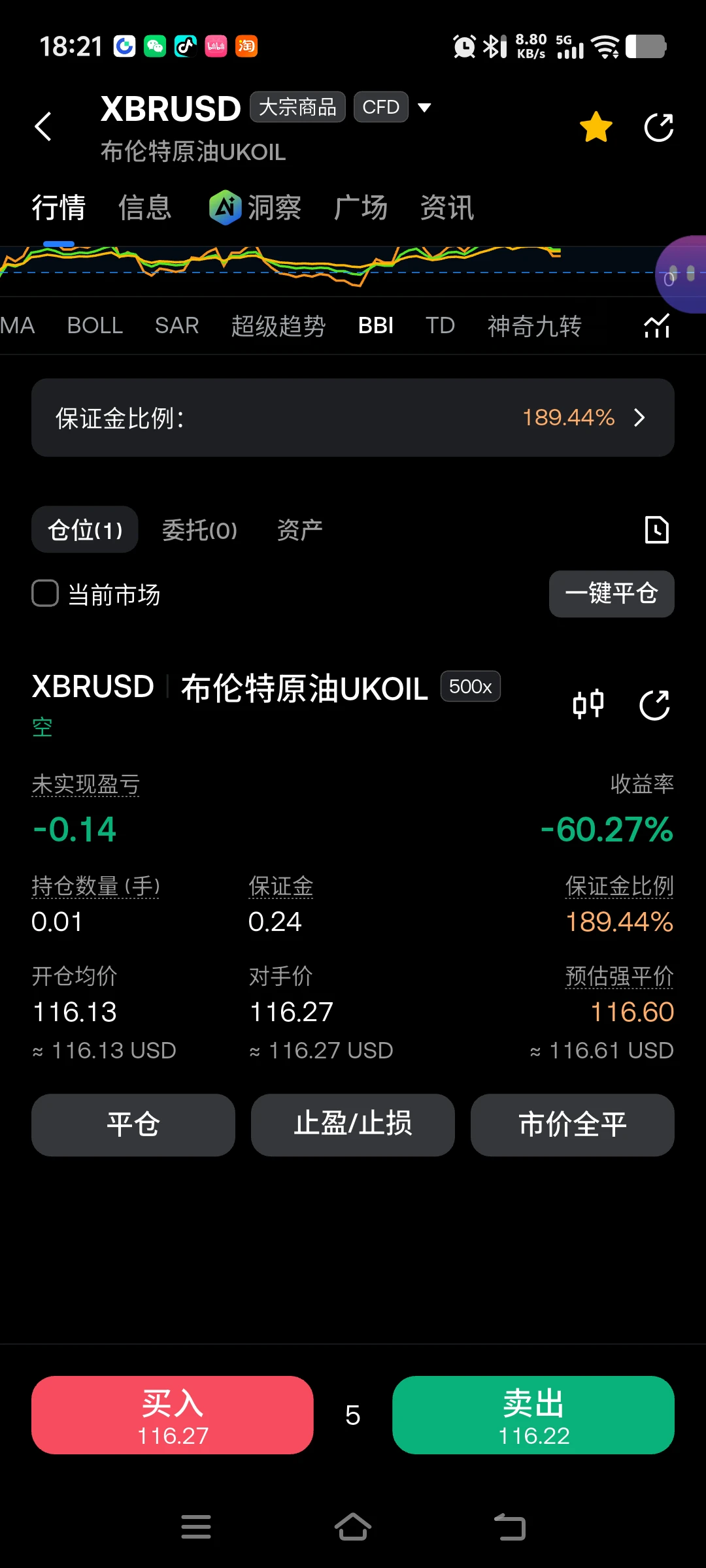
Record ✍️ I closed the short too early just now, what a pity. Recording the correct signal for when the short should have been closed 📡
A complete swing, with a downward one-minute 👇 wick!
Lost 40 steamed buns
View Original
post-image
  • Reward
  • 1
  • Repost
  • Share
H膩NGu膩LovesCollectingCoins:
【Phase One Training】
1. Take a position near the top
2. Repeatedly take positions near the top, scalp, and close on the 1-minute chart Ultra-ultra-short term
【Repeated entries within 3-5 minutes】 Ultra-short term
3. Take a position near the top, ride the full move, and close on the 15-minute chart Short term
4. Take a position near the top, ride the full move, and close on the 1-hour chart Medium-short term
5. Take a position near the top, ride the full move, and close on the 4-hour chart Medium-to-long term
6. Take a position near the top, ride the full move, and close on the daily chart 【Bottom-fishing and selling near the top】 Long term
📊 #GateJulyTransparencyReportReleased 🚀Transparency matters in crypto — and the latest July report is now in focus. 👀🔍🏦 Greater visibility into platform activity📈 Track key developments and ecosystem growth🔐 Stay informed about transparency, security & user protection🧠 Always verify the details and DYOR before making decisions.Crypto moves fast. Stay informed, stay alert, stay ahead. ⚡#Gate #Crypto #Transparency #Web3 #DYOR
post-image
  • Reward
  • Comment
  • Repost
  • Share
A sigh
Please open the HK region soon.
View Original
post-image
  • Reward
  • Comment
  • Repost
  • Share
Okay so chips are now officially an asset class
post-image
post-image
post-image
post-image
  • Reward
  • Comment
  • Repost
  • Share
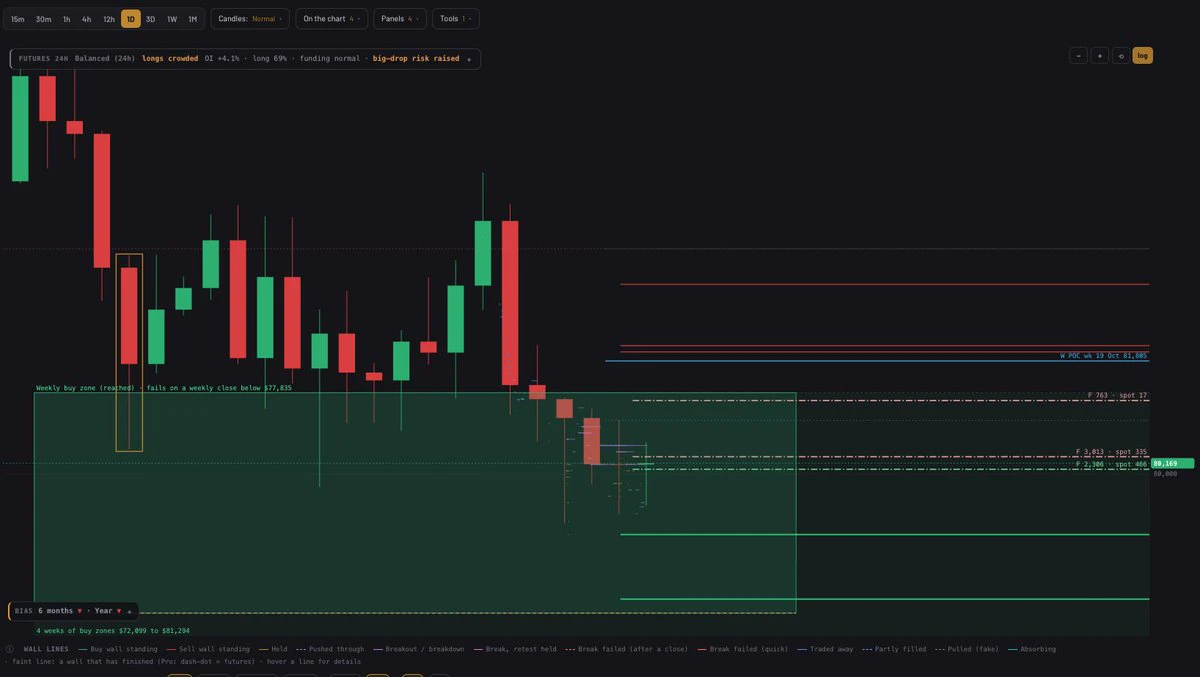
Focus on the 4435–4440 resistance range intraday, with the key strong resistance at 4450, the high of this morning’s rebound. On the downside, first watch the battle around 4400.
If 4400 breaks, the market will further pull back toward the 5-day moving average around 4380, which is also the low of last night’s retracement after the data release. If support at 4380 fails to hold, the correction could extend to 4350–4320.
Give priority to the 4350–4345 range below. If the price falls back here for the first time, consider cautiously taking a small long position.
$BTC $ETH $XAU
BTC-0.76%
ETH-1.38%
XAU-0.35%
View Original
post-image
  • Reward
  • Comment
  • Repost
  • Share
bitcoin:native Bollinger Bands are the tightest they've been since the April squeeze. Upper band $65.4K, lower band $62.6K, price sitting at $63.4K.
Low volatility never lasts. A big move is loading. The question isn't if, it's which way.
What's your read?
BTC-0.76%
post-image
  • Reward
  • Comment
  • Repost
  • Share
🎉 Gate’s global users surpass 59 million!
Another step closer to the 60 million user milestone. 🚀
Since its founding in 2013, Gate has continued to expand its global multi-asset trading ecosystem:
🔹 59 million+ global users
🔹 Supports 4,900+ crypto assets
🔹 Covers 12,500+ stock assets
🔹 Spot trading volume and liquidity consistently rank among the world’s top
🔹 Total reserve ratio of 117%, covering nearly 500 user assets
🔹 Diverse asset offerings including crypto assets, stocks, metals, indices, forex, and commodities
From the first user to today’s 59M+
Next milestone: 60M 👀
Thank you
post-image
  • Reward
  • 3
  • Repost
  • Share
professor69:
2026 GOGOGO 👊
View More
$ACU 3rd Target completed guys ✅️
Set Stoploss to Target 1🎯
#GateHits59MillionUsers
ACU24.50%
post-image
Original content no longer visible
  • Reward
  • Comment
  • Repost
  • Share
Looks like $XRP wants to head back to $1.80
XRP-1.28%
post-image
  • Reward
  • Comment
  • Repost
  • Share
JUST IN: Metaplanet CEO Simon Gerovich clarifies 5,014 BTC transfer was routine custody operation; holdings unchanged at 43,000 BTC.
BTC-0.76%
post-image
  • Reward
  • Comment
  • Repost
  • Share
Load More

Join 40 M users in our growing community

⚡️ Join 40 M users in the crypto craze discussion
💬 Engage with your favorite top creators
👍 See what interests you
  • Pinned