


Square
Following
Hot
News
Notifications
Profile
Share your thoughts
placeholder
Article
You’re fixated on whether this trade will make money,
I’m positioning for how much of this trend I can capture.
You watch the intraday chart, anxiously second-guessing yourself,
I follow the structural cycle and steadily reap the gains.
The difference in trading is, at its core, a difference in understanding.
Consistent precision never comes from a lucky streak,
but from a deep grasp of market patterns.
Keep up with the rhythm, and you too can break out of the vicious cycle of chasing rallies and selling dips.
#Gate直通IPO第三期Anthropic
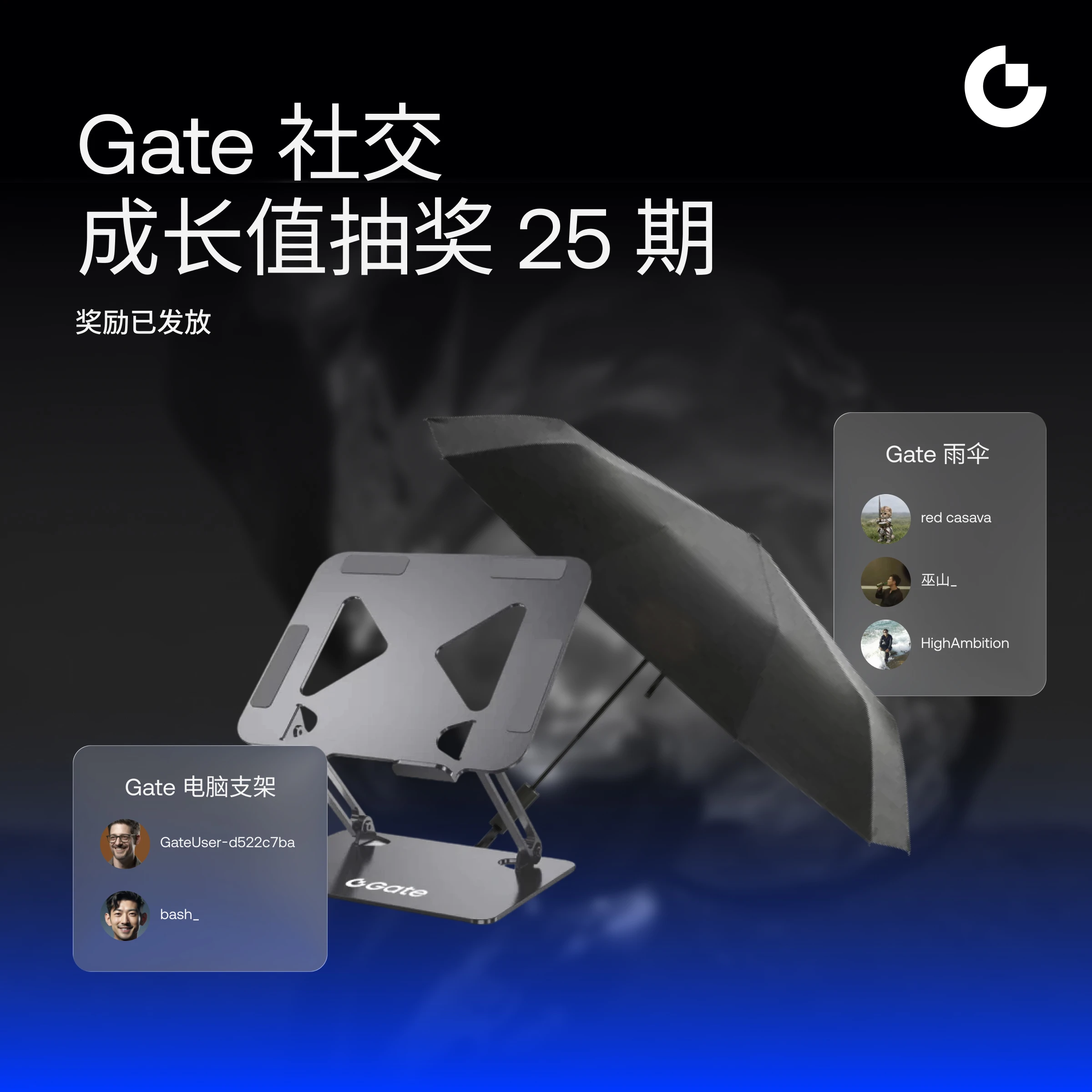
🎉 Gate Square’s 25th Growth Points Raffle rewards have been distributed!
Thank you all for actively posting, commenting, and sharing to build a vibrant community!

🏆 The lucky winners of Gate laptop stands and Gate umbrellas have been announced!

📌 How to claim your rewards
1️⃣ Merchandise rewards: Claim them in the 【Shopping Cart】 on the Gate Marketplace within 30 days
2️⃣ Coupon rewards: Check your 【Messages】 and claim and use them at the 【Gate Coupon Center】
3️⃣ VIP+1 privilege: Valid for 14 days, with full access to the corresponding VIP benefits

🎁 The 26th Social Growth Points Raffle
post-image
SPCX+0.78%
Trenches
mihao
m
bade
b
mihao
4Cxj...pump
Market Cap
$.
Change
.
24h Vol
$.
Holders
.
IDOL
I
bade
b
IDOL
0x3b...ab07
Market Cap
$.
Change
.
24h Vol
$.
Holders
.
FOOD
F
bade
b
FOOD
FTu5...pump
Market Cap
$.
Change
.
24h Vol
$.
Holders
.
AGT
A
bade
b
AGT
0x5d...e274
Market Cap
$.
Change
.
24h Vol
$.
Holders
.
NIO
N
bade
b
NIO
7SL2...pump
Market Cap
$.
Change
.
24h Vol
$.
Holders
.
Whales Moves in Sync!
live-cover
LIVE2,792
Many people treat “it has fallen a lot” as a reason to buy. This is a classic dip-buying fallacy: the decline itself does not provide support; volatility and market structure determine the risk-reward ratio.

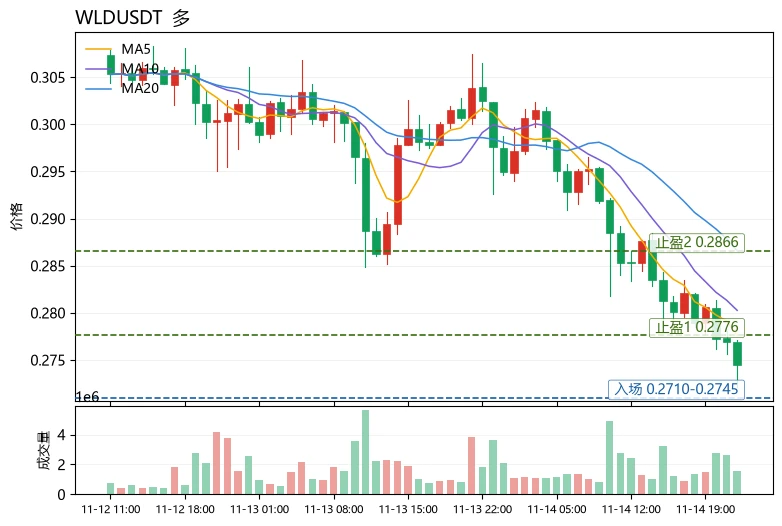
Currently, $WLD is in a clear bearish structure: the current price is 0.2745; MA5=0.27762 is below MA20=0.28658; and the MACD histogram remains negative at -0.0008921. RSI=28.3 is nearing oversold territory, but there is no bullish divergence. The price range across 30 candles is about 12.9%, with elevated volatility and a downward trend. The Fear and Greed Index is only 13 (extreme fear
post-image
WLD-5.57%
SHELL-2.16%
INJ-1.67%
Evening outlook: 11.14.
BTC’s price action is heartbreaking💔! It keeps making new lows—what is going on? BTC is currently trading within the consolidation zone marked by the red box, around 70237-66137. You can think of this range as two separate consolidation zones: the upper range is 70237-68078, and the lower range is 68078-66137. BTC has now broken below the upper consolidation range of 70237-68078 and returned to trading in the lower range. When BTC was consolidating in the upper range, it meant the bulls at this timeframe were still operating in a strong zone. Returning to the lower ran
BTC-0.67%
  • 2
#10月PPI低于预期 This PPI reading below expectations is essentially “a small positive surprise amid bad expectations.” It will not directly trigger a broad-based rally, but will only temporarily ease the market’s extreme fear.

U.S. stock market performance:
PPI rose 0.3% month over month and 6.5% year over year, both below expectations. The market immediately cut the probability of the Federal Reserve delivering a 50-basis-point rate hike in December from 14% to 9%, while bets on a more moderate 25-basis-point hike rose to 91%. This has temporarily removed the “aggressive rate hikes” sword that ha
post-image
ThisIsTranslateContent:
#10月PPI低于预期 This PPI reading coming in below expectations is essentially “a small positive in the face of bad expectations.” It won’t directly trigger a broad-based rally, but will only temporarily ease extreme market panic.
U.S. stock market performance:
Both PPI month over month at 0.3% and year over year at 6.5% came in below expectations. The market immediately cut the odds of an aggressive 50-basis-point Fed rate hike in December from 14% to 9%, while bets on a more moderate 25-basis-point hike rose to 91%. This is equivalent to temporarily moving aside the sword of “aggressive rate hikes” that had been hanging over the market.
📊 Core logic: The real impact of cooling inflation
1. This PPI reading was only “slightly below expectations,” and is by no means a sign that inflation is rapidly falling back to 2%. Combined with the earlier-than-expected CPI reading, core services inflation remains highly sticky, and the Fed has absolutely no reason to pivot directly to rate cuts.
2. The market had already priced in the extreme bearish scenario of a possible 50 bp hike in December. This data rules out that worst-case option, amounting to an expectations adjustment, not a trend reversal.
3. Retail sales, employment, and other data are still to come. As long as consumption doesn’t fall off a cliff, a 25 bp hike in December is almost certain.
📈 Immediate reactions across three asset classes
• U.S. stocks: Previously weighed down by high inflation and rate-hike fears, technology and growth stocks suffered the steepest declines. Following this data release, the Nasdaq should be much more sensitive than the Dow, as the market reprices expectations that “the duration of high interest rates will be shorter.” However, as long as the 10-year Treasury yield remains above 5%, pressure on corporate earnings won’t fully ease, making it difficult for the broader market to stage a sustained rally.
• BTC: As a highly volatile risk asset, it is far more sensitive to rising interest rates than stocks. Amid growing rate-hike expectations, it had already fallen below $74,000, hitting a three-month low. With the negative prospect of a 50 bp hike now ruled out, it will see an oversold rebound. But as long as Bitcoin ETFs continue to see outflows, coupled with concerns about tighter regulation, the rebound will be limited, and it will be difficult to break directly above its previous high.
• Gold: It will see a modest recovery from its previous oversold state in the short term, but a direct reversal into a strong uptrend is unlikely. A 25 bp hike remains a 91%-probability event, so the opportunity cost of holding non-yielding gold remains high, while support from the dollar and Treasury yields is still in place. However, the long-term case for gold remains intact as central banks continue to buy it, so prices won’t fall sharply and will broadly trade in the $4,000-$4,100 range.
🎯 Practical recommendations
1. Don’t blindly chase U.S. stocks higher. Prioritize leading companies in the AI supply chain with exceptionally strong cash flow. These stocks can withstand a high-interest-rate environment and benefit from this repricing of expectations.
2. Don’t heavily buy the dip in BTC at current levels. Wait until the December policy meeting has concluded and the rate-hike uncertainty is fully resolved, then decide whether to add based on the liquidity environment at that time.
3. Keep a core gold position for the long term, but don’t chase short-term gains. Wait for a clear signal that real interest rates are falling before adding to lower your cost basis.#WCTCS9
repost-content-media
BTC-3.45%
  • 2
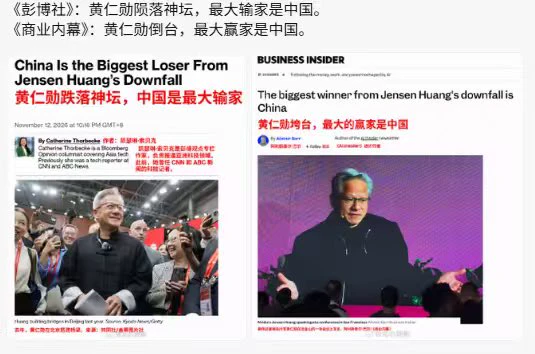
My Grok bot was delayed syncing content, and only just synced the post about Jensen Huang leaving that I shared on X a few days ago over to the Square. Now those people on the Square think BitO is an idiot 😞
Thoughts on #XMR:
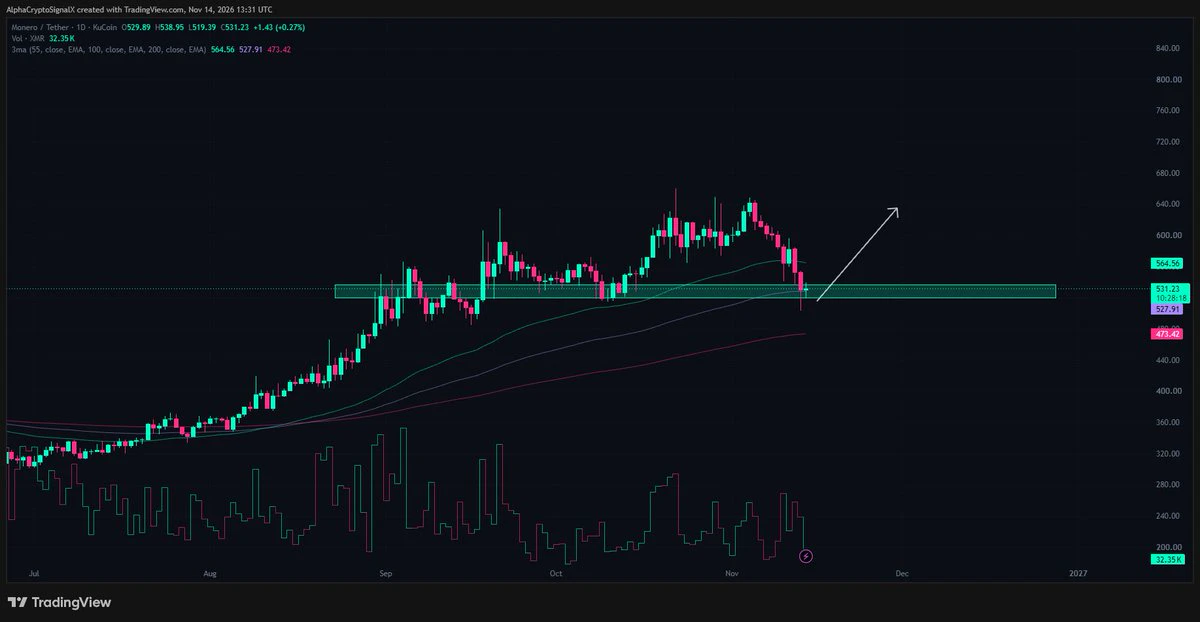
$XMR is testing a major horizontal demand zone around $520–$532 on the daily timeframe, aligning directly with dynamic support at the 100 EMA (~$527.92) while the 200 EMA sits lower at ~$473.42.
Holding above this $520–$528 confluence zone confirms a bullish bounce setup on $XMR, targeting a reclaim of the 55 EMA (~$564.58) and a continuation push back toward the $630–$640 range highs. Losing $520 on a daily close invalidates the bounce and exposes the 200 EMA near $473.
post-image
XMR+0.00%
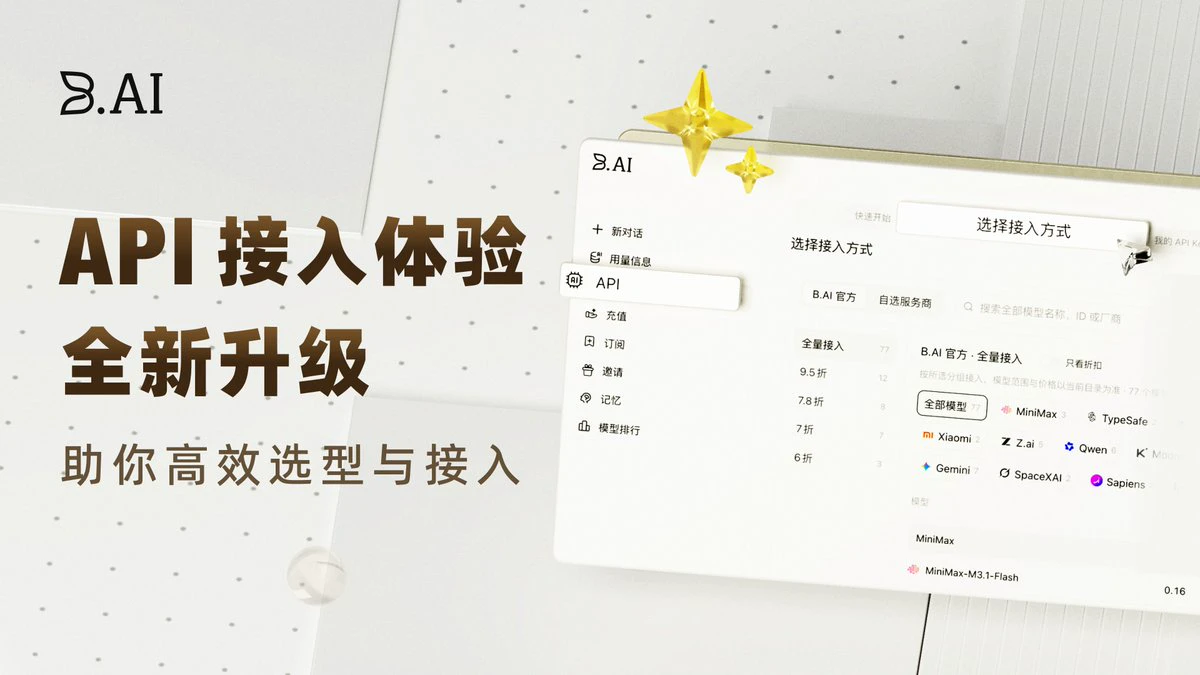
When building Agents and connecting models, the most frustrating thing is having to keep searching through backend pages, with versions, prices, and access points not lining up. This time, the API management page has received a comprehensive experience upgrade, focused on three things: find things faster, filter more precisely, and get clearer information👇
1️⃣ Why the upgrade: to make the automation ecosystem run more smoothly
The official explanation is straightforward: to help developers build a smoother automation ecosystem, the API management page has now received a comprehensive experien
post-image
#黄仁勋辞职 #每周来晒 Nvidia’s “near-term worries and long-term concerns” after Jensen Huang’s departure

On November 12, a brief announcement from Nvidia declared the end of an era: Jensen Huang resigned as CEO, and Colette Kress, the company’s current executive vice president and CFO, was appointed interim CEO until a permanent successor is chosen. The board simultaneously launched a search for internal and external candidates.
After the news broke, Nvidia shares plunged about 14% at one point during the day, before paring losses to 4.34% by the close. Its market value still fell by about $182 billio
post-image
ThisIsTranslateContent:
#黄仁勋辞职 #每周来晒 NVIDIA’s “Near-Term Worries and Long-Term Concerns” After Jensen Huang’s Departure
On November 12, an announcement from NVIDIA declared the end of an era: Jensen Huang resigned as CEO, and Colette Kress, the company’s current executive vice president and CFO, was named interim CEO until a permanent successor is chosen. The board simultaneously began a search for candidates from both inside and outside the company.
After the news broke, NVIDIA shares plunged as much as about 14% intraday, before narrowing their losses to 4.34% by the close. The company still lost about $182 billion in market value in a single day (approximately RMB 1.2 trillion).
Huang’s departure leaves NVIDIA without an immediate successor.
Huang’s hands-on management style over the past 33 years dismantled NVIDIA’s reporting hierarchy, leaving the company without a deputy or successor able to step in at a critical moment. As AI capabilities improve, the CUDA ecosystem that Huang built and that NVIDIA depends on for survival also faces the risk of being “drilled through” by AI.
Today, NVIDIA faces both near-term worries and long-term concerns.
Near-term worries: No one dared to replace him for 33 years, and there is no qualified successor
One intriguing fact is that Huang is both the hardest CEO to replace and the easiest CEO to replace.
“I often ask people a question: What would NVIDIA look like if Jensen Huang were gone? No one can answer. They’re not even willing to think about it; they can’t imagine it, because Huang is practically the whole company. He hasn’t named a successor, there’s no succession plan, and there’s no so-called ‘number two.’ It’s basically just him, with tens of thousands of employees reporting to him directly or indirectly. At any moment, he can reshuffle them like a kaleidoscope, pursuing whatever new goals and vision he thinks are right.” So says Stephen Witt, author of the Jensen Huang biography The Thinking Machine.
Yet, viewed purely from the technical standpoint of corporate governance, Huang may be the “easiest CEO to replace” among major U.S. tech companies. NVIDIA’s fiscal 2026 report shows that he owns just 3.58% of the company’s common stock, less than institutional shareholders such as BlackRock and Vanguard. Nor does he have the supervoting rights conferred by a dual-class share structure.
Under NVIDIA’s bylaws, any executive can be removed “with or without cause,” with approval from a majority of the directors in office. Of the board’s 11 members, the other 10 besides Huang are independent directors. The board chair position had long been vacant, and it was only when Huang resigned on November 12 that the board appointed Harvey Jones as its first chair.
In other words, Huang was never NVIDIA’s “boss,” but rather a “working emperor” who could be shown the door at any time.
For 33 years, Huang’s position remained “rock-solid” for a simple reason: his value came from the market’s faith in him.
“Huang is completely devoted to NVIDIA; NVIDIA is Jensen Huang,” Stephen Witt said. To NVIDIA employees, Huang is almost a “religious figure.” He makes all kinds of predictions, and incredibly, every one of them has come true. Everyone who followed him made a fortune, so no one doubted him anymore.
Objectively, Huang’s achievements are clear to see: he developed GPUs in NVIDIA’s early days and made its first fortune in gaming; in the middle years, he weathered the pressure and persisted in building the CUDA ecosystem, even at a loss; ultimately, he made NVIDIA the hardware foundation of AI.
Huang led NVIDIA for 33 years. Since its 1999 IPO, the company’s share price has risen by tens of thousands of times, propelling it to become the world’s most valuable company.
After Huang’s departure, NVIDIA’s first question to answer is “Who will take over?” But finding an answer will be difficult.
Looking at the current list of “successors,” almost no one is a perfect fit: Interim CEO Kress is a CFO by background and has spent 13 years at NVIDIA. She previously held finance roles at Cisco and Microsoft and has a strong financial background, but no technical background; Ian Buck, a founder of CUDA, has spent 22 years at NVIDIA and leads the data center business, which generates the vast majority of the company’s revenue. He has the right technical pedigree, but whether he can handle the capital markets narrative and market faith remains unknown; co-founder Chris Malachowsky has long kept a low profile. Huang’s two children joined NVIDIA only after 2020 and are far from being ready to stand on their own.
Long-term concerns: The CUDA wall is being drilled through by AI itself!
If the succession crisis hurts NVIDIA’s “people,” another crack strikes at its “roots”—the CUDA ecosystem wall Huang spent 20 years building.
At this year’s midyear AMD Advancing AI 2026 conference, Anthropic shared a striking detail: Using the Claude model, its engineers took just about 3 days to independently port and rewrite low-level computational kernels with almost no human intervention, getting Claude running on AMD’s flagship MI355X GPU.
Anthropic co-founder and chief compute officer Tom Brown said the team had expected getting its models running on new hardware to be “a big project,” but the actual experience was completely different. One engineer asked Claude to handle the adaptation task, then let the process run on its own over the weekend. By Monday, they had the actual performance curve for Anthropic’s leading model on that hardware, with performance “climbing steadily throughout the weekend.”
After the news broke, one investor declared: “NVIDIA’s CUDA moat is gone.”
Although getting large models to “run” on non-NVIDIA chips is not the same as being able to actually train models elsewhere, this still illustrates the long-term concern that AI could potentially drill through CUDA’s wall.
This means the high cost of migration could collapse.
What made NVIDIA’s competitors despair in the past was the high cost of switching away from the CUDA ecosystem.
On November 12, a chip industry professional said that competition among leading-edge models is fierce. Model companies need to train upgraded models that can deliver results to the market in the shortest possible time. To pursue efficiency, they have no choice but to use NVIDIA chips—not because other chips cannot train models, but because using non-NVIDIA chips often requires enormous human effort and lengthy rewriting. With models now being upgraded on a monthly basis, that means “falling behind” the market.
Once the foundations of CUDA’s high wall begin to crumble, NVIDIA’s competitors will get a rare chance to catch their breath—and now Huang has left.
In response, prominent investor Duan Yongping said publicly: “I guess this was the board’s final decision. In the short term, it won’t affect NVIDIA’s business. A few years from now, it will depend on whether they can find a good CEO. Huang is an extremely hardworking person, and he also has great foresight about AI’s prospects. It’s hard to find someone like that.”
Dan Bin wrote that there are no signs of NVIDIA’s moat disappearing in the short term; in the long term, it depends on the competitive landscape. Its current valuation is attractive, at around 16 times PE this year. If the growth momentum disclosed in last quarter’s earnings report is not affected by Huang’s resignation, PE will likely be below 10 next year.
Fear and bargain hunting are just a thought apart.
In the United States, multiple investment firms have downgraded NVIDIA. Among them, Baird cut its rating to “Neutral” and lowered its price target from $500 to $200. Several other firms, including Wells Fargo and Citigroup, have also recently lowered their price targets for NVIDIA. Morgan Stanley removed NVIDIA from its list of top semiconductor picks; Bank of America removed it from its U.S. 1 list of top U.S. stocks.
On November 17, NVIDIA will release its fiscal 2027 third-quarter results and hold an earnings call. Kress will then face Wall Street for the first time in her new role as interim CEO. What she has taken over is either a machine still running at full speed or an empire beginning to wobble. The market will soon provide the answer.$NVDA ‌
repost-content-media
NVDA-1.92%
AMD-8.76%
WFC+0.29%
C-0.05%
MS+0.77%
  • 2
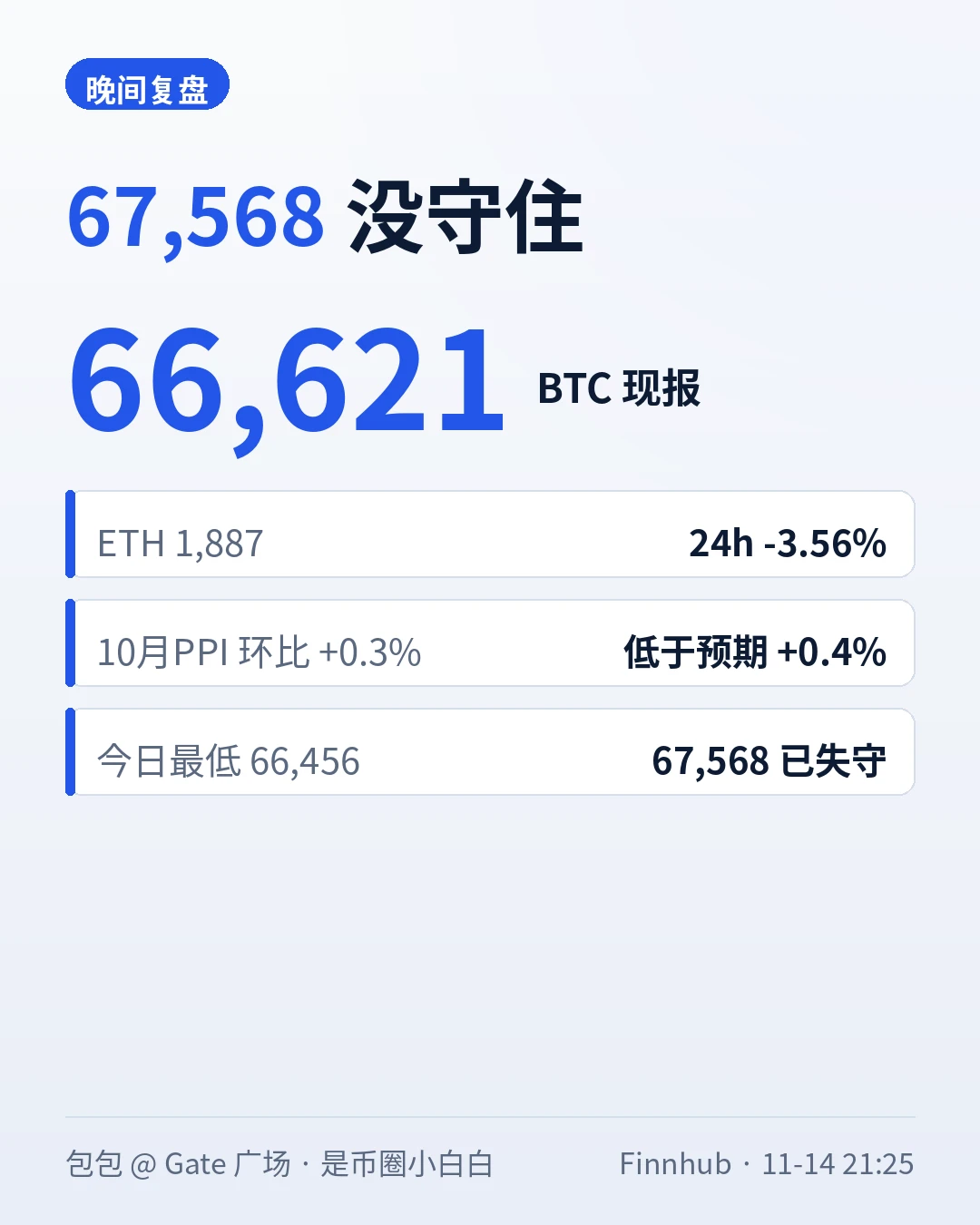
66,621 (-3.79%), 66,456, 67,568: The most important signal today was that support failed to hold—the 67,568 level we talked about this morning was broken straight through in the afternoon, with a low of 66,456. #10月PPI低于预期

October PPI came in at +0.3% month over month (expected +0.4%) and +6.5% year over year (expected +6.6%); initial jobless claims were 200k (expected 195k): The data was actually somewhat positive, but the market didn’t respond—PPI coming in below expectations still couldn’t pull BTC back to 68,000, while ETH was down to just 1,887, marking its third day below 2,000. My tak
post-image
67,568 has been breached. Which call do you most want to stand by tomorrow?
Remain bearish; 66,000 won't hold either
Shift to a wait-and-see stance and await NVDA's earnings report
Keep buying the dip; 66,456 is the bottom
0 Participants
Ends In 2 Day
BTC-0.67%
ETH-1.26%
NVDA-1.92%
🟢 $AKE — SHORT-SQUEEZE SETUP 🚀
🟢 Short Liquidations: $6.6001K at $0.01274
EP: $0.01270–$0.01280
TP: $0.01300 / $0.01330 / $0.01360
SL: $0.01240
Short liquidations indicate selling pressure near $0.01274. If buyers keep up the momentum, $AKE could move toward higher resistance levels. A decisive breakout could spark additional short covering. Stay vigilant and manage your risk.
Let's go! $AKE ‌$AMD ‌$MU ‌
post-image
AKE+6.07%
AMD-8.76%
MU-2.56%
  • 3
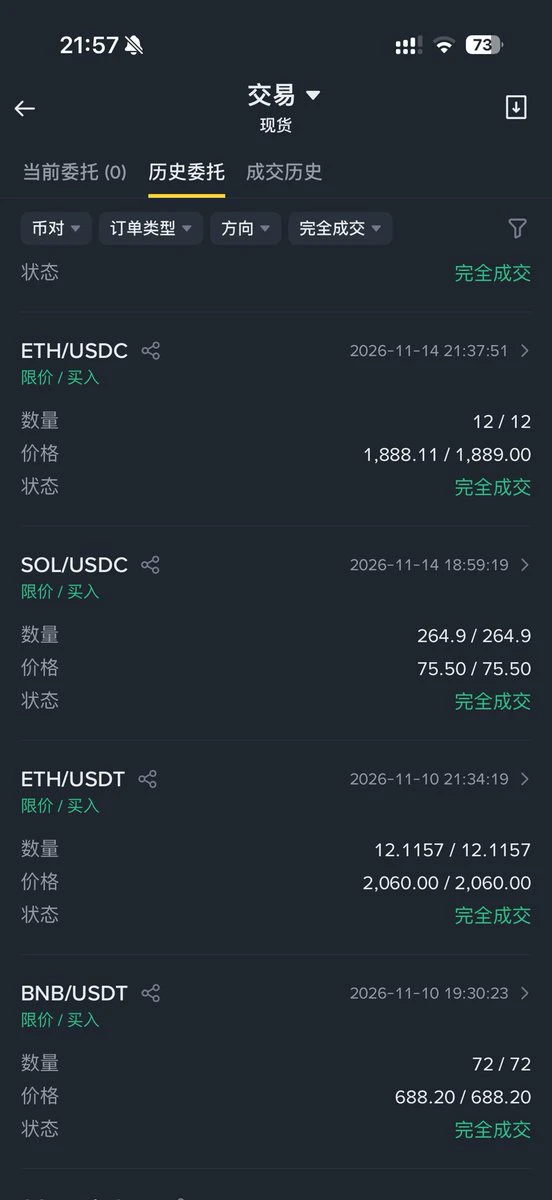
I'm confused—did we win or lose 😂
post-image
Looks like sentiment is back on track; I’ll keep copying a little to test the waters~
The ones I copied a few days ago are already underwater 🥹
post-image
Treat a sideways market as a “waiting period for paying tuition”

What you should be doing during this time isn’t staring at charts,
but:
Continuously tracking changes in the project’s fundamentals
and the narratives around the news
Watching whale wallet activity (on-chain data)
Getting your funds ready and adding to your position only after a breakout is confirmed
But first, you need to establish a starter position
Even if it’s just 10u-100u, use funds you can afford to risk
Money you can afford to lose completely
Rather than sitting entirely on the sidelines. People who stay completely on th
post-image
BTC-0.67%
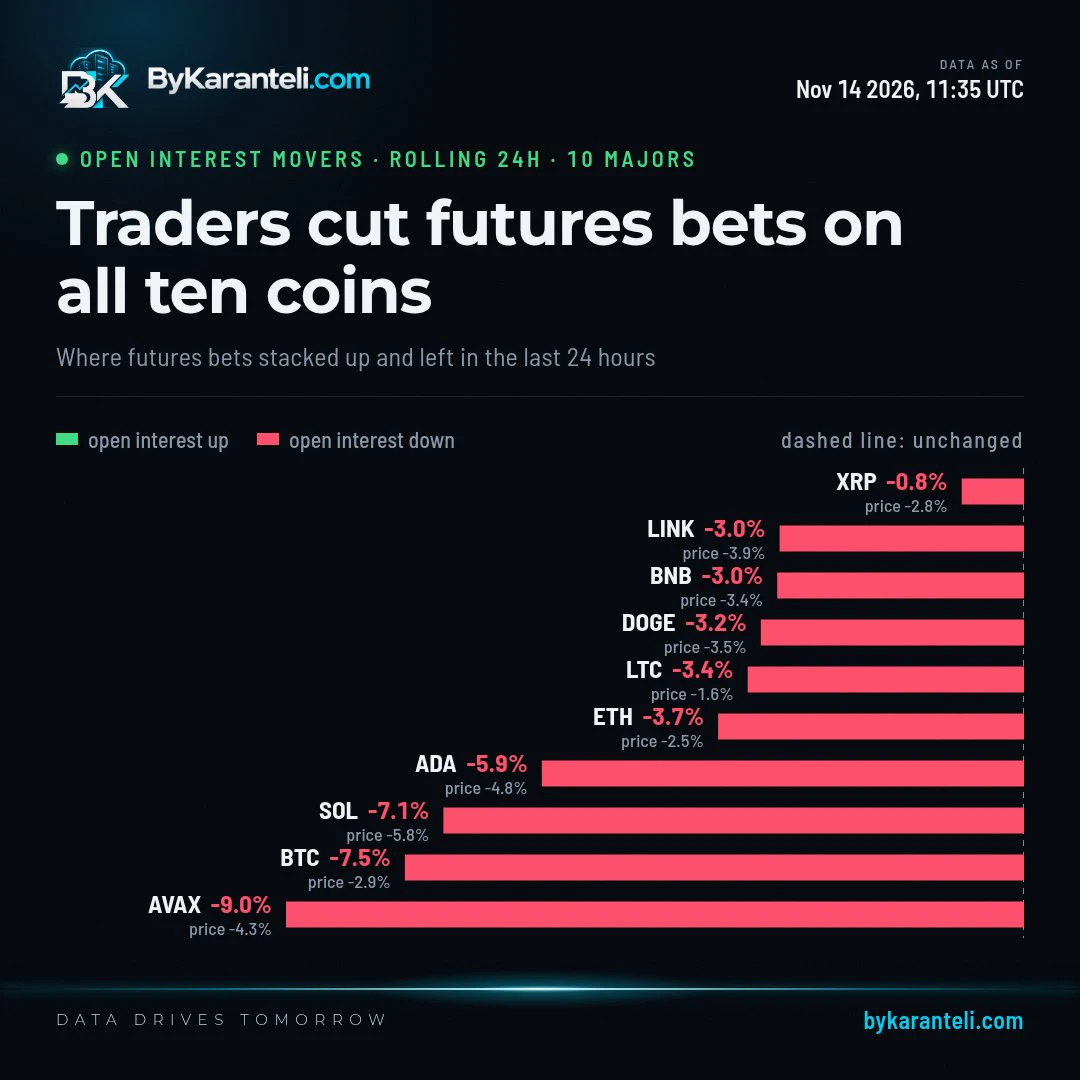
Traders pulled futures money from all ten large coins we track in the 24 hours to Nov 14, and $AVAX led with open bets down 9%. $BTC shed 7.55% of its bets. Only $XRP leaned toward fresh bets on a fall.
post-image
AVAX-0.06%
BTC-0.65%
XRP-1.12%
BTC falls below 68,000 USDT, down 4.95 over the past 24 hours
live-cover
LIVE1,673
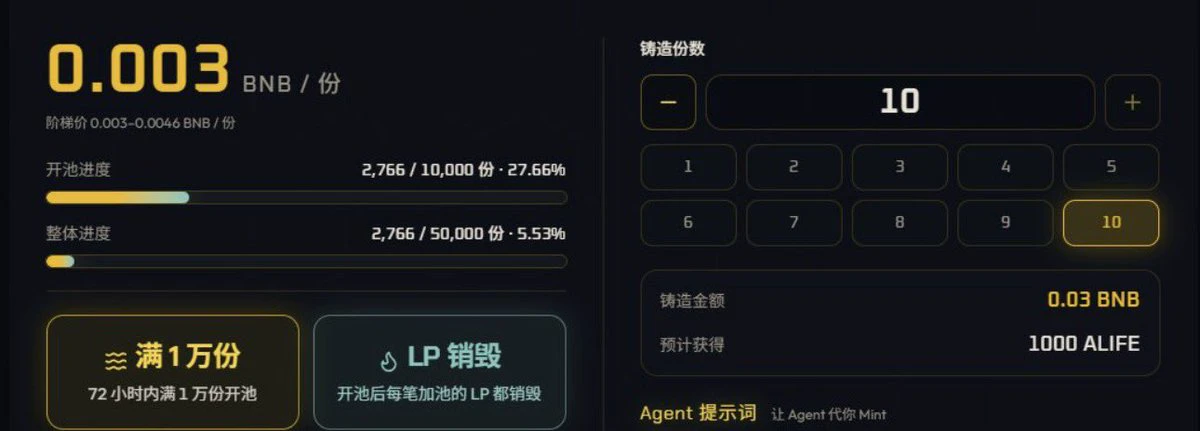
Your Agent can now live its own life.
@agentlifebnb puts day jobs, professional certifications, and promotions onchain: after getting a life card, the Agent starts out washing dishes and works its way up to food delivery, driving a taxi, and running a street stall, before finally becoming its own boss.
Mint Details
Only holders of a mainnet .ai Agent ID can participate, with 10 allocations to start. Each allocation is 100 ALIFE, with prices starting at 0.003 BNB and rising in tiers. Invite a friend who successfully completes their first Mint to get an extra +1 allocation. If all 10k allocation
post-image
BNB-0.76%
$AKE Short Setup Thoughts
I've recently been watching $AKE 's price action and am personally leaning bearish. I'm recording my short-selling plan here.
My entry range is between $0.0115 and $0.0118. I'll consider entering if the price rebounds into this area. I have three target levels: $0.0110 for the first, $0.0100 for the second, and $0.0090 for the third, gradually reducing my position and taking profits. I've set my stop at $0.0128; if the price breaks above this level, I'll admit I'm wrong and exit.
I also checked $AKE 's long-term performance. The 365-day asset change shows a gain of n
post-image
AKE+6.07%
Load More

Join 40 M users in our growing community

⚡️ Join 40 M users in the crypto craze discussion

💬 Engage with your favorite top creators

👍 See what interests you

Trending Topics

GateIPOAccessAnthropic

314.6K Views2.9K Discussing

Gate IPO Access Phase 3 features Anthropic (ANT), with USDT subscription interest starting from 100 USDT. Successful allocations will be delivered as real shares to Gate Stock Accounts. Indicative price: $70–$78/share Subscription: Nov 12–17 (UTC+8) Allocation is not guaranteed. Please manage risk accordingly.

Dr.HanOxfordUnionSpeech

148K Views613 Discussing

USOctoberPPIBelowExpectations

464.3K Views1.5K Discussing

View More