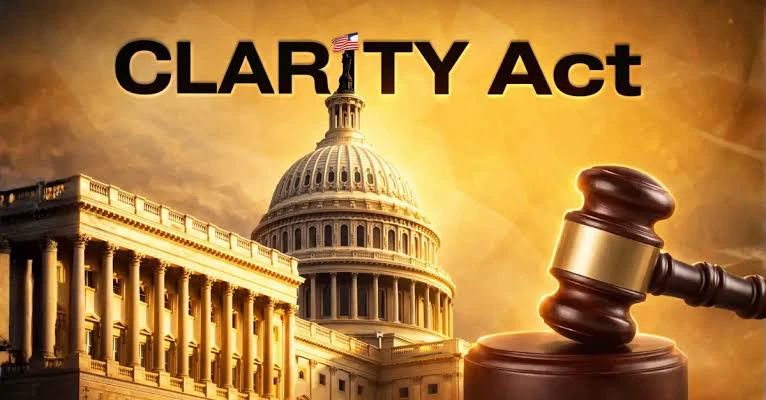










#CLARITYActCouldBeDelayedUntil2028 #CLARITYAct The CLARITY Act Just Ran Out of Calendar: Why 2028 Is No Longer a Stretch
The bill that was supposed to give crypto a federal rulebook has now lost its easiest path. Democrats swept both chambers of Congress in the 2026 midterms, the Senate cloture vote failed 49 to 50 in September, and the current Congress ends on 3 January 2027. Analysts at TD Cowen say the bill could slip by as much as two years, and prediction markets now price passage before 2028 at roughly one in four.
What happened and what the numbers say
The House passed the Digital Asset Market Clarity Act, H.R. 3633, in July 2025 by 294 votes to 134. In the Senate, progress stalled. On 15 September 2026, a cloture vote failed 49 to 50, well short of the 60 votes needed to open debate. Any bill that does not pass before the current Congress ends must be reintroduced in the next one. The timing matters because a new Congress resets the calendar, the committees and the negotiating positions.
Why a Democratic majority changes the calculation
The September defeat was driven by Democratic objections, and those objections will shape the next round. Democrats have pressed for stronger safeguards on illicit finance, consumer protection and ethics, including conflicts involving elected officials. A Democratic-controlled Congress now decides which bills get hearings and in what order. The Senate majority alone does not revive the bill, because every procedural step still needs 60 votes.
What the markets are pricing
Prediction markets have moved sharply. Kalshi priced a roughly 6% chance of passage before 1 January 2027 when the midterm results came in. Traders priced about 15% for passage before 1 July 2027, 19% before 1 October 2027, and 26% before 1 January 2028. Polymarket had already cut its year-end odds to about 6.5% after the September vote. Those numbers are market-implied probabilities, not forecasts, and they can move quickly.
What analysts say about 2027
TD Cowen's Jaret Seiberg wrote that the election "sours the political environment for crypto." NEAR Foundation's legal chief expects negotiations to move into 2027, with tougher ethics provisions likely. Senator Kirsten Gillibrand, a Democrat who has backed crypto legislation, could serve as a bridge in talks, though the election does not signal support for any particular version.
Bitcoin is not the only exposed asset
Analysts draw a distinction between Bitcoin and the rest of the market. Bitcoin may be less exposed to market-structure rules than exchanges, token issuers and DeFi protocols, which face more direct rules on registration, custody and activity. A delay keeps that uncertainty alive, which can weigh on the sector even if Bitcoin itself holds up.
The stablecoin piece is already moving
Not every part of crypto regulation is stalled. The GENIUS stablecoin framework is scheduled to take effect on 18 January 2027, and SEC rulemaking continues. That means a delay in the broader market-structure bill does not mean a regulatory vacuum, though it does mean the most important questions about token classification and venue oversight remain open.
What could change the timeline
Three developments would matter. A bipartisan deal that addresses Democratic ethics and illicit-finance concerns would reopen the path. A lame-duck session before 3 January 2027 would be a last chance for the current bill, though the September vote suggests that window is narrow. Any revised bill in the new Congress would start over, with fresh committee work and new vote counts.
My read
The most likely outcome is that the CLARITY Act slips into 2027 at best, and that a final law arrives later than the industry hoped. The timing is less important than the content. Democratic priorities on ethics, consumer protection and illicit finance will shape what eventually passes, and that could mean tougher rules for DeFi front ends and developers than the current draft contemplates.
For investors, the practical implication is that regulatory clarity is unlikely to arrive as a single catalyst. It will come gradually through agency rules, enforcement choices and whatever legislation survives the next negotiation. Position for that slower path rather than waiting for one decisive vote.
What to watch
Watch the first hearings in the new Congress, any bipartisan text that addresses ethics and illicit finance, the GENIUS framework's launch in January, and prediction-market pricing for 2027 and 2028. Those signals will say more about the timeline than any single statement.
Where do you think the CLARITY Act lands, and does a 2028 timeline change how you position for crypto regulation? Share your view below.
This is market and policy education, not investment advice. Legislative timelines are uncertain, and prediction-market prices move quickly and reflect trader sentiment rather than confirmed outcomes.
#ShareWeekly
#WCTCS9