Square
Following
Hot
News
Notifications
Profile
Share your thoughts
placeholder
Article
11.11$BTC $ETH | Market: Short-term bearish consolidation, awaiting a directional move

Short rallies
BTC: Intraday price action formed a “bottoming—rebound—pullback” pattern.
ETH: Weaker than BTC: low of 2,041.5 → rebound high of 2,074.4 → now pulling back to 2,052.5; the rebound was smaller and the pullback faster.
Likely to move lower after a weak rebound, testing BTC 73,200 / ETH 2,041

Short-term trading outlook: Short
BTC: Watch around 73,900; consider entering if upward momentum stalls
ETH: Watch around 2,065; consider entering if upward momentum stalls
Target levels:
BTC: First target
BTC-0.65%
ETH-1.23%
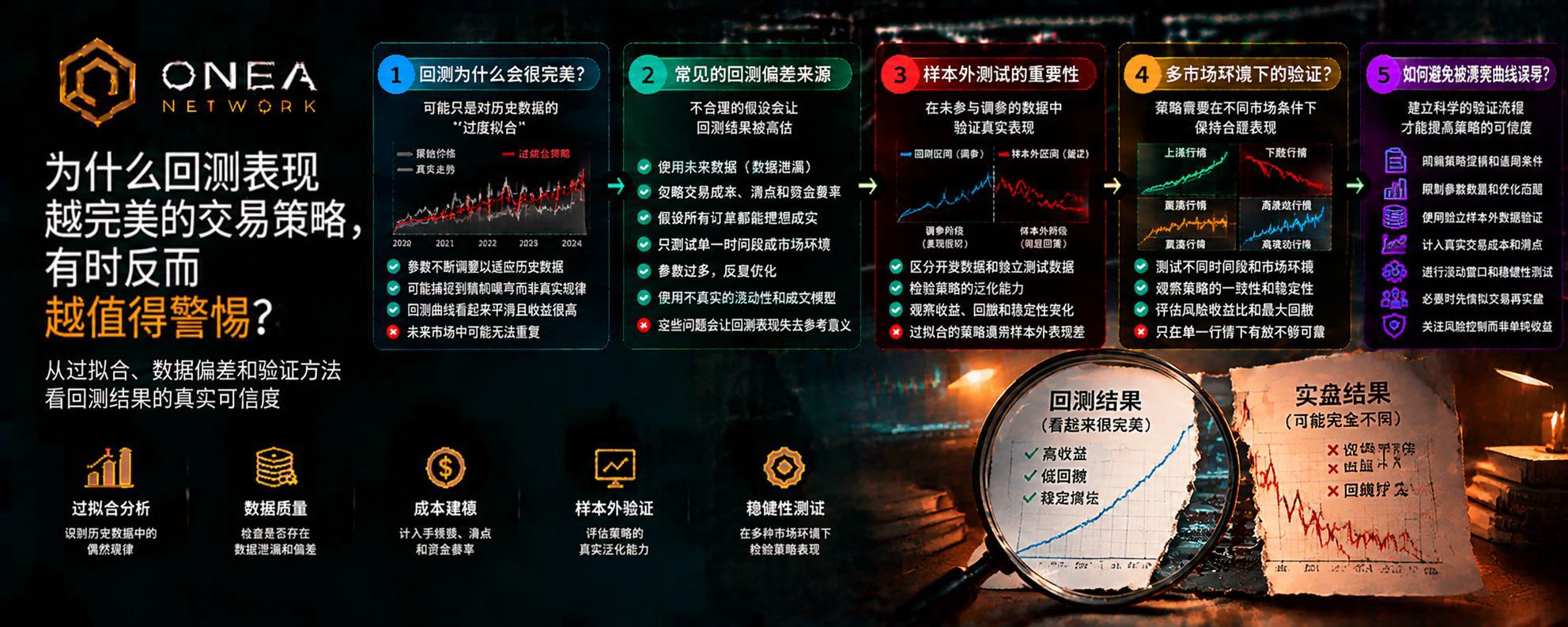
Why Can the More Perfect a Backtest Looks, the More Wary You Should Sometimes Be?

In cryptocurrency trading, there is something that can easily inspire confidence: a beautiful backtest curve.

A very high win rate, steadily growing returns, a tiny maximum drawdown, and profits in almost every market phase.

It looks as if this strategy has found a pattern in the market.

But the problem is this: if a strategy is developed by repeatedly tweaking historical data, it may have learned not the market’s patterns, but accidental features of the historical data.

This is the core risk of strategy ove
post-image
Trenches
mihao
m
bade
b
mihao
4Cxj...pump
Market Cap
$.
Change
.
24h Vol
$.
Holders
.
AGT
A
bade
b
AGT
0x5d...e274
Market Cap
$.
Change
.
24h Vol
$.
Holders
.
PIEVERSE
P
bade
b
PIEVERSE
0x0e...25a9
Market Cap
$.
Change
.
24h Vol
$.
Holders
.
HOLD
H
bade
b
HOLD
4iJ7...pump
Market Cap
$.
Change
.
24h Vol
$.
Holders
.
X
X
bade
b
X
9VZe...pump
Market Cap
$.
Change
.
24h Vol
$.
Holders
.
Market update
live-cover
LIVE6,109
Guns in hand, follow me: kill 4th Brother and seize the watchtower! The authorities are starting to make a move!
post-image
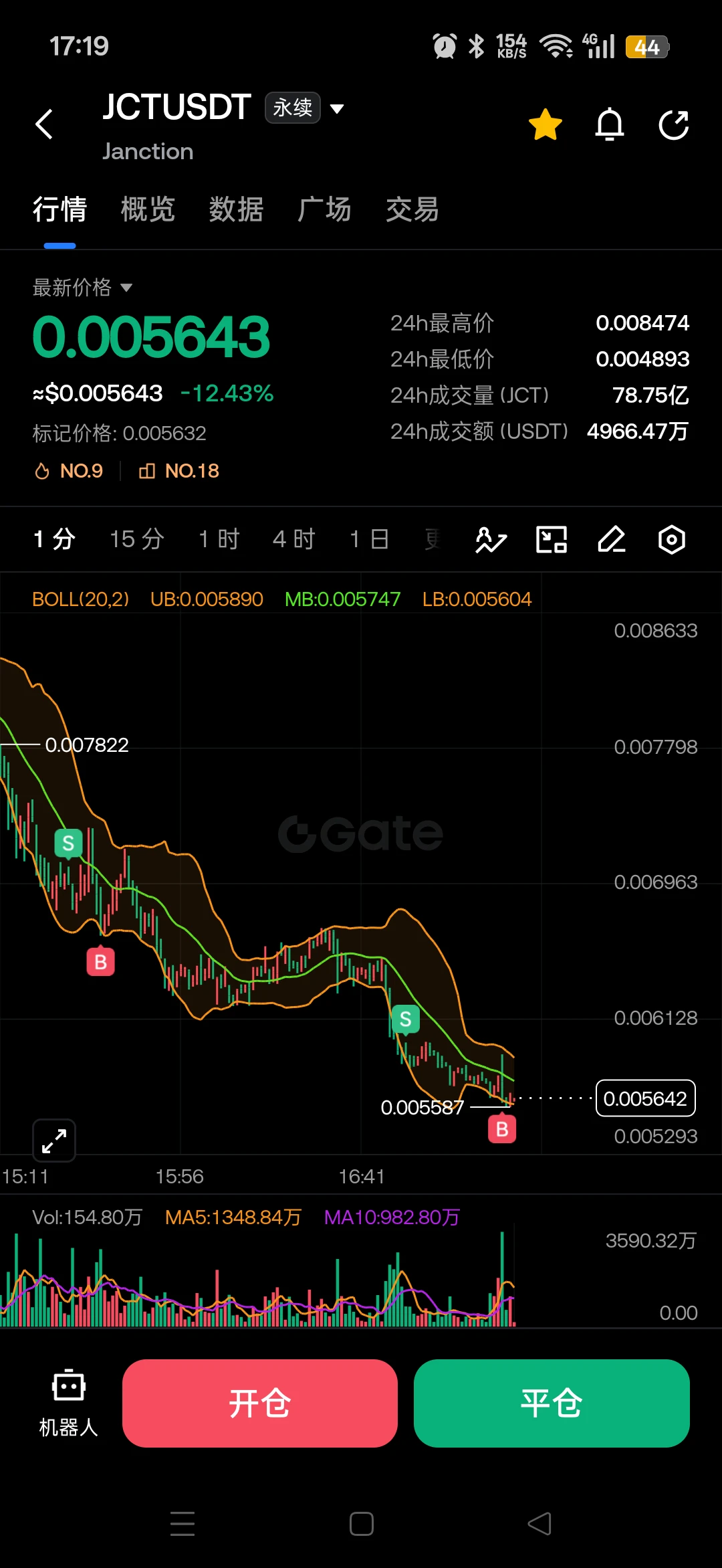
$JCT Empty, empty, empty—living in a palace!
post-image
JCT-3.26%
Does Buying an NFT Give You Copyright? Don’t Confuse Digital Ownership with Copyright

If you buy an NFT, what exactly do you own?

The digital work itself? Its copyright? Or a proof of ownership recorded on the blockchain?

These questions may seem similar, but they involve important distinctions. Understanding them not only helps you understand NFTs, but also helps you assess the true value and potential risks of digital assets.

1. What exactly does an NFT record?

An NFT, or non-fungible token, is a digital token with a unique identifier that can be recorded and transferred on a blockchain
How Can You Quickly Reset Your Trading Mindset After Consecutive BTC Losses?

In BTC futures trading, consecutive losses are a phase many traders go through. The real danger is not the losses themselves, but the chain reaction that follows: rushing to break even, opening positions too frequently, continually increasing leverage, and even starting to stray from the original trading plan. In the end, an ordinary loss can escalate into a much greater risk to the account.

So, how should you reset after consecutive losses?

First, stop trading impulsively. If you have lost several trades in a row,
post-image
BTC-0.65%
How to Identify Phishing Websites and Fake DApps: 7 Security Details to Check Before Connecting Your Wallet

In the Web3 world, many asset risks don’t start with a transaction—they start with a click.

You might see an airdrop announcement on social media, receive a supposedly official direct message, or land on a DApp page that looks completely legitimate through a search engine.

The site may be beautifully designed, the project name familiar, and the rewards tempting, but none of that proves it’s genuine.

Phishing websites often aim to trick you into connecting your wallet, signing a trans
post-image
In the cryptocurrency market, many traders see BTC trading volume suddenly surge and assume the price is about to rise. But sometimes, volume increases significantly while the price fails to rise and instead falls. Why is that?

First, understand that trading volume represents market activity, not simply buying pressure. Every trade involves both a buyer and a seller, so a surge in volume does not mean the price will necessarily rise.

First, rising price with increasing volume. If the price continues to rise while trading volume increases, it suggests market participation is growing and buyer
post-image
BTC-0.67%
In BTC trading, many people see a long upper wick on a candlestick and assume the market is about to fall. But does a long upper wick really mean the trend is reversing?

Not necessarily.

A long upper wick usually indicates that the price encountered selling pressure as it rose. Buyers tried to push the price higher, but faced selling at higher levels, and the price eventually pulled back from its high.

When assessing a long upper wick, focus on three things.

First, where it appears. If a long upper wick forms near a key resistance level from earlier, that area may have strong selling press
post-image
BTC-0.67%
BTC Trading Risk Management Guide: How to Protect Your Principal?

In the cryptocurrency market, many people spend every day figuring out how to make money, but few seriously consider how to protect their principal. In fact, one of the most important skills in trading is not seizing every opportunity to profit from a rally, but retaining enough capital to keep trading when the market makes unexpected moves.

So, how should you build a risk management system?

First, control your position size. Don’t invest all your funds at once just because you’re bullish on BTC. You can limit the risk of a s
post-image
BTC-0.67%
Honda is investing $3 billion in Ohio to build a new plant for hybrid vehicles, completely scrapping its planned EV platform and three 0 Series models. Its previous all-in EV gamble cost it $9 billion and led to its first loss in nearly 70 years. The new hybrids won’t prove themselves until 2028.

First Honda tears up the blueprints for its EV plant and watches $9 billion go down the drain, then turns around and builds a hybrid plant in the same state. The plot twist came faster than a TV drama. The cars haven’t even been built yet, and shareholders had better stock up on antacids.

$BTC
post-image
In cryptocurrency trading, many people know they should analyze rationally, yet when it comes time to place an order, they let their emotions take control. When they see BTC rising rapidly, they fear missing out and can't resist chasing the price; when the price suddenly drops, they panic and rush to close their positions.

Why is trading so easily driven by emotions?

First, fear of missing out on a market move. When the market suddenly becomes highly volatile, many people worry about missing a chance to make money. They rush into a trade without waiting for confirmation, often ending up buyi
post-image
BTC-0.67%
Who Would Suffer Most If the Fed Raises Rates Again? BTC, US Stocks, and Gold Risk Ranking!

What would happen to the market if the Fed really returned to tightening?
First, BTC. Bitcoin generates no fixed interest income and is highly sensitive to global liquidity and risk appetite. If the dollar strengthens and financing costs rise, short-term volatility could increase significantly.
Next, US stocks. High-valuation growth stocks could be hit hard because the discounted value of future profits would decline. Companies with ample cash flow and reasonable valuations may prove relatively resilie
MSFT-2.15%
The person I’m most grateful to along the way is the version of myself with poor self-control.
post-image
A high win rate does not mean high profitability. What truly determines trading results is the ratio between each profit and loss.

Many trading strategies look excellent: an 80% win rate, multiple consecutive wins, and a very attractive backtest curve.

But if each win is only $10 while one loss reaches $50, a problem arises.

Suppose you make 100 trades:
• 80 wins, earning $10 each, for a total of $800.
• 20 losses, losing $50 each, for a total of $1,000.

Final result: a loss of $200, not including fees, funding rates, and slippage.

This shows that win rate is only one part of a trading sy
post-image
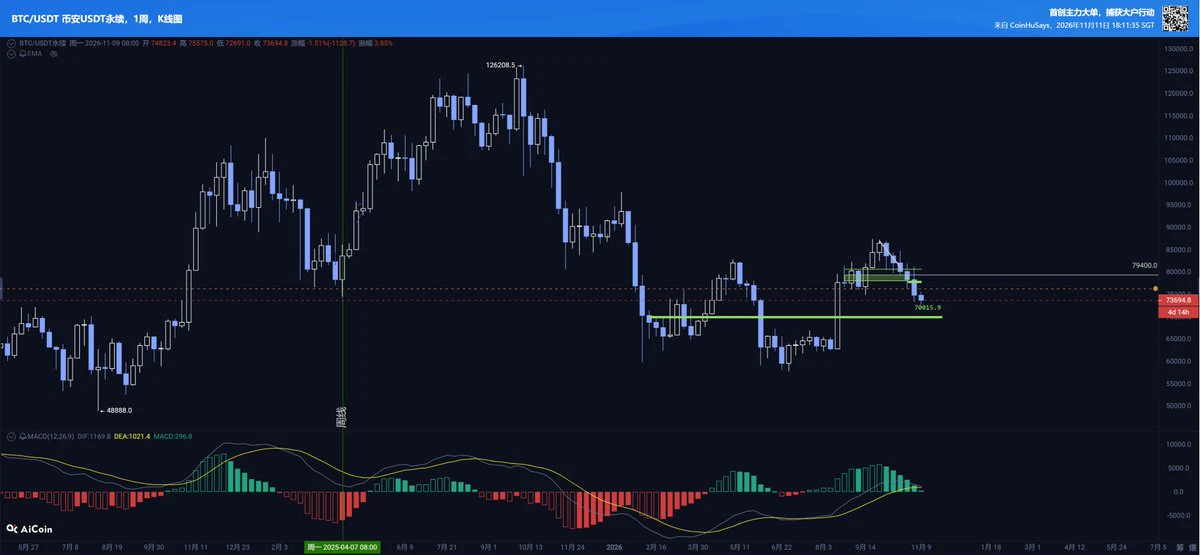
BTC is currently down for six consecutive weekly candles.
U.S. stocks have now stabilized, rising yesterday evening and again in tonight’s overnight session, especially AI hardware stocks, which carry significant weight.
However, U.S. stocks related to crypto are still falling, possibly due to concerns about Democrats taking power and pessimism about Trump’s crypto policies, compounded by worries early this morning that MicroStrategy could be removed from an index. They have yet to stabilize.
The next level to watch is a stabilization above 7000. #BTC
post-image
BTC-0.67%
MSTR-3.72%
[NEW STREAMER] TRENDMARKET UPDATE
live-cover
LIVE1,107
A high win rate does not mean high profitability. What truly determines trading results is the ratio between each profit and loss.

Many trading strategies look excellent: an 80% win rate, multiple consecutive profitable trades, and a pretty impressive backtest curve.

But if each winning trade earns only $10 while a single loss reaches $50, a problem emerges.

Suppose there are 100 trades:
• 80 winning trades, earning $10 each, for a total of $800.
• 20 losing trades, losing $50 each, for a total of $1,000.

Final result: a loss of $200, not including fees, funding rates, and slippage.

This
post-image
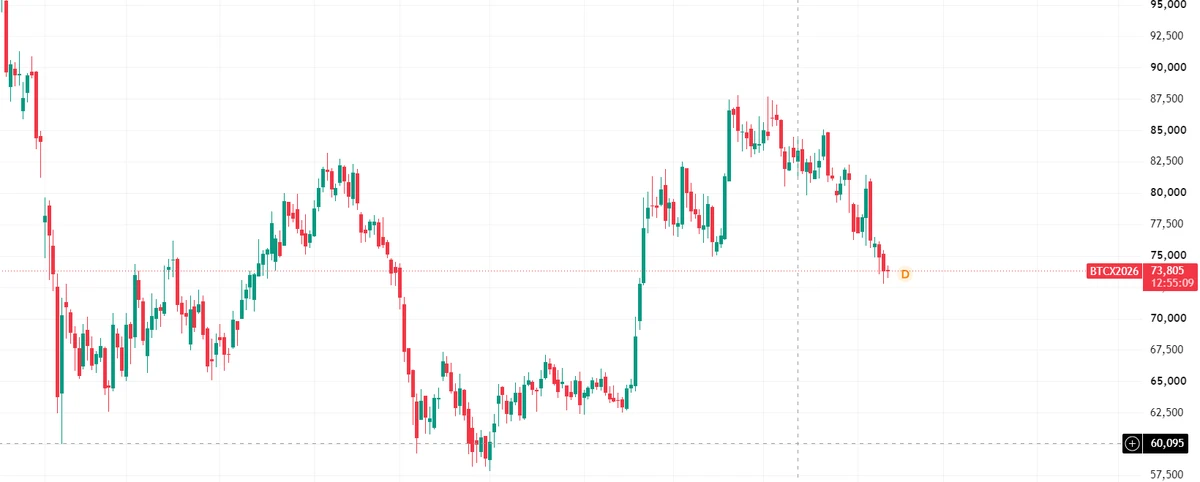
CME Gap: Gravity or Signpost?

Price has fallen below 74k, and the gap at 60,095 is showing its magnetic pull.
But does a true reversal require waiting for the gap to fill, followed by a high-volume move back above 80k?
Army outlook:
Filling the gap isn’t the goal—it’s the process of bulls and bears trading places. Could the direction after price holds above the gap be the start of a new cycle?
post-image
  • 5
Load More

Join 40 M users in our growing community

⚡️ Join 40 M users in the crypto craze discussion

💬 Engage with your favorite top creators

👍 See what interests you

Trending Topics

GateGlobalComplianceExpansion

16.7k Views360 Discussing

Gate continues to expand its global compliance footprint, now covering 81 regulated jurisdictions across Europe, North America, Asia, and Oceania. From MiCA and U.S. state-level MTLs to Japan’s FSA, Dubai, and Australia-related regulatory approvals, global exchanges are entering a new stage of compliance competition. Do you think regulatory strength will become as important as products and liquidity for exchanges in the future?

USOctoberCPIBeatsExpectations

88.29k Views2.66k Discussing

AnthropicIPOValuationCouldReach1.4T

12.71k Views1.61k Discussing

View More