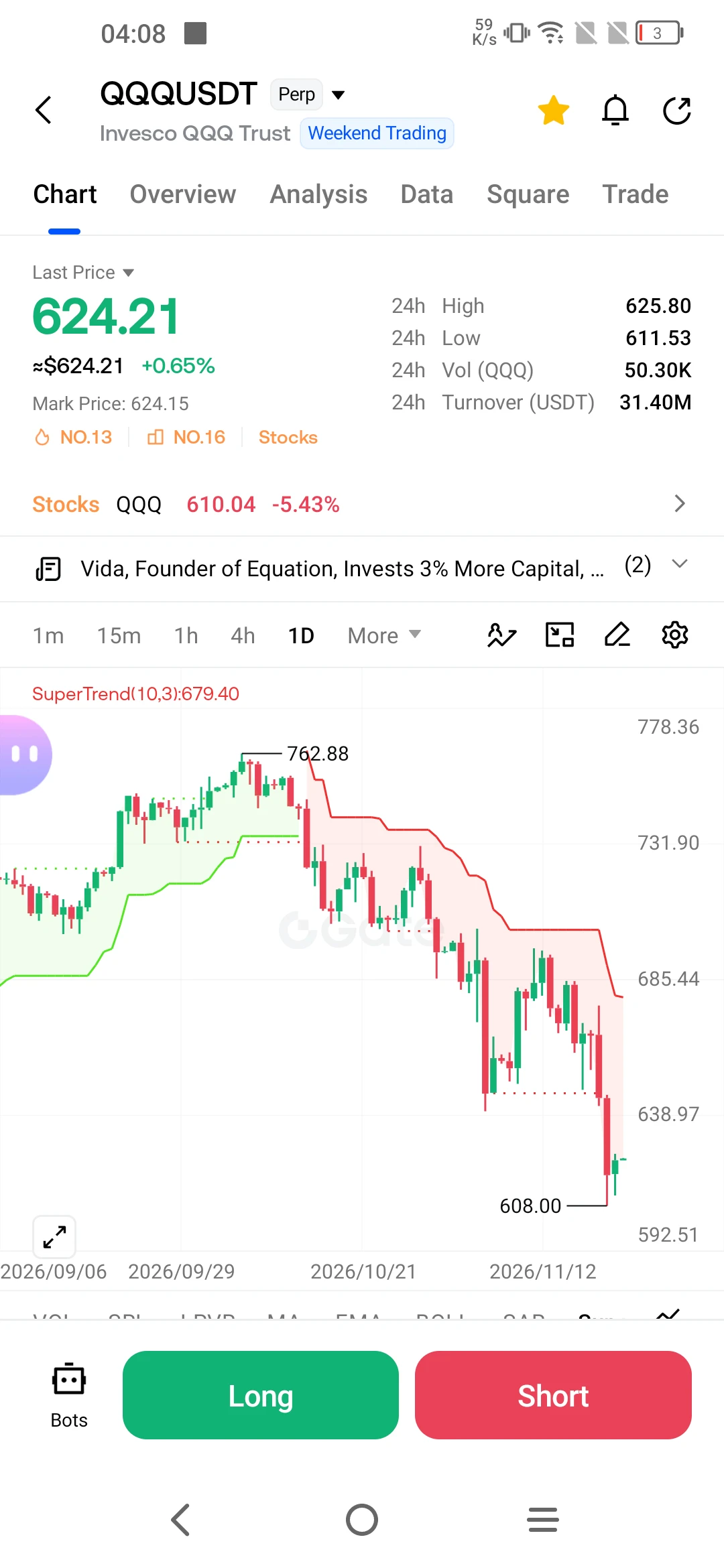
As we all stare at our screens, wondering, "How much further will this decline go?" the roughly 20% drop in the QQQ over the last six weeks is, understandably, alarming. Yet, history consistently whispers the same truth: sharp downturns are often followed by rapid and robust recoveries—provided that the long-term fundamentals remain sound.
Instead of panicking, let’s examine similar market crashes from the past alongside the realities of today.
Does History Repeat Itself?
Looking at the history of the QQQ, the recoveries that followed comparable sharp declines are striking. In 2018, the market experienced a 23% drop but managed to recover in about four months. During the COVID-driven crash of 2020, a 29% loss unfolded over 26 days, with a recovery that took less than three months. In 2025, the "DeepSeek shock" saw Nvidia shares fall 17% in a single day, yet AI-related stocks began to rebound the very next day. That same year, a 23% decline—triggered by tariffs—played out over 48 days, with a recovery again taking less than three months.
So, what is different today? The QQQ has retreated by approximately 20% from its peak in early October. The factors driving this decline are somewhat more complex than those seen in the past. Confidence in the artificial intelligence narrative has wavered; investors are no longer asking merely, "How fast is the growth?" but rather, "When will we see a return on these expenditures?" Compounding this, the news of a CEO change at Nvidia and an accounting review by the SEC has shaken trust in Nvidia—previously the strongest link in the chain. Add to this the Fed’s firm stance on interest rate hikes; a high-interest-rate environment naturally exerts pressure on technology stocks, whose valuations are often based on projected future earnings.
So, what should you do now?
At this juncture, rather than asking, "Is this the bottom?" it is more productive to ask, "What is my plan?" No one can ever know exactly where the bottom lies. However, history shows us that following such sharp declines, the market has generally tended to recover in the medium term—even if it moves sideways or faces further selling pressure for a while.
If you are a long-term investor and believe in the future of AI, these pullbacks may offer windows of opportunity for gradual accumulation. For short-term traders, however, this environment demands avoiding leverage and keeping a close watch on key price levels. With 3x leveraged products like SOXL, in particular, such intense volatility can be far more destructive.
Remember, the market always presents both fear and opportunity simultaneously. What matters is not which side you take, but rather how long you can stay the course.
Are you choosing to remain cautious and hold cash during this period, or are you betting on these historical recovery cycles by buying in gradually?
#QQQ #SOXL #Macro #StockMarket #ShareWeekly Not investment advice.
$QQQ
$QQQG
$SOXL
$NDAQ
$NAS100