Square
Following
Hot
News
Notifications
Profile

LiuYang

vip
No content yet
Peak Tier VIP 00.9 Year(s)
47
Following
20
Followers
72
Liked
great
MrFlower_XingChen
#StrategyAdds950BTCAfterThreeWeekPause
Strategy is buying Bitcoin again, but the 950 BTC headline is not the part I would focus on.
The more interesting development is what happened around that purchase.
Between September 14 and September 20, Strategy acquired 950 BTC for approximately $75.7 million at an average price of $79,670 per Bitcoin. That lifted its holdings back to exactly 846,000 BTC, acquired for approximately $63.80 billion at an average cost of $75,416 per BTC, including fees and expenses. The company used USD Cash for the purchase.
At Bitcoin around the mid-$80,000 area, that treasury represents an enormous balance-sheet position. 846,000 BTC is just over 4% of Bitcoin's fixed 21 million maximum supply.
But there is an important detail here.
Strategy did not simply put $75.7 million into Bitcoin and walk away.
During the same period, the company spent another $174 million repurchasing 1,771,238 shares of STRC preferred stock. In other words, Strategy spent more than twice as much buying back its own preferred security as it spent adding Bitcoin.
That changes the way I read this transaction.
This is no longer just a story about how many Bitcoin Strategy can accumulate.
It is increasingly a story about how Strategy manages the relationship between Bitcoin, common equity, preferred securities, cash reserves and its future financing capacity.
The September 21 filing makes that very clear. Strategy reported that it did not sell MSTR shares through its ATM program during September 14–20. Instead, it used $75.7 million of USD Cash for Bitcoin and $174 million of USD Cash for the STRC repurchase. It separately used $57.4 million from its USD Reserve for preferred dividends and interest payments.
So the old simple formula —
raise capital → buy BTC → increase BTC per share
— is no longer enough to describe what is happening.
Strategy is now actively managing several pieces of the balance sheet at the same time.
And STRC matters here.
Strategy's STRC is a variable-rate perpetual preferred stock. The company had set the regular annual dividend rate at 12% for periods beginning September 16, 2026, with semi-monthly payments of $0.50 per share at the current rate. Strategy's stated framework is designed to support STRC trading around its $99–$100 target range, using several tools including dividend-rate management, USD reserves and repurchases.
That makes the $174 million buyback much more interesting than the raw number suggests.
Buying back STRC reduces the amount of preferred capital outstanding and can reduce future cash dividend requirements on those shares. At the same time, buying below the stated amount can potentially create an economic benefit compared with leaving the securities outstanding at par.
This is why I would be careful with the idea that Strategy has simply become less bullish on Bitcoin.
The filing does not say that.
What it shows is something more practical: Strategy has multiple uses for its capital now.
Bitcoin accumulation remains one of them.
Preferred-stock management is another.
Liquidity and reserve management are another.
That is a much more complicated capital-allocation model than the Strategy of several years ago.
There is another number worth watching: Strategy ended the period with approximately $5.04 billion in its USD Reserve and $1.05 billion in USD Cash, according to the latest filing. That gives the company substantial liquidity while it manages its Bitcoin treasury and preferred obligations.
And the timing is interesting.
Bitcoin has recovered sharply from the September weakness and is now trading around the mid-$80,000 region. Strategy's latest 950 BTC purchase was made at an average of $79,670, meaning the company bought below the current market price.
But I would not turn that into a signal that Bitcoin must continue higher.
One corporate purchase cannot determine the direction of a $1.7 trillion-plus Bitcoin market.
What it does tell us is that Strategy was willing to deploy cash into BTC after its holdings had fallen from the 846,000 level during the summer.
The sequence matters.
Strategy reached 846,000 BTC at the end of June, reduced its holdings through July and August, then bought 4,603 BTC at an average price of $80,318 in late August, and has now added another 950 BTC. Its Bitcoin Ledger shows the company moving from 840,447 BTC after the August sale back to 845,050 BTC after the August 31 purchase and now to 846,000 BTC.
So Strategy has effectively rebuilt its Bitcoin position after the summer reduction.
But it still has not returned to its June peak of 847,363 BTC.
That is an important distinction.
The headline says "Strategy resumes Bitcoin buying."
The balance sheet says something more nuanced:
Strategy is rebuilding Bitcoin exposure while simultaneously optimizing its capital structure.
For MSTR shareholders, that distinction matters.
The valuation of Strategy cannot be judged only by multiplying 846,000 BTC by the current Bitcoin price. Investors also have to account for debt, preferred securities, common shares outstanding, cash, financing costs and the company's ability to continue increasing Bitcoin exposure without creating unfavorable dilution.
This is where the concept of Bitcoin per share becomes more useful than simply watching the headline BTC balance.
If Strategy increases its Bitcoin holdings but issues substantially more common shares or preferred capital to finance those purchases, the effect on each common shareholder can be very different from the headline increase in BTC.
That is why I would watch the capital structure almost as closely as the Bitcoin purchases from here.
There is also a second question: how much cash can Strategy comfortably deploy while maintaining its reserve requirements and preferred obligations?
The company has already shown that it is willing to use cash for both sides of the equation — buying Bitcoin and buying back preferred securities.
That suggests the next phase of Strategy may be less mechanical.
It does not have to buy Bitcoin every week.
It does not have to issue MSTR every week.
It can choose between BTC accumulation, preferred repurchases, reserve management and other capital-market actions depending on market conditions.
That flexibility can become increasingly important as the size of the balance sheet grows.
For Bitcoin traders, however, the immediate takeaway is much simpler.
Strategy is still one of the largest publicly listed sources of corporate Bitcoin demand, and its return to accumulation adds another layer to the current market narrative.
But I would not chase BTC merely because Strategy bought 950 coins.
Instead, I would watch whether this becomes the beginning of a sustained accumulation cycle or simply one opportunistic purchase after the recent recovery.
The next filings will tell us much more than today's headline.
If Strategy continues adding BTC while avoiding excessive common-stock issuance and simultaneously reduces expensive preferred obligations, the capital structure will look very different from the traditional "sell stock, buy Bitcoin" model.
If BTC rises while Strategy can maintain or improve Bitcoin exposure per common share, the market may increasingly value the company as a financial vehicle built around Bitcoin rather than simply as a software company holding BTC.
But that thesis still carries real risks.
Bitcoin volatility remains the largest variable. Preferred dividends and debt obligations require cash. Common-stock issuance can dilute shareholders. Preferred securities have their own market risks. And Strategy's stock can trade at a substantial premium or discount to the value of its underlying assets.
So I would not reduce the Strategy story to:
"Saylor bought 950 BTC, therefore bullish."
The more useful interpretation is:
Strategy bought 950 BTC while spending more than twice as much buying back STRC.
That tells us capital allocation is becoming just as important as Bitcoin accumulation.
For me, the numbers to keep on the screen are 846,000 BTC, $63.80 billion total acquisition cost, $75,416 average BTC cost, $75.7 million spent on the latest BTC purchase, $174 million spent on STRC repurchases, and roughly $6.09 billion of USD assets reported as of September 20.
The Bitcoin stack is still the headline.
The capital structure is the story underneath it.
And that is what I will be watching next.
#GateSquareMidAutumnReunion
great
MrFlower_XingChen
#AugustCPIDropsTonight
#8月CPI今晚公布
Last night before going to sleep, I kept thinking about what the market might look like when I woke up.
My thought was pretty simple: if inflation data kept coming in hot and oil remained elevated, Bitcoin could face another wave of selling before the CPI even arrived.
Then I woke up, checked the market, and honestly… it played out almost exactly the way I had imagined.
Bitcoin had already been pushed down toward the $76K area, and the reason was becoming clearer. The latest U.S. PPI data showed producer prices rising faster than expected, keeping the inflation debate alive and making traders more cautious about the Fed’s next move.
Now the real test is August CPI.
That is the number I’m watching more closely than the noise on social media. The important question isn't simply whether CPI is “good” or “bad.” What matters is whether the actual numbers change expectations for inflation, Treasury yields and the Fed’s policy path.
If core CPI comes in around the expected 0.2% monthly increase, I wouldn't automatically chase a long. I want to see how Bitcoin reacts after the first volatility spike.
If inflation comes in hotter, the $75.8K area becomes very important for me. A clean breakdown could open the door to another leg lower.
But if CPI surprises to the downside and yields start cooling, the setup changes completely. Bitcoin has already taken a lot of pressure, so a softer inflation print could trigger a sharp relief move as shorts rush to cover.
This is why I don't like trading CPI purely on a prediction.
Last night I had one scenario in my head. This morning, the market gave me the first part of it.
Now I’m waiting to see whether tonight’s CPI confirms that idea — or completely invalidates it.
$BTC ‌@Gate_Square
repost-content-media
#GateRWAPerpetualsOIRanked 1Globally
💰 RWA is becoming a market, not just a narrative
For months, RWA has been one of the most talked-about themes in crypto.
But there is a big difference between a narrative getting attention and a market actually attracting sustained trading activity.
The latest CoinMarketCap data gives us a reason to pay attention.
Gate’s RWA perpetual futures open interest has reached $378.8M, representing approximately 49.6% of total RWA perpetual open interest across global CEXs and ranking #1 worldwide.
That number alone is impressive.
But what interests me more is the
MrFlower_XingChen
#GateRWAPerpetualsOIRanked 1Globally
💰 RWA is becoming a market, not just a narrative
For months, RWA has been one of the most talked-about themes in crypto.
But there is a big difference between a narrative getting attention and a market actually attracting sustained trading activity.
The latest CoinMarketCap data gives us a reason to pay attention.
Gate’s RWA perpetual futures open interest has reached $378.8M, representing approximately 49.6% of total RWA perpetual open interest across global CEXs and ranking #1 worldwide.
That number alone is impressive.
But what interests me more is the direction of the market.
RWA perpetual trading volume on Gate increased approximately 5.3× between June and August.
That means the story isn't simply that RWA is being discussed more.
Capital is actively moving through the market.
And perpetual futures are an important part of this transition.
Traditional assets such as equities, commodities and other real-world exposures have historically lived inside markets with specific trading hours, settlement systems and access requirements.
Crypto changes that model.
Once these exposures become available through crypto-native products, traders can interact with them in a market that operates around the clock and supports both long and short positioning.
That creates something much more interesting than simple tokenization.
It creates tradable liquidity around real-world markets.
This is also why I think the recent RWA growth deserves attention.
If the sector depended on a single narrative, its momentum could disappear as quickly as it arrived.
But if different RWA themes can continuously attract traders and liquidity, the market can evolve through rotation rather than relying on one asset or one hype cycle.
And that's where I see the real opportunity.
RWA doesn't necessarily need to replace crypto's existing narratives.
It can expand the market by bringing new types of assets, new trading opportunities and potentially new participants into the crypto ecosystem.
Still, I'm not ready to call RWA the next guaranteed mega-cycle.
The numbers are strong, but the real confirmation will come from consistency.
Can open interest remain healthy?
Can liquidity deepen?
Can trading volume stay strong after the current excitement fades?
If the answer is yes, then we may look back at this period as the point when RWA stopped being just an idea and started becoming a serious trading market.
For now, Gate’s numbers are certainly worth watching:
📌 $378.8M RWA perp OI
📌 ~49.6% of global CEX RWA perp OI
📌 #1 globally
📌 ~5.3× volume growth from June to August
The narrative has already arrived.
Now the market has to prove it can stay.
What do you think?
Is RWA becoming the foundation of the next crypto cycle, or are traders simply chasing the next short-term opportunity?
@Gate_Square
repost-content-media
#RobinhoodActsAsIPOUnderwriterForFirstTime
#HOOD has already made the breakout move. Now it has to prove it can hold it.

Robinhood is coming into the September 8 session with a very different chart from just a few weeks ago.

The latest completed regular session closed at $122.11, down 2.09% on roughly 23.7M shares. The previous session was the real attention-grabber: HOOD jumped 16.57% to $124.72, with more than 51.6M shares traded.

So the question isn't whether momentum exists.

It clearly does.

The question is whether buyers have enough strength left to take out the $124.70–$124.88 resi
MrFlower_XingChen
#RobinhoodActsAsIPOUnderwriterForFirstTime
#HOOD has already made the breakout move. Now it has to prove it can hold it.
Robinhood is coming into the September 8 session with a very different chart from just a few weeks ago.
The latest completed regular session closed at $122.11, down 2.09% on roughly 23.7M shares. The previous session was the real attention-grabber: HOOD jumped 16.57% to $124.72, with more than 51.6M shares traded.
So the question isn't whether momentum exists.
It clearly does.
The question is whether buyers have enough strength left to take out the $124.70–$124.88 resistance zone.
Current market snapshot
Latest regular-session close: $122.11
Previous close: $124.72
Latest session change: -2.09%
Latest session volume: ~23.7M
Recent high: $124.88
52-week range: $63.52–$153.86
There is no meaningful “24h change” for the stock in the crypto sense because HOOD trades during U.S. equity-market hours. The latest full session was September 4 because U.S. markets were closed September 7 for Labor Day.
Why is HOOD moving?
This rally has several drivers rather than one headline.
Morgan Stanley recently upgraded Robinhood to Overweight and raised its price target to $150, arguing that the company is becoming less dependent on crypto through prediction markets, asset-based revenue and a wider financial-product ecosystem.
There is also a new strategic angle: Robinhood has been named an underwriter for the upcoming Oura IPO, its first official move into IPO underwriting. That matters because management is trying to turn Robinhood from simply a retail trading app into a broader financial platform.
And the crypto side hasn't disappeared either.
Robinhood Chain activity has recently reached very high levels, adding another potential revenue channel — although I would treat that as a developing catalyst rather than pricing the entire stock around it.
Recent price action and structure
The chart has become strongly bullish.
HOOD moved from $103.51 on September 1 to $124.72 on September 3, before pulling back to $122.11.
That is a huge move in a very short period.
The good part for bulls is that the larger trend remains above the major moving averages. The 20-day SMA is around $117.90, while the 50-day SMA is around $110.95. RSI near 64.7 shows strong momentum without being at an extreme level yet. ADX around 51 also points to a strong existing trend.
But after a move of this size, chasing the first green candle is not the setup I want.
Key levels
Resistance: $124.70–$124.88
This is the immediate decision zone. It contains the recent high and is the level bulls need to reclaim.
Above that:
$130 becomes the first psychological target.
Then:
$138–$140
And if momentum turns into a genuine continuation move:
$150 becomes the larger target, which also lines up with Morgan Stanley's current price objective.
On the downside:
$119.80–$120 is the first important support area.
Below that:
$117–$118 becomes critical, especially because it sits close to the 20-day average.
Then:
$110–$112 is the next major support zone around the 50-day structure.
Volume and momentum
The volume confirms that the recent move was not a quiet drift higher.
September 3 produced more than 51.6M shares, compared with roughly 23.7M on September 4 and an average daily volume around 23.7M in the historical data.
That tells me the breakout attempt attracted serious participation.
But Friday's lower close after Thursday's huge expansion is exactly why I want confirmation rather than assuming the breakout is already complete.
Options positioning
Options activity has also been elevated.
On September 4, about 386.7K option contracts traded, with calls representing roughly 66% of volume. The prior session saw more than 682K contracts.
That is supportive of bullish sentiment, but it also tells us positioning is active enough for sharp volatility around key levels.
I don't have a reliable current stock-style funding-rate or liquidation metric for HOOD, so I would not manufacture one.
BTC and broader market context
HOOD has become increasingly sensitive to the broader risk environment because its business now touches equities, crypto, prediction markets and other higher-beta trading activity.
Bitcoin has recently been trading around the $80K area, while broader markets are dealing with a more complicated macro backdrop.
Oil has moved sharply higher amid Middle East tensions, Treasury yields are elevated, and investors are heading into important U.S. inflation data this week. That combination can quickly change the appetite for high-beta names such as HOOD.
So even if HOOD's company-specific story remains strong, the macro tape still matters.
Bullish scenario
I want to see a clean break above $124.88, preferably with strong volume, followed by a successful retest of the $124–125 area.
If that happens, the structure opens toward:
TP1: $130
TP2: $138–140
TP3: $150
A sustained move above $125 would tell me the recent spike was more than a one-day momentum event.
Bearish scenario
The first warning would be a rejection around $124–125 followed by a loss of $119.80.
A decisive break below the $117–118 area would be more important because it would put price back below the 20-day trend structure.
Below that, $110–112 becomes the next downside zone.
A break below $110 would materially weaken the current bullish thesis.
Trading setup
I would not chase HOOD at the middle of this range.
The cleaner momentum setup is:
Entry: $125–126 only after a confirmed breakout and retest
Stop: around $118.50
TP1: $130
TP2: $140
TP3: $150
From a $125 entry with an $118.50 stop, the approximate reward/risk is:
TP1: ~0.8R
TP2: ~2.3R
TP3: ~3.8R
That makes TP1 more of a partial-profit level, while the better asymmetry comes from holding part of the position for TP2/TP3.
Risk management
HOOD is volatile enough that I would keep the risk small.
For a trade like this, 1% of account equity is reasonable; 2% should be the upper end, not the default.
And position size should be calculated from the distance between entry and stop — not from how much money you want to put into HOOD.
Final verdict
Bias: Moderately bullish, but confirmation-dependent.
The trend is strong, the momentum indicators are constructive, and the fundamental story is becoming broader than crypto alone.
But HOOD is now sitting directly underneath a major resistance zone after an unusually large move.
For me, $124.88 is the line that matters.
Break and hold it with volume → bullish continuation becomes much more convincing.
Reject it and lose $119.80 → the market likely needs to cool off before another attempt.
I would rather miss the first few dollars of a confirmed breakout than buy directly into resistance and hope the breakout happens.
$HOOD ‌
@Gate_Square @GateSquare
HOOD+3.26%
BTC-0.67%
#Gate60MillionUsers
💙 My Gate Journey — An Opportunity That Became a Journey
I joined Gate on January 5, 2025, and at that time, I had no idea how much this platform would become a part of my journey. I started with streaming, and it was a really good time for me. Through content mining, different projects, campaigns, and other opportunities on Gate, I was able to earn while continuously learning and improving my skills. Every new opportunity gave me a reason to explore something different and keep growing.
What I appreciate most is that Gate has continued to create opportunities for its use
MrFlower_XingChen
#Gate60MillionUsers
💙 My Gate Journey — An Opportunity That Became a Journey
I joined Gate on January 5, 2025, and at that time, I had no idea how much this platform would become a part of my journey. I started with streaming, and it was a really good time for me. Through content mining, different projects, campaigns, and other opportunities on Gate, I was able to earn while continuously learning and improving my skills. Every new opportunity gave me a reason to explore something different and keep growing.
What I appreciate most is that Gate has continued to create opportunities for its users. Whether it’s content creation, streaming, community activities, campaigns, project opportunities, trading, or different ways to participate and earn, there has always been something new to explore. During some difficult times, these opportunities meant a lot to me and helped me stay motivated. For that, I’m genuinely thankful to Gate.
Later, I started my journey as a content creator on Gate Square. I began sharing my market views, crypto insights, and daily thoughts. Slowly, my posts started reaching more people, my followers began increasing, and content creation became another source of earning for me. What started as a simple step eventually turned into something much bigger—a community that I’m truly proud of.
Today, my profile has reached 5.3K followers, 86K+ likes, and 15K+ shares. Looking at these numbers takes me back to January 2025, when I was just getting started. Every follower, every like, every share, and every opportunity represents a small part of my journey.
I’m genuinely happy and grateful to be part of Gate. 💙 For me, Gate is not simply a platform for trading—it has given me opportunities to learn, create, earn, connect with people, and grow. And the best thing is that the journey is still continuing.
I hope more people discover Gate, explore the opportunities it offers, and build their own stories here. My journey is just one example of how a simple decision to join a platform can eventually open completely new doors.
Thank you, Gate, for the opportunities, the support, and the memories. From my first day on January 5, 2025, to 5,327 followers today—this has been an incredible journey. Here’s to the next chapter and to 60 million users and beyond! 🍀🎉💙
#Gate用户突破6000万 #GateSquare #MyGateJourney
repost-content-media
great
MrFlower_XingChen
#SemiconductorETFsTopWeeklyFlows
Chip ETFs Just Recorded a Historic Week—But the Story Goes Beyond the Inflows
The semiconductor sector has once again become the center of attention on Wall Street.
For the first time on record, semiconductor-focused ETFs occupied the top three positions in weekly fund inflows, highlighting how quickly investor sentiment can shift after a sharp market correction. Together, VanEck Semiconductor ETF (SMH), iShares Semiconductor ETF (SOXX), and Direxion Daily Semiconductor Bull 3X (SOXL) attracted more than $9.5 billion in a single week, making it one of the strongest periods ever recorded for the sector.
What makes this even more remarkable is the timing.
Only days earlier, semiconductor stocks had experienced one of their toughest monthly declines in years. Rising concerns over stretched valuations, uncertainty surrounding future AI infrastructure spending, and a more hawkish monetary outlook weighed heavily on the sector. Market pressure intensified further after the reported collapse of a highly leveraged AI-focused hedge fund, triggering forced liquidations that accelerated the selloff.
History has shown that periods of extreme fear often create opportunities for investors with a long-term outlook, and last week's flows suggest many market participants saw the correction as exactly that.
The rebound was equally impressive. As buying interest returned, major semiconductor ETFs recovered sharply, while leveraged products such as SOXL amplified those gains due to their structure. However, rapid recoveries often attract short-term traders, and early signs of profit-taking have already begun to appear as some investors lock in quick gains.
Despite the near-term volatility, the broader trend remains difficult to ignore. Semiconductor ETFs have attracted record inflows throughout 2026, reflecting continued confidence in the industry's long-term role within artificial intelligence, cloud computing, advanced manufacturing, and next-generation computing technologies.
The demand for AI hardware has fundamentally changed how investors view semiconductor companies. Chips are no longer seen as supporting components—they have become the infrastructure powering AI models, autonomous systems, data centers, and high-performance computing.
At the same time, questions remain. Valuations across many semiconductor companies continue to trade at elevated levels, macroeconomic uncertainty has not disappeared, and investors are still debating whether AI-related capital spending can maintain its current pace over the coming years.
For now, the market is balancing two powerful forces: long-term optimism surrounding artificial intelligence and short-term uncertainty driven by valuations, monetary policy, and profit-taking.
The record inflows demonstrate that institutional and retail investors continue to view semiconductors as one of the defining investment themes of this decade. Whether this marks the beginning of another sustained rally or simply a temporary recovery will likely depend on earnings, AI spending trends, and broader economic conditions in the months ahead..
DYOR
@Gate_Square @GateSquare
repost-content-media
#DEXE
Market Analysis (July 26, 2026) — Can the Recovery Continue?
DEXE has become one of the most volatile tokens in the market over the past few days. After suffering a massive sell-off, the token attracted aggressive dip buyers and has staged an impressive rebound. At the time of writing, DEXE is trading around $4.1-$4.3, with extremely high trading volume, showing that both bulls and bears are actively battling for control.
What Is Happening?
The recent rally appears to be driven by short covering, bargain hunting, and speculative buying after the sharp decline. High trading volume confi
MrFlower_XingChen
#DEXE
Market Analysis (July 26, 2026) — Can the Recovery Continue?
DEXE has become one of the most volatile tokens in the market over the past few days. After suffering a massive sell-off, the token attracted aggressive dip buyers and has staged an impressive rebound. At the time of writing, DEXE is trading around $4.1-$4.3, with extremely high trading volume, showing that both bulls and bears are actively battling for control.
What Is Happening?
The recent rally appears to be driven by short covering, bargain hunting, and speculative buying after the sharp decline. High trading volume confirms that interest has returned, but volatility also remains exceptionally high.
The biggest mistake traders can make now is assuming one green candle means the correction is over.
The next few sessions will determine whether this is the start of a sustainable recovery or simply a relief rally.
Technical Analysis
Current Support
- $3.80-$4.00 – First demand zone.
- $3.20-$3.40 – Strong support if sellers return.
Immediate Resistance
- $4.80-$5.20 – First breakout level.
- $5.80-$6.50 – Major resistance where profit-taking may increase.
Next Target
If DEXE successfully holds above $4.00 and breaks $5.20 with strong buying volume, the next bullish targets are:
- Target 1: $5.80
- Target 2: $6.50
- Extended Target: $7.20-$7.80 if momentum continues and the broader crypto market remains supportive.
However, if DEXE loses $4.00, sellers could push the price back toward the $3.20-$3.40 support zone before buyers attempt another recovery.
What I'm Watching
Instead of chasing today's pump, I'm watching three things:
• Can buyers defend the $4 support zone?
• Does trading volume remain strong after the initial excitement?
• Can Bitcoin stay stable? Most altcoins, including DEXE, will struggle to continue higher if BTC loses momentum.
Final Outlook
DEXE has proven once again that crypto is driven as much by psychology as fundamentals.
The recovery is encouraging, but confirmation is still needed.
For me, $5.20 is the key breakout level. If bulls reclaim it with convincing volume, the path toward $5.80-$6.50 becomes much more realistic. Until then, patience and disciplined risk management remain the smartest approach.
Disclaimer: This is a personal market analysis for educational purposes only and not financial advice. Always do your own research before investing.
#SummerCreationCamp @Gate_Square @GateSquare
repost-content-media
DEXE-4.14%
BTC-0.67%
good
MrFlower_XingChen
#EventContractsLive
Gate Event Contracts Are Here: A Simpler Way to Trade, Plus a $50,000 Launch Campaign You Shouldn't Miss
The crypto market never sleeps.
Bitcoin and Ethereum continue moving every minute of every day, creating countless short-term trading opportunities. Yet for many investors, participating in these price movements has always come with a challenge. Traditional derivatives often require traders to understand leverage, margin requirements, liquidation prices, and complex risk management before placing even a single trade.
Gate is changing that experience.
With the official launch of Gate Event Contracts, the platform has introduced a simplified trading product that focuses on one thing only—predicting whether the market will move up or down within a selected time frame. To celebrate the launch, Gate has also announced a $50,000 reward campaign, giving early participants an opportunity to compete for additional incentives while exploring the new product.
A Simpler Approach to Short-Term Trading
Event Contracts are designed for users who want to participate in market movements without dealing with the complexity of traditional futures trading.
Instead of selecting leverage or calculating margin, traders simply choose whether they believe the price of Bitcoin (BTC) or Ethereum (ETH) will rise or fall before the contract expires.
The trading experience becomes much easier to understand, allowing users to focus on market direction rather than complicated trading mechanics.
Trade Around the Clock
One of the biggest advantages of Event Contracts is continuous market access.
The product operates 24 hours a day, allowing users to react whenever market opportunities appear.
Whether volatility is driven by economic data, breaking news, ETF developments, or unexpected market sentiment, traders can participate without waiting for traditional market hours.
In crypto, opportunities can appear at any moment, and Event Contracts are built to match that nonstop environment.
Multiple Timeframes for Different Trading Styles
Every trader has a different strategy.
Some prefer capturing quick momentum, while others wait for larger intraday trends to develop.
Gate supports both approaches by offering four contract durations:
- 5 Minutes – Designed for fast market reactions.
- 15 Minutes – Suitable for short-term momentum trading.
- 60 Minutes – Ideal for intraday market analysis.
- 240 Minutes (4 Hours) – Gives broader trends more time to develop.
This flexibility allows users to choose a timeframe that matches both their trading style and market outlook.
Reliable Settlement Through Chainlink
Transparency is one of the most important parts of any trading product.
Gate uses Chainlink's authoritative price data to determine contract settlement, ensuring results are based on trusted market information rather than manual intervention.
Once a contract reaches expiration, settlement takes place automatically according to the official data source.
This process helps create a fair and transparent trading experience for all participants.
Why Event Contracts Stand Out
The product combines several features that make it attractive for both new and experienced traders.
Users can trade major cryptocurrencies without navigating complicated derivative settings.
The interface is simple, markets operate around the clock, settlement is automatic, and contracts are available across multiple short-term trading cycles.
Instead of spending time configuring trading parameters, users can concentrate on analyzing market trends and making informed predictions.
A $50,000 Launch Celebration
To mark the official launch, Gate has introduced a promotional campaign with a total prize pool of $50,000, giving traders additional incentives to explore the platform.
The campaign runs from July 21, 02:00 UTC until July 31, 08:00 UTC, providing multiple ways to earn rewards.
First Order Loss Coverage
Trying a new product always involves uncertainty.
To reduce that pressure, Gate will compensate the first 2,000 eligible users who incur a loss on their first Event Contract order.
Each qualified participant can receive compensation of up to $5, sharing a dedicated $10,000 prize pool.
This feature gives newcomers an opportunity to experience the product with additional confidence.
Profit Doubling Rewards
Successful traders can also benefit from a second reward program.
Gate has allocated $20,000 to reward users based on their net trading profit during the campaign.
Participants are ranked according to total net profit, with rewards distributed from highest to lowest.
Each user can receive rewards of up to $500, creating an extra incentive for disciplined and profitable trading.
Trading Sprint Competition
Active participation is rewarded as well.
Users who reach at least $1,000 in cumulative Event Contracts trading volume become eligible to share another $20,000 prize pool.
Rewards are distributed proportionally according to each participant's share of the total campaign trading volume, with a maximum reward of $1,000 per user.
This structure encourages consistent activity throughout the campaign instead of focusing on a single trade.
Who Should Explore Event Contracts?
The product is suitable for several types of users.
New traders who find traditional derivatives too complicated can benefit from the simplified trading process.
Active traders looking for quick opportunities can react to short-term market movements throughout the day.
Market analysts who already follow Bitcoin and Ethereum trends can use their research to make directional predictions without adjusting leverage or managing complex futures positions.
Trade Responsibly
Although Event Contracts simplify trading, they still involve market risk.
Short-term price movements can be highly volatile, especially during major economic announcements, ETF news, or unexpected geopolitical events.
Risk management remains essential regardless of how simple the trading interface becomes.
Successful traders focus on discipline, position sizing, and strategy rather than emotion.
Why This Launch Matters
The introduction of Event Contracts reflects a broader trend across the cryptocurrency industry. Exchanges are increasingly building products that lower barriers to entry while maintaining a professional trading experience.
By combining 24-hour market access, BTC and ETH support, multiple prediction timeframes, Chainlink-powered settlement, and a $50,000 launch campaign, Gate is making short-term market participation more accessible than ever.
For traders looking to explore a simpler way to engage with crypto price movements, Event Contracts represent more than just another product launch—they highlight how digital asset trading continues evolving toward greater accessibility, transparency, and user-friendly innovation.
#EventContractsLive
#SummerCreationCamp
@Gate_Square
@GateSquare
repost-content-media
#GUSDYieldRisesto3.8%
GUSD Yield Climbs to 3.8%: The Quiet Upgrade That Could Change How You Use Stablecoins
There is a common habit in crypto that almost everyone has at some point. We spend weeks looking for the next promising project, the next breakout token, or the next market catalyst, yet thousands of dollars worth of stablecoins remain untouched in our wallets. They protect our portfolio from volatility, but once the market slows down, they simply wait. No growth, no additional value, just idle capital.
Gate's latest GUSD upgrade challenges that habit.
Instead of asking users to choose
MrFlower_XingChen
#GUSDYieldRisesto3.8%
GUSD Yield Climbs to 3.8%: The Quiet Upgrade That Could Change How You Use Stablecoins
There is a common habit in crypto that almost everyone has at some point. We spend weeks looking for the next promising project, the next breakout token, or the next market catalyst, yet thousands of dollars worth of stablecoins remain untouched in our wallets. They protect our portfolio from volatility, but once the market slows down, they simply wait. No growth, no additional value, just idle capital.
Gate's latest GUSD upgrade challenges that habit.
Instead of asking users to choose between holding stablecoins and earning passive income, Gate is building an ecosystem where the same capital can continue working without losing its flexibility. The latest update may look like a simple APR adjustment on the surface, but once you understand how the entire system is connected, it becomes clear that this is a much bigger step toward improving capital efficiency inside the Gate ecosystem.
A Small Announcement With Bigger Implications
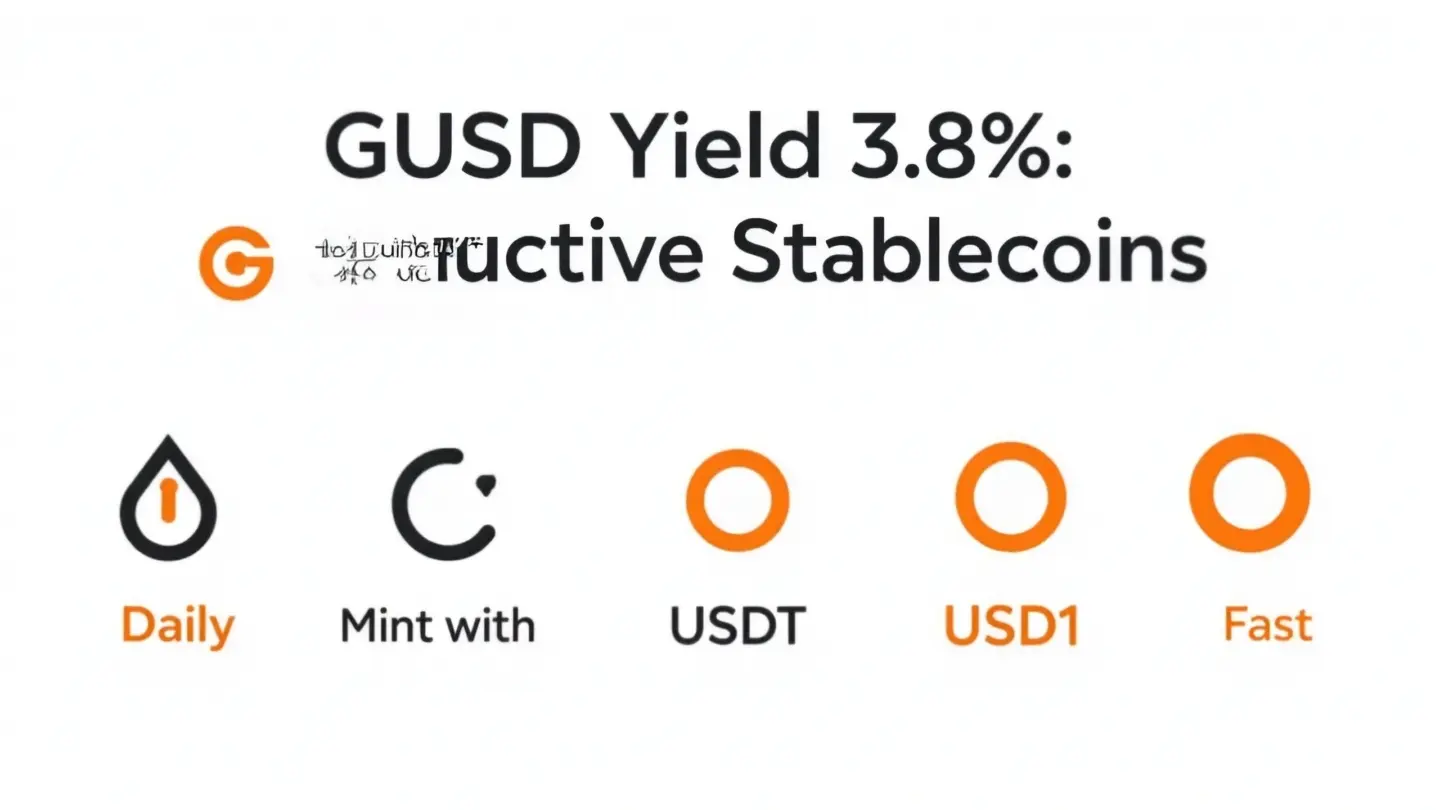
Gate has upgraded the GUSD minting mechanism by introducing USD1 as a new 1:1 minting option alongside USDT and USDC. Users can now mint GUSD using three different stablecoins while maintaining the same face value.
At the same time, the estimated annual yield has been updated to 3.8% APR, with rewards distributed automatically every day before 12:00 UTC. There is no manual claiming process and no complicated reward schedule. Hold eligible GUSD, and the rewards are credited daily.
Another number deserves attention. The total minted supply of GUSD has already exceeded $230 million. That doesn't guarantee future success, but it does indicate growing confidence in the product and increasing participation from users who are looking for a more productive way to manage stablecoins.
The Real Story Isn't the APR
Whenever a platform increases its yield, the first question should always be simple:
Where does the return come from?
In crypto, unusually high yields often depend on aggressive token emissions or temporary incentive programs that eventually disappear.
GUSD follows a different approach.
Its returns are supported through a combination of U.S. Treasury-backed Real World Assets (RWA), Gate ecosystem revenue, and carefully selected stablecoin yield assets.
That distinction matters.
Rather than depending entirely on newly created tokens, part of the income comes from assets that already generate value in traditional financial markets. This creates a stronger foundation compared with reward models that rely purely on inflationary incentives.
Of course, the APR is still variable and may change over time, but understanding the source of the yield is just as important as understanding the percentage itself.
Stablecoins Are Becoming Productive Assets
For years, stablecoins had one primary job.
Preserve value.
They acted as a parking place while traders waited for market opportunities.
Today that role is changing.
Instead of remaining inactive, stablecoins are gradually becoming productive financial assets capable of generating returns while staying available for future investments.
That is exactly the direction GUSD is following.
Rather than forcing users to lock capital for long periods, the objective is to keep liquidity available while allowing idle funds to earn along the way.
This simple change completely alters how many investors think about portfolio management.
Capital Efficiency Is Becoming the Real Competition
One phrase is becoming increasingly important across both traditional finance and crypto:
Capital efficiency.
Imagine two investors holding exactly the same amount of capital.
The first leaves stablecoins untouched while waiting for better market conditions.
The second keeps that capital inside a yield-generating ecosystem where rewards continue accumulating every day.
Months later, both investors still own the same principal, but one investor has generated additional returns without changing overall market exposure.
That difference may appear small over a single week, but across months or years, it becomes meaningful.
This is why exchanges are no longer competing only through trading fees or token listings.
They are now competing on how effectively they help users utilize idle capital.
Why USD1 Integration Matters
Some readers may wonder why adding another stablecoin matters.
The answer is flexibility.
By supporting USDT, USDC, and now USD1, Gate gives users more choices without forcing unnecessary conversions outside its ecosystem.
This reduces friction, lowers operational complexity, and creates a stronger multi-stablecoin environment where users can move between supported assets more efficiently.
As regulated digital dollars continue expanding globally, flexibility may become just as valuable as yield itself.
One Balance, Multiple Opportunities
Perhaps the most interesting part of the GUSD ecosystem is that holding the asset does not necessarily prevent participation elsewhere.
Eligible GUSD can continue generating its base minting rewards while also being used across selected Gate ecosystem products, including Launchpool opportunities, Pre-IPO subscriptions, and supported financial products.
Instead of choosing one opportunity over another, users can potentially benefit from multiple layers of utility using the same underlying capital.
That is a much more efficient use of stablecoins than simply leaving them inactive inside a wallet.
Liquidity Still Matters
Yield means very little if users cannot access their money when needed.
Gate addressed this by introducing fast redemption, allowing eligible users to convert GUSD back into their original minting currency within the available fee-free quota.
For larger requests or periods of unusually high redemption demand, the standard D+3 redemption process remains available.
This balance between accessibility and system stability is important because liquidity remains one of the biggest concerns for anyone using yield products.
Looking Beyond the Headlines
The current 3.8% APR naturally attracts attention, but investors should remember that this figure is not permanently fixed.
Returns are influenced by factors such as Treasury yields, ecosystem revenue, and overall market conditions.
If global interest rates decline, yields linked to Real World Assets may gradually decrease as well.
That does not necessarily indicate weakness in the product—it simply reflects changing financial conditions.
Understanding why returns move is more valuable than focusing only on the percentage itself.
Risks Investors Should Understand
Every investment product deserves balanced analysis.
GUSD is no exception.
The current yield can change.
Fast redemption depends on available fee-free quotas.
Part of the return is connected to Gate's ecosystem performance.
Global regulations surrounding stablecoins and tokenized Real World Assets continue evolving.
These factors should always be considered before making financial decisions.
Responsible investing means understanding both the opportunities and the limitations.
The Bigger Industry Trend
Real World Assets are becoming one of crypto's fastest-growing sectors because they connect blockchain technology with income-producing assets from traditional finance.
Instead of separating crypto and conventional markets, products like GUSD attempt to combine the advantages of both.
Blockchain provides accessibility and efficiency.
Traditional assets contribute stability and sustainable income generation.
This combination may become one of the defining themes of the next phase of digital finance.
Market Outlook
The stablecoin market is changing rapidly.
Competition is no longer based only on transaction speed or trading pairs. Increasingly, platforms are competing on how much value they can create from assets that would otherwise remain idle.
Gate's latest GUSD upgrade reflects that evolution. By combining a 1:1 minting system across USDT, USDC, and USD1, daily reward distribution, exposure to Real World Asset income, flexible redemption, and integration with multiple ecosystem products, GUSD is evolving into more than a digital dollar.
It is becoming a financial tool designed to improve how capital is used.
The biggest lesson from this update is simple.
In today's crypto market, the goal is no longer just protecting your stablecoins.
The goal is making sure they continue working—even while you wait for your next opportunity.
@Gate_Square
#SummerCreationCamp
repost-content-media
#GUSDYieldRisesto3.8%
GUSD Yield 3.8%: The Evolution of Productive Stablecoins
Most people treat stablecoins as a parking space.
They convert profits into USDT or USDC, wait for the next market opportunity, and let their funds remain idle for days or even weeks. While waiting, that capital generates no return despite being one of the safest assets in a crypto portfolio.
The market is gradually moving away from that approach.
Instead of asking, "Where should I park my funds?" investors are asking, "How can my capital continue working without sacrificing liquidity?"
Gate's latest GUSD update re
MrFlower_XingChen
#GUSDYieldRisesto3.8%
GUSD Yield 3.8%: The Evolution of Productive Stablecoins
Most people treat stablecoins as a parking space.
They convert profits into USDT or USDC, wait for the next market opportunity, and let their funds remain idle for days or even weeks. While waiting, that capital generates no return despite being one of the safest assets in a crypto portfolio.
The market is gradually moving away from that approach.
Instead of asking, "Where should I park my funds?" investors are asking, "How can my capital continue working without sacrificing liquidity?"
Gate's latest GUSD update reflects exactly this shift.
A New Stage for GUSD
GUSD has become more than a simple stablecoin issued inside the Gate ecosystem.
Users can now mint GUSD 1:1 using USD1, alongside the previously supported USDT and USDC. This expands flexibility and gives users more ways to enter the ecosystem without unnecessary conversions.
At the same time, the current annual yield has increased to 3.8% APR, with rewards distributed automatically every day before 12:00 UTC.
Another major improvement is the launch of Fast Redemption, allowing eligible users to redeem GUSD back into their original minting currency through a dynamic fee-free quota, making access to liquidity significantly faster than traditional redemption methods.
The circulating minted supply has already exceeded $230 million, showing growing confidence in the product.
Why This Matters
Crypto investing is no longer only about price appreciation.
Today, efficient investors look for ways to generate returns even while waiting for their next trading or investment opportunity.
Holding idle stablecoins creates opportunity cost.
By converting eligible stablecoins into GUSD, users can begin earning daily yield without locking their assets for extended periods.
This changes stablecoins from passive storage into productive capital.
Multiple Entry Options
One of the strongest improvements is support for multiple minting assets.
Users now have the flexibility to mint GUSD using:
• USD1
• USDT
• USDC
This reduces unnecessary transfers between different stablecoins and creates a smoother experience for users operating within the Gate ecosystem.
As liquidity becomes more fragmented across different stablecoins, this flexibility becomes increasingly valuable.
Daily Yield Instead of Waiting
Unlike products that distribute rewards weekly or monthly, GUSD distributes earnings every day.
Daily distribution offers several advantages:
• Faster compounding
• Better visibility of returns
• Continuous reward generation
• Improved capital management
Rather than waiting weeks before seeing rewards, users receive them automatically while holding GUSD.
Capital That Keeps Working
The biggest innovation is not simply the 3.8% APR.
It is the ability to continue earning while using GUSD throughout different ecosystem products.
For example, eligible GUSD can continue generating minting rewards while participating in supported opportunities such as Launchpool or selected Pre-IPO subscriptions.
Instead of choosing between earning yield or participating in new opportunities, users may benefit from both simultaneously where supported.
This significantly improves overall capital efficiency.
Where the Yield Comes From
A healthy yield should have sustainable foundations.
GUSD's return is supported through a combination of:
• Real-world Treasury-backed assets
• Gate ecosystem revenue
• High-quality stablecoin yield strategies
This diversified structure helps reduce dependence on promotional incentives or unsustainable reward emissions.
As real-world asset adoption continues growing across crypto, combining traditional income sources with blockchain infrastructure is becoming an increasingly important trend.
Liquidity Remains Important
Generating yield has little value if users cannot access their funds when needed.
Fast Redemption addresses this concern by enabling near real-time redemption within available fee-free quotas.
If quota limits are reached, standard redemption remains available.
This creates a balance between liquidity and operational stability.
Advantages Compared With Traditional Stablecoin Holding
Keeping stablecoins idle offers security but no productivity.
Many traditional earning products introduce lock-up periods, delayed withdrawals, or changing interest structures.
GUSD focuses on:
• Daily reward distribution
• Flexible redemption
• Multiple minting options
• Integration across Gate products
For many users, this creates a more practical balance between accessibility and passive returns.
Important Risks Investors Should Understand
Every financial product carries risk.
Several factors deserve attention.
The current 3.8% APR is variable, not permanently fixed.
Future changes in interest rates, Treasury yields, or ecosystem revenue may affect future returns.
Fast redemption depends on available fee-free quotas.
During periods of unusually high redemption demand, users may need to use the standard redemption process.
Platform performance also matters because part of the yield originates from ecosystem revenue rather than Treasury income alone.
Regulatory developments across different jurisdictions may also influence product availability over time.
Understanding these factors helps investors make informed decisions instead of focusing only on advertised returns.
Market Perspective
Real-world assets continue becoming one of the fastest-growing sectors in digital finance.
Institutional investors increasingly seek blockchain products backed by traditional financial assets rather than purely speculative yield.
GUSD fits directly into this trend by combining blockchain efficiency with real-world income generation.
If adoption continues expanding, productive stablecoins could become a standard feature rather than a niche product.
Looking Ahead
Several developments will determine GUSD's future.
Growth in minted supply.
Expansion of ecosystem integrations.
Future interest-rate decisions.
Increasing adoption of RWA-backed financial products.
The product's long-term success will depend on whether it can continue delivering competitive returns while maintaining liquidity, transparency, and user confidence.
As crypto matures, investors are becoming less interested in simply holding assets and more interested in making every dollar productive.
GUSD represents that changing mindset.
Instead of waiting for the next opportunity, your capital can continue generating value every single day.
#SummerCreationCamp
@Gate_Square
repost-content-media
GUSD+0.00%
USDC+0.01%
USD1+0.00%
RWA-0.39%
#EventContractsLive
Event Contracts Are Here — But Don't Let the Rewards Distract You From What Really Matters
Every time an exchange launches a new trading product, most people focus on one thing: the prize pool.
This time, Gate is giving away $50,000 through the launch celebration for Event Contracts, and that's enough to grab anyone's attention. But after reading the campaign carefully, I think the rewards are only half of the story.
The real story is that Gate is introducing a trading product built for people who want to capture short-term market opportunities without the complexity of tra
MrFlower_XingChen
#EventContractsLive
Event Contracts Are Here — But Don't Let the Rewards Distract You From What Really Matters
Every time an exchange launches a new trading product, most people focus on one thing: the prize pool.
This time, Gate is giving away $50,000 through the launch celebration for Event Contracts, and that's enough to grab anyone's attention. But after reading the campaign carefully, I think the rewards are only half of the story.
The real story is that Gate is introducing a trading product built for people who want to capture short-term market opportunities without the complexity of traditional derivatives.
So, What Exactly Are Event Contracts?
Think about the moments when Bitcoin suddenly reacts to CPI data, an ETF announcement, or unexpected breaking news.
Many traders see the move coming but don't want to open a leveraged futures position because liquidation risk is always hanging over them.
Event Contracts offer another way to participate.
Instead of calculating leverage, margin requirements, funding fees, or stop-loss levels, you simply make a prediction about where the market will be when the contract expires. Once the event ends, the result is settled automatically.
That simplicity makes the product appealing to both experienced traders looking for quick opportunities and newcomers who find futures markets intimidating.
Why Gate Chose This Moment
Crypto has become a 24-hour market driven by news.
Interest-rate decisions...
ETF approvals...
Whale transactions...
Economic reports...
Political developments...
Prices can move dramatically within minutes.
Products designed around short prediction windows fit naturally into today's fast-moving market, allowing traders to express an opinion without holding positions for days.
A Launch With Three Different Opportunities
Rather than creating a single competition, Gate divided the $50,000 campaign into three separate reward categories.
1. First Trade Protection
Trying something new always carries uncertainty.
That's why the first 2,000 eligible users whose first Event Contract finishes with a loss can receive compensation from a $10,000 reward pool.
Each eligible participant can receive up to $5.
It won't eliminate trading risk, but it lowers the psychological barrier for first-time users who simply want to understand how the product works.
2. Rewarding Profitable Traders
The second campaign focuses on results instead of activity.
A $20,000 prize pool has been allocated for traders who generate the highest net trading profit during the event.
Instead of rewarding random participation, this challenge rewards consistency and successful decision-making.
Individual rewards can reach $500, depending on final rankings.
3. Trading Sprint
The final campaign is designed for active participants.
Anyone reaching at least $1,000 in cumulative Event Contracts trading volume becomes eligible to share another $20,000 reward pool.
Rewards are distributed according to each participant's share of the total eligible trading volume, with payouts capped at $1,000 per user.
This gives frequent traders another way to benefit beyond simply making profitable predictions.
The Bigger Picture
What caught my attention wasn't just the reward campaign.
It was the product philosophy.
Traditional futures trading often scares beginners because they must understand leverage, liquidation prices, funding payments, margin ratios, and risk management before placing even a small position.
Event Contracts remove much of that complexity.
Instead of asking, "What leverage should I use?"
The question becomes:
"Where do I think the market will be when this event finishes?"
That changes the learning curve considerably.
But Don't Confuse Simplicity With Easy Money
A simpler interface doesn't make trading easier.
Every prediction still depends on market direction.
Short-term volatility can become extremely aggressive around important events.
Strong emotions often lead traders to chase candles, overtrade, or ignore risk management.
The promotional rewards should never become the reason for entering positions.
A good trade is based on analysis—not on hoping to qualify for a prize.
How I'd Approach It
If I were exploring Event Contracts for the first time, I wouldn't begin with large positions.
I'd first observe how contracts settle.
I'd understand how different expiry times behave.
I'd pay attention to how prices react around economic announcements.
Only after becoming comfortable with the mechanics would I gradually increase activity.
Learning the product is often more valuable than chasing the biggest reward on day one.
Why This Launch Could Matter
Prediction-style trading has been gaining popularity because many users want exposure to market movements without navigating the complexity of traditional derivatives.
If Event Contracts attract enough liquidity and active participation, they could become another important trading option within the Gate ecosystem alongside Spot and Futures.
The launch campaign is clearly designed to accelerate that adoption by rewarding beginners, profitable traders, and active participants at the same time.
Event Schedule
The campaign runs from:
July 21, 02:00 UTC until July 31, 08:00 UTC
Eligible users can participate throughout the event period and compete across all three reward categories according to the official rules.
My Perspective
The $50,000 prize pool will naturally attract attention.
But after looking beyond the rewards, I think the more important development is the arrival of a trading format that makes short-term market participation more accessible.
Some traders will join for the incentives.
Others will stay because they discover a product that better matches their trading style.
Sometimes the biggest opportunity isn't the prize pool.
It's learning a new way to participate in the market before everyone else does.
What do you think about Event Contracts? Do you see them becoming more popular than traditional short-term futures for quick market predictions?
#SummerCreationCamp #EventContractsLive #Gateio @Gate_Square @GateSquare
repost-content-media
BTC-0.65%
#VIPExclusive4%APY
My USDT Doesn't Need to Trade Every Day… But It Should Work Every Day
One thing I've learned over time is that not every dollar in my portfolio needs to be in an active trade.
Sometimes the best decision is simply protecting capital and letting it earn something while waiting for the next opportunity.
That's why Gate's latest VIP Wealth Hub campaign caught my attention.
Instead of watching USDT sit idle in my wallet, there's now a limited-time option for eligible VIP users to earn a fixed return through Simple Earn.
Here's What's Being Offered
The campaign is straightforwar
MrFlower_XingChen
#VIPExclusive4%APY
My USDT Doesn't Need to Trade Every Day… But It Should Work Every Day
One thing I've learned over time is that not every dollar in my portfolio needs to be in an active trade.
Sometimes the best decision is simply protecting capital and letting it earn something while waiting for the next opportunity.
That's why Gate's latest VIP Wealth Hub campaign caught my attention.
Instead of watching USDT sit idle in my wallet, there's now a limited-time option for eligible VIP users to earn a fixed return through Simple Earn.
Here's What's Being Offered
The campaign is straightforward.
7-Day Term: 3.8% APR
30-Day Term: 4.0% APR
There's one important catch—this isn't a permanent rate.
The promotional allocation is limited, and once the quota is filled, the offer returns to the normal earning rate.
So it's one of those opportunities where waiting too long could mean missing the higher yield.
Why I Think This Matters
Crypto traders often focus only on making profits from price movements.
But markets don't trend every day.
There are plenty of periods where I simply hold stablecoins and wait for better setups.
During those waiting periods, my capital isn't really doing anything.
Even if the return isn't huge, earning something is still better than earning nothing.
Over time, those small returns can add up without needing to chase risky trades.
Which Option Would I Choose?
Honestly, it depends on my trading plan.
If I believe the market could become volatile within a week, I'd probably keep things flexible with the 7-day option.
If I don't expect to use my funds anytime soon, locking them for 30 days at 4% APR looks more attractive because of the higher return.
Neither choice is right or wrong.
The best option depends on how soon you think you'll need your capital.
Don't Forget the Small Details
This promotion isn't unlimited.
It's available only for eligible VIP users, and subscriptions follow a first-come, first-served model.
Once the allocation is gone, the promotional rates disappear too.
So anyone interested should read the campaign rules first instead of assuming the offer will still be available later.
My View
I don't see products like this as a way to get rich.
I see them as a way to improve capital efficiency.
If my USDT is just sitting there while I wait for the next trading opportunity, I'd rather have it earning something than nothing.
Not every strategy has to involve high risk.
Sometimes the smartest move is simply making idle capital productive.
What about you? If you had spare USDT today, would you keep it liquid for the next trade, or lock it for 30 days to earn the higher 4% APR?
DYOR
#VIPExclusive4%APY
#SummerCreationCamp @Gate_Square @GateSquare
repost-content-media
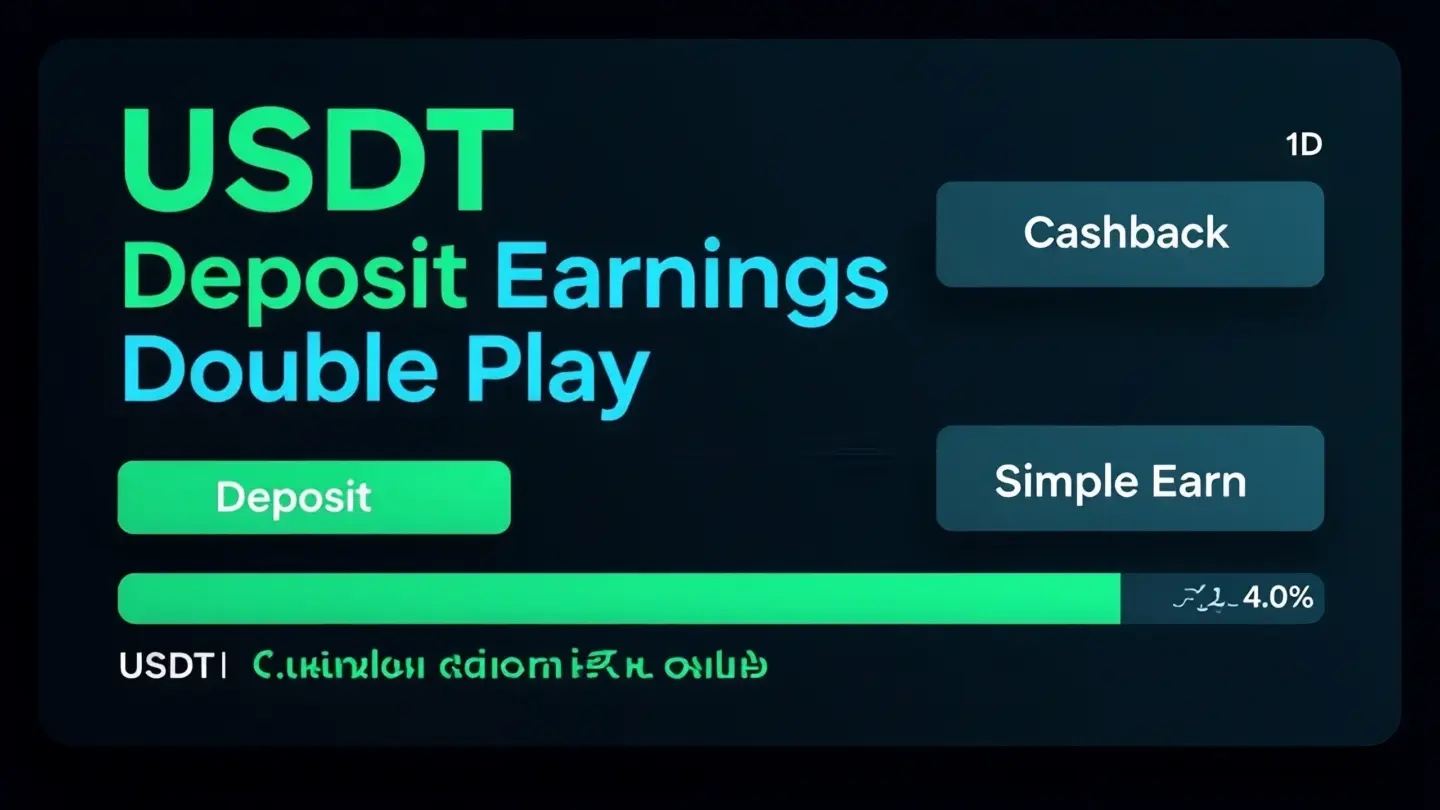
#USDTDepositEarningsDoublePlay
One USDT, Two Ways to Earn — Can Your Stablecoins Work Smarter Instead of Harder?

Most traders only think about making money when they're in a position.

But what happens to your USDT while you're waiting for the next setup?

For many people, it simply sits in their wallet doing nothing.

That idle balance may feel safe, but from a capital management perspective, it's also a missed opportunity.

Gate's latest USDT Deposit Earnings Double Play campaign caught my attention because it isn't built around just one reward. Instead, it combines deposit incentives with
MrFlower_XingChen
#USDTDepositEarningsDoublePlay
One USDT, Two Ways to Earn — Can Your Stablecoins Work Smarter Instead of Harder?
Most traders only think about making money when they're in a position.
But what happens to your USDT while you're waiting for the next setup?
For many people, it simply sits in their wallet doing nothing.
That idle balance may feel safe, but from a capital management perspective, it's also a missed opportunity.
Gate's latest USDT Deposit Earnings Double Play campaign caught my attention because it isn't built around just one reward. Instead, it combines deposit incentives with passive wealth products, giving eligible users two different ways to make better use of the same capital.
Why This Campaign Is Different
Usually, exchange promotions focus on a single objective.
Deposit and receive a reward.
Trade and receive a rebate.
Subscribe to a savings product and earn interest.
This campaign combines these ideas into one strategy, encouraging users to think beyond simply holding USDT.
The goal isn't just to increase deposits—it's to improve how efficiently your capital works inside the ecosystem.
Opportunity One: Deposit and Earn Cashback
The first part of the campaign is aimed at active traders.
Users who complete the required net USDT deposit and meet the specified futures trading volume can qualify for cashback rewards.
The promotion offers:
• Up to 1% USDT cashback
• Maximum reward of 10,000 USDT per eligible user
For traders who already plan to deposit funds and trade futures, this can help lower the overall cost of participation while adding an extra incentive for activity.
The important point is that cashback isn't automatic.
Meeting both the deposit and trading requirements is essential.
Opportunity Two: Put Idle USDT to Work
Not every dollar needs to be traded.
Sometimes the smartest move is simply allowing unused capital to generate predictable returns.
Gate's VIP Wealth products offer eligible users two fixed-term options:
• 7-Day Term — 3.8% APR
• 30-Day Term — 4.0% APR
Rather than leaving stablecoins idle between trades, users can potentially earn passive income during periods when they don't need immediate access to their funds.
It's a simple concept, but one that many traders overlook.
Looking at the Bigger Picture
What I like about this campaign isn't the reward size.
It's the idea behind it.
Good portfolio management isn't only about finding winning trades.
It's also about making every part of your portfolio productive.
One portion of your capital might be supporting active trading.
Another portion could be generating passive returns while waiting for better market conditions.
Instead of forcing users to choose one approach, this campaign supports both.
But Don't Ignore the Risks
Promotions always look attractive at first glance, but every opportunity deserves careful evaluation.
The cashback reward depends on satisfying all campaign conditions, including deposit requirements and futures trading volume.
That means simply depositing funds isn't enough.
On the savings side, fixed-term subscriptions temporarily reduce liquidity.
If an unexpected market opportunity appears, those funds won't be instantly available until the selected term ends.
And of course, futures trading always carries market risk.
No cashback campaign can offset poor risk management or emotional decision-making.
Who Can Benefit Most?
In my opinion, this campaign is most suitable for traders who already maintain a healthy USDT balance and actively participate in the market.
If you're already planning to trade futures, the cashback can become an added benefit.
If part of your capital is sitting unused, fixed-term savings may help improve overall portfolio efficiency.
The biggest advantage comes from using each part of your portfolio with a clear purpose instead of letting funds remain idle.
My Perspective
One lesson I've learned is that successful investing isn't only about earning more.
It's also about wasting less.
Idle capital earns nothing.
Well-managed capital has the potential to generate value even when you're waiting for your next trade.
That's the real idea behind Gate's USDT Deposit Earnings Double Play.
Not encouraging unnecessary trading…
Not encouraging unnecessary risk…
But encouraging traders to think more carefully about how every USDT in their portfolio is being used.
If you had extra USDT today, would you focus on earning cashback through active trading, lock part of it into fixed-term savings, or divide your capital between both strategies?
#SummerCreationCamp
#USDTDepositEarningsDoublePlay @Gate_Square @GateSquare
repost-content-media
#PredictWorldCupWin40000U 🇳🇱 Netherlands vs Tunisia 🔥 | World Cup Group F Prediction
The Netherlands are marching into this crucial Group F clash as overwhelming favorites! After collecting 4 points from two matches — a thrilling 2-2 draw against Japan followed by a dominant 5-1 demolition of Sweden — the Dutch side is firing on all cylinders.
Tunisia, unfortunately, have been in freefall. They suffered a humiliating 5-1 loss to Sweden and a shocking 4-0 defeat against Japan, conceding a staggering 9 goals in just two games while scoring only 1. Their defense has completely collapsed, and w
CryptoDiscovery
#PredictWorldCupWin40000U 🇳🇱 Netherlands vs Tunisia 🔥 | World Cup Group F Prediction
The Netherlands are marching into this crucial Group F clash as overwhelming favorites! After collecting 4 points from two matches — a thrilling 2-2 draw against Japan followed by a dominant 5-1 demolition of Sweden — the Dutch side is firing on all cylinders.
Tunisia, unfortunately, have been in freefall. They suffered a humiliating 5-1 loss to Sweden and a shocking 4-0 defeat against Japan, conceding a staggering 9 goals in just two games while scoring only 1. Their defense has completely collapsed, and with elimination already confirmed, they are playing only for pride.
My Strong Prediction:
Netherlands Win Probability: 75%
Draw Probability: 17%
Tunisia Win Probability: 8%
Predicted Score: Netherlands 3-0 Tunisia
Alternative Scores: 2-0, 4-1 (or 1-1 if heavy rotation happens)
Why Netherlands Dominate This Match:
Explosive attack led by Cody Gakpo and other stars — 7 goals scored in two matches.
Perfect balance between attack and defense.
Unbeaten in the group stage with massive motivation to finish 1st in Group F for a better knockout path.
Superior squad quality, transition play, possession, and finishing.
Tunisia’s defensive organization is in ruins compared to their qualification campaign. Coach Herve Renard wants dignity in their final game, but facing a confident, high-momentum Dutch team makes it an uphill battle.
Expected Scenario: Netherlands will control possession from minute one, create wave after wave of attacks, and likely score early. Tunisia may park the bus and look for counters, but their leaky defense will struggle badly against Oranje quality.
The Dutch have shown they can punish any mistake ruthlessly. This should be a comfortable victory that seals top spot in the group.
Final Verdict: Netherlands are the clear strongest pick. Back them confidently for a solid win! Tunisia can fight with pride, but quality, form, and motivation all point towards a convincing Oranje victory.
#SquarePrediction #世界杯 #Win40000U
repost-content-media
#MGXRaises50BForAIIinfrastructure
MGX Raises Nearly $50 Billion: Why This Could Become One of the Most Important AI Investment Stories of the Decade
The artificial intelligence industry is moving at a pace that few people imagined possible just a few years ago. Every month brings new breakthroughs, new partnerships, and new investments that reshape how technology companies compete. While many investors focus only on AI products, chatbots, and software applications, there is another side of the AI revolution that is becoming equally important: infrastructure. Without powerful infrastructure, e
MrFlower_XingChen
#MGXRaises50BForAIIinfrastructure
MGX Raises Nearly $50 Billion: Why This Could Become One of the Most Important AI Investment Stories of the Decade
The artificial intelligence industry is moving at a pace that few people imagined possible just a few years ago. Every month brings new breakthroughs, new partnerships, and new investments that reshape how technology companies compete. While many investors focus only on AI products, chatbots, and software applications, there is another side of the AI revolution that is becoming equally important: infrastructure. Without powerful infrastructure, even the most advanced AI models cannot operate efficiently. This is why the recent announcement that MGX has raised nearly $50 billion for AI infrastructure and technology investments deserves serious attention from investors, technology enthusiasts, and anyone following the future of artificial intelligence.
MGX, an Abu Dhabi-based AI investment firm backed by Mubadala and G42, has quickly emerged as one of the most influential players in the global AI ecosystem. Raising close to $50 billion places MGX among the largest AI-focused investment organizations in the world. This is not just another venture capital fund looking for startup opportunities. Instead, it represents a strategic effort to build and support the entire foundation that future AI innovation will rely upon. When capital of this scale enters a rapidly growing industry, it often creates opportunities that extend far beyond the companies receiving direct investment.
One reason this development stands out is the sheer size of the capital involved. Many technology investment funds manage billions of dollars, but reaching nearly $50 billion places MGX in a different category. Funds of this size have the ability to influence entire industries, support large-scale infrastructure projects, and participate in multiple strategic investments simultaneously. In the AI sector, where demand for computing power, data centers, advanced chips, and cloud infrastructure continues to rise, access to massive capital can become a competitive advantage in itself.
When I look at the broader AI market, one trend becomes increasingly clear. The industry is moving beyond experimentation and entering a phase of industrial-scale deployment. During the early years of AI development, the focus was primarily on research and proof of concept. Today, organizations around the world are integrating AI into business operations, customer service, healthcare systems, financial services, manufacturing, logistics, education, and many other sectors. As adoption increases, the infrastructure required to support these applications grows exponentially. Data centers, specialized processors, energy systems, networking equipment, and cloud services all become essential components of the AI economy.
MGX appears to recognize this shift. Rather than concentrating solely on consumer-facing AI products, the firm is targeting the underlying infrastructure that powers the entire ecosystem. This approach is particularly interesting because infrastructure investments often create long-term value. While individual applications may rise and fall in popularity, the infrastructure supporting them remains necessary regardless of which specific AI model or platform dominates the market. In many ways, investing in AI infrastructure resembles investing in roads, ports, and utilities during periods of industrial expansion. The companies providing essential infrastructure frequently become some of the most valuable participants in the broader economic transformation.
Another factor that makes MGX noteworthy is the quality of its strategic relationships. The firm has already invested in OpenAI, xAI, and Anthropic. These organizations are widely recognized as leading innovators in advanced AI systems. Having exposure to multiple major AI players provides MGX with a unique position within the industry. Rather than betting exclusively on one company or one technology path, the firm appears to be building a diversified portfolio across several influential AI ecosystems.
This diversified strategy may prove particularly valuable because the future of AI remains highly competitive. No one can predict with certainty which company will dominate the next decade. OpenAI, Anthropic, xAI, and other emerging competitors are all pursuing different approaches to model development, safety, scalability, and deployment. By maintaining relationships across multiple leading organizations, MGX gains insight into various parts of the AI landscape while reducing dependence on the success of any single company.
The partnership involving BlackRock and Microsoft further highlights the scale of MGX's ambitions. Both organizations bring significant expertise and resources to infrastructure development. Microsoft has become one of the most important technology companies in the AI era through its cloud business and strategic AI investments. BlackRock, meanwhile, possesses extensive experience managing large-scale investment initiatives across global markets. When companies and institutions of this caliber collaborate on infrastructure projects, it signals a long-term commitment rather than a short-term market trend.
One aspect of AI infrastructure that deserves more attention from investors is data center development. Every major AI model requires enormous computing resources for training and deployment. As AI applications become more sophisticated, demand for processing power continues to increase. This creates opportunities not only for software developers but also for companies involved in data center construction, semiconductor manufacturing, energy generation, cooling systems, networking equipment, and cloud services. In other words, the AI boom extends far beyond the companies creating chatbots and language models.
From an investment perspective, this broader ecosystem is often where some of the most durable opportunities emerge. Many retail investors focus on headline names because they are visible and easy to understand. However, experienced investors frequently look deeper into supply chains and infrastructure providers. During previous technological revolutions, the companies supplying essential tools and infrastructure often achieved remarkable growth. The AI era may follow a similar pattern.
Another interesting observation is the growing role of the Middle East in advanced technology investment. Historically, discussions about cutting-edge technology have focused primarily on Silicon Valley, Europe, and parts of East Asia. Today, countries in the Gulf region are increasingly positioning themselves as important participants in the global technology economy. Through strategic investments, partnerships, and infrastructure development, organizations such as MGX are helping to establish the region as a meaningful contributor to AI innovation.
This geographic diversification may ultimately strengthen the resilience of the AI industry. As demand for AI services expands worldwide, infrastructure and investment activity are becoming more distributed across different regions. This reduces concentration risk and creates opportunities for international collaboration. It also encourages competition, which can accelerate innovation and improve access to technology.
For newcomers to investing, the MGX story provides several valuable lessons. First, major technological revolutions are rarely driven by a single company. Instead, they involve entire ecosystems consisting of developers, infrastructure providers, investors, hardware manufacturers, cloud operators, and service providers. Understanding these interconnected relationships can help investors identify opportunities that may not receive as much media attention.
Second, infrastructure matters. While exciting consumer applications often attract headlines, infrastructure forms the foundation upon which long-term growth depends. Companies that build essential infrastructure can benefit regardless of which specific products ultimately dominate the market.
Third, patience remains important. Large-scale infrastructure projects typically require years to develop and mature. Investors focusing on long-term structural trends rather than short-term market fluctuations may be better positioned to benefit from transformational technologies such as artificial intelligence.
Looking ahead, the next phase of AI growth will likely depend on solving several key challenges. Computing capacity must continue expanding. Energy requirements must be managed efficiently. Data center networks must scale to support increasing workloads. Advanced chips must be produced in sufficient quantities to meet demand. Capital on the scale that MGX has raised can play an important role in addressing these challenges.
The significance of this fundraising effort extends beyond the numbers themselves. It reflects growing confidence that artificial intelligence will remain a central driver of economic and technological development for many years. Large institutional investors typically conduct extensive research before committing substantial capital. Their willingness to support AI infrastructure at this scale suggests strong conviction regarding the long-term potential of the sector.
As someone who follows technology and investment trends closely, I view this development as another indication that the AI industry is entering a new stage of maturity. The conversation is gradually shifting from whether AI will transform industries to how quickly that transformation will occur and what infrastructure will be required to support it. Organizations capable of building and financing that infrastructure may become some of the most influential players in the next decade.
The rise of MGX demonstrates that the AI race is no longer limited to technology companies alone. Investment firms, sovereign wealth funds, infrastructure providers, and global institutions are becoming increasingly involved. This broader participation expands the resources available to the industry and accelerates the development of critical capabilities.
Ultimately, the nearly $50 billion raised by MGX represents more than a fundraising milestone. It symbolizes confidence in the future of artificial intelligence, confidence in the importance of infrastructure, and confidence that the next wave of technological progress will require unprecedented levels of investment. Whether viewed from the perspective of technology, finance, or long-term innovation, this is a story worth following closely because the decisions being made today could shape the global AI landscape for years to come.
#MyGateTradeStory #MyGateTradingMoment #PredictWorldCupWin40000U @Gate_Square @GateSquare
repost-content-media
Gate Stocks and the Evolution of Global Investing: One Platform, Three Major Markets, Unlimited Opportunities
MrFlower_XingChen
Gate Stocks and the Evolution of Global Investing: One Platform, Three Major Markets, Unlimited Opportunities
#GateStocks7x24Trading
Global investing is evolving rapidly. Gate Stocks connects U.S., Hong Kong, and Korean markets in one platform, offering access to 12,500+ stocks and ETFs, 24/7 trading, fractional investing, and crypto-stock integration. This article explores how Gate Stocks is shaping the future of borderless investing.
#HoldUSD1EarnYield
#MyGateTradeStory
The Gate USD1 Hold and Earn Yield program represents a growing trend in the cryptocurrency industry where exchanges are no longer limited to trading infrastructure alone, but are increasingly evolving into full-scale financial ecosystems. In this new phase of digital finance, users are not only looking for access to markets, but also for stable income opportunities, capital preservation tools, and simplified wealth-building strategies that do not require constant trading activity or advanced technical knowledge.
At its foundation, the USD1 Hold and Earn Y
MrFlower_XingChen
#HoldUSD1EarnYield
#MyGateTradeStory
The Gate USD1 Hold and Earn Yield program represents a growing trend in the cryptocurrency industry where exchanges are no longer limited to trading infrastructure alone, but are increasingly evolving into full-scale financial ecosystems. In this new phase of digital finance, users are not only looking for access to markets, but also for stable income opportunities, capital preservation tools, and simplified wealth-building strategies that do not require constant trading activity or advanced technical knowledge.
At its foundation, the USD1 Hold and Earn Yield program is built around a simple concept: users hold USD1 stablecoins in their Gate account and earn a predefined annualized yield of up to 15 percent. USD1 is a stablecoin designed to maintain a 1:1 peg with the United States dollar, meaning its primary objective is stability rather than price appreciation. Unlike volatile cryptocurrencies such as Bitcoin or Ethereum, stablecoins are designed to reduce exposure to market fluctuations, making them suitable for users who prefer predictable value storage.
This combination of stability and yield generation creates an interesting financial structure. Traditionally, stable assets such as bank deposits or government bonds provide relatively low returns in exchange for safety. In contrast, crypto-based yield programs attempt to enhance returns while maintaining similar stability characteristics. This is why stablecoin earning programs have become increasingly popular among both retail and institutional participants seeking alternatives to traditional savings products.
The mechanics of the USD1 Earn program are intentionally designed to be simple. Users do not need to actively trade, manage positions, or monitor market charts. Once USD1 is deposited or purchased and held within an eligible Gate account, yield generation begins automatically. Earnings are typically distributed on a regular basis, allowing users to observe continuous growth in their holdings over time. This automation is one of the key reasons such programs appeal to beginners, passive investors, and long-term holders who prefer low-effort financial strategies.
One of the most important aspects of any yield-generating system is compounding. While annual yield rates are often discussed in simple percentage terms, the real impact becomes more visible when returns are reinvested over time. For example, a stable principal earning a consistent yield can gradually increase in size not only through interest payments but also through the reinvestment of those earnings. Over longer time horizons, compounding can significantly enhance total returns, assuming rates remain stable and conditions unchanged.
To better understand the appeal of such a system, it is important to compare it with traditional financial instruments. In conventional banking systems, savings accounts often offer low interest rates due to regulatory structures, monetary policy environments, and risk limitations. Even high-yield savings accounts in many developed economies rarely exceed a few percentage points annually. By contrast, crypto-based yield programs often advertise significantly higher returns, reflecting both the competitive nature of digital asset platforms and the evolving structure of decentralized and centralized financial systems.
However, higher yields also require careful consideration of underlying risks. In stablecoin-based programs, the primary risk is not price volatility of the asset itself, since stablecoins are designed to maintain a fixed value. Instead, risks may be associated with platform operations, reserve management, regulatory changes, and broader market conditions affecting liquidity. This is why experienced investors often evaluate not only the yield percentage but also the credibility, transparency, and security infrastructure of the platform offering the program.
Gate positions itself as a global cryptocurrency exchange with a broad ecosystem that extends beyond simple trading services. Its infrastructure includes spot trading, futures markets, investment products, and various earning mechanisms designed to serve different types of users. The USD1 Hold and Earn Yield program fits into this broader strategy by offering a passive income product that complements active trading tools.
From a user experience perspective, simplicity is a major advantage. Many individuals entering the cryptocurrency market are overwhelmed by the complexity of trading strategies, market timing, and technical analysis. A structured yield program removes these barriers by offering a straightforward alternative: hold a stable asset and earn predictable returns. This allows users to participate in the crypto ecosystem without needing deep technical expertise or constant market engagement.
Another important feature of such programs is liquidity flexibility. Unlike traditional fixed-term financial products that require locking funds for specific durations, many crypto yield products are designed with flexible withdrawal options. This means users can access their capital when needed, while still benefiting from ongoing yield generation during the holding period. This balance between liquidity and income generation is one of the key innovations in modern digital finance.
The broader significance of stablecoin yield programs extends beyond individual investors. They represent a shift in how capital is stored and utilized within the digital economy. Stablecoins are increasingly being used as settlement layers for transactions, as hedging instruments during volatile periods, and as base assets for earning strategies. This multi-functional role reflects their growing importance in the overall crypto financial system.
Institutional interest in stable yield products has also increased in recent years. Larger investors often require predictable income streams and low-volatility exposure for cash management purposes. Stablecoin-based earning programs can serve as an alternative to traditional money market instruments, especially in environments where digital asset adoption is expanding. This institutional participation further contributes to liquidity and stability within the ecosystem.
It is also important to consider the psychological aspect of yield-generating products. In financial markets, consistent returns often create a sense of stability and confidence among investors. Unlike speculative trading, where outcomes are uncertain and highly variable, yield programs offer a more structured and predictable experience. This can be particularly appealing during periods of market uncertainty when investors prefer capital preservation over aggressive growth strategies.
At the same time, it is essential to maintain a realistic perspective on risk and return. No financial product is completely risk-free, and yield rates are not guaranteed indefinitely. Market conditions, platform policies, and broader economic factors can influence the sustainability of returns over time. Responsible participation requires understanding these dynamics and aligning investment decisions with individual risk tolerance and financial goals.
From a technological standpoint, stablecoin yield systems rely on robust blockchain infrastructure and secure asset management frameworks. Transparency in reserve management, auditing processes, and operational security are key components that influence user trust. As the crypto industry matures, regulatory oversight and compliance frameworks are also expected to play a larger role in shaping how such products operate.
Looking at the broader evolution of cryptocurrency exchanges, there is a clear trend toward financial product diversification. Early exchanges primarily functioned as trading platforms. Today, they increasingly resemble full-service financial ecosystems offering lending, staking, savings, and structured yield products. This transformation reflects growing user demand for integrated financial solutions within a single platform environment.
The USD1 Hold and Earn Yield program can be viewed as part of this transition. It bridges the gap between traditional savings mechanisms and modern digital asset infrastructure, offering users a familiar financial concept—earning interest on deposits—within a blockchain-based system. This hybrid structure is one of the key reasons stablecoin yield products have gained widespread attention.
In terms of user strategy, such programs are often used as part of broader portfolio management approaches. Investors may allocate a portion of their holdings to stable yield products while maintaining exposure to higher-risk assets such as cryptocurrencies or emerging blockchain projects. This allows for a balance between stability and growth potential, depending on individual investment preferences.
Education also plays an important role in adoption. Many users entering the crypto space for the first time may not fully understand the differences between trading, staking, lending, and yield programs. Clear communication and educational resources help users make informed decisions and better understand how their capital is being utilized within the platform.
In conclusion, the USD1 Hold and Earn Yield program represents a significant development in the evolution of digital finance. It combines the stability of a dollar-pegged asset with the earning potential of modern crypto infrastructure, creating a product that appeals to a wide range of users from beginners to experienced investors. While offering attractive yield opportunities, it also highlights the importance of understanding risk, platform structure, and long-term sustainability.
As the cryptocurrency industry continues to mature, products like USD1 Earn are likely to play an increasingly important role in shaping how users interact with digital assets. They reflect a broader shift toward financial systems that prioritize accessibility, flexibility, and integrated earning opportunities. Ultimately, the success of such programs depends not only on yield rates but also on trust, transparency, and the continued evolution of the underlying digital financial ecosystem.
#PredictWorldCupWin40000U #PredictWorldCupShare20000U Gate_Square @GateSquare
repost-content-media
#TradFiCFDGoldMasters
Financial markets rarely move in a straight line, and even more rarely do they turn when the crowd expects them to. In fact, some of the most important transitions in market cycles tend to occur precisely when sentiment feels most one-sided, uncertain, or exhausted. This disconnect between perception and underlying positioning is what often creates the early foundation for the next major move. In the current environment, Bitcoin and broader digital assets appear to be operating within this kind of transitional phase.

Over the past several months, market conditions have
MrFlower_XingChen
#TradFiCFDGoldMasters
Financial markets rarely move in a straight line, and even more rarely do they turn when the crowd expects them to. In fact, some of the most important transitions in market cycles tend to occur precisely when sentiment feels most one-sided, uncertain, or exhausted. This disconnect between perception and underlying positioning is what often creates the early foundation for the next major move. In the current environment, Bitcoin and broader digital assets appear to be operating within this kind of transitional phase.
Over the past several months, market conditions have reflected a clear shift toward caution. Persistent inflation concerns, elevated interest rates across major economies, and tighter global liquidity conditions have collectively reduced risk appetite among both retail and institutional participants. As borrowing costs rise, speculative capital tends to contract, and assets that depend on liquidity expansion often experience slower momentum. Bitcoin, despite its growing institutional presence, has not been immune to this macroeconomic pressure.
At the same time, geopolitical uncertainty and uneven global growth have contributed to a more defensive positioning across financial markets. Investors are increasingly selective, prioritizing capital preservation over aggressive risk-taking. This environment naturally creates headwinds for high-volatility assets, where price movement is heavily influenced by changes in sentiment and liquidity conditions.
However, beneath the surface of price action, market structure often tells a more nuanced story. While Bitcoin has been trading within a broader consolidation range, downside momentum has gradually slowed compared to earlier phases of correction. This type of behavior is important because market reversals rarely occur through sudden V-shaped movements. Instead, they typically develop through a process of declining volatility, reduced selling pressure, and gradual accumulation by longer-term participants who are less reactive to short-term price fluctuations.
One of the key elements being observed in this phase is the behavior of long-term holders. On-chain patterns suggest that a significant portion of experienced market participants continue to maintain their positions rather than exiting during periods of weakness. Historically, this type of behavior often signals that conviction remains intact beneath surface-level volatility. At the same time, exchange balances have not shown the kind of sharp inflows typically associated with panic-driven selling cycles, suggesting that large-scale capitulation may be less pronounced than in previous downturns.
Macroeconomic conditions continue to play a central role in shaping sentiment. Central banks remain focused on balancing inflation control with economic stability, maintaining a restrictive stance that limits excess liquidity in the financial system. Higher interest rates tend to reduce the attractiveness of non-yielding or speculative assets, which helps explain the cautious tone across risk markets. However, monetary policy operates in cycles, and markets consistently begin to reprice expectations well before policy direction actually changes.
Another important factor is investor positioning. Sentiment indicators across digital asset markets continue to reflect a generally cautious outlook, with many participants expecting either prolonged consolidation or further downside before a sustained recovery can take hold. From a contrarian perspective, this type of positioning often becomes most interesting when pessimism is widespread but selling pressure begins to weaken. When expectations are already heavily negative, even relatively small positive catalysts can have an outsized impact on price behavior and sentiment reversal.
Institutional participation remains one of the most structurally significant developments in this cycle. Traditional financial institutions are continuing to expand their presence in digital assets through regulated investment products, custody solutions, and blockchain infrastructure initiatives. This gradual integration into the traditional financial system suggests that digital assets are increasingly being viewed not as isolated speculative instruments, but as components of a broader financial architecture that is still evolving.
Parallel to this, the development of tokenized real-world assets, stablecoin settlement systems, and blockchain-based financial infrastructure continues to progress at a steady pace. While these developments do not always immediately influence price action, they contribute to long-term adoption trends that shape the underlying demand profile for digital assets. This creates a divergence that is often observed in emerging technologies: short-term price volatility driven by macro and sentiment cycles, alongside consistent long-term structural growth.
From a market psychology standpoint, periods like the current one are defined by uncertainty rather than clarity. Participants are often divided between expectations of further downside and anticipation of eventual recovery, resulting in range-bound conditions and inconsistent directional conviction. It is precisely within these environments that smart capital tends to position itself gradually rather than aggressively, accumulating exposure while broader sentiment remains hesitant.
Volatility is likely to remain a defining feature of the market in the near term. Economic data releases, central bank policy decisions, and geopolitical developments will continue to influence short-term price behavior. However, successful long-term positioning often depends less on reacting to each individual event and more on understanding the broader cycle in which these events are occurring.
The current phase may not yet represent a confirmed transition into a new bullish cycle, but it does reflect characteristics commonly associated with early-stage accumulation environments. Reduced downside momentum, steady institutional engagement, and persistent long-term holder conviction all contribute to a foundation that can support future market expansion if macro conditions begin to stabilize.
Ultimately, financial markets tend to reward patience during periods when certainty is low and punish emotional decision-making when volatility is high. The challenge for most participants is not identifying trends after they have fully formed, but recognizing the structural shifts that begin long before those trends become obvious to the broader market.
In that sense, the current environment is less about immediate direction and more about positioning for what comes next when sentiment eventually realigns with underlying market structure.
#MyGateTradeStory
#PredictWorldCupWin40000U #PredictWorldCupShare20000U Gate_Square @GateSquare.
repost-content-media
BTC-0.67%
#MyGateTradeStory
One of the biggest lessons I learned in crypto came from a trade that resulted in a painful loss. Looking back, the loss was not caused by bad luck, market manipulation, or unexpected news. It was caused by a single mistake that many beginners make: I ignored my risk management rules because I became too confident.
At the time, the market was extremely bullish. Every chart seemed to be moving higher, social media was filled with profit screenshots, and many traders were claiming that prices would continue rising indefinitely. After several successful trades, I started believ
MrFlower_XingChen
#MyGateTradeStory
One of the biggest lessons I learned in crypto came from a trade that resulted in a painful loss. Looking back, the loss was not caused by bad luck, market manipulation, or unexpected news. It was caused by a single mistake that many beginners make: I ignored my risk management rules because I became too confident.
At the time, the market was extremely bullish. Every chart seemed to be moving higher, social media was filled with profit screenshots, and many traders were claiming that prices would continue rising indefinitely. After several successful trades, I started believing that I had finally mastered the market. Instead of following my normal strategy, I began increasing position sizes and taking larger risks.
The opportunity looked perfect. The project had strong momentum, trading volume was increasing, and the community sentiment was overwhelmingly positive. I convinced myself that this trade was different from all the others. Rather than waiting for proper confirmation and setting a strict stop-loss, I entered aggressively because I was afraid of missing further gains.
Initially, everything seemed to go exactly as planned. The position moved into profit, and I watched my unrealized gains grow rapidly. Instead of taking partial profits or protecting my capital, greed started influencing my decisions. I kept telling myself that the market would continue moving higher and that selling early would be a mistake.
Then the market changed.
A sudden wave of selling pressure appeared. What looked like a small pullback quickly became a sharp correction. At first, I refused to accept that the trend was changing. I told myself it was only temporary. When the price fell further, I still did nothing. Because I had not placed a stop-loss, every percentage drop translated into a larger loss.
The most damaging part was not the market decline itself—it was my refusal to react. I kept hoping the price would recover instead of following a predefined trading plan. Hope replaced discipline, and emotion replaced strategy. The longer I waited, the larger the loss became.
Eventually, I was forced to close the position at a significant loss. Weeks of profits from previous trades disappeared because of one decision. The experience was frustrating, but it taught me a lesson that no trading book or tutorial could fully explain.
I realized that successful trading is not about finding the perfect coin, predicting every market move, or chasing the biggest gains. It is about protecting capital. A trader can be wrong many times and still survive if risk is controlled. But a single uncontrolled loss can erase months of hard work.
Since that experience, my entire approach to trading has changed. I never enter a position without knowing where I will exit if the trade fails. I use stop-loss orders consistently. I avoid risking large portions of my portfolio on a single idea. Most importantly, I no longer let confidence convince me that market rules do not apply to me.
For beginners entering crypto today, the lesson is simple: your first goal is not making money—it is preserving capital. Opportunities will always exist in the market, but lost capital is much harder to recover. Patience, discipline, and risk management may not seem exciting during bull markets, but they become invaluable when volatility returns.
My biggest loss ultimately became my most valuable trading lesson. The market charged an expensive tuition fee, but the knowledge gained from that experience has helped me become a more disciplined and realistic trader.
Sometimes the trade that hurts the most teaches the lesson that matters the most.
#PredictWorldCupWin40000U #PredictWorldCupShare20000U Gate_Square @GateSquare
repost-content-media
Load More