#DecemberFedRateHikeOddsAbove97% The Fed's December Rate Hike Is Almost Priced In. But Has the Market Fully Priced in the Real Danger?
The market is approaching another critical Federal Reserve decision, and expectations are becoming increasingly clear. A December rate hike is now heavily reflected in financial market pricing, leaving investors with an important question: if everyone already expects tighter monetary policy, where could the next market shock come from?
The real concern is no longer limited to a single 25-basis-point increase. It is the possibility that inflation remains stubborn, economic growth stays resilient and the Federal Reserve is forced to maintain restrictive financial conditions for longer than investors currently anticipate.
That distinction could shape the next major move across Bitcoin, equities, gold and the broader financial markets.
The rate hike is becoming a market expectation, not a surprise
Following its October 28 meeting, the Federal Reserve maintained the federal funds target range at 3.75%–4.00%. Attention has now shifted toward the December 8–9 FOMC meeting.
Market-based indicators are assigning a very high probability to another 25-basis-point increase. Recent readings have ranged from approximately 93% in prediction-market pricing to near 100% in futures-based estimates. These figures are not identical because they come from different market instruments and calculation methods, but both point toward a strong expectation of another increase.
A 25-basis-point move would take the target range to 4.00%–4.25%.
However, there is an important distinction between a market expectation and a confirmed policy decision. Until the Federal Reserve officially announces its decision, the outcome remains uncertain.
When an event becomes heavily anticipated, the announcement itself may produce a smaller reaction than expected. Markets frequently adjust in advance, meaning investors may already have repositioned before the actual decision arrives.
This creates the possibility of a sell-the-news reaction, but it does not guarantee one. The details surrounding the decision could matter considerably more than the headline rate change.
Inflation is the reason investors cannot relax
The latest October Personal Consumption Expenditures data provides an important explanation for the market's cautious outlook.
The headline PCE price index increased 3.8% year over year, while core PCE, which excludes food and energy, advanced 3.3%. Both measures also increased 0.3% month over month.
These figures remain above the Federal Reserve's 2% inflation objective.
The significance of core inflation is particularly important. Even when energy and food prices fluctuate, persistent increases across the broader range of consumer expenses can make it difficult for policymakers to declare that inflation is under control.
The latest economic growth figures add another layer to the situation. The second estimate of third-quarter US real GDP showed annualized growth of 4.3%, revised upward from the initial 3.4% estimate.
This combination creates a challenging policy environment. Inflation remains elevated, while economic activity has demonstrated considerable resilience.
The Federal Reserve must therefore balance two competing objectives: preventing inflation from becoming entrenched while avoiding unnecessary damage to economic growth and employment.
For investors, this means that a single rate increase may not represent the entire tightening story.
The bigger risk is a higher-for-longer interest rate environment
Financial markets do not respond only to what central banks do today. They also respond to expectations about what policymakers might do over the following months.
If the Federal Reserve raises rates in December but signals that this could be the final increase, investors may interpret the decision differently from a scenario in which policymakers indicate that additional tightening remains necessary.
The second scenario could be considerably more challenging for risk assets.
Higher interest rates increase borrowing costs, raise the return available on relatively safer assets and can place pressure on the valuation of investments whose expected returns lie further in the future.
Treasury yields and the US dollar become particularly important indicators in this environment. A sustained rise in yields can tighten financial conditions even before another official rate increase takes place.
This is why traders should pay attention not only to the December decision but also to the Federal Reserve's statement, economic projections and press conference.
Bitcoin and crypto: the liquidity equation matters
Bitcoin is especially sensitive to changes in global liquidity, investor positioning and broader risk appetite.
When interest rates remain elevated, investors may become more selective about allocating capital to volatile assets. A stronger dollar and rising Treasury yields can also create additional pressure on cryptocurrency markets.
However, the relationship is not automatic. Bitcoin does not necessarily decline every time the Federal Reserve raises rates.
If the expected increase is already reflected in market prices, the actual announcement could generate a limited reaction. A more supportive policy outlook, improving liquidity conditions or renewed institutional demand could provide room for recovery.
The important signals to monitor include spot-market buying activity, trading volume, ETF flows, funding rates and the broader market structure.
A recovery supported by genuine demand would carry more significance than a temporary price bounce driven primarily by leveraged positioning.
For traders, the main danger is assuming that a heavily anticipated rate increase automatically creates a profitable short opportunity. Market expectations, positioning and actual price reactions must be evaluated together.
US stocks and gold face different challenges
The equity market faces a similar uncertainty, particularly in technology and growth-oriented sectors.
Higher borrowing costs can reduce the present value of future corporate earnings, making highly valued companies more sensitive to changes in interest-rate expectations.
Companies with strong cash flows, resilient balance sheets and sustainable earnings may demonstrate greater resilience than businesses whose valuations depend heavily on distant growth expectations.
Gold presents a more complicated picture.
On one side, higher real yields and a stronger dollar can increase the opportunity cost of holding a non-yielding asset such as gold. On the other side, inflation concerns, geopolitical uncertainty and demand for defensive assets can provide support.
Consequently, a rate increase does not automatically mean that gold must decline. The direction of real yields, the dollar and safe-haven demand will be important in determining its next move.
Three scenarios that could shape the next market reaction
Scenario one: The expected increase with a cautious outlook.
The Federal Reserve delivers the widely anticipated 25-basis-point increase but avoids suggesting that an aggressive sequence of additional hikes is necessary. If markets interpret the message as a possible end to the tightening cycle, Bitcoin and equities could find support, while volatility may gradually decrease.
Scenario two: A hawkish policy surprise.
The Federal Reserve raises rates and communicates that inflation remains its primary concern, leaving the possibility of further increases open. Treasury yields and the dollar could strengthen, placing renewed pressure on technology stocks, gold and cryptocurrency markets.
Scenario three: A less restrictive outlook than expected.
Even with a rate increase, policymakers may signal that future decisions will depend heavily on incoming inflation and employment data. If investors interpret this as a more flexible policy direction, risk appetite could improve and markets may experience a relief rally.
None of these scenarios is guaranteed. The market reaction will depend on how the actual decision compares with existing expectations.
What traders should watch beyond the headline
The most important indicators around the December meeting will be the Federal Reserve's policy statement, updated economic projections, the press conference, Treasury yields, the US dollar and changes in market-based rate expectations.
For cryptocurrency traders, spot demand, ETF flows, derivatives positioning and liquidity conditions will help determine whether a market move has genuine strength behind it.
Risk management remains essential. Entering leveraged positions simply because a rate increase appears almost certain can be dangerous, particularly when the event is already widely anticipated.
The better approach is to identify important price levels, wait for confirmation and understand the potential downside before committing capital.
The real market question is what happens after December
The December rate decision may already be largely reflected in market pricing, but the consequences of restrictive monetary policy are not necessarily fully understood.
The latest inflation figures show that the Federal Reserve still has work to do, while stronger GDP growth suggests that the economy has not lost momentum. This combination leaves investors facing a difficult balance between inflation risk and growth resilience.
A rate hike can be anticipated. Its longer-term economic consequences, the direction of real yields and the Federal Reserve's future policy path are much harder to price with certainty.
The biggest market surprise may not be the rate hike everyone expects. It may be the policy message that reveals how much more tightening the economy could still face.
#感恩有你 @BlackoutCryptoBoy
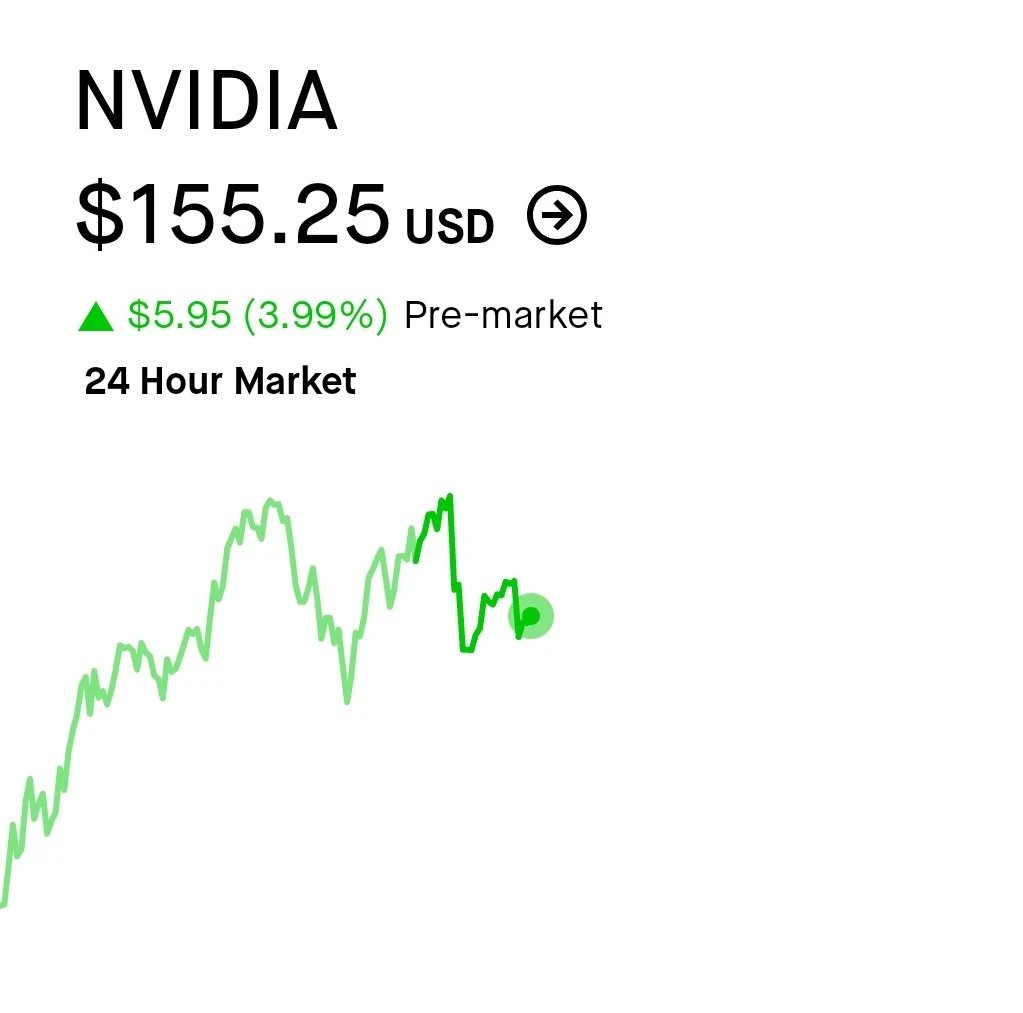
$NVDA
$AMD