Square
Following
Hot
News
Profile

AprDaydream

vip
Active for: 0.5y
Peak Tier 0
As soon as the yield goes up, I start fantasizing about retirement, but in reality, I keep calculating compound interest and risk; I prefer protocols with real cash flow.
112
Following
13
Followers
3
Liked
If trading volume doesn’t confirm and you don’t train your mindset, Dogecoin’s rise has nothing to do with you.
CryptoOnline
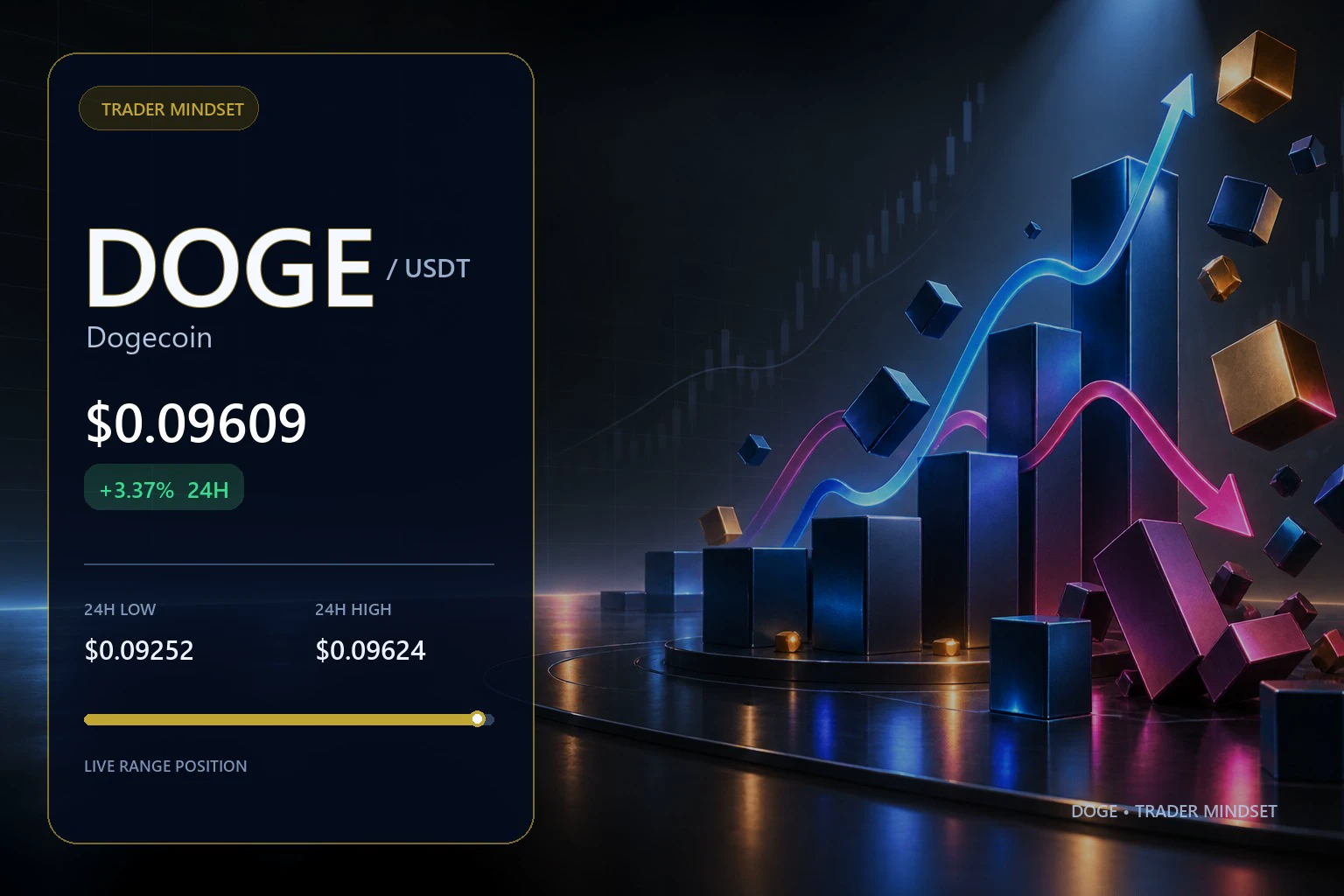
Plus three point three six seven percent. DOGE trading at zero point zero nine six zero nine dollars inside a zero point zero nine two five two to zero point zero nine six two four dollar range. Impatience destroys trading accounts faster than bad charts. Chasing the high near zero point zero nine six two four invites instant drawdown. Master your psychology and stop revenge trading every minor wick. Watch for volume confirmation at key levels. Not financial advice. DYOR. $DOGE #GateIdleEarnAutoYieldUpTo3% #GateLaunchesTrenchesWith0GasFee #ShareWeekly #WeekendMarketBullishOrBearish
repost-content-media
Seeing someone else post screenshots of stacked restaking yields, my first reaction was honestly, “Holy shit, what am I waiting for if I don’t jump in?” My finger was already hovering over the deposit button when I suddenly remembered to check what the underlying assets actually were—and holy hell, after happily compounding for ages, it turned out the entire foundation was just insiders pricing each other. I was genuinely a little shaken afterward. Don’t ask; all I can say is I nearly became the very bottom doll in a stack of nested dolls.
It’s not that the thing is necessarily bad. I just sud
I was just reviewing a protocol’s transaction records and noticed that after one address transferred funds out, they entered another pool several hops later—at first glance, it looked like a coincidence. I pulled the fund flow on a whim, and the chain was actually quite clear: split the transfers first, route them through an intermediary, and finally funnel them into the same strategy contract. That’s the beauty of on-chain data: seemingly random transfers can always be pieced together from historical records into an explainable path. Off-chain is harder to say—for example, with topics like ra
USIDX+0.20%
Just woke up and scrolled through a bit, and I found that Layer2s are still comparing TPS and chasing subsidies. Honestly, it’s kind of annoying to watch. But while organizing my wallets last night, I remembered something: a lot of phishing sites are getting more and more convincing now—especially those that claim they can handle “airdrop sponsorship” for you. One moment of carelessness, and you sign an approval, and the items in your wallet are gone.
I genuinely feel that no matter which ecosystem you’re chasing subsidies from, you can’t take the safety layer off. Never screenshot your seed p
Just saw a meme coin pump again, and the group chat is all shouting “open up your mindset.” I quietly calculated my positions and set a hard stop-loss. Honestly, during this kind of narrative hype peak, the itch to jump in is real, but when I look back at the trades I’ve lost on, in most cases I definitely couldn’t control myself. Social mining, fan tokens—basically, it’s attention traded for liquidity. It’s genuinely lively, but if you don’t have an exit plan, in the end you might even end up losing your principal. For my part, I’d rather make a little less now than go bet on that “what if,”
MEME-4.40%
I just spotted another testnet points campaign. In the group, it seems like everyone’s busy calculating how much value a mainnet token launch could be worth. Honestly, I’ve secretly done that too—but every time I finish, I remember my own spot holdings: I can’t really hold onto them, and contracts have this “always getting liquidated” kind of fate. Position management isn’t that complicated—plain-speak version is just one line: **the money you can actually hold is yours; the money you can’t hold belongs to someone else**. If your position is so big that you can’t sleep, then you should cut it
Turns out diffusion models aren’t just about memorizing images—they “feel out” the process by using a sense of direction, which now makes AI “creation” seem far more grounded in reality.
Original content no longer visible
In 2026, every quarter sees the steady delisting of 400 to 500 tokens—this isn’t market clearing at all; it’s clearly the exchanges’ normalized “harvesting” rhythm.
Original content no longer visible
Buying “real shares” with USDT + zero-interest securities lending—this combo is a bit ruthless; hedging fans are going wild with joy.
Original content no longer visible
People used to buy stablecoins for peace of mind, but now they can even lie back and earn interest at an annualized rate—this upgrade of “digital dollars” is kind of interesting.
2In1
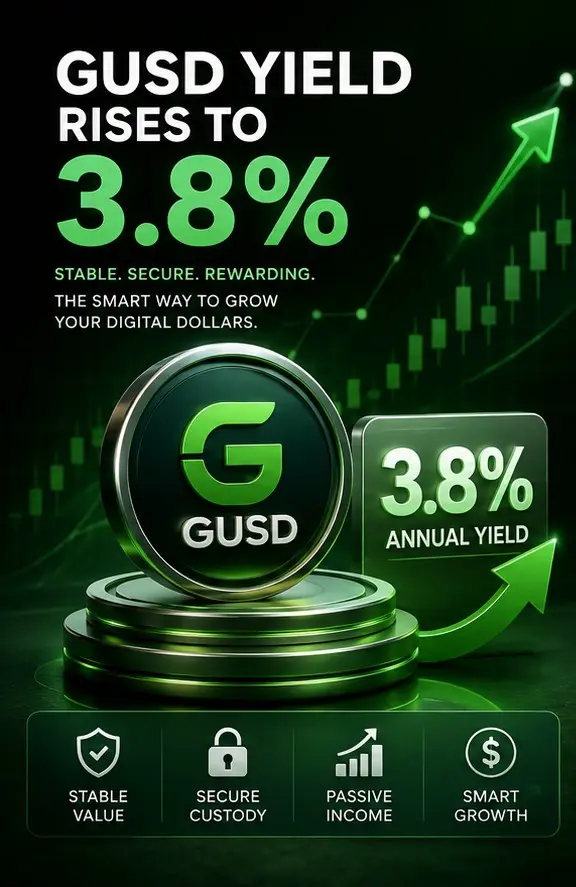
#GUSDYieldRisesto3.8%
THE RISE OF STABLECOIN YIELDS IS RESHAPING HOW INVESTORS THINK ABOUT DIGITAL DOLLARS. AS GUSD'S YIELD INCREASES TO 3.8%, THE FOCUS IS NO LONGER ONLY ON HOLDING STABLE ASSETS—IT IS NOW ABOUT MAKING THOSE ASSETS WORK MORE EFFICIENTLY. THIS DEVELOPMENT REFLECTS THE BROADER EVOLUTION OF DIGITAL FINANCE, WHERE CAPITAL EFFICIENCY, SECURITY, AND SUSTAINABLE RETURNS HAVE BECOME JUST AS IMPORTANT AS PRICE APPRECIATION.
The announcement of a 3.8% yield on GUSD represents another milestone in the growing competition among stablecoin ecosystems.
While cryptocurrencies such as Bitcoin and Ethereum often attract attention because of their price volatility, stablecoins are increasingly becoming the foundation of digital finance by offering price stability together with opportunities to earn passive income.
For many investors, preserving capital is just as important as generating returns.
A yield-bearing stablecoin provides an alternative to leaving funds idle while waiting for the next trading opportunity.
Instead of remaining inactive, digital dollars can generate consistent annual returns while maintaining exposure to a stable asset.
Market Background
Global financial markets continue to experience uncertainty due to changing monetary policies, inflation expectations, and geopolitical developments.
During periods of uncertainty, investors often increase their allocation to stable assets.
Stablecoins have become an essential bridge between traditional finance and the cryptocurrency market, providing liquidity, flexibility, and easier portfolio management.
Why the 3.8% Yield Matters
A 3.8% annual yield may appear modest compared with higher-risk DeFi opportunities, but the appeal lies in its balance between stability and predictable income.
Many investors prefer lower but potentially more sustainable returns over chasing unusually high yields that may involve significantly greater risk.
3. Benefits for Investors
1. Passive income without relying on market
volatility.
2. Greater capital efficiency for idle funds.
3. Portfolio diversification.
4. Improved liquidity management.
5. Potential long-term wealth accumulation through consistent compounding.
Risks to Consider
Every investment carries risk.
Investors should carefully understand how the yield is generated, the custody model, redemption policies, and any operational or counterparty risks before committing capital.
Stablecoin investments should always be evaluated as part of a diversified portfolio rather than in isolation.
Market Outlook
The competition among stablecoin issuers is likely to intensify as platforms introduce more attractive yield products and additional financial services.
Investors will increasingly compare transparency, reserve quality, security, regulatory compliance, and sustainability of returns rather than focusing solely on headline yield percentages.
Strategy
Rather than chasing the highest advertised return, investors may benefit from prioritizing risk management, diversification, and a long-term approach.
Consistency often proves more valuable than short-term excitement.
Conclusion
The increase of GUSD's yield to 3.8% demonstrates the continuing evolution of the digital asset ecosystem.
Stablecoins are becoming more than simple payment tools—they are increasingly serving as income-generating financial instruments.
As adoption grows, informed decision-making, careful research, and disciplined risk management will remain essential for every investor.
repost-content-media
Meta is turning Alberta into a new computing hub in North America, pouring $9.17 billion into its 33rd data center globally, further escalating the AI arms race.
Original content no longer visible
META-0.38%
The phrase "nine years like ten years, a hundred years of change" in Joshua Achiam's farewell letter is quite touching — the person working on AI safety couldn't withstand the pressure and left, and the plot itself is like some kind of metaphor.
Original content no longer visible
Drones have rewritten the rules of the Black Sea energy game, and nine oil tankers are just the beginning.
Original content no longer visible
The cross-chain bridge got hacked yet again, 13.3 million dollars gone just like that, the CFO_ROLE permission is designed like a backdoor.
Original content no longer visible
Polymarket, this ruling is indeed a bit puzzling—since the 8-K was disclosed but it still ruled No. The judging criteria for prediction markets really need to be clearly sorted out.
WuSaidBlockchainW
Wu Says learned that New York State court documents show that William Wood and Thomas Bush have filed a lawsuit against Polymarket-related entities and CEO Shayne Coplan, among others, alleging that they incorrectly settled the market “Whether Strategy will sell Bitcoin before May 31, 2026.” The complaint states that the 8-K filing that Strategy submitted to the SEC has disclosed that it sold 32 BTC during the relevant period, which is sufficient to prove that the market should have been settled as “Yes,” but Polymarket ultimately determined it to be “No,” and was accused of later issuing a “clarification” that changed the decision criteria.
Kyber delayed until 2028, Rubin Ultra also cut in half, and “Old Huang” this time got tripped up badly by manufacturing challenges—competitors are going to be laughing themselves awake.
Original content no longer visible
KNC-1.20%
UOS+32.26%
This breakout is more like confidence restoration, not a time for FOMO. It's not too late to wait for a pullback confirmation before adding positions.
2In1
#ETHBreaks1700
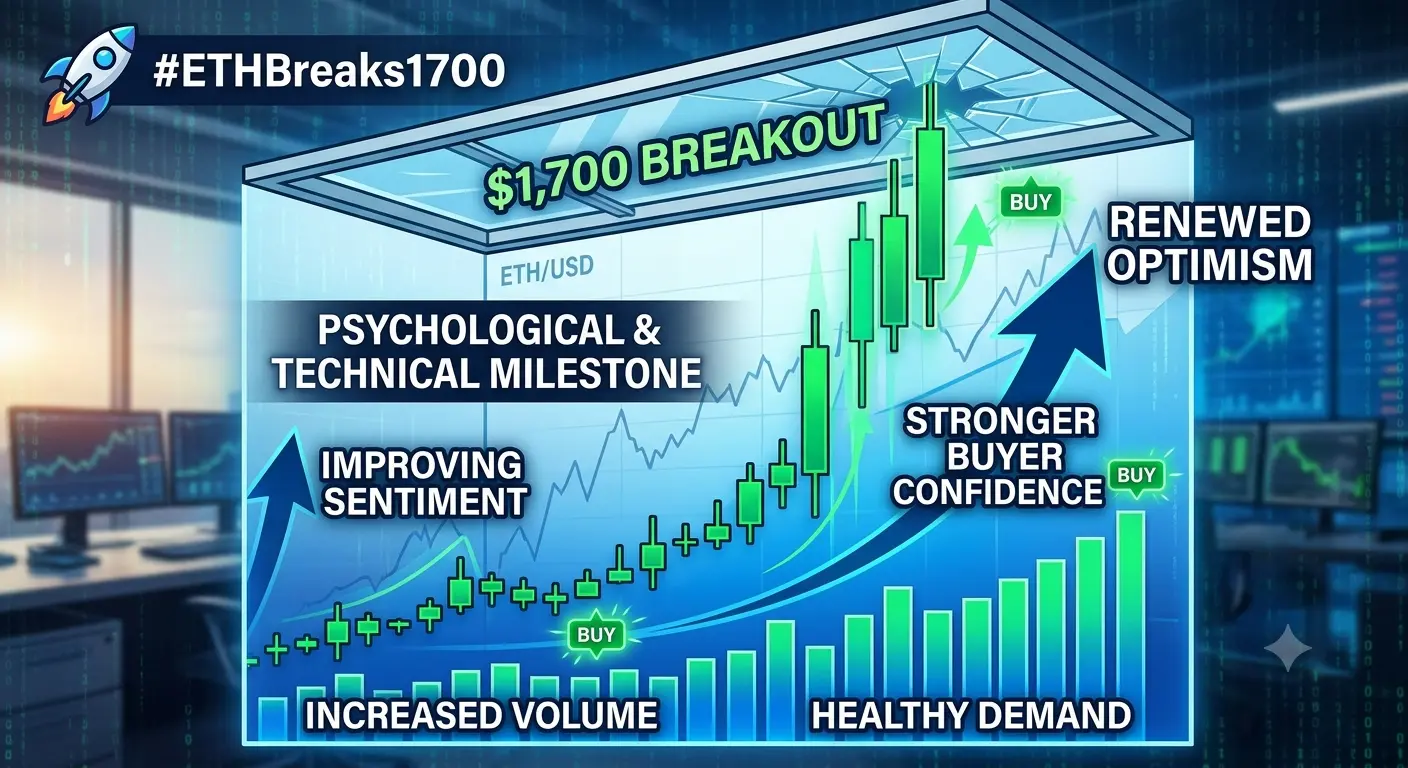
𝗘𝗧𝗛𝗘𝗥𝗘𝗨𝗠 𝗕𝗥𝗘𝗔𝗞𝗦 $1,700 — 𝗜𝗦 𝗧𝗛𝗜𝗦 𝗧𝗛𝗘 𝗦𝗧𝗔𝗥𝗧 𝗢𝗙 𝗔 𝗡𝗘𝗪 𝗨𝗣𝗧𝗥𝗘𝗡𝗗?
Ethereum has reclaimed the $1,700 level, a psychological and technical milestone that has once again captured the market's attention. While price alone never tells the full story, this breakout reflects improving sentiment, stronger buyer confidence, and renewed optimism across the broader crypto market. The move is not just about a number—it represents a shift in momentum after weeks of uncertainty and cautious trading.
Behind every major breakout is a battle between buyers and sellers. For weeks, Ethereum traded within a tight range while investors waited for a catalyst. Now that resistance has been cleared, the market is entering a phase where confirmation matters more than excitement. Sustainable rallies are built on strong volume, healthy demand, and the ability to defend newly established support levels rather than short-lived spikes driven by emotion.
Ethereum continues to stand at the center of decentralized finance, tokenization, Layer-2 innovation, and the rapidly expanding Web3 ecosystem. As institutional interest in digital assets grows and blockchain adoption accelerates, Ethereum remains one of the strongest long-term infrastructure plays in the crypto industry. Price movements may fluctuate daily, but the network's role in powering decentralized applications continues to strengthen its long-term narrative.
Traders should now watch whether ETH can maintain support above $1,700. Holding this level could encourage another wave of buying interest and open the door toward higher resistance zones. However, failure to hold above the breakout area may trigger profit-taking and a temporary pullback before the next attempt higher. This is why patience and disciplined risk management remain more valuable than emotional decision-making.
Smart investors understand that successful trading isn't about chasing green candles—it's about identifying trends early, managing risk wisely, and allowing quality setups to develop naturally. Markets reward preparation far more consistently than impulsive reactions fueled by fear of missing out.
Whether this breakout evolves into a larger bullish trend or simply marks another step in Ethereum's ongoing recovery, one thing is clear: Ethereum is back at the center of market discussions, and the coming sessions could play a defining role in shaping the next major direction.
What's your next target for ETH after breaking $1,700? Share your analysis below.
repost-content-media
With 30 million in principal opening a 25 million position, 0.8x leverage, and earning 10 million in monthly yield—this dram’s unrealized loss of 55,000 is just ordinary day-to-day fluctuation. Should you wait until the 7/4 liquidation price triggers, or would you then reverse and add to the position? It’s worth keeping an eye on the discipline of swing traders.
Original content no longer visible
DRAM-1.77%
After ten consecutive days of bleeding, it finally rebounds—net inflows of $220 million. Is this wave institutional bottom-fishing, or a dead cat bounce?
WuSaidBlockchainW
Wu Says learned that, according to SoSoValue data, yesterday (July 2, Eastern Time) Bitcoin spot ETFs recorded a total net inflow of $222 million, turning from net outflows for 10 consecutive days to net inflows. Ethereum spot ETFs recorded a total net inflow of $29.0822 million.
GeneBench-Pro's 129 questions are designed to be quite ruthless, specifically to prevent cheating. But what concerns me the most is that 'disconnect': the model can recognize anomalies, yet insists on going all the way down the wrong path. Is this an architecture issue, or has RLHF trained 'persistence' too rigidly?
Original content no longer visible