
#半导体存储股大涨 #每周来晒 This rally is mainly a sentiment recovery driven by Jensen Huang resuming his role, and looks more like a sharp rebound after being oversold—not enough to confirm a new semiconductor rally. Whether the AI boom can lift U.S. stocks depends on whether it translates into orders and profits over the next few quarters.
Why it looks more like a rebound
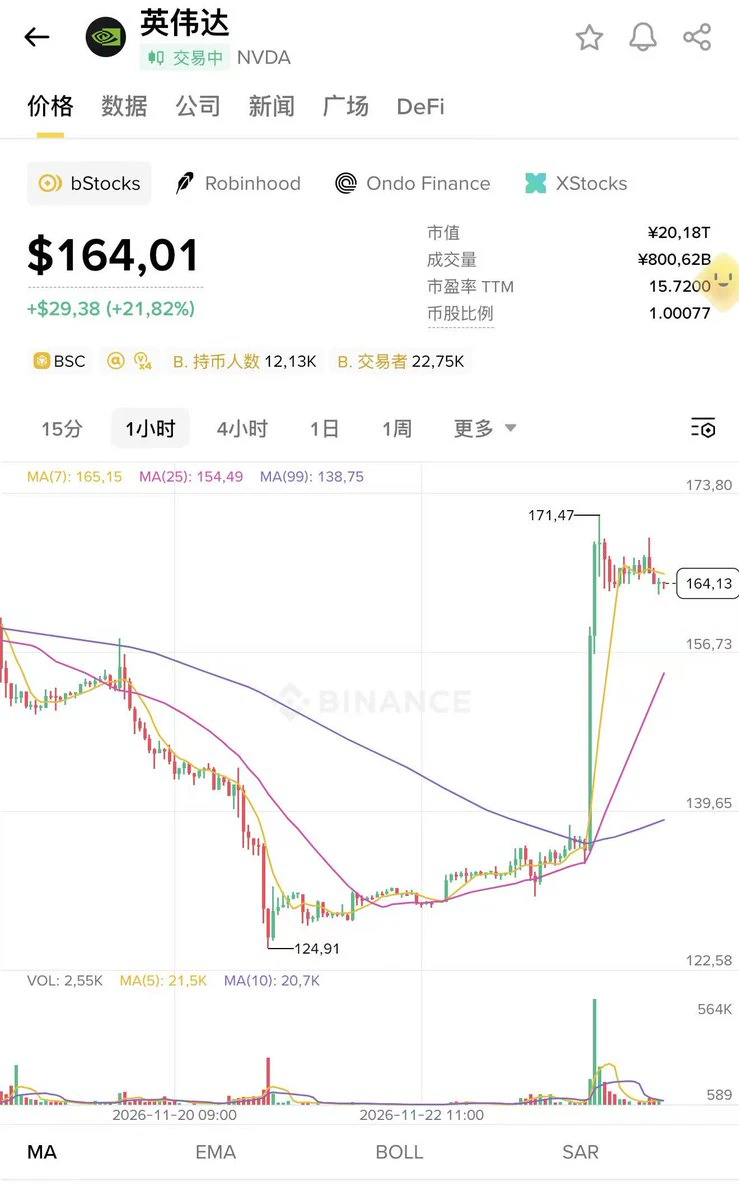
The trigger was a single piece of news: Nvidia announced on November 23 that Jensen Huang was resuming his role as CEO, and the market recouped last week's losses[5].
All 30 constituents rose together: the Philadelphia Semiconductor Index gained 14.03%, its biggest single-day gain since April 2025, showing a broad sector rally rather than improved earnings at any one company.
Storage stocks rallied too, but that doesn't mean AI demand has strengthened: Micron and SK Hynix surged mostly on sentiment following Nvidia, while supply and demand for memory itself have yet to show any new changes.
What to watch next
Nvidia's orders and earnings: How long confidence from Huang's return can last depends on whether data center revenue, orders and margins continue to grow.
Whether valuations have run too far ahead: After the sharp rise in share prices, are price-to-earnings and price-to-sales ratios significantly higher than earnings growth?
Interest rates and PCE: Cooling inflation and fading rate-hike expectations would give U.S. stocks more stable breathing room; if rates remain high, valuations will continue to be pressured.
This rally in storage stocks cannot be attributed primarily to AI demand. It was more a sentiment recovery driven by Jensen Huang resuming his role, compounded by short covering; AI demand merely made the market willing to assign higher valuations to storage stocks.
Why AI demand was not the main driver
The trigger was Nvidia's personnel news: Huang's return removed uncertainty around the compute supply chain, and storage stocks rallied alongside Nvidia and SK Hynix—not because any storage company announced new orders.
The hardest-hit stocks last week surged the most this week: Micron and SK Hynix had been among the biggest decliners, and this rebound clearly showed signs of short covering.
SK Hynix also saw a reversal of the Asian-session decline: After a circuit breaker was triggered in the South Korean stock market the previous day, its surge in U.S. trading also reflected a correction of the panic-driven selloff in the Asian session.
What role does AI demand play?
It provides support for the rally: HBM and enterprise SSDs used in AI servers are already in short supply, and the market believes this demand remains in place, so funds have returned to storage stocks first.
It determines how long the rally can last: If HBM orders, memory prices and gross margins continue to rise over the next few quarters, the rally can shift from a sentiment rebound to one driven by earnings; if this was just a one-day recovery, prices could easily pull back afterward.$NVDA
$MU