Square
Following
Hot
News
Notifications
Profile
Share your thoughts
placeholder
Article
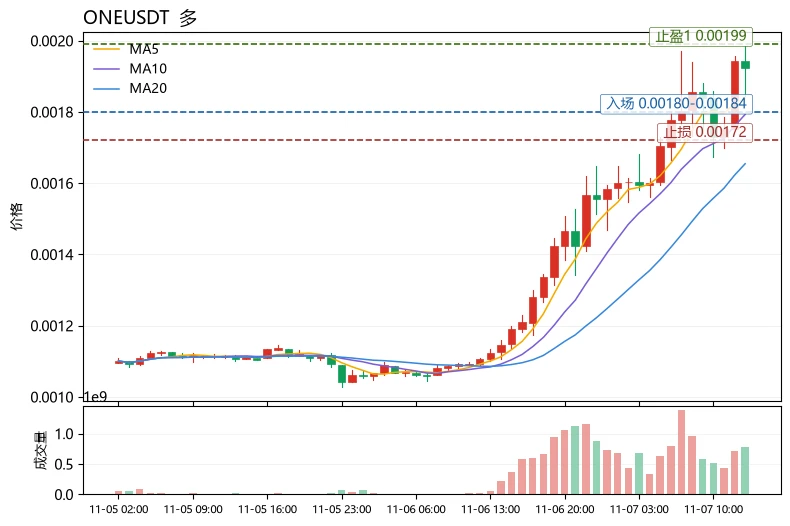
$ONE Current price: 0.001925, up 69.90% in 24h. RSI at 77.3 has entered overbought territory, and the 30-candle range is 48.02%, with volatility at an extreme level. The funding rate is -0.0003%, so shorts are still paying, but the Fear & Greed Index is only 25. Short squeezes amid extreme fear are often accompanied by sharp pullbacks. Assessment: The medium-term bullish structure remains intact (MA5 crossed above MA20, MACD histogram is positive), but chasing the rally in the short term offers a very poor risk-reward ratio. Only enter on a pullback; do not chase.

Reference entry range: 0.001
post-image
WLD-5.61%
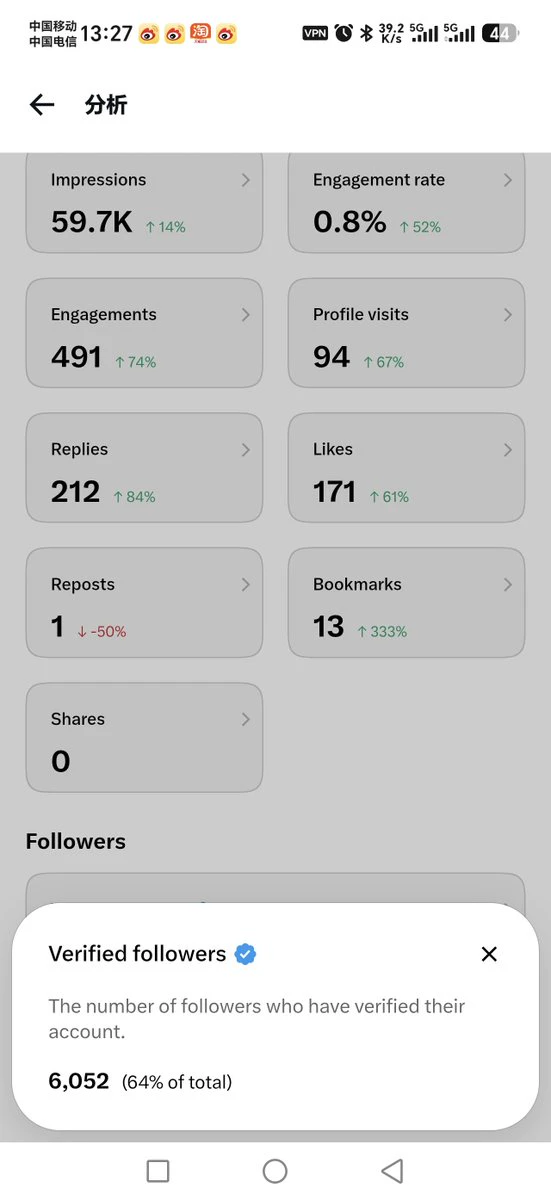
Blue V already has 6K followers,
and we're just 470 away from surpassing 10K total followers.
Let's push a little harder
and aim to reach our goal within 3 days—
a month and a half ahead of schedule!
You got this🌺🌺🌺
post-image
Trenches
ZIG
Z
bade
b
ZIG
0x8c...1145
Market Cap
$.
Change
.
24h Vol
$.
Holders
.
BTC
B
bade
b
BTC
C5xp...pump
Market Cap
$.
Change
.
24h Vol
$.
Holders
.
GM
G
bade
b
GM
0x13...7777
Market Cap
$.
Change
.
24h Vol
$.
Holders
.
Diamond
D
bade
b
Diamond
5VCE...pump
Market Cap
$.
Change
.
24h Vol
$.
Holders
.
STONK
S
bade
b
STONK
6GmA...UNgx
Market Cap
$.
Change
.
24h Vol
$.
Holders
.
The final rule allowing alternative investments such as crypto assets to be included in 401(k) retir
live-cover
LIVE2,492
What is the highest level of stock investing? Don't act impulsively when you're bullish, and don't get anxious when sitting on the sidelines!

I've realized that investors' toughest opponent may not be the market, but their own emotions.
When a stock keeps rising, we're afraid of missing out and can't wait to jump in; when the market suddenly falls, we start questioning everything and can't wait to get out.
Every day, I open my account and feel like I'm on a roller coaster. The only thing that may be growing steadily is my heartbeat.
So, I increasingly agree with this idea: investing isn't jus
NVDA+2.80%
  • 29
What Is the Risk-Reward Ratio? Why Can a Trading Strategy with a High Win Rate Still Lose Money Over the Long Term?

In cryptocurrency trading, some traders place great importance on their win rate. They want to win at least seven out of ten trades, believing that making the right call often enough will allow them to keep making money.

But actual trading results don't depend only on how many times you win. They also depend on how much you make on each winning trade, how much you lose on each losing trade, and how high your trading costs are.

That's why the risk-reward ratio and win rate must
post-image
🤖 ANTHROPIC PUSHES AHEAD WITH $1.5 TRILLION IPO PLAN! 💰
📉 Despite the recent AI market sell-off, Anthropic is reportedly moving forward with its November IPO.
💵 Target fundraising: $80B–$100B
📊 Target valuation: Around $1.5 TRILLION
🏦 The company is aiming for one of the biggest IPOs in history, despite growing investor concerns over AI valuations. �
When a trading strategy starts to fail, should you adjust its parameters or stop trading?

The real danger is not that a strategy incurs losses, but that you don't know why it's losing and keep changing its parameters in an attempt to fix the performance curve.

A strategy may once have worked, but the market won't operate the same way forever.

A trend may turn into a range, liquidity may decline, trading costs may rise, and entry signals that once worked may gradually lose their edge.

So how should you tell?

Step one: First determine whether it's a normal drawdown or a change in the strate
post-image
Our Chinese netizens are seriously wild
Even Koreans can only bow down in admiration
The economic downturn has only lasted six years,
and look at our nine years of compulsory education—
what has it produced?
What kind of “gems”?
😭😭😭
#USEarningsSeason #USEarningsSeason

US Earnings Season: Are American Companies Still Delivering Strong Growth?

Imagine opening your phone in the morning and seeing that a major American company has reported record sales. Its profits are higher, but its stock price is falling. How can a company perform well and still disappoint investors?

This is exactly why the US earnings season matters. Company results reveal more than whether businesses are making money. They help investors understand the strength of the economy, the direction of major industries, and what could happen in financial mark
SanDisk, Micron, and SK Hynix Fall More Than 10%—If You Could Buy Only One, Which of the Three Would You Choose?

The storage sector has suddenly changed course: yesterday it was still an AI darling, but today it has become a punching bag for investors. SanDisk, Micron, and SK Hynix have all pulled back, bringing investors’ biggest dilemma into focus: if you had to choose one, which is the better buy?
SanDisk’s core appeal is NAND flash, with AI data center expansion bringing long-term opportunities, though the NAND price cycle cannot be ignored. Micron has a dual focus on DRAM and HBM, allowi
AMD+11.55%
  • 13
akash ai now offers kimi k3.1 pro, featuring open weights, a 1m-token context window, and compatibility with openai and anthropic sdks for coding, research, and ai agents.

$AKT $AI #GATE
AKT-0.10%
BTC rebounds to $76,000, and retail traders are getting excited again! Don’t get played by the market this time!

The familiar story is playing out again: BTC rises, and the group chats start talking about a bull market; BTC falls, and everyone immediately starts analyzing the bear market.
To be fair, sentiment in the crypto market shifts faster than the weather forecast.
BTC returning to around $76,000 has indeed given the market some hope for a rebound. But I think what really matters isn’t the sudden price jump—it’s whether buying continues afterward.
If money keeps flowing in and the price
AMD+11.55%
  • 33
Why do you need a 100% gain to break even after a 50% loss?

In cryptocurrency trading, many people see their assets fall by 50% and think that a 50% price rebound will restore their original capital.

But this is a common mathematical misconception.

Losses and the gains needed to break even are not symmetrical. The greater the loss, the higher the return needed to restore the original capital. That is why controlling drawdowns is more important than trying to make up for losses afterward.

First, why doesn’t a 50% gain make up for a 50% loss?

Suppose you initially invest 1,000 USDT.

After
post-image
Buying for 24 months straight! The central bank has quietly added more gold again 🏵️

Folks, the central bank opened its books this morning: At the end of October, gold reserves stood at 78.30 million ounces, up another 830k ounces from September, marking 24 consecutive months of increases #XAU $XAU ‌
XAU+0.38%
  • 4
A high win rate does not mean high profitability. What truly determines trading results is the ratio between each win and loss.

Many trading strategies look excellent: an 80% win rate, multiple consecutive wins, and a very attractive backtest curve.

But if each win is only $10, while a single loss is $50, that's where the problem arises.

Assume 100 trades:
• 80 wins, earning $10 each, for a total of $800.
• 20 losses, losing $50 each, for a total of $1000.

Final result: a $200 loss, before accounting for fees, funding rates, and slippage.

This shows that win rate is only one part of a tra
post-image
What Is Beta? How Can You Assess an Altcoin’s Volatility Relative to BTC?

In the cryptocurrency market, some altcoins rise faster when BTC goes up and fall harder when BTC goes down. Many traders describe this phenomenon as having “high elasticity,” but a more systematic analysis requires understanding a financial concept: the beta coefficient (Beta).

Beta can help us understand how sensitive an asset is to benchmark market movements, but it is not a tool for predicting future price movements, nor can it measure an asset’s full risk on its own.

First, what exactly is beta?

In traditional f
post-image
BTC-0.67%
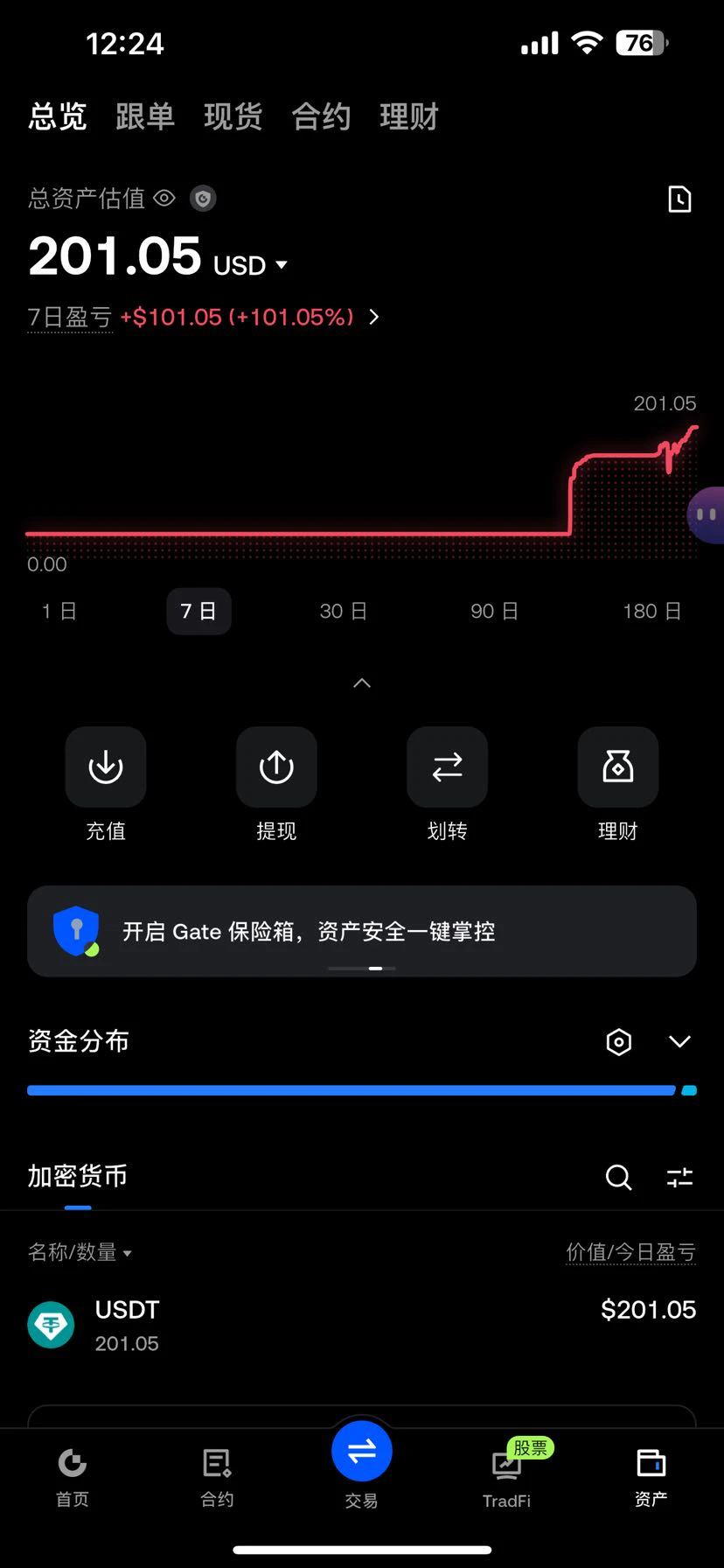
After copy trading for just 2 days, we’ve already easily doubled our money. Those who followed today and held on also have $50 in profit. If you can’t handle a $20–30 unrealized loss, don’t copy trade. You can’t make money every time you buy in. I’ve seen the 100U accounts next door go through swings that cut their value in half. Although I sometimes use a larger position, I always keep a tight stop-loss and only take bets at extreme levels. If you’re not planning to withdraw your principal and want to follow, stay put and don’t keep changing things around. Don’t tell me you don’t have enough
post-image
NVDA-0.35%
  • 1
$SHIPPED @shippedbond
Delivery bonds for tokens, NFTs
and apps. Creators lock real money behind a public promise. Ship on time and they get it back, miss and holders get paid.
Launched on @ripplesdotrun .
Feels like the third solid utility play there after $BRAIN and $ZENI, both ran hard.
Worth a gamble.
0xCdF2aD9e12D599640321372499768eCA4C4C0000
RR.
post-image
Load More

Join 40 M users in our growing community

⚡️ Join 40 M users in the crypto craze discussion

💬 Engage with your favorite top creators

👍 See what interests you

Trending Topics

USAIStocksHitHard

15.28k Views3.64k Discussing

U.S. stocks sold off sharply on Thursday, November 5 (UTC). The Nasdaq closed down around 5.5%, entering correction territory, while the Philadelphia Semiconductor Index plunged roughly 12%, with chip stocks including $NVDA and $AMD posting steep losses. Beyond profit-taking, investors are growing concerned about the pace of AI data center construction, capital spending, and future returns on investment. The key question now is whether the AI sector’s lofty growth expectations need to be repriced. Where do you think the next opportunities will emerge: chip stocks, tech giants, or other sectors?

USNonfarmPayrolls

22.89k Views4.25k Discussing

StakeOnLaunchpoolToShare450KVLX

2.02k Views774 Discussing

View More