In 2025, Bitcoin payments have moved from a fringe concept to mainstream business. Starbucks and McDonald's accept BTC and ETH crypto asset payments through Flexa and BitPay, while retailers like Microsoft and Home Depot integrate digital asset checkout options. XRP payments perform outstandingly in the cross-border remittance sector, with Mercury FX and Cuallix adopting Ripple infrastructure to drop costs.
Daily Consumption Scenarios: Full Opening from Coffee Shops to Retailers
For many crypto asset holders, the first real test is whether they can use BTC, ETH, or XRP like cash: for a cup of coffee, a sandwich, or to buy some groceries. As of 2025, paying for coffee with crypto assets is no longer a fantasy from science fiction. Many chain stores and independent coffee shops have already integrated Bitcoin payments into everyday life.
At Starbucks, you can use a Bitrefill gift card to pay for a caramel macchiato with Ethereum or Bitcoin. Applications like Flexa's SPEDN wallet and even rechargeable digital gift cards can easily convert tokens into lattes. Convenience stores are also getting involved, with Sheetz accepting Bitcoin, Ethereum, and a few other Crypto Assets. If you're a loyal supporter of XRP, guides like Cryptwerk will recommend some small restaurants that are happy to exchange tokens for tacos or burgers.
In terms of daily consumption, the performance of XRP payments often lags behind BTC and ETH, with fewer and fewer small shops directly accepting XRP, as its advantages are usually reflected in backend or cross-border payments rather than at café points of sale. This difference stems from technical characteristics: Bitcoin has the highest brand recognition for payments, Ethereum has a smart contract ecosystem, while XRP's fast settlement and low fees are more suited for large cross-border transfers rather than small retail transactions.
Some McDonald's locations in crypto asset hotspots accept Bitcoin through payment applications, allowing digital dollars to be used for fast food purchases. In Europe and the United States, major fast food chains like Subway and Burger King continue to accept crypto asset payments, usually through third-party gift card services or payment processors. Steak 'n Shake joined this trend in May 2025, launching BTC payments nationwide and increasing its sales by 11% by attracting tech-savvy diners. Chipotle and Baskin-Robbins have also integrated this trend through BitPay, allowing you to pay for your burritos or ice cream with ETH, BTC, or XRP.
Cryptocurrency payments in the retail sector are also thriving. AT&T allows you to settle your phone bills using ETH or BTC, thus avoiding those annoying late fees. Many online retailers and some physical retailers accept XRP through gateways like CoinGate. Large tech companies are also providing support: Microsoft accepts BTC directly or through processors, while Newegg supports using ETH for in-store purchases, and Overstock also welcomes XRP. AMC theaters accept Bitcoin and other digital assets as payment for their products and services, from Xbox content to movie tickets.
Major retail chains such as Home Depot, Lowe's, and Ikea accept cryptocurrency in the form of Bitrefill and BitPay gift cards, allowing you to fund your home renovations with ETH. In addition to these giants, e-commerce platforms like Shopify are also democratizing the use of digital currencies by enabling millions of small and medium-sized businesses to easily offer cryptocurrency checkout options.
The travel airline industry fully embraces the advantages of XRP payments
As cryptocurrency payments mature, many travel services and airlines offer booking services directly or through intermediaries using BTC, ETH, and even XRP. In terms of flight and hotel booking platforms, websites like Travala.com allow travelers to book using BTC, ETH, and many other supported digital assets.
Alternative Airlines is a noteworthy example, supporting over 600 airlines globally and accepting payments in more than 100 types of Crypto Assets, including XRP. This level of integration shows that the travel industry is rapidly increasing its acceptance of Crypto Assets payments, and the advantages of XRP payments are starting to stand out in this field, as cross-border flight bookings involve currency conversion among multiple countries, and XRP's fast settlement and low fees can effectively drop transaction costs.
In the near future, Emirates Airline passengers will be able to book first-class seats using digital dollars without worrying about currency exchange. In Europe, airBaltic has been accepting cryptocurrencies since 2014 and has processed thousands of cryptocurrency transactions. The successful experiences of these pioneers provide a reliable reference model for other airlines.
The luxury goods and high-end automobile market is also rapidly integrating cryptocurrency payments. High-end brands and luxury car dealers are entering this field one after another. For example, Post Oak Motor Cars in the United States accepts Bitcoin through BitPay for the purchase of ultra-luxury cars. In Europe, platforms like BitCars have established a high-end and classic car trading market that is exclusively for cryptocurrencies. High-end brands are also joining in: Gucci and Ralph Lauren continue to expand their cryptocurrency payment options in some flagship stores, particularly for their higher-end product lines.
The Unique Advantages of XRP Payments in the Cross-Border Remittance Field
(Source: CoinTelegraph)
As the use cases expand from consumer transactions to payment infrastructure, institutional use, remittances, and financial operations, the different advantages of BTC, ETH, and XRP become more apparent. XRP payments are positioned in the cross-border remittance space because its consensus-based ledger and Ripple's infrastructure aim to drop the costs of cross-border transfers and accelerate settlement speed.
Companies like Mercury FX and Cuallix have adopted or trialed XRP for such purposes. The practical applications of these early adopters demonstrate the efficiency advantages of XRP payments when processing international remittances. Traditional bank systems' cross-border transfers typically take 3 to 5 business days, with fees reaching 5% to 10% of the transfer amount. In contrast, cross-border transfers using XRP payments can be completed in seconds, with fees usually below $0.01.
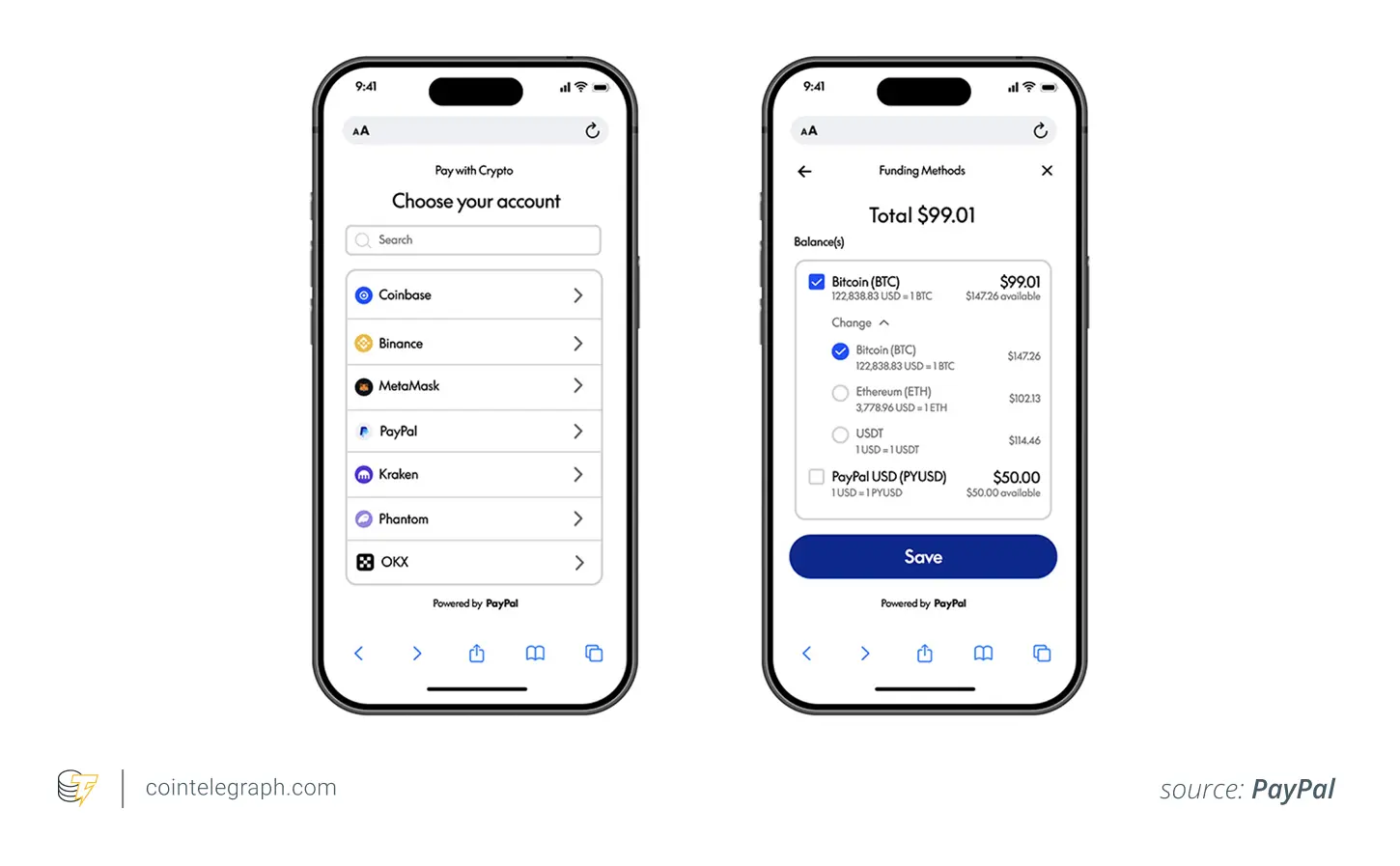
To reduce volatility risk, more and more businesses are starting to accept Crypto Assets through platforms like PayPal, BitPay, and NOWPayments. Especially PayPal, which allows retailers to use over 100 types of Crypto Assets, such as Bitcoin, ETH, and XRP. These payment processors can instantly convert Crypto Assets into fiat currency, eliminating the risk of price fluctuations, allowing merchants to accept Crypto Assets payments with peace of mind without worrying about exchange rate losses.
Some companies, such as BitMine, SharpLink Gaming, and VivoPower, are incorporating Crypto Assets into their portfolios for strategic purposes, inflation hedging, or further participation in the Crypto Assets market. This trend in institutional adoption indicates that Bitcoin payments and XRP payments are extending from the consumer level to the enterprise financial management level.
How Small Businesses Can Easily Accept Crypto Assets Payments
The answer lies in the development of more user-friendly technology and a larger financial ecosystem. Payment processors like BitPay and CoinGate allow small businesses to easily integrate Crypto Assets payments without requiring much technical knowledge. These processors can instantly convert Crypto Assets into fiat currency, eliminating the risk of price volatility.
For small business owners concerned about compliance costs, automated tax reporting systems and more open regulatory frameworks can alleviate financial and legal burdens. Many payment processors have already integrated the function of automatically generating tax reports, allowing businesses to easily meet tax filing requirements. With the lowering of technological barriers and the simplification of compliance, businesses can confidently accept a wider range of Crypto Assets.
Why choose these three: BTC, ETH, and XRP? Because they all have strong brand recognition, good liquidity, and their respective advantages: BTC as a store of value, ETH with its smart contract ecosystem, and XRP with the advantages of fast settlement and cross-border payments. Together, they meet the needs of businesses: trust, functionality, and speed. This complementarity allows enterprises to choose the most suitable Crypto Assets based on different application scenarios.


