In the encryption world built on the principles of Decentralization, the Ethereum Foundation is regarded as a guardian of technological and value neutrality. However, a recent split controversy ignited by core developer Péter Szilágyi has shattered this veneer of trust.
Dissolution of the Geth team, EF embroiled in internal disputes and debates
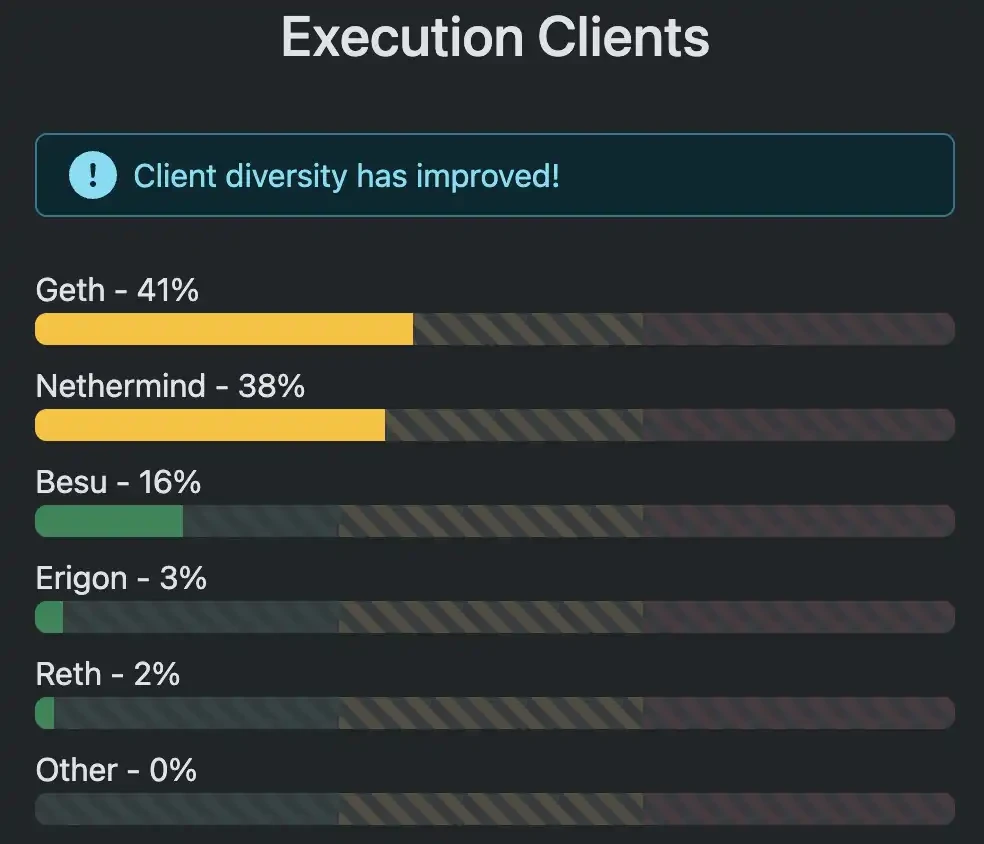
Geth (Go Ethereum) is the most commonly used execution client in the Ethereum network, with about 41% of nodes relying on it. The stability and decentralization of the network highly depend on its development quality. Recently, Ethereum core developer and Geth client developer Péter Szilágyi mentioned in a review that years ago he proposed to grant small subsidies to the authors of key dependencies of Geth (such as go-leveldb) to encourage them to continue maintaining the relevant code. At that time, he hoped to provide a funding of $10,000 but was told that only $500 could be allocated, and any amount beyond that would require a contract and deliverables.
However, according to Szilágyi, during the same period, the Ethereum Foundation could provide Parity with a grant of 5 million dollars without additional conditions, on the grounds that "Ethereum needs a second client because Geth is unreliable." This became an enduring imbalance in Szilágyi's mind: both are critical infrastructure for the protocol, yet the Geth team has to make ends meet while the competitor can easily obtain large grants.
As time passed, this imbalance gradually evolved into a trust crisis. Szilágyi revealed that a new Geth team has been formed within the Nethermind and explicitly stated that this is a "completely independent, unintentional collaboration" fork. More crucially, the original Geth team was not informed in advance, but rather learned of this matter only after Szilágyi discovered it himself.
In response to Szilágyi's repeated accusations, Tomasz K. Stańczak, co-executive director of the Ethereum Foundation, publicly responded: "There are no plans to remove Geth at this time. It is a great client software that is also contributed to the security of the protocol by a great team. We will continue to maintain and support Geth and are committed to making it better and faster."
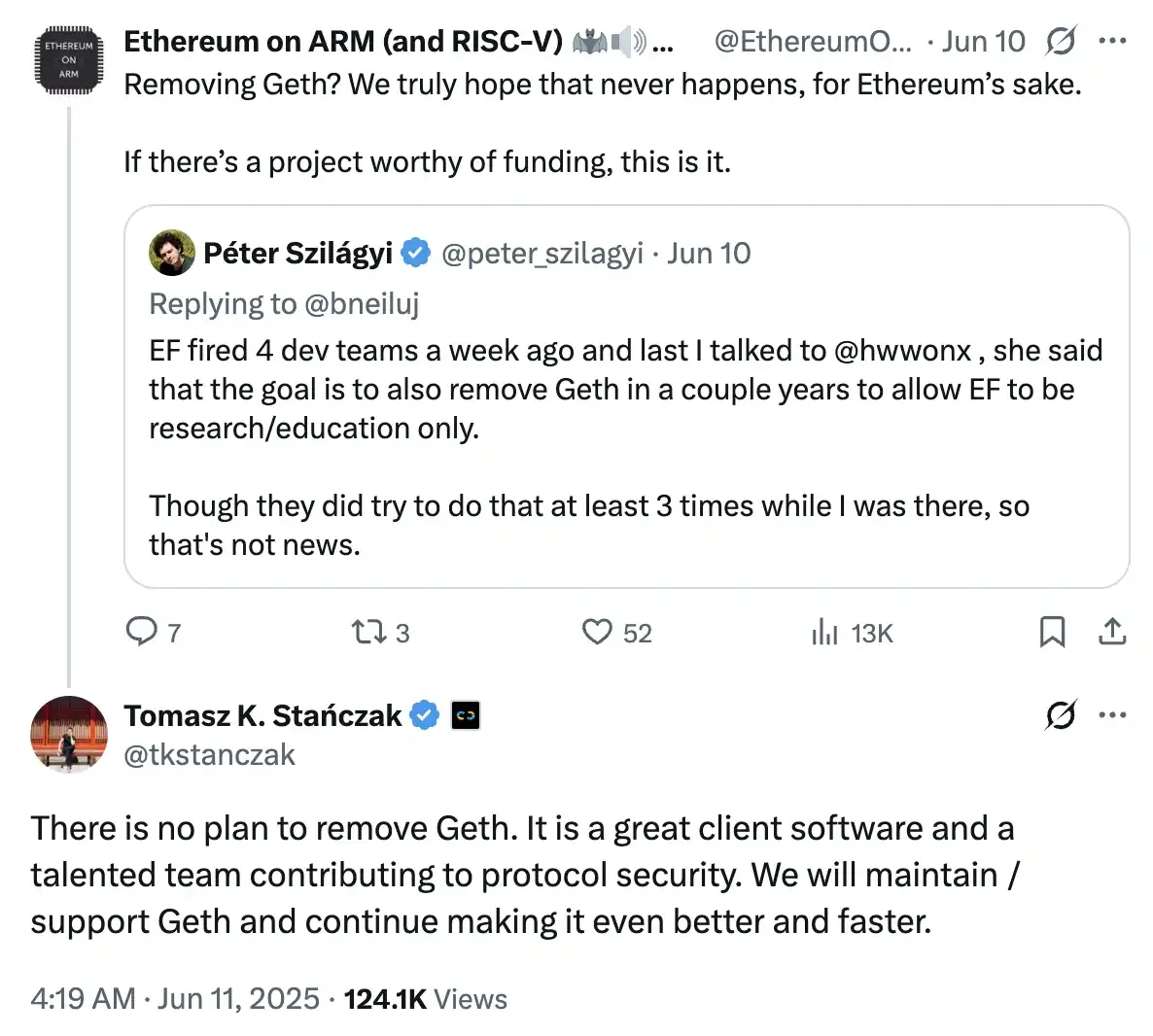
Tomasz is also the leader of Nethermind, which is now one of the most important infrastructures in the Ethereum ecosystem, ranking alongside Geth, Besu, and Erigon as one of the five main execution clients.
However, this statement is clearly at odds with Szilágyi's disclosure. Szilágyi even publicly challenged the EF leadership with "Dare to deny?" and specifically mentioned that several foundation executives had privately proposed the idea of making the Geth team independent and separating it from the EF, which was rejected by the team three times.
Szilágyi said that Tomasz has approached most of the developers who are still at Geth in recent weeks, telling them that they can start interviewing other companies because he thinks their salaries are too high, and asking how many of them would leave if they cut their salaries in half. "Come on, deny it! Remember that time off? yes, that was after a one-on-one conversation I had with @0x stark about that secret second Geth team that I had discovered. I was expelled from the Foundation within 24 hours!" Ethereum Infighting Upgrade: Core Developers Publicly Call the Foundation
"I dare you to let the entire Ethereum Foundation come out and say: didn't you propose $5 million for us to split off? Or say that the Foundation didn't at least ask us three times whether we wanted to establish a company and become independent, and that I, Felix, and @mhswende rejected it? I dare @hwwonx to deny our conversation in February."
As a fellow developer, banteg questioned Szilágyi why he did not accept the proposal for a $5 million severance package and chose to go solo. Szilágyi's response was that as developers, "we are simply not good at running companies, and we lack the necessary infrastructure or team support, so the whole thing will ultimately fail."
According to Szilágyi, the intensity of the situation goes far beyond disagreements over team management or resource allocation, and directly touches upon the foundations of power dynamics and trust systems within the Ethereum ecosystem.
Geth, as a key module that maintains the normal operation of the Ethereum network, should receive continuous and stable support. However, the reality is quite the opposite: it has neither received resource allocation commensurate with its importance nor enjoyed long-term trust from the foundation. For Szilágyi, this institutional cold shoulder has gradually eroded his initial confidence in this endeavor — a decentralized experiment that once excited him and to which he devoted himself is now becoming increasingly disheartening.
From Enthusiasm to Disappointment: Péter Szilágyi's Ethereum Journey
Péter Szilágyi is a core member of the Ethereum Foundation and the lead developer of Geth, the most important execution client for Ethereum. If he had not left the Ethereum Foundation, this year would mark his tenth year working on Ethereum, and it would also be his first job after graduation.
In 2015, Szilágyi accepted the "trial task" proposed by Ethereum core developer Jeff Wilcke: "This is a mess, you fix it, and you can ask me if you have any questions." Thus, he began to participate in the development of Geth.
Szilágyi's university major was Computer Science, with a research background in distributed systems, especially passionate about network directions. During his master's program, he focused on building distributed hosting platforms, and due to dissatisfaction with the inefficiency and fragility of manual configurations, he aspired to develop a computing system that could run autonomously without human intervention. "After graduation, I wasn't necessarily looking for blockchain, but rather searching for work that would allow me to get computers to run by themselves, and then I encountered Ethereum," Szilágyi described his encounter with Ethereum.
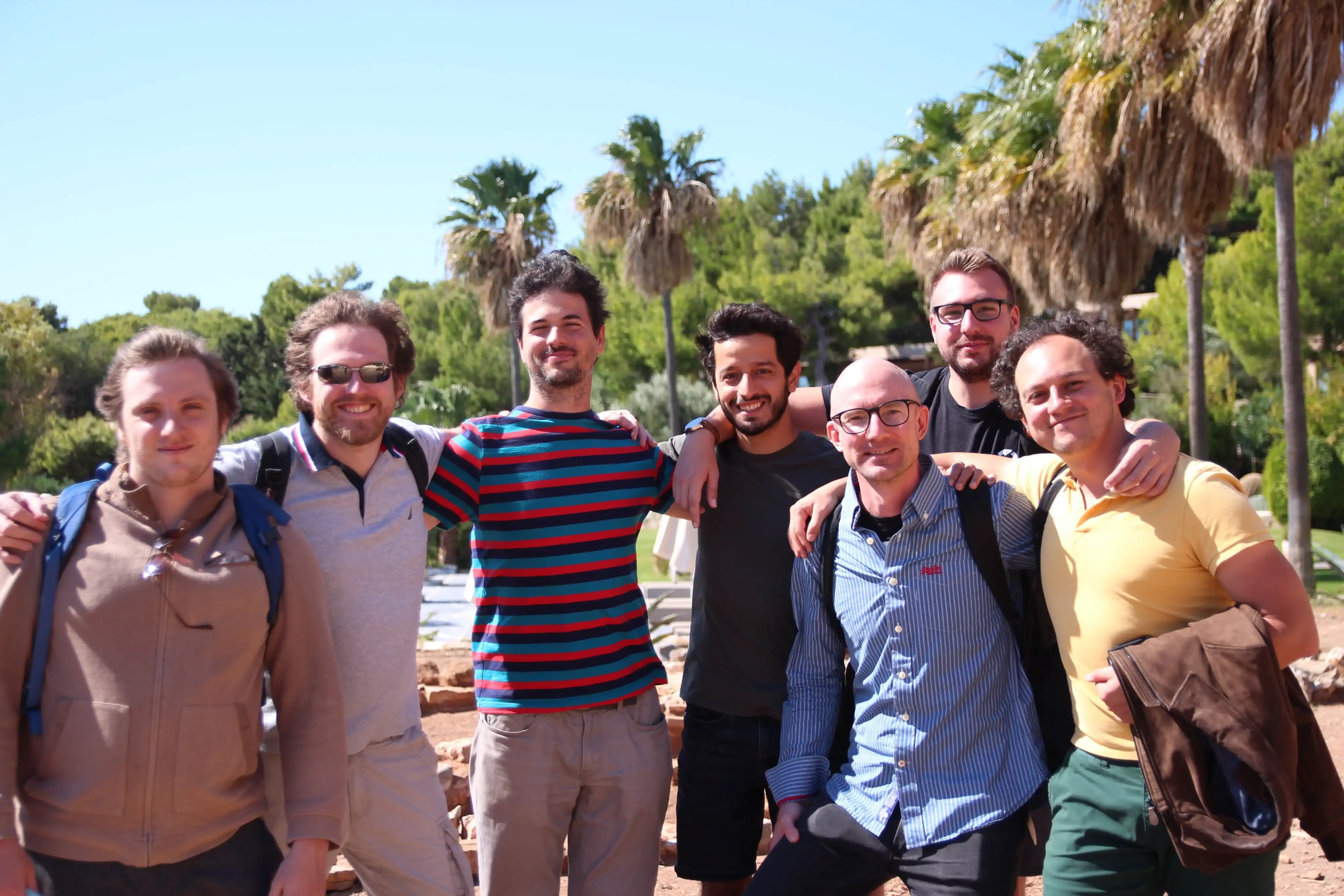
In 2021, the Geth team photo, with Szilágyi on the far right.
In an interview with Bankless, Szilágyi stated that during the last few years working with the Geth team, most of the work was patching things up. In his early years, his motivation was "creating, releasing, and tinkering," but that drive has mostly faded now. Gradually, it has transformed into a sense of responsibility: he realizes that he is maintaining an extremely valuable network, and he is one of the few who truly understands and can maintain it. "This work is indeed not as interesting, but it is rewarding, and you gain a sense of satisfaction from being part of it."
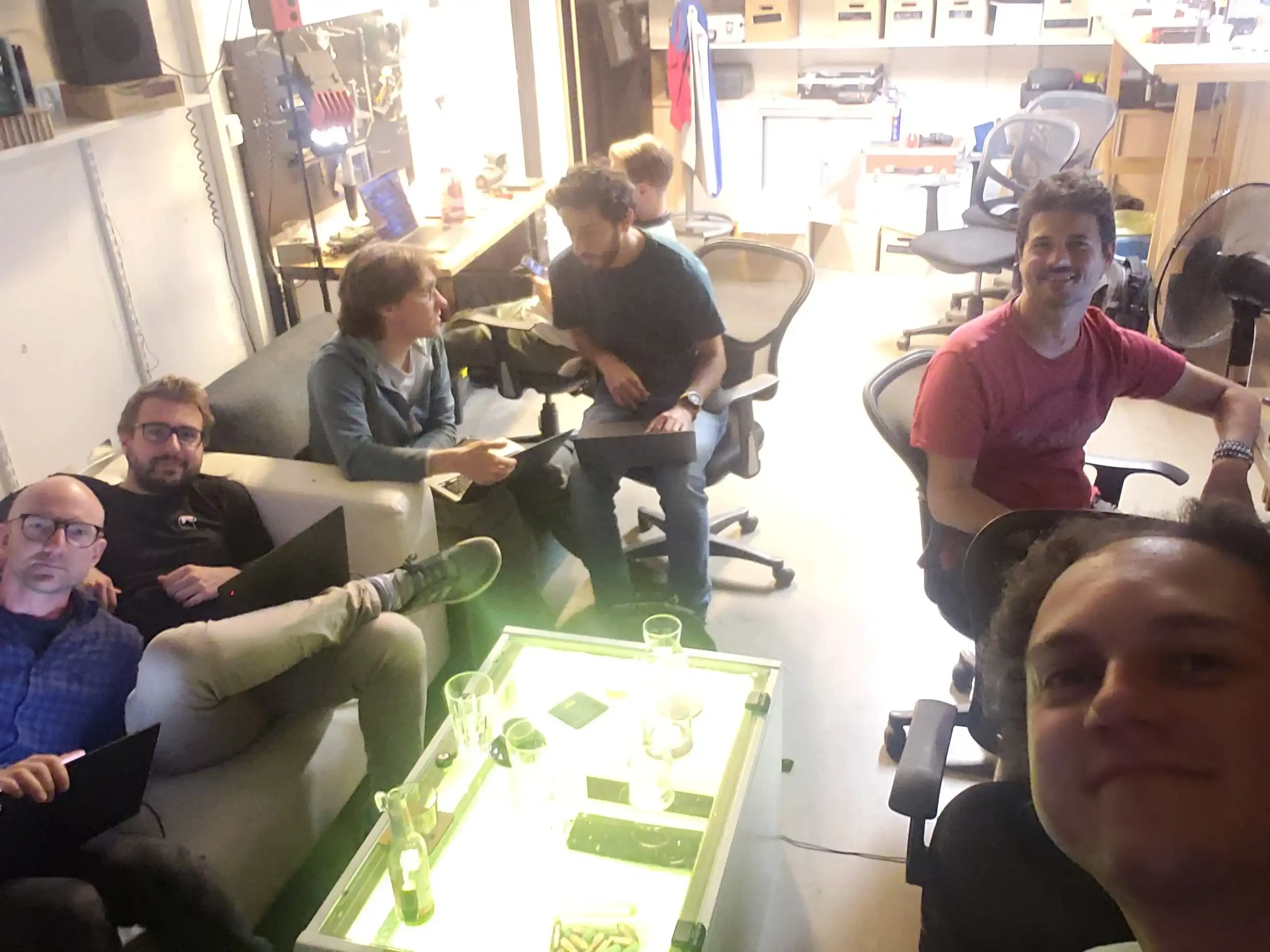
In an interview in 2023, when asked about the trajectory of his relationship with Geth, Szilágyi replied, "There have certainly been ups and downs over the years, and there were times when I was very frustrated and wanted to throw the table and leave. The worst might have been during the COVID-19 pandemic, which was indeed quite difficult. But now I still enjoy this job quite a bit."
However, just a year later, Szilágyi became an "outsider" in the Ethereum community.
Actually, this isn't the first time Szilágyi has blasted some issues in the Ethereum community. In July last year, he criticized Ethereum for going the wrong way, and the research team fully accepted the idea of centralization, as long as it can be verified, ostensibly decentralized verification, but in essence centralized control, his strong wording has attracted the attention of the Ethereum community, and has triggered a fierce debate about the core principles of the Ethereum network. Ethereum Infighting Upgrade: Core Developers Publicly Call the Foundation
A month later, Szilágyi published a complaint about the encryption industry, questioning whether he had chosen the wrong industry. He said, "For example, SpaceX, they send rockets to Mars? Humanity progresses. Did they fail to launch the rocket and it blew up? Humanity learned a lesson and still progresses. All outcomes brought progress.
In comparison, the crypto industry is simply a casino for fools (apologies to the few exceptions). Prices go up? Great, when to buy a sports car. Prices go down? Life is destroyed. What contribution does it make to humanity?
In my opinion, this industry should have started creating some truly useful things that people are willing to use, otherwise it should just shut down. At least Bitcoin attempted (though it failed) to become a safe-haven asset. But the others are just selling shovels, with no signs of a gold rush at all.
It seems that at that time, Szilágyi may have encountered some unpleasant things within the Ethereum Foundation.
Szilágyi and Tomasz, the current director of the Ethereum Foundation, also seem to have a difficult relationship. Nethermind once stopped storing historical data of Ethereum along with Besu, a decision that triggered public criticism from Szilágyi, who deemed it irresponsible and potentially misleading to users. This was also one of the triggers for Szilágyi's exit from Ethereum, "Since even the core developers are maximizing their interests relative to other developers, why bother trying to make it better? I am deeply disappointed in everyone involved."
On November 16, 2024, Szilágyi announced that he would temporarily leave the Geth team due to "vacation." However, as mentioned earlier, Szilágyi's "vacation" was a result of being fired for discovering that the Ethereum Foundation was secretly funding a second Geth development team within Nethermind. He was dismissed by the Foundation within 24 hours after a one-on-one meeting with Foundation member Josh Stark on the grounds of "threatening to resign and undermining team morale."
The process of cutting expenses is not dignified.
This public split essentially touches on the dilemma of Ethereum's current governance structure. On one hand, the foundation emphasizes that "multi-client consensus" is crucial for protocol security, stressing that Geth should not dominate; on the other hand, Geth has been the main force in protocol execution for many years, and its infrastructure quality and team experience are hard to replace.
In February of this year, Aya Miyaguchi, the Executive Director of the Ethereum Foundation, announced her transition to the newly established position of "Chairperson," bringing an end to months of dissatisfaction within the community regarding the Foundation's leadership and direction.
In June, the Ethereum Foundation announced the layoff of some R&D staff and restructured the original research team into a new department called "Protocol," focusing resources on three major technical directions: L1 scaling, blob scaling, and UX improvement. The official positioning of this move is to optimize resource allocation; on one hand, laying off some R&D personnel, especially those teams that have been in the theoretical stage for a long time; on the other hand, introducing a stricter accountability mechanism that requires rapid transformation of research results into actual outputs.
Related Reading: "Cost Reduction and Efficiency Improvement = Layoffs + Selling ETH? What Signals Are Being Conveyed by the EF Treasury's New Policy"
It can be said that the Ethereum Foundation has been committed to transforming the entire team since it faced ridicule in the second half of last year, but reform inevitably encounters a period of growing pains. According to the new policy, the EF will determine the allocation ratio of fiat and ETH based on the "operating expense ratio × buffer period" model, and will maintain annual expenditures at a high level of 15%. The Foundation pointed out that the years 2025 – 2026 will be a critical phase for the ecosystem, and resources need to be concentrated on advancing the technical implementation of the protocol layer, including directions such as L1 scaling, blob technology, and UX optimization.
EF stated that the years 2025 – 2026 will be a key window for advancing the protocol's implementation, with an expected annual expenditure of 15% and a fiat buffer period of 2.5 years. This means the foundation needs to convert about 37.5% of its treasury into fiat to support medium to short-term investments.
Nowadays, the positive policies continue to emerge, which is a good thing for the application layer on Ethereum. However, regarding governance, we may still need to give the Ethereum Foundation a little more time to adapt to the new stage.


