WLFI is the native governance and utility token of World Liberty Financial, designed to bridge traditional finance and decentralized finance (DeFi) applications. This article provides an in depth analysis of WLFI’s positioning, core mechanisms, ecosystem progress, risks, and future outlook.
2026-03-25 05:21:46
WLFI is a blockchain based financial project launched by World Liberty Financial. Its governance and value model combine elements of decentralized finance with features commonly found in traditional financial systems. This article provides a structured analysis of WLFI’s overall architecture, value mechanisms, participant roles, asset flow structure, differences from traditional models, current stage of development, key challenges, and potential future direction.
2026-03-25 05:20:12
SUN is a decentralized finance (DeFi) governance and incentive token built on the TRON network. It supports protocol operations, liquidity allocation, and on-chain governance. Within the TRON-based DeFi system, SUN connects trading, liquidity, and governance processes, aiming to integrate different user behaviors into a unified and sustainable system through a single token mechanism.
2026-03-25 05:19:48
WLFI is the ecosystem token issued by World Liberty Financial. After a 99.94% community vote in 2025, it became tradable. This article explains its role, incentives, supply structure, long term development, and risks.
2026-03-25 05:18:40
Vision (VSN) is the native token of the Bitpanda Web3 ecosystem. It is positioned as a unified asset that combines both utility and governance functions, designed to act as the value center connecting wallets, public chains, cross chain protocols, and token issuance infrastructure. By integrating the former dual token model of BEST and PAN, VSN establishes a single token architecture that links centralized and decentralized product lines. With one token, users can access payments, governance, staking, and platform benefits, making VSN a core asset in Bitpanda's Web3 financial infrastructure strategy.
2026-03-25 05:17:07
Vision (VSN) is the native token of the Bitpanda Web3 ecosystem. It is positioned as a unified asset with both utility and governance functions, acting as the value hub connecting wallets, public chains, cross chain protocols, and token issuance infrastructure. By integrating the former dual token model of BEST and PAN, VSN establishes a single token architecture that links centralized and decentralized product lines. With one token, users can access payments, governance, staking, and platform benefits, making VSN a core asset in Bitpanda's Web3 financial infrastructure strategy.
2026-03-25 05:15:45
RWA tokenization refers to the process of transforming real world assets such as real estate, bonds, funds, or other traditional financial instruments into on-chain tokens through blockchain technology. This allows assets to become divisible, programmable, and capable of near real time settlement. As regulatory frameworks become clearer and institutional demand continues to rise, Europe is gradually emerging as one of the most important testing grounds for global RWA tokenization. Regulatory systems represented by MiCA provide financial institutions with a predictable legal environment, allowing asset tokenization to move from concept into real world implementation.
2026-03-25 05:14:09
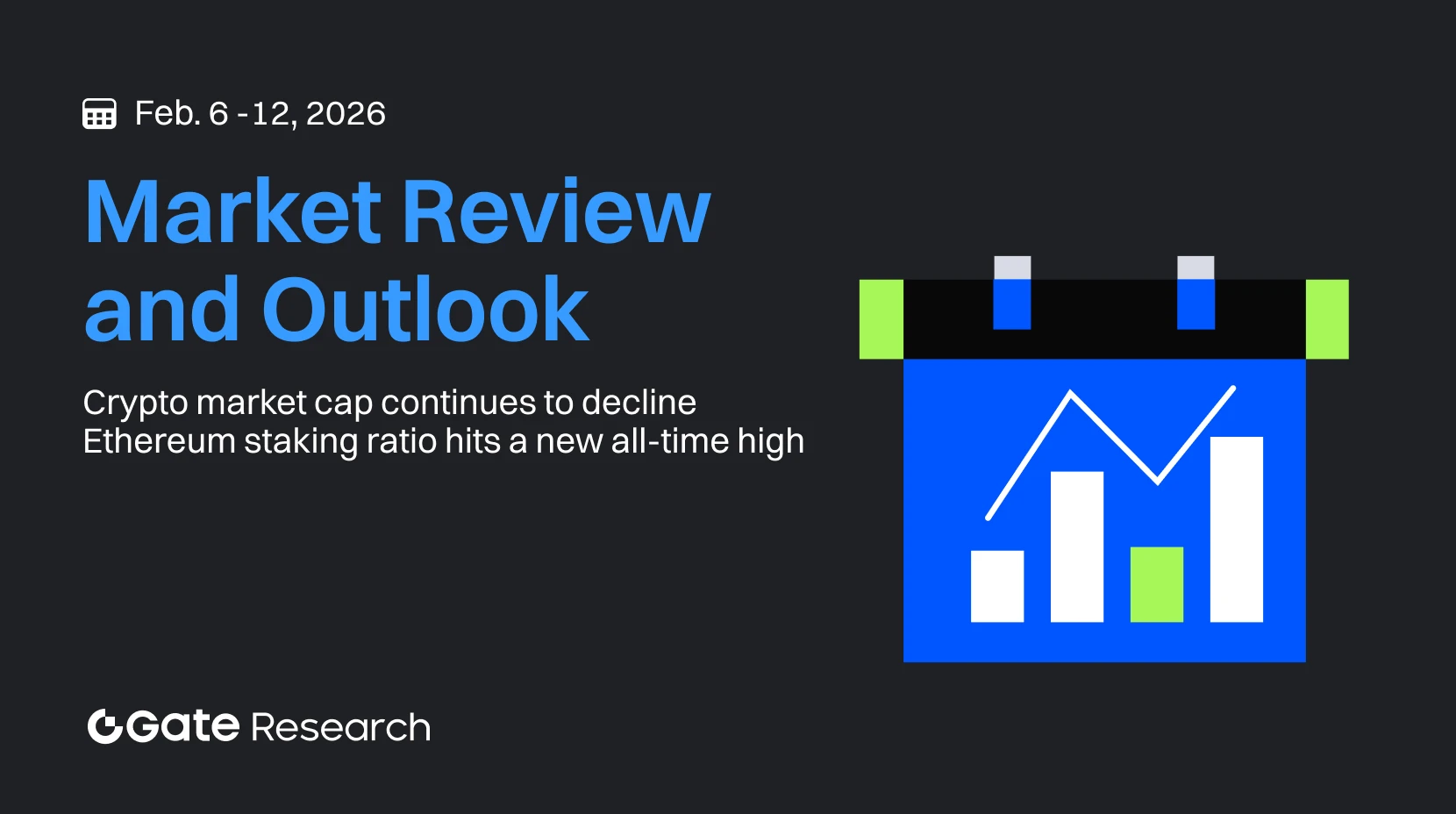
Gate Research Weekly Report: After a sharp sell-off, the market has entered a consolidation phase, with BTC and ETH still capped by key moving averages. Capital is rotating back into high-beta sectors such as AI, signaling a modest recovery in risk appetite. Ethereum’s staking ratio has surpassed 30%, reaching a new all-time high and pointing to ongoing supply contraction and a rebalancing of liquidity structures. Zerohash’s integration with Monad and USDC is advancing the deployment of stablecoin payment infrastructure at the L1 level. Tether’s U.S. Treasury holdings continue to expand, accelerating the integration of stablecoins into the short-term interest rate system. Overall crypto market capitalization continues to decline, indicating that the market remains in a near-term de-risking phase. Meanwhile, Anchorage has completed a strategic financing round of approximately $100 million, with participation from Tether.
2026-03-25 05:12:45
Gate has launched sub-account position mode for perpetual contracts, allowing both cross margin and isolated margin to be used together within the same market. Traders can maintain simultaneous long and short positions, set independent leverage for each, and run multiple strategies in parallel for precise risk management. This comprehensive upgrade boosts trading flexibility and capital efficiency across all contract markets.
2026-03-25 05:11:15
Gate has officially introduced the sub-account position mode for perpetual contracts, allowing users to hold multiple directional and multi-mode positions simultaneously within a single market. This feature supports the combined use of cross margin and isolated margin strategies. With independent leverage settings and robust risk isolation mechanisms, the sub-account mode provides advanced traders with enhanced flexibility for strategic operations, offering a significant upgrade to the perpetual contract trading experience.
2026-03-25 05:10:09
Gate DEX is launching the "Chinese New Year Continuous Trading Challenge", inviting global users to deeply experience one-stop on-chain trading on the Gate DEX Web and App.
2026-03-25 05:05:29
The article combines price trends with inventory data to argue that the current silver market is not merely driven by sentiment, but reflects a structural crisis of "highly leveraged paper silver versus extreme physical shortages."
2026-03-25 05:04:03
To celebrate Valentine's Day, Gate Perp DEX is launching a special Valentine's event.
2026-03-25 05:01:03
The article starts from the $5.7 trillion financing gap faced by small and medium-sized enterprises in emerging markets, revealing how on-chain lending is reshaping DeFi through treasuries, risk management, and institutional endorsement.
2026-03-25 04:59:31
LayerZero has introduced the institutional-grade L1 platform “Zero,” quickly attracting backing from major Wall Street players including Citadel, DTCC, and ICE. This article examines the underlying logic of LayerZero’s pivot from cross-chain bridges to a “Wall Street public chain,” providing an in-depth analysis of Zero’s market positioning, shifts in ZRO valuation, and critical risk factors. We also assess whether this transformation marks genuine entry into the realm of financial infrastructure or if it remains an unproven pilot initiative.
2026-03-25 04:56:31