This article provides an in-depth analysis of current market trends, personal investment strategies, and the field of angel investing. It shares insights into cryptocurrency market dynamics and offers an optimistic outlook on the revival of DeFi. Additionally, it explores the potential impact of stablecoins and innovative projects on the market.
2026-04-06 17:03:09
Gate AI has officially launched its web portal, adding a range of intelligent assistant features such as the user center, marketing campaigns, asset management, and personalized recommendations. These updates accelerate the platform’s shift to an AI-driven intelligent service layer, further elevating the user experience.
2026-04-06 17:03:08
Gate for AI delivers the industry's first AI Agent infrastructure, spanning five key domains—CEX, DEX, wallets, real-time news, and on-chain data—enabling AI to achieve fully intelligent, end-to-end operations in digital asset trading.
2026-04-06 17:03:07
Gate has officially released Gate for AI, seamlessly connecting CEX, DEX, wallets, information services, and on-chain data into a unified interface framework designed for AI Agents, marking a foundational upgrade to exchange infrastructure.
2026-04-06 17:03:06
As we approach our 13th anniversary, Gate proudly welcomes over 50 million users worldwide. This milestone reflects the trust of our global community and our continued commitment to building a secure, accessible, and forward-looking trading ecosystem. It also underscores Gate's ongoing focus on product innovation, infrastructure development, and user experience optimization. Recent platform enhancements include the launch of Gate AI, expanded TradFi trading capabilities, and the upgrade of Gate Web3 to Gate DEX, further strengthening Gate's multi-asset trading experience.
2026-04-06 17:03:05
The cryptocurrency market is highly transparent but extremely complex. Information is no longer an advantage; instead, it often turns into noise that hinders sound judgment. With a constant influx of news, indicators, and market narratives, traders don’t need more data—they need a framework to organize context and clarify causality. This article examines how Gate AI leverages cognitive structures to help users restore logical analysis and decision-making cadence amid information overload.
2026-04-06 17:03:05
Gate has officially launched Gate for AI, establishing the industry's first unified AI portal that brings together five core functions: CEX, DEX, wallet, real-time information, and on-chain data. Leveraging a dual-layer architecture with MCP and Skills, Gate grants AI Agents comprehensive access to its core exchange capabilities, empowering them to conduct research, make decisions, execute actions, and monitor processes—all within a single integrated framework.
2026-04-06 17:03:05
Gate has surpassed 50 million registered users, reflecting its strength in trading scale, product coverage, and market liquidity. With top-three global trading volume, diversified asset offerings, the upgrade of Gate DEX, the launch of Gate AI, and a 125% reserve ratio, Gate demonstrates its capability to support large-scale, long-term user growth.
2026-04-06 17:03:04
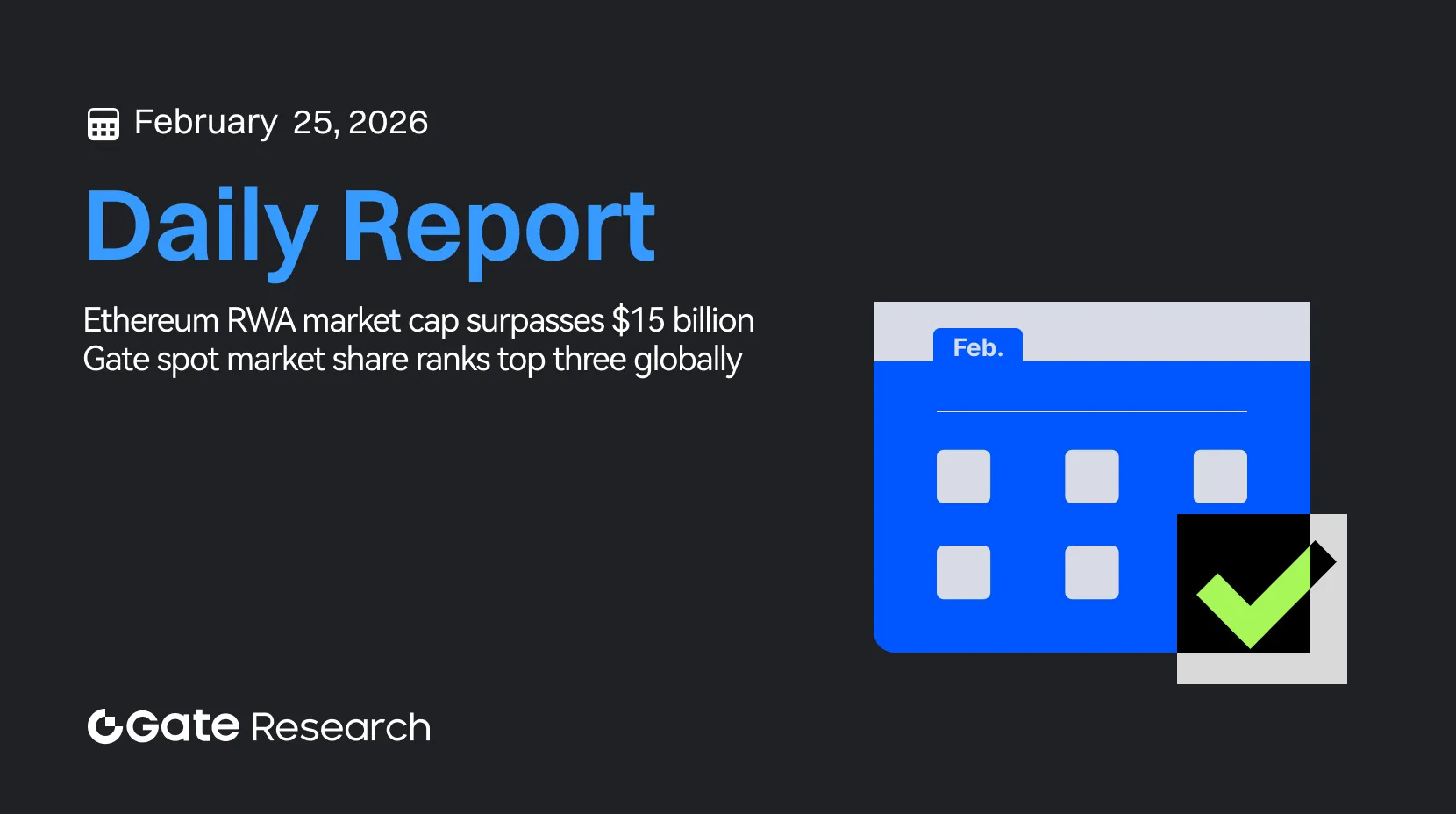
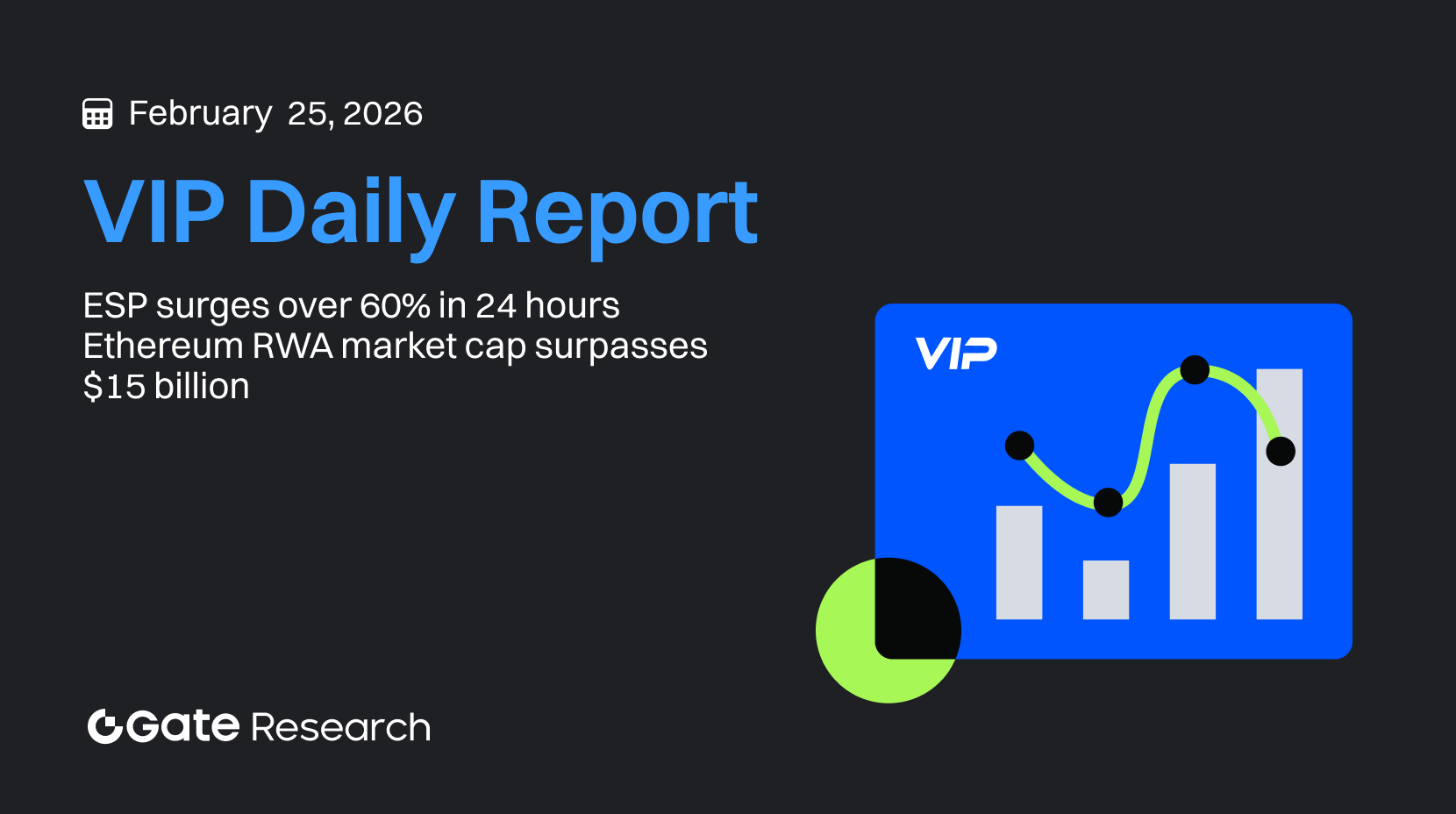
Gate Research Daily Report: On February 25, the crypto market saw a technical rebound, but overall conditions remain range-bound and largely driven by market sentiment, with BTC and ETH showing short-term recovery while medium-term direction remains unclear. Capital continues to rotate into high-narrative assets, with ENSO, ESP, and POWER strengthening on catalysts tied to cross-chain execution infrastructure, unified interaction layers, and funding tailwinds, respectively. Structurally, Ethereum RWA market capitalization has surpassed $15 billion, signaling accelerating real-world asset tokenization, while Gate continues to укрепen its spot and derivatives market share and advance TradFi and AI trading features—highlighting infrastructure build-out and compliance as key medium- to long-term themes.
2026-04-06 17:03:02
On February 25, the crypto market saw a technical rebound, but overall conditions remain range-bound and largely driven by market sentiment, with BTC and ETH showing short-term recovery while medium-term direction remains unclear. Capital continues to rotate into high-narrative assets, with ENSO, ESP, and POWER strengthening on catalysts tied to cross-chain execution infrastructure, unified interaction layers, and funding tailwinds, respectively. Structurally, Ethereum RWA market capitalization has surpassed $15 billion, signaling accelerating real-world asset tokenization, while Gate continues to укрепen its spot and derivatives market share and advance TradFi and AI trading features—highlighting infrastructure build-out and compliance as key medium- to long-term themes.
2026-04-06 17:03:02
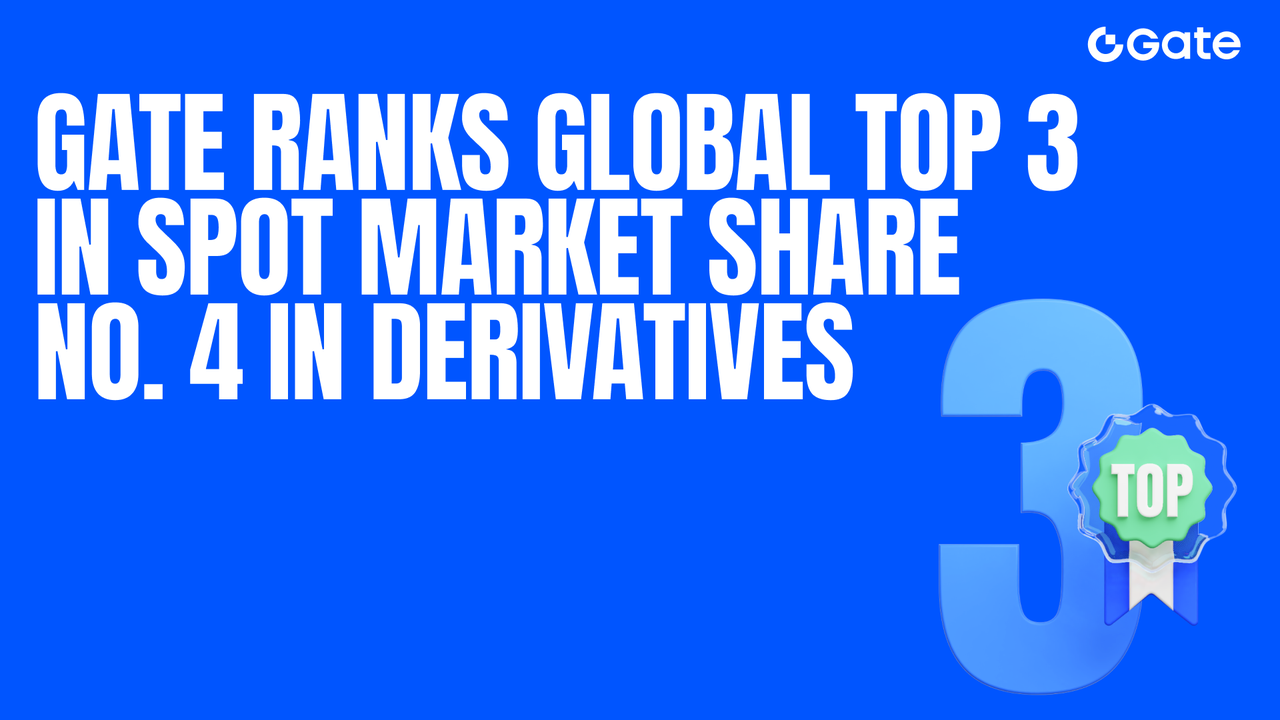
According to the latest Exchange Review by CoinDesk, Gate ranked third among centralized exchanges in global spot market share and fourth in derivatives market share in January.
2026-04-06 17:03:02
As information in the crypto market becomes more transparent, trading continues to grow more complex. Gate AI systematically organizes market data to help traders establish a stable cognitive framework, lower the cost of understanding, and avoid making distorted decisions in the face of information overload and emotional swings.
2026-04-06 17:03:01
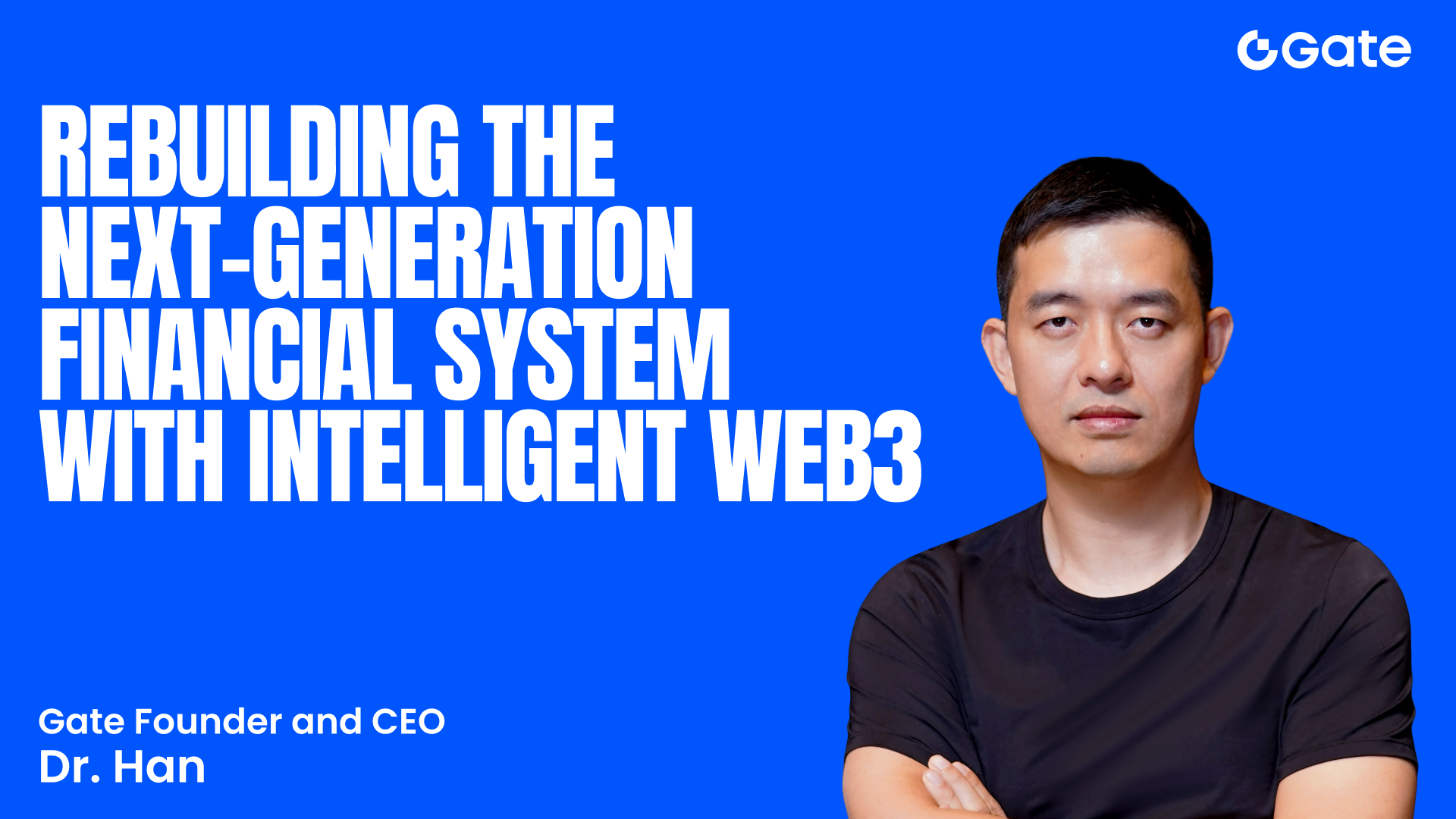
At Consensus HK, Gate Founder and CEO Dr. Han presented the vision of “Intelligent Web3,” highlighting the platform’s evolution into an integrated Web3 ecosystem combining CEX, DEX, and AI, with Gate AI enhancing user trading and asset management efficiency.
2026-04-06 17:03:01
The cryptocurrency trading platform Gate held a high-end networking reception during Consensus HK, inviting over a thousand industry guests to participate. Gate's founder and CEO Dr. Han delivered a keynote speech titled "What's the Next Big Thing in Crypto," sharing his latest insights on the development trends in the digital asset industry.
2026-04-06 17:03:01
PANews reported on February 12 that Dr. Han, founder and CEO of Gate, was invited to attend the main stage of Consensus HK and deliver a keynote speech, focusing on Intelligent Web3 and sharing his forward-looking insights into the development direction of digital assets.
2026-04-06 17:03:01