Zebec (ZBCN) is a decentralized finance protocol built around streaming payments. Its core goal is to enable continuous settlement on blockchain, transforming payments from one-time transactions into flows that move continuously over time.
2026-11-04 08:12:07
The sharp correction in gold prices results from the interplay of a stronger US dollar, changing interest rate expectations, and leveraged liquidations. This article offers an in-depth examination of the factors driving the recent slump in gold, shifts in capital structure, and projections for future market movements.
2026-11-04 08:12:07
SaaS: Doomsday or a New Golden Age? As AI agents start autonomously writing code, software companies are left with only one true moat: proprietary data. In early 2026, feature updates from Anthropic and OpenAI sparked a sharp decline in SaaS stocks. Yet, robust earnings from Bloomberg, Salesforce, and ServiceNow provided a surprising counterpoint. This article explores the logic behind the “factor scarcity shift”: In the era of AI agents, tool-building capabilities have become abundant, while authentic business context and historical transaction data have turned into extremely scarce fuel. Lightweight software lacking data access will be effortlessly displaced by agents, while legacy giants with deep “contextual knowledge graphs” are moving from selling software to charging “rent” for powering AI engines.
2026-11-04 08:12:07
Who’s Quietly Cashing In on Polymarket? The Brutal Truth Revealed by Analyzing 40 Top Addresses.
In Q1 2026, prediction market analyst Leo performed a reverse analysis of the top 40 leaderboard addresses, covering more than 100,000 on-chain transactions. His research uncovers three core strategies behind multimillion-dollar profits: directional traders who exploit information asymmetries in the five major sports leagues by “only buying, never selling”; structural market makers who dominate binary options liquidity on crypto price movements; and cognitive hunters who use weather modeling to identify pricing inefficiencies. The data shows that even the top-ranked address, kch123, can lose its advantage in milliseconds if it loses pricing power. Leveraging the most robust on-chain redemption data (REDEEM/MERGE), this article demonstrates that in prediction markets, picking the right game matters more than simply optimizing parameters.
2026-11-04 08:12:07
A Detailed Explanation of "Hardness," One of the Three Major Ethereum 2026 Protocol Clusters: Covering Implementations Such as Network Resilience, Protocol-Level Privacy, Private Transfers, Eliminating Single Points of Failure, Post-Quantum Cryptography Preparedness, and Incident Response Playbooks—Ensuring That Core Attributes Are Not Lost Amid Accelerated Scaling, While Establishing Metrics to Measure the Ecosystem's Level of Censorship Resistance and the Degree of Trust Assumption Penetration.
2026-11-04 08:12:07
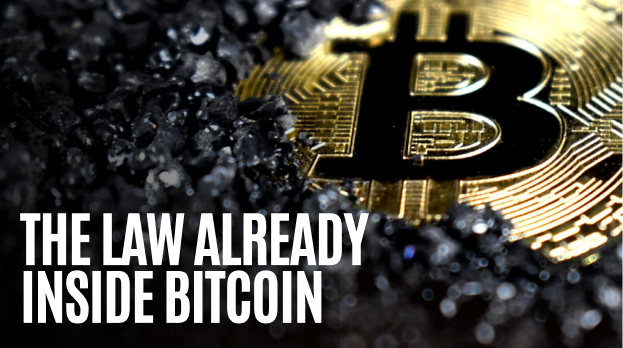
The article categorizes small-scale transactions as relying on agreements, while large-scale transactions trigger legal mechanisms, refuting the fairy tale of "absence of rule of law" and revealing how the mining economy spontaneously embeds itself within a judicial framework.
2026-11-04 08:12:07
The article focuses on the Bitcoin arms race between BlackRock and Strategy, covering everything from holdings data, fundraising structures, and risk exposure to market supply compression—providing a comprehensive explanation of how both the spot ETF and corporate treasury models are simultaneously reshaping the structure of the Bitcoin market.
2026-11-04 08:12:07
In his annual letter, BlackRock CEO Larry Fink once again emphasized the transformative potential of asset tokenization. He asserts that blockchain technology will reshape the foundational infrastructure of financial markets, dramatically reducing barriers to investment issuance, trading, and participation. With Wall Street institutions and regulatory bodies increasingly engaging in pilot programs, asset tokenization is gradually transitioning from a conceptual idea to real-world implementation.
2026-11-04 08:12:07
The Solana Foundation’s latest report highlights that the future of the crypto industry depends not just on transparency, but also on allowing enterprises to determine the extent of their data disclosures. Through the privacy spectrum framework, Solana seeks to provide businesses with a range of privacy options, enabling blockchains to maintain regulatory compliance while addressing the data protection requirements of commercial use cases.
2026-11-04 08:12:07
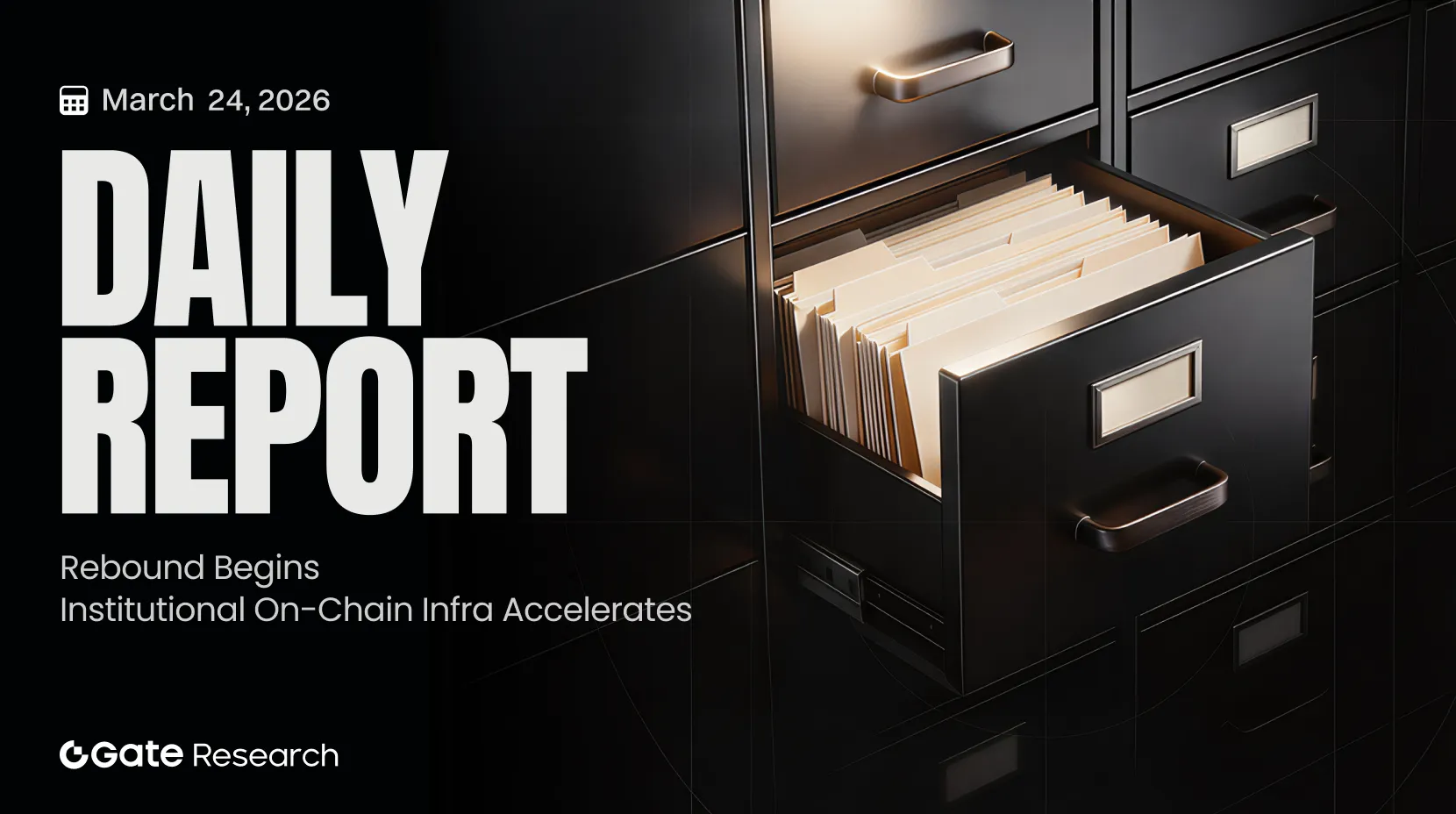
Gate Research Daily Report: On March 24, the crypto market as a whole entered a corrective rebound phase. BTC and ETH strengthened in tandem, but the Fear and Greed Index remained in the Extreme Fear zone. The current recovery is still primarily capital-driven, and market sentiment has not fully warmed up. On the market board, ANON, CSPR, and LIGHT ranked as the top three gainers among assets with a market cap exceeding 10 million USD, corresponding respectively to the three niche sectors of AI DeFi assistants, enterprise-grade public chains, and Bitcoin infrastructure. Incremental funds are conducting structural rotations around high-recognition themes. At the industry level, the partnership between Deloitte Canada and Stablecorp, Nasdaq’s tokenized collateral integration with Talos, and the on-chain risk control collaboration between Bluprynt and Kroll show that institutional-grade infrastructure such as stablecoins, collateral management, and compliance trust layers continues to advance steadily.
2026-11-04 08:12:07
Plasma (XPL) differs from traditional payment systems across several core dimensions. In terms of settlement, Plasma enables direct on-chain asset transfers, while traditional systems rely on account-based ledgers and intermediary clearing. In efficiency and cost, Plasma offers near real-time and low-cost transactions, whereas traditional systems often involve delays and layered fees. For liquidity management, Plasma uses stablecoins for on-demand capital allocation, while traditional systems depend on pre-funded accounts. In programmability and accessibility, Plasma supports smart contracts and operates on an open global network, while traditional systems remain constrained by legacy banking infrastructure.
2026-11-04 08:12:07
Polymarket has revised its market integrity rules, introducing clear definitions for three categories of insider trading for the first time. The update responds to recent disputes and reinforces regulatory principles. This article examines the specifics of the new rules, the relevant background, and their far-reaching implications for the prediction market sector.
2026-11-04 08:12:07
Plasma is a blockchain network designed specifically for stablecoin payments. Through PlasmaBFT consensus, a Paymaster gas sponsorship mechanism, and a native Bitcoin bridge, it enables zero-fee transfers and high-performance settlement. Unlike general-purpose blockchains, Plasma treats stablecoins as core assets and optimizes execution and settlement at the protocol level, allowing users to complete on-chain payments with an experience close to Web2. It is suited for cross-border remittance, merchant payments, and high-frequency settlement scenarios.
2026-11-04 08:12:07
Plasma (XPL) is a blockchain infrastructure designed for stablecoin payments. Its native token, XPL, performs core functions across the network, including gas fees, validator incentives, governance participation, and value capture. Built around the central use case of high-frequency payments, the XPL tokenomics model combines inflationary distribution with fee burning in an attempt to balance network growth with long-term asset scarcity.
2026-11-04 08:12:07
Plasma (XPL) is an EVM-compatible Layer 1 blockchain designed for global stablecoin settlement. It focuses on zero-fee USDT transfers, high throughput, and native Bitcoin bridging to support high-frequency use cases such as payments and cross-border settlement.
2026-11-04 08:12:07