Trust Wallet Token (TWT) is a utility token designed to support the operation and governance of the Trust Wallet ecosystem. It is primarily used for fee discounts, community governance voting, and ecosystem incentives. As decentralized wallets become increasingly important within the Web3 landscape, TWT has gradually evolved into a key medium connecting users, wallet services, and on-chain applications.
2026-11-04 08:12:20
Trust Wallet Token (TWT) is a functional token in the Trust Wallet ecosystem. It is designed to enhance user benefits, enable community governance, and support ecosystem incentives. As decentralized wallets increasingly become key entry points into the Web3 ecosystem, wallet tokens have evolved from simple reward mechanisms into tools for governance participation and ecosystem collaboration. In this shift, TWT plays an important role in connecting users with the wallet ecosystem.
2026-11-04 08:12:20
Trust Wallet is a multi-chain decentralized wallet, while Trust Wallet Token (TWT) serves as the ecosystem’s utility token, connecting users, the community, and the wallet infrastructure. As decentralized wallets increasingly become entry points to Web3, the role of wallet tokens has grown accordingly. TWT has gradually evolved from a simple governance token into a broader tool for ecosystem incentives and community participation.
2026-11-04 08:12:20
The tokenomics of Trust Wallet Token (TWT) is designed around supply control, ecosystem incentives, and long-term development. Compared with single-utility tokens, TWT builds a token economy linked to wallet growth through the combination of supply structure, distribution mechanisms, and ecosystem incentives.
2026-11-04 08:12:20
edgeX is a decentralized derivatives trading protocol that combines off-chain order matching with on-chain settlement to achieve performance close to centralized exchanges while maintaining the security of self-custodied assets. As DeFi evolves from simple token swaps to more complex financial instruments, hybrid architectures like edgeX have become widely adopted for supporting high-frequency trading scenarios such as perpetual contracts. Its design reflects a balanced approach within decentralized trading infrastructure, navigating trade-offs between performance, transparency, and verifiability.
2026-11-04 08:12:20
edgeX adopts a hybrid model of “off-chain matching + on-chain settlement” for decentralized perpetual contract trading. This design maintains asset self-custody and verifiable outcomes while improving execution efficiency. From order submission to final settlement, each trade goes through matching, risk calculation, and on-chain confirmation. This hybrid architecture has become a typical approach for improving performance in Perp DEX systems.
2026-11-04 08:12:20
The core differences between edgeX, Hyperliquid, and Aster lie in their matching mechanisms and architectural paths. edgeX adopts an off-chain matching with an on-chain settlement model, Hyperliquid operates a fully on-chain order book, while Aster uses a modular design to aggregate liquidity and trading mechanisms. These distinctions directly shape each platform’s latency, level of decentralization, liquidity structure, and risk management approach.
2026-11-04 08:12:20
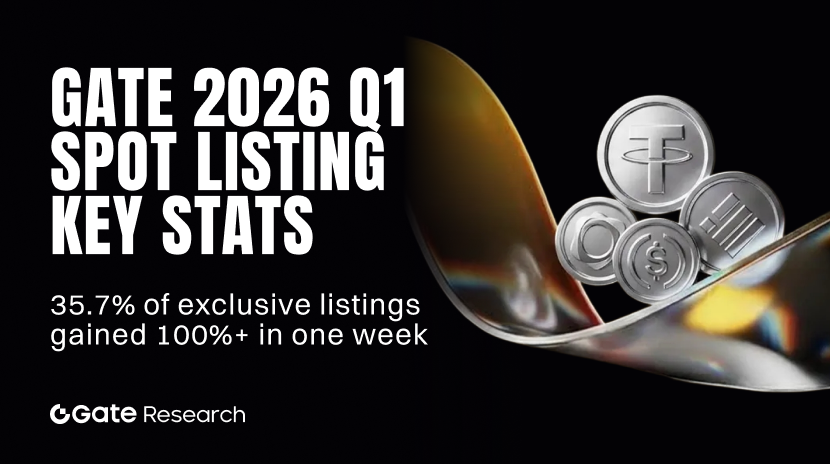
In the first quarter of 2026, against the backdrop of overall pressure in the crypto market and increasing project divergence, Gate established a structurally complete spot listing framework through high coverage, a high proportion of first listings, and a meaningful share of exclusive listings, while maintaining relatively stable positive return coverage across multiple post listing time windows. From a data perspective, median returns at 24 hours and 3 days remained consistently positive, with first listings providing stronger return elasticity, non-first listings demonstrating higher success rates of price increases, and exclusive listings reflecting stronger selection capability and mid-term performance. Overall, in a weak market environment, Gate demonstrates a systematic capability to consistently source high quality projects, conduct effective selection, and deliver tangible market outcomes.
2026-11-04 08:12:20
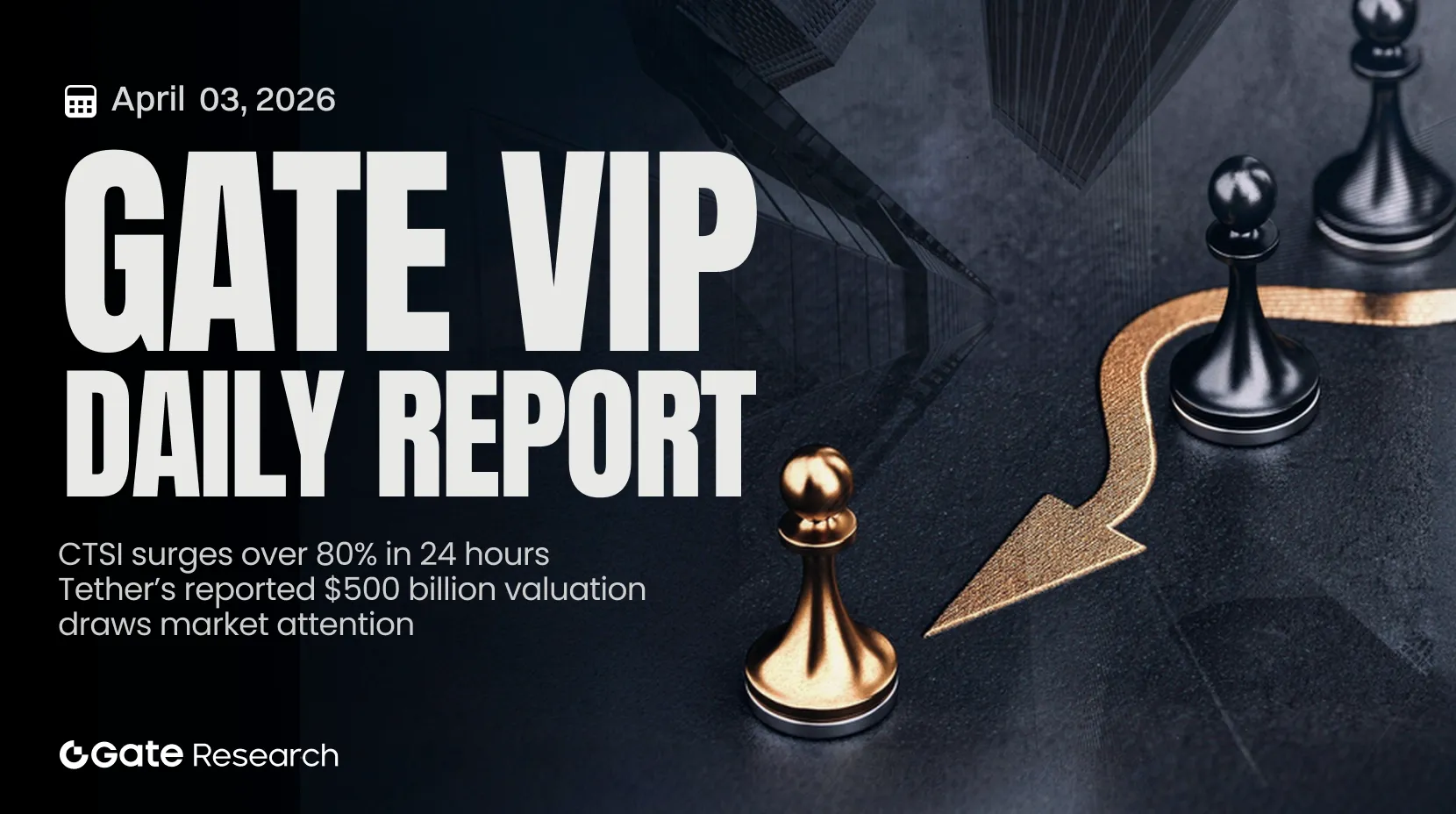
Gate Research Daily Report: On April 3, BTC consolidated above $66,000, ETH pulled back toward $2,050, and GT traded in a narrow range near $6.45. While the broader market remained weak, CTSI, BR, and SYN outperformed. Meanwhile, market attention focused on reports of Tether pursuing a $500 billion valuation, Telegram Wallet’s push into perpetual futures trading.
2026-11-04 08:12:20
Ontology (ONT) is a blockchain infrastructure centered on decentralized identity (DID) and data collaboration. It aims to enable identity authentication and trusted data exchange in decentralized environments through verifiable credentials and on-chain trust mechanisms. With ONT ID, a dual-token model, and a modular architecture, Ontology allows users to establish trusted relationships without relying on centralized institutions, with applications spanning digital identity, data exchange, and enterprise blockchain use cases.
2026-11-04 08:12:20
Gate ETF, or leveraged tokens, are crypto financial instruments that “tokenize” leveraged trading. They allow users to gain amplified price exposure through spot trading without needing margin or a futures account. As the crypto derivatives market evolves, these products are increasingly used to improve capital efficiency and simplify risk management in trending markets.
2026-11-04 08:12:19
The core differences between USDD and USDT lie in their issuance models, stabilization mechanisms, and risk structures. USDD is an overcollateralized stablecoin with higher yield potential, while USDT is issued by a centralized entity and backed by fiat reserves, relying on redemption mechanisms and market trust to maintain its peg. USDT offers stronger liquidity but comes with regulatory and custodial risks. Each serves different user needs: USDT is better suited for trading and hedging, while USDD is designed for DeFi yields and on-chain applications.
2026-11-04 08:12:19
USDD 2.0 marks a significant shift in stablecoin design, moving away from its earlier model toward architecture centered on overcollateralization and reserve backing. This upgrade not only responds to growing market concerns around stablecoin security, but also reshapes its risk structure and practical use cases.
2026-11-04 08:12:19
An in-depth overview of Gate TradFi Copy Trading, detailing the fundamentals of TradFi Copy Trading, the application process for Lead Traders, step-by-step guides for Copiers, the profit-sharing model, risk control strategies, and the main distinctions from Futures Copy Trading—designed to help newcomers get up to speed quickly.
2026-11-04 08:12:19