This article examines Yuga Labs' decision to dissolve ApeCoin DAO and shift to ApeCo, highlighting how DAOs can exacerbate centralized management challenges, operate without effective accountability mechanisms, and experience inefficiencies in democratic voting. The author advocates for applying management science principles to enhance organizational performance.
2026-11-10 08:10:12
The development history of DAOs has spanned over a decade, and following the explosive growth period of DAOs in 2021, they have gradually become a familiar organizational and administrative model in human society. Subsequently, various large-scale DAOs have conducted experiments and expansions in governance, leading to diverse governance research. This article compiles reference parameters that can serve as governance indicators for data analysis in various governance contexts. Each parameter is typically used to quantify a specific indicator, but the importance of each indicator varies depending on the type of DAO.
2026-11-10 07:58:57
The literature and practice for investment performance evaluation in traditional finance is extensive. However, the on-chain world has few proxies that could provide DAOs or on-chain investors with the necessary tools to make quantitative investment allocation decisions.
2026-11-10 07:56:07
In Ethereum, every new feature or improvement is proposed in the form of EIP, which will be implemented by all miners. This article will give you an in-depth understanding of what an EIP is and what role EIPs play in the development of Ethereum.
The Ethereum ecosystem has attracted a large number of users. Although its high gas fees and congested network are often criticized, it has always been the preferred public chain for Dapps due to its safe, stable, and innovative system. Rome was not built in a day. Similarly, Ethereum has undergone various upgrades since its inception. These upgrade and improvement proposals need to reach an overall consensus in the Ethereum community in the form of EIP before they can be finally implemented.
2026-11-10 07:54:32
Web 3.0 is an iteration of the internet that combines AI, algorithms, IoT, blockchain, and more. It aims to create a more interconnected and decentralized internet.
2026-11-10 07:54:32
Loot, originally an NFT project adopting the Free Mint tactic, had triggered positive responses in the NFT market immediately after its launch. As the first project that proactively invites users to participate in the project construction and allows players to create their NFT minting stories freely, Loot's innovation has been recognized by many users. The first batch of Loot (for Adventurers) received a trading volume of 74.7K ETH on OpenSea, witnessing great success. After that, Lootverse began to open up a magnificent chapter in crypto space.
The combination of NFT projects and blockchain games has always been highly talked about. One of the best practices for empowering NFT projects is to make game characters and props into NFTs and store them on chain. Loot is exactly such a project that combines NFTs and GameFi. What makes Loot stand out among many NFT and GameFi projects as a rising star? Follow us to enter the Lootverse and feel its charm directly.
2026-11-10 07:54:32
AMPL adjusts its token supply through an elastic supply mechanism, while FORTH previously served as the governance token for the Ampleforth ecosystem. Together, they illustrate how DeFi can separate asset and governance functions, while also highlighting the relationship between protocol applications, technical mechanisms, and changes in governance frameworks.
2026-11-04 11:01:03
FORTH is the governance token of the Ampleforth ecosystem. Its value is influenced not only by token supply and demand, but also by governance rights, treasury management, and protocol development. As Forth DAO enters its exit phase, FORTH has also become a case study for examining the boundaries of governance rights and market pricing for governance-focused altcoins.
2026-11-04 11:00:22
BEE Token is the native Utility and Governance Token of the DAOBase ecosystem, designed to support governance participation, ecosystem incentives, and community coordination. DAOBase uses BEE Token to connect users, DAO creators, and contributors within its decentralized organization infrastructure.
2026-11-04 08:15:04
DAOBase is an AI-powered DAO infrastructure platform designed to help users create, manage, and analyze decentralized autonomous organizations through DAO creation tools, governance systems, on-chain data analytics, and community coordination features.
2026-11-04 08:15:04
DAOBase (BEE) is an AI-powered DAO infrastructure platform designed to help users create, manage, and analyze decentralized autonomous organizations through DAO creation tools, governance systems, on-chain data analytics, and community coordination features.
2026-11-04 08:15:04
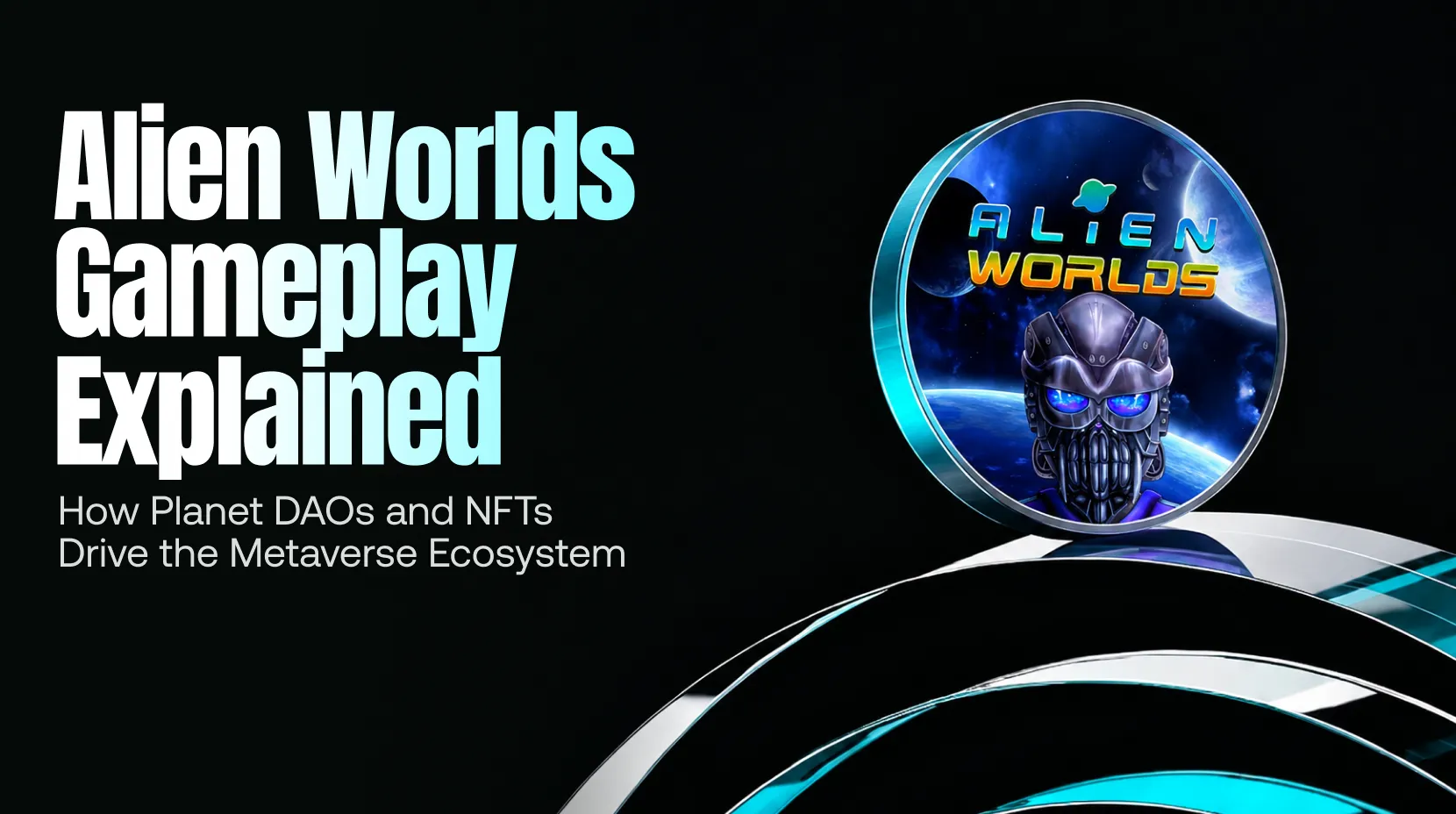
Alien Worlds is a decentralized metaverse game system built on blockchain, with its core structure comprising Planet DAO, an NFT asset system, and the Trilium (TLM) tokenomics model. By converting in-game actions into on-chain verifiable economic activities, the project enables players' operations on virtual planets to directly influence resource distribution and Rendite structures, thereby creating a continuous Play-to-Earn ecosystem.
2026-11-04 08:14:43
MetaDAO (META) is a Solana based Futarchy governance protocol. Its core idea is to replace traditional DAO voting with decision markets.
2026-11-04 08:12:58
The META token is the governance and utility token of the MetaDAO protocol. It is mainly used for proposal governance, Treasury management, market incentives, and controlling token issuance through the Futarchy mechanism.
2026-11-04 08:12:58
MetaDAO runs its governance process through decision markets. Proposal outcomes are not directly decided by traditional voting, but by price signals from the Proposal Pass and Proposal Fail markets.
2026-11-04 08:12:58