A crypto crash happens when Bitcoin, Ether, and related digital assets fall sharply across venues in a short window—usually because liquidity thins, risk appetite fades, and leveraged positions get forced closed. That is different from ordinary day-to-day volatility: a crash is a broad, self-reinforcing drawdown where selling pressure, thin order books, and margin liquidations amplify each other. Understanding why crypto is crashing means reading those market mechanics, not treating a single headline as the whole story.
What Is a Crypto Crash?
A crypto crash is a rapid, market-wide decline in cryptocurrency prices that is steeper and more synchronized than a routine pullback. In practice, traders and educators often describe a crash when major assets such as Bitcoin (BTC) and Ether (ETH) drop hard together, altcoins fall even faster, and funding or open interest in derivatives contracts collapses as positions unwind.
Several traits help separate a crash from normal volatility:
- Breadth — Selling hits many coins and venues at once, not one illiquid token.
- Speed and feedback — Price declines trigger stop-outs and liquidations that create more selling.
- Liquidity stress — Bid depth thins; large market orders move prices more than usual.
- Narrative shift — Media and social feeds switch from expansion stories to risk-off language.
A short history of crypto crashes across years helps readers see the pattern without treating any single week as unique. Educators often start with the 2017 boom and the multi-year 2018 bear market that followed, when prices kept falling for an extended stretch. May 2021 is frequently cited as a retail-heavy sell-off; June and July windows often show up in mid-year deleveraging timelines. November 2022 is widely associated with FTX-related contagion after earlier Terra/Luna stress the same year; other November weeks of forced selling show how contagion can return. December and January often bring year-end and new-year liquidity resets, when a large year-end close can leave January opening flows fragile. March 2020 remains a textbook COVID risk-off example. Those episodes differ in triggers, but they share the same mechanical pattern: leverage plus thin liquidity turns a shock into a cascade while prices are still falling. This article explains mechanisms in evergreen language; it is not a live price desk or a forecast of the next bottom.
Why Is Crypto Crashing? Common Drivers Explained
When people ask why crypto is crashing—or why the crypto market is down today—they usually want the overlapping forces that push digital assets lower together. No single cause explains every sell-off, but several drivers appear repeatedly across cycles and years.
Tighter liquidity and risk-off macro conditions. Cryptocurrencies often trade like high-beta risk assets. When markets expect higher policy rates, stronger U.S. dollar conditions, or weaker risk appetite, capital can rotate away from speculative assets. Spot Bitcoin exchange-traded products and other institutional vehicles can also see net outflows during risk-off windows, which removes a bid that previously supported prices. In those windows, prices keep falling even when long-term holders stay inactive, and high real yields can keep the bid thin for a long time.
Regulatory and policy uncertainty. Enforcement actions, exchange restrictions, tax rule changes, or unclear licensing regimes can raise perceived operating risk for platforms and investors. Uncertainty alone can reduce willingness to hold size, even before any final rule is published. Headline weeks in June, July, or November often mix policy rumors with thin liquidity, and a fresh July scare can restart selling even after a brief pause.
Thin spot liquidity and market structure. Crypto markets run nearly 24/7 across many venues. When professional market makers widen spreads or pull quotes, the same sell order moves price farther. That microstructure effect matters more in crypto than in equity markets that use circuit breakers and shorter trading hours. Low depth means a large market order can drive a fast close of the day’s range.
Leverage and forced selling. Perpetual futures and margin products let traders run large notional exposure with limited collateral. When prices fall through liquidation thresholds, exchange engines automatically sell, which can accelerate the drop. Cascading liquidations are one of the most common amplifiers behind “why is crypto crashing today” and “why is crypto crashing right now” headlines while the tape is still falling.
Sentiment, treasury narratives, and contagion. Fear spreads through social media, funding-rate flips, and correlated selling across Bitcoin, Ether, and altcoins. Contagion can also start outside crypto—equity sell-offs or geopolitical shocks—then spill into digital assets because the same risk budgets are cut everywhere. Corporate crypto treasury companies and large holders sometimes dominate news cycles when they sell or pause buying; those stories matter as flow signals, not as proof that a permanent bubble always ends in one week.
Treat these drivers as a checklist for reading the tape, not as a promise that any one factor always dominates. Asking what can cause a crypto crash is really asking which mix of liquidity, leverage, and risk-off time is active.
How Do Leverage and Liquidations Amplify a Crypto Crash?
Leverage turns a moderate decline into a crash when forced liquidations outrun available bids—the liquidation cascade in plain terms. On many crypto derivatives venues, if a long position’s equity falls below maintenance margin, the exchange liquidates the position automatically. That forced sell hits the market immediately; there is often no multi-day “margin call letter” like traditional brokerage workflows. When prices keep falling, each new low can close another cluster of high-leverage longs, and falling collateral values leave little cushion.
The cascade typically looks like this:
- Price slips and over-leveraged longs approach liquidation prices.
- Liquidation engines sell into thin books.
- The next tranche of positions hits their thresholds.
- Open interest drops as the spiral burns through leveraged exposure.
- Spot markets feel the spillover as basis trades and hedges unwind.
High advertised leverage (sometimes tens of times notional) means a small percentage move can wipe collateral in little time. During stress, visible order-book depth can collapse quickly, so liquidations travel farther in price terms than they would in deep equity markets. A single week of cascading forced selling can erase months of quiet range trading. Readers researching why crypto crashes often find that the headline “trigger”—a macro print, a policy rumor, or a large holder sale—is only the spark; the fuel is leveraged inventory sitting too close to the market.
Educational takeaway: liquidation heatmaps, open interest, and funding rates help explain how a crash accelerates. They are not buy or sell signals by themselves, and this guide does not recommend opening or closing leveraged trades. Watching whether forced selling is still high after the first wave helps you judge whether the cascade may be close to exhausting.
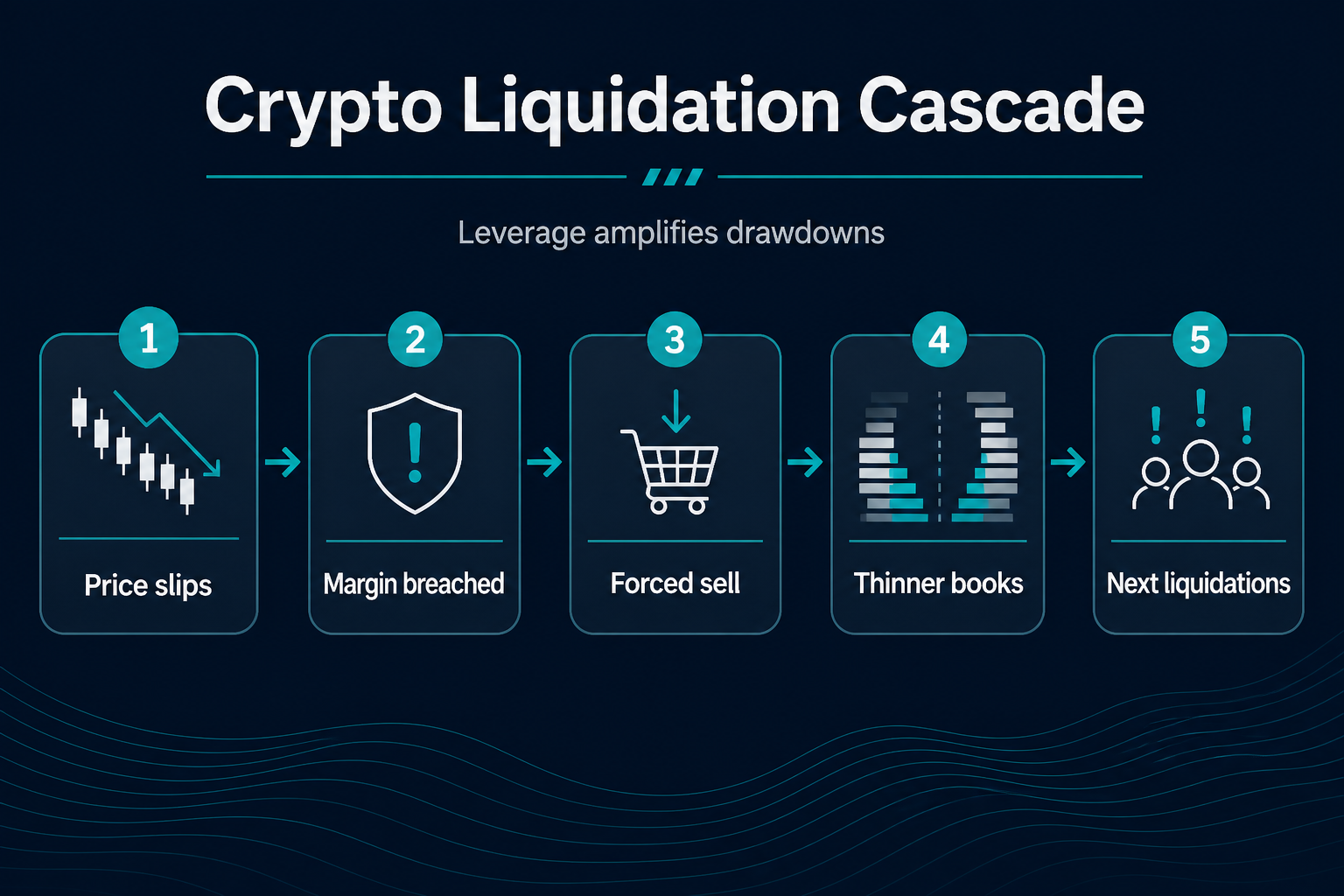
Figure 1. How leverage liquidations can amplify a crypto crash through cascading forced sells.
Why Is Bitcoin Crashing When the Broader Market Falls?
Bitcoin crashing during a broad crypto sell-off is common because BTC still sets much of the market’s risk tone. Many altcoin pairs are quoted against Bitcoin or Ether; when BTC weakens, portfolio risk models often cut exposure across the stack. Spot Bitcoin ETFs and corporate treasury narratives also tie BTC more tightly to traditional risk assets than early “uncorrelated hedge” marketing suggested. Questions such as “why is Bitcoin falling?” and “did a treasury company trigger the Bitcoin crash?” often appear in the same news week when a large known holder sells or pauses buying for the first time in years.
In risk-off regimes, Bitcoin frequently moves with equities and other speculative assets: rising yields or a stronger dollar can raise the opportunity cost of holding non-yielding crypto. Liquidation cascades in BTC perpetual futures can then transmit stress to Ether and majors within minutes. That is why search queries like “why is Bitcoin crashing” and “why is crypto crashing” often surface the same macro and leverage explanations. Psychological round-number levels attract media attention, but losing a headline level does not by itself prove a permanent bubble burst; it can also be a brutal shakeout before the next range forms over subsequent weeks and years.
Bitcoin can also fall for BTC-specific reasons—miner selling narratives, ETF flow shifts, or large on-chain transfers hitting exchanges—but during a market-wide crash, the dominant story is usually correlation plus leverage, not a permanent rejection of the Bitcoin network’s protocol design. Institutional desks may still show selective buying during stress even while retail panic selling dominates social feeds; those flows take time to show up in weekly summaries.
Crypto Crash vs Stock Market Crash: What’s Different?
Crypto crashes and equity crashes share panic and forced selling, yet market design differs in ways that change how pain shows up.
| Dimension |
Crypto markets |
Traditional stock markets |
| Hours |
Near 24/7 across venues |
Mostly session-based with closes |
| Circuit breakers |
Limited or venue-specific |
Common on major exchanges |
| Typical leverage |
Often higher on crypto derivatives |
Constrained by broker and regulation |
| Listing and custody |
Fragmented venues and self-custody options |
Centralized brokers and clearing |
| Information cycle |
Social feeds move fast around the clock |
More structured news windows |
Because crypto venues can keep trading through weekends and holidays, gaps that equities “digest” overnight may print continuously in crypto. Higher available leverage and automated liquidations can also compress the time from shock to cascade. Equities still crash, especially in systemic risk events, but the combination of continuous trading and high leverage helps explain why crypto drawdowns can look especially violent on short timeframes. A low-liquidity Sunday session can still print a large move while stock markets are closed for the weekend.
Correlation matters too: in modern cycles, crypto often falls with equity risk-off rather than acting as an independent safe haven. Comparing a crypto crash with a stock market crash is therefore less about declaring one “safer” and more about understanding trading hours, leverage, and liquidity rules. When investors flee risky assets in the same week across stocks and crypto, both markets can show falling prices even if the first spark was outside digital assets.
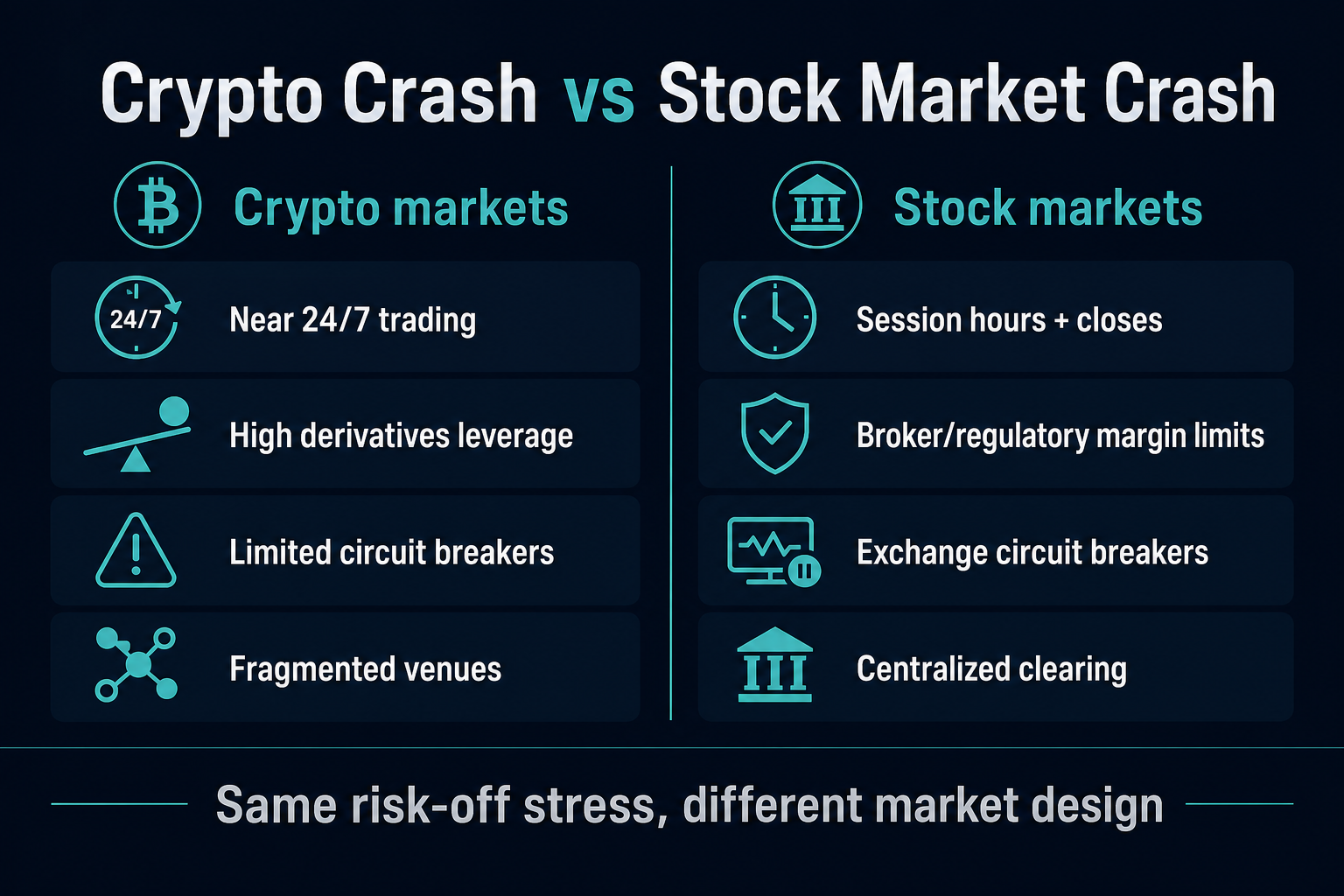
Figure 2. Structural differences that change how crash stress shows up in crypto versus equities.
What Should You Do During a Crypto Crash?
How to navigate a crypto crash, from an educational risk standpoint, starts with process—not with a call to buy the dip or abandon the market. Gate Learn frames crash response as information hygiene and risk controls. The goal is to stay close to a written plan when prices are falling and social feeds are loud.
Practical checklist:
- Verify sources. Prefer primary notices from exchanges, issuers, and regulators over anonymous urgency posts that appear every week of stress.
- Check leverage and margin. If you use derivatives, understand liquidation prices and whether you can meet margin without panic transfers when equity is low.
- Separate spot holdings from borrowed exposure. Spot assets and leveraged futures behave differently under stress; high leverage leaves little time to react.
- Watch for phishing and fake “support” messages. Crash periods attract scams that imitate exchanges or wallet recovery flows, especially after a large close or flash move.
- Document your decision framework. Notes on time horizon, position size, and risk limits reduce impulsive reactions driven by headlines about buying the dip or “this time is different.”
- Review custody and withdrawal readiness. Confirm you control keys or understand exchange withdrawal rules before stress peaks.
This checklist is not investment advice, not a timing system, and not a recommendation to buy, sell, or hold any asset. Cryptocurrency markets remain highly volatile; past crashes across years do not map neatly onto future outcomes. Retail panic selling and selective institutional buying can coexist in the same week. If you need personalized guidance, consult a licensed professional in your jurisdiction.
Key Takeaways: Reading Crypto Crashes Without Panic Narratives
Crypto crashes happen when sharp price declines meet thin liquidity and leveraged forced selling. The question “why is crypto crashing” usually points to a mix of macro risk-off conditions, regulatory uncertainty, microstructure stress, and liquidation cascades—often with Bitcoin leading the tone for the rest of the market. Crashes differ from stock-market sell-offs mainly in trading hours, leverage intensity, and venue design, not because digital assets are exempt from risk. Timelines that mention May 2021, June or July deleveraging, November contagion weeks, and December–January liquidity resets simply show how often these patterns repeat across years. Looking again at a November or December episode with the same mechanics reinforces that falling markets can look similar even when the news ticker changes.
Use mechanism literacy—liquidity, leverage, correlation—to interpret headlines about temporary shakeouts versus larger downtrends. Avoid treating any article, including this one, as a prediction of when a crash ends, when prices recover, or whether the next week will close higher or lower.
Disclaimer: This content is for educational purposes only and does not constitute investment, trading, legal, or tax advice. Digital asset prices can fall substantially and may result in loss of capital.
FAQ
Why is crypto crashing today?
“Today” and “right now” headlines usually compress several forces into one phrase: weaker risk appetite, thinner liquidity, and/or liquidation cascades after a shock. The specific spark changes by episode and by week; the amplification path—forced selling into shallow books while prices keep falling—repeats often across years.
Why is Bitcoin crashing?
Bitcoin often leads crypto risk tone. When BTC falls on macro pressure, ETF flow shifts, treasury-company headlines, or derivatives liquidations, Ether and many altcoins typically follow because portfolios cut correlated exposure together. A high-volatility close after a large move does not by itself prove a permanent end of the Bitcoin market.
What causes a crypto market crash?
Common causes include tighter financial conditions, regulatory uncertainty, thin order-book liquidity, high leverage, low depth, and contagion from related venues or traditional markets. Multiple drivers can stack in the same window of time. Historical weeks in January, June, July, November, and December show how calendar liquidity and leverage can interact.
What should I do when crypto is crashing?
Focus on verification, leverage awareness, custody security, and scam avoidance. Do not treat social urgency about buying or panic selling as a trading plan. This guide does not tell you to buy or sell; it only outlines how to navigate stress carefully.
Can crypto recover after a crash?
Markets have recovered after prior drawdowns in some cycles and stayed depressed for long stretches in others across years. Recovery is not guaranteed on any timetable; treat “V-shape” narratives as speculation, not fact. Whether a move is a temporary shakeout or the start of a larger downtrend only becomes clearer with time.
How do liquidations make crypto crashes worse?
When margin thresholds are breached, exchanges automatically sell positions. Those forced sells can push prices through the next liquidation cluster, creating a cascade that outruns ordinary discretionary selling. As long as open interest remains high and books stay thin, each new low can close another wave of leveraged exposure.