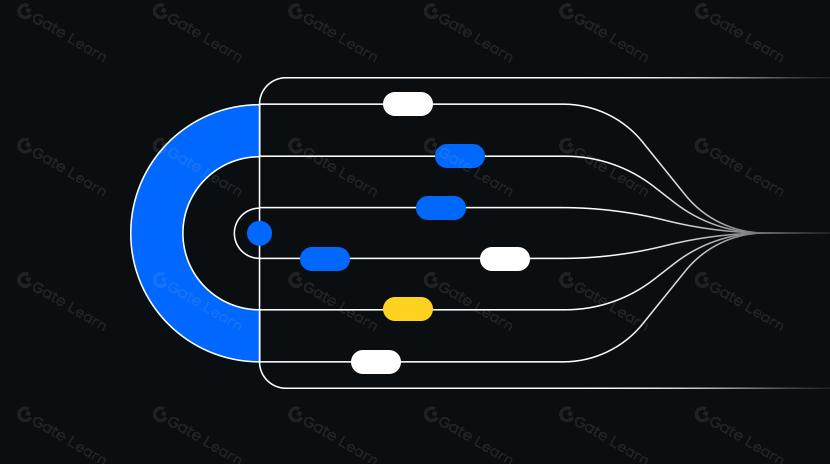
Conventional pool models have made decentralized trading broadly accessible, while reserve-derived pricing can drift as market conditions change. Metric approaches the problem at the pricing layer: market references feed pool quotes, and Active Pools move liquidity toward where trading is likely to occur. That makes execution quality, asset type, and network conditions the three factors to evaluate before a swap or LP deposit.
Metric positions itself as “the DEX that prices pools to reality.” That sentence captures its main design goal: keep pool quotes close to external market prices and make liquidity more useful across volatile DeFi assets, tokenized stocks, and real-world assets. The how-to guide walks through operations, and the PropAMM comparison analyzes the technical tradeoffs.
Key Takeaways
-
Metric DEX is a spot-trading protocol built around pool liquidity rather than order books.
-
PropAMM adds oracle-aware pool pricing and active position management to the AMM model.
-
Active Pools are designed to rebalance and concentrate liquidity around real-time market prices.
-
Tokenized stocks through bStocks and broader RWA support differentiate Metric from generic crypto-only DEXs.
-
Zellic and Sherlock have audited the protocol; users still manage smart-contract, oracle, market, and execution risks.
What Is Metric DEX?
Metric DEX is the public-facing name for Metric.xyz, a decentralized exchange protocol that executes spot trades through liquidity pools. A trader swaps one asset for another against a pool; an LP deposits assets into that pool and earns protocol fees from trades. Metric’s distinctive layer is its pricing engine. Rather than treating the pool as an isolated curve, Metric uses external market data to update pool quotes and drive rebalancing.
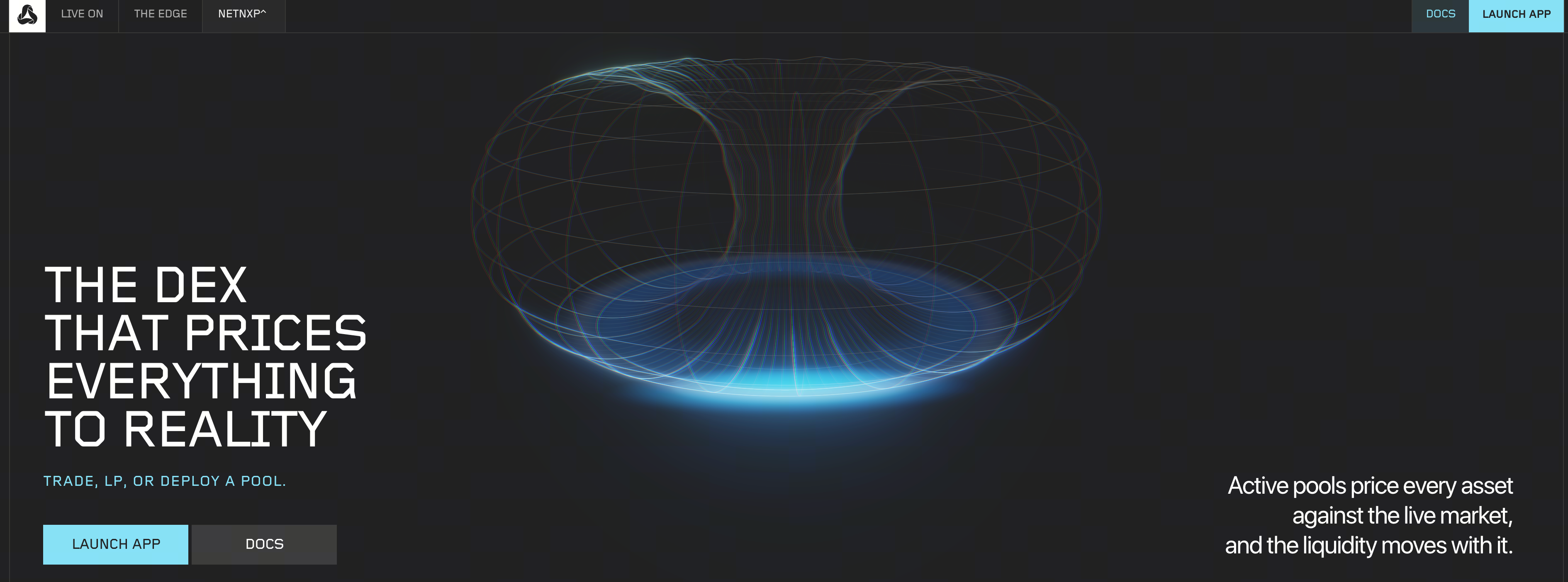
The protocol’s product set includes Active Pools, PropAMM, bStocks for tokenized stocks, and RWA-focused liquidity. Metric is live on Ethereum, BNB Chain, and Robinhood Chain. Its published ecosystem integrations include PancakeSwap, Bitget, and Propeller, while official social channels and GitHub provide release updates and technical materials. Pool responses depend on feed freshness, so users should review quote timing before signing.
As of November 17, 2026, Metric’s official site and social channels list Ethereum, Robinhood Chain, and BNB Chain as active deployments. BNB Chain coverage expanded the protocol’s retail accessibility and linked it to PancakeSwap-side routing and distribution. The product is best understood as a liquidity infrastructure layer: traders need execution quality, LPs need capital efficiency, and asset issuers need credible pricing for stocks or RWA instruments.
How Does Metric’s Oracle-Driven Pricing Work?
Metric’s oracle-driven pricing uses external market prices to anchor pool quotes. In a conventional constant-product AMM, the pool price changes only through swaps, so a large external market move can leave the pool stale. Arbitrageurs then trade against the pool until its price catches up, and LPs absorb part of that loss through impermanent loss.
Metric applies market data from Chainlink Data Streams to align pool pricing with real-world or off-chain market prices. Active Pools use that price signal to rebalance their composition and maintain usable quotes near the market price. This is most relevant for assets that trade on multiple venues or have external reference prices, including tokenized stocks that may need continuity when primary equity markets are closed, RWA instruments, and highly traded crypto pairs.
The practical result is a different risk distribution. Oracle pricing can reduce stale-quote inventory risk and improve execution around fast markets. It also introduces oracle dependency: a delayed feed, degraded data source, or governance change can affect quoting and rebalancing behavior. Metric therefore pairs its design with audits and explicit on-chain parameters rather than claiming risk elimination.
What Are Active Pools and PropAMM?
Active Pools are Metric’s managed liquidity pools. They use market signals and predefined pool logic to rebalance around the current price. Instead of spreading liquidity evenly across a broad price range, the system aims to keep capital where trading activity is occurring. This can raise LP capital efficiency and reduce slippage for traders, provided rebalancing costs and market volatility remain manageable.
PropAMM is Metric’s proprietary AMM design. It extends the pool model with oracle awareness and active position management. In the standard x*y=k model, LPs are passive counterparties and systematically buy assets that are falling while selling assets that are rising. PropAMM changes that role by allowing pool logic to adjust to external prices, with the objective of preserving quote quality and reducing passive exposure to adverse selection.
| Component |
Core function |
Main beneficiary |
| Oracle pricing |
Anchors pool quotes to external market data |
Traders and LPs |
| Active Pools |
Rebalance liquidity around the live price |
LPs |
| PropAMM |
Governs the oracle-aware AMM mechanics |
Protocol and traders |
| bStocks |
Represents tokenized stock exposure |
Equity/RWA traders |
What Can You Trade and Build on Metric DEX?
Metric supports standard crypto spot swaps, stablecoin and blue-chip crypto pairs, tokenized stocks through bStocks, and other real-world asset markets where listings and liquidity exist. bStocks are important because tokenized equity requires a price anchor that survives market closures and cross-venue differences. Metric’s oracle-driven pool model gives those assets a clearer pricing mechanism than a static AMM. For market context on tokenized stocks and RWA assets, see Forbes’ coverage of tokenization and Yahoo Finance’s Robinhood Markets quote page.
For builders and aggregators, Metric can function as an execution venue rather than a standalone app. Third-party aggregators and partner integrations can route trades into Metric pools when execution is competitive. For institutions or issuers, the protocol’s RWA support and oracle design provide a path to list assets with external reference prices. Asset availability, chain deployment, and pool depth remain visible on the live app before execution.
Third-party reporting in November 2026 described Metric’s monthly trading volume at more than $8B. Volume is a useful signal for routing quality; transaction checks should still cover the specific pool, fee tier, price impact, and available liquidity.
How Is Metric DEX Different From Traditional AMMs?
Traditional AMMs use deterministic curves. The pool price is generated from token reserves, and liquidity is often uniform across an infinite price range unless the AMM implements concentrated-liquidity ranges. This is simple and transparent, but it exposes LPs to stale pricing and impermanent loss during external price changes.
Metric’s PropAMM changes the pool from a passive curve into an oracle-aware liquidity system. Active Pools rebalance around the market price, while oracle pricing gives the pool an external reference point. The comparison guide breaks down capital efficiency, slippage, rebalancing costs, and failure modes in detail. In short, Metric favors execution quality and dynamic liquidity management, while classic AMMs favor simplicity and passive pool logic.
Which Networks, Integrations, and Security Reviews Support Metric?
Metric is live on Ethereum, BNB Chain, and Robinhood Chain. Ethereum provides deep crypto and institutional asset liquidity; BNB Chain provides high-frequency retail access; Robinhood Chain links Metric to a consumer-oriented chain rollout. Multichain coverage also means users must select the right network and bridge or fund assets accordingly.
Metric’s published ecosystem includes PancakeSwap, Bitget, and Propeller. Integrations matter for two reasons: routing increases order flow, and partner distribution increases pool utilization. Security-wise, Metric’s audits by Zellic and Sherlock cover protocol logic and critical contracts. Audits reduce implementation risk but do not remove market volatility, oracle availability, bridge risk, or governance risk. Users should confirm the current contract addresses, timing rules, and pool parameters from the official app before transacting.
Who Should Use Metric DEX?
-
Traders who want oracle-aware pricing and lower price impact on volatile assets or tokenized stocks.
-
LPs who understand rebalancing mechanics and prefer active liquidity management over static x*y exposure.
-
Aggregators and builders who need another routing source for pool-based spot execution.
-
RWA or stock-asset issuers who need liquidity infrastructure with external price anchoring.
Users who prefer the simplest possible passive LP model or assets without reliable external price feeds may find conventional AMMs easier to reason about. Metric’s advantage is strongest when the asset has a credible market price, active trading flow, and pool logic aligned with the user’s risk tolerance.
Summary
Metric DEX is a multichain decentralized trading protocol that upgrades pool liquidity with PropAMM, Active Pools, and oracle-driven pricing. Its architecture targets the main weakness of static AMMs: stale pool prices during external market moves. With support for Ethereum, BNB Chain, and Robinhood Chain, bStocks tokenized stocks, RWA liquidity, PancakeSwap and Bitget integrations, and audits by Zellic and Sherlock, Metric is positioned as execution infrastructure for both crypto and tokenized real-world markets.
FAQ
What is Metric DEX?
Metric DEX is Metric.xyz’s decentralized spot-trading protocol. It uses liquidity pools, PropAMM, Active Pools, and oracle-driven pricing to execute swaps and rebalance liquidity around external market prices.
Which chains does Metric support?
As of November 17, 2026, Metric is live on Ethereum, BNB Chain, and Robinhood Chain. Availability and pools should be checked in the official Metric app before trading.
What is PropAMM?
PropAMM is Metric’s proprietary AMM design. It adds oracle-aware pricing and active pool management to pool-based spot trading, reducing the reliance on static reserve curves.
What are Active Pools?
Active Pools are Metric’s liquidity pools that rebalance around live market prices. The goal is to keep liquidity concentrated where trading is happening and improve execution quality.
What are bStocks on Metric?
bStocks are tokenized stock assets supported through Metric’s pool infrastructure. They use external pricing references to support trading and liquidity management for tokenized equity exposure.
Educational content only. Trading, liquidity provision, and RWA exposure involve market, smart-contract, oracle, and execution risk.